
بيت / خدمات / إنتاج متسلسل

APPROVED DESIGN. CONTROLLED SCALE.

Mass Production Services for Custom Parts

Scale approved metal and plastic components into stable, إنتاج قابل للتكرار.

TOPS Precision provides mass production and high-volume manufacturing services for custom metal and plastic components. We help OEM and engineering customers move from approved samples into controlled repeat production using CNC machining, يموت الصب, sheet metal fabrication and plastic injection molding.

Processes are selected and optimized according to geometry, مادة, التسامح, annual volume, متطلبات الأدوات, quality standards and target cost.

Send your drawing, target batch quantity, annual demand, مادة, متطلبات التشطيب والتفتيش.

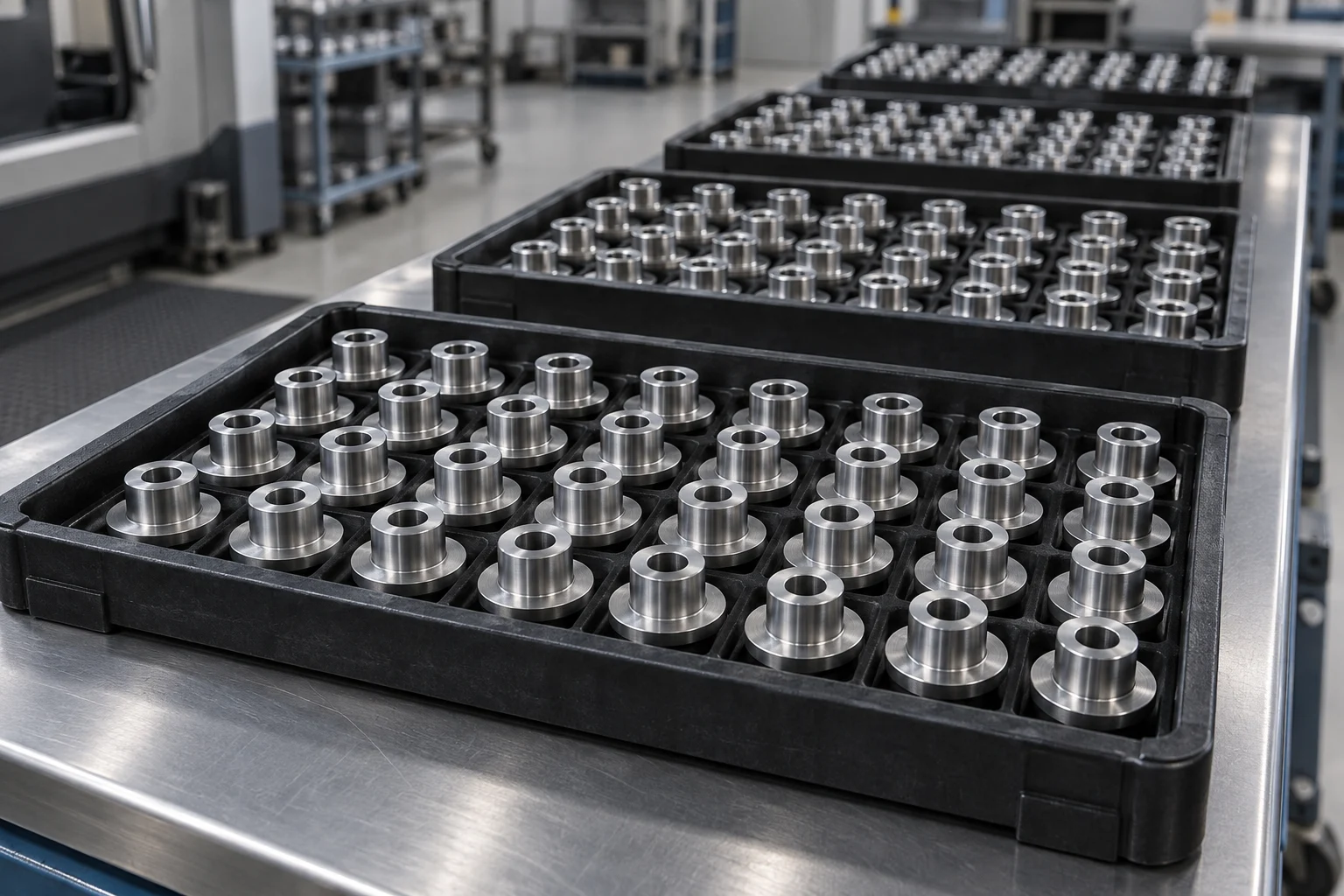
Illustrative repeat-production trays of identical precision turned metal bushings
Repeat the process.
Control the release.
Tooling · Inspection · Scheduled supply
ايزو 9001:2015Quality management
Prototype → ProductionScalable manufacturing
±0.005 mm CNCSuitable features only
معدن + بلاستيكFour in-house processes
Global OEM/ODMInternational supply

A stable route for recurring demand

What Is Mass Production?

Mass production is the repeat manufacturing of large quantities of standardized or approved components using controlled production processes, dedicated tooling or fixtures where appropriate, and defined quality-inspection methods.

Compared with prototype or low-volume manufacturing, it places greater emphasis on process stability, وقت الدورة, unit cost, production capacity, التكرار, traceability and supply continuity.

TOPS Precision provides mass production and repeat production for custom metal and plastic parts using in-house CNC machining, يموت الصب, sheet metal fabrication and plastic injection molding in Dongguan, الصين.

The production route is reviewed against approved drawings and actual recurring demand, rather than a universal volume threshold.

Confirm the inputs before releasing the batch

When Is Your Product Ready for Mass Production?

Tick the requirements you have confirmed. This checklist helps prepare an RFQ; it does not authorize production.

0 ل 6 production inputs confirmed.

If several elements are still changing, pilot or low-volume manufacturing may be more economical before committing to full production.

Explore Low-Volume Manufacturing →

Four in-house routes. Different production economics.

Mass Production Manufacturing Capabilities

Production CNC Machining component illustration

Production CNC Machining

High-precision metal and engineering-plastic parts, complex geometry and recurring batches where machining remains the appropriate route.

  • الطحن باستخدام الحاسب الآلي, turning and multi-axis machining
  • Production fixtures and repeat setups
  • Secondary operations and inspection
Explore Production CNC Machining →
Plastic Injection Molding component illustration

صب حقن البلاستيك

Stable recurring plastic requirements that can justify mold investment and validation.

  • Mold making and injection molding
  • Insert, overmolding and two-color molding
  • Secondary finishing as specified
Explore Plastic Injection Molding →
Die Casting component illustration

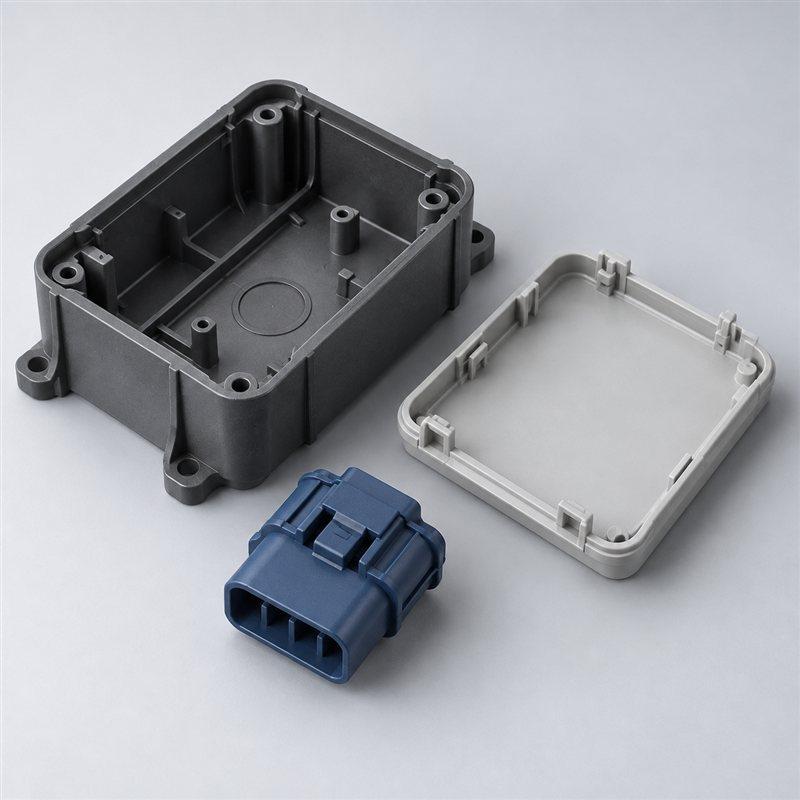
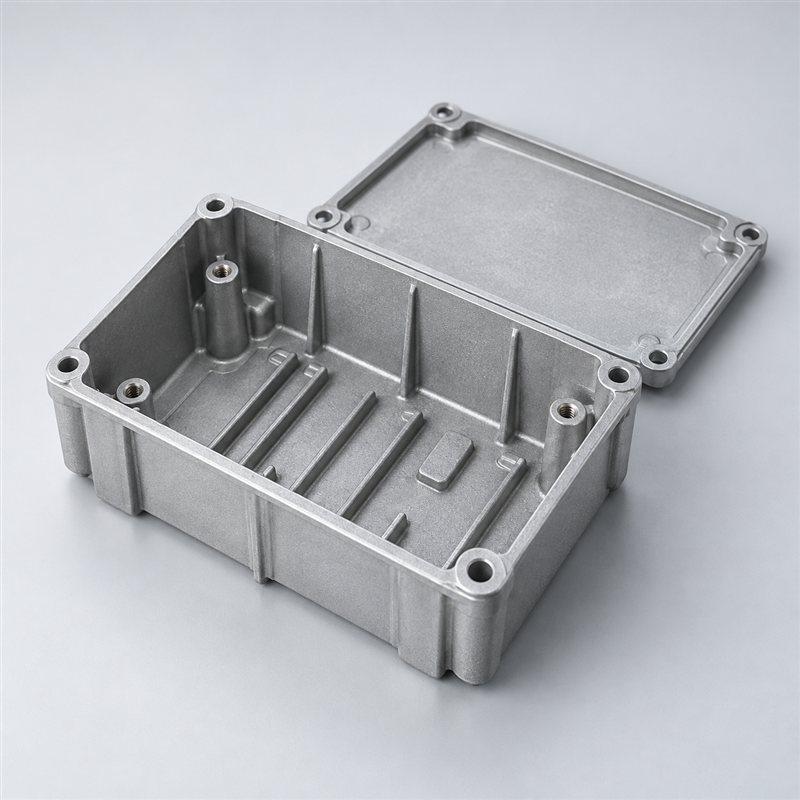
يموت الصب

Recurring aluminum, zinc and magnesium parts with suitable cast geometry and tooling economics.

  • الأدوات, casting and trimming
  • CNC post-machining
  • Surface finishing and inspection
Explore Die Casting →
Sheet Metal Production component illustration

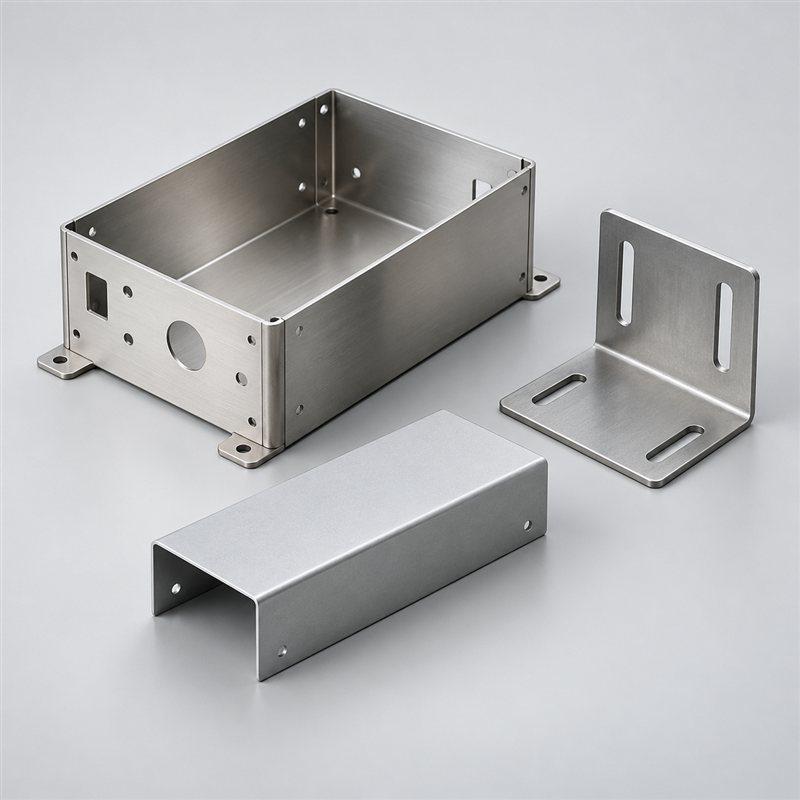
Sheet Metal Production

Repeated enclosures, اقواس, لوحات, chassis and fabricated structures.

  • القطع بالليزر, bending and forming
  • Welding and hardware installation
  • Finishing to an agreed specification
Explore Sheet Metal Production →

CNC production

Often needs less dedicated hard tooling than molding or casting, but machine time and unit cost can remain significant.

صب الحقن

Requires mold and validation investment. A stable forecast can spread that cost over enough repeat parts.

يموت الصب

Requires tooling and process development. Cast geometry, annual demand and secondary machining affect the economic case.

CNC Milling → · CNC Turning → · 4-Axis CNC Machining → · 5-Axis CNC Machining →

The production release gates

From Approved Samples to Repeat Mass Production

Before mass production, رسومات, مادة, الأبعاد الحرجة, ينهي, production method, inspection requirements and approved samples are confirmed according to the project.

  1. 01

    Drawing Freeze

    Approve drawing revision, نذل - وغد, مادة, tolerance and finish.

  2. 02

    الأدوات & تركيبات

    Prepare suitable molds, يموت, dedicated fixtures, gauges and process documents.

  3. 03

    First Article Production

    Manufacture initial production-intent parts using the proposed route.

  4. 04

    التفتيش المقال الأول

    Verify agreed critical dimensions, مادة, appearance and functional requirements.

  5. 05

    Customer Approval

    Resolve deviations and release the approved requirements before the next stage.

  6. 06

    Production Ramp-Up

    Increase quantity under controlled settings and designated verification checkpoints.

  7. 07

    إنتاج الدُفعات

    Run repeat production to the approved route and parameters.

  8. 08

    التفتيش النهائي & شحن

    Release against the agreed inspection, identification and packaging requirements.

The approval stages, customer hold points and evidence required at each gate are agreed before manufacture. Increasing quantity does not remove the inspection requirements.

Select for the full lifecycle

Which Manufacturing Process Is Best for High-Volume Production?

Component requirementPotential approachEngineering review
Tight-tolerance complex metal partProduction CNC machiningأبعاد حرجة, access and setup count
Large recurring plastic volumeصب الحقنStable design, راتنج, mold investment and validation
High-volume aluminum housingDie casting where suitableCast alloy, هندسة, tooling and post-machining
Repeated sheet enclosureتصنيع الصفائح المعدنيةسماكة, nesting, bends and assembly
Precision cylindrical partتحول باستخدام الحاسب الآليDiameters, runout, finish and repeat workholding
Complex multi-face metal partMulti-axis CNC machiningDatum strategy and fixture access
Plastic insert componentInsert moldingInsert retention, resin and loading method
Cast geometry with tight featuresيموت الصب + التصنيع باستخدام الحاسب الآليCasting allowances, datums and final-condition inspection

The correct process depends on geometry, مادة, تسامح, annual demand, tooling investment, cycle time and lifecycle cost—not quantity alone.

Review My Production Route ↗

Control the setup, then repeat it

أدوات الإنتاج, تركيبات & Process Optimization

Dedicated Production Fixtures

For CNC work, suitable fixtures can reduce setup variation and handling, improve repeatability and support multi-part machining. Datum location, clamping, tool access and changeover are reviewed together.

قوالب & يموت

قوالب الحقن, casting dies and forming tools are selected around material, هندسة, expected lifetime, production volume and maintenance. Ownership, modification and transfer requirements should be agreed.

Inspection Fixtures & مقاييس

Suitable fixtures and go/no-go gauges can speed repeat checks of defined characteristics. They complement an agreed inspection plan and do not automatically verify every drawing requirement.

Tooling and fixture optimization is reviewed together with cycle time, التعامل مع, tool wear and the inspection method. A change that improves speed still needs to preserve critical quality requirements.

Lower total cost through a reviewed production route

How We Reduce Cost in Volume Production

تصميم للتصنيع

Simplify difficult features where engineering requirements allow, with approval before changing the drawing.

Cycle Time Optimization

Review manufacturing sequence, cutting strategy, setup and process flow.

Multi-Part Fixtures

Machine multiple components per setup where access, rigidity and quality requirements allow.

Tooling Optimization

Match tooling investment, cavity or fixture strategy and maintenance to forecast quantity and lifecycle.

Material Utilization

Review stock sizes, sheet nesting or near-net-shape routes to reduce unnecessary waste.

Secondary Process Consolidation

Coordinate finishing and post-processing around batch flow and final acceptance requirements.

Cost reduction must preserve critical tolerances, material requirements and functional performance.

Engineering changes and revised acceptance criteria require approval. Cost-saving percentages are not promised without a measured project comparison.

Piece price is one line in the cost model

Compare Total Landed Manufacturing Cost

The cheapest piece price does not always produce the lowest total landed manufacturing cost.

الأدوات

استثمار, amortization, maintenance and change cost

مادة

درجة, حالة المخزون, sourcing and utilization

Scrap

Yield, rework and rejected parts

تقتيش

طُرق, frequency, reports and acceptance

التعبئة والتغليف

حماية, identification and handling

Freight

Agreed shipment mode and destination

Inventory

Release size, holding cost and obsolescence

Quality risk

Disruption, containment and corrective action

Engineering changes

Tool modifications, stock disposition and revalidation

Compare quotations on the same scope, Incoterms, inspection plan and release schedule. An annual forecast helps evaluate the route; it does not itself authorize stock purchases or production commitments.

Make the control plan visible

Quality Control for Mass Production

Existing TOPS Precision inspection photography showing measurement equipment

CMM · Optical measurement · Micrometers · Calipers · Gauges · XRF where applicable

First Article Inspection Before Full Production

Where first article approval is required, initial production-intent parts are checked against the specified critical dimensions and other agreed requirements. Deviations are reviewed and corrected before larger quantities are released.

ايزو 9001:2015 concerns quality management. فاي, شهادات المواد, تقارير الأبعاد, RoHS documentation and CoC are agreed per project; industry references do not imply medical or aerospace regulatory certification.

Review Quality & Inspection →
  1. 01

    Incoming Material Verification

    Check the specified grade and condition using agreed evidence and applicable tests.

  2. 02

    التفتيش المقال الأول

    Verify initial production parts against agreed requirements and approval hold points.

  3. 03

    Production Setup Verification

    Confirm released programs, عقد العمل, الأدوات, datums and checks before the run.

  4. 04

    التفتيش أثناء العملية

    Measure designated characteristics at agreed stages and intervals.

  5. 05

    مراقبة العملية

    Review applicable settings, tool condition and process changes during production.

  6. 06

    Batch Sampling / Defined Inspection

    Apply the agreed sampling or 100% متطلبات التفتيش; do not assume every feature is checked on every part.

  7. 07

    التفتيش النهائي

    Review dimensions, مظهر, identification and delivery condition.

  8. 08

    Quality Documentation

    Prepare the reports and certificates specified in the order.

  9. 09

    Shipment Release

    Release accepted parts using the agreed packaging and documentation checks.

Same requirements. Each release.

Maintaining Consistency Across Production Batches

Drawing Revision Control

Manufacture against the current approved revision and identify the effective release.

عوامل المعالجة

Maintain the released settings and process documents where appropriate.

أداة & Fixture Control

Review wear, صيانة, replacement and setup condition.

Material Control

Verify specified grades and approved substitutions; do not change material silently.

Inspection Records

Retain the required records according to customer and project requirements.

Nonconformance Management

Separate and evaluate parts that fail defined requirements before disposition.

Repeat Orders

Confirm approved specifications and review changes before the next release.

Traceability requirements are defined during quotation according to customer and project needs.

Specify the relationship required between raw-material records, work orders, part marking, batch identification and inspection reports. Full lot traceability is not assumed for every order.

A sourcing reference, not a universal guarantee

Mass Production Capabilities at a Glance

القدرةTOPS support
Production typesRepeat batch and larger-volume manufacturing
Main processesIn-house CNC machining, يموت الصب, injection molding and sheet metal fabrication
المعادنالألومنيوم, الفولاذ المقاوم للصدأ, فُولاَذ, التيتانيوم, نحاس, brass and suitable other alloys
البلاستيكعضلات المعدة, بوم, الكمبيوتر, نايلون, نظرة خاطفة, ص, PTFE and suitable other grades
دقةDefined according to drawing, هندسة, مادة, finish and process
CNC capabilityTolerances down to ±0.005 mm for suitable features, subject to engineering review
تقتيشسم, الأنظمة البصرية, مقاييس, micrometers and other applicable methods
التشطيب السطحأنودة, تصفيح, التخميل, طلاء مسحوق, polishing and other specified processes
توثيقProject-dependent inspection and material documentation
Production stageApproved production-intent sample through repeat production

The CNC tolerance is not a blanket tolerance for molding, صب, sheet metal or every CNC feature. أبعاد حرجة, جي دي&T and final-condition inspection must be agreed before manufacture.

Material follows the manufacturing route

Materials for Mass Production

الألومنيوم

6061 · 5052 · 7075 · Appropriate casting alloys

الفولاذ المقاوم للصدأ

304 · 316 · 17-4 PH · 420

الكربون & سبائك الصلب

1045 · A36 · Alloy steels

نحاس & نحاس

Copper · C360 · C260 · C280

Advanced Alloys

Titanium · Inconel · Invar · Kovar

البلاستيك الهندسي

ABS · POM · PC · Nylon · PEEK · PP · PTFE · PMMA

درجة, temper and condition matter. Wrought machining grades, sheet grades and casting alloys are not interchangeable. A machined polymer prototype may not reproduce a molded part’s properties. Suitability and availability are confirmed at quotation.

Explore Materials →

Release the part in its specified final condition

Secondary Operations & التشطيب السطح

Volume production includes the downstream requirements that make the part ready for its intended use. Final dimensions, surface requirements and appearance are reviewed together.

Specify coating thickness, مناطق ملثمة, heat-treatment condition, hardness and any required inspection after processing. The quotation defines responsibilities and any outside operations.

Explore Surface Finishing →

CNC Post-Machining

Define datums and tight interfaces on cast or molded parts.

إزالة الأزيز

Agree edge breaks and burr acceptance without changing critical geometry.

أنودة

Specify alloy, سمك الطلاء, color and masking.

أنودة الثابت

Review thickness, wear requirements and dimensional allowance.

مسحوق الطلاء

Define thickness, لون, لمعان, masking and adhesion requirements.

التخميل

Specify stainless grade, process and acceptance; appearance alone is not proof.

تصفيح

Specify metal layers, thickness and applicable embrittlement controls.

الصدمة الكهربائية

Review material, finish and dimensional allowance.

المعالجة الحرارية

Define material condition, صلابة, distortion and verification.

تلميع

Agree roughness, cosmetic criteria and protected dimensions.

وضع العلامات بالليزر

Review content, location, legibility and process feasibility.

حَشد, Where Agreed

Confirm scope, بوم, ملائم, handling and acceptance before including assembly.

A repeat order needs a release plan

Production Planning for Repeat Orders

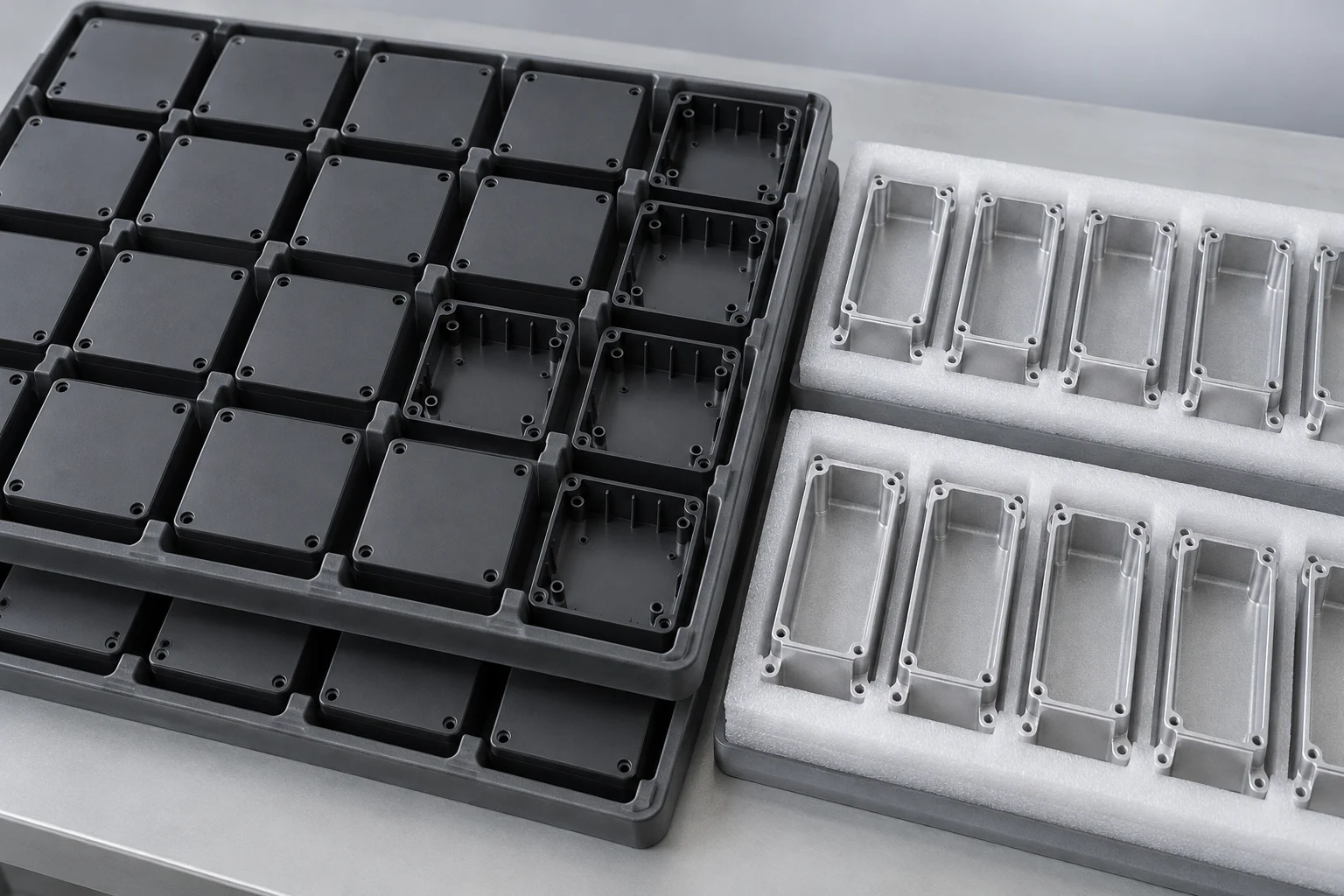
Illustrative organized repeat-production metal and molded components in protective trays

Forecasts, releases and shipping arrangements are confirmed for the project.

Production Forecast

Annual demand, part mix and forecast confidence help determine the manufacturing strategy.

Batch Scheduling

Plan releases around actual requirements, يثبت, inspection and production loading.

Material Procurement

Align specified material sourcing and lead time with the agreed production schedule.

Tooling Maintenance

Review molds, يموت, cutting tools and fixtures to maintain the released process.

Delivery Planning

Coordinate accepted batch release, packaging and international shipment dates.

Inventory commitments require a separate agreement.

Safety stock, stockholding, reserved capacity, minimum releases and ownership are not presented as standard services without confirmed arrangements.

Review evidence before committing a forecast

القدرة الإنتاجية & Supply Review

Production capacity is part-specific. Cycle time, يثبت, process mix, أَثْمَر, تقتيش, maintenance and existing loading all affect the achievable schedule.

Existing TOPS workshop photograph
Evidence to reviewRequired basis
CNC equipment and machine hoursMachine count, process type and available monthly hours
Molding and casting resourcesMachine list, size/tonnage and suitable process range
Production loadingCurrent commitments, shifts, maintenance and part-specific cycle time
Repeat-production volumesVerified part-specific batch size, annual releases and production history
Inspection resourcesRelevant CMM / measurement equipment and QC staffing
Manufacturing facilityVerified floor area and production layout

Applications defined by the component

High-Volume Manufacturing for OEM Industries

السيارات & إيف

العلب, اقواس, powertrain-related mechanical parts, fixtures and equipment components.

Explore Automotive & EV →

إلكترونيات

العلب, thermal-management components, brackets and structural parts.

Explore Electronics →

Aerospace machining applications → require review of customer specifications and qualification requirements. No specialist regulatory certification is implied by these application categories.

Manufacturing routes to discuss for your approved design

Mass Production Program Examples

These examples illustrate production planning for component families. They are not claims of completed customer projects, verified quantities or measured results.

CNC Production Component illustrative component family

PROGRAM EXAMPLE 1

CNC Production Component

مادة
Drawing-specified metal or engineering plastic
Part dimensions
Approved CAD and dimensional drawing
كمية الدفعة
Agreed quantity per release
الحجم السنوي
Reviewed annual forecast
Key tolerance
Agreed critical CNC features
Fixture strategy
Datum-controlled repeat workholding
الانتهاء من السطح
Per approved specification
طريقة التفتيش
First article and batch checks as agreed

Confirm the drawing revision, production route, approval hold points and repeat-order requirements before release.

Die-Cast Housing illustrative component family

PROGRAM EXAMPLE 2

Die-Cast Housing

سبيكة
Approved casting alloy
الأدوات
Reviewed die design and ownership
Casting route
Released casting route and settings
CNC post-machining
Machining allowances and datums
الانتهاء من السطح
Per approved specification
Dimensional controls
Agreed cast and machined feature verification

Confirm the drawing revision, production route, approval hold points and repeat-order requirements before release.

Injection-Molded Component illustrative component family

PROGRAM EXAMPLE 3

Injection-Molded Component

الراتنج
Drawing-specified resin and condition
قالب
Reviewed mold design and ownership
Cavity count
Cavity strategy reviewed against forecast
كمية الإنتاج
Agreed releases and annual demand
أبعاد حرجة
Agreed molded-feature requirements
Appearance requirements
Approved appearance criteria and reference

Confirm the drawing revision, production route, approval hold points and repeat-order requirements before release.

Choose the production stage you actually need

Low-Volume vs. إنتاج متسلسل

عاملLow-volume manufacturingالإنتاج بكثافة الإنتاج بكميات ضخمة
Main goalFlexibility and validationحجم, consistency and efficiency
يطلبأدنى, specialized or uncertainStable and recurring enough to justify the route
Tooling investmentOften lower without dedicated production toolingOften higher when dedicated tooling is justified
تغييرات التصميمOften easier before tooling releaseMay need tool modification, stock review and revalidation
Unit costOften higher per partMay be lower at sufficient volume
Inventory commitmentSmaller releases can limit exposureLarger batches can increase exposure
Dedicated fixturesUsed where neededCommon for repeatability and handling
تحسين العمليةFit for the smaller-batch requirementGreater focus on repeated cycle and production flow
Production validationMay be developing during pilot buildsEstablished before larger releases
Best usePilot, كوبري, variants and niche demandMature stable production programs

These are typical tendencies. Actual economics depend on the part and quotation.

Not Ready for Mass Production? Explore Low-Volume Manufacturing →

Scale and outsourcing are different decisions

Mass Production and Contract Manufacturing

إنتاج متسلسل

Describes production scale, process stability and manufacturing economics for a repeat component.

عقد تصنيع

Describes outsourcing an agreed manufacturing responsibility. A contract manufacturing program can be low, medium or high volume.

Explore Contract Manufacturing → for managed OEM production responsibilities. View Precision Manufacturing → for detailed technical capabilities.

This is a buyer journey, not a requirement to move through every stage. Contract manufacturing can cover any production volume.

Support built around the released production program

Why OEM Buyers Choose TOPS for Mass Production

Prototype-to-Production Continuity

Carry reviewed manufacturing knowledge and approved requirements from early builds into production.

Multi-Process Capability

Choose in-house machining, صب, molding or fabrication around the production economics.

Production Engineering

Review tooling, تركيبات, manufacturing methods and repeat-order requirements.

First Article & التفتيش أثناء العملية

Check agreed characteristics before and during larger production quantities.

Secondary Processing Coordination

Coordinate specified finishing, heat treatment and other downstream requirements.

International OEM Support

Agree inspection, protective packaging, documentation and global delivery arrangements.

Engineering Change Support

Review revisions, tooling impacts, work in progress and effective releases before applying changes.

From drawing review to accepted delivery

How Our Mass Production Process Works

  1. 01

    Send Drawings & Forecast

    Provide CAD, 2رسم د, revision, مادة, batch quantity, annual volume, finish and quality requirements.

  2. 02

    سوق دبي المالي & Production Review

    Review geometry, عملية, تسامح, الأدوات, تركيبات, cycle time and manufacturing risk.

  3. 03

    يقتبس & Production Plan

    Confirm manufacturing route, الأدوات, unit pricing, expected lead time and inspection scope.

  4. 04

    عينة / First Article

    Produce initial production-intent parts and verify the agreed requirements.

  5. 05

    Sample Approval

    Resolve deviations and freeze the approved specifications before volume release.

  6. 06

    Production Ramp-Up

    Review process stability as quantities increase under the agreed plan.

  7. 07

    إنتاج متسلسل

    Manufacture using the approved route and released requirements.

  8. 08

    فحص الجودة

    Verify agreed dimensions, ينهي, quality records and acceptance criteria.

  9. 09

    التعبئة والتغليف & توصيل

    Package, identify and ship accepted parts according to the order.

Direct answers for engineering and sourcing teams

Frequently Asked Questions About Mass Production

What is mass production?

Mass production is the repeat manufacturing of large quantities of standardized or approved components using controlled processes, dedicated tooling or fixtures where appropriate, and defined inspection methods. It emphasizes process stability, وقت الدورة, التكرار, cost and supply continuity. There is no single quantity threshold that makes every part or process a mass-production project.

What is the difference between mass production and low-volume manufacturing?

Mass production focuses on stable demand, repeatability and efficient supply at scale, while low-volume manufacturing often prioritizes flexibility, pilot validation or bridge supply. The practical boundary depends on geometry, عملية, tooling and demand. A specialized machined part and a molded commodity part can have very different economical production volumes.

When should a product move from low-volume to mass production?

Consider mass production when the design, مادة, approved sample, quality criteria and recurring demand are sufficiently stable. Compare tooling, تركيبات, inventory, release schedules and total lifecycle cost before committing. If key requirements still change, a pilot or low-volume route may reduce unnecessary tooling changes and stock exposure.

Which manufacturing processes are suitable for mass production?

CNC production machining, صب حقن البلاستيك, die casting and sheet metal fabrication can all suit repeat production under the right conditions. الهندسة, مادة, الأبعاد الحرجة, annual demand, tooling investment, cycle time and total cost determine the route. TOPS provides these four core manufacturing processes in-house; required downstream responsibilities are defined in the quotation.

Can CNC machining be used for mass production?

نعم. CNC machining can be used for mass production when geometry, تسامح, مادة, annual volume and tooling economics make machining appropriate. Dedicated fixtures, repeat setups, tool management and in-process measurement can support recurring batches. It does not automatically become cheaper than casting or molding simply because quantity increases.

When does injection molding become more economical than CNC machining?

Injection molding may become economical when stable recurring demand offsets mold, validation and maintenance costs. There is no universal break-even quantity. Compare tooling investment, part price, releases, التغييرات الهندسية, inventory and material behavior. مسودة, سمك الجدار, shrinkage and molded properties also need review before replacing a machined plastic part with a molded version.

How does TOPS control quality during large production runs?

TOPS uses agreed drawing and material requirements, first article verification, production setup checks, in-process inspection and final acceptance checks according to the project quality plan. Inspection frequency, sampling, documentation and traceability are defined during quotation or order review. سم, optical measurement and appropriate gauges are selected around the characteristics being verified.

Do you perform first article inspection before full production?

نعم. First article inspection can be included before full production according to the agreed project requirements. Initial production-intent parts are checked against specified characteristics, and deviations are reviewed before release. Customer approval hold points, report format and any functional testing should be agreed in advance; first article approval does not replace batch inspection.

Can TOPS manufacture repeat production orders?

نعم. TOPS supports recurring production orders against approved drawings and agreed acceptance requirements. Provide the batch quantity, annual forecast, expected releases and target delivery schedule. Drawing changes, حالة الأدوات, material availability and production loading are reviewed before a new release. No fixed capacity reservation, safety stock or delivery guarantee is implied without a separate agreement.

Can you coordinate surface finishing and secondary operations?

نعم. Required finishing and secondary operations can be coordinated within the agreed manufacturing scope. Define coating type and thickness, مناطق ملثمة, critical final dimensions, صلابة, appearance and documentation. The quotation identifies processing responsibilities and any outside operations. Assembly and laser marking are reviewed for feasibility rather than assumed for every part.

What information should I provide for a mass-production quotation?

Provide CAD and a 2D drawing with part number and revision, مادة, batch quantity, annual volume, releases per year, ينهي, critical tolerances, quality documents, delivery dates and destination. State whether production tooling and approved samples already exist, including ownership or transfer requirements. Identify packaging, labeling and traceability requirements and discuss confidentiality before sending restricted files.

Can TOPS support production after prototype approval?

نعم. TOPS can review approved prototypes and requirements for a production route using machining, صب, casting or fabrication. Prototype approval does not automatically validate the final manufacturing process. Production-intent samples, الأدوات, الأبعاد الحرجة, material differences, inspection criteria and ramp-up checks should be reviewed before larger releases.

Quote the program, not an isolated piece price

Request a Mass Production Quote

Share the approved design and the production forecast. Annual quantity, release frequency, existing tooling and approved-sample status help define the right production route.

  • 2D drawing and 3D CAD with part number and revision
  • Current batch quantity and estimated annual demand
  • Expected releases per year and required delivery dates
  • Tooling availability, ownership and transfer requirements
  • Approved samples, critical tolerances and inspection documents
  • مادة, الانتهاء من السطح, التعبئة والتغليف, labeling and destination

Prefer email?
info@tops-precision.com

For multi-part programs or larger files, contact us for a suitable transfer option. سعر, feasibility, capacity, lead time and production responsibilities are confirmed by quotation and order review.

    طلب عرض أسعار

    خطوة, سان تومي وبرينسيبي, إيجيس, قوات الدفاع الشعبي, دي دبليو جي أو دي إكس إف; ما يصل الى 10 ميغابايت.

    يتم استخدام التفاصيل والملفات الخاصة بك لمراجعة استفسارك والرد عليه. ناقش أي متطلبات لاتفاقية عدم الإفشاء قبل إرسال معلومات سرية.

    Let's Start A New Project Today

    أرسل استفسارك اليوم

      طلب عرض أسعار

      خطوة, سان تومي وبرينسيبي, إيجيس, قوات الدفاع الشعبي, دي دبليو جي أو دي إكس إف; ما يصل الى 10 ميغابايت.

      يتم استخدام التفاصيل والملفات الخاصة بك لمراجعة استفسارك والرد عليه. ناقش أي متطلبات لاتفاقية عدم الإفشاء قبل إرسال معلومات سرية.

      ابدأ الكتابة لترى المشاركات التي تبحث عنها.