
ブログ

ブログUnderstanding A36 Carbon Steel: プロパティ, 用途, and Advantages

Understanding A36 Carbon Steel: プロパティ, 用途, and Advantages

A36 Carbon Steel

A36 carbon steel is one of the most widely used structural steels in engineering and industrial fabrication. Whether you are building steel structures, manufacturing heavy machinery, or fabricating industrial components, A36 steel is often considered a reliable and cost-effective material.

Its popularity comes from a balanced combination of 強さ, 溶接性, 可用性, 手頃な価格. エンジニア向け, メーカー, and procurement managers, A36 offers predictable mechanical performance while remaining economical for large-scale projects.

このガイドでは, we will explore everything you need to know about A36 carbon steel, それを含む chemical composition, 機械的性質, 利点, アプリケーション, and differences compared with other steels. If you are considering A36 steel for your next project, this article will help you determine whether it is the right material choice.

What Is A36 Carbon Steel?

A36 Carbon Steel

A36 carbon steel is a low-carbon structural steel grade defined under the standards of ASTM International. It is formally specified under the standard ASTM A36/A36M, which describes the requirements for carbon structural steel used in construction and industrial fabrication.

The defining characteristic of A36 steel is its low carbon content, typically below 0.26%. This relatively low carbon level improves the material’s 溶接性, 延性, and formability, making it easier to fabricate and shape into structural components.

Unlike alloy steels designed for specialized performance, A36 steel focuses on general structural strength and manufacturing efficiency. 結果として, it is widely used in:

Structural construction

Steel frameworks

Machinery fabrication

Heavy equipment manufacturing

Shipbuilding components

Industrial platforms and supports

A36 steel is typically supplied in several common forms, 含む:

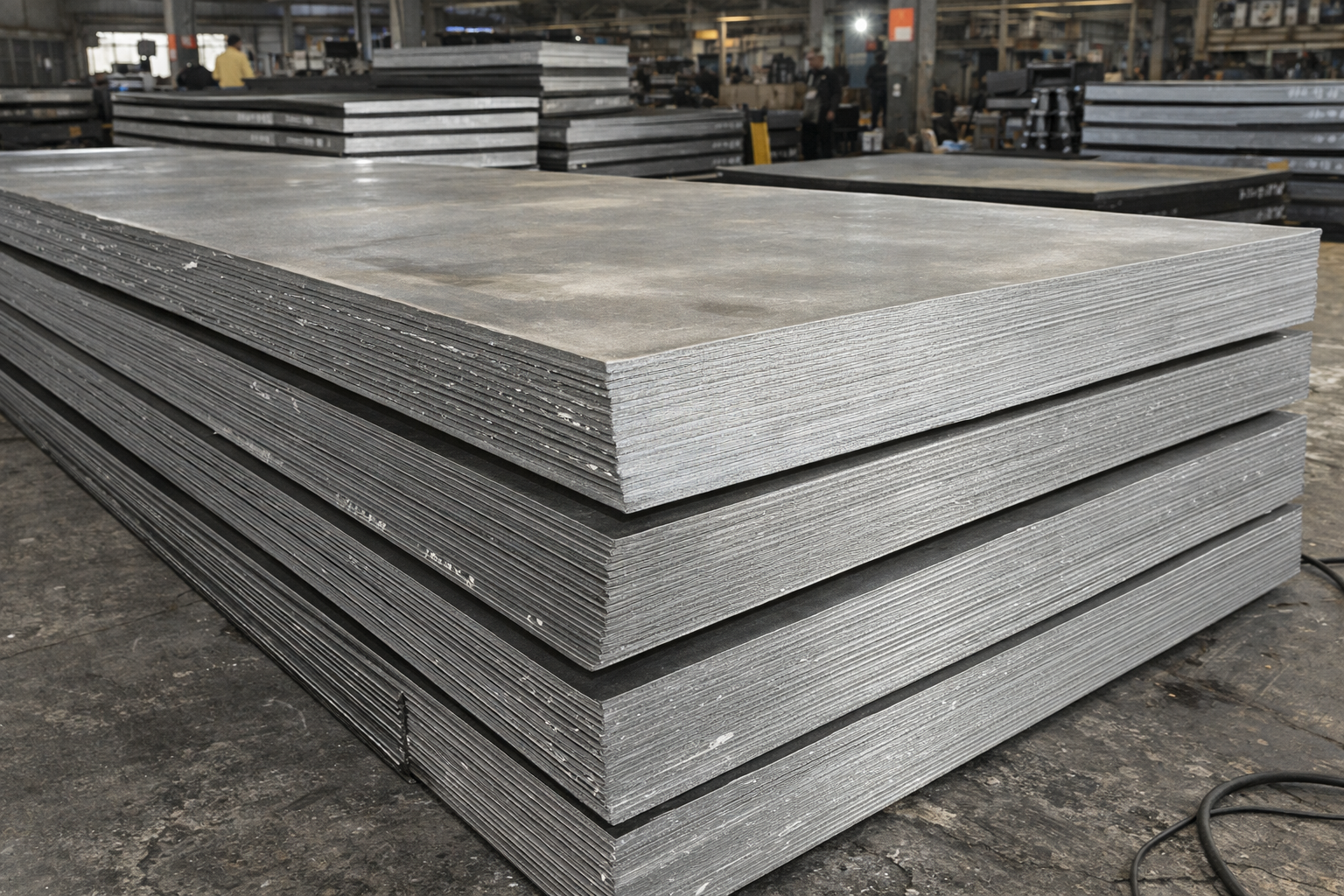
Steel plates

Steel bars

構造ビーム

Steel channels

角度

Tubing and fabricated parts

Because it is easy to machine and weld, A36 steel is frequently used in custom fabrication projects, particularly where structural strength and affordability are priorities.

Chemical Composition of A36 Carbon Steel

The chemical composition of A36 steel is carefully controlled to maintain the balance between 強さ, 延性, and manufacturability.

Below is a typical composition range.

要素 構成 (%) 関数
炭素 (C) ≤ 0.26 Provides strength while maintaining weldability
マンガン (ん) 0.60 – 1.20 Improves toughness and tensile strength
リン (P) ≤ 0.04 Limited to maintain ductility
硫黄 (S) ≤ 0.05 Improves machinability but kept low to prevent brittleness
ケイ素 (そして) ≤ 0.40 Acts as a deoxidizer and strengthens the steel
銅 (銅) ≥ 0.20 (オプション) Enhances corrosion resistance

炭素 (C)

Carbon is the primary element controlling steel strength. A36 uses a low carbon level, which allows the steel to remain highly weldable and ductile.

マンガン (ん)

Manganese increases tensile strength and wear resistance. It also helps remove oxygen during the steelmaking process.

リン (P)

Although phosphorus can increase strength, excessive amounts make steel brittle. したがって, its concentration is strictly controlled.

硫黄 (S)

Sulfur improves machinability but may reduce toughness. このため, the allowable amount remains very small.

ケイ素 (そして)

Silicon functions mainly as a deoxidizing element, improving the steel’s internal structure and mechanical stability.

銅 (銅)

In some specifications, copper is added to improve corrosion resistance, especially for outdoor structural applications.

Mechanical Properties of A36 Carbon Steel

The mechanical properties of A36 steel make it suitable for structural engineering applications where strength and durability are required without sacrificing manufacturability.

抗張力

A36 steel typically has a tensile strength between 400 そして 550 MPa (58,000 – 80,000 psi).

Tensile strength measures the maximum stress the material can withstand before breaking. This range allows A36 steel to handle heavy loads in structural frameworks.

降伏強さ

minimum yield strength is 250 MPa (36 クシ) for most structural sections.

Yield strength indicates the point at which permanent deformation begins. For construction materials, this is a critical parameter because it determines how much load a structure can support safely.

伸長

A36 steel exhibits good ductility, typically offering:

20% elongation in 200 んん

23% elongation in 50 んん

High elongation means the steel can deform without fracturing, making it safer for structural applications where dynamic loads may occur.

硬度

Typical hardness values range from 119 に 162 ブリネル (HB).

This moderate hardness level provides resistance to indentation and wear while still allowing machining and forming operations.

弾性率

The modulus of elasticity is approximately 200 GPa, which is typical for most structural steels.

This value measures the steel’s resistance to elastic deformation when stress is applied.

ポアソン比

The Poisson’s ratio of A36 steel is approximately 0.26, indicating how the material expands laterally when stretched.

Physical Properties of A36 Steel

Beyond mechanical performance, several physical properties also influence the steel’s behavior in engineering applications.

密度

A36 steel has a density of approximately:

7.85 g/cm3 (0.284 ポンド/インチ3)

This density is similar to most carbon steels and allows engineers to predict structural weight accurately.

融点

The melting temperature ranges from:

1,425°C to 1,538°C (2,600°F to 2,800°F)

This high melting point makes A36 steel suitable for various fabrication processes, including welding and hot forming.

磁気特性

Like most carbon steels, A36 steel is 磁気 due to its iron content.

Key Advantages of A36 Carbon Steel

Several factors contribute to the widespread use of A36 steel in industrial and structural applications.

1. 費用対効果

One of the biggest advantages of A36 steel is its affordability. Compared with alloy steels or high-strength grades, A36 provides adequate strength at a significantly lower cost.

For large-scale projects such as buildings, 橋, および産業用具, this cost advantage becomes very significant.

2. 優れた溶接性

Due to its low carbon content, A36 steel can be welded using most common welding methods, 含む:

ミグ溶接

TIG welding

Shielded metal arc welding

Minimal preheating is usually required, which simplifies fabrication.

3. Good Formability

A36 steel can be easily:

Bent

Rolled

カット

Formed

This flexibility makes it ideal for fabricating custom structural components.

4. High Strength and Durability

Despite being economical, A36 steel still provides strong mechanical performance. Its combination of tensile strength and ductility allows it to withstand heavy loads and mechanical stress.

5. Wide Availability

A36 steel is one of the most widely produced structural steels in the world. Manufacturers can obtain it quickly in various forms and sizes, reducing project lead times.

Common Applications of A36 Carbon Steel

Because of its versatility, A36 steel is used across many industries.

Structural Construction

One of the primary applications is in construction. A36 steel is widely used for:

構造ビーム

Building frameworks

Support columns

Industrial platforms

Structural shapes such as I-beams, H-beams, channels, と角度 are often produced using A36 steel.

Heavy Equipment Manufacturing

Industrial machinery often uses A36 steel for:

Equipment frames

Mounting brackets

Base plates

Structural supports

Its durability allows machinery to withstand heavy operational loads.

Automotive and Shipbuilding

自動車業界で, A36 steel is used for:

シャーシコンポーネント

Mounting structures

Reinforcement brackets

In shipbuilding, it may be used for structural components such as hull frames and deck structures.

石油およびガス産業

The oil and gas sector frequently uses A36 steel for:

Storage tanks

Structural platforms

Equipment supports

Pipelines and fabrication structures

Its strength and weldability make it suitable for large industrial installations.

Pipe and Tube Fabrication

A36 steel can also be fabricated into pipes and tubes used for:

Structural tubing

Mechanical supports

Industrial piping systems

A36 Steel vs Other Carbon Steels

Understanding how A36 compares with other steels helps engineers select the right material.

A36 vs 1018 鋼鉄

Compared with SAE 1018 鋼鉄, A36 steel offers:

財産 A36 Steel 1018 鋼鉄
強さ Higher structural strength 適度
被削性 良い 素晴らしい
典型的な使用 Structural fabrication Precision machined parts

1018 steel is often used for machined components, while A36 is preferred for structural applications.

A36 vs High-Strength Structural Steel

High-strength steels like ASTM A572 steel provide greater strength but cost more. A36 remains the economical option when extreme strength is not required.

Fabrication and Processing Methods

A36 steel performs well in various manufacturing processes.

溶接

A36 steel can be welded using standard methods:

ミグ溶接

TIG welding

Stick welding

Submerged arc welding

機械加工

The machinability rating of A36 steel is approximately 72%, which is considered good for carbon steel.

表面処理

To improve corrosion resistance, A36 steel can be treated with:

亜鉛メッキ

パウダーコーティング

Industrial painting

Surface plating

Galvanization is especially common for outdoor structural applications.

Limitations of A36 Steel

その利点にもかかわらず, A36 steel also has some limitations.

Limited Corrosion Resistance

A36 steel is not inherently corrosion-resistant and may require coatings or galvanization when used outdoors.

Not Ideal for High-Temperature Environments

A36 steel generally performs well up to approximately 343℃ (650°F). For higher temperatures, alloy steels may be more suitable.

Lower Strength Compared With Alloy Steels

While adequate for many structures, A36 steel does not provide the same strength-to-weight ratio as advanced structural alloys.

結論

A36 carbon steel remains one of the most important materials used in structural engineering and industrial fabrication. Its balanced combination of 強さ, 手頃な価格, 溶接性, and availability makes it a practical choice for many projects.

From building construction and heavy machinery to industrial platforms and fabricated components, A36 steel continues to serve as a reliable structural material across multiple industries.

For manufacturers and engineers seeking a cost-effective and versatile structural steel, A36 remains one of the most dependable options available today.

FAQs

1. Can A36 steel be galvanized?

はい. A36 steel can be hot-dip galvanized to significantly improve corrosion resistance.

2. What is the machinability of A36 steel?

The machinability rating of A36 steel is approximately 72%, which allows for efficient machining operations.

3. Is A36 steel magnetic?

はい. Because it contains iron, A36 steel is naturally magnetic.

4. What temperature can A36 steel withstand?

A36 steel can typically operate safely up to 650°F (343℃).

5. Is A36 steel suitable for welding?

はい. Its low carbon content makes it highly weldable using most standard welding techniques.

読み込み中

1008 炭素鋼
前の投稿

1008 炭素鋼: プロパティ, アプリケーション, and Why It’s Ideal for Precision Machining

次の投稿

18 機械加工のメリット

返信を残す

あなたのメールアドレスが公開されることはありません. 必須フィールドは、マークされています *

Let's Start A New Project Today

今すぐお問い合わせを送信してください

    入力を開始すると、探している投稿が表示されます.