External Housing
Confirm cosmetic surfaces, anodizing consistency, thin walls and connector openings. Evaluate CNC or die casting.


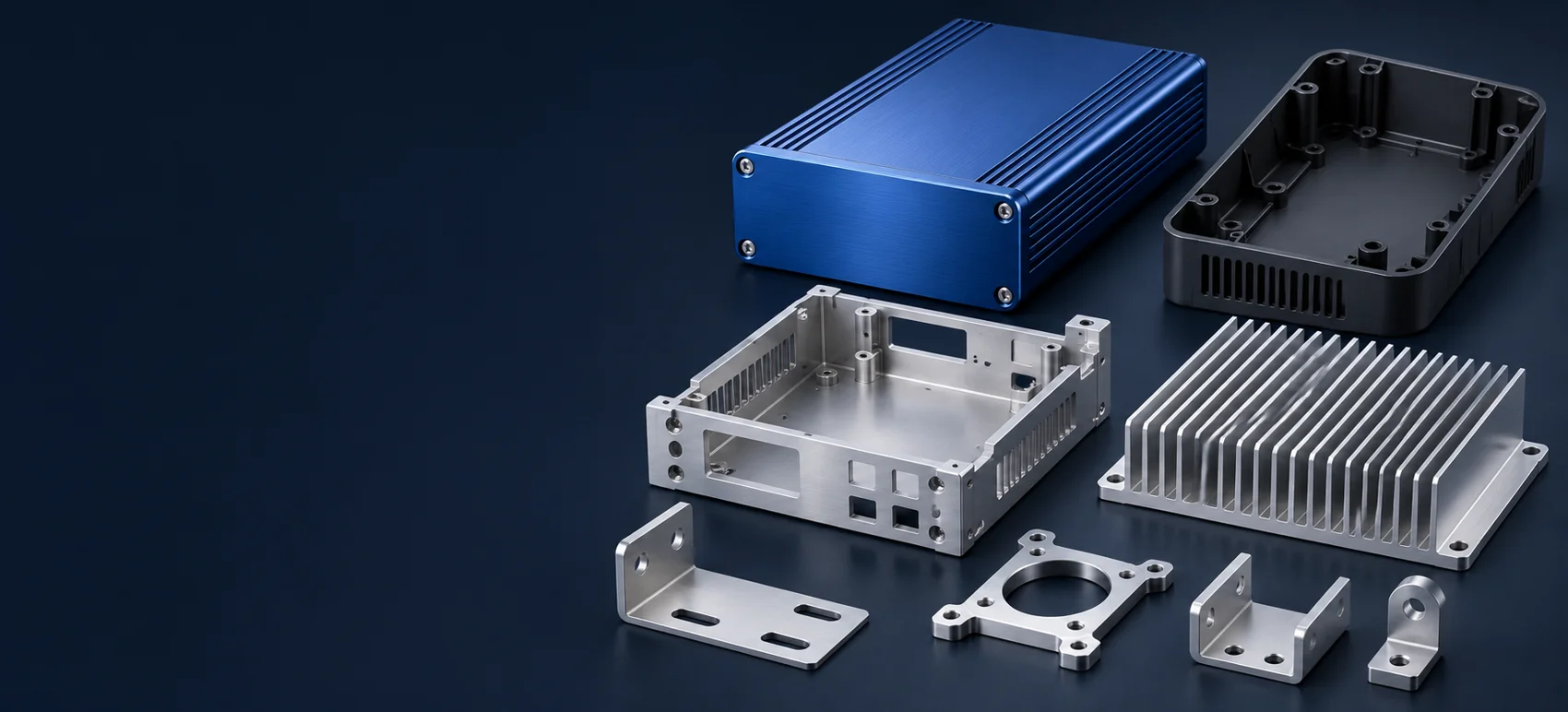
TOPS Precision manufactures custom metal and plastic components for consumer electronics, smart devices, 通信機器, wearable products and connected hardware. From CNC-machined aluminum housings and heat sinks to die-cast enclosures, sheet-metal chassis and molded plastic components, we support projects from functional prototypes through repeat production.
Explore the mechanical parts that protect, position and cool electronic hardware.
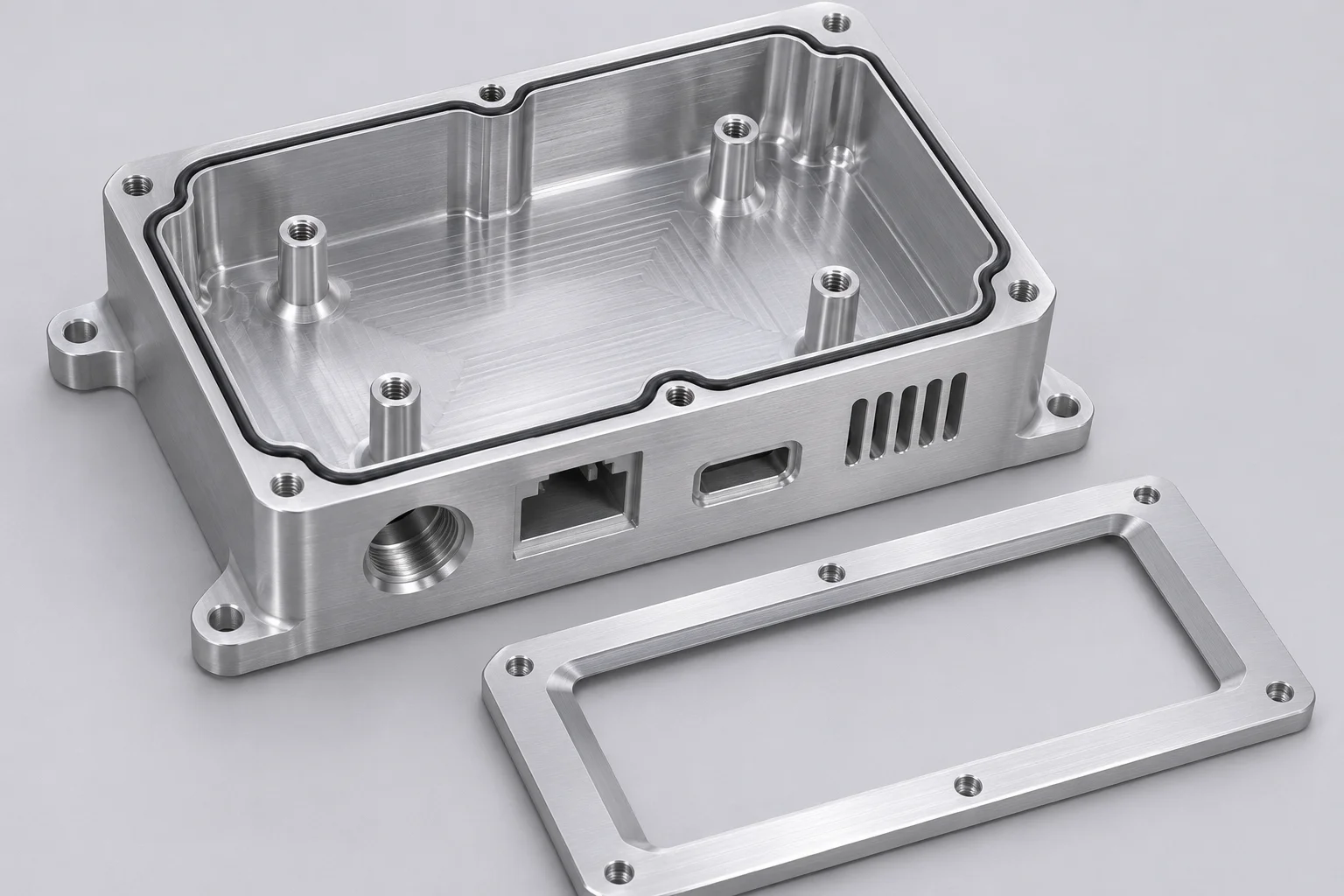
Protect PCBs, support assemblies and provide a cosmetic exterior.
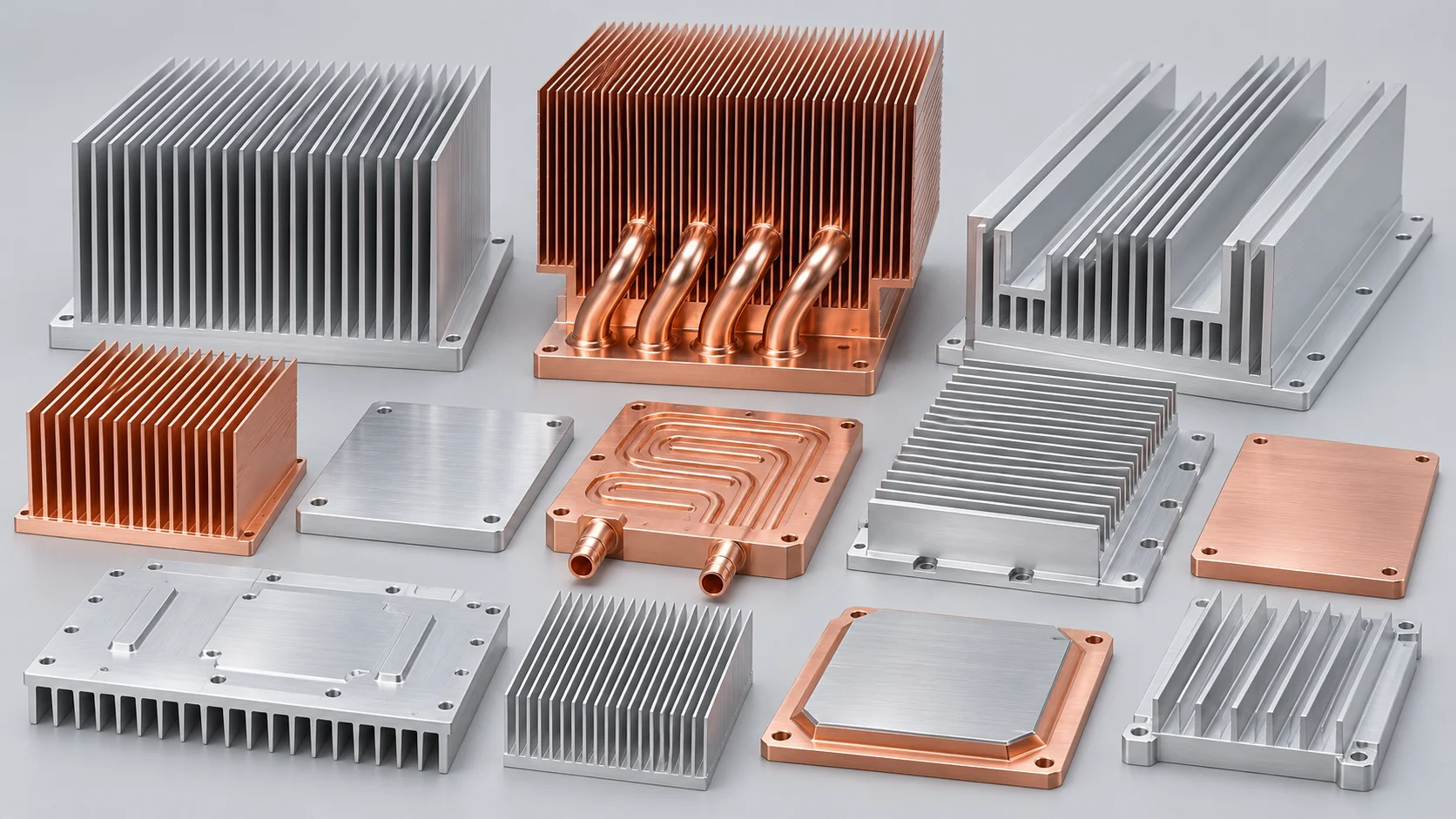
Transfer heat from processors, power modules and other heat sources.
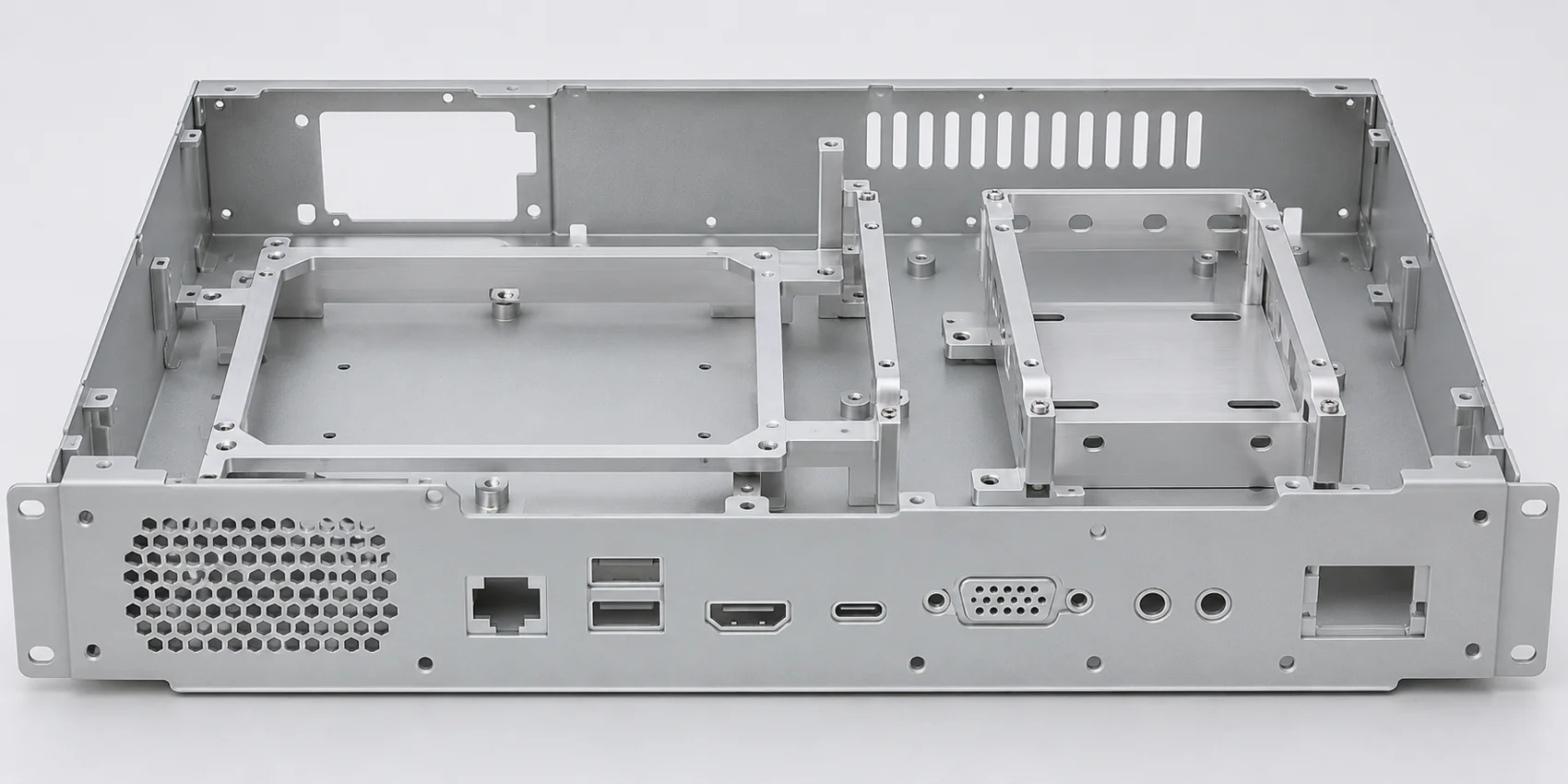
Locate PCBs, ディスプレイ, batteries and connectors.
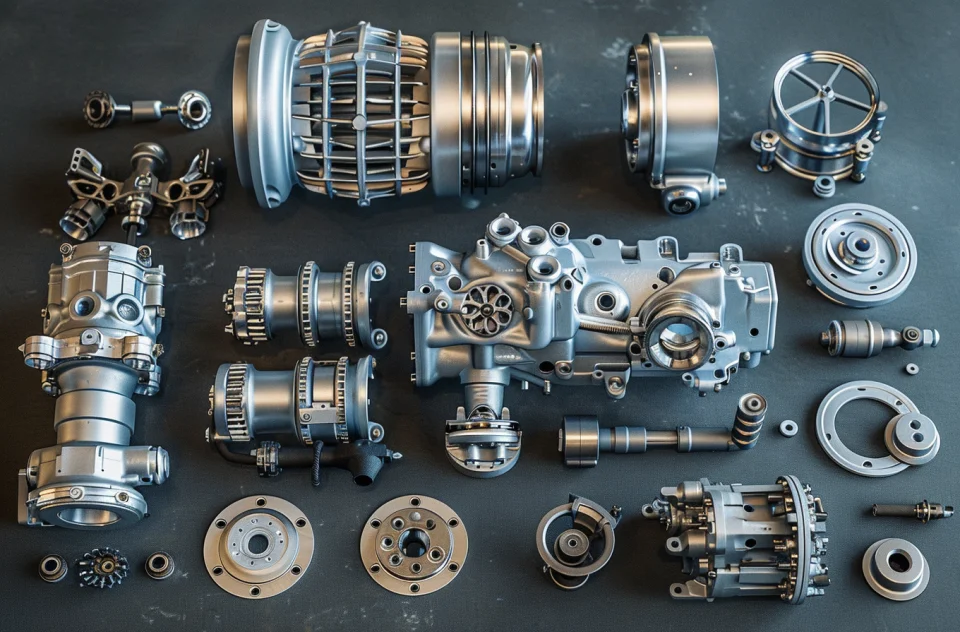
Consolidate enclosure features for repeat production.
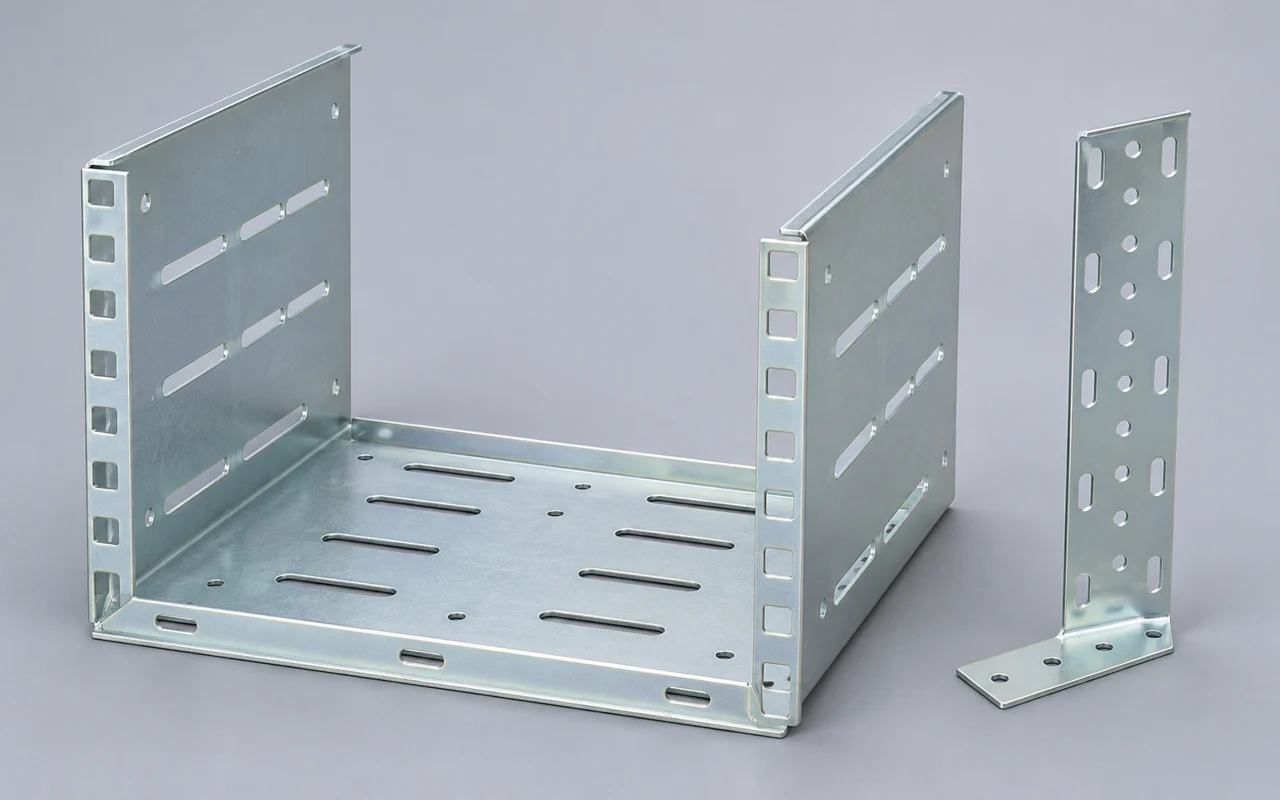
Support control units, communication equipment and larger assemblies.

Protect and locate sensors in monitoring and smart-home devices.
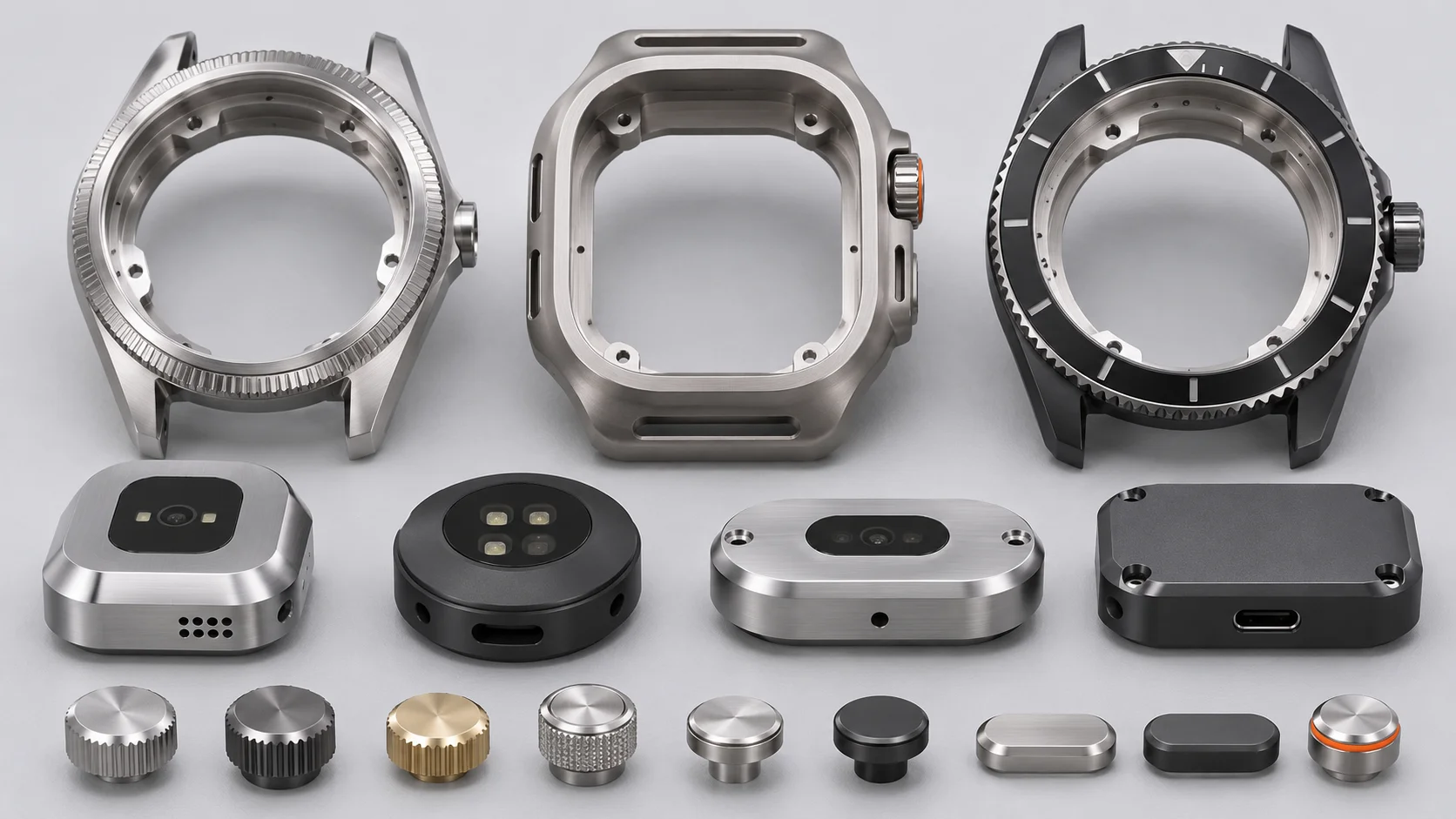
Support compact, lightweight products with tight packaging.
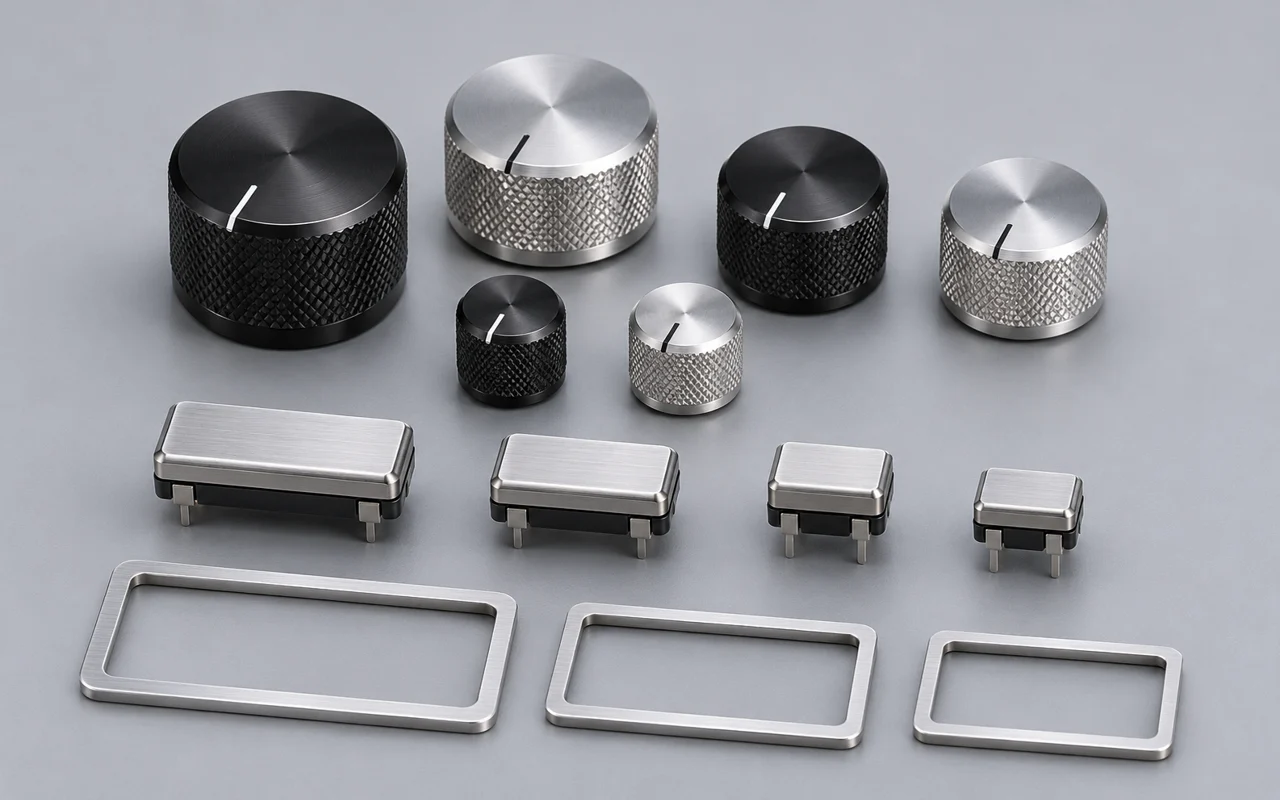
Provide tactile controls and visible hardware for device interfaces.
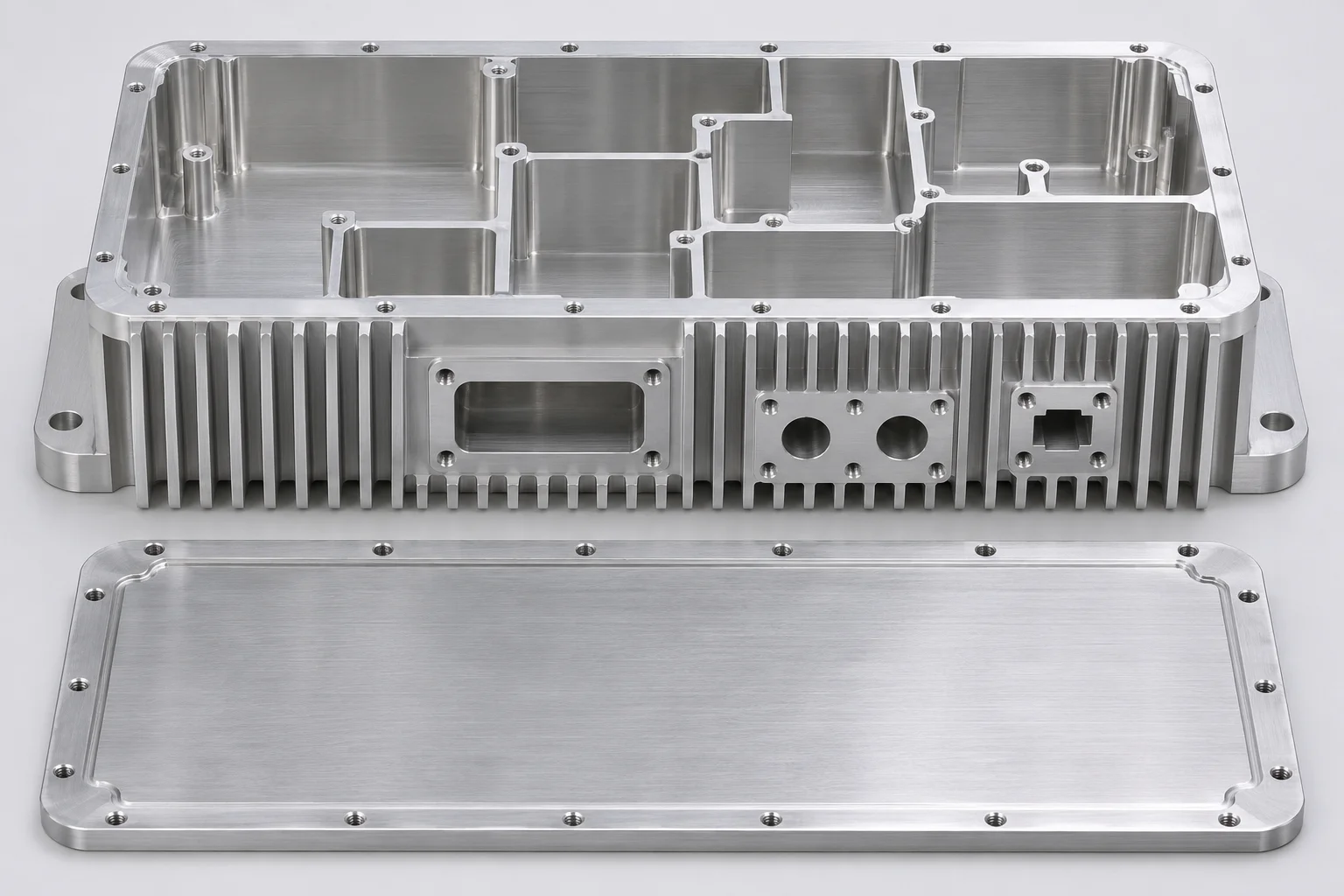
House communication assemblies and accommodate shielding interfaces.
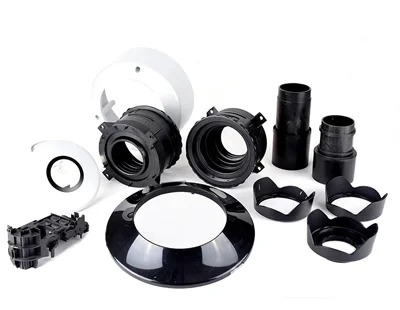
Provide insulation, lightweight structure and internal retention.
A single device brings together cosmetic housing, 熱の, PCB, コネクタ, structural and sealing requirements.
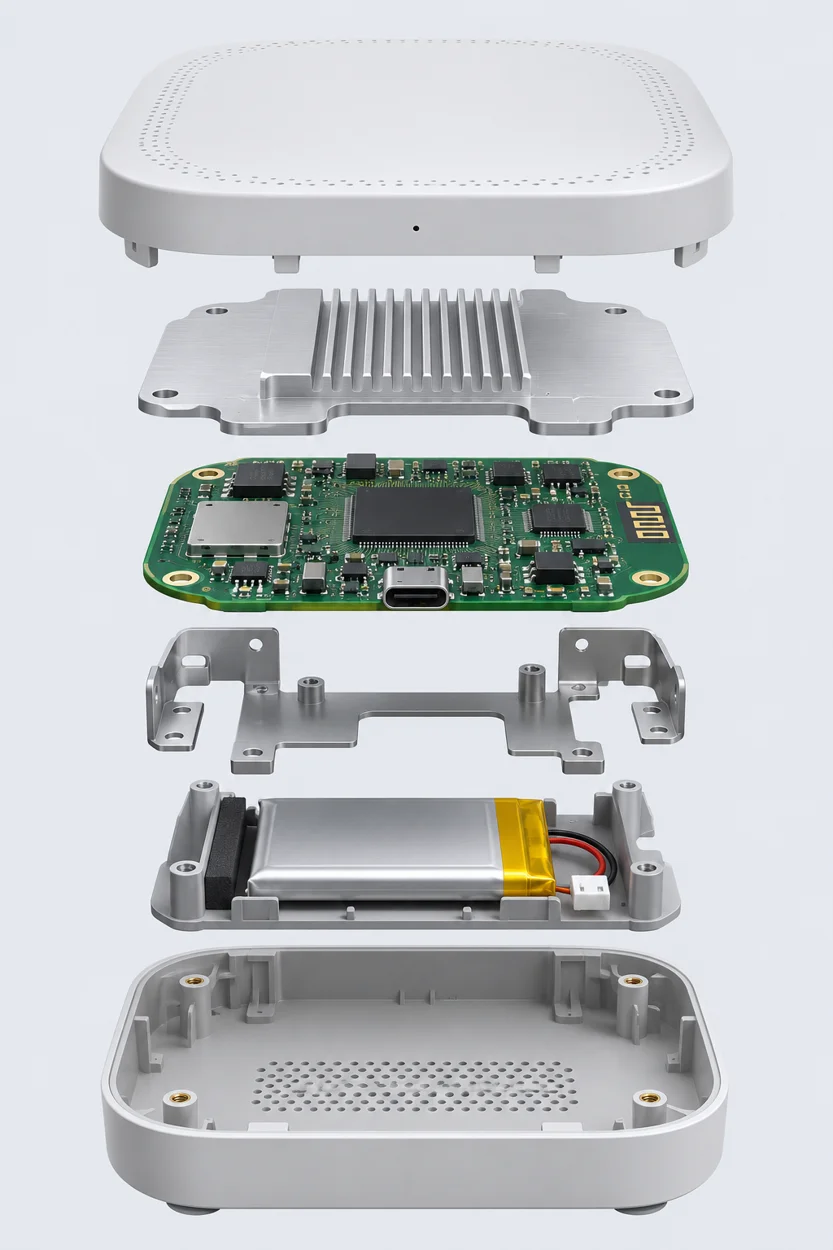
Confirm cosmetic surfaces, anodizing consistency, thin walls and connector openings. Evaluate CNC or die casting.
Define boss locations, スレッド, flatness and the datum scheme.
Specify contact flatness, heat-transfer area and aluminum or copper.
Coordinate port position, cutout accuracy and assembly clearance.
Balance assembly repeatability, low weight and compact packaging.
Define sealing, snap or screw fit and matching cosmetic surfaces. Evaluate CNC or molding.
Identify the features that drive machining, finishing and inspection before locking a production route.
Deep pockets can release stress in thin aluminum walls. TOPS approach — plan roughing, 仕上げ, workholding and dimensional verification together.
ボス, USB ports, antenna openings and display windows share assembly references. TOPS approach — use functional datums and inspect critical positions.
Visible areas may call for matching blast texture, brush direction or anodized appearance. TOPS approach — mark A-surfaces and agree on handling and finish criteria.
The housing or heat sink can form part of the thermal path. TOPS approach — review contact surfaces, 平坦さ, material and fin geometry.
Packaging leaves little room for misalignment or tool access. TOPS approach — evaluate multi-axis machining for complex pockets and interfaces.
The best route can change with quantity. TOPS approach — prototype with CNC where appropriate and evaluate die casting or molding before tooling.
Use geometry, 材料, ツール投資, cosmetic requirements and volume to select a route. Three stars indicate a strong starting point. Confirm suitability against your drawings.
| 要件 | CNC加工 | ダイカスト | 板金 | 射出成形 |
|---|---|---|---|---|
| Prototype housing | ★★★ | ★ | ★★ | ★ |
| Premium aluminum enclosure | ★★★ | ★★ | ★ | — |
| Deep internal pocket | ★★★ | ★★ | — | ★★ |
| High-volume aluminum housing | ★★ | ★★★ | ★★ | — |
| シャーシ / internal frame | ★★ | — | ★★★ | — |
| Plastic enclosure | ★ | — | — | ★★★ |
| Frequent design changes | ★★★ | ★ | ★★★ | ★ |
| Cosmetic metal exterior | ★★★ | ★★★ | ★★ | — |
| High-volume plastic part | — | — | — | ★★★ |
Map every functional or cosmetic feature to its machining and inspection requirements.
12345678Methods include 3-axis milling, 4-軸加工, 5-軸加工, CNC turning and EDM where appropriate. Explore CNC machining services.
The enclosure controls the relationship between PCBs, コネクタ, 電池, ディスプレイ, seals and external interfaces. It also defines the visible and tactile surfaces.
| 特徴 | なぜそれが重要なのか | Manufacturing consideration |
|---|---|---|
| PCB bosses | PCB positioning | Hole position and thread depth |
| コネクタ開口部 | External alignment | Datum relationship |
| Deep pockets | Component clearance | Tool access and distortion |
| 薄い壁 | 軽量化 | Stability during machining |
| Lid interface | 組み立て時のフィット感 | 平面度 |
| Gasket groove | シーリング | Consistent width and depth |
| Display opening | Cosmetic alignment | Position and edge quality |
| Exterior surface | Product appearance | Scratch and finish control |
ヒートシンク, thermal plates, finned housings, copper spreaders and power-module mounting plates form the mechanical side of the heat path.
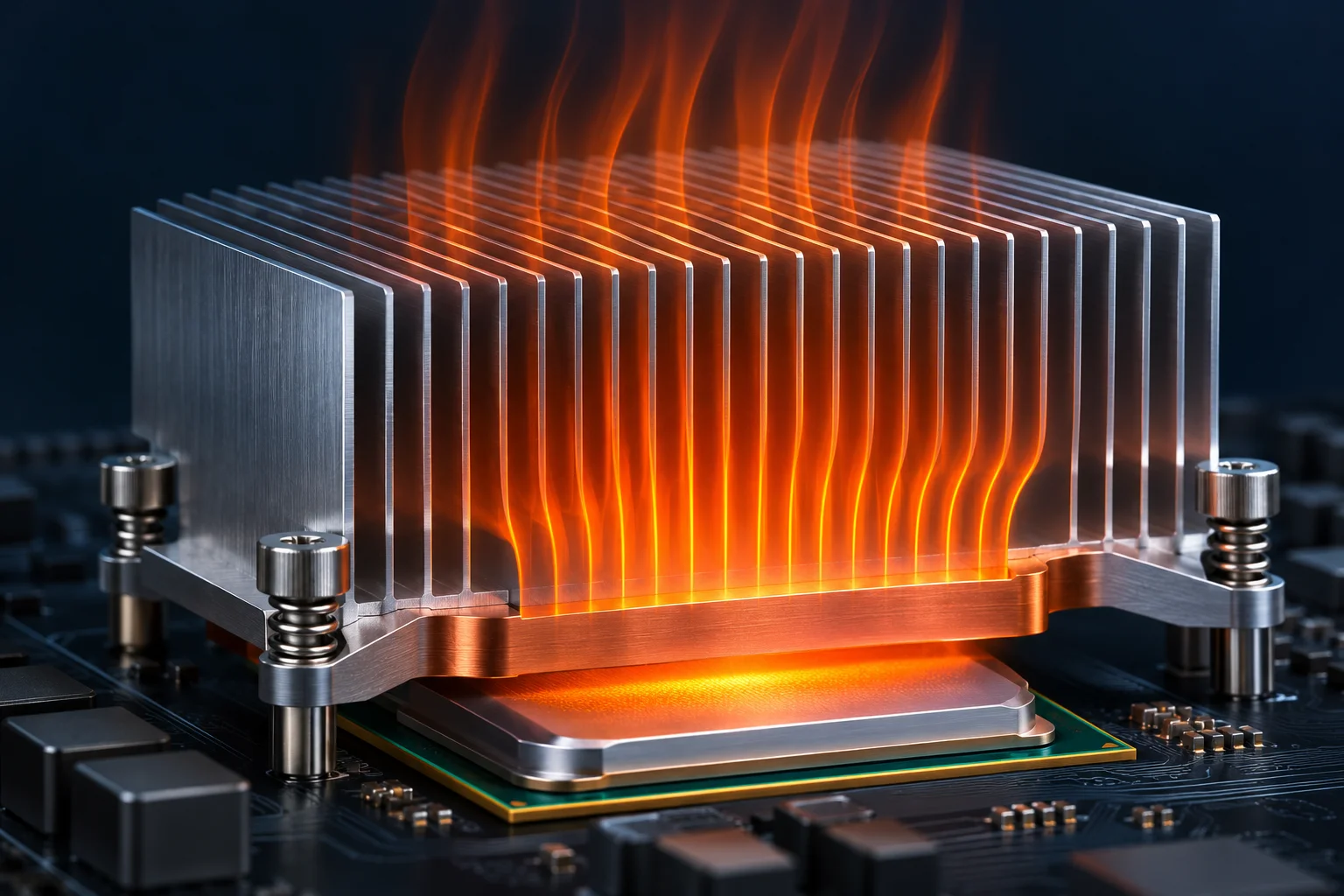
軽量, thermally conductive, machinable and suitable for anodizing.
Higher thermal conductivity makes copper useful for localized heat spreading.
Choose materials around the part’s primary job, then confirm alloy or resin grade, 気性, process and finish.
| Design priority | Material options | Typical electronics uses |
|---|---|---|
| 軽量 + 化粧品 | アルミニウム 6061 / 6063 / 7075 | ハウジング, フレーム, bezels and heat sinks |
| 熱伝導率 | アルミニウム / 銅 | ヒートシンク, spreaders and cold plates |
| 構造強度 | ステンレス鋼 | ブラケット, internal structures and hardware |
| 電気伝導率 | 銅 / 真鍮 | Conductive mechanical parts and electrical interfaces |
| 絶縁 | ピーク / POM / パソコン / ナイロン / PTFE | 絶縁体, サポートします, guides and nonconductive structures |
Specify the finish together with cosmetic zones, マスキング, color references and acceptance criteria.
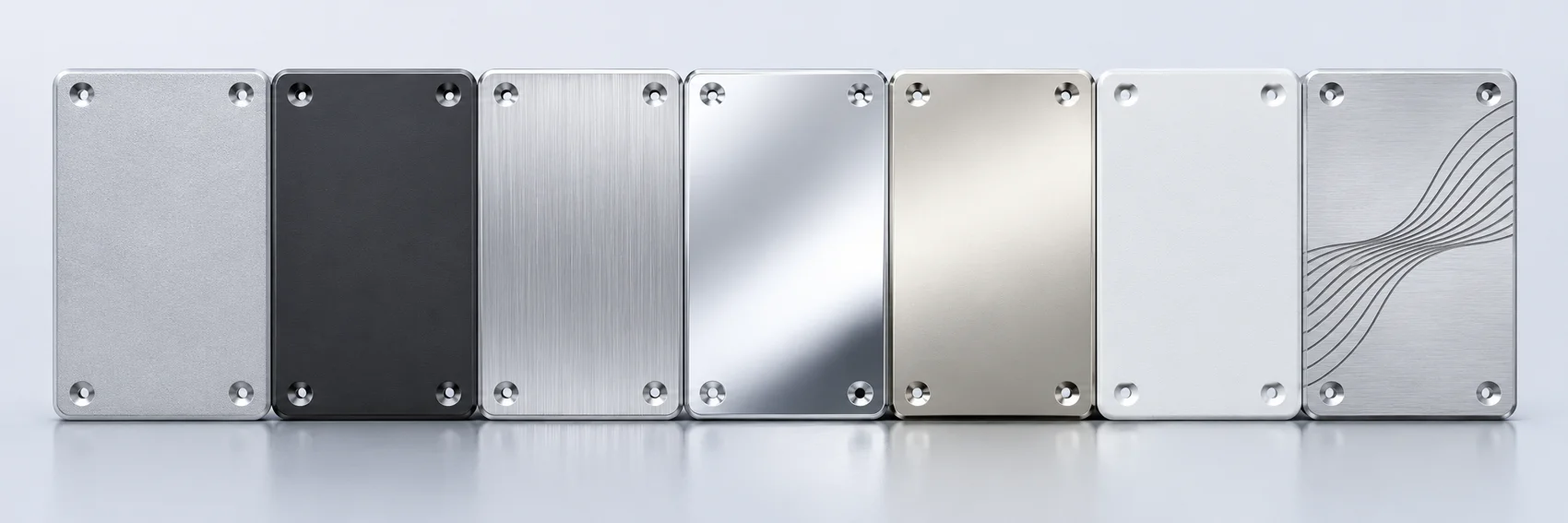
Consistent matte aluminum appearance.
Improved surface hardness and wear resistance.
Directional premium metal appearance.
Reflective decorative hardware.
Suitable corrosion and wear applications.
Larger chassis and fabricated enclosures.
ロゴ, シリアル番号, symbols and product IDs.
Specify critical dimensions, 日付, フィット, threads and finish at the interfaces that drive assembly.
Standoff position, board clearance and thread geometry.
Opening position, connector exposure and mounting alignment.
Opening dimensions and flush alignment.
平面度, screw locations and sealing.
平面度, contact area and surface condition.
Mechanical components support product families from smart-home controllers to handheld devices.

カメラ, センサー, gateways and controllers use housings, brackets and heat sinks.
Watches, monitoring products and smart accessories use compact frames, cases and buttons.
Headphones, microphones, speakers and amplifiers use housings, knobs and chassis.
ルーター, gateways and RF devices use enclosures, RF housings and heat sinks.
Docking stations, storage devices and peripheral products use tailored chassis and covers.
ヘッドセット, controllers and mounts use compact mechanical structures.
Handheld and personal-care electronics use housings and internal supports.
Use validation stages to settle fit, appearance and repeatability before volume production.
ジオメトリを確認してください, internal packaging, PCB fit and the thermal concept.
Verify final materials, 化粧品, assembly and environmental requirements.
Confirm repeatability, cosmetic consistency and process controls.
Select CNC, ダイカスト, molding or sheet metal based on the approved design and volume.
Define dimensional, material and cosmetic acceptance independently so inspection checks the features that matter.
限界寸法, 穴の位置, 平坦さ, fits and threads. Select CMM, 光学測定, micrometers or gauges to suit the feature.
Check alloy or resin, incoming material and documentation. XRF can support appropriate metal identification.
Check scratches, dents, blast consistency, anodizing appearance and coating defects against agreed criteria.
IQC → FAI → IPQC → OQC
See how machining, 鋳造, molding and inspection support the mechanical side of electronics programs.
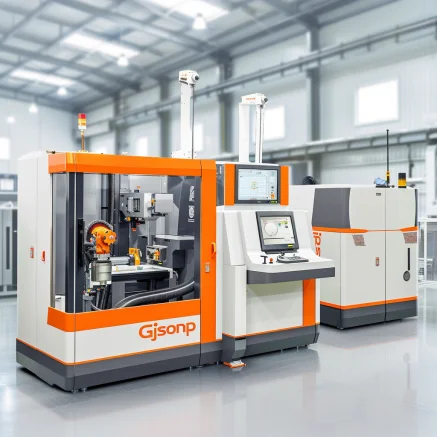

Multi-axis machining for complex enclosures, pockets and precision interfaces.
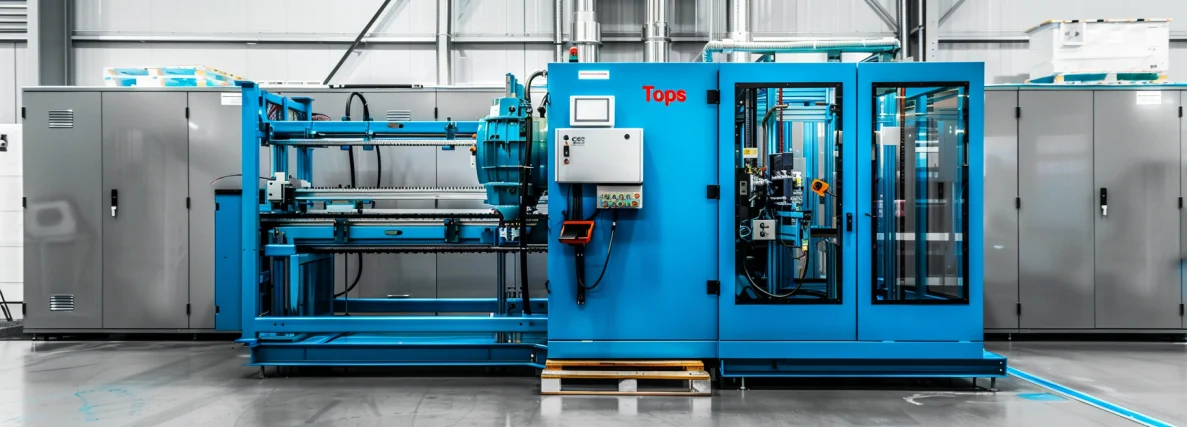
Tooling and casting options for recurring aluminum and zinc parts.
Injection molding for production plastic housings and internal parts.
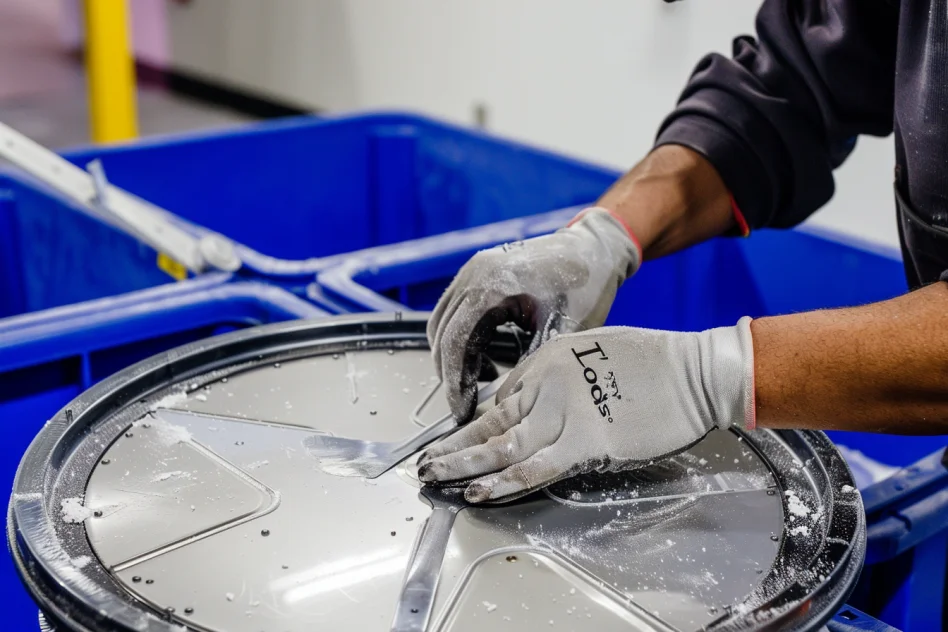
Dimensional and material verification before shipment.
10+ years of experience · 10,000+ custom parts produced · ISO 9001:2015 · 100+ metal and plastic materials · Prototype to production
These engineering scenarios illustrate how route, finish and inspection decisions fit together.
Illustrative specification — 6061-T6, 5-軸CNC, bead blast and anodizing. Define deep pockets, PCB mounts, connector openings and the exterior finish. Use fixturing and machining order to protect thin walls. Verify critical interfaces and agree on cosmetic handling.
Illustrative specification — Aluminum housing with integrated fins and a thermal contact surface. Review cutter access, fin geometry and heat path. Specify flatness and coating on the thermal interface.
Illustrative specification — Die casting, secondary CNC, finishing and inspection. Review draft before tooling. Flag the sealing face, mounting holes and connector positions for secondary machining or verification.
Use this checklist to give the quoting team the details that affect tooling, 機械加工, finishing and inspection.
□ Identify critical dimensions
□ Identify cosmetic A-surfaces
□ Define PCB and connector datums
□ Check tool access
□ Specify exact grade
□ Define temper or condition
□ Apply tight tolerances to functional features
□ Define flatness at thermal contacts
□ Specify anodizing or coating
□ Define masking areas
□ Confirm color requirements
□ Identify critical characteristics
□ Specify FAI or inspection report requirements
□ Prototype quantity
□ Pilot quantity
□ Estimated annual demand
はい. TOPS provides milling and multi-axis CNC machining for custom aluminum housings, エンクロージャ, heat sinks and frames made to customer drawings.
はい. TOPS offers CNC machining, ダイカスト, 板金加工およびプラスチック射出成形.
はい. TOPS supports rapid prototypes, low-volume lots and larger repeat orders.
Inspection can include incoming material checks, first articles, in-process measurement and final checks using CMM or optical equipment where appropriate.
TOPS manufactures custom enclosures, ヒートシンク, シャーシ, 括弧, sensor housings and other precision parts. Send assembly context when a part supports a PCB, connector or display. That context clarifies the functional datums, keep-out areas and cosmetic zones your team needs checked.
はい. TOPS provides CNC machining for aluminum enclosures with pockets, 上司, 穴, connector ports and other detailed features. Share drawings and a model so the team can review tooling access and wall stability. Mark surfaces that need a specific appearance or handling procedure.
6061 is a common starting point for machined housings. 考慮する 6063 for suitable extruded designs and 7075 where strength requirements justify it. Choose based on load, 仕上げる, thermal needs and the intended route. Confirm the exact alloy and temper on your drawing.
はい. Suitable parts include heat sinks, thermal plates, power module mounts and heat spreaders. Provide the contact area, expected surface finish and flatness requirements. Fin spacing and geometry should be reviewed for tool access and the intended dissipation design.
はい. Die casting can suit repeat aluminum or zinc housings. The review should cover draft, 壁の厚さ, ツーリング, sealing faces and the features that need secondary CNC machining. Share annual demand and program life before selecting a production route.
TOPS lists ±0.005 mm CNC capability for suitable features. Feasibility depends on geometry, フィーチャーサイズ, 材料, fixturing and inspection method. Apply tight tolerances to functional features and specify how to measure them. Confirm each critical dimension during quotation.
Identify visible A-surfaces, approved finish, color targets, grain direction and packaging requirements on the drawing. Agree on acceptance criteria for scratches, handling marks and finish variation. A reference sample can help align inspection for visible surfaces.
はい. TOPS supports CNC-machined metal and engineering plastics, die-cast metal, fabricated sheet metal and molded plastics. If materials meet in one assembly, share the intended fit and operating conditions so the review can consider their combined dimensional and functional requirements.
はい. Provide PCB mounting datums, standoff positions, connector cutouts, opening tolerances and mating part references. An assembly model helps explain which features must align. Agree on inspection criteria when port or connector position is critical.
はい. CNC machining can support early fit and assembly validation before tooling. Prototype findings can inform a DVT or pilot build. When the design is stable, review die casting, molding or sheet-metal options based on geometry, cosmetic demands and repeat volume.
Options include bead blasting, Type II anodizing, 硬質陽極酸化処理, brushing and polishing for suitable designs. Powder coating and other finishes may suit specific parts. Confirm alloy, 色, target appearance and masking areas at quotation.
Send a 3D CAD file and 2D drawing with material, 仕上げる, 量, tolerance and inspection notes. Mark visible surfaces, functional datums and thermal contact areas. Add prototype and annual quantities, delivery country and documentation needs for the quoting team.
Send your 3D CAD model and 2D drawing together with material, 量, 重要な寸法, 化粧品の要件, surface finish and estimated annual demand. We can review the manufacturing route and identify key DFM considerations before quotation.