
ブログ

ブログ射出成形用の成形ねじを設計するための包括的なガイド

射出成形用の成形ねじを設計するための包括的なガイド

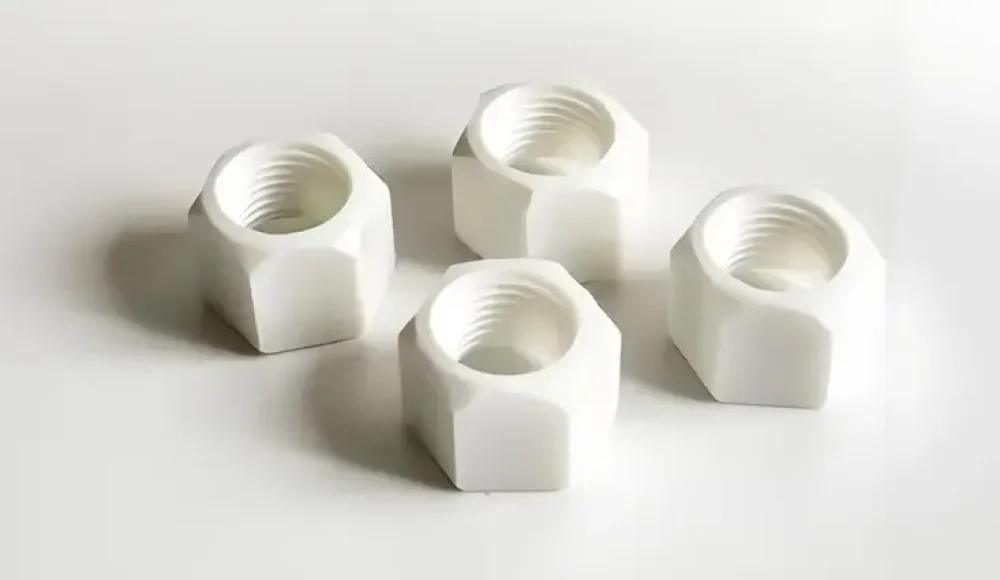
Molded-In Threads

Molded-in threads are fundamental features across countless products, from consumer goods and precision instruments to robust industrial enclosures. While highly desirable for creating secure, repeatable connections, integrating threads directly into a plastic injection mold presents unique challenges. Successful molded threads require careful consideration of material properties, mechanical forces, and complex tooling, often deviating significantly from standard injection molding practices.

The goal of this guide is to provide an in-depth analysis of the technical, 機械的, and tooling requirements necessary to successfully incorporate molded threads into your plastic parts.

Key Forces Relevant to Thread Design

When designing a screw thread, two opposing mechanical forces must be maximized or minimized to ensure functional integrity and prevent failure during use.

あ. Pull-Out Force (Axial Strength)

意味: The linear force required to separate the fastener (screw) from the molded part without turning それ. This measures the thread’s resistance to stripping under direct axial load.

Design Goal: The pull-out force must be as high as possible. The plastic thread walls must be strong enough to withstand the maximum expected tensile load without failing before the fastener is unscrewed. This force is dictated by the thread geometry, the contact area, and the material’s shear strength.

B. Torque-Out Force (Rotational Resistance)

意味: The rotational torque required to remove a screw once it has been fully tightened or “seated.”

Design Goal: This force should be as low as possible to allow easy, repeatable assembly and disassembly. しかし, it must be high enough to maintain the clamping load and prevent vibrational loosening. 実際に, the torque-out force should be easily overcome by hand tools but sufficient to withstand operational stresses. The designer seeks a balance where optimal pre-load is achieved (maximizing pull-out) with minimal removal effort (minimizing torque-out).

Injection Molding Thread Types and Tooling Requirements

Injection Molding Thread Types

Injection Molding Thread Types

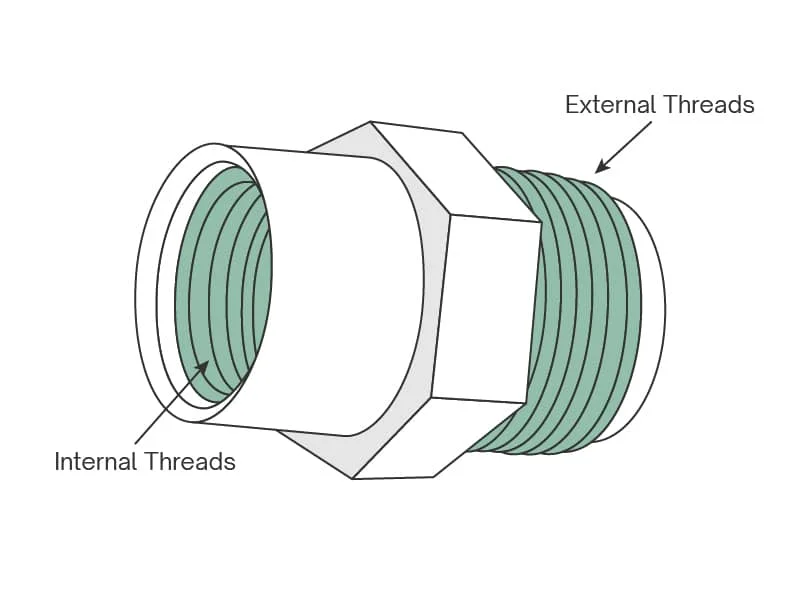
The choice between external and internal threads fundamentally determines the mold’s complexity and cost due to the challenge of demolding undercuts.

あ. External Threads (Easiest Method)

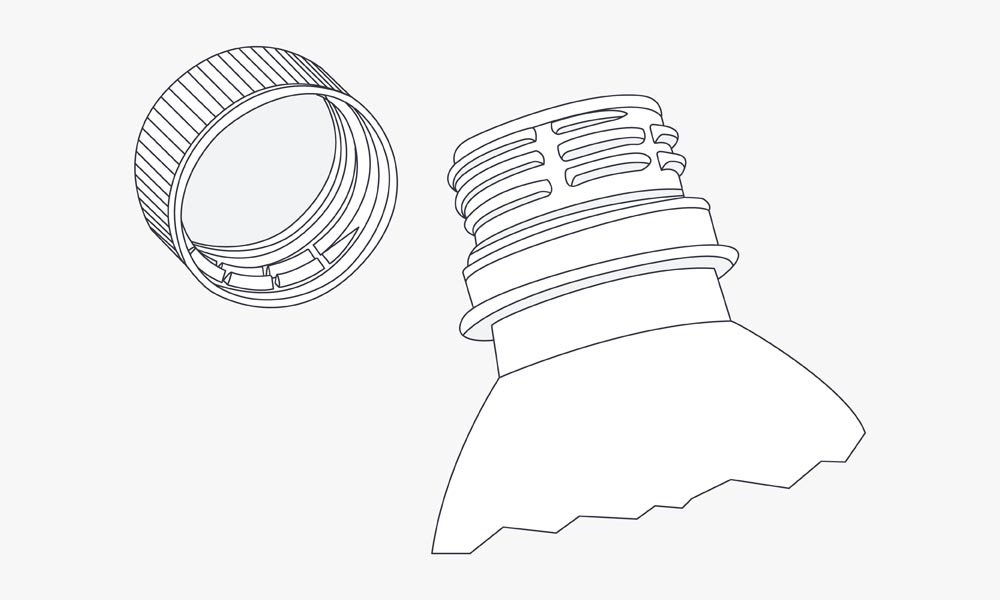
Design Difficulty: Relatively Easy. The external threads (like on a bottle cap) form around the circumference of the part.

方法: The thread form is created directly by the geometry of the mold—the thread’s valley is formed by the cavity wall, and the thread’s peak is formed by the コア wall. No movement is strictly necessary for demolding the threads themselves.

Drawback: 別れの行: Because the thread spans the mold’s parting line, a visible and tactile パーティングライン will run along the axis of the thread. While experienced molders can reduce the flash, the line remains a permanent feature, potentially affecting sealing or precise engagement.

B. Internal Threads (Complex Undercut Method)

Design Difficulty: Significantly more difficult. Internal threads represent an undercut that locks the part onto the core pin, requiring specialized demolding mechanisms.

Primary Automatic Method: Unwinding Core / Unwinder:

Mechanism: An additional motorized or hydraulically actuated mechanism is added to the mold base. これ unwinding core (or unscrewing mechanism) rotates the core pin out of the finished part before ejection.

Advantage: No parting lines on the threads, ensuring 360-degree perfect thread quality. Short cycle times.

Disadvantage: Dramatically increases mold cost, 複雑, メンテナンス, and setup time.

Secondary Manual Method: Manual Hand Load:

応用: Best suited for very low-volume production or extremely large threads where automation is impractical.

プロセス: A dedicated threaded core pin is manually placed into the mold before each cycle. 注射後, the finished part is ejected with the core pin still inside. An operator then uses a handheld tool to manually unscrew the core from the part.

Disadvantage: 必要 multiple core pins to allow time for the metal core to cool down before reinsertion. Leads to very slow cycle times and high labor costs.

Thread Release Methods for Finished Parts

Thread Release Methods for Finished Parts

Thread Release Methods for Finished Parts

Choosing the right release method balances tooling cost, サイクル時間, and thread complexity.

あ. Force Release (Stripping) – Rarely Used

Mechanism: The mold opens, and the ejector pins push the part off the threaded core pin. The threads are stretched and stripped over the core pin.

Applicability: Only viable for small threads (例えば, fine pitch on flexible bottle caps) with materials having high elongation properties (like PE or PP).

Critical Design Preconditions:

Thread profile must incorporate significant ドラフト角度 (テーパー) and generous radii (丸み) at the thread root and crest.

Wall thickness must be 一貫性のある and relatively thin to allow the plastic to flex without cracking during stripping.

B. Manual Insert (Pull-Out) – Sometimes Used

Mechanism: (See Section II.B, Hand Load Method) Relies on operator labor to remove the core pins after the cycle.

Trade-off: Low initial tooling cost but the highest operational cost (労働) and longest cycle time. The labor cost makes it inefficient for anything but prototyping or very limited runs.

C. Fully Automatic Unwinding – Most Common

Mechanism: (See Section II.B, Unwinding Core) Uses a dedicated motor (hydraulic or electric servo) synchronized with the machine’s opening sequence to mechanically spin the thread cores out of the part.

利点: Provides the shortest cycle times and highest throughput, necessary for high-volume consumer parts.

考慮事項: The complexity and precision of the moving components (歯車, racks, モーター) significantly increase the upfront investment. Maintenance and mold repair are also specialized and more expensive.

Critical Design Factors and Best Practices

Attention to material mechanics and geometry is essential for thread durability.

あ. Thread Size and Pitch

The Plastic Thread Rule: Plastic materials have significantly lower shear strength than metals.

おすすめ: Internal threads should be kept at least 0.3 インチ (約. 7.6 んん) in diameter. The larger diameter increases the contact area for the shear forces.

Pitch Selection: Use the coarsest pitch possible (fewer threads per inch/mm). A coarser pitch means the load is distributed over thicker, stronger thread roots, reducing the likelihood of stripping.

B. アンダーカット

Threads are a helical undercut, locking the part to the mold.

Elimination via Side-Actions: For external or side-wall threads that cannot be rotationally demolded, designers may use cam-activated side-actions or slides. These retract a portion of the mold perpendicular to the opening direction to clear the undercut.

Trade-off: 効果的です, side-actions dramatically increase initial tooling cost and complexity and introduce additional parting lines where the side-action meets the main mold body.

C. 材料の選択

Material flexibility, 靭性, and chemical resistance are paramount.

Preferred Materials for Internal Threads (耐久性):

ABS (アクリロニトリル ブタジエン スチレン): Good balance of rigidity and impact resistance.

POM (ポリオキシメチレン, or Delrin): 優れた強さ, 剛性, そして低摩擦 (ideal for repeated assembly/disassembly).

ナイロン (ポリアミド): High toughness and resistance to wear, making it excellent for load-bearing threads.

External Threads: Material choice is less critical as the surrounding mold cavity provides uniform support.

D. General Molding Best Practices

The success of threads depends on adhering to fundamental injection molding principles:

抜き勾配角度: Essential on all walls for demolding; often incorporated into the thread geometry itself for force-release methods.

Consistent Wall Thickness: Critical to ensure uniform cooling, minimize warping, and prevent stress concentrations around the thread feature.

Radius Design: Always use a radius at corners (root and crest of the thread) instead of sharp corners, as sharp corners are highly prone to crack initiation and stress failure in plastic.

Cost-Effective Alternatives to Molded Threads

When molded threads prove too costly or complex, consider these robust alternatives:

Machining Threads in a Secondary Operation: The part is molded without the thread, and a dedicated machine (like a CNC router or lathe) cuts the thread after the part has cooled. This adds a processing step but simplifies the mold.

Self-Tapping Screws: The use of metal screws designed to cut or form their own thread as they are driven into an undersized, unthreaded molded hole. This is cheap and effective but not suitable for repeated disassembly.

Overmolded Thread Insert (Heat-Set or Ultrasonic): Pre-manufactured metal inserts (ナッツ) are placed into the mold, or are installed after molding using heat or ultrasonic welding. This provides the strength of a metal thread within the plastic component, offering excellent pull-out resistance and durability for frequent assembly.

結論

Molded-in threads are a high-value feature, but their integration demands a nuanced understanding of plastic behavior under stress and the operational dynamics of complex tooling. By carefully optimizing thread geometry, selecting appropriate materials like ABS or POM, and choosing the correct release mechanism (often full automation for high volume), designers can overcome the inherent challenges. 疑わしいとき, consulting with a highly experienced plastic injection molder is the necessary step to balance thread integrity, サイクル時間, and tooling cost effectively. お問い合わせ 詳細については.

読み込み中

プラスチック射出成形のアウトソーシング
前の投稿

5 プラスチック射出成形を外注するメリット

次の投稿

8 製造性を考慮したプラスチック部品設計の重要な要素 (DFM)

製造性を考慮したプラスチック部品の設計

返信を残す

あなたのメールアドレスが公開されることはありません. 必須フィールドは、マークされています *

Let's Start A New Project Today

今すぐお問い合わせを送信してください

    入力を開始すると、探している投稿が表示されます.