



تنتج الآلات المصغرة أجزاء دقيقة جدًا ذات دقة أبعاد دقيقة. ويستخدم عمليات قطع مصغرة على المكونات التي يمكن أن تكون أصغر من العملة المعدنية. يغطي هذا الدليل الأساليب, مواد, التسامح, التطبيقات, وقواعد التصميم للمكونات المصغرة.
ما هي الآلات المصغرة?
Miniature machining is the precision removal of material to produce small parts with controlled dimensions and fine features.
It is not simply running a normal machine faster. Tool size, صلابة الآلة, اهتزاز, إزالة الرقائق, and inspection all behave differently at small scale. At very small cutting depths, the cutting edge radius becomes significant relative to chip thickness. Instead of shearing material cleanly, the tool may rub or plough, increasing heat, بيرز, وقوات القطع.
Parts are usually measured in millimeters, and some precision features are measured in micrometers.
ما مدى صغر الأجزاء المصنعة آليًا؟?
There is no universally accepted dimensional boundary between small-part machining, miniature machining, and micromachining. في الممارسة العملية, miniature machining refers to small components or features where conventional tooling, عقد العمل, chip control, and inspection become more difficult because of scale.
| شرط | Practical Meaning | مثال |
| Small-part machining | Small components made with conventional precision machining | الموصلات, التجهيزات, علب أجهزة الاستشعار |
| تصنيع الآلات المصغرة | Small parts or fine features needing specialized tooling and handling | دبابيس, miniature gears, المكونات الطبية |
| Micromachining | Very small features needing micro-scale tools or processes | Micro holes, القنوات, micro pins |
Confirm the practical limit with your machinist for your specific feature.
الآلات المصغرة مقابل الآلات الدقيقة
Miniature machining describes the manufacture of very small parts. Micromachining usually focuses on extremely small features, أدوات, or process dimensions. The terms overlap, and there is no single industry-wide boundary.
| عامل | الآلات المصغرة | Micromachining |
| Main focus | Small components | Extremely small features |
| Typical tooling | Small conventional cutting tools | Micro end mills, التدريبات, موسيقى الرقص الإلكترونية, الليزر |
| Main challenge | التعامل, صلابة, بيرز | Tool fragility, scale effects, تقتيش |
| Typical applications | دبابيس, التجهيزات, مسامير, المكونات الطبية | Microfluidics, micro holes, MEMS-related features |
ما هي الطرق المستخدمة في الآلات المصغرة?
Each method suits a different shape and production need.
| طريقة | الأفضل ل | نقاط القوة | Limits |
| الطحن باستخدام الحاسب الآلي | Small prismatic parts, فتحات, جيوب | Flexible geometry, fine features | الأدوات الصغيرة هشة |
| تحول باستخدام الحاسب الآلي | أجزاء أسطوانية صغيرة | سريع, دائري, متراكز | الأشكال الدورانية فقط |
| تحول من النوع السويسري | أجزاء صغيرة نحيلة طويلة | تحكم قوي في الطول إلى القطر | الأنسب للهندسة التي تغذيها القضبان |
| مايكرو إي دي إم / سلك التنظيم الإداري | المواد الصلبة, التفاصيل الدقيقة | لا قوة القطع, ميزات صغيرة | أبطأ, المواد الموصلة فقط |
| طحن | صلابة, ينهي, التسامح الشديد | حجم الدقة والانتهاء | الهندسة محدودة |
ينتج الحفر باستخدام الحاسب الآلي والحفر الدقيق ثقوبًا صغيرة لممرات السوائل, الموصلات, المكونات الطبية, والتجمعات الدقيقة. كما يتناقص قطر الثقب, نفاذ الأداة, نسبة الارتفاع, إخلاء الرقائق, ويصبح كسر الحفر أكثر أهمية.
غالبًا ما تتطلب الأدوات ذات القطر الصغير سرعات دوران عالية للحفاظ على سرعة سطح مناسبة. السرعة وحدها لا تحل المشكلة. نفاذ المغزل, توازن, حيازة الأدوات, تغذية لكل سن, ويظل استقرار الماكينة أمرًا بالغ الأهمية.
للأجزاء الأسطوانية والمسمارية الصغيرة, انظر دليلنا على التصنيع باستخدام الحاسب الآلي السويسرية المسمار. للعمل العام بأجزاء صغيرة, نحن نستخدم الطحن باستخدام الحاسب الآلي و تحول باستخدام الحاسب الآلي.
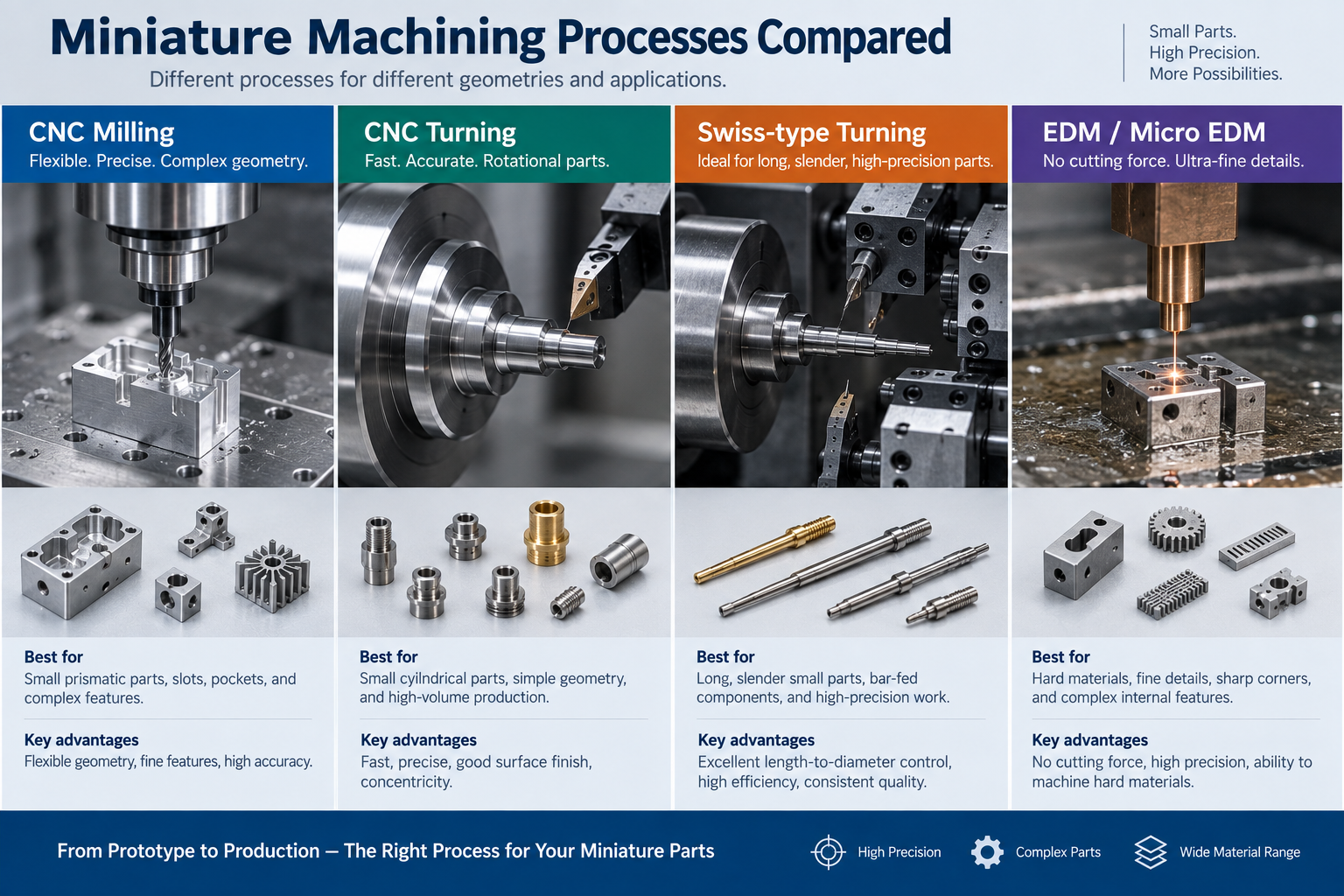
الطحن باستخدام الحاسب الآلي مقابل الخراطة السويسرية للأجزاء المصغرة
استخدم الدوران السويسري عندما يكون الجزء أسطوانيًا في المقام الأول, long relative to its diameter, produced from bar stock, needed in medium or high quantities, or concentric and thread-heavy.
Use CNC milling when the part needs pockets, flats, off-axis holes, prismatic geometry, complex surfaces, or multi-face machining.
Define the geometry first. That decision usually points to one process.
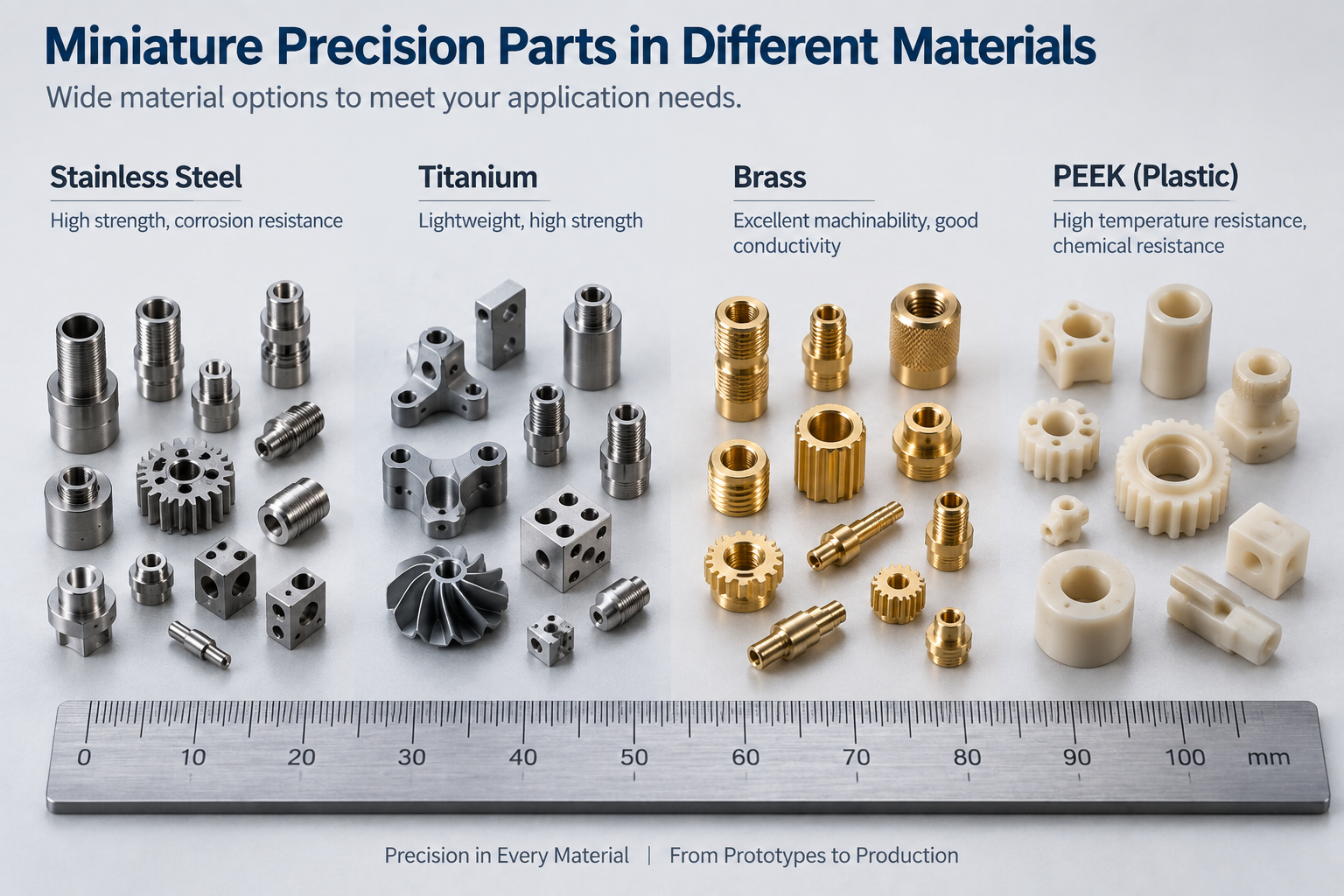
ما هي المواد المستخدمة للأجزاء المصغرة?
Miniature machining works on metals and plastics, but material behavior matters more at small scale.
- الفولاذ المقاوم للصدأ: 303 for machinability; 316L and 17-4 PH for corrosion and strength.
- سبائك التيتانيوم: used for high-strength, lightweight medical and aerospace components. Implant applications require specified medical-grade material, الوثائق, and validated controls.
- النحاس والنحاس: conductive and free-machining, good for connectors.
- الألومنيوم: light and fast to machine.
- البلاستيك الهندسي: نظرة خاطفة, ديلرين (أسيتال), وPTFE للعزل, احتكاك, والمقاومة الكيميائية.
- Specialty alloys: may be machined where strength, درجة حرارة, تآكل, or application requirements justify the added difficulty. Confirm the alloy with our team.
Choose material by function and machinability, not only by cost. Small parts are sensitive to material defects and burrs. يرى مواد التصنيع باستخدام الحاسب الآلي for comparisons.
ما هي التفاوتات التي يمكن أن تحققها الآلات المصغرة؟?
Miniature parts often require tolerances measured in hundredths or thousandths of a millimeter, depending on the feature and application.
On suitable geometries, precision CNC machining may hold around ±0.01 mm. Selected critical dimensions may reach approximately ±0.005 mm when machine capability, مادة, يثبت, and inspection allow. Tolerances are design-dependent, so specify them only on functional surfaces.
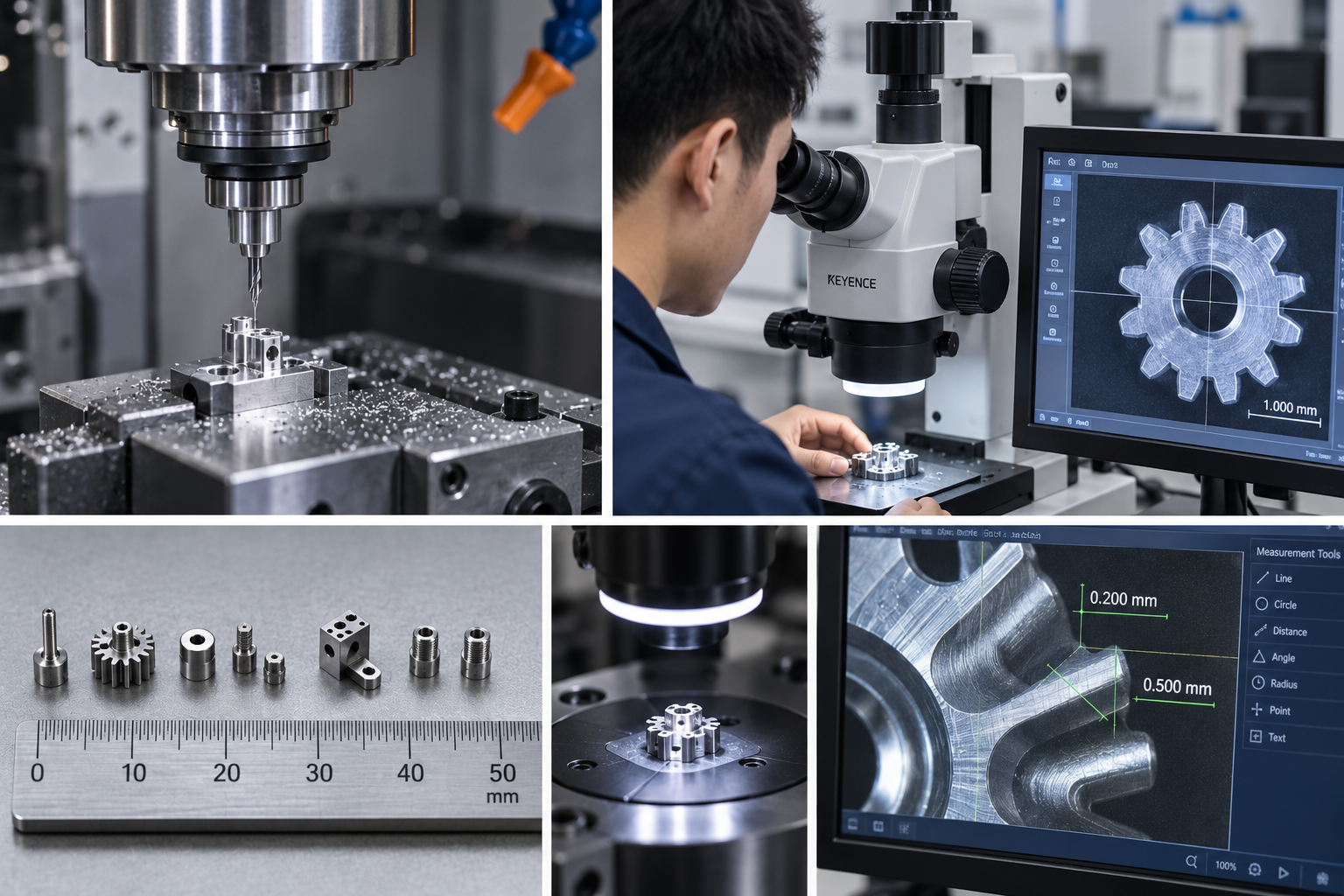
كيف يتم فحص الأجزاء المصغرة?
Inspection strategy changes at small scale.
- Optical and vision measurement suit small, delicate features.
- Fine-stylus CMM can measure accessible critical dimensions. Vision or optical measurement may be preferable for very small or delicate features.
- Optical comparators and toolmaker microscopes check burrs and edge condition.
- Surface roughness testers verify finish where required.
As tolerances tighten, measurement uncertainty must stay small relative to the tolerance being verified. خلاف ذلك, the result may not reliably show conformity.
كيف يتم الاحتفاظ بالأجزاء المصغرة أثناء التصنيع?
Workholding must secure the part without distorting or damaging it.
- Precision collets suit round parts.
- Soft jaws and custom fixtures protect delicate features.
- Guide bushings support bar work in Swiss machines.
- Adhesive or sacrificial fixtures hold very thin parts.
- Parts may be machined from larger stock and separated at the end.
Fixture design must also provide tool access and a stable datum for inspection.
ما هي التحديات الرئيسية في الآلات المصغرة?
Small parts amplify problems that are easy to ignore at full scale.
- Tool deflection and breakage rise as tool size drops.
- نفاد الأداة يهم أكثر: يمكن أن تصبح بضعة ميكرومترات من الجريان كبيرة عندما يكون قطر القاطع وحمل الرقاقة صغيرًا جدًا, مما تسبب في قطع غير متساو, نهاية سيئة, أو الكسر.
- نتوءات مهمة أكثر: يمكن للنتوء الذي قد يكون غير مهم في جزء كبير منه أن يتداخل مع الثقب, وجه الختم, الاتصال الكهربائي, أو واجهة التجميع.
- إخلاء الرقاقة أمر صعب في العمق, ميزات صغيرة.
- يؤثر اهتزاز الماكينة والنمو الحراري على الدقة.
- من السهل أن تفقد الأجزاء, يلوي, أو تلف. تغليف صينية, التنظيف الخاضع للرقابة, وقد يصبح فصل الأجزاء جزءًا من العملية.
- يقتصر الوصول إلى التفتيش على الأشكال الهندسية الصغيرة.
- يجب أن تظل التفاوتات واقعية بالنسبة لحجم الميزة.
خطط لهذه القضايا في وقت مبكر.
تشطيب السطح والتحكم في الحرق
الانتهاء من السطح يعتمد على حجم القاطع, مادة, نفاذ المغزل, يٌطعم, اهتزاز, وحالة الأداة.
قد يكون من الصعب تلميع الميزات الصغيرة أو إزالتها بعد التشغيل الآلي. Specify Ra and cosmetic criteria only where function demands them. Define critical edges and burr limits instead of applying a strict deburring requirement to every edge.
إرشادات تصميم الآلات المصغرة
Follow these rules to keep your miniature part manufacturable.
- Avoid extremely thin walls where stiffness is needed. Minimum wall depends on material and feature size.
- Keep hole depth reasonable relative to hole diameter.
- Avoid extremely deep small-diameter holes where chip evacuation becomes unreliable.
- Use the largest practical internal corner radius.
- Avoid tiny internal radii unless function requires them.
- Limit tight tolerances to functional surfaces.
- Specify burr control on critical edges only.
- Avoid deep pockets that trap chips.
- Add a datum that inspection can reach.
- Specify material grade and finish on the drawing.
Designs that simplify tool access, إخلاء الرقائق, إزالة الأزيز, and inspection are generally easier and more economical to manufacture. For tolerance strategy, انظر دليلنا على التحمل التصنيع باستخدام الحاسب الآلي.
أين يتم استخدام الآلات المصغرة?
Miniature machining supports industries where size, دقة, and reliability matter.
- Medical and laboratory components: instrument parts, device components, المساكن, and prototype parts.
- الإلكترونيات والموصلات: محطات, دبابيس, المساكن, and micro connectors.
- Semiconductor and test equipment: دبابيس الدقة, alignment components, تركيبات, and small mechanical parts.
- الطيران والدفاع: small fittings, أجهزة الاستشعار, and actuator parts.
- السيارات: أجهزة الاستشعار, injector components, and small mechanisms.
- الروبوتات والأتمتة: micro gears, مهاوي, والأدوات.
Each application adds its own material and cleanliness requirements. State the intended use in your inquiry.
ما الذي يؤثر على تكلفة التصنيع المصغرة?
A miniature part may use very little material, but small size does not automatically mean low cost.
- وقت الآلة: small parts can still run long cycles with fine tools.
- الأدوات: micro tools are expensive and wear faster.
- التعامل: small parts need careful fixturing, تنظيف, والتعبئة والتغليف.
- تقتيش: fine tolerances need more measurement time.
- Yield risk: fragile tools, أجزاء حساسة, and demanding features can increase scrap or rework risk.
- كمية: setup cost spreads over the batch.
- مادة: medical and specialty grades cost more.
There is no reliable per-part price without a drawing. Send the model and quantity for an accurate quote.
متى تكون الآلات المصغرة ليست أفضل عملية؟?
Machining is not always the best way to make a small part.
| متطلبات | Likely Process |
| Low-volume precision metal | CNC or Swiss machining |
| High-volume small turned part | Swiss or automatic turning |
| Very high-volume stamped geometry | ختم |
| High-volume miniature plastic | Micro injection molding |
| Extremely fine hard-material feature | موسيقى الرقص الإلكترونية |
| Prototype complex micro geometry | CNC, موسيقى الرقص الإلكترونية, or additive depending on feature |
For high-volume plastic micro parts, انظر لدينا micro injection molding service. يقارن التصنيع باستخدام الحاسب الآلي مقابل صب الحقن when deciding.
أسئلة مكررة
What is miniature machining?
It is precision material removal that produces very small parts, typically at millimeter scale, with fine dimensional control.
How small can CNC machining go?
The practical minimum depends on process, cutter diameter, نسبة الارتفاع, مادة, قدرة الآلة, والتفتيش. Very small features may need dedicated micromachining or EDM rather than conventional CNC.
What is the difference between miniature machining and micromachining?
Miniature machining focuses on small components. Micromachining focuses on extremely small features and tools. The terms overlap.
What materials are used for miniature machining?
الفولاذ المقاوم للصدأ, التيتانيوم, نحاس, نحاس, الألومنيوم, and engineering plastics such as PEEK, ديلرين, و بتف.
What tolerances can miniature machining hold?
On suitable features, ±0.01 mm may be practical. Approximately ±0.005 mm may be achievable for selected dimensions. Actual capability depends on size, هندسة, مادة, الأدوات, يثبت, والتفتيش.
Is Swiss turning the same as miniature machining?
لا. Swiss turning is one method. It suits long, مرهف, small-diameter bar-fed parts.
Why are miniature parts expensive?
Fine tooling, معالجة دقيقة, detailed inspection, and yield risk add time. Cost depends on geometry, مادة, والكمية.
احصل على عرض أسعار للمكون المصغر الخاص بك
أرسل نموذجك ثلاثي الأبعاد, 2رسم د, مادة, كمية, and critical-dimension list. سيقوم مهندسونا بمراجعة قابلية التصنيع, flag risk features, and quote machining plus inspection together.
الاتصال بنا للحصول على الاقتباس


