



الأنودة تحول سطح الألومنيوم إلى سطح صلب, طبقة أكسيد مقاومة للتآكل. الأنواع الرئيسية هي حمض الكروميك من النوع الأول, حمض الكبريتيك من النوع الثاني, والنوع الثالث أنودة صلبة. كل منها يعطي سمكًا مختلفًا, صلابة, لون, والتكلفة. يشرح هذا الدليل الأنواع وكيفية الاختيار.
ما هي الأنواع الرئيسية للأنودة?
فئات الأنودة الثلاثة الأكثر شيوعًا هي النوع الأول, النوع الثاني, والنوع الثالث. يحدد MIL-PRF-8625 أيضًا النوع IB, اكتب آي سي, ومتغيرات النوع IIB.
| يكتب | عملية | سمك نموذجي | القوة الرئيسية |
| النوع الأول | حمض الكروميك | تقريبا. 0.5-7.5 واحد | طلاء رفيع, المقاومة للتآكل, التطبيقات الحساسة للتعب |
| النوع الثاني | حمض الكبريتيك | تقريبا. 1.8-25 واحد | هدف عام, قابل للصباغة, حماية التآكل |
| النوع الثالث | أنودة صعبة | عادة حولها 25-75 واحد, يعتمد التطبيق | ارتداء ومقاومة التآكل |
يجب تحديد السُمك الدقيق في الرسم أو مستند الشراء وفقًا للمعايير المعمول بها والمتطلبات الوظيفية.
ما هو النوع الأول من أنودة حمض الكروميك?
النوع الأول من أنودة حمض الكروميك ينتج طبقة أنودية رقيقة, عادة حول 0.5 ل 7.5 ميكرومتر.
يتسبب طلاؤه الرقيق في تغير أبعاد أقل من التشطيبات الأنودية السميكة ويستخدم على نطاق واسع في تطبيقات الفضاء الجوية الحساسة للتعب. اختيار العملية للتجاويف العمياء, المفاصل, أو يجب مراجعة ميزات الحل المحاصر باستخدام المؤكسد.
ما هو النوع الثاني أنودة حمض الكبريتيك?
أنودة حمض الكبريتيك من النوع الثاني هي أكثر أنواع الأنودة شيوعًا.
سمك نموذجي على وشك 1.8 ل 25 ميكرومتر. الطلاء مسامي, يقبل الصبغة, ويعطي مقاومة جيدة للتآكل. يستخدم النوع الثاني للمرفقات, بالوعة الحرارة, إضاءة, والمنتجات الاستهلاكية. يعتبر النوع الأسود II في المشتتات الحرارية أمرًا شائعًا, لكن الطلاء عازل كهربائيا. تأثيره على الانبعاثات الحرارية هو اعتبار منفصل عن التوصيل.
ما هو أنودة الطبقة الصلبة من النوع الثالث?
تنتج الأنودة الصلبة من النوع الثالث طبقة أنوديك الأكثر سمكًا وصلابة.
يتم تحديد النوع الثالث بشكل شائع 25 ل 75 ميكرومتر, مع تقريبا 50 ميكرومتر متطلبات هندسية مشتركة. السمك الفعلي يعتمد على السبائك, طلب, والمواصفات. معطف صلب يناسب الأسطح المنزلقة, الصمامات, بيستونز, والأدوات.
يختلف لون المعطف الصلب الطبيعي من البني الفاتح أو الرمادي إلى البني الداكن أو الأسود, اعتمادا على سبيكة, سمك الطلاء, وظروف العملية. يمكن أيضًا استخدام الأصباغ الداكنة عند الاقتضاء.
ما هو النوع IB, اكتب آي سي, والنوع IIB?
يتضمن MIL-PRF-8625 أيضًا أنودة كرومية منخفضة الجهد من النوع IB, نوع IC البدائل غير الكرومية, والنوع IIB أنودة الكبريتيك رقيقة.
هذه المتغيرات أكثر تخصصًا من النوع الأول التقليدي, النوع الثاني, والتشطيبات من النوع الثالث. يتم اختيارهم عند عملية الكيمياء, سمك الطلاء, أو أن المتطلبات البيئية تتطلب ذلك.
نوع أنودة مقابل فئة
تحت MIL-PRF-8625, يحدد النوع عملية الأنودة, بينما يحدد الفصل ما إذا كانت النهاية مصبوغة.
- فصل 1: طلاء غير مصبوغ
- فصل 2: طلاء مصبوغ
لا ينبغي الخلط بين هذه الفئات وبين تصنيفات الأنودة المعمارية من الدرجة الأولى والفئة الثانية, والتي هي نظام مختلف.
كيف تتم إضافة الألوان المؤكسدة?
تتشكل الطبقة الأنودية أولاً. يعد التلوين خطوة منفصلة بعد الأنودة قبل أو كجزء من تسلسل الختم.
توفر الصباغة العضوية العديد من الألوان على الطلاءات من النوع الثاني, لكن بعض الأصباغ تتلاشى تحت ضوء الأشعة فوق البنفسجية القوية. التلوين الكهربائي ينتج برونزًا ثابتًا, أسود, ونغمات الشمبانيا. إذا كان ثبات اللون مهمًا, اذكر التعرض للضوء المتوقع على الرسم.
ما هو أنودة الختم?
يقوم الختم بإغلاق أو تعديل المسام الموجودة في أكسيد الأنوديك بعد الأنودة والتلوين.
يعمل الختم على تحسين مقاومة التآكل واحتباس الصبغة. تعتمد متطلبات الختم على نوع الأنودة والهدف الوظيفي. يعد ختم الماء الساخن وخلات النيكل أو الختم الكيميائي الآخر أمرًا شائعًا. أحيانًا يتم ترك المعطف الصلب بدون إغلاق حيث يتم إعطاء الأولوية لخصائص التآكل. قم بتأكيد متطلبات الختم على الرسم.
ما هي عمليات الأنودة الأخرى المستخدمة؟?
العمليات المتخصصة تخدم الترابط, بيئية, والاحتياجات المعمارية.
- أنودة حمض الفوسفوريك تعمل على تحضير الألومنيوم للربط اللاصق.
- أنودة حمض البوريك الكبريتيك هي بديل ذو تأثير أقل في الفضاء الجوي.
- تتبع الأنودة المعمارية معايير اللون الخارجي والعوامل الجوية على المدى الطويل.
أنودة التيتانيوم هي عملية كهروكيميائية مختلفة تشكل طبقة أكسيد التيتانيوم الخاضعة للرقابة. ألوانها المرئية تأتي بشكل رئيسي من التداخل البصري وليس من الأصباغ. للحصول على التفاصيل, انظر دليلنا على التيتانيوم أنودايج.
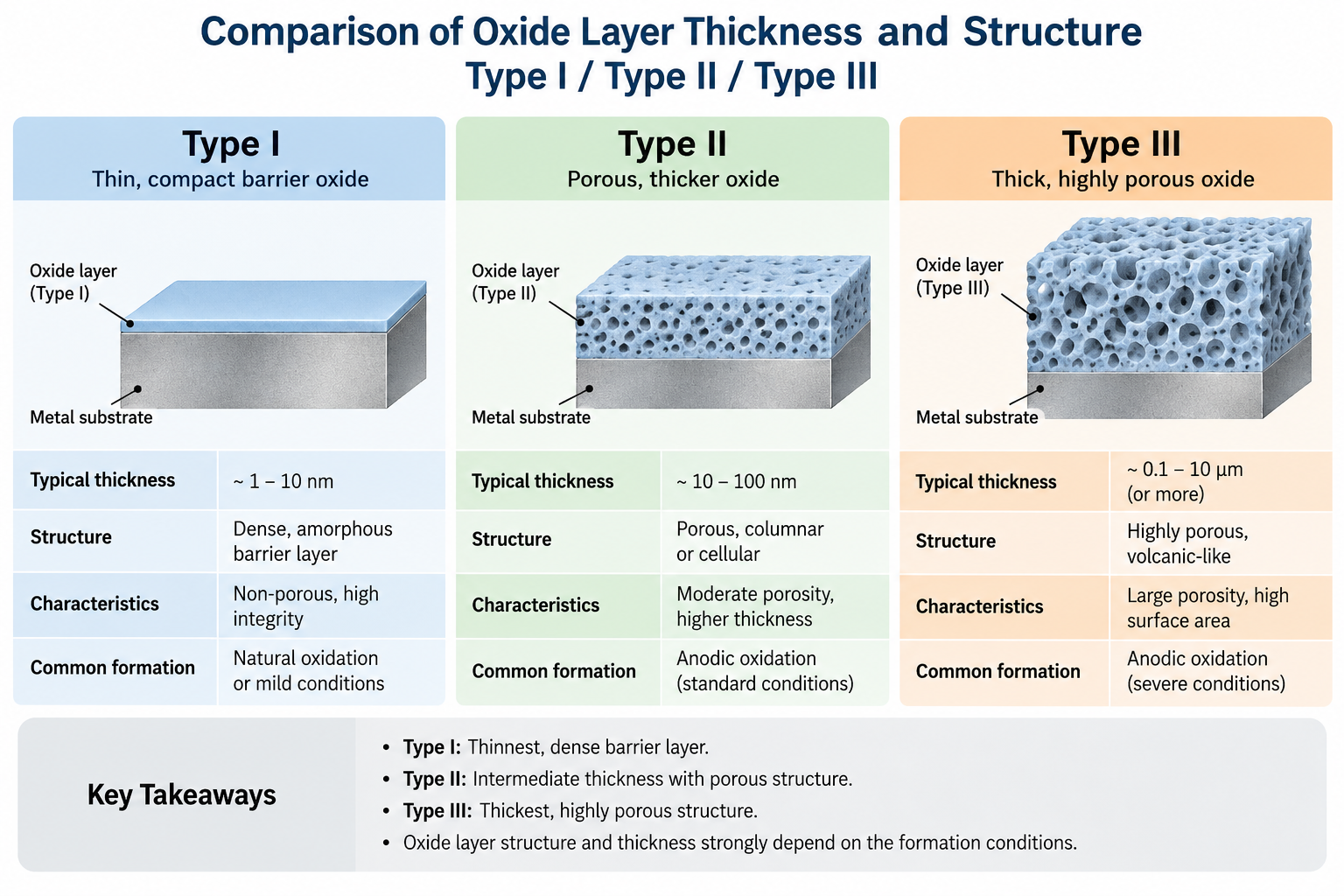
النوع الأول مقابل النوع الثاني مقابل النوع الثالث
| عامل | النوع الأول كروميك | النوع الثاني الكبريتيك | النوع الثالث أنودة صلبة |
| سمك نموذجي | 0.5-7.5 واحد | 1.8-25 واحد | عادة 25-75 واحد |
| المقاومة للتآكل | جيد | جيد إلى جيد جدًا | جيد إلى جيد جدًا, اعتمادا على الختم |
| ارتداء المقاومة | قليل | معتدل | عالي |
| قابلية التلوين | محدودة للغاية | ممتاز | محدود |
| نمو الأبعاد | الحد الأدنى | معتدل | بارِز |
| تعقيد المعالجة النسبية | المتخصصة | معيار, متاحة على نطاق واسع | أعلى |
| الاستخدام النموذجي | الفضاء الجوي, التحمل الضيق | الأجزاء العامة والملونة | ارتداء وأجزاء وظيفية |
نمو, صلابة, ونتائج التآكل تعتمد على السبائك, عملية, والختم.
كيفية اختيار نوع أنودة
اختر النوع حسب المتطلب الأساسي: تآكل, مظهر, أو ارتداء.
- اختر النوع الأول عندما تكون الأبعاد والتعب مهمًا ويجب أن يظل الطلاء رقيقًا.
- اختر النوع الثاني للحماية العامة من التآكل والتشطيبات الملونة.
- اختر النوع III عندما يجب أن يكون السطح مقاومًا للتآكل والتآكل.
- اختر التلوين الكهربائي عندما يكون ثبات اللون على المدى الطويل مهمًا.
- اختر صبغة عضوية عندما تحتاج إلى لون مشرق محدد على الجزء الزخرفي.
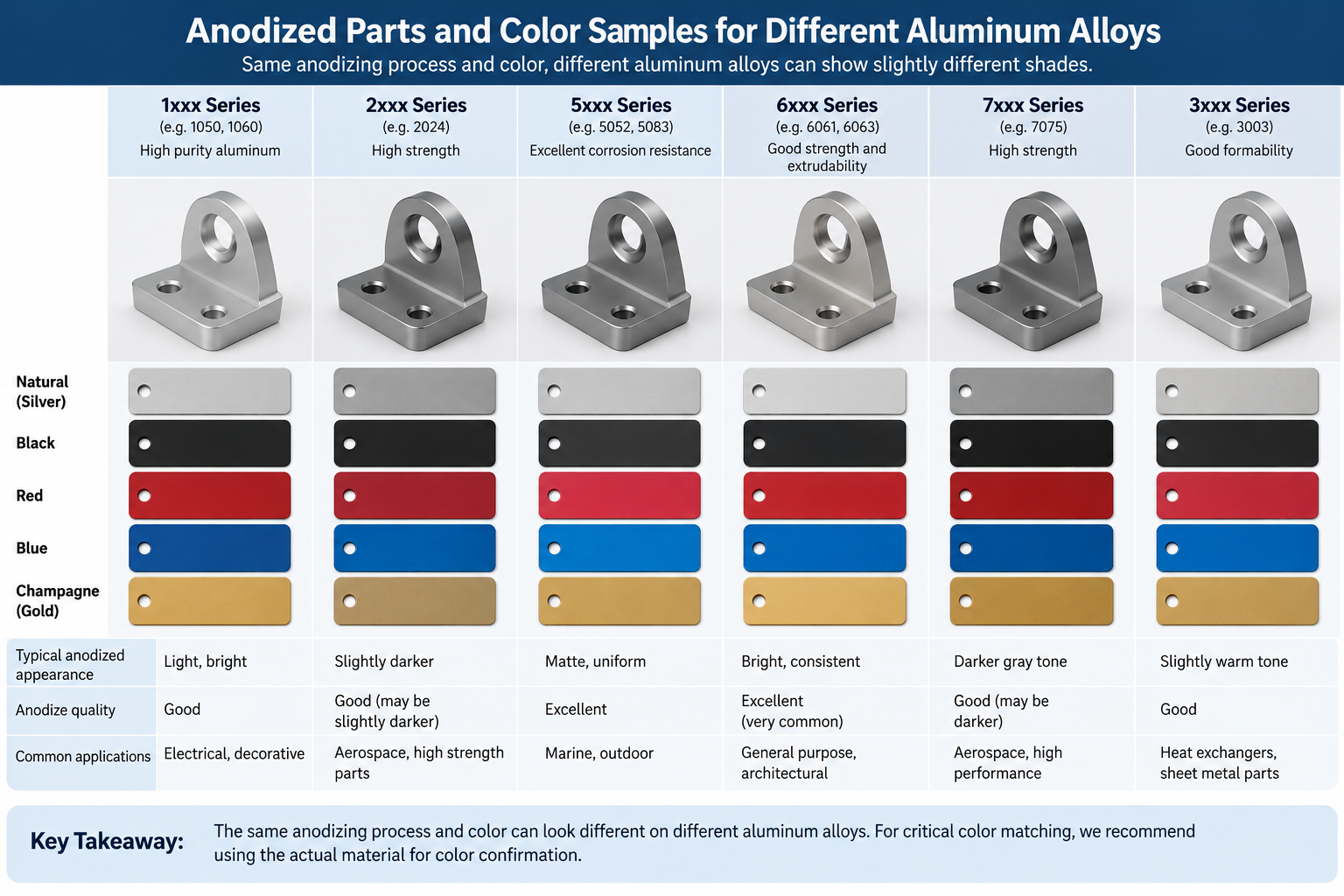
كيف تؤثر سبائك الألومنيوم على أنودة?
يؤدي اختيار السبائك إلى تغيير شكل الطلاء وأدائه.
| عائلة السبائك | سلوك أنودة نموذجي |
| 5xxx | عموما جيدة التآكل والاستجابة الزخرفية |
| 6xxx | عادة ما يعطي أنودة زخرفية متسقة |
| 2xxx | يمكن أن يؤثر ارتفاع النحاس على اللون وسلوك التآكل |
| 7xxx | يمكن أن تتطلب معالجة أكثر تحكمًا |
| سبائك السي | يمكن أن ينتج عن السيليكون العالي مظهر أغمق أو أقل تجانسًا |
استخدم "بشكل عام" و"يمكن" كما تقترح اللغة أعلاه. قم بتأكيد السلوك باستخدام وحدة الإنهاء للحصول على السبيكة المحددة.
اعتبارات التصميم أنودة
خطة لنمو الطلاء, ختم, وحدود السبائك قبل إرسال الرسم.
- لا تؤدي عملية الأنودة ببساطة إلى إضافة سماكة الطلاء الكاملة إلى الجزء الخارجي من الجزء. ينمو جزء من الأكسيد إلى سطح الألومنيوم الأصلي, وجزء ينمو إلى الخارج. تنسيق أبعاد المعالجة مع سمك الطلاء.
- إخفاء المواضيع الهامة, الاتصالات الكهربائية, وتناسب الدقة حيث لا يمكن تحمل الطلاء. ويمكن استخدام الآلات بعد الأنودة عند الحاجة على وجه التحديد, لكنه يعرض الألومنيوم العاري على السطح المُشكل.
- تحديد سبيكة والمزاج.
- حدد الختم عندما تكون مقاومة التآكل أو ثبات اللون أمرًا مهمًا.
- لون الدولة, لمعان, وأي اختبار لرش الملح أو التآكل على الرسم.
- الرجوع إلى المعيار الحالي, ميل-PRF-8625. ربما لا تزال الرسومات القديمة تشير إلى MIL-A-8625; تحقق من المتطلبات الحالية مقابل MIL-PRF-8625.
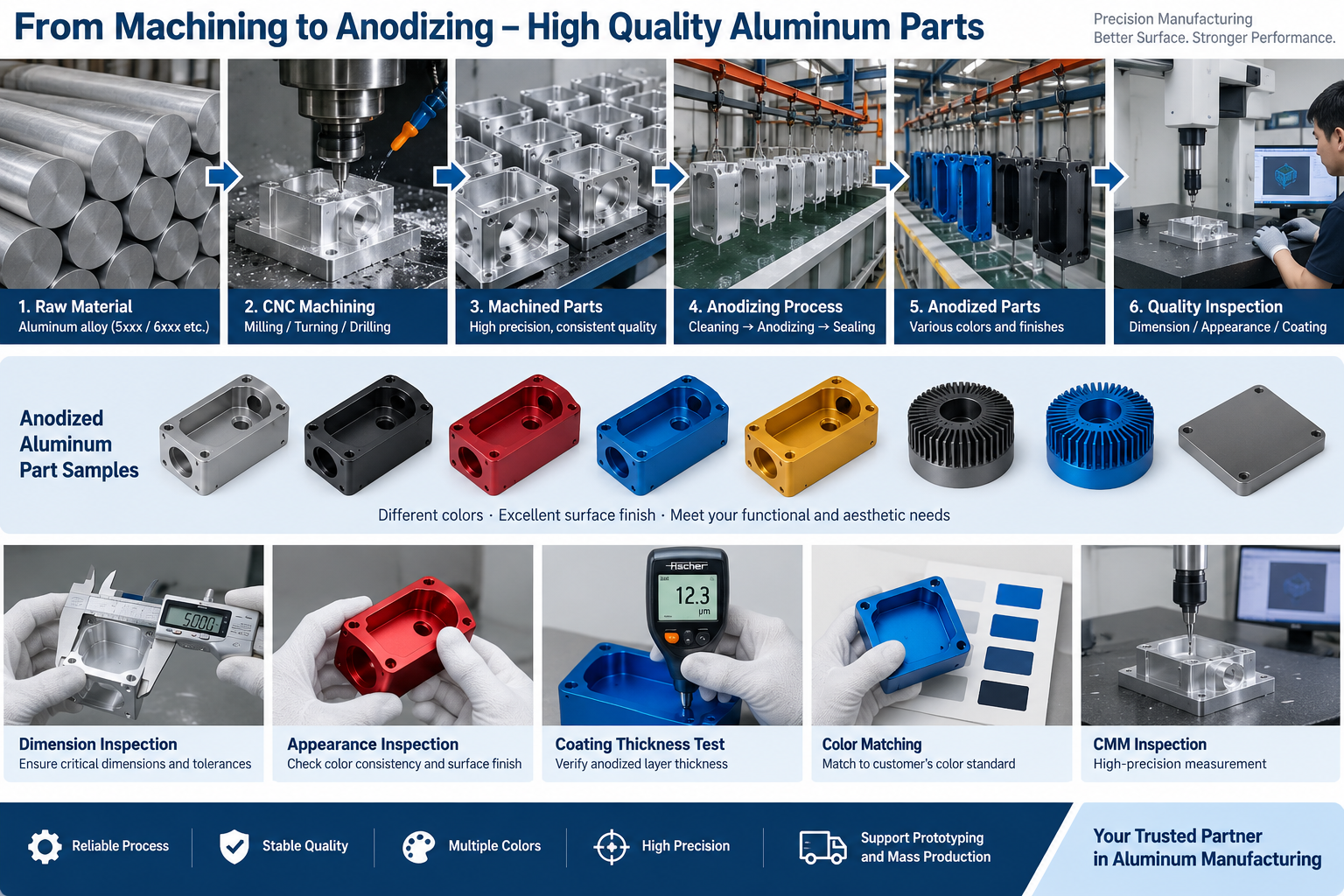
لأجزاء الألومنيوم تشكيله, ملكنا خدمة التصنيع باستخدام الحاسب الآلي بأكسيد يمكن أن أقتبس النهاية مع الجزء.
كيفية تحديد أنودة على الرسم
حدد وسيلة الشرح الكاملة بحيث تطبق وحدة الإنهاء ما تحتاجه بالضبط.
تشمل سبائك الألومنيوم والمزاج, معيار أنودة, النوع, الطبقة أو اللون, سمك الطلاء المطلوب, متطلبات الختم, مناطق ملثمة, الأبعاد الحرجة بعد الطلاء, متطلبات التجميل, وأي اختبار للتآكل أو التآكل.
مثال للتشطيب الملون: ميل-PRF-8625, النوع الثاني, فصل 2, أسود, سمك الطلاء على النحو المحدد, الختم مطلوب.
مثال للمعطف الصلب: ميل-PRF-8625, النوع الثالث, فصل 1, 50 اسمي, خيوط القناع كما هو مبين.
متى يجب ألا تستخدم الأنودة؟?
الأنودة ليست النهاية المناسبة لكل جزء.
- يتم استخدام الأنودة بشكل شائع على الألومنيوم, على الرغم من أن العمليات الأنودية ذات الصلة تُستخدم أيضًا في المعادن مثل التيتانيوم والمغنيسيوم.
- قد لا تمتص التفاوتات الضيقة جدًا نمو الطلاء.
- يمكن للخيوط الداخلية والميزات العمياء أن تحبس كيمياء العملية.
- بعض السبائك المصبوبة تتأكسد بشكل غير متساو.
- لا يمكن إصلاح الطلاءات الأنودية التالفة بسهولة في مكانها.
- يجب أن تكون ملثمين نقاط الاتصال موصلة, لأن أنودة عازلة.
إذا كان الجزء يحتاج إلى بديل, يقارن التشطيبات السطحية للتصنيع باستخدام الحاسب الآلي.
أسئلة مكررة
ما هي الأنواع الرئيسية للأنودة?
النوع الأول حمض الكروميك, حمض الكبريتيك من النوع الثاني, والنوع الثالث أنودة صلبة.
ما هو أنودة النوع الثاني المستخدمة ل?
وهو النوع الأكثر شيوعاً. يوفر حماية من التآكل ويقبل الصبغة للأجزاء الملونة.
ما هو الفرق بين أنودة النوع الثاني والنوع الثالث?
النوع الثالث هو أكثر سمكا وأصعب. النوع الثاني أرق, أكثر قابلية للصباغة, ومتاحة على نطاق أوسع.
ما هو الفرق بين النوع والفئة في أنودة?
النوع يحدد العملية. تحدد الفئة ما إذا كان الطلاء مصبوغًا. فصل 1 غير مصبوغ والطبقة 2 مصبوغ تحت MIL-PRF-8625.
ما مدى سماكة الأنودة الصعبة?
عادة حول 25 ل 75 ميكرومتر, مع تقريبا 50 ميكرومتر مطلب مشترك. قم بالتأكيد مع وحدة التشطيب الخاصة بك.
هل تغير الأنودة أبعاد الجزء؟?
نعم. ينمو جزء من الأكسيد إلى السطح وينمو الجزء الآخر إلى الخارج. السماح بالنمو في ميزات التسامح الضيق.
ما هي الألوان التي يمكن أن تكون بأكسيد الألومنيوم؟?
يمكن صبغ النوع الثاني بعدة ألوان. الأسود هو الأكثر شيوعًا. عادة ما يكون المعطف الصلب بلونه الطبيعي, رمادي, بني, أو النطاق الأسود.
هل يمكن تطبيق الأنودة على الفولاذ?
لا. أنودة تناسب الألومنيوم. يتطلب الفولاذ معالجات أخرى مثل الطلاء أو الأكسيد الأسود.
احصل على عرض أسعار لأجزاء CNC المؤكسدة
أخبرنا بالسبائك, نوع الطلاء, فصل, سماكة, لون, وأي متطلبات الاختبار. سيقوم مهندسونا بمراجعة الرسم, السماح لنمو الطلاء, واقتباس الآلات بالإضافة إلى أنودة معا.
الاتصال بنا للحصول على الاقتباس


1 فكرت في "أنواع أنودة: كل ما تحتاج إلى معرفته”