



Alumínio is one of the most widely used engineering metals in the world, largely due to its abundance, natureza leve, resistência à corrosão, e versatilidade. As the most abundant metallic element in the Earth’s crust, aluminum serves industries ranging from electrical and construction to aerospace, processamento de alimentos, and renewable energy.
By alloying aluminum with controlled amounts of other elements, manufacturers can tailor its mechanical, físico, and chemical properties for specific applications. These alloys are categorized into series and grades, each designed to balance strength, conformabilidade, condutividade, e resistência à corrosão.
Entre estes, 1050 liga de alumínio stands out as a commercially pure aluminum grade. With exceptionally high aluminum content, it prioritizes conductivity, ductilidade, and corrosion resistance over mechanical strength. This article provides a comprehensive technical overview of aluminum 1050, incluindo sua composição, propriedades, fabrication behavior, e aplicações industriais.
O que é 1050 Liga de alumínio?
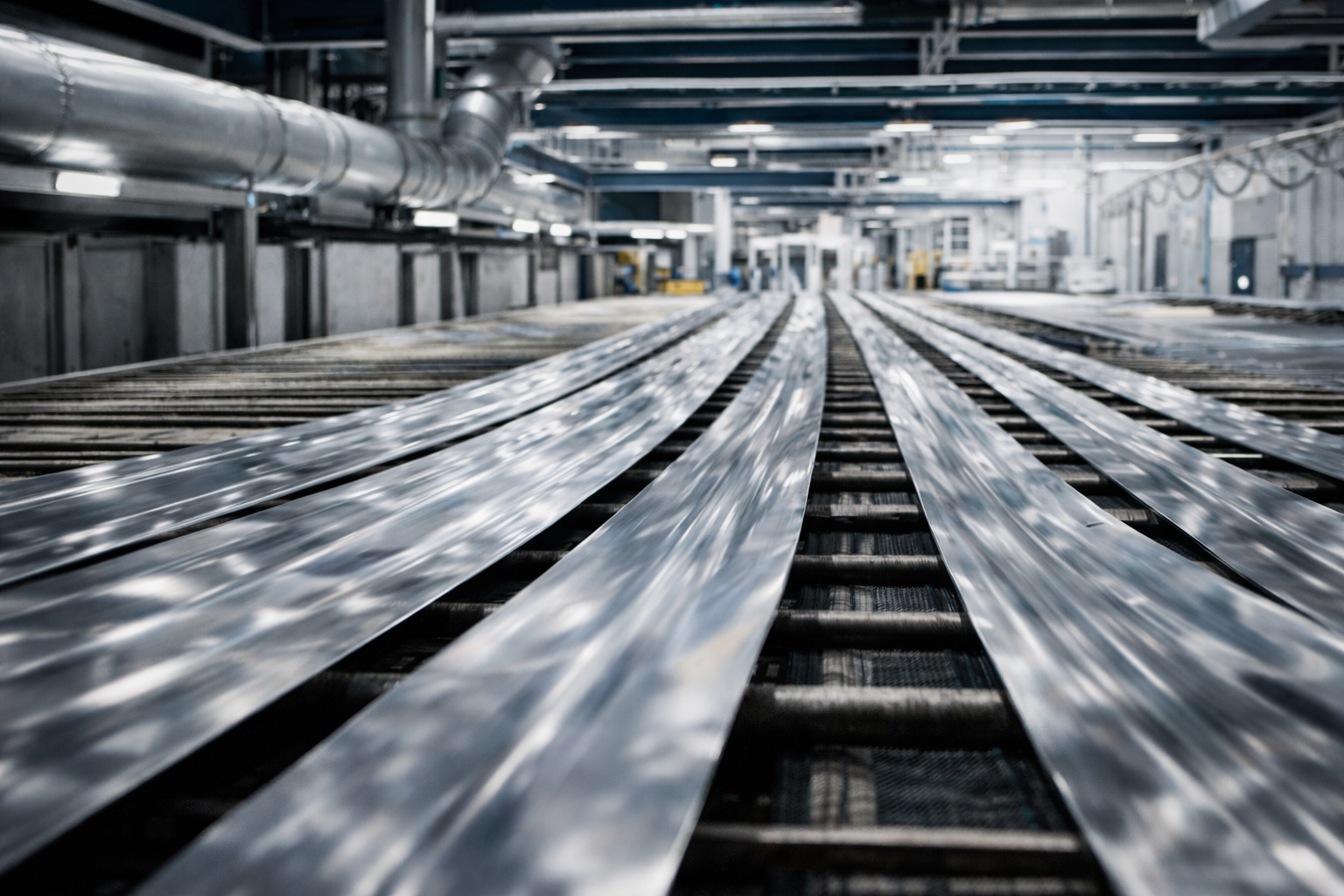
1050 aluminum alloy belongs to the 1xxx series, which represents commercially pure aluminum alloys containing a minimum of 99.0% alumínio. Especificamente, 1050 aluminum contains at least 99.5% alumínio, making it one of the purest grades used in industrial manufacturing.
It is classified as a non-heat-treatable alloy, meaning its strength cannot be increased through precipitation hardening. Em vez de, strength adjustments are achieved through cold working (strain hardening), and the alloy is available in multiple tempers to suit different forming and service requirements.
International Designations
1050 aluminum is recognized globally under several standards:
ISO / EM: Al99.5, EN AW-1050A
Ele é: A1050
DE: 3.0255 (commonly referenced)
Principais características
Extremely high aluminum purity
Excellent thermal and electrical conductivity
Excelente resistência à corrosão
Superior ductility and formability
Relatively low mechanical strength
Because of this property balance, 1050 aluminum is best suited for applications where condutividade, resistência à corrosão, and ease of forming are more critical than load-bearing capacity.
Alumínio 1050 Composição Química
As a commercially pure aluminum alloy, the chemical composition of 1050 aluminum is tightly controlled to maintain its defining characteristics.
Typical Composition
Alumínio (Al): ≥ 99.5%
Ferro (Fé): ≤ 0.40%
Silício (E): ≤ 0.25%
Cobre (Cu): ≤ 0.05%
Manganês (Mn): ≤ 0.05%
Zinco (Zn): ≤ 0.05%
Titânio (De): ≤ 0.03%
Iron and silicon are the primary impurities and contribute modestly to strength without significantly degrading conductivity or corrosion resistance. The extremely low levels of alloying elements are the primary reason for the alloy’s softness and excellent workability.
Alumínio 1050 Propriedades mecânicas
Alumínio 1050 is considered a low-strength but highly ductile material. Its mechanical properties vary depending on temper (Ó, H12, H14, etc.), but typical values are summarized below.
Typical Mechanical and Physical Properties
Densidade: 2.71 g/cm³
Ponto de fusão: ~650 °C
Módulo Elástico: ~70 GPa
Proporção de Poisson: ~0.33
Dureza Brinell: 20–30 HB
Resistência à tração final: 60–105 MPa
Força de rendimento: 20–30 MPa
Alongamento no intervalo: 25–40%
Força de cisalhamento: ~25 MPa
Força de fadiga: ~30 MPa
The high elongation values clearly demonstrate the alloy’s suitability for deep drawing, flexão, rolando, and other severe forming operations. No entanto, the relatively low yield and tensile strengths limit its use in structural or high-load applications.
Fabrication of Aluminum Alloy 1050
Soldabilidade
1050 aluminum exhibits excelente soldabilidade, primarily due to its high purity and absence of crack-sensitive alloying elements such as magnesium or zinc.
Suitable welding processes:
TIG (GTAW)
MEU (GMAW)
For thin sheets and precision work, AC TIG welding is commonly used, producing clean weld beads with good control. Argon or helium shielding gases are employed to prevent oxidation during welding.
For thicker sections or higher productivity, Soldagem MIG is preferred. Using filler wire of matching or compatible composition helps preserve corrosion resistance and ductility. Weld strength typically approaches that of the base material.
Proper surface preparation, including mechanical or chemical removal of the aluminum oxide layer, is critical to avoid lack of fusion and porosity.
Brazing
Brazing 1050 aluminum is more challenging than welding due to:
The stable oxide layer on aluminum surfaces
The relatively narrow temperature difference between filler metal and base metal
Fluxes containing fluoride or chloride compounds are commonly required to disrupt the oxide layer. These fluxes must be thoroughly removed after brazing to prevent corrosion.
Vacuum brazing is an alternative method that eliminates flux use and produces cleaner joints, though at higher processing cost. Brazed joints generally have lower mechanical strength compared to welded joints.
Soldering
Soldering involves joining at temperatures typically below 450 °C and is technically possible with aluminum 1050, though it is not ideal for high-strength requirements.
Os desafios incluem:
Rapid heat dissipation due to high thermal conductivity
Persistent oxide layer formation
Special fluxes and tin-based solders are required, along with meticulous surface preparation. Soldered joints offer limited mechanical performance and are usually restricted to low-load electrical or sealing applications.
Tratamento térmico
Alumínio 1050 é not heat treatable in the conventional strengthening sense because it lacks alloying elements required for precipitation hardening.
No entanto, recozimento is commonly performed to:
Restore ductility after cold working
Reduce internal stresses
Improve formability
Typical annealing is carried out at 360–400 °C, followed by air cooling. This process softens the material and returns it to a highly workable state.
Key Applications of 1050 Liga de alumínio
Due to its unique combination of properties, 1050 aluminum is widely used in the following areas:
Electrical industry: conductors, busbars, transformer components
Chemical and food processing: tanques, recipientes, tubulação, and liners
Construction and architecture: painéis decorativos, cobertura, flashing
Energia renovável: solar reflectors and light-reflective components
Industrial manufacturing: trocadores de calor, heat shields, Rótulos, packaging materials
Its excellent corrosion resistance and food-safe nature make it particularly suitable for hygienic and outdoor environments.
Conclusão
Alumínio 1050 is a highly versatile engineering material when strength is not the primary requirement. Its superior conductivity, resistência à corrosão, and exceptional formability make it indispensable in electrical, químico, and forming-intensive applications.
To ensure consistent quality and performance, it is essential to source aluminum 1050 from reputable manufacturers and fabricators with strict composition and process control.
Perguntas frequentes
What are the advantages of aluminum 1050?
Excelente resistência à corrosão
Excellent formability and ductility
Alta condutividade térmica e elétrica
Cost-effective and fully recyclable
What is the difference between aluminum 6061 e 1050?
| Aspecto | 6061 Alumínio | 1050 Alumínio |
| Aluminum Content | ≥ 98.85% | ≥ 99.5% |
| Principais elementos de liga | Magnésio, Silício | Ferro, Silício |
| Tratável térmico | Sim | Não |
| Força | Alto | Baixo |
| Uso típico | Partes estruturais | Electrical and formed parts |
Is aluminum 5055 better than 1050?
Neither is universally “better.” Aluminum 5055 offers higher strength and is more suitable for structural applications, enquanto 1050 aluminum excels in ductility, condutividade, e resistência à corrosão.
What is the equivalent of aluminum 1050?
ASTM: 1350 / A91050 (commonly referenced)
DE: 3.0255
EM: EN AW-1050A
ISO: Al99.5
Ele é: A1050
What is the price of aluminum 1050?
Depending on market conditions, forma, and supplier, alumínio 1050 typically ranges from USD 2,000 para 3,500 per metric ton.


