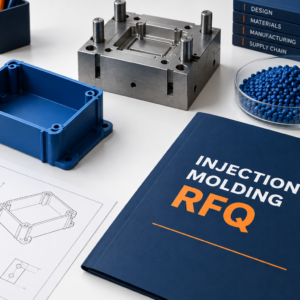



Injection molding cavity identification links a molded part to the mold position that produced it. Specify the mark, cavity map, record links, and verification checks before tooling approval. A cavity number supports investigation, but it does not uniquely identify one part or prove that part meets specification.
Define What Your Cavity Identification Must Tell You
A useful cavity identification system connects each mark to a controlled tool and cavity map.
Begin with the question you need to answer after delivery. Do you need to identify a suspect cavity, review its measurements, or narrow a production investigation? These goals require different records.
A simple C2 mark can identify a mold position within an agreed system. Without the tool identity, لكن, C2 may refer to several different molds. Without production records, it cannot establish the resin lot or production window.
| Identifier | What It Can Identify | What It Does Not Prove Alone |
|---|---|---|
| Tool identity | The approved production tool | Which cavity produced a loose part |
| Cavity mark | A mapped position within that tool | An individual part or production date |
| Date or shift mark | A defined production period or shift | The actual material lot without record links |
| Lot reference | A controlled production or shipment grouping | Individual-part history unless designed for it |
| Unique part identifier | One individual unit within the defined system | Quality acceptance without linked evidence |
Choose the required traceability scope before selecting a marking method. Do not request individual-part traceability when your actual plan records only cavities and batches.
Keep The Mold Map And Part Marks Consistent
Every active cavity should have an unambiguous relationship between its physical position, part mark, and inspection records.
ل multi-cavity molds, agree a numbering convention before engraving. Define the viewing direction used on the cavity map. خلاف ذلك, opposite views of the tool can create a misleading left-to-right interpretation.
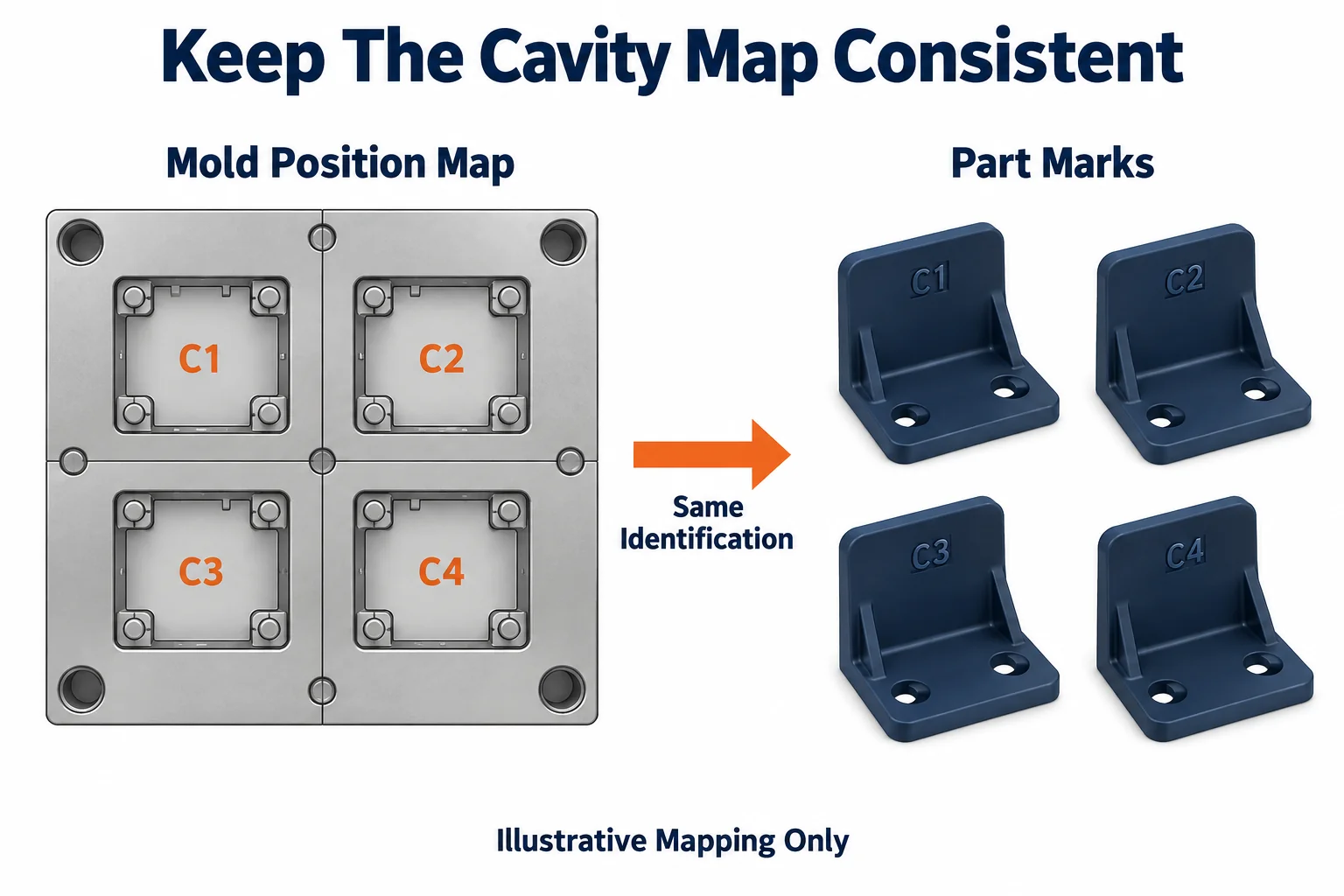
Record whether an identifier follows a physical cavity position or a particular replaceable insert. Both approaches need clear rules when inserts move. A duplicate mark or an undocumented reassignment can break the historical record.
During initial approval, collect identified samples from every active cavity. Compare their marks against the map and the inspection report. Do not approve the mapping from a drawing alone.
Keep blocked or inactive cavities visible in the tool record. State their status and any conditions for returning them to production. Do not quietly reuse an old identifier for a different cavity history.
Specify Mark Location And Readability On The Part Drawing
The part drawing should define a readable identifier without compromising the component’s functional requirements.
Choose a location that remains accessible for the intended inspection. Review whether assembly, تسميات, تقليم, or packaging will hide the mark. An underside identifier may work for incoming inspection but become inaccessible after assembly.
Agree the text, توجيه, location, and raised or recessed form. Have the toolmaker review draft, release, wall geometry, and nearby functional surfaces. Avoid a universal engraving depth or character size without checking the actual resin and geometry.
Require representative molded samples to establish readability. Review them in the specified color and surface texture under the intended inspection conditions. A readable tool engraving does not automatically demonstrate a readable molded mark.
If machine reading is required, define and validate that requirement separately. Do not assume that a mark readable by an operator is suitable for a camera.
Choose Fixed Or Changeable Marking To Match The Information
Fixed cavity identity and changing production information should serve separate, clearly defined purposes.
A cavity mark normally needs a stable identity rule. Date, shift, or other production information may need controlled changes. Discuss both functions with the toolmaker before choosing inserts.
HASCO's marking-unit example describes interchangeable engraved inserts. Such components offer a way to change molded information. They do not determine your identifier policy or authorize uncontrolled changes.
For changing information, DME's automatic date-stamp sheet describes PLC-controlled updates. The update can follow each cycle or defined settings. Confirm the actual configuration rather than assuming every automatic stamp creates unique part identification.
Whichever method you choose, define who changes the information and how the change is verified. Include startup checks after maintenance or insert replacement. Retain the previous mapping when an approved identifier changes.
Link Cavity Marks To Production And Shipment Records
Your traceability record must connect the part mark with the production and shipment information needed for investigation.
A mark provides an entry point. The records supply its meaning. على الأقل, decide how tool identity, cavity identity, production grouping, material lot, and inspection results are connected.
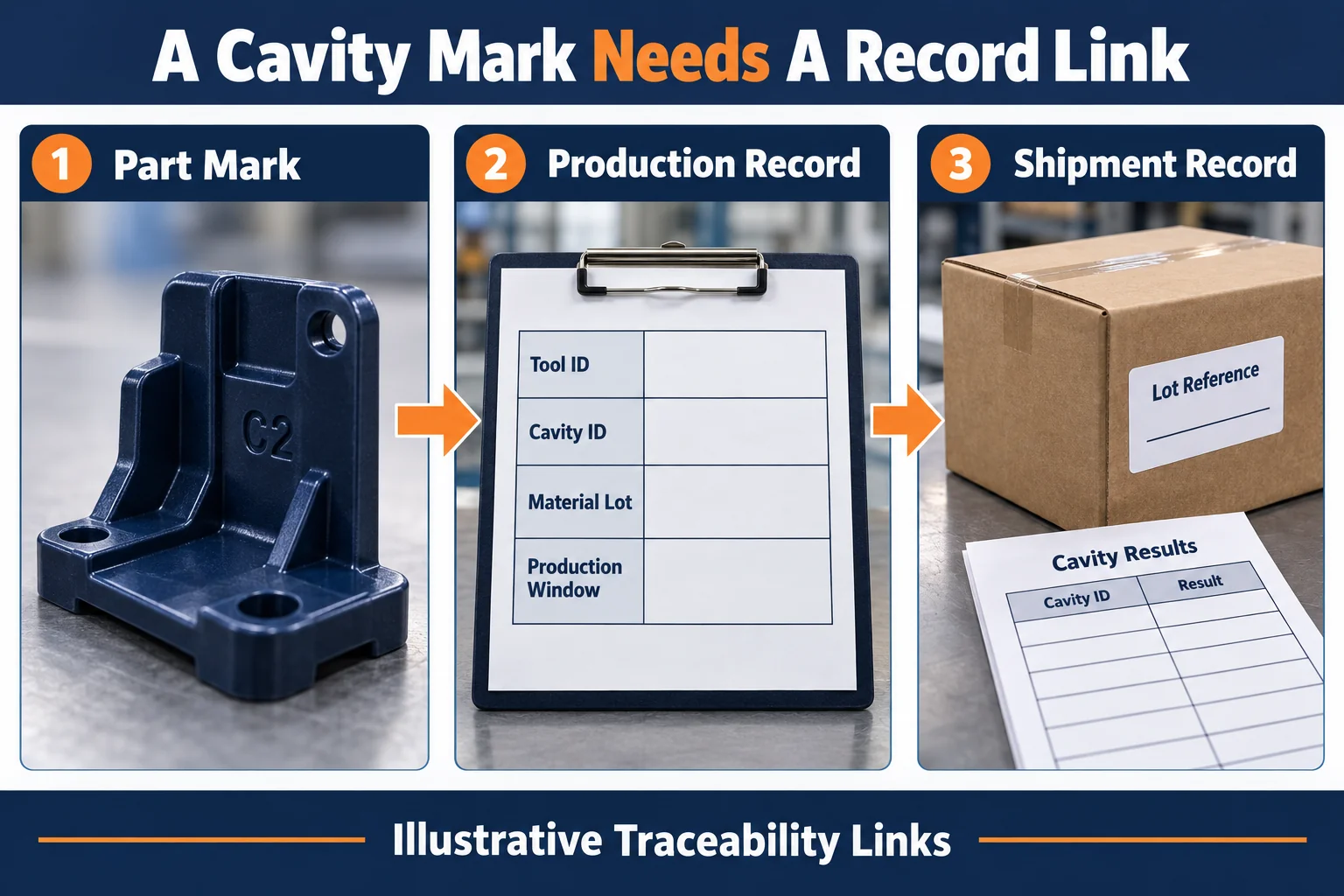
| Record Link | Question Your Supplier Should Answer |
|---|---|
| Tool and cavity map | Which approved position produced the marked part? |
| Production window | When was that cavity operating within the identified run? |
| Material record | Which resin grade, كثير, and approved material condition applied? |
| Inspection evidence | Which samples or monitoring records relate to the cavity? |
| Packing and shipment | Which production groups entered the delivered containers? |
| Change history | What maintenance or identifier changes occurred? |
Define how transfers between bins, عمليات التفتيش, and packing preserve the chosen identification level. If cavities are mixed in one container, the records should still support the promised investigation scope.
Kistler's process-data management example connects process information with quality data and traceability. That illustrates one digital approach. It does not establish that every supplier has such equipment or that every process signal proves product conformity.
Request a practical retrieval demonstration during qualification. Select an identified sample and ask the supplier to find the agreed records. A written procedure is useful, but successful retrieval tests the actual link.
Preserve Cavity Identity In Inspection And Problem Containment
Cavity-specific inspection records help you distinguish a localized concern from a broader production issue.
Agree sampling by cavity where your approval plan requires it. Keep cavity identity attached to dimensional and appearance results. A pooled summary can make it harder to see whether one position needs investigation.
If a concern appears, identify the potentially affected population using the actual records. Do not automatically assume that only one cavity is involved. مادة, آلة, التعامل مع, or inspection issues may affect several cavities.
Treat identification and defect detection as separate controls. ملكنا automated injection molding inspection guide explains inspection methods and their validation requirements.
When parts have become mixed or identification is unreadable, document the limitation. Quarantine and disposition should follow the agreed quality process. Avoid claiming narrow containment when the evidence supports only a wider production group.
Include Identification Requirements In The Tooling RFQ
Your RFQ should make marking, records, maintenance controls, and verification responsibilities clear before tooling starts.
Send the part drawing, resin specification, cavities required, الحجم السنوي, وحياة البرنامج. Include a proposed marking zone and the traceability questions the system must answer.
Ask the quotation to distinguish initial tooling work from recurring inspection and record-management effort. Changeable inserts, automated updates, camera verification, and detailed record retention can require different resources.
Agree the approval deliverables: cavity map, identified samples, inspection results, and a traceability retrieval demonstration. Define record retention and access requirements for the program. Confirm responsibility when tooling, صب, and inspection involve different organizations.
أسئلة مكررة
Your identification agreement should resolve the assumptions that often create gaps between marks and records.
Is A Cavity Number A Serial Number
لا. Many parts can carry the same cavity number. Individual identification requires a separately designed system.
Does A Date Stamp Identify The Resin Lot
Not alone. Link the marked period to controlled production and material records. Material changes within that period need appropriate handling.
Must Every Injection Molded Part Carry A Cavity Mark
The design and traceability requirements decide. If marks are prohibited, agree another reliable mapping method and its limitations.
Can You Move Marking Inserts Between Cavities
Only under an agreed identification rule and change process. Update the map, verify samples, and preserve the historical relationship.
Does A Readable Cavity Mark Prove Part Quality
لا. Identification connects records to a source. Product acceptance still requires the agreed inspection or validated monitoring evidence.
Request An Injection Molding Identification Review From TOPS
عروض توبس خدمات صب حقن البلاستيك. أرسل الرسم الخاص بك, راتنج, الحجم السنوي, حياة البرنامج, and traceability scope. اتصل بنا to review cavity marking, الأدوات, and acceptance requirements before ordering.