



A36 carbon steel is one of the most widely used structural steels in engineering and industrial fabrication. Whether you are building steel structures, manufacturing heavy machinery, or fabricating industrial components, A36 steel is often considered a reliable and cost-effective material.
Its popularity comes from a balanced combination of сила, Заваряване, наличност, и достъпност. За инженери, производители, and procurement managers, A36 offers predictable mechanical performance while remaining economical for large-scale projects.
В това ръководство, we will explore everything you need to know about A36 carbon steel, включително неговите chemical composition, механични свойства, предимства, приложения, and differences compared with other steels. If you are considering A36 steel for your next project, this article will help you determine whether it is the right material choice.
What Is A36 Carbon Steel?
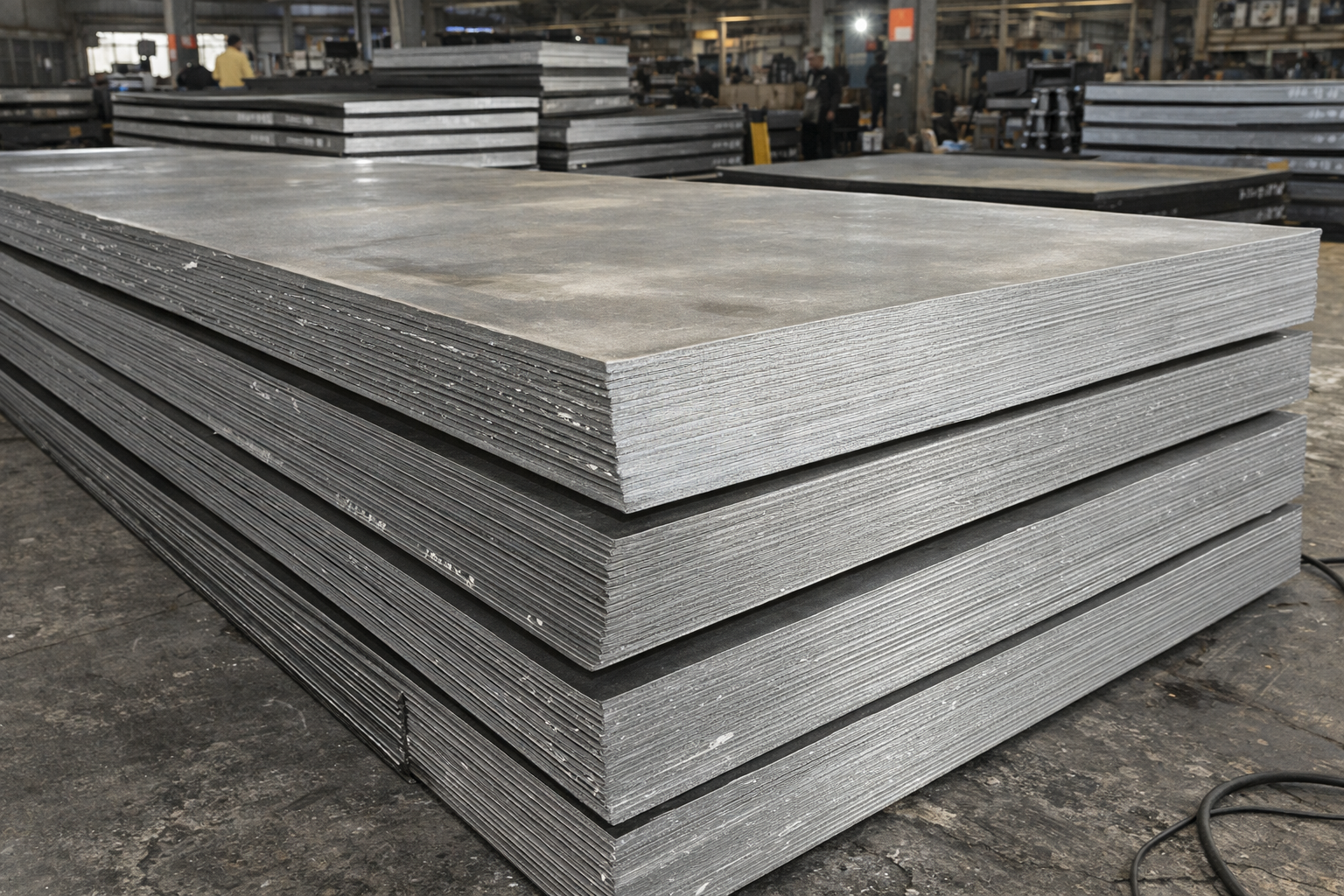
A36 carbon steel is a low-carbon structural steel grade defined under the standards of ASTM International. It is formally specified under the standard ASTM A36/A36M, which describes the requirements for carbon structural steel used in construction and industrial fabrication.
The defining characteristic of A36 steel is its low carbon content, typically below 0.26%. This relatively low carbon level improves the material’s Заваряване, пластичност, и оформяемост, making it easier to fabricate and shape into structural components.
Unlike alloy steels designed for specialized performance, A36 steel focuses on general structural strength and manufacturing efficiency. В резултат на това, it is widely used in:
Structural construction
Steel frameworks
Machinery fabrication
Heavy equipment manufacturing
Shipbuilding components
Industrial platforms and supports
A36 steel is typically supplied in several common forms, включително:
Steel plates
Steel bars
Конструктивни греди
Steel channels
Ъгли
Tubing and fabricated parts
Because it is easy to machine and weld, A36 steel is frequently used in custom fabrication projects, particularly where structural strength and affordability are priorities.
Chemical Composition of A36 Carbon Steel
The chemical composition of A36 steel is carefully controlled to maintain the balance between сила, пластичност, и технологичност.
Below is a typical composition range.
| елемент | Състав (%) | функция |
| въглерод (° С) | ≤ 0.26 | Provides strength while maintaining weldability |
| Манган (Мн) | 0.60 – 1.20 | Improves toughness and tensile strength |
| Фосфор (П) | ≤ 0.04 | Limited to maintain ductility |
| Сяра (С) | ≤ 0.05 | Improves machinability but kept low to prevent brittleness |
| Силиций (и) | ≤ 0.40 | Acts as a deoxidizer and strengthens the steel |
| Мед (Cu) | ≥ 0.20 (Незадължително) | Enhances corrosion resistance |
въглерод (° С)
Carbon is the primary element controlling steel strength. A36 uses a ниско ниво на въглерод, which allows the steel to remain highly weldable and ductile.
Манган (Мн)
Manganese increases tensile strength and wear resistance. It also helps remove oxygen during the steelmaking process.
Фосфор (П)
Although phosphorus can increase strength, excessive amounts make steel brittle. Следователно, its concentration is strictly controlled.
Сяра (С)
Sulfur improves machinability but may reduce toughness. По тази причина, the allowable amount remains very small.
Силиций (и)
Silicon functions mainly as a deoxidizing element, improving the steel’s internal structure and mechanical stability.
Мед (Cu)
In some specifications, copper is added to improve corrosion resistance, especially for outdoor structural applications.
Mechanical Properties of A36 Carbon Steel
The mechanical properties of A36 steel make it suitable for structural engineering applications where strength and durability are required without sacrificing manufacturability.
Издръжливост на опън
A36 steel typically has a tensile strength between 400 и 550 MPa (58,000 – 80,000 psi).
Tensile strength measures the maximum stress the material can withstand before breaking. This range allows A36 steel to handle heavy loads in structural frameworks.
Сила на провлачване
The minimum yield strength is 250 MPa (36 ksi) for most structural sections.
Yield strength indicates the point at which permanent deformation begins. For construction materials, this is a critical parameter because it determines how much load a structure can support safely.
Удължение
A36 steel exhibits good ductility, typically offering:
20% elongation in 200 мм
23% elongation in 50 мм
High elongation means the steel can deform without fracturing, making it safer for structural applications where dynamic loads may occur.
твърдост
Typical hardness values range from 119 да се 162 Бринел (HB).
This moderate hardness level provides resistance to indentation and wear while still allowing machining and forming operations.
Модул на еластичност
The modulus of elasticity is approximately 200 GPa, which is typical for most structural steels.
This value measures the steel’s resistance to elastic deformation when stress is applied.
Коефициент на Поасон
The Poisson’s ratio of A36 steel is approximately 0.26, indicating how the material expands laterally when stretched.
Physical Properties of A36 Steel
Beyond mechanical performance, several physical properties also influence the steel’s behavior in engineering applications.
Плътност
A36 steel has a density of approximately:
7.85 g/cm³ (0.284 lb/in³)
This density is similar to most carbon steels and allows engineers to predict structural weight accurately.
Точка на топене
The melting temperature ranges from:
1,425°C to 1,538°C (2,600°F to 2,800°F)
This high melting point makes A36 steel suitable for various fabrication processes, including welding and hot forming.
Магнитни свойства
Like most carbon steels, A36 steel is магнитен due to its iron content.
Key Advantages of A36 Carbon Steel
Several factors contribute to the widespread use of A36 steel in industrial and structural applications.
1. Ефективност на разходите
One of the biggest advantages of A36 steel is its affordability. Compared with alloy steels or high-strength grades, A36 provides adequate strength at a significantly lower cost.
For large-scale projects such as buildings, мостове, и индустриално оборудване, this cost advantage becomes very significant.
2. Отлична заваряемост
Due to its low carbon content, A36 steel can be welded using most common welding methods, включително:
MIG заваряване
TIG заваряване
Shielded metal arc welding
Minimal preheating is usually required, which simplifies fabrication.
3. Good Formability
A36 steel can be easily:
Наведен
Навити
Нарязване
Formed
This flexibility makes it ideal for fabricating custom structural components.
4. Висока якост и издръжливост
Despite being economical, A36 steel still provides strong mechanical performance. Its combination of tensile strength and ductility allows it to withstand heavy loads and mechanical stress.
5. Wide Availability
A36 steel is one of the most widely produced structural steels in the world. Manufacturers can obtain it quickly in various forms and sizes, reducing project lead times.
Common Applications of A36 Carbon Steel
Because of its versatility, A36 steel is used across many industries.
Structural Construction
One of the primary applications is in construction. A36 steel is widely used for:
Конструктивни греди
Building frameworks
Мостове
Support columns
Industrial platforms
Structural shapes such as I-beams, H-beams, channels, и ъгли are often produced using A36 steel.
Heavy Equipment Manufacturing
Industrial machinery often uses A36 steel for:
Рамки за оборудване
Монтажни скоби
Base plates
Структурни опори
Its durability allows machinery to withstand heavy operational loads.
Automotive and Shipbuilding
В автомобилната индустрия, A36 steel is used for:
Компоненти на шасито
Mounting structures
Reinforcement brackets
In shipbuilding, it may be used for structural components such as hull frames and deck structures.
Нефтена и газова промишленост
The oil and gas sector frequently uses A36 steel for:
Storage tanks
Structural platforms
Equipment supports
Pipelines and fabrication structures
Its strength and weldability make it suitable for large industrial installations.
Pipe and Tube Fabrication
A36 steel can also be fabricated into pipes and tubes used for:
Structural tubing
Механични опори
Industrial piping systems
A36 Steel vs Other Carbon Steels
Understanding how A36 compares with other steels helps engineers select the right material.
A36 vs 1018 Стомана
Compared with SAE 1018 стомана, A36 steel offers:
| Имот | A36 Steel | 1018 Стомана |
| Сила | Higher structural strength | Умерен |
| Обработваемост | добре | Отлично |
| Типична употреба | Structural fabrication | Precision machined parts |
1018 steel is often used for machined components, while A36 is preferred for structural applications.
A36 vs High-Strength Structural Steel
High-strength steels like ASTM A572 steel provide greater strength but cost more. A36 remains the economical option when extreme strength is not required.
Fabrication and Processing Methods
A36 steel performs well in various manufacturing processes.
Заваряване
A36 steel can be welded using standard methods:
MIG заваряване
TIG заваряване
Заваряване на клечки
Submerged arc welding
Машинна обработка
The machinability rating of A36 steel is approximately 72%, which is considered good for carbon steel.
Повърхностни обработки
To improve corrosion resistance, A36 steel can be treated with:
Галванизиране
Прахово покритие
Industrial painting
Surface plating
Galvanization is especially common for outdoor structural applications.
Limitations of A36 Steel
Въпреки своите предимства, A36 steel also has some limitations.
Limited Corrosion Resistance
A36 steel is not inherently corrosion-resistant and may require coatings or galvanization when used outdoors.
Not Ideal for High-Temperature Environments
A36 steel generally performs well up to approximately 343°C (650°F). For higher temperatures, alloy steels may be more suitable.
Lower Strength Compared With Alloy Steels
While adequate for many structures, A36 steel does not provide the same strength-to-weight ratio as advanced structural alloys.
Заключение
A36 carbon steel remains one of the most important materials used in structural engineering and industrial fabrication. Its balanced combination of сила, достъпност, Заваряване, and availability makes it a practical choice for many projects.
From building construction and heavy machinery to industrial platforms and fabricated components, A36 steel continues to serve as a reliable structural material across multiple industries.
For manufacturers and engineers seeking a cost-effective and versatile structural steel, A36 remains one of the most dependable options available today.
ЕAQs
1. Can A36 steel be galvanized?
да. A36 steel can be hot-dip galvanized to significantly improve corrosion resistance.
2. What is the machinability of A36 steel?
The machinability rating of A36 steel is approximately 72%, which allows for efficient machining operations.
3. Is A36 steel magnetic?
да. Because it contains iron, A36 steel is naturally magnetic.
4. What temperature can A36 steel withstand?
A36 steel can typically operate safely up to 650°F (343°C).
5. Is A36 steel suitable for welding?
да. Its low carbon content makes it highly weldable using most standard welding techniques.


