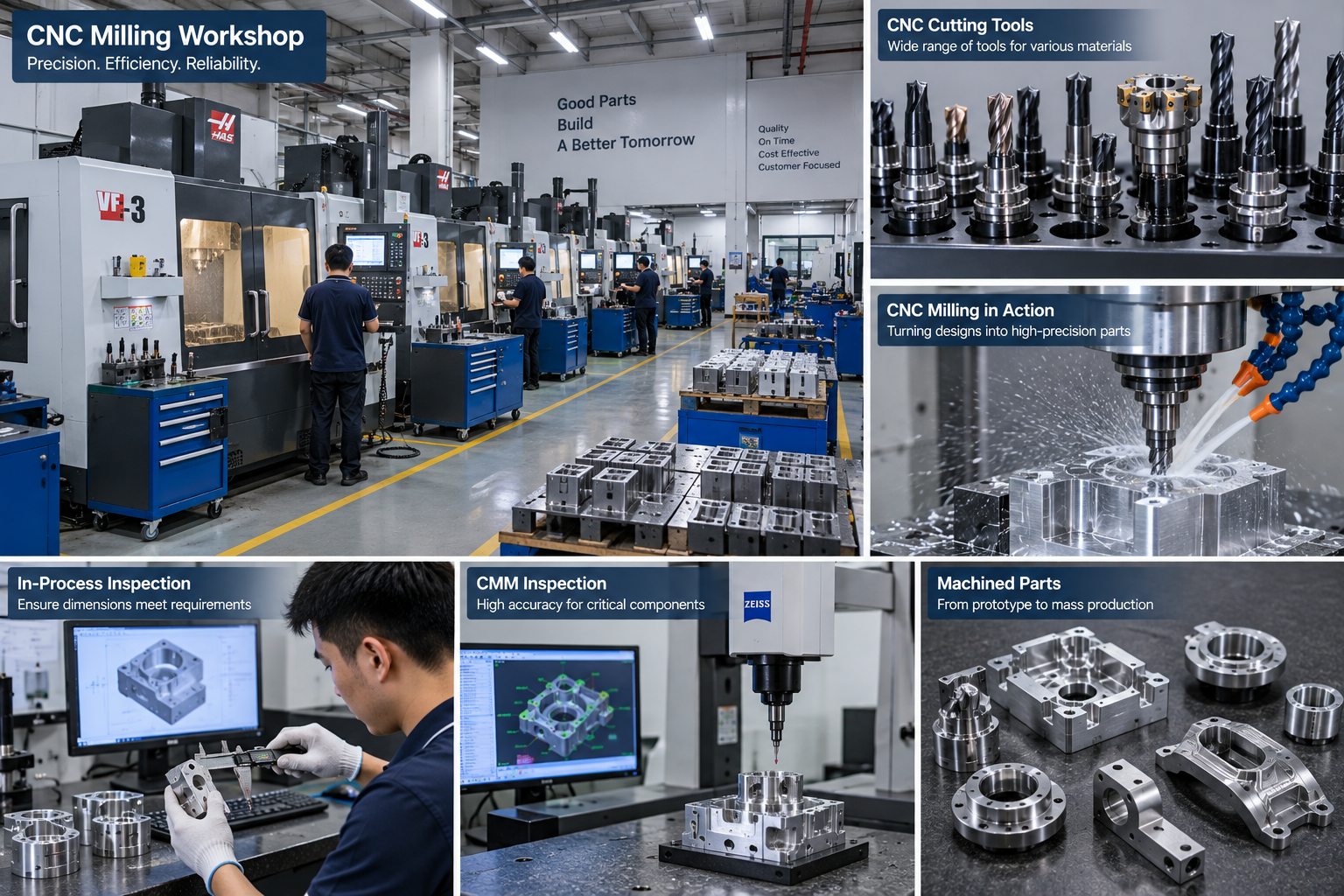



CNC фрезови инструменти премахват материала, за да създадат слотове, джобове, контури, дупки, и завършени лица. Правилният нож контролира качеството, Време за цикъл, и цена. Това ръководство обхваща основните видове инструменти, материали, покрития, и как да изберете всеки от тях.
Какво представляват CNC фрезовите инструменти?
CNC фрезовите инструменти са въртящи се фрези, които обработват материал от детайл.
Всеки инструмент има специфична форма за определена функция. Правилният избор избягва преработването, бърборене, и счупени инструменти. Изборът на инструмент зависи от операцията, материал, геометрия, и машина.
Обичайни режещи инструменти, използвани при CNC фрезови машини
Списанието за фрезови инструменти с ЦПУ съдържа повече от фрези. Носи и бормашини, reamers, и инструменти за конци.
| Инструмент | Първична употреба |
| Крайна фреза | Слотове, джобове, профилиране |
| Челна фреза със сферичен нос | 3D контури и извити повърхности |
| Бик нос / крайна фреза с ъглов радиус | Плоски подове със заоблени ъгли |
| Челна мелница | Големи плоски повърхности |
| Тренировка | Дупки |
| Райбер | Прецизни завършени отвори |
| Мелница за нишки | нишки |
| Фреза за скосяване | Ъглови ръбове |
| Фреза тип лястовича опашка | Подрязвания и пързалки |
| T-Slot резачка | Т-образни прорези за затягане |
| Фреза за ключове | Шпонкови канали |
| Ъглова фреза | V канали и назъбвания |
| Фреза за форми | Повтарящи се специални профили |
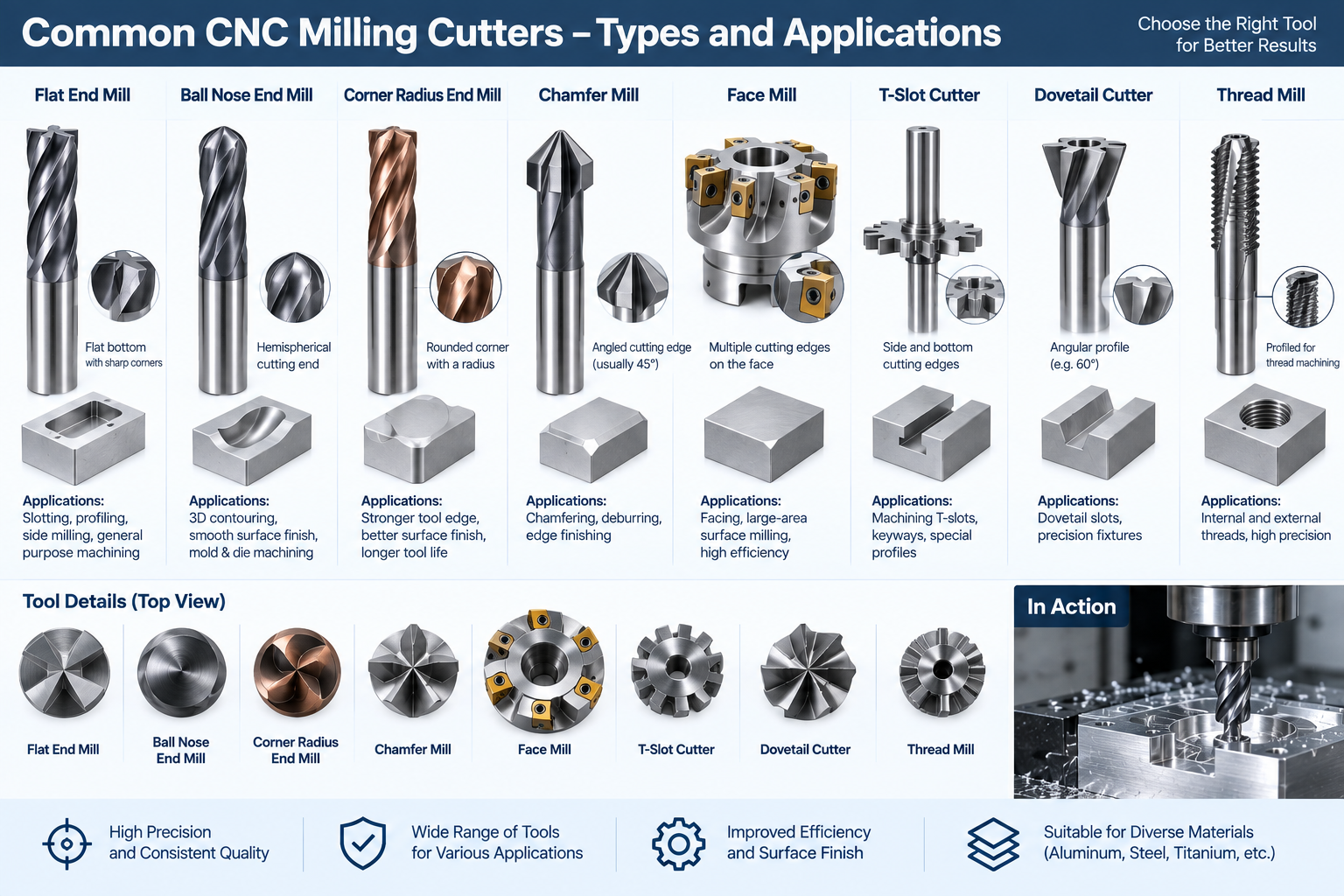
Челни фрези и техните приложения
Крайните фрези са най-разпространените фрезови инструменти. Изрязват се по периферията и, за типове централно рязане, на края.
- Плоските крайни фрези изрязват прорези и джобове с квадратно дъно.
- Челните фрези със сферичен нос изрязват 3D контури и извити повърхности. На 3D повърхности, диаметърът на ножа и стъпката определят височината на скалпа. По-малката стъпка подобрява финала, но увеличава времето на цикъла.
- Бик нос / крайните фрези с радиус на ъгъла дават плоски подове с радиус на ъгъла.
- Челните фрези за груба обработка премахват материала бързо с назъбен ръб.
- Потопяеми крайни фрези с централно рязане; типовете с нецентрално рязане не го правят.
Вижте всички неща за фрезоване на края за повече подробности.
Лицеви мелници
Челните фрези обработват големи плоски повърхности с множество режещи ръбове.
Те дават добър завършек и премахват материала бързо в широка област. Много челни фрези са изградени около сменяеми вложки. Те са обичайни за квадратно изглаждане и завършване на плоски лица. Прочетете пълен преглед на челното фрезоване.
Инструменти за пробиване и правене на дупки
Бормашините създават дупки. Райбери и други инструменти ги усъвършенстват.
- Спиралните бормашини правят стандартни отвори.
- Микро свредлата правят много малки отвори и се нуждаят от контролирано биене.
- Райберите привеждат отвора до точен размер и завършват.
- Точковите бормашини започват дупка точно.
Дълбочина на отвора, диаметър, и материалът определят инструмента и метода. Вижте дълбоко пробиване на отвори когато дълбочината е голяма.
Инструменти за резби
Резбите могат да се нарязват с метчици или резбови мелници.
Нарязването е бързо и ефективно за конкретен размер на резбата, но счупен кран може да бъде трудно да се премахне, особено в слепи отвори или трудни материали. Резбовите мелници могат да произвеждат вътрешни или външни резби, предлагат добър контрол на размера на резбата, и са полезни за по-големи нишки, трудни материали, или приложения, при които намаляването на риска от счупен кран има значение. Сравнете фрезоване на резба срещу нарязване на резба.
Специални фрези
Специалните инструменти изрязват форми, които стандартните фрези не могат да достигнат.
- Фрезите за скосяване правят скосове и премахват грапавини по ръбовете.
- Фрезите тип лястовича опашка изрязват подрязвания за плъзгачи и приспособления.
- Фрезите с T-слот правят затягащи слотове.
- Фрезите Keyseat и Woodruff изрязват шпонковите канали на вала.
- Ъгловите фрези правят V канали и назъбвания.
- Форморезите възпроизвеждат профил с едно преминаване.
- Мухарските фрези използват един ръб за широки плоски повърхности при подходящи настройки, въпреки че индексируемите челни мелници са по-често срещани в производството.
За копиране на профил, виж формиране на основни елементи.
Твърдосплавни срещу сменяеми фрезови инструменти
Инструментите за фрезоване са твърди или изградени около сменяеми вложки.
| Тип инструмент | Най -доброто за | Основно предимство | Ограничение |
| Твърд карбид | По-малки диаметри, подробни характеристики, довършителни работи | Твърдост и прецизност | Целият инструмент е сменен при износване |
| Сменяем нож | По-големи диаметри, челно фрезоване, тежко грубо обработване | Сменяеми режещи ръбове | По-голям минимален размер на инструмента |
| Запоен или накрайник инструмент | Специализирани приложения | Комбинира субстрат и режещ материал | По-рядко за общо CNC фрезоване |
Груба срещу довършителни фрези
Грубата и крайната обработка поставят различни изисквания към инструмента.
- Грубо: високо отнемане на материал, по-здрави ръбове, голям клирънс на стружките, и вторично повърхностно покритие.
- Довършителни работи: ниска надбавка за запаси, остри и стабилни ръбове, контролирано изтичане, и приоритизирани завършеност и точност.
Проходът за груба обработка премахва материала. Финишният пас контролира размера и повърхността.
Материали за фрезови инструменти
Материалът на инструмента определя твърдостта, издръжливост, и скорост на рязане.
| Материал на инструмента | Типична употреба |
| Бързорежеща стомана (HSS) | Работа с по-ниска скорост, прекъснати или по-малко строги условия, издръжливост, ниска цена на инструмента |
| Твърд карбид | По-високи скорости, производство, твърдост, устойчивост на износване |
| Металокерамика | Високоскоростна обработка на стомани и избрани отлети материали |
| CBN | Закалена стомана, често като вложки или върхове |
| PCD | Цветни и абразивни материали, често като вложки или върхове |
CBN и PCD са първокласни свръхтвърди материали, използвани за специализирани приложения, често като вложки или режещи ръбове с връх, а не като крайни фрези с общо предназначение. PCD обикновено се използва за цветни и абразивни материали, не стомани.
Покрития на фрезови инструменти
Покритията намаляват износването и топлината на режещия ръб.
| Покритие | Типично приложение |
| TiN | Машинна обработка с общо предназначение |
| TiCN | Устойчивост на абразия при умерени температури на рязане |
| Тиал / злато | Стомана, неръждаема, титан, високотемпературно рязане |
| AlCrN | Трудни материали и условия на висока температура или износване |
| CrN | Приложения за цветни метали, устойчивост на натрупан ръб |
| DLC | Рязане с ниско триене на избрани цветни материали |
Изборът на покритие зависи от основата на инструмента, материал на детайла, скорост на рязане, стратегия за охлаждащата течност, и геометрия на ножа. Усъвършенстваните покрития осигуряват своите предимства само когато параметрите на рязане са подходящи.
За алуминий, остри полирани карбидни инструменти, често без покритие или с покритие за работа с цветни метали, са често срещани, защото намаляват натрупания ръб и подобряват евакуацията на стружките.
Геометрия на фрезовия инструмент
Геометрията контролира действието на рязане, завършек, и животът на инструмента.
- Броене на флейта: по-малко канали дават по-големи канали за стърготини и улесняват трудното евакуиране на стружки. Повече канали увеличават зацепването на ръба и здравината на сърцевината и могат да поддържат по-високи скорости на подаване, но оставяйте по-малко пространство за чипове. Завършването зависи от геометрията, захранване на зъб, изтичане, твърдост, материал, и условия, не само броене на флейта.
- Ъгъл на спирала: влияе върху аксиалната сила, Евакуация на чип, захващане на ръба, и завършете. Инструментите с по-висока спирала могат да режат по-плавно в много довършителни и цветни приложения. По-ниските или специализираните геометрии на спиралата могат да отговарят на твърди или трудни материали.
- Диаметър на инструмента: използвайте най-големия нож, който има достъп до функцията, като същевременно отговаря на необходимия радиус на ъгъла.
- Дължина на флейта и надвес: поддържайте дължината на канавката достатъчна, но не прекомерна. По-късият надвес подобрява твърдостта и намалява деформацията.
- Съотношение на дължина към диаметър: дългите тънки инструменти се отклоняват повече и обикновено се нуждаят от по-леко рязане.
- Аксиална дълбочина на рязане (Ап) контролира зацепването по оста на инструмента. Радиална ширина на рязане (Ae) контролира странично зацепване. И двете влияят на силата, топлина, дебелина на чипа, отклонение, и животът на инструмента.
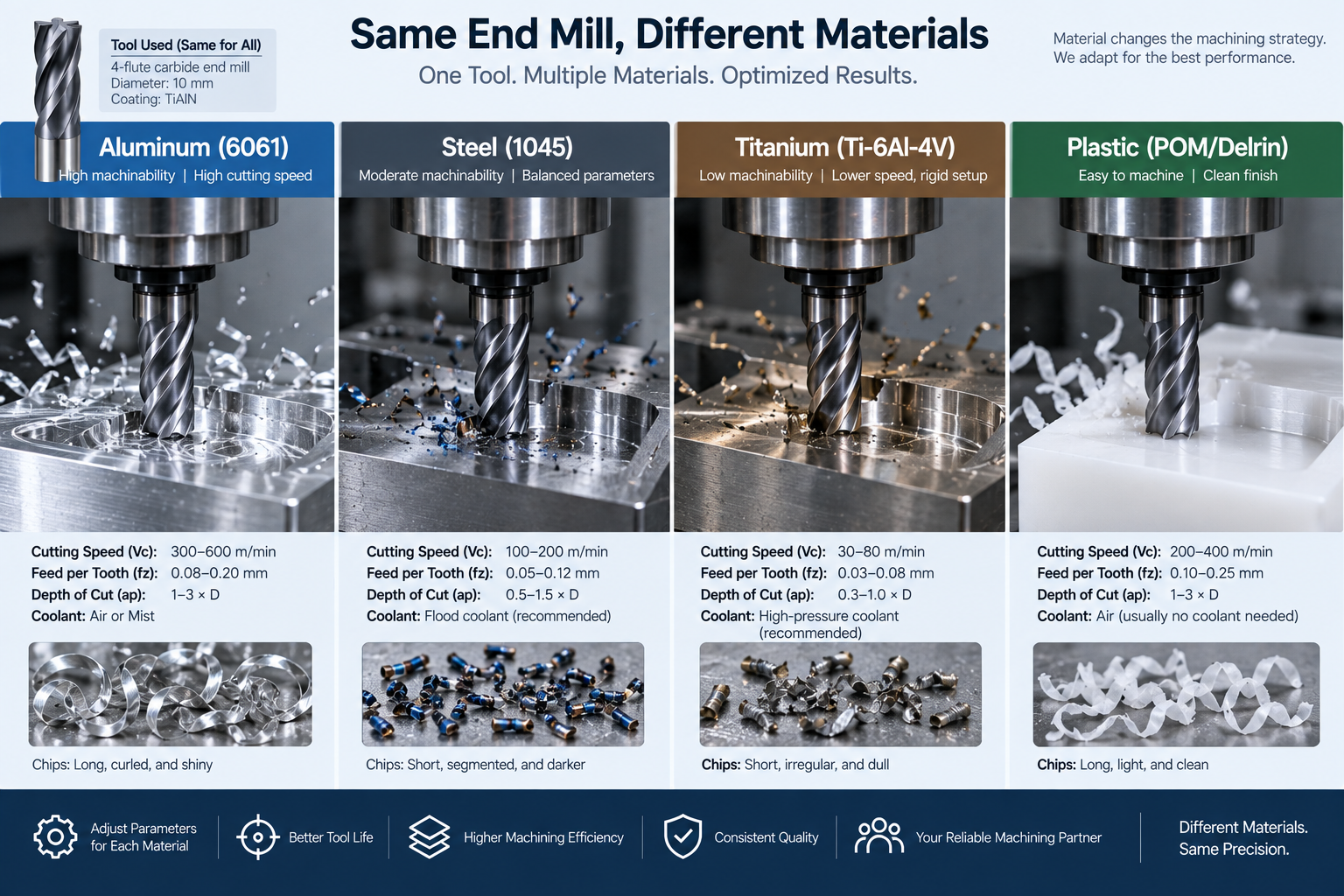
Кои фрезови инструменти работят най-добре за различни материали?
| Заготовка | Типичен начален подход |
| Алуминий | Остър карбид, голямо пространство за чипове, полирана или цветна геометрия |
| Мека или легирана стомана | Карбид с подходящо за материала покритие |
| Неръждаема стомана | Здрава карбидна геометрия, контролирано натоварване на чипа, топлоустойчиво покритие |
| Титан | Твърд карбид, контролирано ангажиране, силно управление на топлината |
| Закалена стомана | Специализиран карбид или CBN в зависимост от твърдостта и приложението |
| Пластмаси | Остри ръбове и геометрия, които ограничават топлината и изглаждането |
Как да изберем инструмент за фрезоване
| Характеристика или операция | Препоръчителен инструмент |
| Плосък слот или джоб | Плоска челна фреза |
| 3D контур | Челна фреза със сферичен нос |
| Равен под със заоблен ъгъл | Бик нос / крайна фреза с ъглов радиус |
| Голямо плоско лице | Челна мелница |
| Стандартен отвор | Спирална бормашина |
| Точна дупка | Пробийте и след това разширете |
| Тема | Резбофреза или метчик |
| фаска | Фреза за скосяване |
| Подрязване тип лястовича опашка | Фреза тип лястовича опашка |
| Шпонков канал | Фреза за ключове |
| Повтарящ се профил | Фреза за форми |
След като изберете типа фреза, потвърдете диаметъра на ножа, ъглов радиус, дължина на флейта, обхват на инструмента, клирънс на държача, и необходим надвес. Правилната форма не е достатъчна, ако държачът няма достъп до функцията или инструментът стане твърде гъвкав при необходимия обхват.
Захващане на инструменти, Изтичане, И обхват на инструмента
Добрият инструмент се нуждае от добър държач.
- Общите държачи за цанги осигуряват гъвкавост при много размери на инструменти.
- Хидравличните и свиваемите държачи могат да осигурят висока концентричност и да отговарят на ниско биене, стабилно високоскоростно рязане.
- При високи обороти на шпиндела, балансът на държача и биенето стават все по-важни за живота на инструмента, точност, и завършете.
- Дръжте надвеса къс, за да намалите деформацията и бърборенето.
Скорости, емисии, И живот на инструмента
Скоростите и подаванията зависят от инструмента, материал, машина, покритие, и условия.
- Хранене на зъб, или натоварване на чип, въпроси. Прекалено лекото хранене причинява протриване. Прекомерното натоварване на чипа претоварва ръба.
- Използвайте препоръчаните от производителя на инструмента начални данни, след това коригирайте за вашата машина и настройка.
- Охлаждащата течност и евакуацията на стружки предотвратяват топлинни щети.
- Посоката на рязане влияе върху зацепването, завършек, и чувствителност на обратната реакция. Вижте фрезоване с изкачване срещу конвенционално фрезоване.
- Следете износването и сменете инструментите, преди да се счупят.
често задавани въпроси
Кой е най-добрият инструмент за джоб с плоско дъно?
Плоска или квадратна челна фреза.
Каква е разликата между топка и плоска мелница?
Топчест нос изрязва извити 3D контури. Фреза с плосък край реже квадратни канали и плоски подове.
Може ли CNC фреза да реже резби?
да. CNC мелниците могат да произвеждат резби с помощта на мелница за нишки, и вътрешните резби също могат да бъдат нарязани с кранове, където е подходящо. Фрезоването на резба използва специален нож, следващ спирална траектория на инструмента.
Каква е разликата между твърдосплавни и индексируеми фрезови инструменти?
Твърдосплавните инструменти са прецизни, но се сменят цели, когато се износят. Сменяемите инструменти използват сменяеми вложки и са подходящи за по-големи или по-тежки срезове.
Защо крайните фрези се чупят?
Често срещани причини са изчерпване, грешни емисии, дълбоки разфасовки, лоша евакуация на чипа, повторно рязане на стружки, и чуплив инструмент за работа.
Как да намаля бърборенето при фрезоване?
Използвайте твърда настройка, скъсете надвеса, регулирайте скоростта и захранването, проверка на изтичане, намаляване на радиалното зацепване, или променете скоростта на шпиндела, за да се отдалечите от нестабилно състояние.
Какво е захранване на зъб?
Това е натоварването на чипа, премахнато от всеки режещ ръб за оборот. Тя трябва да съответства на инструмента и материала.
Вземете насоки за обработка с ЦПУ
Изпратете своя 3D модел, 2D рисунка, материал, количество, допустими отклонения, и изисквания за покритие на повърхността. Нашите инженери ще изберат стратегията за обработка, тип фреза, инструментална екипировка, и подход за проверка въз основа на частта.