


Центробежното леене е най-ефективният и надежден производствен метод за производство на високоякостни цилиндрични метални компоненти. От тръби от неръждаема стомана и алуминиеви втулки до цилиндрови втулки и лагерни пръстени, този процес се използва широко в индустрии, които изискват изключителни механични свойства, структурна цялост, и последователност на размерите.
В сравнение с традиционните методи за леене, центробежното леене предлага значителни предимства по отношение на плътността, рафиниране на зърното, намалена порьозност, и производствена ефективност. Той е особено подходящ за производство на тръбни и ротационно симетрични компоненти, където производителността и издръжливостта са критични.
В това цялостно ръководство, ще научиш:
Какво е центробежно леене
Как работи процесът на центробежно леене
Основни видове центробежно леене
Стъпка по стъпка производствени процедури
Предимства и ограничения
Общи материали и дефекти
Индустриални приложения
Разлики между центробежно леене и други методи на леене
Как да изберем правилния доставчик на центробежно леене
Какво е центробежно леене?
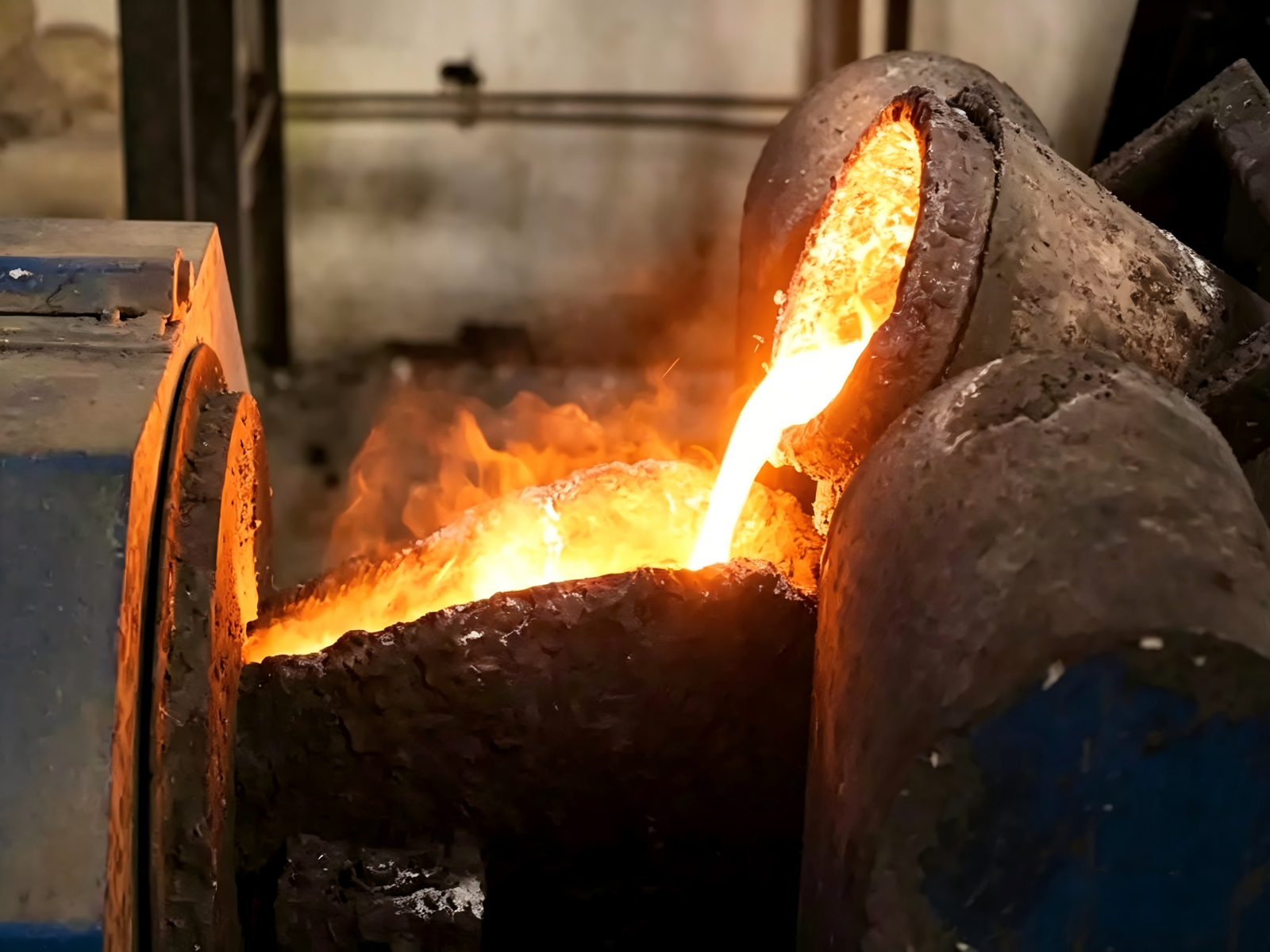
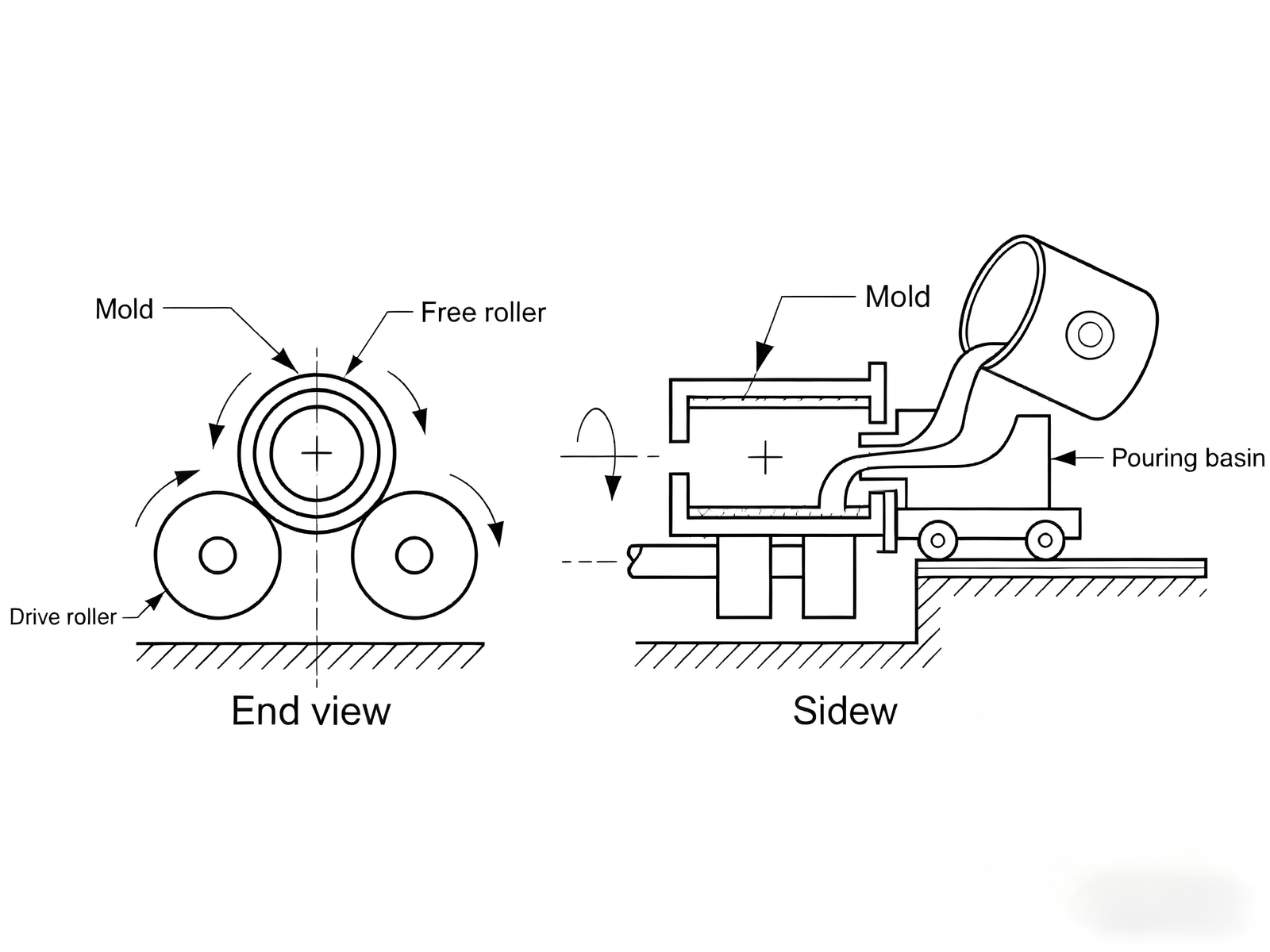
Центробежното леене е процес на леене на метал, при който разтопеният метал се излива във въртяща се форма. Силата на въртене, генерирана от въртящата се форма, избутва разтопения метал към стената на формата, където се втвърдява при контролирани условия.
Процесът е известен също като:
Спин кастинг
Ротационно леене
Рото леене
За разлика от конвенционалното гравитационно леене, центробежното леене използва центробежна сила, за да разпредели равномерно разтопения метал в кухината на формата. Това създава плътни и фино зърнести структури с минимални вътрешни дефекти.
Процесът се използва предимно за производство:
Тръби
Тръби
Втулки
Ръкави
Пръстени
Корпуси на лагери
Цилиндрични втулки
Заготовки за зъбни колела
Поради способността си да произвежда високонадеждни части с отлични металургични свойства, центробежното леене е широко разпространено в индустрии като нефт и газ, космическото пространство, автомобилен, добив, Генериране на електроенергия, и тежки машини.
Защо центробежното леене е важно в съвременното производство
Съвременните индустриални системи изискват компоненти, които могат да издържат:
Високи температури
Тежки натоварвания
Колебания на налягането
Корозивни среди
Абразивно износване
Традиционните процеси на леене понякога се затрудняват да отговорят на тези изисквания поради порьозност, дефекти на свиване, и непостоянни зърнести структури. Центробежното леене се справя с тези предизвикателства чрез подобряване на плътността на метала и намаляване на примесите.
Основните причини, поради които центробежното леене остава важно, включват:
Отлична механична якост
Центробежната сила уплътнява разтопения метал по време на втвърдяването, произвеждайки плътни микроструктури и подобрени механични свойства.
Намалена порьозност
Газовите мехурчета и примесите са склонни да мигрират към вътрешния диаметър, което позволява на производителите да отстраняват склонни към дефекти секции чрез машинна обработка.
Превъзходна зърнеста структура
Насоченото втвърдяване подобрява изтъняването на зърното, което повишава здравината, устойчивост на умора, и издръжливост.
Ефективност на разходите
Процесът минимизира материалните отпадъци и намалява изискванията за вторична обработка на цилиндрични части.
Куха отливка без сърцевина
За разлика от много традиционни методи за леене, центробежното леене може да произвежда кухи тръби и цилиндри без използване на сърцевини.
Как работи процесът на центробежно леене
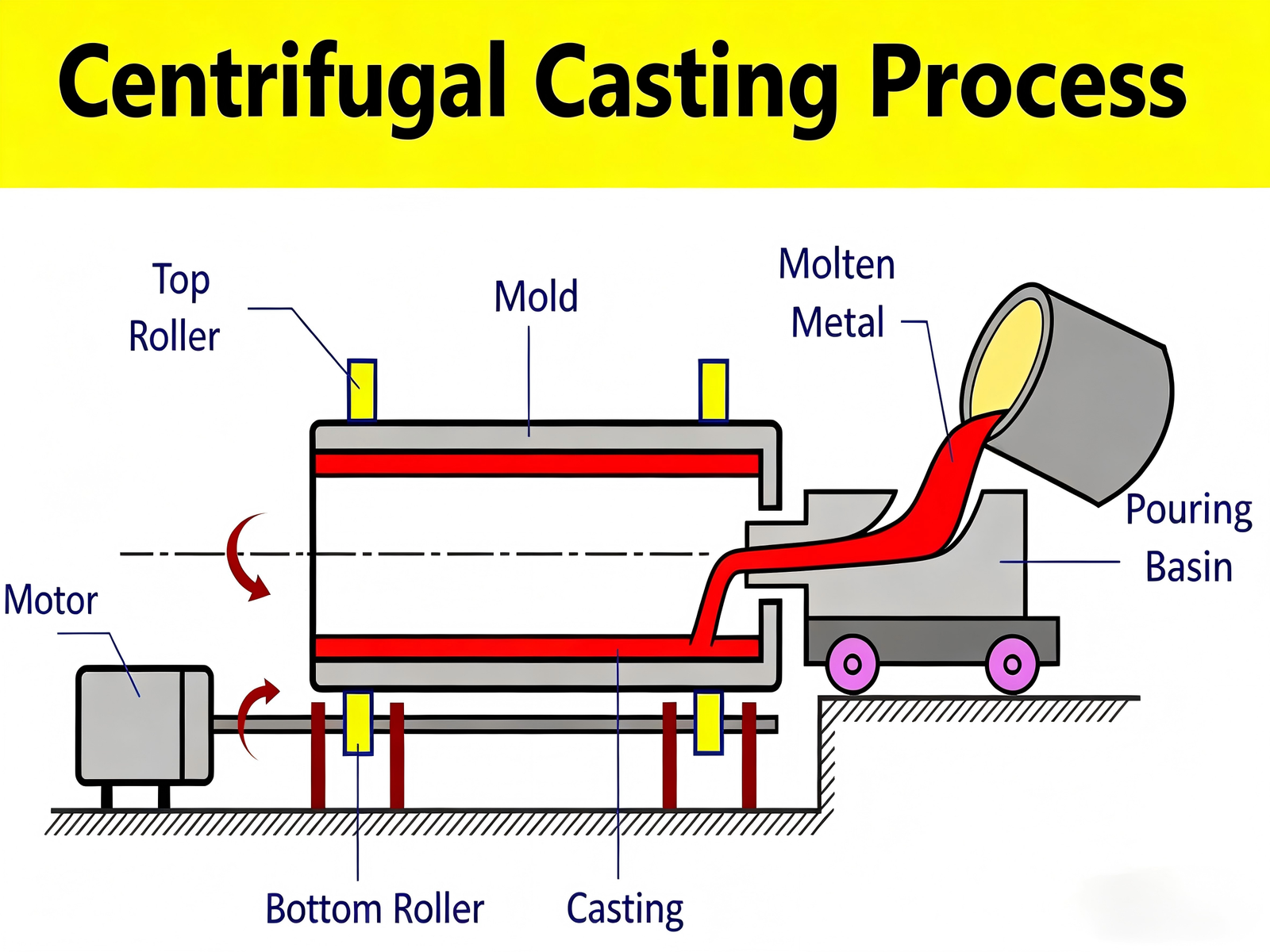
Процесът на центробежно леене разчита на контролирана сила на въртене и насочено втвърдяване.
Основен принцип на работа
Процесът обикновено следва тези стъпки:
Формата се върти с висока скорост.
Разтопеният метал се излива във въртящата се форма.
Центробежната сила избутва разтопения метал към стената на формата.
Металът се втвърдява от външния диаметър навътре.
Готовата отливка се извлича и обработва машинно.
Колкото по-бързо се върти формата, толкова по-силна е центробежната сила, действаща върху разтопения метал.
Тази сила помага:
Уплътнете металната конструкция
Отстранете газовите джобове
Подобрете плътността
Намаляване на включванията
Роля на центробежната сила при втвърдяване на метал
Центробежната сила е основният механизъм зад процеса.
По време на въртене:
По-тежките и по-плътни метални частици се движат навън
По-леките примеси мигрират навътре
Газовите джобове се придвижват към вътрешната повърхност
Това създава няколко предимства:
Подобрена чистота
Външната област на отливката става по-чиста и по-плътна.
Образуване на фини зърна
Бързото насочено охлаждане подобрява металургичната структура.
Намалени дефекти при свиване
Процесът естествено компенсира свиването по време на втвърдяването.
По-добра механична производителност
Получените части излагат:
По-висока якост на опън
Подобрена устойчивост на удар
По-добро представяне при умора
Материали, използвани при центробежно леене
Едно от основните предимства на центробежното леене е неговата съвместимост с широк спектър от метали и сплави.
Общите материали включват:
Неръждаема стомана
Широко използван за:
Устойчиви на корозия тръби
Оборудване за химическа обработка
Тръби за хранителни цели
Популярни оценки:
304 неръждаема стомана
316 неръждаема стомана
Дуплекс неръждаема стомана
Въглеродна стомана
Подходящ за:
Структурни приложения
Тежко индустриално оборудване
Системи под налягане
Излято желязо
Общо за:
Цилиндрови втулки на двигателя
Спирачни барабани
Тръби
Никелови сплави
Използва се в:
Космонавтика
Морски системи
Среда с висока температура
Примери:
Инконел
Хастелой
Кобалтови сплави
Подходящ за:
Устойчиви на износване приложения
Екстремни температурни среди
Медни сплави
Използва се за:
Втулки
Лагери
Морски хардуер
Основни видове центробежно леене
Центробежното леене може да се класифицира по два основни начина:
По ориентация на формата
По метод на леене
Класификация по ориентация на матрицата
Хоризонтално центробежно леене
При хоризонтално центробежно леене, формата се върти по хоризонтална ос.
Този метод е идеален за производство:
Дълги тръби
Тръби
Ръкави
Цилиндрични черупки
Предимства
Отлична консистенция на размерите
Висока производителност
Еднаква дебелина на стената
Идеален за части с високо L/D съотношение
Типични приложения
Стоманени тръби
Топлоустойчиви тръби за пещи
Хидравлични цилиндри
Тръби за нефтени находища
Хоризонталното центробежно леене е особено популярно в нефтената и газовата промишленост и производството на енергия.
Вертикално центробежно леене
При вертикално центробежно леене, формата се върти около вертикална ос.
Този процес е по-подходящ за компоненти с по-къси дължини и по-големи диаметри.
Предимства
Подходящ за пръстеновидни компоненти
По-добре за сложни симетрични форми
По-ниска сложност на инструментите за някои приложения
Типични продукти
Лагерни пръстени
Заготовки за зъбни колела
Маховици
Цилиндрични втулки
За минимизиране на изкривяването, причинено от гравитацията, производителите често използват специално проектирани форми и оптимизирани скорости на въртене.
Класификация по метод на отливане
Истинско центробежно леене
Истинското центробежно леене се използва предимно за кухи цилиндрични части.
Не са необходими сърцевини, тъй като центробежната сила естествено формира кухия център.
Преглед на процеса
Разтопеният метал влиза във въртящата се форма
Центробежната сила разпределя метала по стената на формата
Втвърдяването става отвън навътре
Вътрешните примеси се отстраняват машинно
Предимства
Отлична плътност
Превъзходни механични свойства
Намалени вътрешни дефекти
Общи продукти
Тръби
Тръби
Втулки
Ръкави
Полуцентробежно леене
Полуцентробежното леене се използва за твърди ротационно-симетрични части.
За разлика от истинското центробежно леене, този метод създава твърди компоненти, а не кухи секции.
Типични продукти
Маховици
Спирачни барабани
Заготовки за зъбни колела
шайби
Основна полза
Силата на въртене подобрява характеристиките на плътност и захранване по време на втвърдяване.
Леене с центрофугиране
Центрофугирането се използва за производство на по-малки и по-сложни части.
Разтопеният метал тече от централен леяк през канали в множество кухини на формата.
Приложения
Бижута
Зъбни компоненти
Малки втулки
Прецизни индустриални части
Този процес позволява на производителите да произвеждат множество компоненти едновременно с отлични характеристики на пълнене.
Стъпка по стъпка процес на центробежно леене
Въпреки че детайлите на процеса варират в зависимост от геометрията на компонента и избора на материал, общият работен процес обикновено включва следните етапи.
1. Подготовка на мухъл
Правилната подготовка на формата е от съществено значение за постигане на висококачествени отливки.
Почистване
Повърхността на формата трябва да е свободна от:
Прах
Оксиди
Остатъчни материали
Замърсители
Предварително загряване
Предварителното загряване предотвратява:
Термичен шок
Преждевременно втвърдяване
Повърхностни дефекти
Нанасяне на огнеупорно покритие
Полага се керамично или огнеупорно покритие:
Защитете мухъла
Контролирайте преноса на топлина
Подобрете покритието на повърхността
Улесняване на премахването на части
Подходящата дебелина на покритието е от решаващо значение за стабилността на процеса.
2. Изливане на разтопен метал
Разтопеният метал се прехвърля от пещта с помощта на кофи или автоматизирани системи за изливане.
Важните променливи на процеса включват:
Температура на изливане
Твърде високите температури могат да причинят:
Окисляване
Огрубяване на зърното
Повърхностни дефекти
Ниските температури могат да причинят:
Неправилно работи
Непълно запълване
Скорост на изливане
Стабилното изливане минимизира турбуленцията и улавянето на газ.
Синхронизиране на въртенето на формата
Мухълът може:
Завъртете преди наливане
Започнете да се въртите по време на изливането
Прецизната синхронизация подобрява разпределението на метала.
3. Ротационно втвърдяване
След наливане, матрицата продължава да се върти, докато металът се втвърдява.
Насочено втвърдяване
Охлаждането започва от стената на формата и напредва навътре.
Това създава:
Фини зърнести структури
Подобрена плътност
По-добри металургични свойства
Сегрегация на примеси
По-леките примеси се придвижват към вътрешния диаметър, където по-късно могат да бъдат отстранени чрез машинна обработка.
4. Охлаждане и извличане на части
След втвърдяване, компонентът се охлажда при контролирани условия.
Неправилното охлаждане може да доведе до:
Напукване
Изкривяване
Остатъчно напрежение
Може да се използва специално оборудване за извличане за безопасно отстраняване на частта.
5. Операции за последваща обработка
Повечето центробежни отливки изискват вторична обработка.
Типичните операции включват:
Термична обработка
Подобрява:
Сила
твърдост
Устойчивост на износване
Машинна обработка
Подобрява:
Размерна точност
Повърхностно покритие
Концентричност
Повърхностна обработка
Примери:
Смилане
Полиране
Покритие
Двуструйна обработка
инспекция
Методите за контрол на качеството могат да включват:
Ултразвуково изследване
Рентгеново изследване
Тест за проникване на багрила
Проверка на размерите
Предимства на центробежното леене
Центробежното леене предлага няколко значителни предимства пред конвенционалните процеси на леене.
Превъзходни механични свойства
Процесът създава плътни и рафинирани зърнести структури.
Ползите включват:
По-висока якост на опън
По-добра устойчивост на умора
Подобрена устойчивост на удар
Намалени дефекти на отливката
Центробежната сила е сведена до минимум:
Газова порьозност
Кухини на свиване
Включвания
Това подобрява надеждността на продукта.
Отлично покритие на повърхността
Стената на формата действа като гладка формовъчна повърхност, намаляване на грапавостта и изискванията за обработка.
Висока ефективност на производството
Предимствата включват:
По -бързи времена на цикъла
Намален разход на материали
По-нисък процент на отказ
Няма нужда от ядра
Кухите компоненти могат да бъдат произведени без вътрешни сърцевини, опростяване на инструменталната екипировка и намаляване на разходите.
Гъвкава дебелина на стената
Производителите могат да произвеждат:
Тънкостенни тръби
Дебелостенни цилиндри
Многослойни структури
Възможност за многослойно отливане
Центробежното леене поддържа биметални и композитни структури.
например:
Износоустойчиви външни слоеве
Устойчиви на корозия вътрешни слоеве
Това е особено ценно в минната и химическата промишленост.
Ограничения на центробежното леене
Въпреки своите предимства, центробежното леене също има определени ограничения.
Ограничена способност за форма
Процесът работи най-добре за ротационно симетрични компоненти.
Сложните нецилиндрични форми обикновено не са подходящи.
Висока първоначална цена на оборудването
Производителите трябва да инвестират в:
Машини за ротационно леене
Специализирани форми
Системи за управление
Предизвикателства при точността на вътрешния диаметър
Вътрешната повърхност може да изисква механична обработка, за да се постигнат точни допуски.
Сложност на контрола на процеса
Критичните параметри включват:
Скорост на въртене
Температура на изливане
Скорост на охлаждане
Балансиране на мухъл
Лошият контрол може да доведе до дефекти.
Ключови параметри на процеса, влияещи върху качеството на отливката
Няколко фактора пряко влияят на ефективността на центробежното леене.
Скорост на въртене
Твърде бавно:
Непълно разпределение на метала
Твърде бързо:
Турбуленция
Сегрегация
Температура на изливане
Трябва да съвпада:
Характеристики на сплавта
Размер на матрицата
Геометрия на детайла
Покритие на мухъл
Правилните огнеупорни покрития се подобряват:
Повърхностно покритие
Термичен контрол
Живот на мухъл
Скорост на охлаждане
Охлаждането влияе:
Зърнеста структура
Остатъчно напрежение
Механични свойства
Метална чистота
Разтопеният метал с висока чистота намалява включванията и дефектите.
Често срещани дефекти при центробежно леене
Дори при напреднали процеси може да има дефекти при отливане.
Порьозност на газ
причини
Уловен газ
Излишна турбуленция
Неправилно изливане
Решения
Дегазиране
Контролирано наливане
Оптимизирана скорост на формата
Сегрегация
причини
Неправилно втвърдяване
Прекомерна сила на въртене
Решения
Правилен контрол на скоростта
Оптимизация на сплавта
Напукване
причини
Термичен стрес
Неравномерно охлаждане
Решения
Контролирано охлаждане
Правилно предварително загряване на формата
Повърхностни дефекти
причини
Лошо покритие на матрицата
Замърсени плесени
Решения
По-добра подготовка на формата
Правилно огнеупорно приложение
Индустриални приложения на центробежно леене
Центробежното леене обслужва много индустрии, които изискват издръжливи цилиндрични компоненти.
Нефтена и газова промишленост
Продуктите включват:
Тръбни системи
Маншони за пробиване
Устойчиви на корозия тръби
Тези компоненти трябва да издържат:
Високо налягане
Абразивни течности
Корозивни среди
Автомобилна индустрия
Приложенията включват:
Спирачни барабани
Цилиндрични втулки
Корпуси на лагери
Процесът подобрява устойчивостта на износване и структурната цялост.
Аерокосмическа индустрия
Използват се центробежни отливки от никелови и кобалтови сплави:
Високотемпературни системи
Турбинни приложения
Компоненти на двигателя
Индустрия за производство на електроенергия
Продуктите включват:
Термоустойчиви тръби
Котелни компоненти
Турбинни маншети
Минно и тежко оборудване
Приложенията за копаене изискват:
Устойчивост на абразия
Издръжливост при големи натоварвания
Общи продукти:
Втулки
Ролки
Носете ръкави
Центробежно леене срещу други процеси на леене
Разбирането на разликите между методите за леене помага на производителите да изберат правилното решение.
Центробежно леене срещу Леене на пясък
| Особеност | Центробежно леене | Леене на пясък |
| Плътност | По-високо | По-ниска |
| Порьозност | Минимален | По-често срещано |
| Повърхностно покритие | По -добре | По -грубо |
| Механична якост | По-високо | Умерен |
| Най -доброто за | Цилиндрични части | Сложни форми |
Центробежно леене срещу Инвестиционно леене
Инвестиционното леене е по-добро за:
Сложни геометрии
Тесни допустими отклонения
Центробежното леене е по-добро за:
Тръбни части
Плътни структури
Цилиндрични компоненти с голям обем
Центробежно леене срещу Леене под налягане
Леенето под налягане е подходящо за:
Цветни сплави
Тънкостенни сложни части
За предпочитане е центробежното леене:
По-големи цилиндрични компоненти
Приложения с висока якост
Как да изберете правилния доставчик на центробежни отливки
Изборът на правилния производствен партньор пряко влияе върху качеството на продукта и успеха на проекта.
Инженерни възможности
Квалифициран доставчик трябва да осигури:
DFM анализ
Препоръки за материали
Оптимизация на процесите
Материална експертиза
Доставчикът трябва да разбере:
Отливка от неръждаема стомана
Никелови сплави
Топлоустойчиви материали
Износоустойчиви сплави
Системи за контрол на качеството
Потърсете:
ISO сертификати
NDT възможности
Металургични изпитвания
Възможност за обработка
Много проекти изискват:
CNC струговане
скучно
Фрезоване
Смилане
Интегрираните услуги за машинна обработка намаляват времето за изпълнение и разходите.
Производствен капацитет
Помислете:
Диапазон на размера на отливките
Месечна продукция
Възможност за инструментална екипировка
Гъвкавост при персонализиране
Заключение
Центробежното леене остава един от най-ефективните производствени методи за производство на високоякостни цилиндрични метални компоненти с превъзходна плътност, отлична зърнеста структура, и минимални вътрешни дефекти.
В сравнение с конвенционалните методи за леене, предлага големи предимства в:
Механични характеристики
Ефективност на производството
Използване на материала
Намаляване на дефектите
Процесът се използва широко в индустрии като нефт и газ, автомобилен, космическото пространство, добив, и генериране на електроенергия поради способността му да произвежда издръжливи и надеждни компоненти при взискателни работни условия.
въпреки това, постигането на постоянно качество изисква прецизен контрол на:
Скорост на въртене
Температура на изливане
Подготовка на матрицата
Скорост на охлаждане
Материален състав
За компании, които търсят високоефективни метални компоненти, работата с опитен производител на центробежни отливки е от съществено значение.
Надежден доставчик може да помогне за оптимизиране:
Избор на материали
Дизайн на отливки
Механични операции
Процедури за проверка
Ефективност на производството
Независимо дали имате нужда от тръби от неръждаема стомана, алуминиеви ръкави, цилиндрови втулки, или промишлени отливки по поръчка, центробежното леене осигурява високоефективно и рентабилно производствено решение за взискателни приложения.
Често задавани въпроси
За какво се използва главно центробежното леене?
Центробежното леене се използва предимно за производство на цилиндрични метални компоненти като тръби, тръби, ръкави, втулки, и цилиндрови втулки.
Какви метали могат да се използват при центробежно леене?
Обичайните материали включват неръждаема стомана, въглеродна стомана, чугун, никелови сплави, Кобалтови сплави, и медни сплави.
Каква е разликата между истинското центробежно леене и полуцентробежното леене?
Истинското центробежно леене произвежда кухи цилиндрични части, докато полуцентробежното леене се използва за твърди ротационни компоненти като маховици и спирачни барабани.
Скъпо ли е центробежното леене?
Първоначалната инвестиция в оборудването е сравнително висока, но процесът става рентабилен за среда- и голям обем производство на цилиндрични компоненти.
Какви са основните предимства на центробежното леене?
Основните предимства включват:
Висока плътност
Намалена порьозност
Отлични механични свойства
Подобрена зърнеста структура
По-ниски разходи за обработка
Центробежното леене изисква ли сърца?
не. Кухите цилиндрични компоненти често могат да бъдат произведени без сърцевини, тъй като центробежната сила естествено създава кухата секция.
Кои индустрии използват центробежно леене?
Индустриите включват:
Нефт и газ
Автомобилна
Космонавтика
Производство на електроенергия
Копаене
Производство на тежко оборудване
Какво причинява дефекти при центробежно леене?
Честите причини включват:
Неправилна скорост на въртене
Лоша подготовка на формата
Неправилна температура на изливане
Неадекватен контрол на охлаждането
Може ли неръждаема стомана да се лее центробежно?
да. Неръждаемата стомана е един от най-често използваните материали в центробежното леене поради своята устойчивост на корозия и механична якост.
Колко точно е центробежното леене?
Процесът предлага добра консистенция на размерите, въпреки че често се изисква вторична механична обработка за критични допуски и вътрешни диаметри.
Подходящи връзки:
Леене под налягане срещу леене по инвестиция;
Пълно ръководство за кастинг на алуминиев матрица: Процес, Сплави, Довършителни работи & Приложения;
Леене под налягане на цинк: процеси, Сплави, Машини, и индустриални предимства;
Услуги за леене под налягане на магнезий.