

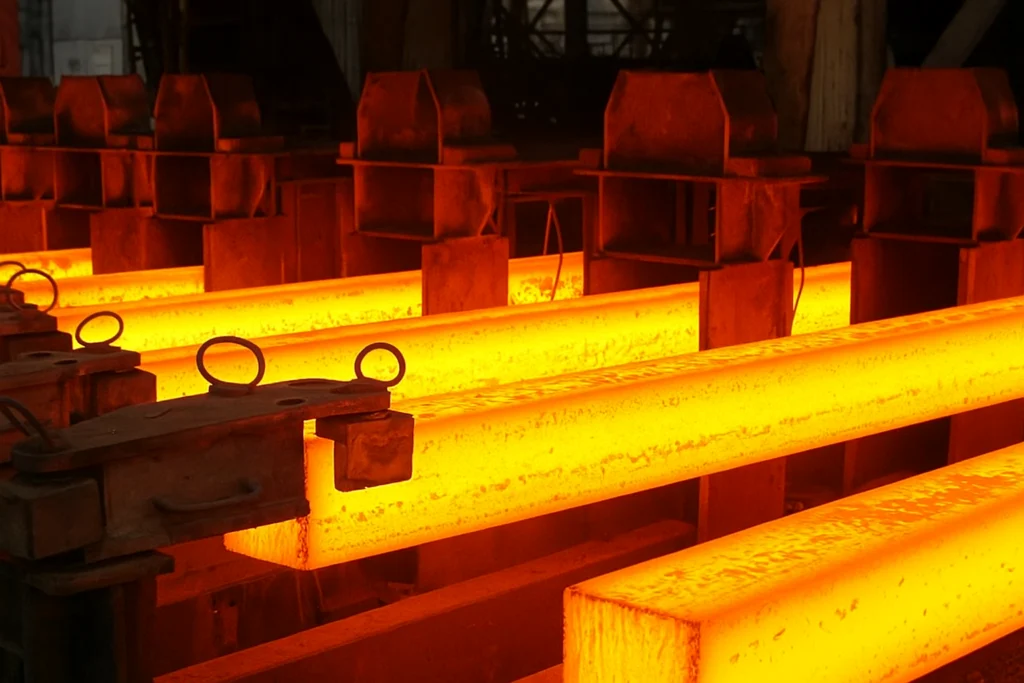
Precision Cast Iron Machining Services for OEM Industrial Parts

ISO-certified CNC machining for gray iron, ductile iron, Image de synthèse, and custom cast iron parts with tolerances up to ±0.005 mm.

    • OIN 9001 Agréé
    • Prototype in 5–7 Days
    • OEM & Low Volume Production
    • CMM Inspection Reports
    • Global Shipping

Envoyez votre demande aujourd'hui

    TOPS Precision offers premier cast iron machining services to clients worldwide across the automotive, aérospatial, automation, et industries de machinerie lourde. Thanks to state-of-the-art tools, années d'expérience, et ISO 9001:2015-certified methods, we meet the needs of small and large production orders. We take care of all steps in prototyping or high-volume manufacturing smoothly and accurately.

    What is Cast Iron Machining?

    Cast iron machining is the accurate process of cutting and forming cast iron items using different removal methods. Using advanced CNC tools and technology, they turn raw cast iron into parts that make up engine blocks and automation frames. Because cast iron is hard, fragile, and abrasive, the process must be suited to those qualities.

    Envoyez votre demande aujourd'hui

      Processus étape par étape: How do We Machine Cast Iron

      Here are some steps of cast iron machining:

      Sélection des matériaux

      Before everything else, pick a suitable grade of cast iron. The specified grade affects things such as part hardness, usinabilité, and the task the part can perform.

      • Gray Iron is famous for having stellar sound-reducing abilities and comfortable machining, which makes it ideal for engine blocks and housings.
      • Its high strength and ductility make Ductile Iron (Nodular Iron) ideal for use in gears, vilebrequins, and essential components.
      • Because of their fragility or additional processing needs, White and Malleable Irons are not used as often as other types.
      • The demands for toughness, flexibilité, and smoothness in your application help decide which type of cast iron you should use.
      How to Cast Iron Machining​
      Setting Up Workholding and Tooling

      Setting Up Workholding and Tooling

      Cast iron must be properly fixed before being machined. The fact that cast iron vibrates needs clamps and setups that are steady and hold the parts well to avoid inaccuracies and keep the tools strong

      Any tooling used with cast iron should be:

      1. Long-lasting when used for wear-resistant tasks (carbure, céramique, or CBN tools).
      2. SG Coated for longer life and better durability
      3. Built to include geometries that lessen the stress applied during machining

      Most workholding devices have damping materials or special jigs to reduce vibration and ensure repeatability in large numbers.

      Envoyez votre demande aujourd'hui

        Opérations d'usinage

        Many types of computer numerical control techniques are at the heart of the cast iron machining process.

        • CNC Turning is used to create cylinders, arbres, and round parts.
        • CNC Milling is used to produce flat surfaces, machines à sous, and 3D contours.
        • To make holes with precision using drilling and boring methods
        • Grinding is useful when maintaining the smoothness of the surface, and high accuracy of dimensions is vital
        • Internal or external threaded features are made using threads & robinets.

        By using multi-axis CNC machines, these operations are combined to achieve better efficiency and accuracy, mainly for complex projects.

        Envoyez votre demande aujourd'hui

          Opérations d'usinage

          Liquide de refroidissement & Gestion des puces

          Machining cast iron makes small, dry chips and dust that might abrade tools or machine parts.

          • Some machines do not use coolant, but in some cases, a low lubrication process (MQL) or special coolant stations are useful to manage heat and preserve the life of tools.
          • It is necessary to have improved evacuation, dust collectors, and vacuum filtration to keep the workstation clean and free from contamination. The right coolant and chip management help avoid tool wear, provide better parts, and make the equipment last longer.

          Envoyez votre demande aujourd'hui

            Inspection & Assurance qualité

            Inspection & Assurance qualité

            Once machining finishes, the parts are carefully tested to be sure they match the needed criteria for size and finish.

            • Dimensional accuracy is determined with the use of Coordinate Measuring Machines (CMMS).
            • We will check surface finishes and smoothness with testers.
            • Using vision and hands checks for any flaws, fissures, burrs or irregularities, it confirms what grade and type of cast iron a material is.
            • We will provide Material certificates as well.
            • Dimensional reports available

            The products from TOPS Precision meet international quality standards by using ISO 9001:2015.

            Envoyez votre demande aujourd'hui

              Cast Iron Properties – Important Features

              You must understand what you are studying before you work on it. These are the main reasons cast iron stands out:

              • High Strength Under Pressure: Great for parts that have to face large static loads
              • Strong Damping Performance: Helps reduce vibration, ideal for the base of a machine
              • Résistance à l'usure: The material can last for a long time in places where it could be abraded
              • Résistance à la traction (in gray iron):Pieces can break easily under tension
              • Ductility Changes: Ductile iron can bend more than gray iron, which is relatively stiff

              Envoyez votre demande aujourd'hui

                Advanced Techniques for Machining Cast Iron

                The following are important and modern techniques we can use for cast iron machining

                Tournage dur

                It is used to smooth and shape cast iron parts that are already very hard due to heat treatment. It is particularly useful for making parts that need to handle tough wear, such as brake discs or gear hubs. Instead of using grinding, hard turning gives an even finish and close tolerances with greater efficiency and lower cost, which is why it’s favored for finishing cast iron parts.

                Multi-axis Machining

                This makes use of CNC machines that support 3-, 4-, and 5-axis to shape cast iron parts with complex geometries in only one setup. With this process, surfaces courbes, caries, and complex angles cause less repositioning and make for more reliable results. It improves how fast work gets done and how well the final outcome turns out.

                Dry Machining

                It does not require the use of coolant almost all of the time. Its unique properties mean that cast iron requires very little or no coolant to be machined, which reduces spending on coolant and prevents wasting it. This way of machining also helps the environment and makes cleaning after machining easier.

                High-Speed Machining

                It depends on using more speed and feed to increase how explosive materials can be removed, even while maintaining accuracy. It is highly useful when working with ductile iron because it lowers cycle time and keeps the finish intact. This method is great when huge volumes need to be printed and time is limited.

                Envoyez votre demande aujourd'hui

                  Grades of Cast Iron We Machine

                  Below are the available grades for cast iron:

                  Grade

                  Description

                  Applications

                  Gray Iron (Class 20–60)

                  High machinability, bonne amortissement

                  Blocs de moteur, pompes, and machinery bases

                  Ductile Iron (60-40-18, etc.)

                  Fort, ductile, Résistant aux impacts

                  Vilebrequin, engrenages, pièces de suspension

                  White Iron

                  Très dur, résistant à l'usure, poor machinability

                  Liners, brake shoes, and crushing equipment

                  Malleable Iron

                  Fort, ductile, à la chaleur

                  Raccords de tuyaux, supports, pièces de transmission

                  Fer graphite compacté (Image de synthèse)

                  Midway between gray and ductile iron

                  Culasses, exhaust manifolds

                  Alloyed Cast Iron

                  Enhanced for heat, porter, ou résistance à la corrosion

                  Rolls, high-temp industrial parts

                  Envoyez votre demande aujourd'hui

                    Our Cast Iron Machining Finishing Options

                    Donc, they may include:

                    Cast Iron Machining Finishing Options

                    Revêtement en poudre

                    It gives a long-lasting surface that is resistant to corrosion by spraying a dry powder that is cured with heat. The method adds a strong outer barrier to cast iron parts, which keeps them safe for outdoor use.

                    Polissage

                    helps the machined cast iron look better by getting rid of minor issues and leaving it smoother and brighter. People often install it on parts that are seen, as appearance is essential, and where the surface feels matter for usage.

                    Peinture

                    Paint is a versatile solution for finishing, as it gives your flooring color and helps protect it. These coatings help parts resist corrosion, humidité, et produits chimiques, and they leave them looking clean and branded, so consumers see them as high quality.

                    Rough blast cleaning

                    It is an option used to smooth, texture, or make the surface of cast iron parts shiny or matte. Parfois, it is applied before painting or coating to make the material stick better, and at other times, it is done by itself to create a smooth finish that meets certain needs for how the surface will look or feel. Cost-Effective Tips for Machining Cast Iron

                    Donc, you can follow:

                    • Choose carbide cutters and blades – They last longer because they resist abrasion caused by iron particles.
                    • Opt for Dry Cutting – when it makes sense to reduce the use of coolant.
                    • Reduce Cycle Time –Make use of CAM software to reduce how long a job takes.
                    • Make Designs Standard –Preparing the equipment is easier, and the tools used are more consistent.
                    • Manage Large Batches – Make the most of economies of scale when handling production runs.

                    Envoyez votre demande aujourd'hui

                      Advantages of Cast Iron Machining

                      Donc, the following are the pros of cast iron machining:

                      • Costs less when done in large production volumes
                      • Vibration-proof structure
                      • All good for situations requiring both stiffness and wear resistance
                      • Can deal with complicated shapes.
                      • Has enough resources to produce and can be recycled

                      Envoyez votre demande aujourd'hui

                        Disadvantages of Cast Iron Machining

                        These are as follows:

                        • The machine is working with a lot of dust and chips.
                        • Cracking risk due to the tension applied.
                        • Heat needs to be managed in special ways for these circuits.
                        • Variations in the surface texture are seen in certain grades.

                        Applications of Our Cast Iron Machining

                        Here are some important areas of application for our cast iron machining:

                        • For Automobiles, we deal with brake discs, blocs moteurs, et collecteurs.
                        • Machinery for Industry: Gear housings, corps de vannes
                        • Matériel de construction:Mounting bases, support frames
                        • Brackets and damping systems are some of the most typical parts of aerospace systems.
                        • Energy area: composants de la pompe, housing enclosures.

                        Envoyez votre demande aujourd'hui

                          Applications of Cast Iron Machining

                          Choose TOPS Precision to Produce Cast Iron Parts

                          Trusted Cast Iron Machining Manufacturer in China

                          • 10+ years machining experience
                          • Exported worldwide
                          • In-house CNC turning / fraisage / ennuyeux
                          • Material traceability
                          • Assistance technique

                          Envoyez votre demande aujourd'hui

                            Nos capacités

                            We stand by every part that we make. We offer the following with our services:

                            • CNC Turning for Shafts / Moyeux
                            • CNC Milling for Bases / Cadres
                            • Precision Boring for Housings
                            • Forage & Tapotement
                            • Broyage de surface
                            • Reverse Engineering Old Parts

                            Envoyez votre demande aujourd'hui

                              Technical Specs

                              Cast Iron Machining Specifications

                              • Tolérance: ±0.005 mm to ±0.02 mm
                              • Taille maximale: Coutume
                              • Finition de surface: Râ 0.8 available
                              • Taille de lot: Prototype to mass production
                              • Lead time: 5–20 days

                              Envoyez votre demande aujourd'hui

                                FAQs About Cast Iron Machining

                                We machine gray iron, ductile iron, Image de synthèse, alloy cast iron, and custom grades.

                                We can achieve tolerances up to ±0.005 mm depending on geometry.

                                Oui. We support small precision parts and large industrial components.

                                Oui. Prototype lead time usually starts from 5–7 working days.

                                Oui. We can measure samples and reproduce replacement parts.

                                Let's Start A New Project Today

                                Envoyez votre demande aujourd'hui

                                  Commencez à taper pour voir les messages que vous recherchez.