

CNC ロボティクスと自動加工は近年前例のない成長を遂げています, 先進的な製造環境に不可欠なコンポーネントになる. CNC ロボティクスは、CNC 機械の精度と産業用ロボットの柔軟性および自動化機能を組み合わせたものです。. この統合により生産性が大幅に向上します, 精度, 運用効率と. この詳細なガイドでは、CNC ロボット工学を詳しく説明します, その利点を強調する, 一般的なアプリケーション, 従来のCNC加工プロセスとの比較.
CNC ロボティクスと自動加工の概要
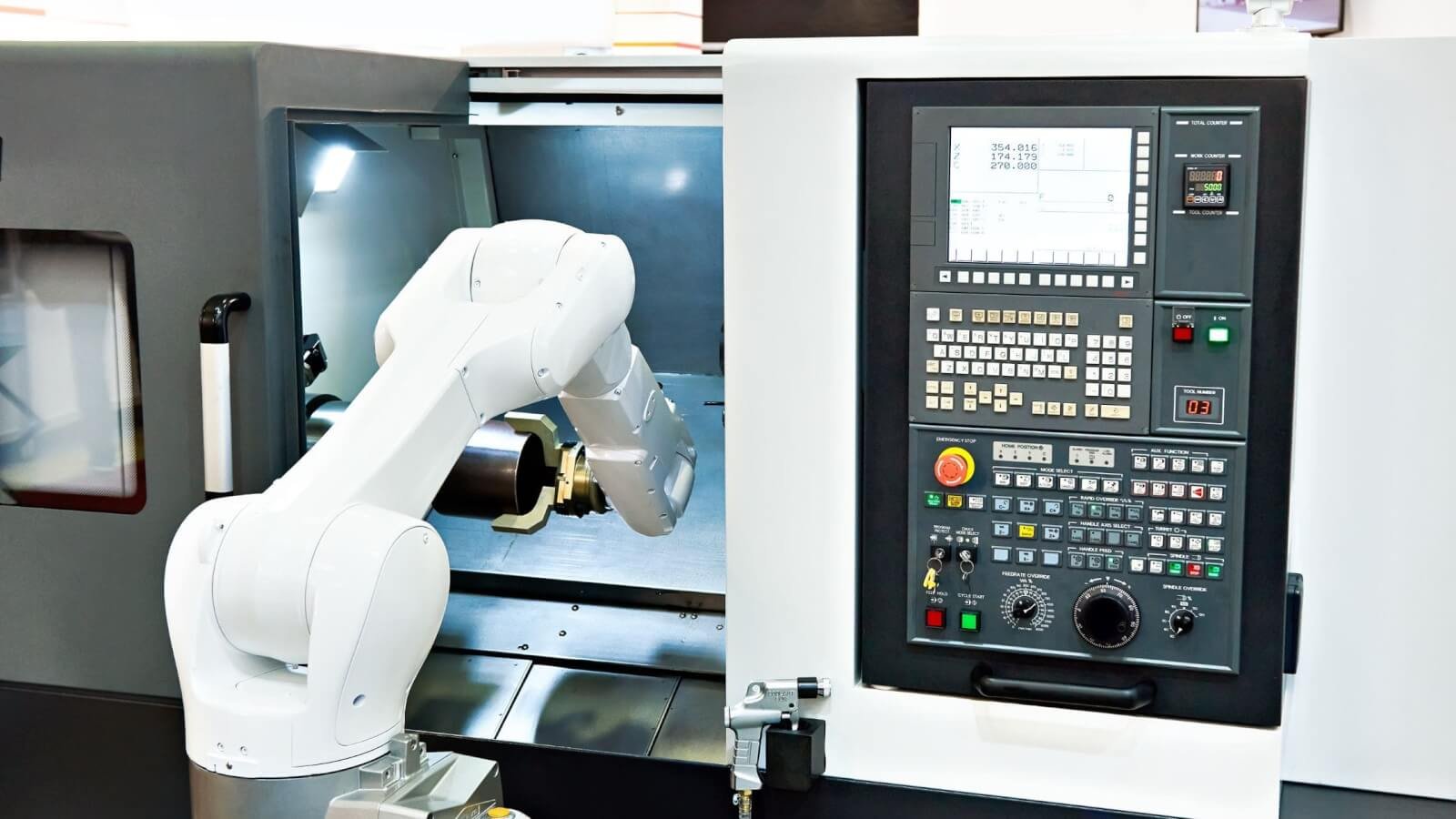
製造業界の継続的な進化により、CNC 加工プロセスにおけるロボット自動化の広範な導入が実現しました。. CNC マシンは歴史的に精密製造を代表していましたが、, ロボティクスの統合により優れた自動化が実現, 多用途性, と効率. 一緒に, CNC 加工とロボット工学により従来の境界が曖昧になります, 産業オートメーションを前進させる.
CNCロボティクスとは?
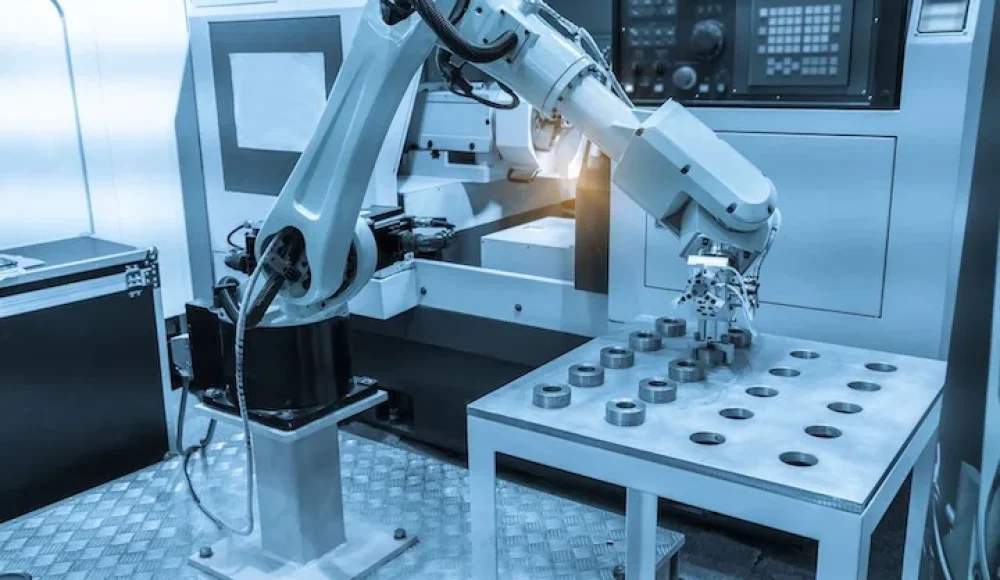
CNCロボット工学 CNC 加工プロセスを補完または強化するために特別に設計されたロボット システムを指します. これらのロボット システムには高度なセンサーが装備されています, アクチュエータ, コントローラー, および自動処理を可能にするソフトウェア, 操作, およびコンポーネントの加工. CNC robotics reduce reliance on manual operators, enhancing repeatability, 効率, そして精度.
Unlike traditional CNC machines—which require operator interaction to load and unload workpieces—CNC robotics operate autonomously following programmed instructions, greatly minimizing human intervention.
ロボット部品の製造における CNC 機械加工の利点
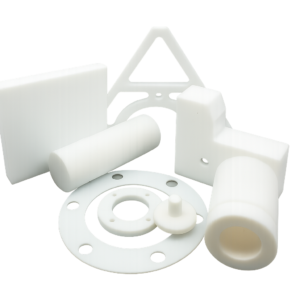
CNC加工 remains the most favored method for producing high-quality robotic components. Several critical advantages justify its widespread adoption in manufacturing robotics:
スピードと効率の向上
CNC machining offers rapid turnaround times and exceptional production speed. Custom robotic parts, 複雑さに応じて, can be manufactured within just 1–3 days, facilitating faster prototyping and iteration cycles.
卓越した寸法精度
Precision is paramount in robotics. CNC machining consistently achieves tight tolerances (up to ±0.0002 inches or ±0.005 mm), ensuring robotic components operate smoothly, predictably, and with high repeatability.
幅広い材料互換性
Robotic components often require robust materials like aluminum alloys, 鋼, チタン, エンジニアリングプラスチック. CNC machining effectively handles these diverse materials, allowing engineers to optimize performance, 重さ, 強さ, そしてコスト.
優れた表面仕上げ
CNC machining delivers excellent surface finishes, typically Ra 0.8 μm or lower, essential for minimizing friction and enhancing durability. Additional finishing processes like polishing, コーティング, and anodizing further enhance component performance.
CNC 加工とロボット産業の統合
CNC machining and robotics are interconnected in modern manufacturing. CNC machining produces critical robotic components, while robots increasingly automate CNC machining operations.
CNC 加工で作られた一般的なロボット部品
CNCロボットアーム
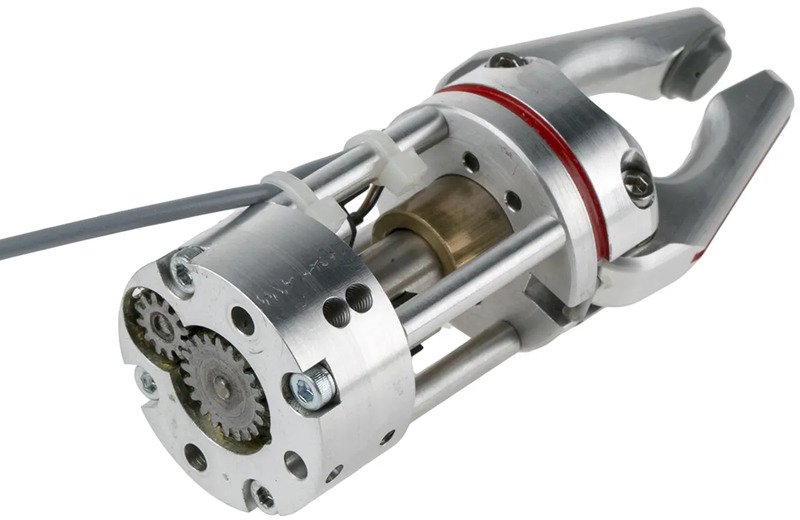
Robotic arms replicate human-like motion to handle tasks requiring precise movement and strength. 一般的な材質にはアルミニウムが含まれます, 鋼鉄, 補強されたプラスチック, machined precisely for mechanical stability.
エンドエフェクター
End effectors, including grippers, vacuum attachments, and specialized tools, directly interact with products or materials. CNC machining precisely crafts these critical attachments for exacting applications.
カスタム治具と治具
Jigs and fixtures securely hold workpieces during robotic operations, ensuring repeatable positioning. CNC machining customizes these devices economically and efficiently.
センサーとコントローラー
Sensors and controllers rely heavily on precision-machined Flex PCB units and high-density interconnects. CNC machining overcomes traditional chemical etching limitations, 精度を確保します, environmental safety, そして信頼性.
CNC 加工で使用される一般的なロボット
多関節ロボット
With rotary joints allowing multiple axes of movement, articulated robots handle complex machining, 組み立て, 溶接, and material handling operations. Their flexibility and versatility make them prevalent across industries.
スカラロボット (選択的コンプライアンス組立ロボットアーム)
SCARA robots provide precise, high-speed performance for repetitive assembly tasks, component inspection, およびパッケージング操作, ideal for compact workspace integration.
デルタロボット
Known for rapid pick-and-place tasks, delta robots offer superior speed and precision, ideal for sorting, 梱包, and assembly operations on conveyor lines.
ガントリー (デカルト座標) ロボット
Operating along linear axes (バツ, Y, Z), gantry robots manage heavier payloads and larger workspaces, making them ideal for material handling, 梱包, loading/unloading, and precision cutting tasks (laser or waterjet cutting).
CNC 機械加工作業におけるロボット工学の利点
Integrating robotics into CNC machining processes offers significant operational advantages, 含む:
生産速度の向上
Robotic automation ensures continuous, uninterrupted operations, significantly reducing production cycle times. Robots maintain consistent output even during prolonged, repetitive tasks.
製造精度の向上
Robotic systems achieve exceptional positional accuracy during loading, unloading, and component handling operations, typically maintaining precision within ±1 mm, greatly enhancing manufacturing consistency.
最適な表面仕上げ
Robotic handling ensures precise alignment and minimizes surface imperfections, improving the quality and consistency of finished products.
マルチタスク機能
Robots efficiently handle simultaneous operations like loading/unloading, 検査, と包装, maximizing productivity while CNC machines perform primary machining tasks.
CNC マシンと CNC ロボティクスの違い
Despite overlapping functions, CNC machines and CNC robots exhibit key performance differences:
正確さ
CNC Machines: Achieve ultra-high precision (±0.02–0.05 mm), with specialized Swiss lathe systems offering even finer tolerances.
CNCロボット: Generally achieve ±0.1–0.2 mm precision, focusing more on repeatability than absolute accuracy.
多用途性
CNC Machines: Specialized for precise machining tasks like milling, 旋回, 掘削, with limited degrees of freedom.
CNCロボット: Offer significantly higher versatility, easily adapting to multiple tasks simultaneously with greater degrees of freedom.
剛性
CNC Machines: 高剛性 (>50 N/µm), ensuring accuracy during heavy cutting and machining of hard materials.
CNCロボット: Lower rigidity (<1 N/µm), suitable primarily for softer materials like plastics, 複合材, or lightweight metals.
ワークスペースのサイズ
CNC Machines: Typically offer limited workspace based on their enclosed design.
CNCロボット: Feature larger, flexible workspace configurations that can be expanded with additional axes.
手頃な価格
CNC Machines: Cost-effective for repetitive, high-volume precision machining tasks.
CNCロボット: Offer broader operational flexibility, making them cost-effective for multitasking and complex workflows.
CNC ロボティクスは CNC マシンに取って代わるのか?
While CNC robotics continues to evolve, CNC machines retain superior precision, 剛性, and specialization capabilities. CNC robotics complement rather than replace CNC machines, effectively handling automation tasks and complex motions, while CNC machines remain best suited for ultra-precision machining tasks.
Integration of CNC robotics and CNC machining achieves optimal productivity, 正確さ, 運用効率と.
精度の高いトップ CNC Machining Services for Robotic Components
Manufacturing precision robotic parts demands a reliable CNC machining partner. Tops Precision provides professional CNC machining services, featuring:
Highly skilled engineering teams and expert CNC operators.
Rigorous quality control and inspection processes.
速いターンアラウンド, 競争力のある価格設定, and superior quality assurance.
Customers can send CAD designs to Tops Precision, receive instant quotations, and obtain automated Design for Manufacturing (DFM) 報告.
試す 精度の高いトップ today for efficient and accurate CNC machining services.
結論
CNC robotics represents an exciting advancement in automated manufacturing, seamlessly merging robotic flexibility with CNC precision. As CNC machines remain essential for specialized machining, robotics augment automation, 柔軟性, そして生産性.
Choosing a qualified manufacturing partner ensures optimized outcomes. For professional CNC machining of robotic components, contact Tops Precision and experience unmatched precision, スピード, and service quality.
よくある質問
1. CNC マシンと CNC ロボティクスの主な違いは何ですか?
The core difference lies in Accuracy vs. 多用途性. CNC machines are built with extreme 剛性 (high stiffness) to achieve ultra-high precision (例えば, ± 0.02 んん) during heavy, specialized cutting tasks. CNC robots have lower rigidity, resulting in slightly less accuracy (例えば, ± 0.1 んん), but offer much greater 柔軟性, a larger workspace, and better multitasking capabilities (取り扱い, 読み込み中, 検査, 等).
2. CNC 加工がロボット コンポーネントの製造に推奨される理由?
CNC machining is preferred because robotic systems demand parts with exceptional 寸法精度 and specific material properties. CNC delivers:
-
厳しい公差: Ensuring smooth, repeatable operation of joints and actuators.
-
材質の適合性: Effectively processing high-strength materials like specialized aluminum alloys and titanium is required for lightweight, strong robotic arms.
-
優れた表面仕上げ: Reducing friction and wear on moving parts.
3. CNC ロボットを重金属の切断に使用できますか??
It is generally 推奨されません for heavy cutting (high material removal rates) on hard metals like stainless steel or tool steel. Due to their inherently lower 剛性 (compared to a heavy CNC mill), robots are prone to おしゃべり and vibration under heavy load, leading to poor surface finish and reduced accuracy. They are better suited for light materials, finishing tasks (研削, 研磨), or handling/loading operations.
4. 既存の CNC マシンをロボット自動化で改造できるか?
はい, most existing CNC machines can be retrofitted to integrate robotics. This typically involves adding an external articulated robot or gantry system dedicated to machine tending (loading and unloading workpieces) or performing secondary operations like part cleaning or inspection. This integration significantly boosts spindle uptime and efficiency without replacing the primary machining asset.
5. 「耐クリープ性」とは,CNC で作られたロボット部品においてそれがなぜ重要なのか?
クリープ is the slow, permanent deformation of a material under continuous stress, especially at elevated temperatures. In robotics, components like motor mounts and structural joints must maintain their shape precisely over thousands of cycles. CNC machining allows the use of specific, high-performance alloys (例えば, specialized aluminum) that have been engineered for excellent 耐クリープ性, ensuring the robot’s long-term positional accuracy and reliability.
6. CNC 加工作業を自動化するために最も一般的に使用されるロボットの種類は何ですか?
最も一般的なタイプには次のものがあります。:
-
多関節ロボット: Highly flexible, used for complex material handling and machine tending, often reaching multiple machines.
-
ガントリー (デカルト座標) ロボット: Operate along linear axes (バツ, Y, Z), ideal for handling heavy payloads and servicing very large workspaces, often used for loading/unloading large workpieces or pallets.
7. CNC ロボティクスは最終的に従来の CNC マシンに取って代わるのでしょうか?
いいえ, they are generally seen as complementary technologies. Traditional CNC machines will continue to dominate the niche requiring ultra-high absolute accuracy, maximum rigidity, and the ability to perform heavy, demanding material removal. CNC robotics specializes in オートメーション, 柔軟性, そして multitasking. Optimal manufacturing utilizes both: the CNC machine cuts the part with precision, and the robot handles it efficiently.
続きを読む:
Guide to CNC Milling and Turning
Understanding Surface Finishes in CNC Machining
CNC Machining Quality Control Procedures