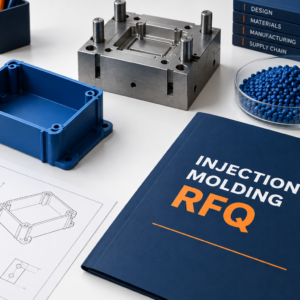



Injection molding regrind control starts with a written material agreement. Specify whether regrind is allowed, its permitted source, blend limit, and qualification evidence. Clean runners from an approved grade still have processing history. Your approval should address that history before production begins.
Define Exactly What Regrind Means On Your Order
Your specification should distinguish controlled molding scrap from purchased recycled compounds and mixed waste.
For this guide, regrind means granulated molding scrap proposed for reuse. Identify the original resin manufacturer, 正確なグレード, 強化, color system, and source process. A shared polymer family name does not establish material equivalence.
Separate clean runners from rejected parts. Rejects may contain contamination or material damaged during abnormal processing. Define which scrap categories are eligible and which require disposal or separate review.
UL Solutions explains regrind and recycled plastics, including distinctions relevant to certification. Do not assume that an in-house regrind allowance authorizes purchased recycled material. Confirm the applicable product requirements separately.
Set A Grade And Application Specific Blend Limit
Your permitted regrind content must follow the material guidance and approved application requirements.
There is no universal blend percentage suitable for every molded part. A material supplier’s allowance does not automatically satisfy your drawing, customer specification, or product approval conditions. Record the controlling requirements before comparing quotes.
State the calculation basis clearly. If your limit is by mass, require a method that controls mass proportions. Define whether additives are included in the denominator. An unexplained blender setting is insufficient evidence of the actual mixture.
Specify the approved range and how deviations are handled. If regrind supply varies, confirm whether production may run with less regrind. Your validation should cover the permitted operating conditions.
Control Source Separation And Processing History
Your supplier should preserve material identity from scrap collection through storage and feeding.
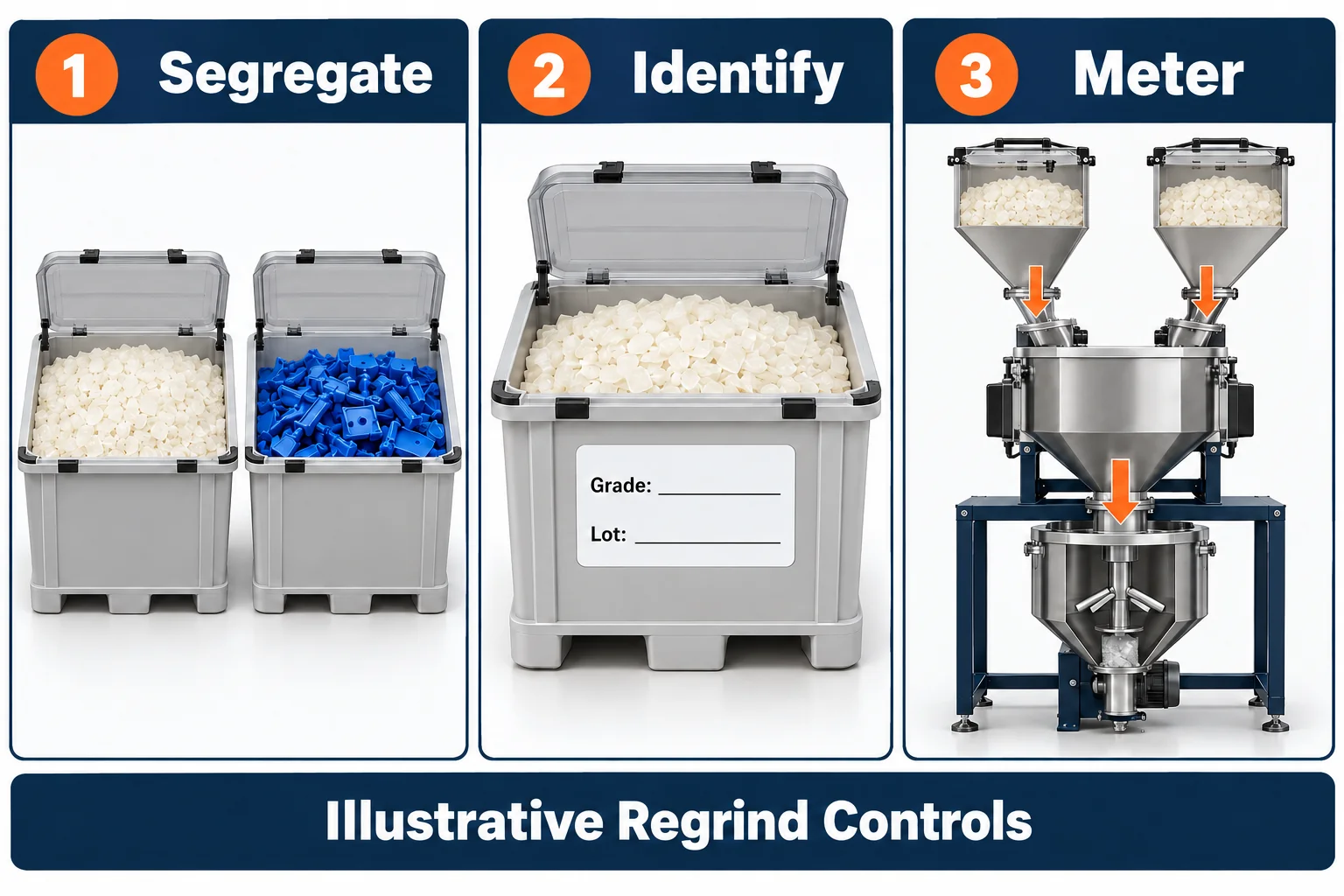
Use dedicated or properly cleaned collection and granulation equipment. Keep different grades, 色, and reinforced materials segregated. Identify containers and prevent anonymous scrap from entering an approved stream.
Ask how the supplier tracks repeated processing. Returning runners from a blend can create material with different numbers of melt histories. A stated blend percentage alone does not describe that history.
Agree a practical limit or approved control method for repeated reuse. Record how startup scrap, purges, and abnormal rejects are handled. Do not approve an unrestricted return loop merely because the first trial looks acceptable.
BASF's Ultramid processing guidance highlights contamination, 水分, and repeated processing concerns for its materials. Use the current recommendations for your actual grade when defining controls.
Review Drying And Dosing As Separate Controls
Your material preparation plan must address both moisture condition and blend consistency.
Regrind can behave differently from uniform virgin pellets during handling and feeding. Ask how the supplier verifies the dosing equipment with the actual material. Review cleaning, calibration or checks, alarms, and records required by your agreement.
For moisture-sensitive grades, define appropriate drying and moisture verification. Do not assume the original virgin-resin packaging condition applies after grinding and storage. 私たちの resin drying guide explains the separate drying decisions.
A drying instruction cannot replace source traceability. 同じく, a correct blend ratio cannot establish acceptable moisture condition. Require evidence for both where your material demands it.
Qualify Parts Under The Proposed Conditions
Your approval trial should evaluate relevant part requirements using the proposed grade, blend, and processing history.
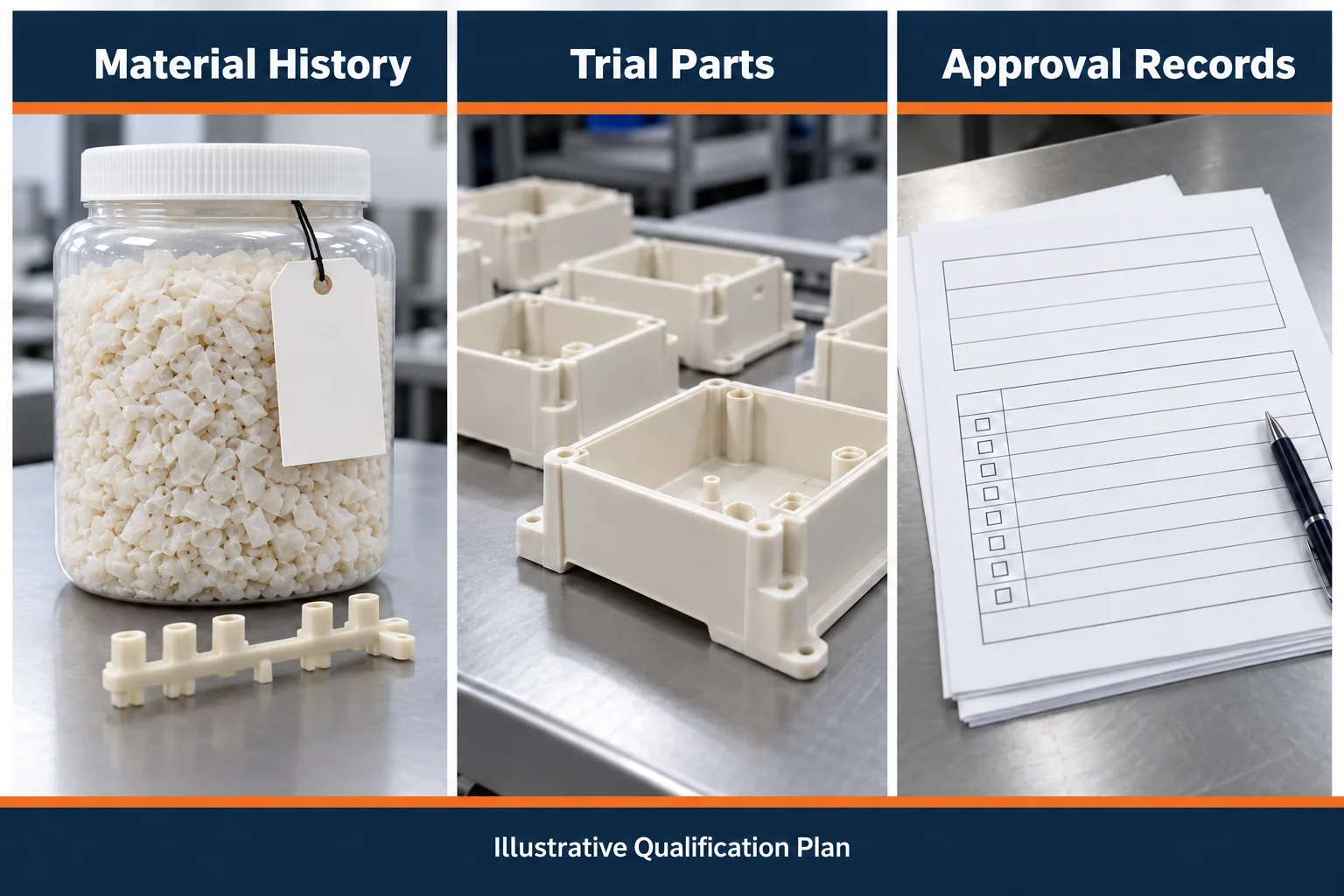
Compare the proposed material condition against an agreed baseline. Select tests that represent the part’s actual function. アプリケーションに応じて, these may address dimensions, アセンブリフィット, インパクト, 外観, or electrical performance.
Do not infer complete performance from color matching or a single tensile value. 強化, 添加物, and processing history can affect different properties differently. Agree the test methods and acceptance criteria before making samples.
For certified products, verify the current authorized material and manufacturing conditions. Treat certification review separately from ordinary dimensional inspection. Do not claim a rating solely because the virgin grade has one.
| Approval Item | 同意する情報 | Evidence To Retain |
|---|---|---|
| マテリアルアイデンティティ | メーカー, 学年, 色, 強化 | Original material and scrap source records |
| Eligible Scrap | Allowed runners and reject categories | Segregation and disposition procedure |
| Blend Control | Limit, mass basis, permitted range | Dosing checks and production records |
| Material History | Reuse policy and abnormal scrap rules | Traceable container and processing records |
| Part Qualification | Baseline, tests, 合格基準 | Trial conditions and results |
| Change Approval | Changes requiring review | Customer approval and affected lot identity |
Compare Supplier Proposals On The Same Basis
Your quotation request should state the approved material conditions and evidence required for shipment.
Compare virgin-only and permitted-regrind proposals only when their approval scope is clear. Sorting, granulation, 乾燥, dosing, qualification, and recordkeeping can affect the total cost. Avoid assuming that all recovered scrap becomes usable production feed.
TOPS プレシジョンのオファー プラスチック射出成形サービス. Submit your material restrictions during project review. Confirm the proposed source controls, trial scope, and reporting requirements for your specific part.
よくある質問
Your decision should follow the approved grade and application requirements rather than a generic recycling percentage.
Can Regrind Replace Virgin Resin Without Approval
Only within your documented permission and qualification scope. Require review when the material condition differs from the approved specification.
Is Clean Regrind Equivalent To Unprocessed Pellets
It has already experienced processing. Cleanliness alone does not establish equivalent performance or an acceptable reuse history.
Does A Regrind Allowance Prove Recycled Content Claims
いいえ. Define and substantiate any environmental claim separately. An approved molding process does not automatically validate a marketing claim.
資材管理レビューをリクエストする
お問い合わせ with your drawing, exact resin grade, 年間生産量, そしてプログラムライフ. Include regrind restrictions and required tests. Agree the material control plan before approving production.