



ステンレス鋼はクロム含有量により腐食に強い, 保護酸化層を形成する. 強度の異なるファミリーとグレードが用意されています, 被削性, および腐食挙動. このガイドでは主要なプロパティについて説明します, 人気グレード, そしてそれぞれがどこに当てはまるのか.
ステンレス鋼とは何ですか?
ステンレス鋼は、少なくとも約 10.5% クロム.
クロムは薄い層を形成します, 腐食をブロックする自己修復酸化層. ステンレスが錆びにくいのはこのためです. あらゆる環境で錆びないわけではありません, しかし、適切なグレードは、ほとんどの産業および日常の条件に耐えます.
ステンレス鋼の特性の与え方?
特性は鉄に添加された合金元素に由来します.
| 要素 | 主な役割 |
| クロム | 不動態皮膜を形成します; について 10.5% 最小値はステンレス鋼を定義します |
| ニッケル | オーステナイトを安定させ、靭性と成形性を高めます。 |
| モリブデン | 塩化物中での孔食や隙間腐食に対する耐性が向上します。 |
| 炭素 | 強度を追加します, しかし多すぎると溶接時に鋭敏化を引き起こす可能性があります |
| マンガンと窒素 | オーステナイトを強化し安定化させる |
| 硫黄 | などの材種の被削性を向上させます。 303, ただし耐食性が低下する可能性があります |
これらの要素がその理由を説明します 303, 304, 316, 410, そして 2205 違う行動をする.
主要な物理的および機械的特性
クロムは不動態皮膜を形成します. モリブデンは孔食や隙間腐食に対する耐性を向上させることができます, 一方、ニッケルはオーステナイトを安定化し、靭性に貢献します。, 成形性, 選択された環境における耐腐食性能.
以下の表は、一般的な室温の値を示しています。. 商品の形状や状態により異なります, したがって、規格と工場証明書と照合して検証してください.
| 財産 (典型的な) | 304 | 316 | 303 | 17-4 PH (H900) |
| 密度 (g/cm3) | 7.9 | 8.0 | 7.9 | 7.8 |
| 弾性率 (GPa) | 193 | 193 | 193 | 196 |
| 降伏強さ (MPa) | 205 | 205 | 205 | 1170 |
| 抗張力 (MPa) | 515 | 515 | 620 | 1310 |
| 硬度 | について 92 HRB | について 95 HRB | について 92 HRB | について 44 HRC |
| 焼きなましすると磁性を帯びる | いいえ | いいえ | いいえ | はい |
オーステナイトグレードは、アルミニウムや炭素鋼よりも熱伝導率が低くなります。, 温度が上がるとさらに膨張します. これは、温度変化が起こる機械加工や組み立てにおいて重要です。.
ステンレス鋼 5 族
| 家族 | 代表的なグレード | 主な特徴 | 一般的な用途 |
| オーステナイト系 | 304, 316, 303, 321 | 焼きなましすると非磁性になります, 成形可能, 溶接可能 | 食べ物, 医学, 化学薬品, 海洋 |
| フェライト系 | 430, 409 | 一般に磁性, 低コスト, 適度な耐食性 | トリム, 自動車の排気ガス |
| マルテンサイト系 | 410, 420, 440 | 一般に磁性, 熱処理により硬化可能 | カトラリー, シャフト, バルブ |
| デュプレックス | 2205 | 高強度, 耐塩化物性 | マリン, 化学薬品, 石油とガス |
| 析出硬化 | 17-4 PH | 非常に高い強度と良好な耐食性 | 航空宇宙, 医療器具 |
人気のステンレス鋼グレードの比較
| 学年 | 家族 | 耐食性 | 被削性 | 強さ | 典型的な使用 |
| 304 | オーステナイト系 | 良い | 適度 | 良い | 一般産業用, 食べ物 |
| 316 | オーステナイト系 | より優れた耐塩化物性 304 | 適度 | 良い | マリン, 化学薬品 |
| 303 | オーステナイト系 | 良い | 素晴らしい | 良い | 精密機械加工部品 |
| 430 | フェライト系 | 適度 | 良い | 適度 | トリム, 家電製品 |
| 410 | マルテンサイト系 | 適度 | 公平 | 硬化後は高い | バルブ, シャフト |
| 17-4 PH | 析出硬化 | 良い | 公平 | 老化後は非常に高い | 航空宇宙, 医学 |
| 2205 | デュプレックス | より優れた耐塩化物性 316 多くの状況で | 公平 | 高い | マリン, 石油とガス |
評価は相対的なものです. 熱処理に依存します, 表面状態, と環境.
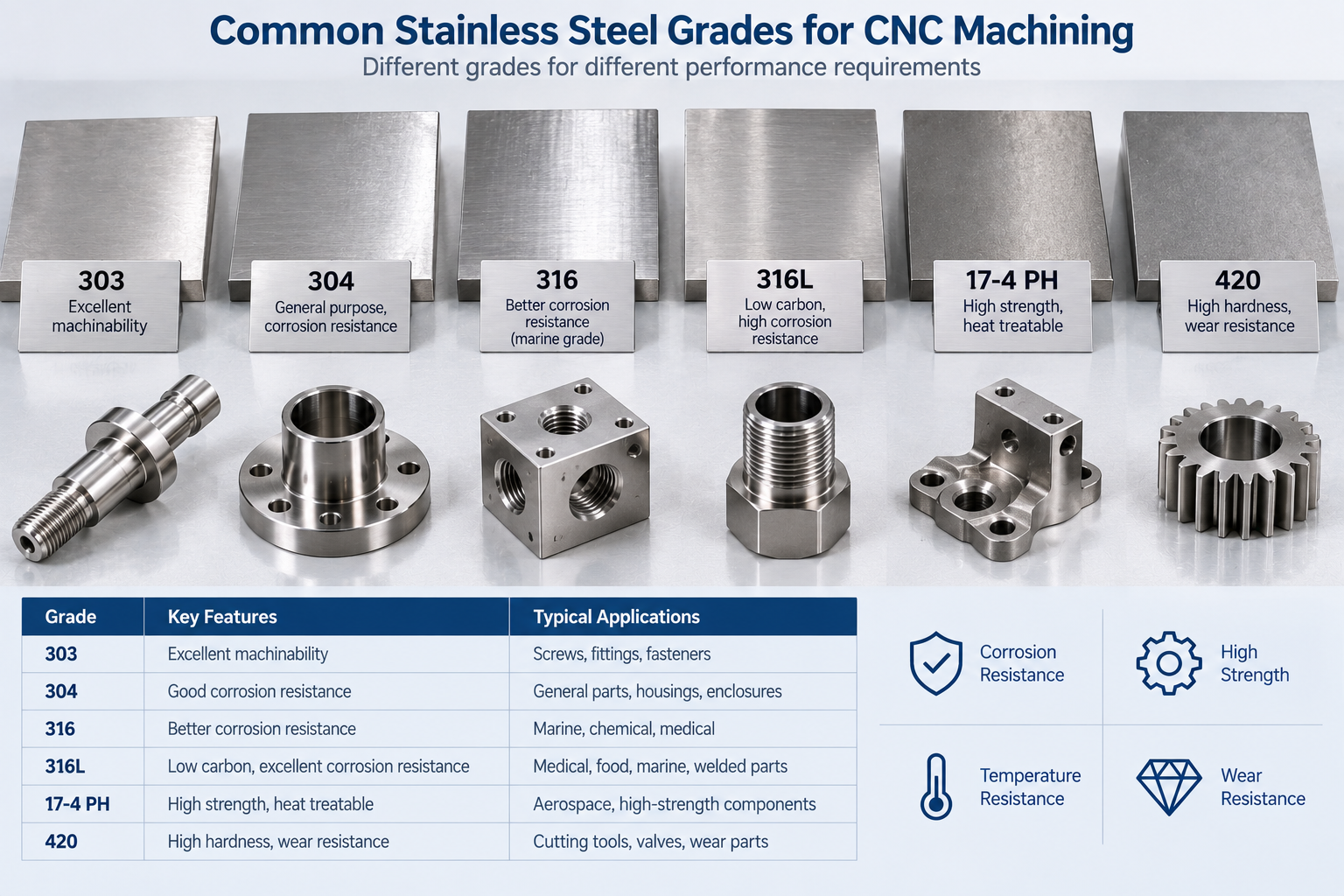
304 対 316 対 303 対 17-4 PH
- 304 工業用および食品接触用の汎用グレードです。.
- 316 モリブデンを添加, より優れた耐塩化物性を与えます。 304.
- 303 加工用に最適化されており、より簡単に切断できます, しかし、多くの用途では耐食性が低下し、溶接性が低下します。.
- 17-4 PH は時効後に非常に高い強度を与えます, ただし条件が指定されている場合のみ. 17-4 PH H900とH1150は同じ強度ではありません, 硬度, または加工動作.
溶接アセンブリ用, 低炭素の 304L および 316L グレードが一般的な選択肢です. 感作性および関連する腐食問題に対する感受性を軽減します。. 見る 316 vs 316L 詳細については.
ステンレス鋼はどのように腐食するのか?
ステンレス鋼は不適切な条件下でも腐食する可能性があります.
- 孔食: 局所的な攻撃, 多くの場合塩化物から.
- 隙間腐食: ガスケットの下を攻撃する, ファスナー, または預金.
- ガルバニック腐食: 導電性環境における異種金属との接触.
- 粒界腐食: 炭素含有量が高い場合、溶接による鋭敏化に従うことができます.
- 応力腐食割れ: 高温塩化物環境における引張応力下での亀裂.
グレード, 表面仕上げ, リスクを決めるのは環境と環境. 見る さまざまな種類のステンレス鋼 もっと.
ステンレス鋼の用途
| 業界 | 代表的なグレード | なぜ |
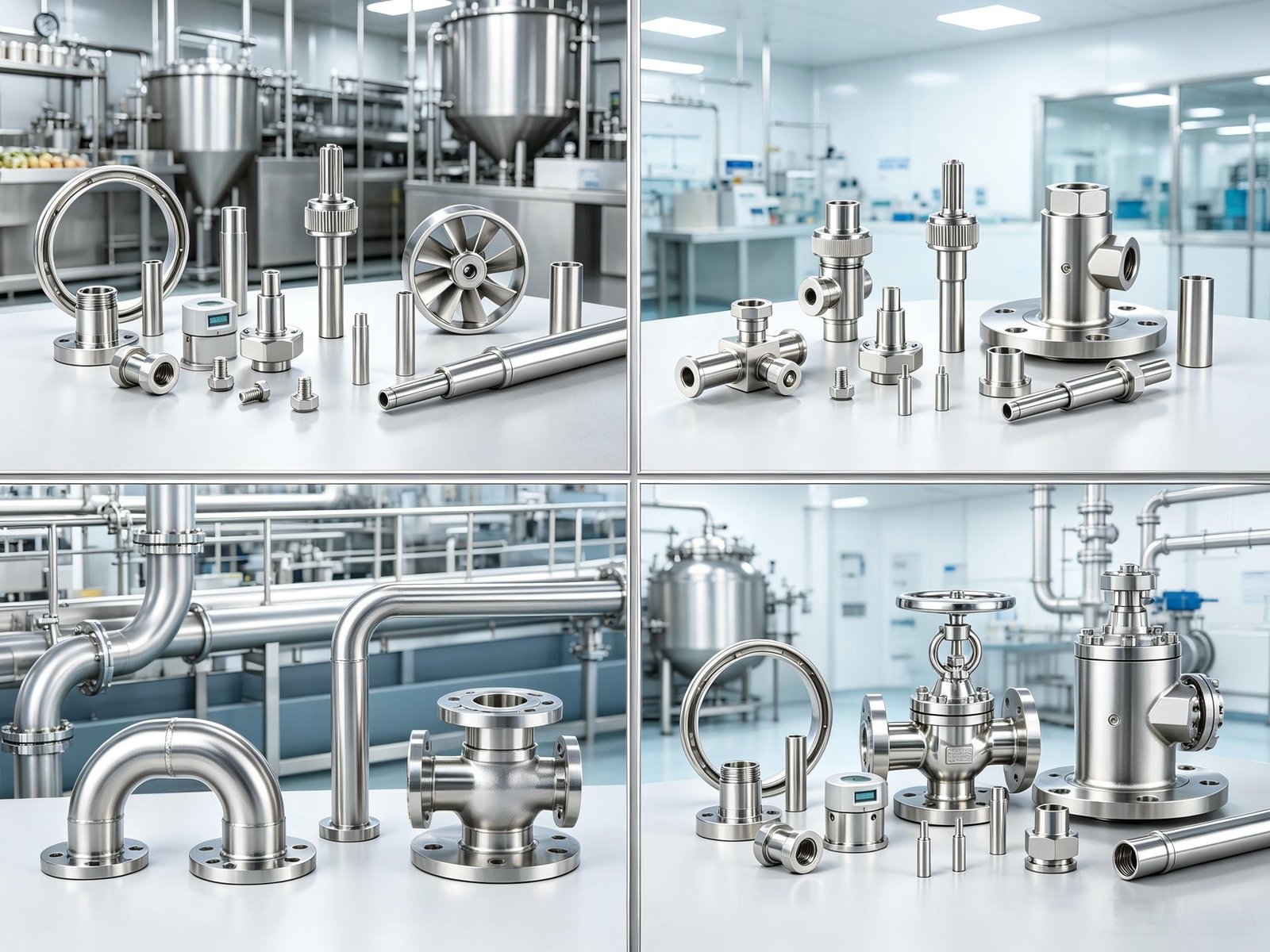
| 食べ物と飲み物 | 304, 316 | 洗浄可能, 耐食性表面 |
| 医療機器 | 316L, 17-4 PH | 耐食性と強度 |
| マリン | 316, 2205 | 耐塩化物性 |
| 化学処理 | 316, 2205 | 耐薬品性および耐腐食性 |
| 航空宇宙 | 17-4 PH, 321 | 強度と耐熱性 |
| 建築 | 304, 316 | 外観と耐候性 |
| 自動車 | 409, 430 | 排気およびトリム部品 |
医療上の適合性はデバイスによって異なります, 適用可能な材料仕様, 表面状態, トレーサビリティ, および規制要件. グレードだけでは医療用途に適した部品とは言えません.
ステンレス鋼のグレードの選び方
環境で選ぶ, 機械的要件, 製造方法, そしてコスト.
- 環境を特定する. 塩化物, 食品との接触, そして化学物質はそれぞれ家族を示しています.
- 必要な強度と硬さを設定します. 製造後の硬化はマルテンサイトまたは PH グレードを示します.
- 部品の作り方を決める. 機械加工の多い部品を優先 303. 溶接アセンブリには 304L または 316L が適しています.
- コストと入手可能性を比較する. 合金グレードが高いほどコストが高くなります.
- グレードを確認する, 気性, 規格および材料証明書に対する条件.
ステンレス鋼の加工に関する考慮事項
ステンレスの加工には熱の管理が必要です, 加工硬化, そしてチップス.
- ステンレスはアルミニウムよりも効率的に切断面から熱を伝導しません。.
- オーステナイト系グレードは長寿命, 良好な切りくず処理が必要な糸状の切りくず.
- 303 機械加工が最も簡単なステンレスグレードです.
- 304 そして 316 一生懸命働く, したがって、鋭利な超硬工具と一貫した送りを使用してください。.
- 留まったり、軽いこすり傷を繰り返したりすることは避けてください。, 表面を加工硬化させることができます.
- クーラントを使用して刃先の熱を制御します.
実践的な詳細については, 見る ステンレス鋼の切り方 そして私たちの ステンレス鋼加工サービス.
表面処理と不動態化
機械加工後, 部品を徹底的に洗浄し、遊離鉄汚染を除去してきれいな不動態表面をサポートするために必要な不動態化を指定します。.
ヒートティント, 規模, または機械加工によりクロムが減少した表面層, 溶接, または加熱には酸洗いまたはその他の適切な処理が必要になる場合があります. 不動態化だけではこれらの状態が必ずしも解消されるわけではありません.
ステンレス鋼が最良の選択ではない場合
ステンレス鋼は依然として腐食する可能性があり、常に最良の材料であるとは限りません.
- 間違ったグレードに塩化物を使用すると、穴が開いたり亀裂が入ったりする可能性があります.
- 腐食のリスクがない場合、炭素鋼の方がコストが安くなります.
- 糸や留め具が摩耗する可能性があります. 焼き付き防止グレードまたは互換性のあるグレードを使用してください.
- オーステナイト系グレードは確実に磁性を示すわけではありません. 磁気応答は組成と処理に依存します.
- 電気伝導率と熱伝導率は銅やアルミニウムより低い.
ステンレスの性質を持たずに高強度が必要な場合, 比較する 合金鋼対ステンレス鋼.
よくある質問
最も一般的なステンレス鋼のグレードは何ですか?
304 そして 316 最も一般的です. 303 機械加工部品では一般的です.
違いは何ですか 304 そして 316 ステンレス鋼?
316 モリブデンを添加, 塩化物環境における孔食や隙間腐食に対する耐性を向上させます。.
違いは何ですか 303 そして 304 ステンレス鋼?
303 は機械加工用に最適化されており、一般的により簡単に切断できます。 304, しかし、多くの用途では耐食性が低下し、溶接性が低下します。. 使用 304 加工速度よりも耐食性と製造が重要な場合.
ステンレス鋼の磁気です?
それは家族によります. オーステナイト系グレードは、焼きなましするとほとんど非磁性になります. フェライト系, マルテンサイト系, および二相グレードは一般に磁性を持ちます.
食品との接触に最適なステンレス鋼はどれですか?
304 そして 316 洗浄可能で耐腐食性があるため、一般的です。.
海洋用途に最適なステンレス鋼はどれですか?
316 多くの海洋および沿岸用途に一般的に使用されています. デュプレックスグレードなど 2205 より高い強度と耐塩化物性が必要な場合に選択可能. 実際の選択は温度によって異なります, 塩化物濃度, 隙間, そして露出.
違いは何ですか 304 と304L, または 316 と316L?
Lグレードは低炭素です. 感作リスクを軽減し、溶接アセンブリでは一般的です。.
ステンレス鋼をCNC加工できますか?
はい. 303 最も簡単に機械を動かす, その間 304 そして 316 より鋭利な工具と制御された切断が必要.
ステンレス鋼グレードの選択に関するヘルプを見る
グレードを教えてください, 状態, 環境, 機械的要件, と量. 弊社エンジニアが仕様を確認させていただきます, 加工と仕上げを見直す, 材料証明のある部品を引用します.


12 』への思いステンレス鋼: プロパティ, グレード, そしてアプリケーション”