Centrifugal casting is the most efficient and reliable manufacturing methods for producing high-strength cylindrical metal components. From stainless steel pipes and alloy sleeves to cylinder liners and bearing rings, this process is widely used across industries that demand exceptional mechanical properties, 構造的完全性, and dimensional consistency.
Compared with traditional casting methods, centrifugal casting offers significant advantages in terms of density, grain refinement, reduced porosity, and production efficiency. It is particularly suitable for manufacturing tubular and rotationally symmetrical components where performance and durability are critical.
この包括的なガイドで, you will learn:
What centrifugal casting is
How the centrifugal casting process works
Main types of centrifugal casting
Step-by-step production procedures
Advantages and limitations
Common materials and defects
産業用途
Differences between centrifugal casting and other casting methods
How to choose the right centrifugal casting supplier
What Is Centrifugal Casting?
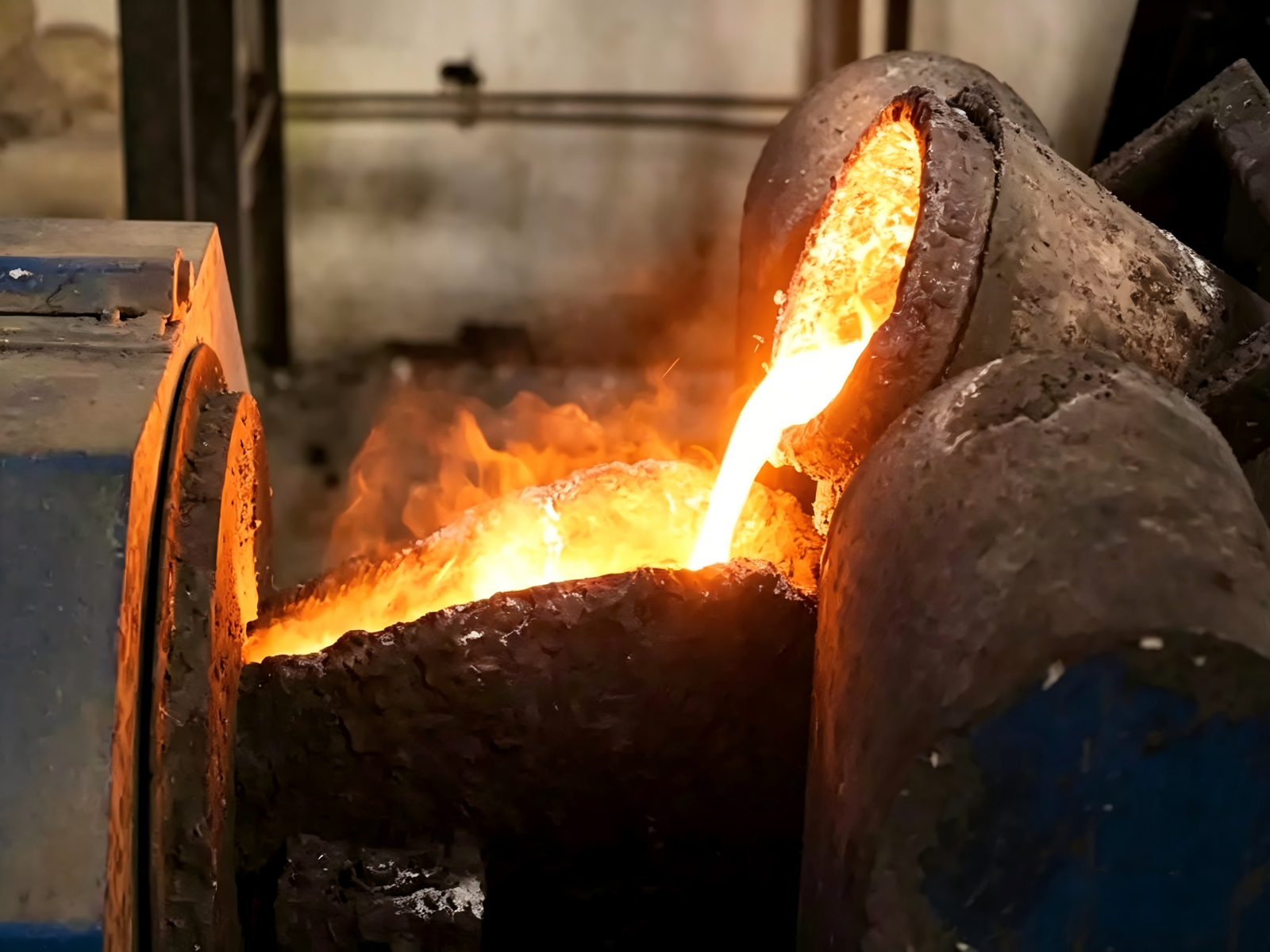
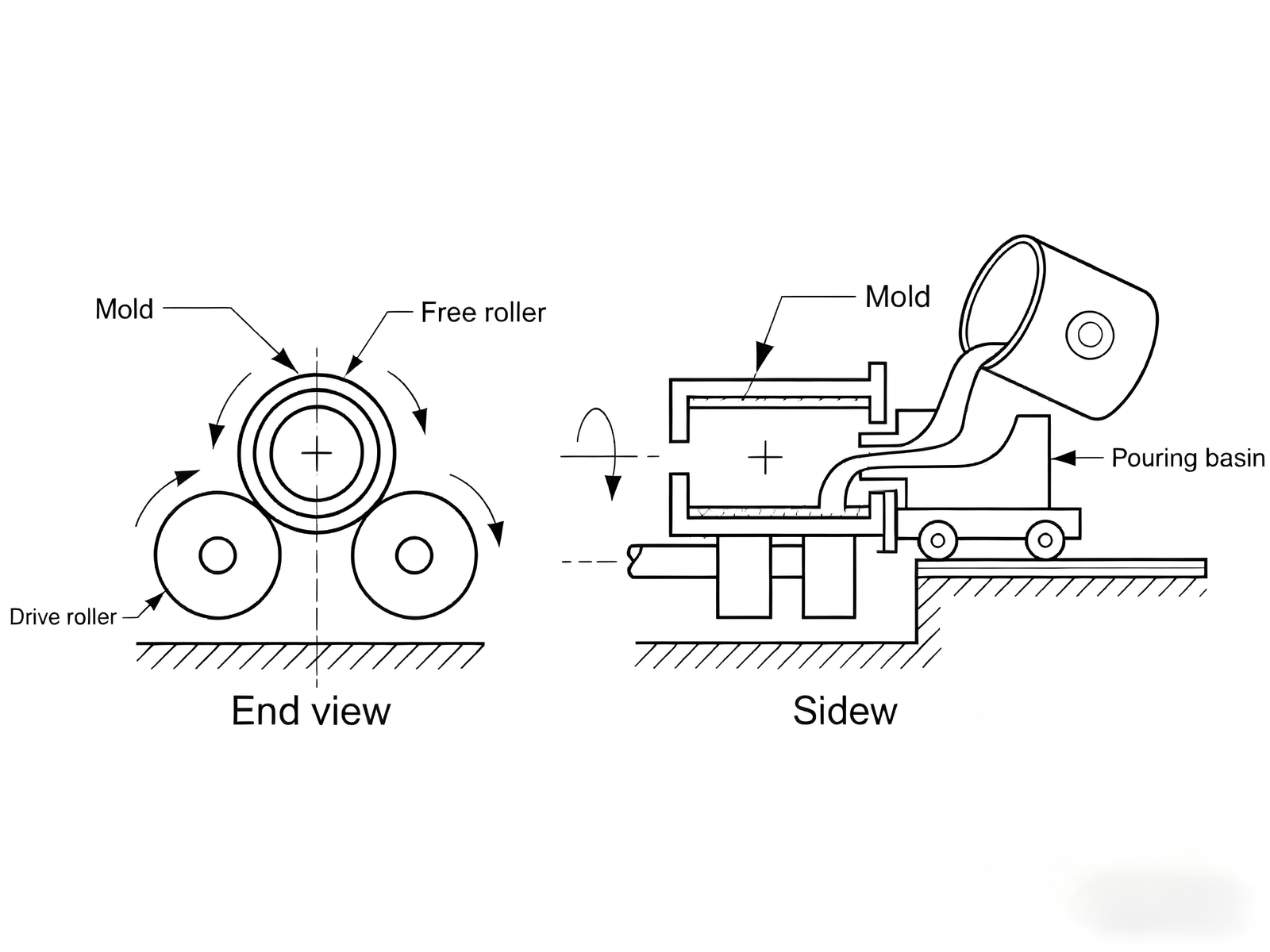
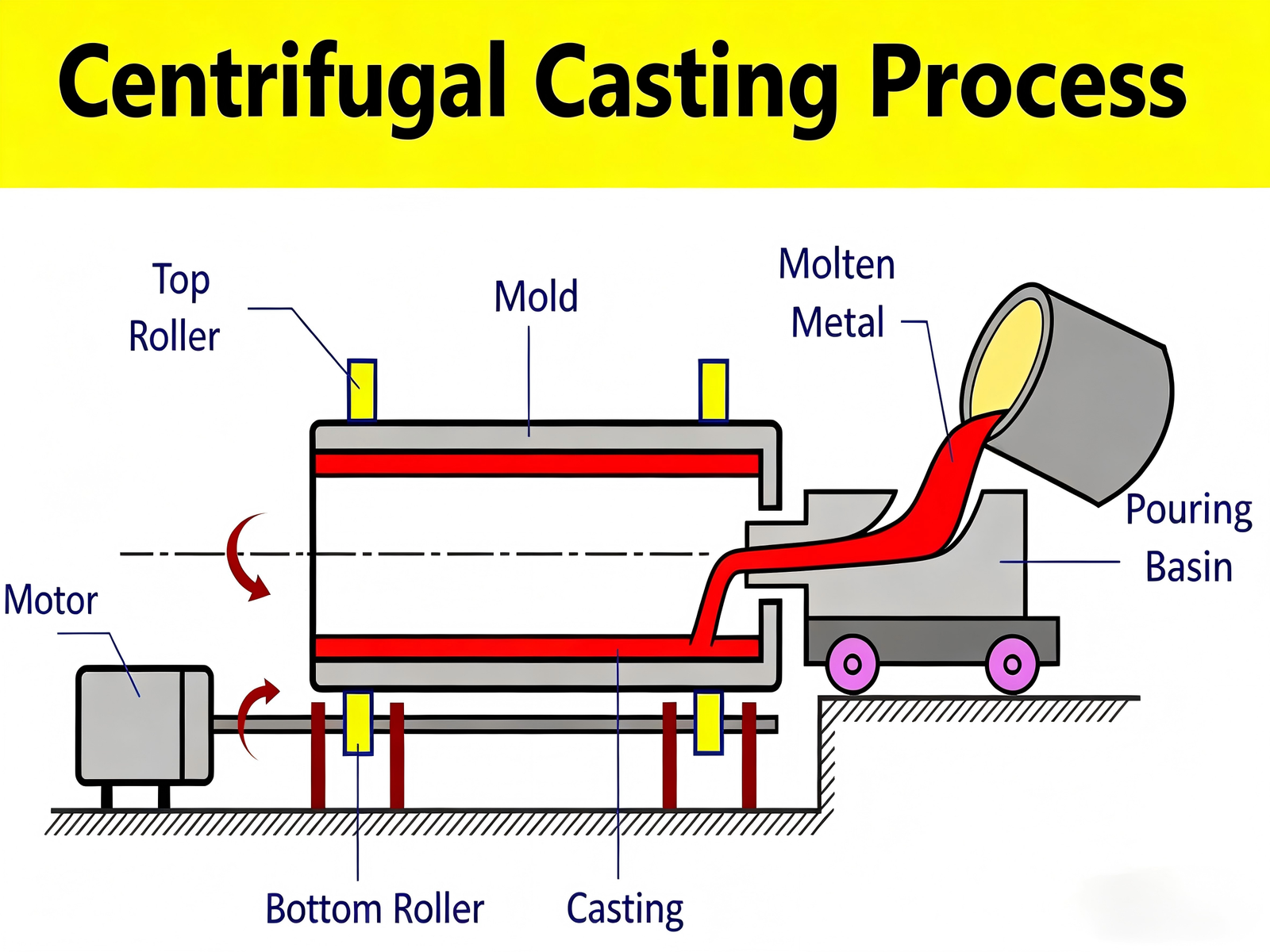
Centrifugal casting is a metal casting process in which molten metal is poured into a rotating mold. The rotational force generated by the spinning mold pushes the molten metal toward the mold wall, where it solidifies under controlled conditions.
The process is also commonly known as:
Spin casting
Rotational casting
Roto casting
Unlike conventional gravity casting, centrifugal casting uses centrifugal force to distribute molten metal evenly throughout the mold cavity. This creates dense and fine-grain structures with minimal internal defects.
The process is primarily used to manufacture:
パイプ
チューブ
ブシュ
Sleeves
指輪
Bearing housings
Cylinder liners
Gear blanks
Because of its ability to produce highly reliable parts with excellent metallurgical properties, centrifugal casting is widely adopted in industries such as oil and gas, 航空宇宙, 自動車, 採掘, 発電, と重機.
Why Centrifugal Casting Is Important in Modern Manufacturing
Modern industrial systems require components that can withstand:
High temperatures
Heavy loads
Pressure fluctuations
Corrosive environments
Abrasive wear
Traditional casting processes sometimes struggle to meet these demands due to porosity, shrinkage defects, and inconsistent grain structures. Centrifugal casting addresses these challenges by improving metal density and reducing impurities.
Key reasons why centrifugal casting remains important include:
Excellent Mechanical Strength
The centrifugal force compacts molten metal during solidification, producing dense microstructures and improved mechanical properties.
Reduced Porosity
Gas bubbles and impurities tend to migrate toward the inner diameter, allowing manufacturers to remove defect-prone sections through machining.
Superior Grain Structure
Directional solidification improves grain refinement, which enhances toughness, 疲労耐性, そして耐久性.
コスト効率
The process minimizes material waste and reduces secondary machining requirements for cylindrical parts.
Coreless Hollow Casting
Unlike many traditional casting methods, centrifugal casting can produce hollow tubes and cylinders without using cores.
How the Centrifugal Casting Process Works
The centrifugal casting process relies on controlled rotational force and directional solidification.
Basic Working Principle
The process typically follows these steps:
A mold rotates at high speed.
Molten metal is poured into the rotating mold.
Centrifugal force pushes the molten metal against the mold wall.
The metal solidifies from the outer diameter inward.
The finished casting is extracted and machined.
The faster the mold rotates, the stronger the centrifugal force acting on the molten metal.
This force helps:
Compact the metal structure
Remove gas pockets
Improve density
Reduce inclusions
Role of Centrifugal Force in Metal Solidification
Centrifugal force is the core mechanism behind the process.
During rotation:
Heavier and denser metal particles move outward
Lighter impurities migrate inward
Gas pockets move toward the inner surface
This creates several benefits:
Improved Purity
The outer region of the casting becomes cleaner and denser.
Fine Grain Formation
Rapid directional cooling improves metallurgical structure.
Reduced Shrinkage Defects
The process naturally compensates for shrinkage during solidification.
Better Mechanical Performance
The resulting parts exhibit:
Higher tensile strength
Improved impact resistance
Better fatigue performance
Materials Used in Centrifugal Casting
One of the major advantages of centrifugal casting is its compatibility with a wide range of metals and alloys.
一般的な資料には含まれます:
ステンレス鋼
Widely used for:
Corrosion-resistant pipes
化学処理装置
Food-grade tubing
Popular grades:
304 ステンレス鋼
316 ステンレス鋼
Duplex stainless steel
炭素鋼
に適しています:
構造用途
Heavy industrial equipment
Pressure systems
鋳鉄
Common for:
Engine cylinder liners
Brake drums
パイプ
ニッケル合金
で使用されます:
航空宇宙
Marine systems
High-temperature environments
例:
インコネル
ハスロイ
コバルト合金
に適しています:
Wear-resistant applications
Extreme temperature environments
銅合金
に使用されます:
ブシュ
ベアリング
船舶用ハードウェア
Main Types of Centrifugal Casting
Centrifugal casting can be classified in two major ways:
By mold orientation
By casting method
Classification by Mold Orientation
Horizontal Centrifugal Casting
In horizontal centrifugal casting, the mold rotates along a horizontal axis.
This method is ideal for manufacturing:
Long pipes
チューブ
Sleeves
Cylindrical shells
利点
Excellent dimensional consistency
High productivity
均一な肉厚
Ideal for high L/D ratio parts
代表的なアプリケーション
Steel pipes
Heat-resistant furnace tubes
油圧シリンダ
Oilfield tubing
Horizontal centrifugal casting is especially popular in the oil and gas and power generation industries.
Vertical Centrifugal Casting
In vertical centrifugal casting, the mold rotates around a vertical axis.
This process is more suitable for components with shorter lengths and larger diameters.
利点
Suitable for ring-shaped components
Better for complex symmetrical shapes
Lower tooling complexity for some applications
代表的な製品
Bearing rings
Gear blanks
Flywheels
Cylinder liners
To minimize distortion caused by gravity, manufacturers often use specially designed molds and optimized rotational speeds.
Classification by Casting Method
True Centrifugal Casting
True centrifugal casting is primarily used for hollow cylindrical parts.
No cores are required because centrifugal force naturally forms the hollow center.
Process Overview
Molten metal enters the rotating mold
Centrifugal force distributes metal along the mold wall
Solidification occurs outward to inward
Inner impurities are machined away
利点
Excellent density
優れた機械的特性
Reduced internal defects
Common Products
パイプ
チューブ
ブシュ
Sleeves
Semi-Centrifugal Casting
Semi-centrifugal casting is used for solid rotationally symmetrical parts.
Unlike true centrifugal casting, this method creates solid components rather than hollow sections.
代表的な製品
Flywheels
Brake drums
Gear blanks
Pulleys
重要な利点
The rotational force improves density and feeding characteristics during solidification.
Centrifuging Casting
Centrifuging casting is used to manufacture smaller and more complex parts.
Molten metal flows from a central sprue through runners into multiple mold cavities.
アプリケーション
ジュエリー
歯科用コンポーネント
Small bushings
Precision industrial parts
This process allows manufacturers to produce multiple components simultaneously with excellent filling characteristics.
Step-by-Step Centrifugal Casting Process
Although process details vary depending on component geometry and material selection, the overall workflow generally includes the following stages.
1. カビの準備
Proper mold preparation is essential for achieving high-quality castings.
クリーニング
The mold surface must be free from:
Dust
Oxides
Residual materials
Contaminants
Preheating
Preheating prevents:
Thermal shock
Premature solidification
Surface defects
Refractory Coating Application
A ceramic or refractory coating is applied to:
Protect the mold
Control heat transfer
Improve surface finish
Facilitate part removal
Proper coating thickness is critical for process stability.
2. Molten Metal Pouring
The molten metal is transferred from the furnace using ladles or automated pouring systems.
Important process variables include:
注湯温度
Excessively high temperatures may cause:
酸化
Grain coarsening
Surface defects
Low temperatures may cause:
Misruns
Incomplete filling
Pouring Speed
Stable pouring minimizes turbulence and gas entrapment.
Mold Rotation Synchronization
The mold may:
Rotate before pouring
Start rotating during pouring
Precise synchronization improves metal distribution.
3. Rotational Solidification
After pouring, the mold continues spinning while the metal solidifies.
Directional Solidification
Cooling begins at the mold wall and progresses inward.
これにより、:
Fine grain structures
Improved density
Better metallurgical properties
Impurity Segregation
Lighter impurities move toward the inner diameter, where they can later be removed by machining.
4. Cooling and Part Extraction
固化後, the component is cooled under controlled conditions.
Improper cooling can lead to:
ひび割れ
Distortion
Residual stress
Special extraction equipment may be used to remove the part safely.
5. Post-Processing Operations
Most centrifugal castings require secondary processing.
Typical operations include:
熱処理
Enhances:
強さ
硬度
耐摩耗性
機械加工
改善します:
寸法精度
表面仕上げ
同心
Surface Treatment
例:
研削
研磨
コーティング
Shot blasting
検査
Quality control methods may include:
Ultrasonic testing
X-ray inspection
Dye penetrant testing
Dimensional inspection
Advantages of Centrifugal Casting
Centrifugal casting offers several significant advantages over conventional casting processes.
Superior Mechanical Properties
The process creates dense and refined grain structures.
利点には含まれます:
Higher tensile strength
Better fatigue resistance
Improved impact toughness
Reduced Casting Defects
Centrifugal force minimizes:
Gas porosity
Shrinkage cavities
インクルージョン
This improves product reliability.
優れた表面仕上げ
The mold wall acts as a smooth forming surface, reducing roughness and machining requirements.
高い生産効率
Advantages include:
より速いサイクル時間
Reduced material waste
Lower rejection rates
No Need for Cores
Hollow components can be produced without internal cores, simplifying tooling and reducing costs.
Flexible Wall Thickness
Manufacturers can produce:
Thin-wall tubes
Thick-wall cylinders
Multi-layer structures
Multi-Layer Casting Capability
Centrifugal casting supports bi-metallic and composite structures.
例えば:
Wear-resistant outer layers
Corrosion-resistant inner layers
This is especially valuable in mining and chemical industries.
Limitations of Centrifugal Casting
その利点にもかかわらず, centrifugal casting also has certain limitations.
Limited Shape Capability
The process works best for rotationally symmetrical components.
Complex non-cylindrical shapes are usually unsuitable.
High Initial Equipment Cost
Manufacturers must invest in:
Rotational casting machines
Specialized molds
Control systems
Inner Diameter Accuracy Challenges
The inner surface may require machining to achieve precise tolerances.
Process Control Complexity
Critical parameters include:
Rotational speed
Pouring temperature
冷却速度
Mold balancing
Poor control can lead to defects.
Key Process Parameters Affecting Casting Quality
Several factors directly influence centrifugal casting performance.
回転速度
遅すぎる:
Incomplete metal distribution
速すぎる:
Turbulence
Segregation
注湯温度
Must match:
Alloy characteristics
Mold size
Part geometry
Mold Coating
Proper refractory coatings improve:
表面仕上げ
Thermal control
Mold life
Cooling Rate
Cooling affects:
Grain structure
Residual stress
Mechanical properties
Metal Cleanliness
High-purity molten metal reduces inclusions and defects.
Common Defects in Centrifugal Casting
Even advanced processes may experience casting defects.
ガス気孔率
原因
Entrapped gas
Excess turbulence
Improper pouring
ソリューション
Degassing
Controlled pouring
Optimized mold speed
Segregation
原因
Improper solidification
Excessive rotational force
ソリューション
Proper speed control
Alloy optimization
ひび割れ
原因
Thermal stress
不均一な冷却
ソリューション
Controlled cooling
Proper mold preheating
表面欠陥
原因
Poor mold coating
Contaminated molds
ソリューション
Better mold preparation
Correct refractory application
Industrial Applications of Centrifugal Casting
Centrifugal casting serves many industries that require durable cylindrical components.
石油およびガス産業
Products include:
Pipe systems
Drilling sleeves
Corrosion-resistant tubes
These components must withstand:
高圧
Abrasive fluids
Corrosive environments
自動車産業
アプリケーションには以下が含まれます:
Brake drums
Cylinder liners
Bearing housings
The process improves wear resistance and structural integrity.
航空宇宙産業
Nickel and cobalt alloy centrifugal castings are used in:
High-temperature systems
Turbine applications
エンジンコンポーネント
Power Generation Industry
Products include:
Heat-resistant tubes
Boiler components
Turbine sleeves
Mining and Heavy Equipment
Mining applications require:
耐摩耗性
Heavy-load durability
Common products:
ブシュ
ローラー
Wear sleeves
Centrifugal Casting vs Other Casting Processes
Understanding the differences between casting methods helps manufacturers choose the right solution.
Centrifugal Casting vs 砂型鋳造
| 特徴 | Centrifugal Casting | 砂型鋳造 |
| 密度 | より高い | より低い |
| 気孔率 | 最小限 | More common |
| 表面仕上げ | より良い | 粗い |
| 機械的強度 | より高い | 適度 |
| に最適です | 円筒形の部分 | 複雑な形状 |
Centrifugal Casting vs インベストメント鋳造
Investment casting is better for:
複雑な形状
厳しい許容範囲
Centrifugal casting is better for:
Tubular parts
Dense structures
High-volume cylindrical components
Centrifugal Casting vs ダイカスト
Die casting is suitable for:
非鉄合金
Thin-wall complex parts
Centrifugal casting is preferred for:
Larger cylindrical components
高強度アプリケーション
How to Choose the Right Centrifugal Casting Supplier
Selecting the right manufacturing partner directly affects product quality and project success.
Engineering Capability
A qualified supplier should provide:
DFM analysis
Material recommendations
Process optimization
材料に関する専門知識
The supplier should understand:
Stainless steel casting
Nickel alloys
Heat-resistant materials
Wear-resistant alloys
Quality Inspection Systems
探す:
ISO認定
NDT capabilities
Metallurgical testing
Machining Capability
Many projects require:
CNC旋削加工
つまらない
フライス加工
研削
Integrated machining services reduce lead time and cost.
Production Capacity
考慮する:
Casting size range
Monthly output
Tooling capability
Customization flexibility
結論
Centrifugal casting remains one of the most effective manufacturing methods for producing high-strength cylindrical metal components with superior density, excellent grain structure, and minimal internal defects.
Compared with conventional casting methods, it offers major advantages in:
Mechanical performance
生産効率
Material utilization
Defect reduction
The process is widely used across industries such as oil and gas, 自動車, 航空宇宙, 採掘, and power generation because of its ability to manufacture durable and reliable components under demanding operating conditions.
しかし, achieving consistent quality requires precise control of:
Rotational speed
Pouring temperature
Mold preparation
冷却速度
材料構成
For companies seeking high-performance cast metal components, working with an experienced centrifugal casting manufacturer is essential.
A reliable supplier can help optimize:
Material selection
Casting design
Machining operations
Inspection procedures
生産効率
Whether you require stainless steel tubes, alloy sleeves, cylinder liners, or custom industrial castings, centrifugal casting provides a highly efficient and cost-effective manufacturing solution for demanding applications.
よくある質問
What is centrifugal casting mainly used for?
Centrifugal casting is primarily used to manufacture cylindrical metal components such as pipes, チューブ, sleeves, ブッシング, and cylinder liners.
What metals can be used in centrifugal casting?
Common materials include stainless steel, 炭素鋼, 鋳鉄, ニッケル合金, コバルト合金, and copper alloys.
What is the difference between true centrifugal casting and semi-centrifugal casting?
True centrifugal casting produces hollow cylindrical parts, while semi-centrifugal casting is used for solid rotational components such as flywheels and brake drums.
Is centrifugal casting expensive?
The initial equipment investment is relatively high, but the process becomes cost-effective for medium- and high-volume cylindrical component production.
What are the main advantages of centrifugal casting?
Major advantages include:
高密度
Reduced porosity
Excellent mechanical properties
Improved grain structure
Lower machining costs
Does centrifugal casting require cores?
いいえ. Hollow cylindrical components can often be produced without cores because centrifugal force naturally creates the hollow section.
What industries use centrifugal casting?
産業には含まれます:
Oil and gas
自動車
航空宇宙
Power generation
マイニング
重機製造
What causes defects in centrifugal casting?
Common causes include:
Improper rotational speed
Poor mold preparation
Incorrect pouring temperature
Inadequate cooling control
Can stainless steel be centrifugally cast?
はい. Stainless steel is one of the most commonly used materials in centrifugal casting due to its corrosion resistance and mechanical strength.
How accurate is centrifugal casting?
The process offers good dimensional consistency, although secondary machining is often required for critical tolerances and inner diameters.
Relevant Links:
ダイカストとダイカストの完全ガイド. 砂型鋳造: 適切な製造プロセスの選択;
アルミニウムダイキャスティングの完全なガイド: プロセス, 合金, 仕上げ & アプリケーション;
亜鉛ダイカスト: プロセス, 合金, 機械, および産業上の利点;