



従来の大量生産方式とは異なり、, CNC 加工により、自転車メーカーは材料選択をより細かく制御できるようになります, 寸法精度, weight optimization, そしてカスタマイズ. This makes it particularly suitable for premium bicycles, racing bikes, マウンテンバイク, 電動自転車, custom bicycle builds, and low- 中量生産まで.
But which bicycle parts are actually made with CNC machining? Why is CNC machining preferred for these components? Which materials are commonly used? And when should a bicycle manufacturer choose CNC machining instead of casting or forging?
このガイドでは、最も一般的なものについて説明します CNC machined bicycle parts, the advantages and limitations of CNC machining, 材料オプション, manufacturing considerations, and how to choose the right CNC machining partner.
1. What Is CNC Machining and Why Is It Important for Bicycle Parts?
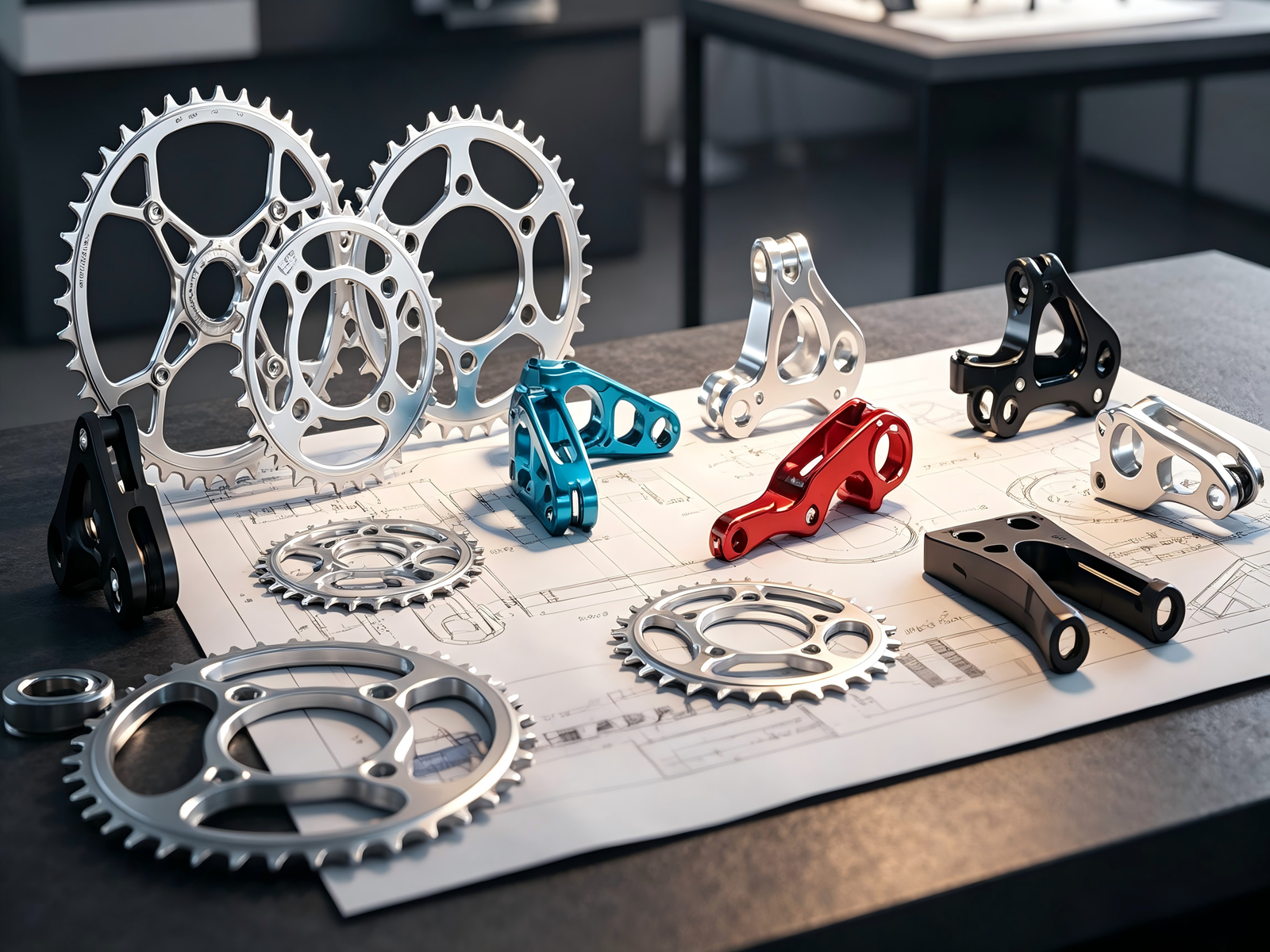
1.1 CNC加工とは何ですか?
CNC stands for コンピュータ数値制御. CNC加工 is a subtractive manufacturing process in which computer-controlled machines remove material from a solid workpiece to create a finished component.
The manufacturing process typically starts with a digital CAD model. Engineers convert the design into machine instructions using CAM software. The CNC machine then controls the movement of cutting tools along multiple axes to remove material precisely according to the programmed geometry.
Depending on the component and design requirements, メーカーは使用する可能性があります:
For bicycle components, CNCフライス加工 is especially common because many parts require complex pockets, 湾曲した表面, bores, threaded holes, and lightweight structures.
The process can produce components directly from materials such as aluminum, チタン, ステンレス鋼, 鋼鉄, 真鍮, エンジニアリングプラスチック.
1.2 Why Is CNC Machining Suitable for Bicycle Components?
Bicycle components operate under a wide range of mechanical loads. Crank arms experience repeated torque, hubs carry wheel loads, stems must withstand steering forces, and brake components need to maintain accurate alignment under mechanical and thermal stress.
これらのアプリケーション向け, small dimensional errors can affect:
- Component fit
- 機械的性能
- Rider safety
- 重さ
- 耐久性
- Noise and vibration
- Assembly efficiency
CNC machining is well suited to these requirements because it offers excellent dimensional control and repeatability.
例えば, a CNC-machined hub can be manufactured with precise bearing seats and concentric bores. A CNC-machined stem can maintain accurate clamping surfaces. A derailleur hanger can be produced with precise mounting holes and alignment features.
This level of precision is particularly valuable when multiple components must work together as a complete bicycle system.
2. 一般的に CNC 機械加工で作られる自転車部品はどれですか?
Not every bicycle component requires CNC machining. しかし, parts that require high precision, 複雑な形状, lightweight construction, or customization are often excellent candidates.
Here are some of the most common CNC machined bicycle parts.
2.1 CNC Machined Cranksets and Crank Arms
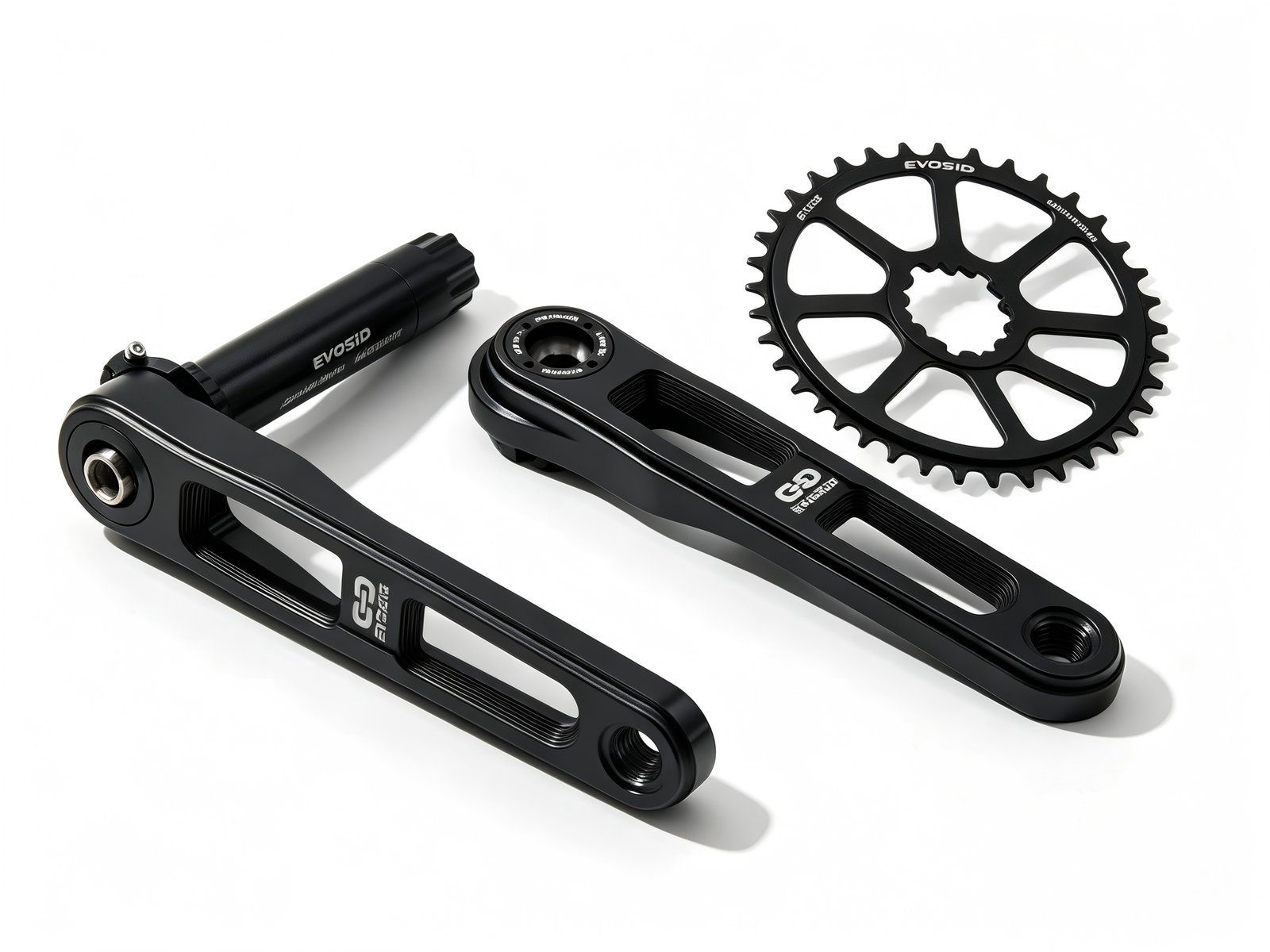
Crank arms are among the most demanding bicycle components because they transfer the rider’s pedaling force directly to the drivetrain.
During normal operation, crank arms experience repeated torque and cyclic loading. They therefore require a combination of:
- 高強度
- 軽量
- 寸法精度
- Structural stiffness
- 耐疲労性
CNC machining allows manufacturers to optimize crank arm geometry by removing material from low-stress areas while maintaining sufficient material around critical load-bearing zones.
Aluminum alloys such as 6061-T6 and 7075-T6 are commonly considered for CNC-machined bicycle crank components.
CNC machining can also create precise:
- Pedal threads
- Bottom bracket interfaces
- Chainring mounting holes
- Weight-reduction pockets
- Decorative features
For premium bicycle manufacturers, CNC machining can provide greater design freedom than conventional manufacturing processes.
しかし, because crank arms are safety-critical components, the final design must be properly engineered and validated for the intended loads and application.
2.2 CNC Machined Chainrings
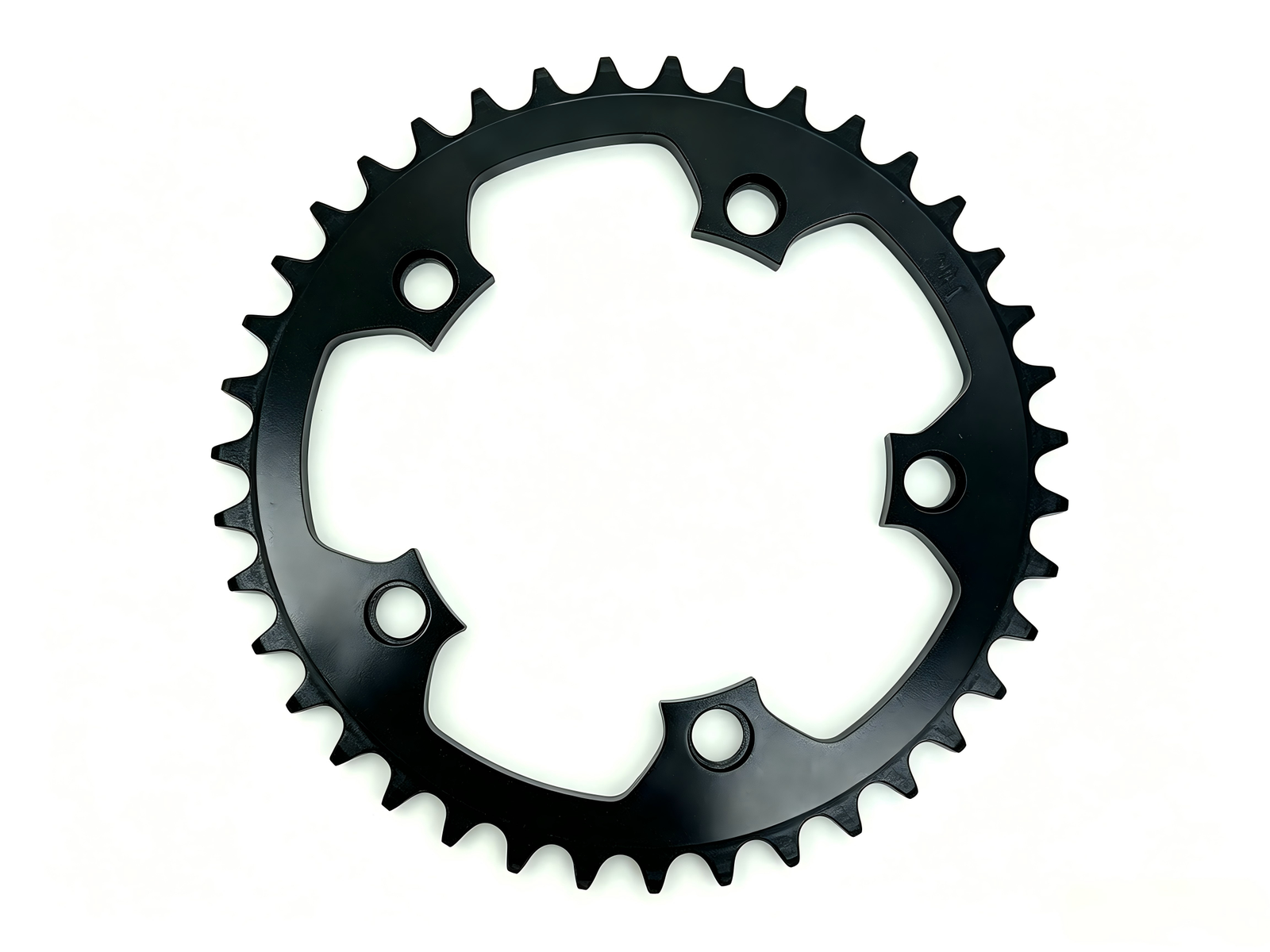
Chainrings are another common application for precision machining.
The shape and spacing of chainring teeth directly influence drivetrain performance. Small variations in tooth geometry can affect:
- Chain engagement
- Shifting performance
- ノイズ
- 着る
- Power transmission
CNC machining can produce highly accurate tooth profiles and mounting interfaces.
It is also suitable for specialized designs such as:
- Standard round chainrings
- Oval chainrings
- Narrow-wide chainrings
- Custom lightweight chainrings
- Limited-production performance chainrings
CNC machining allows manufacturers to optimize the chainring structure by removing excess material while maintaining sufficient strength.
機械加工後, manufacturers may apply finishes such as anodizing, ビーズブラスト, ブラッシング, or laser marking to improve corrosion resistance and visual appearance.
2.3 CNC Machined Hubs and Axles
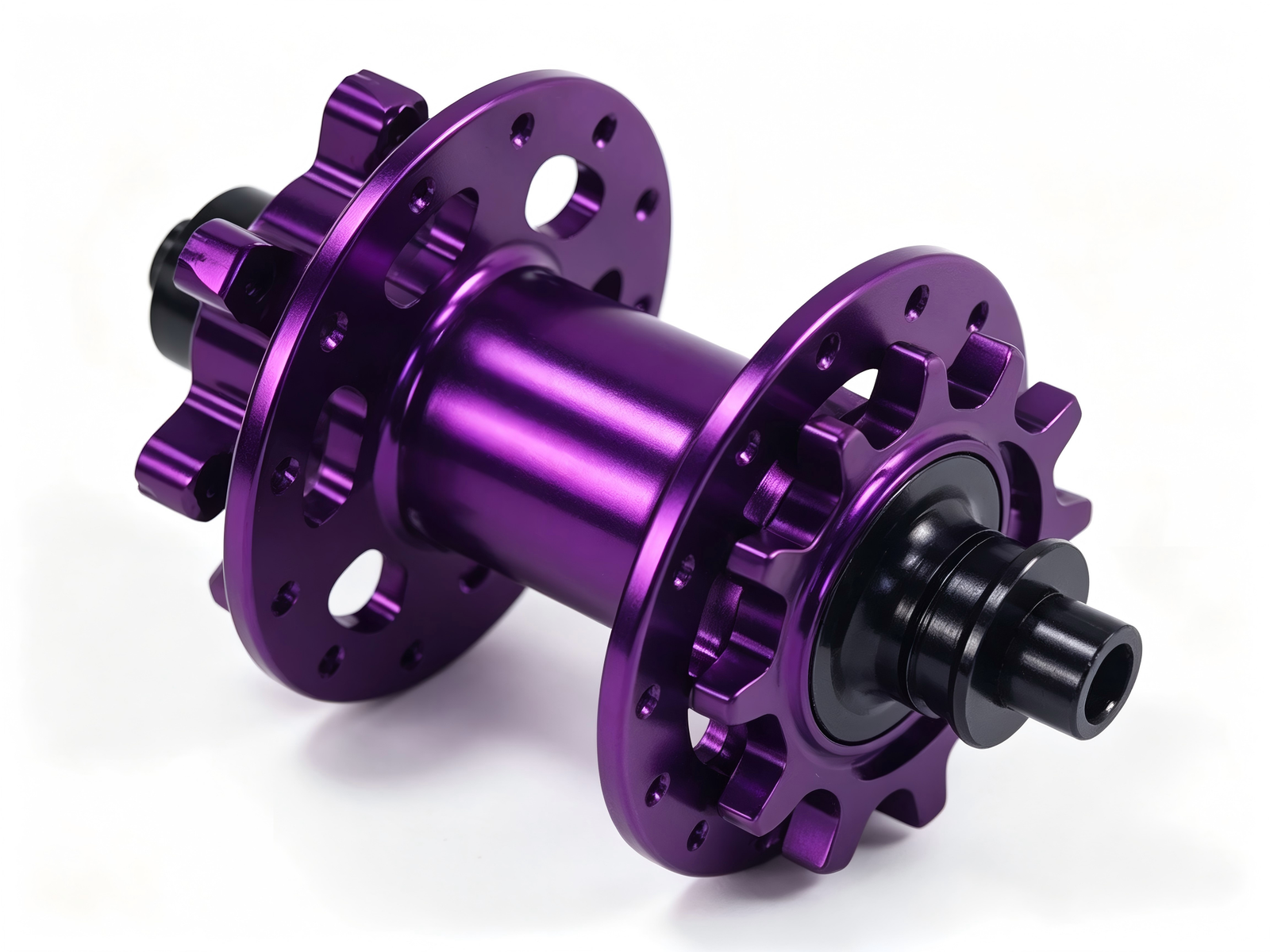
Wheel hubs are critical rotating components. Their performance depends heavily on dimensional accuracy and alignment.
A CNC-machined hub may include:
- Bearing bores
- Axle interfaces
- Spoke holes
- フランジ
- Rotor mounting features
- Freehub interfaces
The bearing seats and central bores require particular attention. Poor concentricity or inaccurate dimensions can result in:
- Increased friction
- Bearing wear
- 振動
- Poor wheel alignment
- Reduced service life
CNC machining allows manufacturers to maintain precise relationships between these features.
The process also supports complex flange designs that can help optimize spoke geometry and reduce unnecessary weight.
CNC-machined axles can similarly benefit from precise turning and milling operations, particularly when tight fits and accurate threads are required.
2.4 CNC Machined Brake Calipers and Brake Levers
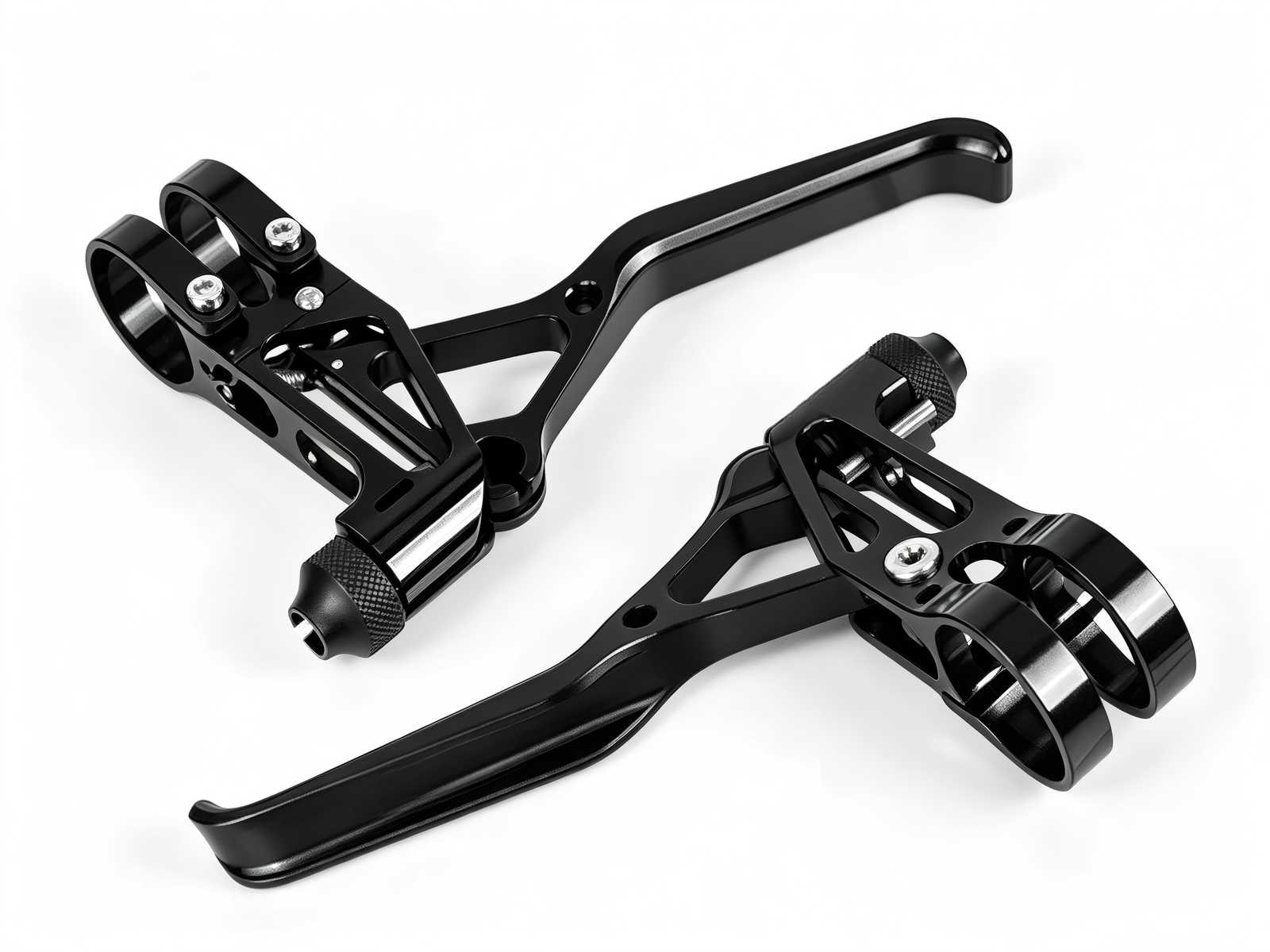
Brake components are safety-critical parts that require precise alignment and reliable mechanical performance.
CNC machining can produce brake calipers and levers with:
- Accurate mounting surfaces
- Precise pivot holes
- Lightweight structures
- Complex internal geometry
- Smooth ergonomic profiles
For high-performance bicycles, designers often want to reduce weight while maintaining sufficient stiffness.
CNC machining allows material to be strategically removed from low-stress areas while preserving structural material around critical interfaces.
For brake levers, CNC machining also enables manufacturers to develop custom ergonomic shapes and brand-specific designs.
のために 油圧システム, additional manufacturing processes may be required to create internal fluid passages and sealing interfaces.
Because braking systems directly affect rider safety, components must be designed, 製造された, and tested according to the relevant application requirements.
2.5 CNC Machined Bicycle Stems
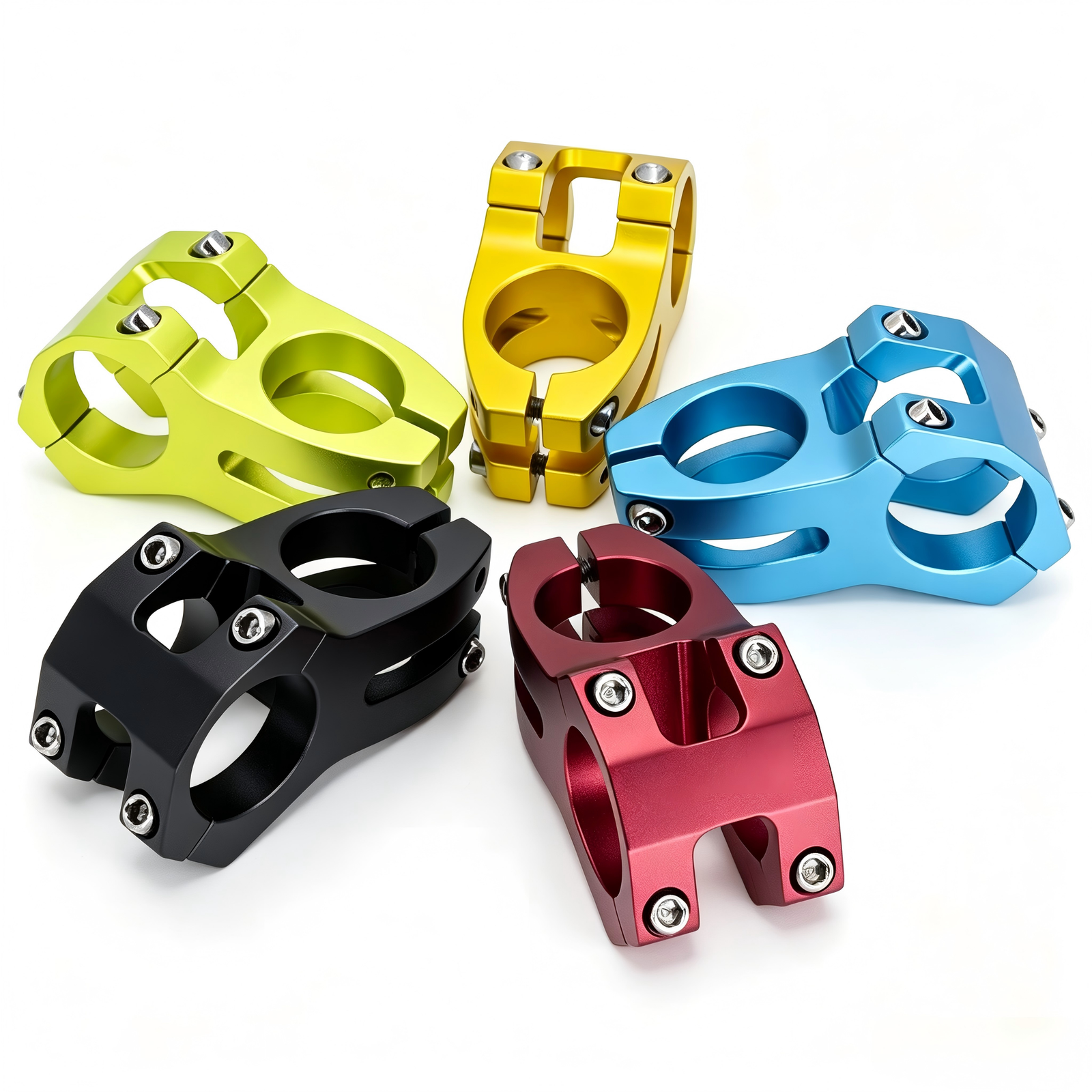
A bicycle stem connects the handlebars to the steering system and plays an important role in handling and rider control.
A CNC-machined stem typically requires accurate:
- Handlebar clamping surfaces
- Steerer tube interfaces
- Bolt holes
- ねじ穴
- アライメント機能
Manufacturers can use CNC machining to create lightweight designs with carefully positioned pockets and cutouts.
The main advantages include:
- 高次元精度
- Consistent clamping
- Weight optimization
- Custom geometry
- Premium surface finishes
CNC machining also allows bicycle brands to incorporate logos, decorative details, and distinctive design elements.
For high-end road, mountain, gravel, and racing bicycles, the combination of precision and lightweight construction makes CNC machining an attractive option.
2.6 CNC Machined Bicycle Pedals
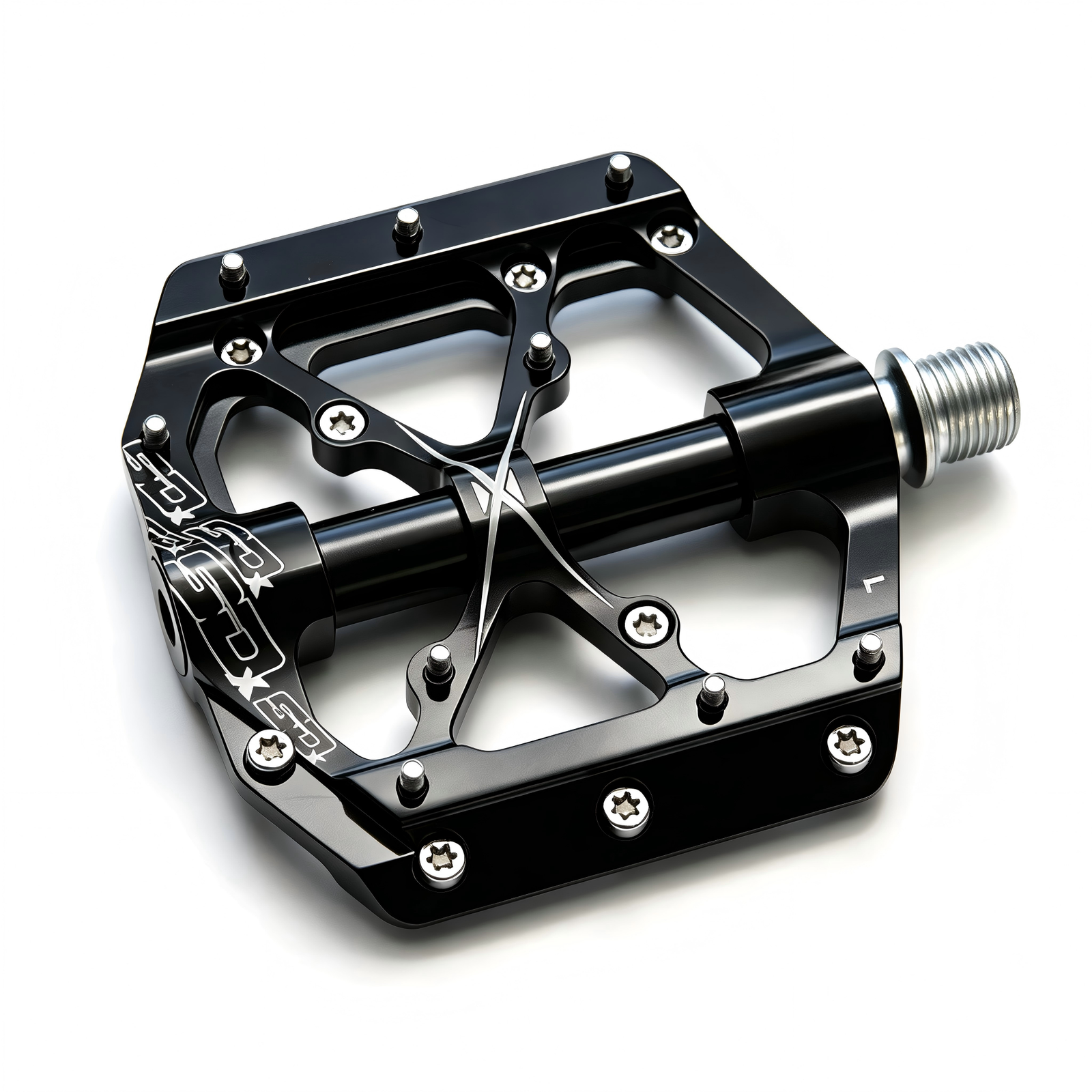
Pedals must withstand repeated impact, rotational forces, and rider weight.
CNC machining can be used to manufacture pedal bodies and other pedal components with customized features such as:
- Grip surfaces
- Pin holes
- Bearing cavities
- Lightweight pockets
- Custom contours
Aluminum alloys are commonly considered for performance-oriented pedal bodies.
CNC machining allows manufacturers to balance strength and weight while creating unique designs for different riding styles.
例えば, mountain bike pedals may prioritize impact resistance and grip, while road bike components may focus more heavily on low weight and aerodynamic design.
2.7 CNC Machined Seatpost Clamps
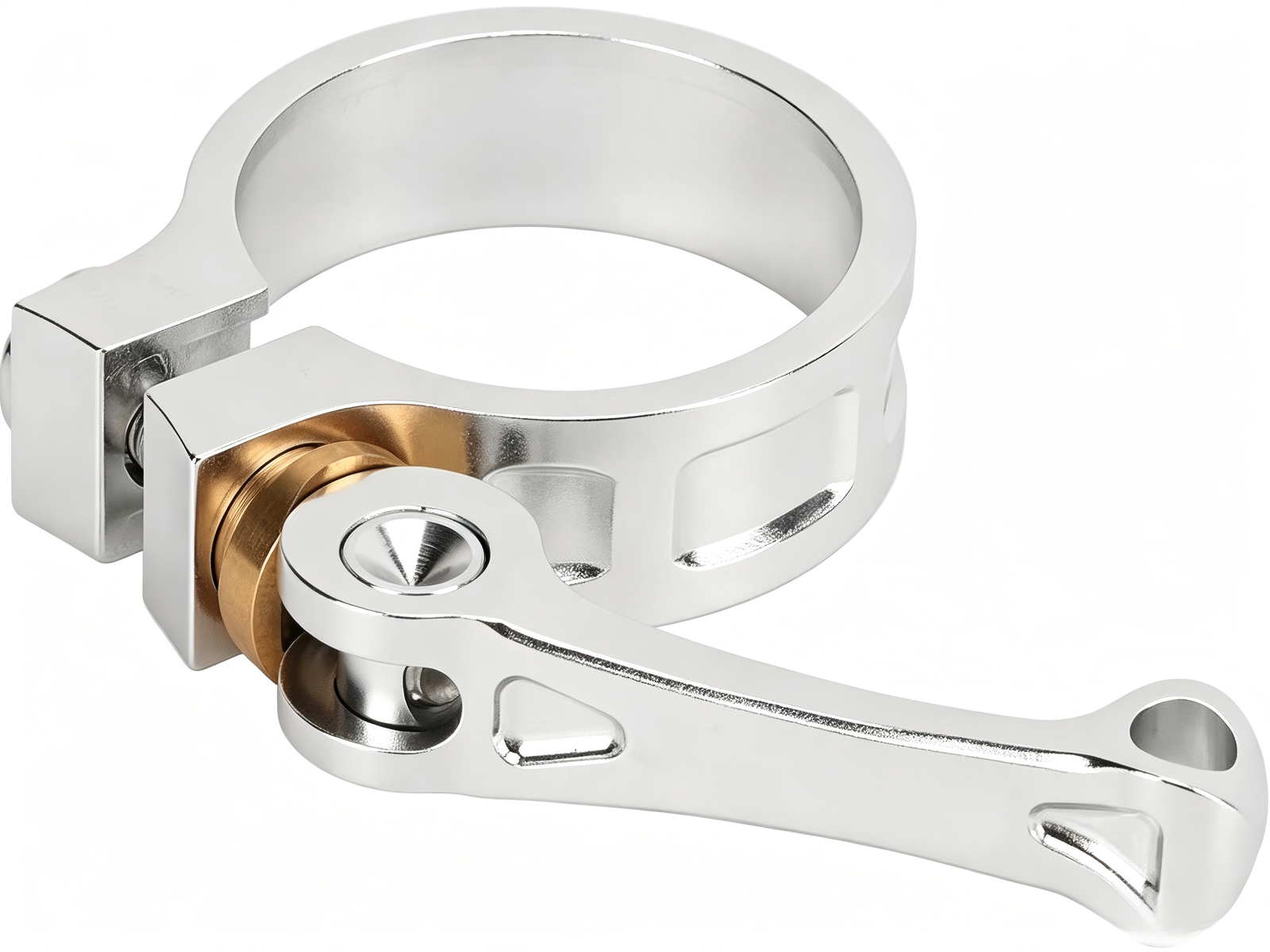
Although relatively small, seatpost clamps are important components that require consistent clamping force.
CNC machining can produce precise interfaces that help distribute clamping pressure evenly around the seatpost.
利点には含まれます:
- Accurate dimensions
- Consistent clamping
- 軽量構造
- Custom designs
- High-quality finishes
Manufacturers can also add laser-etched logos or other branding elements to create a premium appearance.
2.8 Other Bicycle Parts Commonly CNC Machined
Beyond the major components above, CNC machining is also used for many specialized bicycle parts.
これらには以下が含まれる場合があります:
- Derailleur hangers
- 中退者
- Bottom bracket components
- Headset components
- Crank caps
- サスペンションコンポーネント
- Brake adapters
- Cable guides
- 取付金具
- E-bike motor brackets
- Battery mounting components
- Custom frame fittings
For e-bikes, CNC machining is increasingly useful for custom mechanical components that connect electrical systems, 電池, モーター, そして自転車のフレーム.
The suitability of CNC machining depends on the part’s geometry, 材料, 量, 許容要件, and production budget.
3. Why Do Bicycle Manufacturers Prefer CNC Machining?
CNC machining is not always the cheapest manufacturing process. しかし, it provides a unique combination of precision, 柔軟性, design freedom, と品質.
3.1 High Precision and Tight Tolerances
Precision is critical when bicycle components must fit together accurately.
例には含まれます:
- ベアリングシート
- Axle interfaces
- ねじ穴
- Clamping surfaces
- Mounting holes
- Drivetrain components
CNC machining allows manufacturers to control these features consistently.
しかし, it is important to understand that not every feature needs an extremely tight tolerance.
Over-specifying tolerances can increase machining time and inspection requirements without improving actual performance.
A professional CNC supplier should review the drawings and recommend appropriate tolerances based on the function of each feature.
3.2 Excellent Strength-to-Weight Optimization
One of the biggest advantages of CNC machining for performance bicycles is the ability to optimize material distribution.
Instead of manufacturing a solid block with unnecessary mass, engineers can create pockets and contours in areas where material is not structurally essential.
This can help achieve a balance between:
強さ + 剛性 + 重さ + 機能性
This approach is particularly valuable for:
- Crank arms
- Stems
- Pedals
- ハブ
- ブレーキコンポーネント
The final design must always be validated for the intended mechanical loads, especially for safety-critical components.
3.3 Superior Surface Finish and Appearance
CNC machining can produce clean edges, 滑らかな表面, そして正確な詳細.
Additional finishing processes may include:
- 陽極酸化処理
- ビーズブラスト
- ブラッシング
- 研磨
- パウダーコーティング
- レーザー彫刻
For bicycle brands, appearance can be almost as important as performance.
A high-quality surface finish can help create a premium visual identity and improve corrosion resistance, depending on the selected finishing process.
3.4 Design Flexibility and Customization
CNC machining is particularly valuable for brands that want to differentiate their products.
Manufacturers can create:
- Custom logos
- Unique cutouts
- Brand-specific geometries
- Personalized dimensions
- Limited-edition designs
- Performance-specific structures
Unlike processes that require dedicated molds or dies, CNC machining can often accommodate design changes by modifying the CAD/CAM program.
This makes it attractive for product development and customized bicycle components.
3.5 Ideal for Prototyping and Small-Batch Production
CNC machining is often an excellent choice when production quantities are relatively low.
に使用できます:
- 1-10 prototype parts
- Engineering validation
- 10-100 piece pilot production
- Small-batch commercial production
- Product revisions
The absence of expensive injection molds or forging dies can make CNC machining economically attractive for early-stage product development.
Once the design is validated and production volumes increase significantly, manufacturers can evaluate whether another process would provide a lower unit cost.
3.6 Consistent Quality and Repeatability
For bicycle brands, consistency is critical.
A reliable CNC machining process can help maintain consistent:
- 寸法
- 表面仕上げ
- Hole locations
- スレッド
- Assembly interfaces
A professional supplier should also have a documented quality control system and appropriate inspection equipment.
コンポーネントに応じて, inspection may include:
- キャリパー
- マイクロメートル
- 身長計
- CMM検査
- ねじゲージ
- 表面粗さ測定
4. CNCの機械加工と. Other Bicycle Part Manufacturing Processes
Choosing the correct manufacturing process depends on production volume, 設計の複雑さ, 材料, 許容範囲, and target cost.
4.1 CNCの機械加工と. 鋳造
Casting is generally more suitable for high-volume production because the cost of tooling can be spread across a large number of parts.
Advantages of casting include:
- Lower unit cost at high volumes
- Complex near-net-shape production
- 効率的な量産
しかし, casting may require additional machining to achieve tight tolerances.
CNC machining is generally preferred when:
- Quantities are low or moderate
- Tight tolerances are required
- Surface finish is important
- Customization is needed
- Tooling investment should be minimized
4.2 CNCの機械加工と. 鍛造
Forging can provide excellent mechanical properties because the manufacturing process can improve material grain flow.
It is often attractive for high-volume structural components.
しかし, forging usually requires dedicated tooling and may be less flexible for highly customized designs.
CNC machining is often preferred for:
- プロトタイプ
- Custom components
- 複雑な形状
- 低容量生産
- Frequent design changes
For some bicycle components, a combination of forging and CNC machining may provide the best balance between strength, 料金, そして精度.
4.3 CNCの機械加工と. 射出成形
Injection molding is primarily used for plastic components.
It is highly efficient for mass production but requires an initial mold investment.
CNC machining is more suitable when:
- The component is metallic
- Quantities are relatively low
- The design is still evolving
- Tight tolerances are required
For plastic bicycle components, CNC machining can be useful for prototypes, while injection molding may become more economical for high-volume production.
4.4 When Should You Choose CNC Machining?
CNC machining is generally a strong choice when you need:
- 高次元精度
- Tight functional tolerances
- Complex geometry
- 軽量設計
- Premium surface finishes
- Custom bicycle components
- 迅速なプロトタイプ
- 低い- 中量生産まで
If your project requires millions of identical parts at the lowest possible unit cost, other processes may be more appropriate.
The best manufacturing process should always be selected based on the complete product lifecycle rather than unit price alone.
4.5 CNCの機械加工と. Other Manufacturing Processes: クイック比較
| 製造プロセス | 正確さ | ツーリングコスト | 設計の柔軟性 | Best Production Volume | Typical Bicycle Applications |
| CNC加工 | 高い | 低から中程度 | 素晴らしい | 低から中程度 | Custom and precision parts |
| 鋳造 | 中程度から高程度 | 中程度から高程度 | 高い | Medium to high | Complex mass-produced parts |
| 鍛造 | 高い | 高い | 適度 | Medium to high | High-strength structural parts |
| 射出成形 | High for plastics | 高い | 適度 | 高い | Plastic components |
The right choice depends on the part design, 材料, 量, 許容範囲, and target cost.
5. What Materials Are Commonly Used for CNC Bicycle Parts?
Material selection directly affects component weight, 強さ, 耐久性, 被削性, そしてコスト.
5.1 アルミニウム合金
Aluminum is one of the most common materials for CNC-machined bicycle components.
Popular options include:
- 6061 アルミニウム
- 7075 アルミニウム
6061 アルミニウム
6061 is widely used because it offers:
- 良好な機械加工性
- 優れた耐食性
- バランスのとれた強さ
- 競争力のあるコスト
- Excellent availability
It is suitable for many general-purpose bicycle components.
7075 アルミニウム
7075 aluminum offers higher strength than 6061 in many conditions and is often selected for performance-oriented applications where strength-to-weight ratio is critical.
潜在的な用途には以下が含まれます:
- Stems
- Crank components
- ハブ
- High-performance brackets
- Structural bicycle components
The final material choice should be based on the actual loading conditions and required mechanical properties.
5.2 チタン
Titanium is valued for:
- 高い強度重量比
- 優れた耐食性
- 長期耐久性
- プレミアムな外観
しかし, titanium is generally more expensive and more challenging to machine than aluminum.
It may be used for premium bicycle components where performance and durability justify the higher manufacturing cost.
5.3 ステンレス鋼
Stainless steel offers:
- 高い耐久性
- 耐食性
- 良い耐摩耗性
It may be suitable for components that require greater strength or wear resistance than aluminum can provide.
The disadvantage is its higher density, which makes it less attractive for applications where minimizing weight is the primary goal.
5.4 エンジニアリングプラスチック
Certain engineering plastics can also be CNC machined for bicycle applications.
潜在的な材料としては、:
- POM
- ナイロン
- ピーク
These materials may be selected for:
- 軽量コンポーネント
- ブシュ
- スペーサー
- Guides
- Insulating components
- 試作部品
The specific material should be selected based on temperature, 着る, 摩擦, 強さ, および環境要件.
5.5 適切な素材の選び方
When selecting a material for CNC bicycle parts, 考慮する:
- 機械的負荷
- Required strength
- Weight target
- 腐食環境
- 耐摩耗性
- 被削性
- Surface finishing requirements
- Production quantity
- 予算
A qualified CNC machining supplier should be able to provide material recommendations during the DFM review.
6. How Much Does It Cost to CNC Machine Bicycle Parts?
There is no universal price for CNC bicycle parts because the cost depends on the specific design and production requirements.
The main cost factors include:
材料
Titanium generally costs more to machine than aluminum.
パーツの複雑さ
More complex geometries require additional programming, ツーリング, and machining time.
公差
Extremely tight tolerances may require additional machining operations and inspection.
加工時間
The longer a CNC machine runs, the higher the manufacturing cost.
表面仕上げ
陽極酸化処理, 研磨, ブラッシング, and other processes add to the total cost.
量
Higher production quantities can reduce the average cost per piece.
フィクスチング
Complex components may require custom fixtures to ensure stable and accurate machining.
検査
Critical components may require detailed dimensional inspection or CMM measurement.
To reduce CNC machining costs, 考慮する:
- Using standard materials
- Avoiding unnecessary tight tolerances
- Simplifying complex features
- Optimizing part orientation
- Designing for standard cutting tools
- Increasing order quantity when appropriate
- Combining compatible operations
The most effective way to obtain an accurate price is to send the supplier a 2D drawing and 3D CAD model, together with the required material, 表面仕上げ, 量, and delivery requirements.
7. Frequently Asked Questions About CNC Bicycle Parts
1. Which bicycle parts are commonly CNC machined?
Common CNC bicycle parts include crank arms, チェーンリング, ハブ, 車軸, stems, ブレーキ部品, pedals, seatpost clamps, derailleur hangers, dropouts, and custom frame components.
2. What is the best material for CNC bicycle parts?
There is no single best material. 6061 aluminum is a versatile choice for many applications, その間 7075 aluminum is often selected for higher-strength requirements. Titanium and stainless steel are also suitable for specialized applications.
3. Is CNC machining better than forging for bicycle components?
必ずしもではありません. CNC machining provides greater design flexibility and is excellent for prototypes and low-volume production. Forging can offer excellent mechanical properties and lower unit costs for high-volume production.
4. Can CNC machining produce lightweight bicycle parts?
はい. CNC machining allows engineers to remove material strategically through pockets, 空洞, and optimized geometries while maintaining structural material in critical areas.
5. What aluminum alloy is best for CNC bike components?
6061 そして 7075 are both widely used. 6061 offers excellent machinability and balanced performance, その間 7075 generally provides higher strength and is often chosen for performance-oriented components.
6. How accurate are CNC machined bicycle parts?
精度は機械に依存します, 材料, 幾何学, 許容要件, ツーリング, and inspection process. A qualified CNC supplier can establish realistic tolerances based on the function of each component.
7. Can CNC machining be used for custom bicycle parts?
はい. CNC machining is particularly suitable for custom components because designs can be manufactured directly from CAD files without requiring expensive molds or dies.
8. Is CNC machining suitable for bicycle prototypes?
はい. CNC machining is widely used for prototypes because it allows engineers to test real production materials and functional geometries before committing to high-volume manufacturing.
9. How can I reduce the cost of CNC machined bike parts?
You can reduce costs by optimizing the design for manufacturability, avoiding unnecessary tight tolerances, using standard materials and tooling, simplifying machining operations, and selecting appropriate production quantities.
10. How do I choose a reliable CNC bicycle parts manufacturer?
Look for a supplier with suitable CNC equipment, experience with bicycle components, strong quality control, DFM support, 物質的な専門知識, surface finishing capabilities, and a proven track record of delivering consistent parts.
8. 結論: Choosing the Right CNC Manufacturing Process for Bicycle Parts
から crank arms, チェーンリング, ハブ, と車軸 に stems, pedals, ブレーキ部品, and derailleur hangers, CNC machining provides the precision and flexibility needed for demanding bicycle applications.
その主な利点は次のとおりです。:
- 高次元精度
- Consistent repeatability
- Complex geometry capability
- Lightweight design optimization
- Broad material compatibility
- カスタマイズ
- Excellent surface finishes
- Efficient prototyping and low-volume production
しかし, CNC machining is not automatically the best solution for every bicycle part. The right process depends on the component’s material, 幾何学, 許容範囲, 量, パフォーマンス要件, and target cost.
For bicycle manufacturers and product developers, the best approach is to evaluate the entire manufacturing process before production begins. A professional CNC machining partner can provide DFM feedback, recommend suitable materials and tolerances, optimize the design, and help determine whether CNC machining, 鋳造, 鍛造, or another process is the right choice.
Looking for a reliable CNC machining partner for custom bicycle components?
を送信してください 2D 図面または 3D CAD ファイル 専門的な DFM レビューと見積もりをご希望の場合. 単一のプロトタイプが必要かどうか, a small production batch, or ongoing manufacturing support, working with 精度の高いトップ-an experienced CNC supplier can help you achieve the right balance of 精度, パフォーマンス, 料金, and production reliability.


