



A brushed stainless steel finish needs more than a finish name or abrasive grit number. You should specify the visible surfaces, texture direction, acceptance sample, and inspection conditions. Agree the final appearance after fabrication so suppliers quote the same result.
Define The Finish Beyond Its Name
A finish designation describes a surface category but does not completely define your component’s appearance.
Terms such as brushed, cetim, and No. 4 can leave room for interpretation. State the governing specification and edition when your order uses a standardized designation.
The worldstainless surface treatment overview distinguishes brushed, cetim, and mirror finishes. Use these categories to start a discussion, then define the actual acceptance requirements.
Identify the steel grade, grossura, and visible face separately. A finish description does not establish the material grade or service suitability.
For enclosure panels, consider how adjacent parts look together. Two individually acceptable surfaces may still create an objectionable assembled appearance.
Mark Texture Direction On The Finished Part
Your drawing should show the required brushing lay relative to an identifiable edge or feature.
Use the finished orientation, not an unexplained arrow on a flat blank. Identify each visible face when bends change the panel orientation.
Appearance lay and sheet rolling direction are separate requirements. A fabrication layout must resolve both when forming and appearance restrictions apply.
State whether neighboring panels must share the same orientation. Also define permitted direction changes around corners, openings, or blended welds.
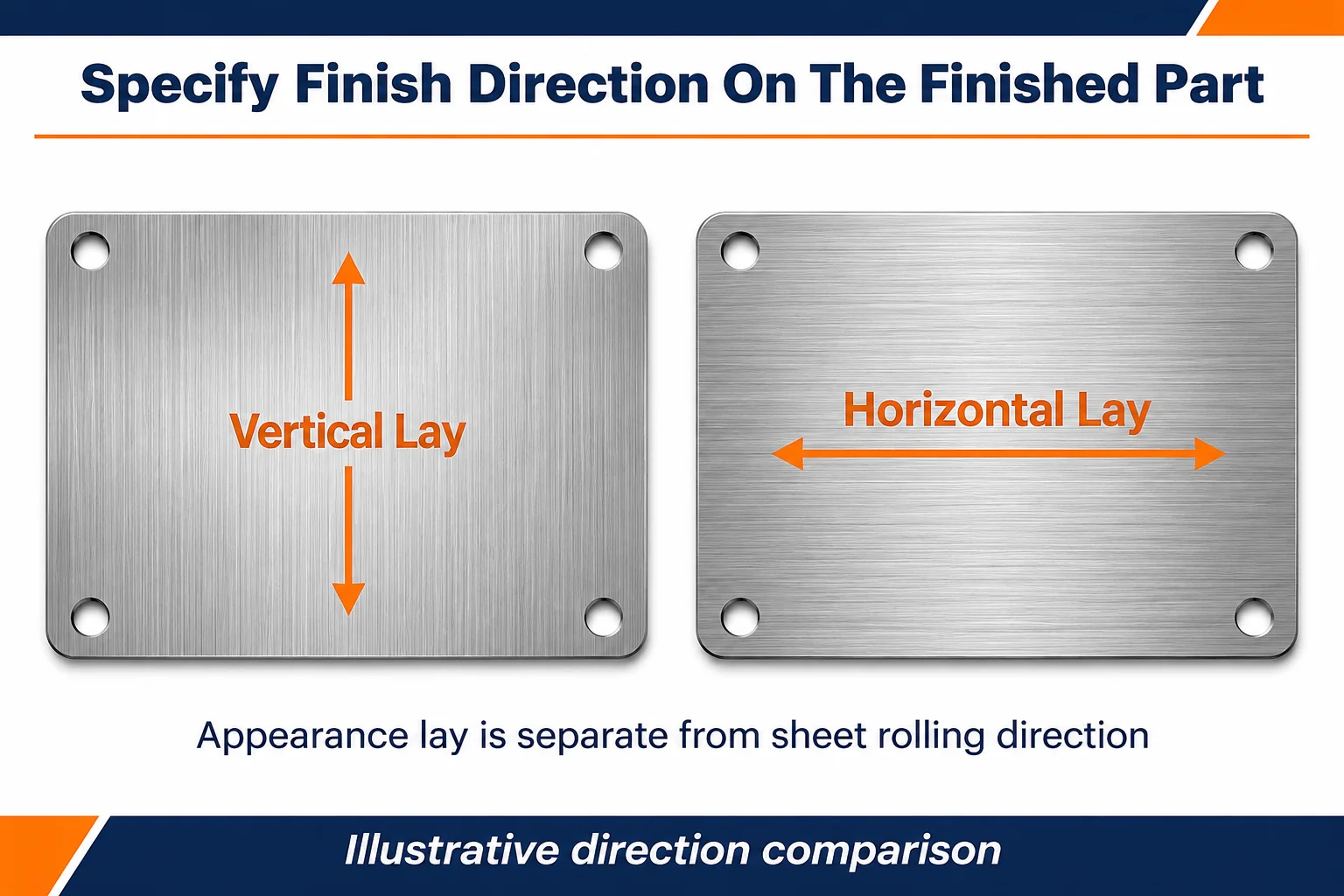
Separate Roughness From Appearance
A roughness value can control texture amplitude without fully controlling gloss, line pattern, or visual uniformity.
The worldstainless roughness measurement guide explains that different surface profiles can share the same Ra. It also recommends samples when appearance matters.
Specify roughness only where function or acceptance requires it. Agree the parameter, limit, measurement direction, configurações de avaliação, and reporting locations.
Do not convert a grit number directly into a guaranteed Ra. Qualify the selected finishing route and measure the relevant surface.
A photograph helps communicate intent but can change perceived color and reflection. Retain a physical reference when visual matching is critical.
| Exigência | What You Should Define |
|---|---|
| Superfícies visíveis | Finished faces, inspection zones, and hidden areas |
| Texture direction | Lay relative to a named edge, hole pattern, ou montagem |
| Aparência | Approved sample, permitted variation, and viewing conditions |
| Roughness when required | Parâmetro, limit, measurement setup, and locations |
| Local refinishing | Permitted blending zones and acceptance after repair |
| Delivery condition | Limpeza, filme, separation, e fase de inspeção |
Review Fabrication And Local Blending
You should agree how cutting, flexão, juntando-se, and refinishing affect the visible finish before production.
Decide whether the supplier starts with finished sheet or applies the appearance finish after fabrication. Review access to corners and assembled joints.
The worldstainless mechanical finishing guide discusses following the existing polishing direction during blending. It also emphasizes protection against damage and contamination.
Ask how welded or repaired areas will match the surrounding texture. Include representative joints in sample approval when those joints remain visible.
Confirm permitted material removal near critical edges and dimensions. A visually improved area must still meet the drawing.
Review chemical treatment separately. Nosso stainless steel passivation guide addresses treatment requirements; passivation does not replace agreement on appearance.
Agree A Repeatable Inspection Method
Appearance acceptance needs a shared inspection setup and a clear decision rule.
Compare the part and approved reference under the same lighting and orientation. Define viewing distance, inspection time, and whether the comparison covers an assembled set.
| Inspection Element | Agreement Needed |
|---|---|
| Reference | Approved sample identity, revisão, and storage condition |
| Preparação | Film removal, limpeza, and permitted handling |
| Viewing | Iluminação, distance, orientação, and background |
| Defect evaluation | Scratches, cross-grain marks, dents, stains, and blend boundaries |
| Amostragem | Lot definition, quantidade, frequency, and escalation |
| Records | Findings, rastreabilidade, disposição, and approval authority |
Agree when protective film is removed for inspection. Inspecting only through film can conceal marks that matter after installation.
Use controlled boundary samples for acceptable variation. Avoid replacing the agreed reference with a particularly attractive production piece without approval.
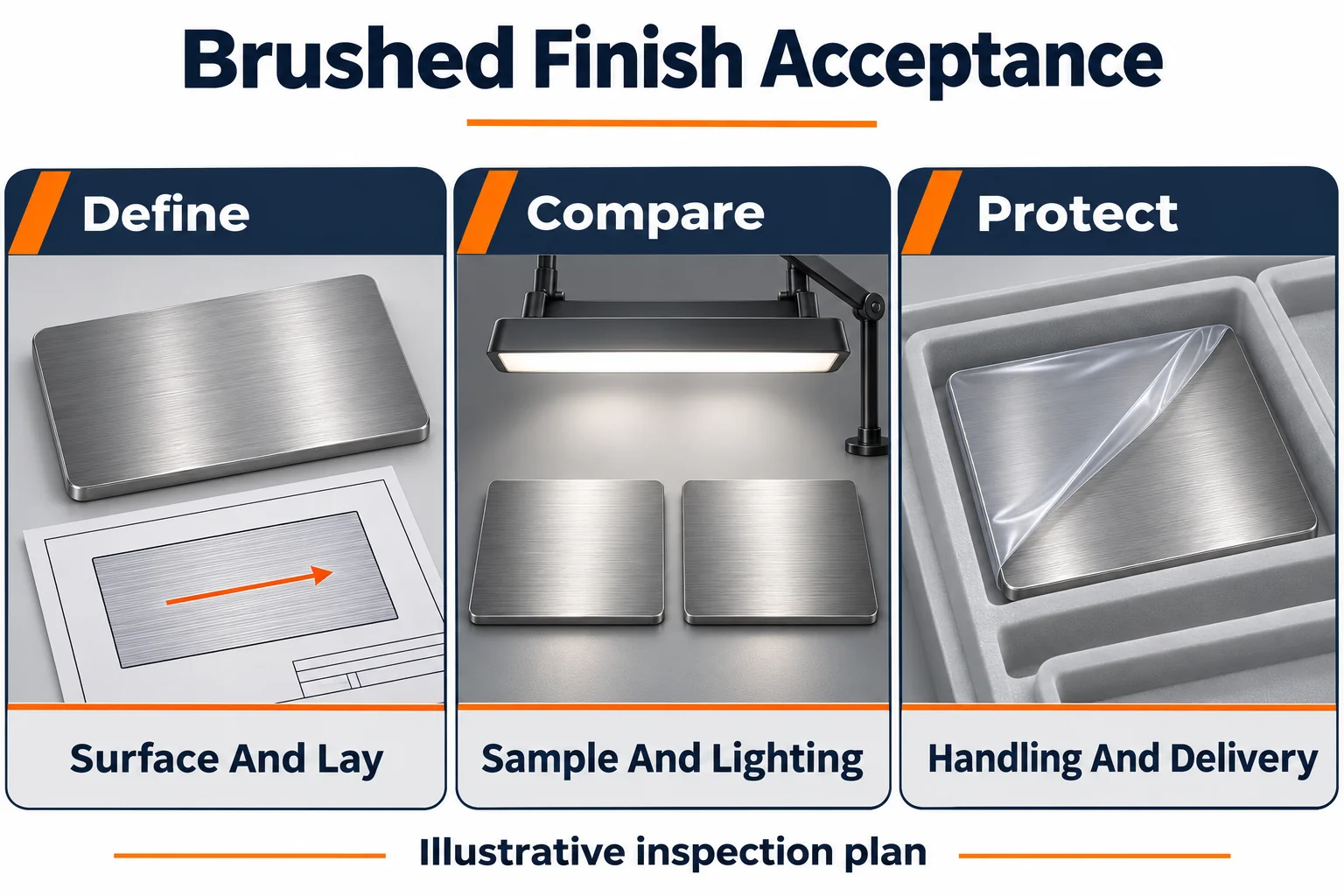
Protect The Finish Through Delivery
Your packaging and handling plan should preserve the accepted surface condition until the agreed delivery point.
Specify suitable protection for faces and contact points. Confirm film compatibility with the fabrication route, storage conditions, and removal requirements.
Define how parts are separated during transport. A stack of unprotected finished panels can undermine otherwise acceptable finishing work.
Record the receiving inspection condition and any permitted film residue. Agree a disposition process for damaged film or visible transport marks.
Compare Supplier Quotes On The Same Basis
Your quote comparison should include finishing, aprovação de amostra, local blending, Inspeção, and surface protection.
Costs depend on visible area, direction restrictions, acesso, joint treatment, matching requirements, e manuseio. Identify which faces justify the additional controls.
Ofertas TOPS serviços de fabricação de chapas metálicas. Send the appearance requirements alongside your drawing so the proposed material and fabrication route can be reviewed together.
Confirm the operations, sample commitments, and inspection records included in the quotation. Require approval before changes affect the agreed appearance.
perguntas frequentes
Your finish specification should resolve these common interpretation gaps before placing an order.
Does No 4 Guarantee A Particular Appearance
Não. Identify the governing specification and agree the actual visual reference, direção, and inspection conditions.
Is Grit Number The Same As Surface Roughness
Não. Abrasive selection describes part of the process. Verify the required roughness through an agreed measurement method.
Does Matching Ra Guarantee Matching Gloss
Não. Ra alone does not fully characterize visual appearance. Use the approved reference and viewing setup.
Is Brushing Direction The Sheet Rolling Direction
Não necessariamente. Specify cosmetic lay and any forming orientation requirement separately.
Can A Welded Area Be Blended Invisibly
Do not assume it. Review representative fabricated samples and agree the permitted blend boundary and visual variation.
Does Brushing Establish Corrosion Resistance
Não. Review the steel grade, service environment, contamination control, and any required treatment separately.
Should Hidden Faces Receive The Same Finish
Only when the drawing or function requires it. Identify visible and nonvisible surfaces to avoid unnecessary finishing expense.
What Should A Finish RFQ Include
Send CAD, desenhos, material, quantidades, volume anual, visible-face markings, lay direction, reference samples, e requisitos de inspeção.
Request A Finish Review
Contate-nos com seu desenho, material, volume anual, and appearance reference. Mark visible faces and texture direction so finishing, Inspeção, and delivery protection can be agreed before production.