


O teste de dureza fornece um rápido, confiável, e econômica de avaliar a resistência de um material à indentação, arranhando, e deformação superficial. Os fabricantes utilizam testes de dureza durante todo o ciclo de produção – desde a inspeção do material recebido e a verificação do tratamento térmico até o controle de qualidade final..
Neste guia, exploraremos tudo o que você precisa saber sobre testes de dureza de metal, incluindo métodos de teste comuns, padrões internacionais, procedimentos de teste, Aplicações industriais, e melhores práticas para alcançar resultados precisos.
O que é dureza metálica?
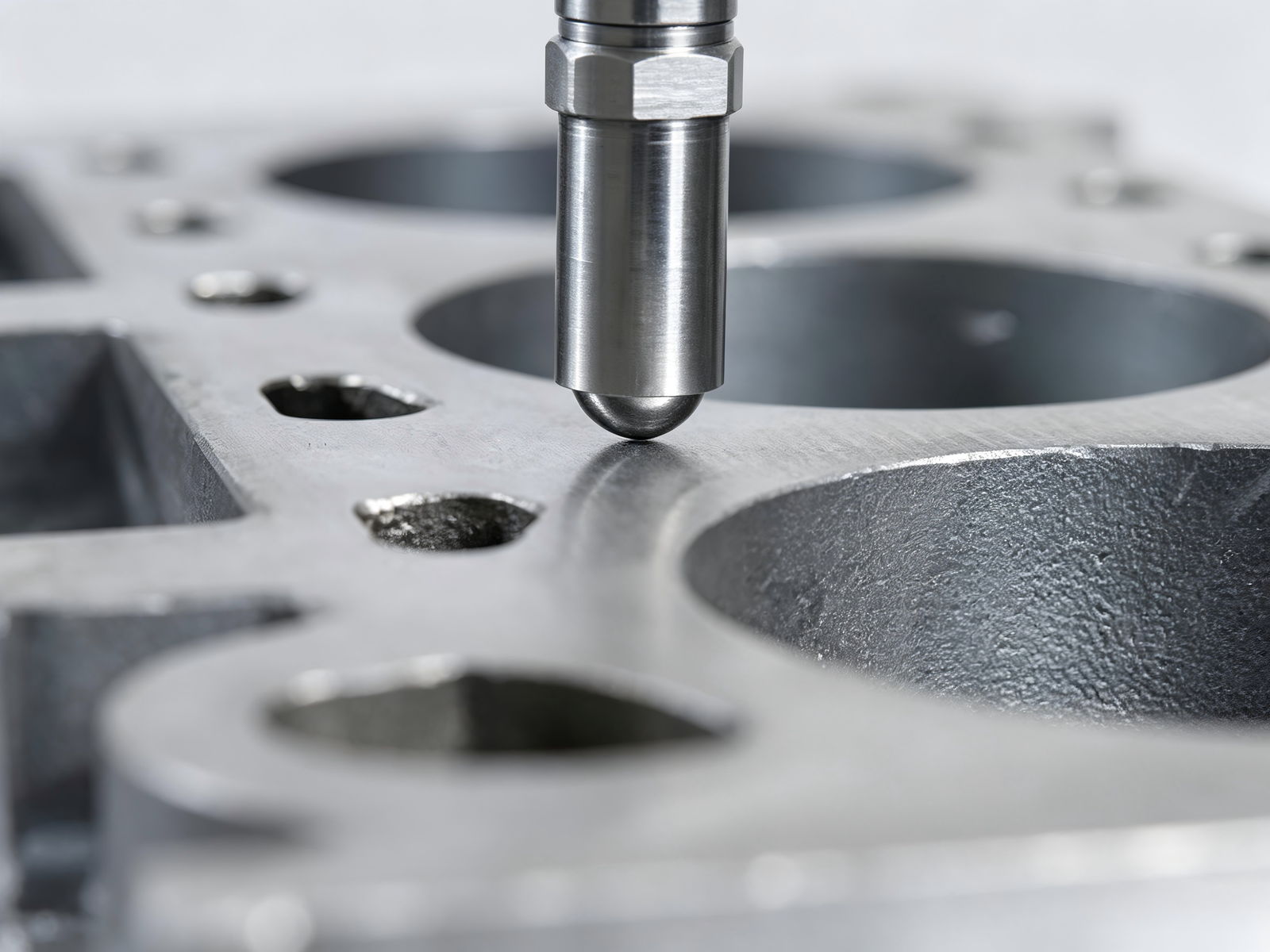
A dureza do metal refere-se à capacidade de um material resistir à deformação permanente quando sujeito a uma força externa..
Em termos práticos, A dureza mede o quão resistente um metal é:
- Recuo
- Coçar
- Abrasão
- Vestir
- Deformação superficial
Quanto mais difícil for um material, mais resistente será a danos mecânicos durante a operação.
Por que a dureza é importante
A dureza influencia diretamente:
- Resistência ao desgaste
- Vida útil
- Capacidade de carga
- Desempenho de fadiga
- Maquinabilidade
- Resistência à corrosão (em algumas aplicações)
Por exemplo, uma engrenagem de aço temperado usada em um sistema de transmissão deve manter dureza suficiente para resistir ao desgaste durante milhões de ciclos operacionais. De forma similar, os fixadores aeroespaciais exigem níveis de dureza cuidadosamente controlados para garantir a integridade estrutural.
Dureza vs Força vs Resistência
Esses termos são frequentemente confundidos, mas eles representam propriedades materiais diferentes.
| Propriedade | Definição |
| Dureza | Resistência à indentação e deformação da superfície |
| Força | Capacidade de resistir ao estresse aplicado sem falhar |
| Resistência | Capacidade de absorver energia antes da fratura |
Um material pode ser extremamente duro, mas quebradiço. Por outro lado, um material pode ser muito tenaz e ao mesmo tempo ter uma dureza relativamente baixa.
Compreender essas diferenças é fundamental ao selecionar materiais para aplicações de engenharia.
Por que o teste de dureza é essencial na fabricação
Controle de qualidade
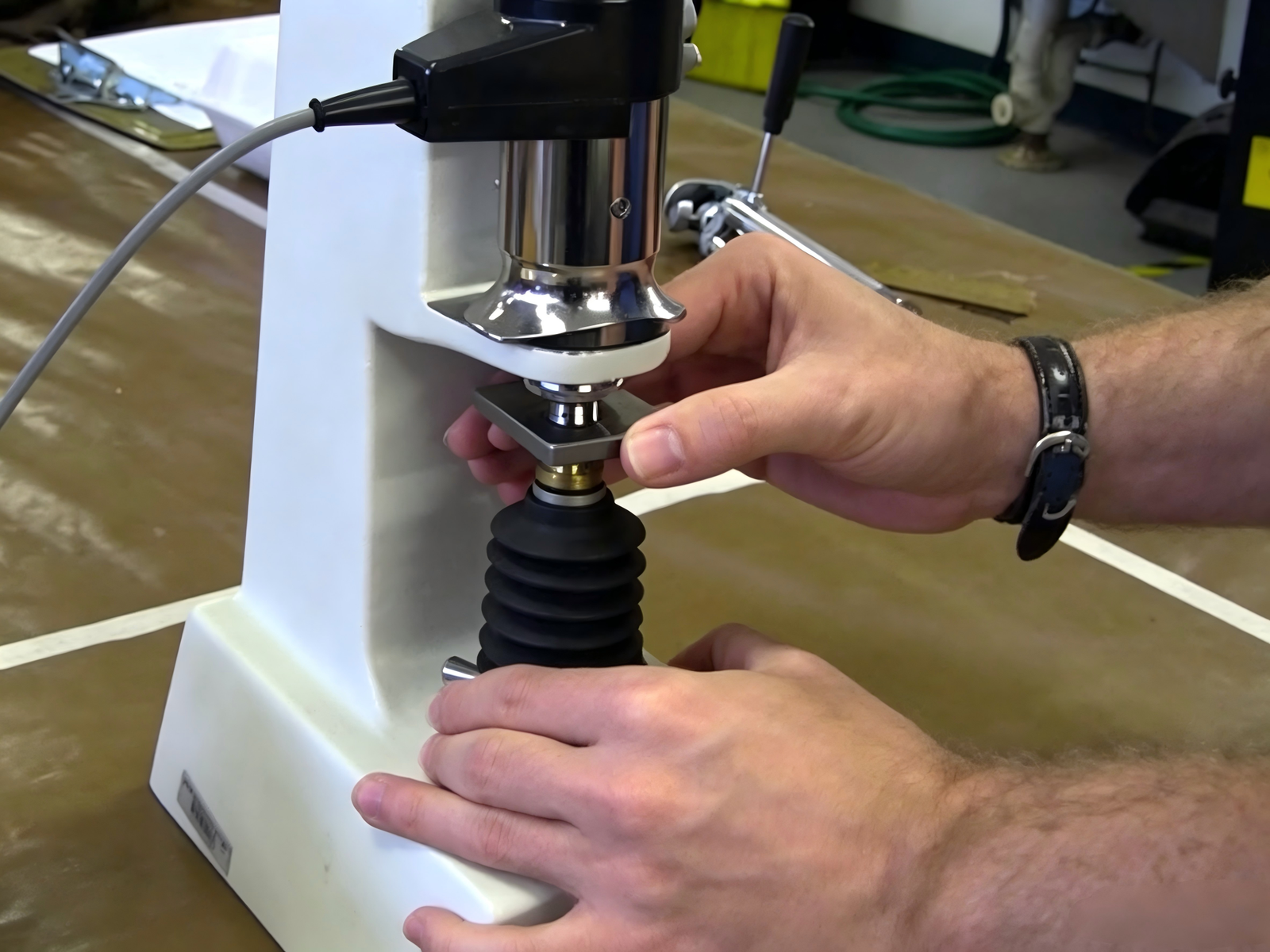
Os fabricantes usam testes de dureza para verificar se as matérias-primas atendem às especificações antes do início da produção.
O teste ajuda a identificar:
- Classes de material incorretas
- Tratamento térmico inadequado
- Inconsistências de fornecedores
- Defeitos materiais
Verificação de Tratamento Térmico
O teste de dureza é um dos métodos mais eficazes para confirmar processos de tratamento térmico bem-sucedidos, Incluindo:
- anelamento
- Normalização
- Têmpera
- Temperamento
- Endurecimento de caixa
- Nitretagem
Por exemplo, se um componente de aço endurecido não atingir sua faixa de dureza alvo, o processo de tratamento térmico pode precisar de ajuste.
Avaliação de desempenho do produto
A dureza afeta diretamente:
- Resistência ao desgaste
- Resistência à abrasão
- Vida de fadiga
- Durabilidade estrutural
Os fabricantes usam valores de dureza para prever o desempenho dos componentes em condições operacionais reais..
Conformidade regulatória
Indústrias como aeroespacial, automotivo, defesa, energia, e a fabricação médica muitas vezes exigem testes de dureza para atender a padrões de qualidade rigorosos.
Métodos comuns de teste de dureza
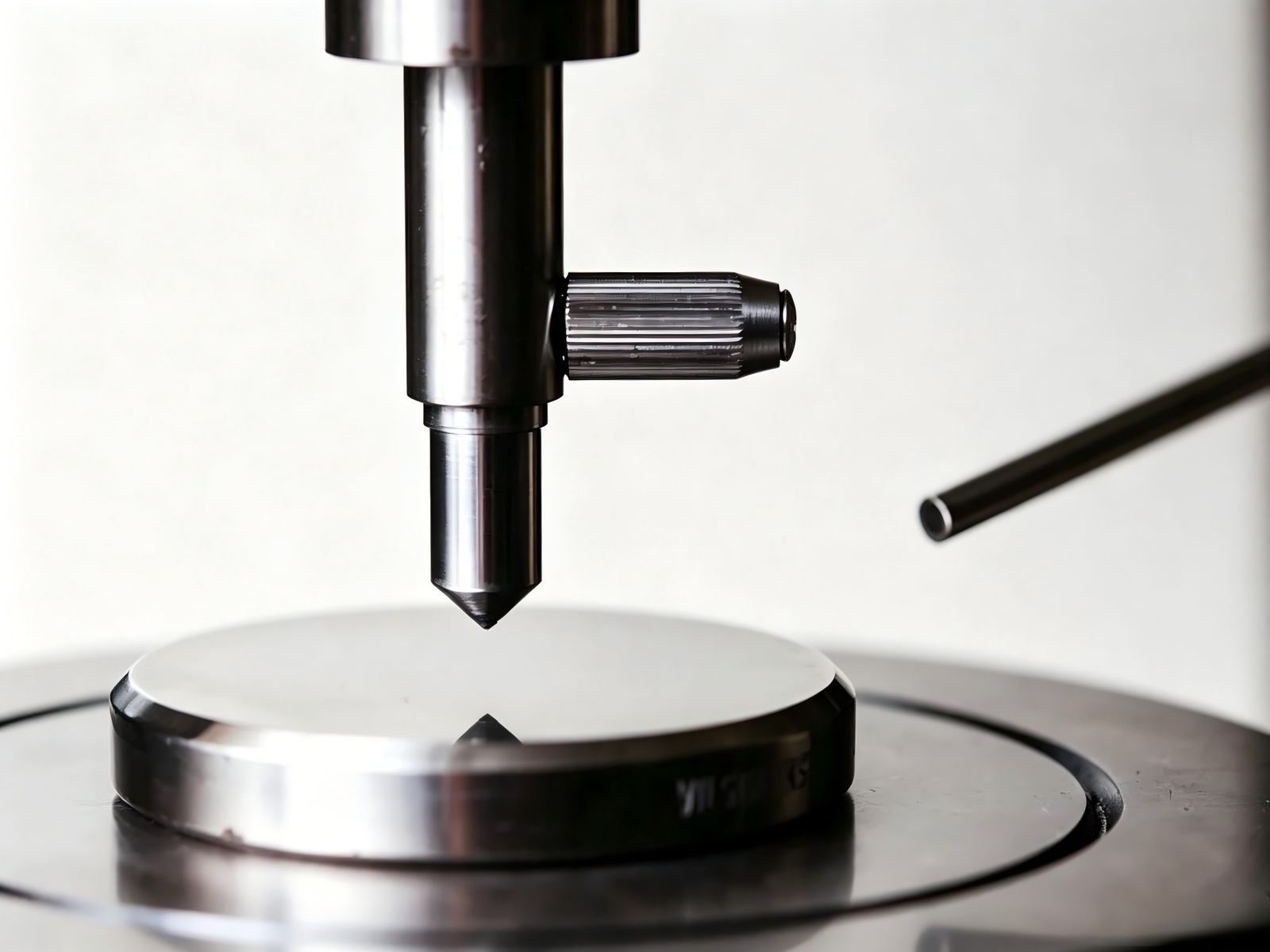
Vários métodos de teste de dureza são usados em todo o mundo. Cada um tem vantagens dependendo do tipo de material, grossura, e requisitos de aplicação.
Teste de dureza Rockwell
O teste Rockwell é o método de teste de dureza mais comumente usado na fabricação.
Como funciona
Um penetrador de cone de diamante ou esfera de aço endurecido é pressionado no material sob uma carga especificada.
A máquina mede a profundidade de penetração e calcula automaticamente o valor da dureza.
Escalas comuns incluem:
- CDH (Rockwell C.)
- HRB (Rockwell B.)
- RH (Rockwell A)
Vantagens
- Teste rápido
- Leitura direta de dureza
- Influência mínima do operador
- Adequado para ambientes de produção
Formulários
- Aço endurecido
- Aço ferramenta
- Aço inoxidável
- Componentes tratados termicamente
Teste de dureza Brinell
O método Brinell utiliza uma esfera de carboneto de tungstênio para criar uma reentrância na superfície do material.
Vantagens
- Excelente para componentes grandes
- Adequado para peças fundidas e forjadas
- Eficaz para materiais de granulação grossa
Limitações
- Tamanho de recuo maior
- Não é adequado para materiais finos
Formulários
- Ferro fundido
- Fundições de alumínio
- Aço estrutural
- Componentes de máquinas pesadas
Teste de dureza Vickers
O teste Vickers utiliza um penetrador de pirâmide de diamante.
Vantagens
- Extremamente preciso
- Ampla faixa de testes
- Adequado para materiais duros e macios
Formulários
- Componentes aeroespaciais
- Implantes médicos
- Peças de engenharia de precisão
- Laboratórios de pesquisa
Devido à sua versatilidade, o método Vickers é frequentemente considerado a técnica de teste de dureza mais precisa.
Teste de dureza Knoop
O método Knoop foi projetado especificamente para testes de microdureza.
Melhores aplicativos
- Revestimentos finos
- Componentes eletrônicos
- Materiais cerâmicos
- Tratamentos de superfície
Seu penetrador de diamante alongado minimiza danos ao material e fornece medições altamente precisas.
Teste de dureza Leeb
O teste de dureza Leeb é um método de teste portátil.
Como funciona
Um corpo de impacto com mola atinge a superfície de teste.
A velocidade de recuperação é medida e convertida em um valor de dureza.
Vantagens
- Portátil
- Rápido
- Ideal para inspeções de campo
Usos comuns
- Grandes máquinas
- Pipelines
- Vasos de pressão
- Equipamento pesado
Comparação de métodos de teste de dureza
| Método | Precisão | Velocidade | Melhor para |
| Rockwell | Alto | Muito rápido | Teste de produção |
| Brinell | Alto | Moderado | Fundições & Forjados |
| Vickers | Muito alto | Moderado | Componentes de precisão |
| Botão | Muito alto | Lento | Materiais Finos |
| Lee | Moderado | Muito rápido | Teste de campo |
Padrões de teste de dureza
Seguir padrões reconhecidos internacionalmente garante consistência e confiabilidade.
Padrões ASTM
ASTM E18
Teste de dureza Rockwell.
ASTM E10
Teste de dureza Brinell.
ASTM E92
Teste de dureza Vickers.
ASTM E384
Procedimentos de teste de microdureza.
Padrões ISO
ISO 6508
Teste Rockwell.
ISO 6506
Teste Brinell.
ISO 6507
Teste de Vickers.
ISO 4545
Teste de botão.
A conformidade com esses padrões ajuda os fabricantes a atender aos requisitos dos clientes e regulatórios em todo o mundo.
Fatores que afetam a precisão do teste de dureza
Vários fatores podem influenciar os resultados.
Acabamento de superfície
Superfícies ásperas podem produzir leituras imprecisas.
O lixamento e o polimento adequados melhoram a confiabilidade da medição.
Espessura da amostra
Materiais finos podem deformar excessivamente durante o teste.
Sempre garanta a espessura adequada em relação à profundidade do recuo.
Seleção de carga
Selecionar a carga de teste errada pode distorcer os resultados.
As cargas de teste devem estar em conformidade com os padrões ASTM ou ISO aplicáveis.
Espaçamento de recuo
Recuos colocados muito próximos podem interferir uns nos outros.
O espaçamento adequado garante leituras precisas.
Calibração de Equipamentos
A calibração regular é essencial para manter a precisão dos testes.
Procedimento passo a passo de teste de dureza
Etapa 1: Selecione o método de teste apropriado
Escolha Rockwell, Brinell, Vickers, Botão, ou Leeb com base no material e aplicação.
Etapa 2: Prepare a amostra
Certifique-se de que a superfície esteja:
- Limpar
- Plano
- Livre de escala
- Livre de contaminação
Etapa 3: Aplicar a carga de teste
Aplique a força necessária usando uma máquina de teste de dureza calibrada.
Etapa 4: Meça o recuo
Dependendo do método, medir:
- Profundidade de recuo
- Diâmetro de recuo
- Comprimento diagonal do recuo
Etapa 5: Calcular Dureza
Converta medições em valores de dureza usando o padrão aplicável.
Etapa 6: Registrar resultados
Documento:
- Identificação de materiais
- Método de teste
- Carga aplicada
- Valor de dureza
- Local de teste
Teste de dureza para diferentes materiais metálicos
Aço carbono
Geralmente testado usando métodos Rockwell e Brinell.
As faixas típicas de dureza variam significativamente dependendo do tratamento térmico.
Aço inoxidável
Os métodos Rockwell e Vickers são frequentemente usados.
Ligas de alumínio
Os testes Brinell e Vickers são comumente preferidos.
Ligas de titânio
Os testes Vickers fornecem resultados altamente precisos.
Ferro fundido
Os testes Brinell continuam sendo o padrão da indústria.
Testes de dureza em usinagem CNC e fabricação de precisão
Os testes de dureza desempenham um papel crítico na fabricação de precisão.
Antes do início da usinagem, os fabricantes verificam as propriedades dos materiais para garantir a conformidade com as especificações do cliente.
Após o tratamento térmico, testes de dureza confirmam que os componentes alcançaram as características mecânicas exigidas.
Empresas que fornecem usinagem CNC personalizada os serviços muitas vezes integram testes de dureza em seus sistemas de gestão de qualidade para garantir a precisão dimensional, resistência ao desgaste, e confiabilidade do produto a longo prazo.
Para indústrias como aeroespacial, médico, automotivo, e automação industrial, a verificação da dureza é muitas vezes um requisito de inspeção obrigatório.
Desafios comuns de testes de dureza
Leituras inconsistentes
Causado por:
- Má preparação da superfície
- Erro do operador
- Problemas de calibração de equipamentos
Superfícies Curvas
Muitos testes de dureza são projetados para superfícies planas.
Acessórios especiais ou fatores de correção podem ser necessários.
Materiais Finos
Selecionar uma carga inadequada pode causar distorção.
Os métodos de teste de microdureza geralmente fornecem melhores resultados.
Tendências Futuras em Testes de Dureza
O futuro dos testes de dureza é cada vez mais automatizado.
As tecnologias emergentes incluem:
- Mapeamento automatizado de dureza
- Análise de imagens com tecnologia de IA
- Medição de recuo digital
- Indústria 4.0 integração
- Sistemas inteligentes de controle de qualidade
Essas tecnologias melhoram a precisão, reduzir a dependência do operador, e aumentar a eficiência da inspeção.
Perguntas frequentes
1.Qual é o teste de dureza mais comum?
O teste de dureza Rockwell é o mais utilizado devido à sua rapidez e simplicidade.
2.Qual teste de dureza é o mais preciso?
O teste de dureza Vickers é geralmente considerado o mais preciso e versátil.
3.A dureza pode indicar a resistência do material?
Em muitos metais, dureza e resistência à tração estão intimamente relacionadas, embora não sejam propriedades idênticas.
4.Com que frequência os testadores de dureza devem ser calibrados?
Os intervalos de calibração devem seguir as recomendações do fabricante e os padrões ASTM ou ISO aplicáveis.
5.Qual teste de dureza é melhor para materiais finos?
Os métodos Knoop e Vickers são normalmente preferidos para seções finas e revestimentos.
Conclusão
Selecionando o método de teste correto, seguindo os padrões ASTM e ISO, e implementação de procedimentos de teste adequados, os fabricantes podem melhorar a qualidade do produto, verificar a eficácia do tratamento térmico, reduzir falhas, e garantir a conformidade com os requisitos do cliente.
Para empresas envolvidas em usinagem de precisão, fabricação, e fabricação avançada, o teste de dureza não é simplesmente um processo de inspeção - é um elemento-chave para fornecer resultados confiáveis, produtos de alto desempenho que atendem às demandas dos mercados industriais atuais.