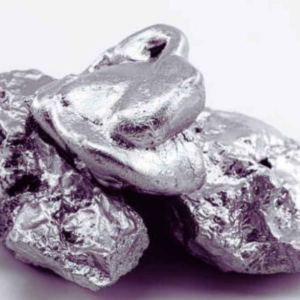



A fundição centrífuga é o método de fabricação mais eficiente e confiável para a produção de componentes metálicos cilíndricos de alta resistência. Desde tubos de aço inoxidável e luvas de liga até camisas de cilindro e anéis de rolamento, este processo é amplamente utilizado em indústrias que exigem propriedades mecânicas excepcionais, integridade estrutural, e consistência dimensional.
Comparado com métodos de fundição tradicionais, a fundição centrífuga oferece vantagens significativas em termos de densidade, refinamento de grãos, porosidade reduzida, e eficiência de produção. É particularmente adequado para a fabricação de componentes tubulares e rotacionalmente simétricos onde o desempenho e a durabilidade são críticos.
Neste guia abrangente, você aprenderá:
O que é fundição centrífuga
Como funciona o processo de fundição centrífuga
Principais tipos de fundição centrífuga
Procedimentos de produção passo a passo
Vantagens e limitações
Materiais e defeitos comuns
Aplicações industriais
Diferenças entre fundição centrífuga e outros métodos de fundição
Como escolher o fornecedor certo de fundição centrífuga
O que é fundição centrífuga?
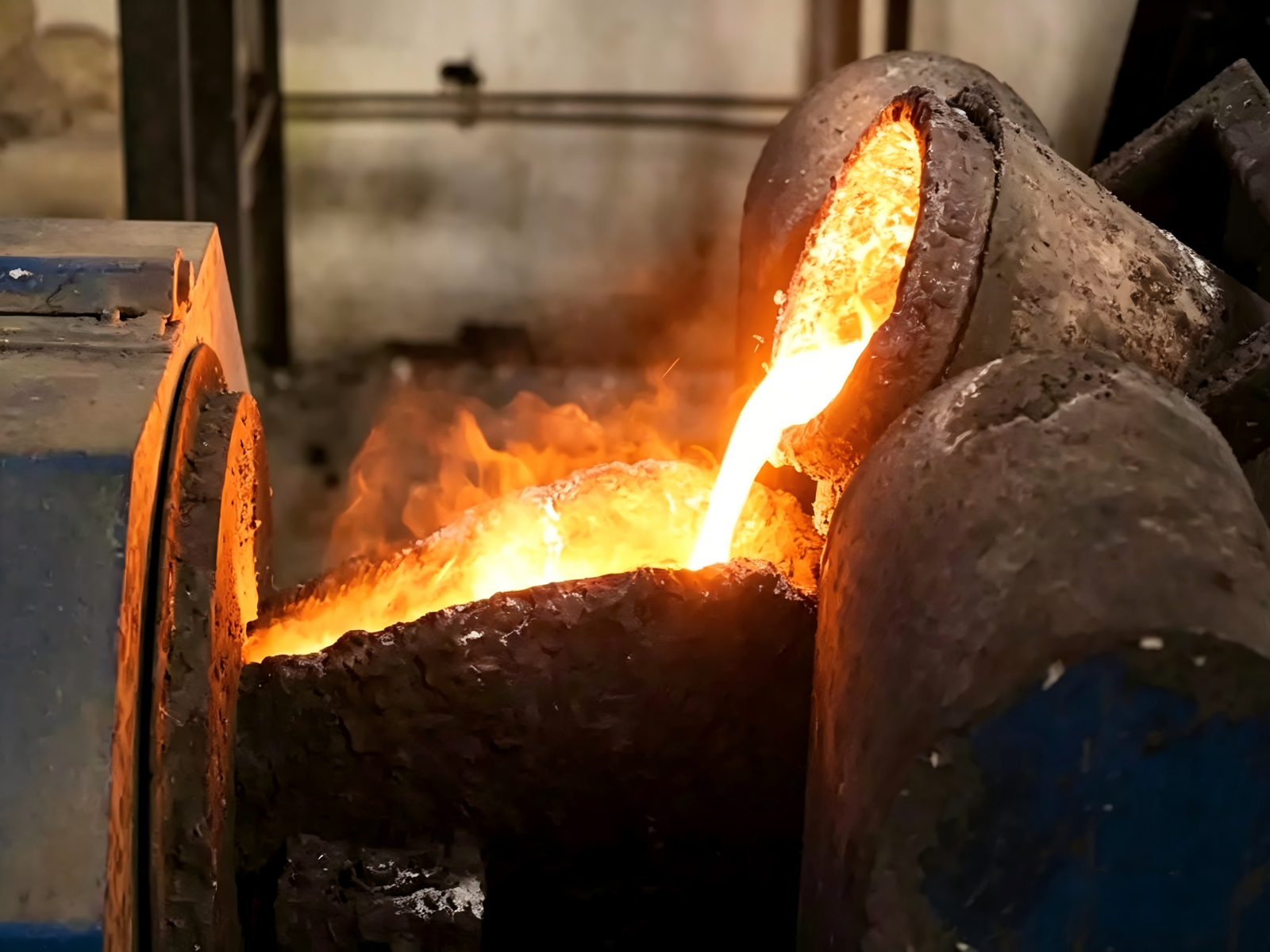
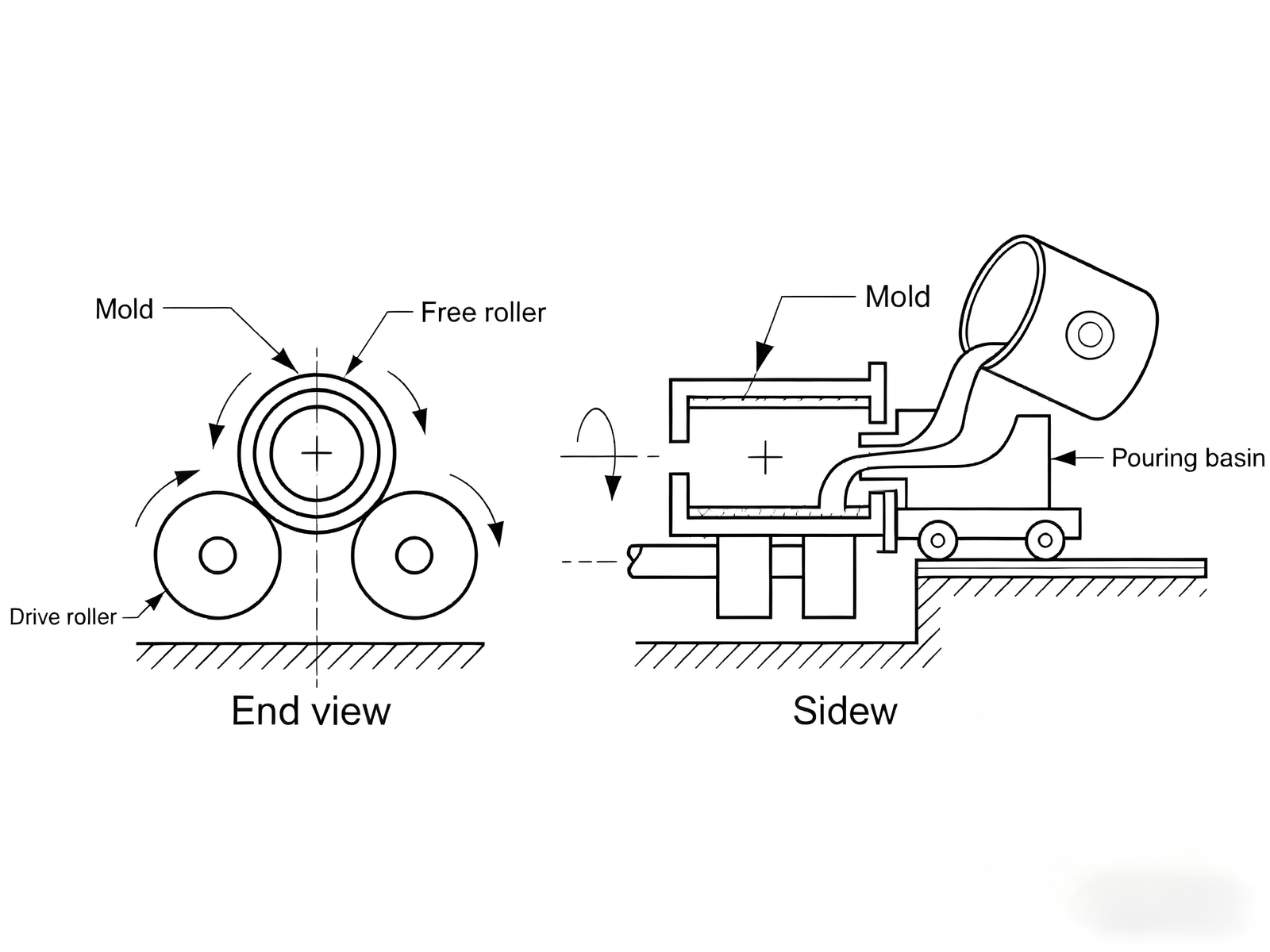
A fundição centrífuga é um processo de fundição de metal no qual o metal fundido é derramado em um molde rotativo. A força rotacional gerada pelo molde giratório empurra o metal fundido em direção à parede do molde, onde solidifica sob condições controladas.
O processo também é comumente conhecido como:
Fundição giratória
Fundição rotacional
Rotofundição
Ao contrário da fundição por gravidade convencional, a fundição centrífuga usa força centrífuga para distribuir o metal fundido uniformemente por toda a cavidade do molde. Isso cria estruturas densas e de granulação fina com defeitos internos mínimos.
O processo é usado principalmente para fabricar:
Tubos
Tubos
Buchas
Mangas
Anéis
Caixas de rolamento
Camisas de cilindro
Espaços em branco para engrenagens
Devido à sua capacidade de produzir peças altamente confiáveis com excelentes propriedades metalúrgicas, a fundição centrífuga é amplamente adotada em indústrias como petróleo e gás, aeroespacial, automotivo, mineração, geração de energia, e máquinas pesadas.
Por que a fundição centrífuga é importante na fabricação moderna
Os sistemas industriais modernos requerem componentes que possam suportar:
Altas temperaturas
Cargas pesadas
Flutuações de pressão
Ambientes corrosivos
Desgaste abrasivo
Os processos de fundição tradicionais às vezes têm dificuldade para atender a essas demandas devido à porosidade, defeitos de contração, e estruturas de grãos inconsistentes. A fundição centrífuga aborda esses desafios melhorando a densidade do metal e reduzindo as impurezas.
As principais razões pelas quais a fundição centrífuga continua importante incluem:
Excelente resistência mecânica
A força centrífuga compacta o metal fundido durante a solidificação, produzindo microestruturas densas e propriedades mecânicas melhoradas.
Porosidade Reduzida
Bolhas de gás e impurezas tendem a migrar em direção ao diâmetro interno, permitindo que os fabricantes removam seções propensas a defeitos por meio de usinagem.
Estrutura de grãos superior
A solidificação direcional melhora o refinamento do grão, que aumenta a resistência, resistência à fadiga, e durabilidade.
Eficiência de custos
O processo minimiza o desperdício de material e reduz os requisitos de usinagem secundária para peças cilíndricas.
Fundição oca sem núcleo
Ao contrário de muitos métodos tradicionais de fundição, a fundição centrífuga pode produzir tubos ocos e cilindros sem usar núcleos.
Como funciona o processo de fundição centrífuga
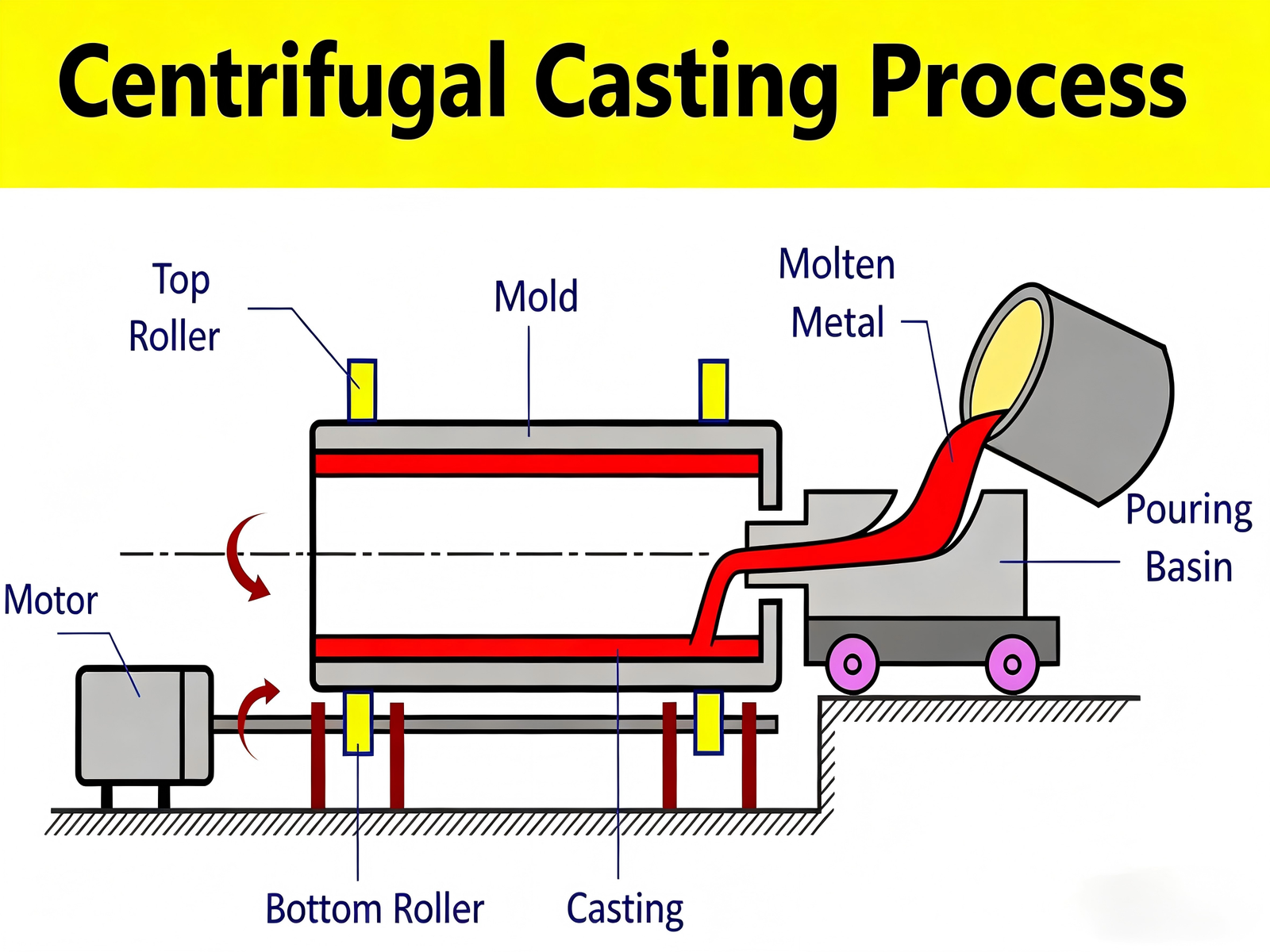
O processo de fundição centrífuga depende de força rotacional controlada e solidificação direcional.
Princípio Básico de Trabalho
O processo normalmente segue estas etapas:
Um molde gira em alta velocidade.
O metal fundido é derramado no molde rotativo.
A força centrífuga empurra o metal fundido contra a parede do molde.
O metal solidifica do diâmetro externo para dentro.
A peça fundida acabada é extraída e usinada.
Quanto mais rápido o molde gira, quanto mais forte for a força centrífuga que atua sobre o metal fundido.
Essa força ajuda:
Compacte a estrutura metálica
Remova bolsas de gás
Melhorar a densidade
Reduzir inclusões
Papel da Força Centrífuga na Solidificação de Metal
A força centrífuga é o mecanismo central por trás do processo.
Durante a rotação:
Partículas metálicas mais pesadas e densas movem-se para fora
Impurezas mais leves migram para dentro
Bolsas de gás movem-se em direção à superfície interna
Isso cria vários benefícios:
Pureza Melhorada
A região externa da peça fundida fica mais limpa e densa.
Formação de grãos finos
O resfriamento direcional rápido melhora a estrutura metalúrgica.
Defeitos de encolhimento reduzidos
O processo compensa naturalmente o encolhimento durante a solidificação.
Melhor desempenho mecânico
As partes resultantes exibem:
Maior resistência à tração
Melhor resistência ao impacto
Melhor desempenho de fadiga
Materiais Utilizados na Fundição Centrífuga
Uma das principais vantagens da fundição centrífuga é a sua compatibilidade com uma ampla gama de metais e ligas..
Os materiais comuns incluem:
Aço inoxidável
Amplamente utilizado para:
Tubos resistentes à corrosão
Equipamento de processamento químico
Tubo de qualidade alimentar
Notas populares:
304 aço inoxidável
316 aço inoxidável
Aço inoxidável duplex
Aço carbono
Adequado para:
Aplicações estruturais
Equipamento industrial pesado
Sistemas de pressão
Ferro fundido
Comum para:
Camisas de cilindro do motor
Tambores de freio
Tubos
Ligas de Níquel
Usado em:
Aeroespacial
Sistemas marítimos
Ambientes de alta temperatura
Exemplos:
Inconel
Hastelloy
Ligas de cobalto
Adequado para:
Aplicações resistentes ao desgaste
Ambientes de temperatura extrema
Ligas de cobre
Usado para:
Buchas
Rolamentos
Hardware marítimo
Principais tipos de fundição centrífuga
A fundição centrífuga pode ser classificada de duas maneiras principais:
Por orientação do molde
Por método de fundição
Classificação por orientação do molde
Fundição Centrífuga Horizontal
Na fundição centrífuga horizontal, o molde gira ao longo de um eixo horizontal.
Este método é ideal para fabricação:
Tubos longos
Tubos
Mangas
Conchas cilíndricas
Vantagens
Excelente consistência dimensional
Alta produtividade
Espessura uniforme da parede
Ideal para peças com alta relação L/D
Aplicações Típicas
Tubos de aço
Tubos de forno resistentes ao calor
Cilindros hidráulicos
Tubulação para campos petrolíferos
A fundição centrífuga horizontal é especialmente popular nas indústrias de petróleo e gás e de geração de energia.
Fundição Centrífuga Vertical
Na fundição centrífuga vertical, o molde gira em torno de um eixo vertical.
Este processo é mais adequado para componentes com comprimentos mais curtos e diâmetros maiores.
Vantagens
Adequado para componentes em forma de anel
Melhor para formas simétricas complexas
Menor complexidade de ferramentas para algumas aplicações
Produtos Típicos
Anéis de rolamento
Espaços em branco para engrenagens
Volantes
Camisas de cilindro
Para minimizar a distorção causada pela gravidade, os fabricantes costumam usar moldes especialmente projetados e velocidades de rotação otimizadas.
Classificação por método de fundição
Fundição Centrífuga Verdadeira
A verdadeira fundição centrífuga é usada principalmente para peças cilíndricas ocas.
Não são necessários núcleos porque a força centrífuga forma naturalmente o centro oco.
Visão geral do processo
O metal fundido entra no molde rotativo
A força centrífuga distribui o metal ao longo da parede do molde
A solidificação ocorre de fora para dentro
As impurezas internas são usinadas
Vantagens
Excelente densidade
Propriedades mecânicas superiores
Defeitos internos reduzidos
Produtos Comuns
Tubos
Tubos
Buchas
Mangas
Fundição Semi-Centrífuga
A fundição semicentrífuga é usada para peças sólidas rotacionalmente simétricas.
Ao contrário da verdadeira fundição centrífuga, este método cria componentes sólidos em vez de seções ocas.
Produtos Típicos
Volantes
Tambores de freio
Espaços em branco para engrenagens
Polias
Benefício principal
A força rotacional melhora a densidade e as características de alimentação durante a solidificação.
Fundição por Centrifugação
A fundição por centrifugação é usada para fabricar peças menores e mais complexas.
O metal fundido flui de um canal central através dos canais até múltiplas cavidades do molde.
Formulários
Joia
Componentes dentários
Buchas pequenas
Peças industriais de precisão
Este processo permite que os fabricantes produzam vários componentes simultaneamente com excelentes características de enchimento.
Processo de fundição centrífuga passo a passo
Embora os detalhes do processo variem dependendo da geometria do componente e da seleção do material, o fluxo de trabalho geral geralmente inclui os seguintes estágios.
1. Preparação de mofo
A preparação adequada do molde é essencial para obter peças fundidas de alta qualidade.
Limpeza
A superfície do molde deve estar livre de:
Pó
Óxidos
Materiais residuais
Contaminantes
Pré-aquecimento
O pré-aquecimento evita:
Choque térmico
Solidificação prematura
Defeitos superficiais
Aplicação de revestimento refratário
Um revestimento cerâmico ou refratário é aplicado:
Proteja o molde
Controlar a transferência de calor
Melhorar o acabamento superficial
Facilita a remoção de peças
A espessura adequada do revestimento é crítica para a estabilidade do processo.
2. Derramamento de metal fundido
O metal fundido é transferido do forno usando panelas ou sistemas de vazamento automatizados.
Variáveis de processo importantes incluem:
Temperatura de derramamento
Temperaturas excessivamente altas podem causar:
Oxidação
Grosseiro de grãos
Defeitos superficiais
Baixas temperaturas podem causar:
Erros de execução
Preenchimento incompleto
Velocidade de derramamento
O vazamento estável minimiza a turbulência e o aprisionamento de gás.
Sincronização da Rotação do Molde
O molde pode:
Gire antes de despejar
Comece a girar durante o vazamento
A sincronização precisa melhora a distribuição do metal.
3. Solidificação Rotacional
Depois de derramar, o molde continua girando enquanto o metal solidifica.
Solidificação Direcional
O resfriamento começa na parede do molde e progride para dentro.
Isso cria:
Estruturas de grãos finos
Densidade melhorada
Melhores propriedades metalúrgicas
Segregação de Impurezas
Impurezas mais leves movem-se em direção ao diâmetro interno, onde podem ser posteriormente removidos por usinagem.
4. Resfriamento e extração de peças
Após solidificação, o componente é resfriado sob condições controladas.
O resfriamento inadequado pode causar:
Rachadura
Distorção
Estresse residual
Equipamento de extração especial pode ser usado para remover a peça com segurança.
5. Operações de pós-processamento
A maioria das fundições centrífugas requerem processamento secundário.
As operações típicas incluem:
Tratamento térmico
Melhora:
Força
Dureza
Resistência ao desgaste
Usinagem
Melhora:
Precisão dimensional
Acabamento superficial
Concentricidade
Tratamento de superfície
Exemplos:
Esmerilhamento
Polimento
Revestimento
Tiro
Inspeção
Os métodos de controle de qualidade podem incluir:
Teste ultrassônico
Inspeção de raios X
Teste de corante penetrante
Inspeção dimensional
Vantagens da fundição centrífuga
A fundição centrífuga oferece diversas vantagens significativas em relação aos processos de fundição convencionais.
Propriedades Mecânicas Superiores
O processo cria estruturas de grãos densas e refinadas.
Os benefícios incluem:
Maior resistência à tração
Melhor resistência à fadiga
Melhor resistência ao impacto
Defeitos de fundição reduzidos
A força centrífuga minimiza:
Porosidade de gás
Cavidades de contração
Inclusões
Isso melhora a confiabilidade do produto.
Excelente acabamento superficial
A parede do molde atua como uma superfície de formação lisa, reduzindo a rugosidade e os requisitos de usinagem.
Alta eficiência de produção
As vantagens incluem:
Tempos de ciclo mais rápidos
Redução do desperdício de materiais
Taxas de rejeição mais baixas
Não há necessidade de núcleos
Componentes ocos podem ser produzidos sem núcleos internos, simplificando ferramentas e reduzindo custos.
Espessura de parede flexível
Os fabricantes podem produzir:
Tubos de parede fina
Cilindros de parede espessa
Estruturas multicamadas
Capacidade de fundição multicamadas
A fundição centrífuga suporta estruturas bimetálicas e compostas.
Por exemplo:
Camadas externas resistentes ao desgaste
Camadas internas resistentes à corrosão
Isto é especialmente valioso nas indústrias de mineração e química.
Limitações da fundição centrífuga
Apesar de suas vantagens, a fundição centrífuga também tem certas limitações.
Capacidade limitada de formato
O processo funciona melhor para componentes rotacionalmente simétricos.
Formas complexas não cilíndricas são geralmente inadequadas.
Alto custo inicial do equipamento
Os fabricantes devem investir em:
Máquinas de fundição rotacional
Moldes especializados
Sistemas de controle
Desafios de precisão do diâmetro interno
A superfície interna pode exigir usinagem para obter tolerâncias precisas.
Complexidade de controle de processos
Parâmetros críticos incluem:
Velocidade rotacional
Temperatura de vazamento
Taxa de refrigeração
Balanceamento de molde
O mau controle pode levar a defeitos.
Principais parâmetros do processo que afetam a qualidade da fundição
Vários fatores influenciam diretamente o desempenho da fundição centrífuga.
Velocidade de rotação
Muito lento:
Distribuição incompleta de metal
Muito rápido:
Turbulência
Segregação
Temperatura de derramamento
Deve corresponder:
Características da liga
Tamanho do molde
Geometria da peça
Revestimento de molde
Revestimentos refratários adequados melhoram:
Acabamento superficial
Controle térmico
Vida do molde
Taxa de resfriamento
Efeitos de resfriamento:
Estrutura de grãos
Estresse residual
Propriedades mecânicas
Limpeza de metais
Metal fundido de alta pureza reduz inclusões e defeitos.
Defeitos Comuns em Fundição Centrífuga
Mesmo processos avançados podem apresentar defeitos de fundição.
Porosidade de Gás
Causas
Gás aprisionado
Excesso de turbulência
Derramamento inadequado
Soluções
Desgaseificação
Derramamento controlado
Velocidade otimizada do molde
Segregação
Causas
Solidificação inadequada
Força rotacional excessiva
Soluções
Controle de velocidade adequado
Otimização de liga
Rachadura
Causas
Estresse térmico
Resfriamento irregular
Soluções
Resfriamento controlado
Pré-aquecimento adequado do molde
Defeitos de superfície
Causas
Mau revestimento do molde
Moldes contaminados
Soluções
Melhor preparação do molde
Aplicação correta de refratário
Aplicações Industriais de Fundição Centrífuga
A fundição centrífuga atende muitas indústrias que exigem componentes cilíndricos duráveis.
Indústria de Petróleo e Gás
Os produtos incluem:
Sistemas de tubulação
Mangas de perfuração
Tubos resistentes à corrosão
Esses componentes devem resistir:
Alta pressão
Fluidos abrasivos
Ambientes corrosivos
Indústria automobilística
As aplicações incluem:
Tambores de freio
Camisas de cilindro
Caixas de rolamento
O processo melhora a resistência ao desgaste e a integridade estrutural.
Indústria aeroespacial
Fundições centrífugas de liga de níquel e cobalto são usadas em:
Sistemas de alta temperatura
Aplicações de turbina
Componentes do motor
Indústria de geração de energia
Os produtos incluem:
Tubos resistentes ao calor
Componentes da caldeira
Mangas de turbina
Mineração e Equipamentos Pesados
As aplicações de mineração exigem:
Resistência à abrasão
Durabilidade em cargas pesadas
Produtos comuns:
Buchas
Rolos
Use mangas
Fundição Centrífuga vs Outros Processos de Fundição
Compreender as diferenças entre os métodos de fundição ajuda os fabricantes a escolher a solução certa.
Fundição Centrífuga vs. Fundição em Areia
| Recurso | Fundição Centrífuga | Fundição em Areia |
| Densidade | Mais alto | Mais baixo |
| Porosidade | Mínimo | Mais comum |
| Acabamento de superfície | Melhorar | Mais áspero |
| Força mecânica | Mais alto | Moderado |
| Melhor para | Partes cilíndricas | Formas complexas |
Fundição Centrífuga vs. Fundição de investimento
A fundição de precisão é melhor para:
Geometrias complexas
Tolerâncias apertadas
A fundição centrífuga é melhor para:
Peças tubulares
Estruturas densas
Componentes cilíndricos de alto volume
Fundição Centrífuga vs. Fundição sob pressão
A fundição sob pressão é adequada para:
Ligas não ferrosas
Peças complexas de parede fina
A fundição centrífuga é preferida para:
Componentes cilíndricos maiores
Aplicações de alta resistência
Como escolher o fornecedor certo de fundição centrífuga
A seleção do parceiro de fabricação certo afeta diretamente a qualidade do produto e o sucesso do projeto.
Capacidade de Engenharia
Um fornecedor qualificado deve fornecer:
Análise DFM
Recomendações de materiais
Otimização de processos
Experiência em Materiais
O fornecedor deve compreender:
Fundição de aço inoxidável
Ligas de níquel
Materiais resistentes ao calor
Ligas resistentes ao desgaste
Sistemas de Inspeção de Qualidade
Procurar:
Certificações ISO
Capacidades de END
Testes metalúrgicos
Capacidade de usinagem
Muitos projetos exigem:
Torneamento CNC
Tedioso
Fresagem
Esmerilhamento
Serviços de usinagem integrados reduzem prazos e custos.
Capacidade de produção
Considerar:
Faixa de tamanho de fundição
Produção mensal
Capacidade de ferramental
Flexibilidade de personalização
Conclusão
A fundição centrífuga continua sendo um dos métodos de fabricação mais eficazes para a produção de componentes metálicos cilíndricos de alta resistência com densidade superior, excelente estrutura de grãos, e defeitos internos mínimos.
Comparado com métodos de fundição convencionais, oferece grandes vantagens em:
Desempenho mecânico
Eficiência de produção
Utilização de materiais
Redução de defeitos
O processo é amplamente utilizado em indústrias como petróleo e gás, automotivo, aeroespacial, mineração, e geração de energia devido à sua capacidade de fabricar componentes duráveis e confiáveis sob condições operacionais exigentes.
No entanto, alcançar uma qualidade consistente requer um controle preciso de:
Velocidade rotacional
Temperatura de vazamento
Preparação do molde
Taxa de refrigeração
Composição do material
Para empresas que buscam componentes metálicos fundidos de alto desempenho, trabalhar com um fabricante experiente de fundição centrífuga é essencial.
Um fornecedor confiável pode ajudar a otimizar:
Seleção de materiais
Projeto de fundição
Operações de usinagem
Procedimentos de inspeção
Eficiência de produção
Se você precisa de tubos de aço inoxidável, mangas de liga, camisas de cilindro, ou peças fundidas industriais personalizadas, a fundição centrífuga fornece uma solução de fabricação altamente eficiente e econômica para aplicações exigentes.
Perguntas frequentes
Para que é usada principalmente a fundição centrífuga?
A fundição centrífuga é usada principalmente para fabricar componentes metálicos cilíndricos, como tubos, tubos, mangas, buchas, e camisas de cilindro.
Quais metais podem ser usados na fundição centrífuga?
Os materiais comuns incluem aço inoxidável, Aço carbono, ferro fundido, ligas de níquel, ligas de cobalto, e ligas de cobre.
Qual é a diferença entre fundição centrífuga verdadeira e fundição semicentrífuga?
A verdadeira fundição centrífuga produz peças cilíndricas ocas, enquanto a fundição semicentrífuga é usada para componentes rotacionais sólidos, como volantes e tambores de freio.
A fundição centrífuga é cara?
O investimento inicial em equipamento é relativamente alto, mas o processo se torna econômico para médios- e produção de componentes cilíndricos em alto volume.
Quais são as principais vantagens da fundição centrífuga?
As principais vantagens incluem:
Alta densidade
Porosidade reduzida
Excelentes propriedades mecânicas
Estrutura de grãos melhorada
Custos de usinagem mais baixos
A fundição centrífuga requer núcleos?
Não. Componentes cilíndricos ocos muitas vezes podem ser produzidos sem núcleos porque a força centrífuga cria naturalmente a seção oca.
Quais indústrias usam fundição centrífuga?
As indústrias incluem:
Petróleo e gás
Automotivo
Aeroespacial
Geração de energia
Mineração
Fabricação de equipamentos pesados
O que causa defeitos na fundição centrífuga?
As causas comuns incluem:
Velocidade de rotação inadequada
Má preparação do molde
Temperatura de vazamento incorreta
Controle de resfriamento inadequado
O aço inoxidável pode ser fundido centrifugamente?
Sim. O aço inoxidável é um dos materiais mais utilizados na fundição centrífuga devido à sua resistência à corrosão e resistência mecânica..
Quão precisa é a fundição centrífuga?
O processo oferece boa consistência dimensional, embora a usinagem secundária seja frequentemente necessária para tolerâncias críticas e diâmetros internos.
Links relevantes:
Fundição sob pressão versus fundição de investimento;
Guia completo para fundição de matrizes de alumínio: Processo, Ligas, Acabamento & Formulários;
Fundição sob pressão de zinco: Processos, Ligas, Máquinas, e vantagens industriais;
Serviços de fundição sob pressão de magnésio.