


Moldagem por injeção de água pode reduzir peso, acelerar o resfriamento, e criar passagens internas em peças plásticas adequadas. Those benefits depend on geometry, resina, e controle de processo. Before choosing it, compare total production cost and verify the hollow section—not just the outside dimensions.
What Is Water Injection Molding?
Water injection molding uses pressurized water to displace molten polymer and create a hollow section inside a molded part.
You may also see water-assisted injection molding, Remuneração, or water injection technology, WIT. These terms describe the same broad process family.
The water enters the polymer melt. This differs from ordinary cooling water circulating through channels inside the steel mold.
The finished component remains plastic. Water serves as a temporary forming and cooling medium; it is removed during the manufacturing cycle.
WITTMANN describes water as a flexible piston for producing complex hollow structures, including three-dimensional fluid conduits. Fluid-assisted injection molding overview
You should consider this process when a hollow channel contributes meaningful function or weight reduction. Thin flat components rarely offer the same opportunity.
How Water-Assisted Injection Molding Works
You first inject polymer, then introduce water to form the channel while the surrounding material solidifies.
The exact sequence depends on the selected process variant:
| Variant | Where The Displaced Melt Goes |
| Short-shot process | Water pushes the initial polymer charge into the remaining unfilled cavity. |
| Overflow process | Water pushes melt from the filled part cavity into a separate overflow cavity. |
| Melt pushback process | Water displaces melt back toward the injection unit through a controlled route. |
After channel formation, controlled pressure supports the part during cooling. The equipment then removes water before opening the mold.
Drainage may use gravity, ar comprimido, or vacuum, depending on the equipment and geometry. These are engineered operations, not interchangeable settings. WITTMANN AQUAMOULD process guide
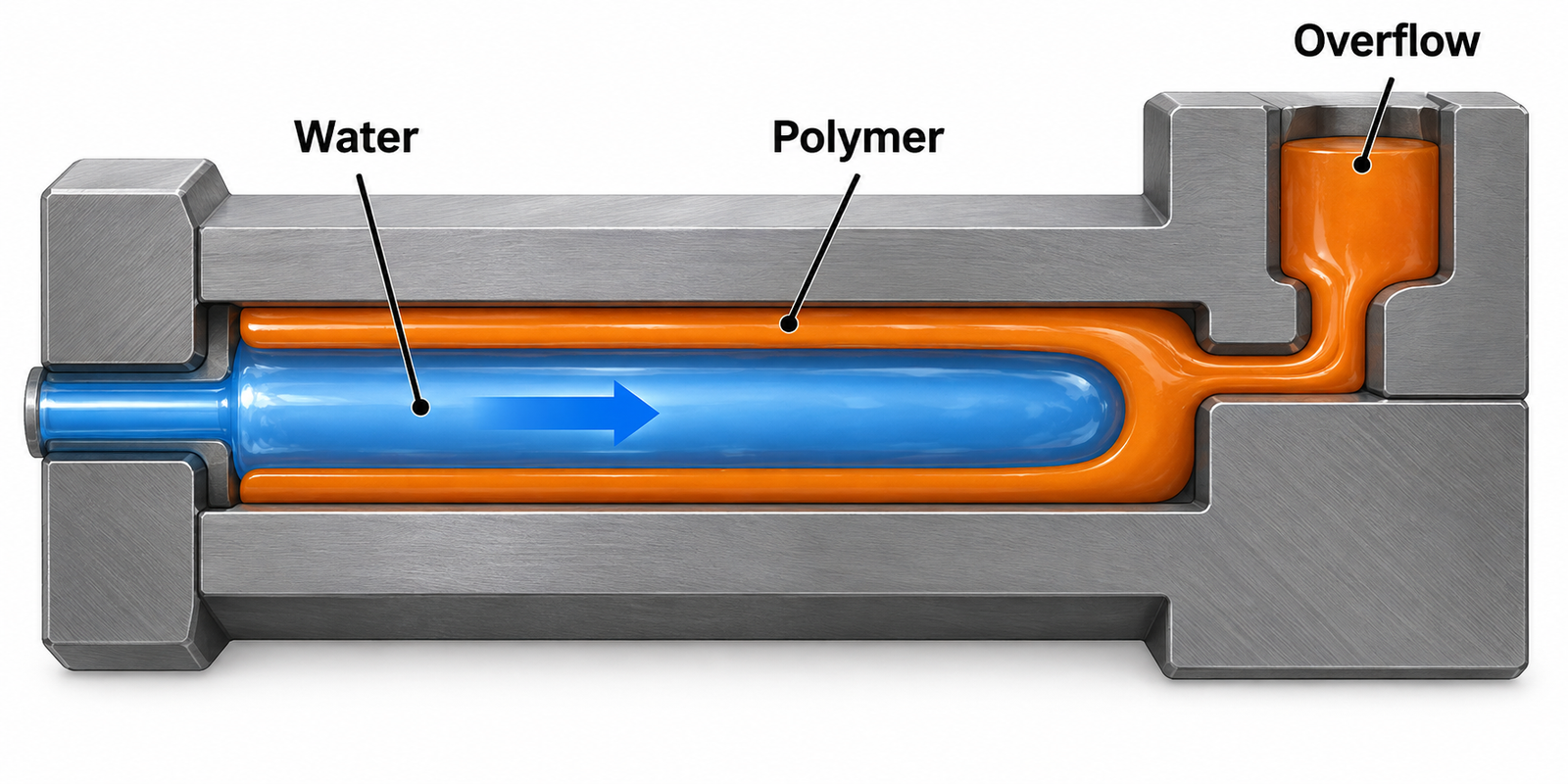
Figura 2. In the overflow variant, water displaces molten polymer into a separate pocket. Simplified illustration, não em escala.
For your quotation, ask which variant the supplier proposes. It changes tooling, material recovery, drainage, and the validation plan.
Six Benefits Of Water Injection Molding
You gain value when the hollow structure solves a specific weight, resfriamento, fluxo, or assembly problem.
1. Lower Finished Part Weight
Removing the solid center reduces the plastic retained in the finished component. This can help with handling or assembly mass targets.
No entanto, finished-part weight is not the same as purchased-resin consumption. Overflow material, corredores, peças rejeitadas, and approved reuse affect net savings.
Ask for both figures when evaluating a quotation: finished mass and resin consumed per acceptable part.
2. Faster Internal Cooling
Water extracts heat from the channel surface while the mold cools the outside. This can reduce cooling time in suitable sections.
Do not convert that advantage into a universal cycle-time percentage. Enchimento, water injection, drainage, manuseio, and inspection still consume time.
Compare complete production cycles using the same acceptance criteria. A faster cooling stage alone does not establish higher output. AQUAMOULD cooling principles
3. Integrated Internal Flow Passages
A molded hollow passage can follow a curved external shape. This creates opportunities for fluid-conveying components with integrated mounting features.
An industrial example is BASF’s published Teklas application involving automotive fluid tubes and a dedicated Ultramid WIT grade. This is an external example, not a TOPS project. BASF application case
Your design still needs defined pressure, temperatura, fluid compatibility, and connection requirements.
4. Potentially Fewer Assembly Joints
A suitable one-piece conduit may replace an assembly of separate molded sections. That can remove selected joining operations.
Treat this as a design opportunity, not an automatic outcome. End fittings, vedações, inserções, or closures may remain necessary.
Compare the complete assembly. Count the operations and leak paths actually removed, rather than assuming every hollow part becomes joint-free.
5. Better Control Of Thick-Section Appearance
Internal fluid pressure can support the outer surface during cooling. Hollowing also changes the material distribution in thick sections.
These mechanisms can help reduce sink-related appearance problems. They do not guarantee a flawless surface or eliminate every distortion source. Fluid-assisted molding benefits
Specify cosmetic zones and approved defect limits before sampling. Inspect appearance after the required conditioning and assembly operations.
6. Useful Internal Surface Quality
Water-assisted molding can produce useful internal channel surfaces, but surface quality remains process-dependent.
Experimental research compares internal surfaces, resfriamento, and residual walls under different molding conditions. It also highlights complex water–polymer interactions. Experimental WAIM study
For a fluid passage, request flow performance under defined conditions. A visually smooth sample does not establish acceptable pressure loss.
Water-Assisted Vs Gas-Assisted Injection Molding
Choose between water and gas assistance around channel requirements, Compatibilidade do material, and the complete production cycle.
Both processes create hollow sections by displacing melt. Gas assistance typically uses nitrogen; water assistance introduces liquid water.
| Decision | Water Assistance | Gas Assistance |
| Internal medium | Pressurized water | Usually pressurized nitrogen |
| Cooling consideration | Direct internal water cooling | Different heat-transfer behavior; compare trial results |
| Post-forming requirement | Water evacuation and residual-moisture control | Controlled depressurization and gas handling |
| Project screening | Functional hollow conduits and selected thick sections | Hollow channels and selected thick-section applications |
| Acceptance focus | Distribuição de parede, drainage, channel quality, e função | Distribuição de parede, channel quality, e função |
Water is not universally better. Gas assistance may meet your requirements with a more suitable production arrangement.
If neither process solves a defined problem, begin with conventional molding. Nosso plastic injection molding guide explains the broader tooling and purchasing decisions.
Which Parts And Materials Deserve A Feasibility Review?
Start with hollow geometry that provides a clear functional benefit, then select the exact resin grade.
| Candidate | Benefit To Investigate | Requirement To Validate |
| Curved fluid conduit | Integrated flow path | Leakage, burst resistance, and pressure loss |
| Thick handle or grip | Lower mass and controlled appearance | Load performance and minimum local wall |
| Hollow structural section | Material redistribution | Rigidez, fadiga, and joint loading |
| Simple straight tube | Limited differentiation from other routes | Compare extrusion or another simpler process |
Do not select a material from its family name alone. Processing behavior and service requirements must both suit the application.
AKRO-PLASTIC describes dedicated materials for water injection technology. BASF’s tube example likewise uses a WIT-specific grade. AKRO-PLASTIC WIT materials
Give your supplier the actual fluid, exposure temperature, vida esperada, and relevant mechanical loads. Identify required material approvals and substitution restrictions.
Avoid assuming ordinary nylon, reinforced nylon, or polypropylene grades are interchangeable.
Limitations You Should Resolve Before Tooling
The main risks are uncontrolled channel formation, unsuitable local walls, difficult drainage, and insufficient commercial benefit.
Residual Wall Thickness Is Not Automatically Uniform
Residual wall thickness is the plastic remaining between the outer surface and the internal channel.
Research on reinforced composites shows that process settings influence its distribution. The examined variables include temperatures, injection delay, and water pressure. Residual-wall optimization study
You should specify minimum local walls and inspection locations. An average thickness can conceal a weak region.
Channel Geometry Needs Its Own Review
Review bends, transitions, branch regions, injector locations, and channel termination with the process specialist.
Ask how the proposed water path relates to the functional passage. Do not assume water will reproduce every internal feature precisely.
If bore consistency is critical, ask whether another molding variant or manufacturing route better suits the requirement.
Drainage Is Part Of The Design
Identify places where water could remain trapped. Agree how the process removes it and how residual moisture is checked.
Also define cleanliness and packaging requirements. A part can meet external dimensions while remaining unacceptable for fluid-system assembly.
Some Projects Cannot Justify The Added Complexity
Reconsider water assistance for frequently changing designs, limited demand, or geometry offering little hollowing benefit.
Dedicated equipment, injector maintenance, trials, and inspection can outweigh material or cycle savings.
How To Validate Water Injection Molded Parts
Validate the internal channel and application performance alongside the external dimensions.
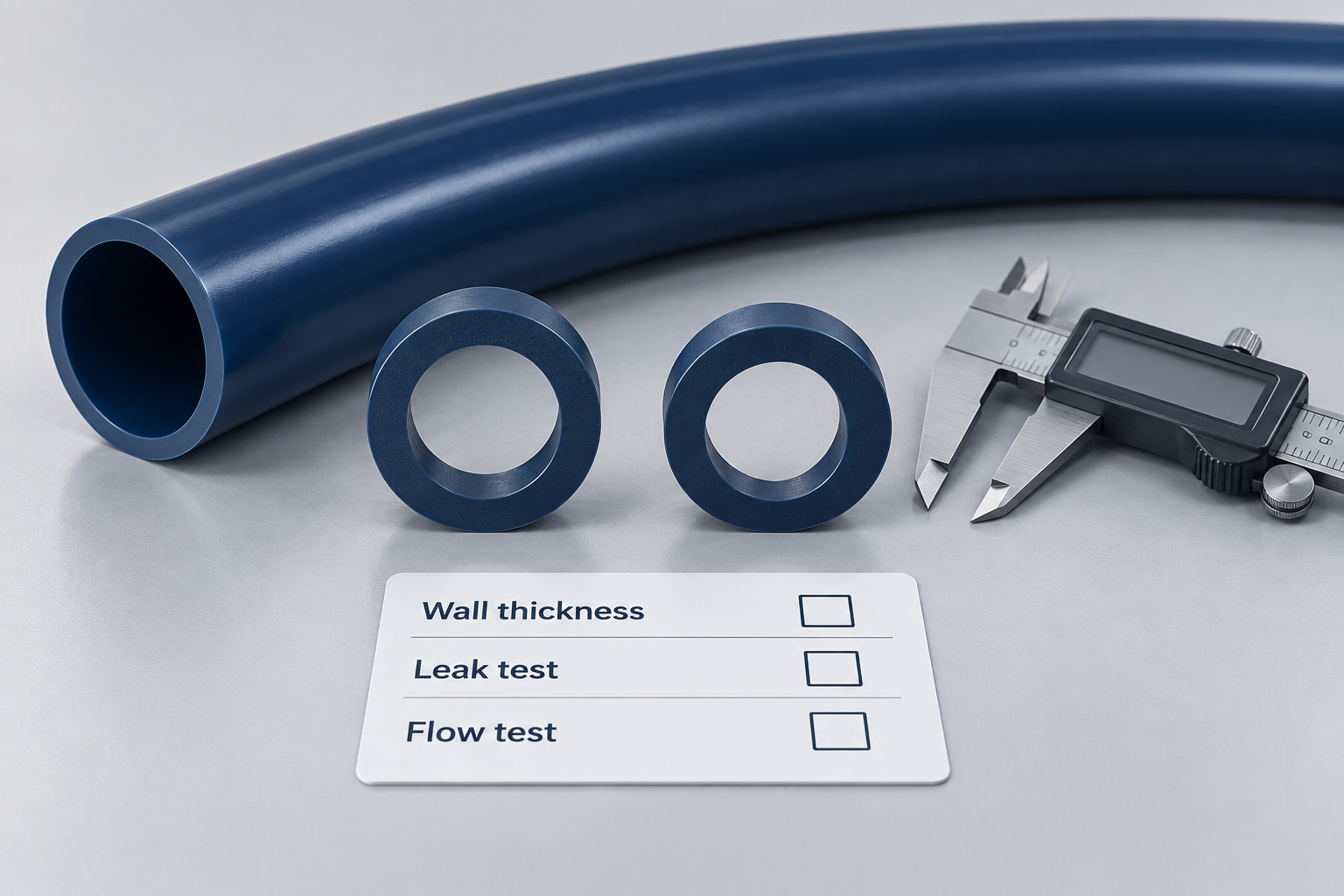
Figura 3. Approval should cover local walls and the required leak and flow performance. Conceptual illustration.
Agree on the following checks before first samples:
| Verificar | Provas a serem solicitadas |
| Material identity | Approved grade, batch traceability, and relevant processing records |
| Local wall thickness | Defined sections or a validated nondestructive measurement method |
| Channel continuity | Inspection or testing suited to the passage geometry |
| Fluid performance | Leak, pressão, and flow tests with stated conditions |
| Desempenho mecânico | Application-specific loading, fadiga, or environmental testing |
| Residual water and cleanliness | Documented acceptance limits and checking method |
| Repetibilidade | Results from multiple parts, cavities where applicable, and agreed production conditions |
Sectioning is useful for examining selected internal locations. CT scanning may help with inaccessible geometry when its resolution is suitable.
Agree on measurement uncertainty and sampling frequency. Do not assume either method automatically supports every drawing tolerance.
Record the approved material, drawing revision, process arrangement, and acceptance criteria. Define which subsequent changes require revalidation.
How To Evaluate The Cost Benefit
Compare the cost of acceptable finished parts, including tooling, utilities, manuseio, Inspeção, e montagem.
Request separate quotations for one-time investment and recurring production costs. Include expected annual volume and total program life.
Your comparison should account for:
- Tooling and dedicated equipment charges.
- Resin consumption, overflow handling, and permitted material reuse.
- Complete cycle time and realistic production yield.
- Water preparation, pumping, drainage, e manutenção.
- Teste, operações secundárias, embalagem, e montagem.
Use validated savings rather than supplier headline percentages. Ask which assumptions were measured and which remain estimates.
A lighter part does not automatically have a lower environmental footprint. Any environmental comparison needs a defined baseline and production data.
perguntas frequentes
These answers address common process-selection questions before you commit to tooling.
Is Water Injection Molding The Same As Mold Cooling?
Não. Water assistance introduces water into the polymer melt to form a hollow region. Ordinary mold cooling uses separate tool channels.
Does Water Stay Inside The Finished Part?
The process removes the forming water. You should still define drainage, residual-moisture, and cleanliness requirements for your application.
Are The Internal Walls Always Uniform?
Não. Geometria, material, and processing conditions influence local walls. Verify the minimum thickness at relevant locations.
Is Water Assistance Always Cheaper Than Gas Assistance?
Não. Compare tooling, complete cycle time, utilities, colheita, and validation costs for your actual design and volume.
Can Water-Assisted Parts Carry Pressurized Fluids?
They can be designed for that purpose. Approval requires the specified material, distribuição de parede, conexões, and application testing.
Discuss Your Plastic Part Requirements With TOPS
Ofertas TOPS serviços de moldagem por injeção de plástico covering design review, ferramentas, amostragem, e inspeção.
A water-assisted production route requires project-specific feasibility and equipment confirmation. General injection molding capability alone does not establish WIT availability.
Request a project review with your 3D model, desenho, resin requirements, volume anual, and program life. Include fluid conditions, dimensões críticas, surface requirements, and validation criteria.
Conclusão
Water injection molding offers its strongest benefits when the hollow channel has a clear purpose. Evaluate weight, resfriamento, conjunto, and flow together. Before tooling, confirm material suitability, local walls, drainage, and production economics through a documented feasibility review.


