



Ao contrário dos métodos convencionais de produção em massa, A usinagem CNC dá aos fabricantes de bicicletas maior controle sobre a seleção de materiais, precisão dimensional, otimização de peso, e personalização. Isto o torna particularmente adequado para bicicletas premium, bicicletas de corrida, bicicletas de montanha, bicicletas elétricas, construções de bicicletas personalizadas, e baixo- para produção de médio volume.
Mas quais peças de bicicleta são realmente feitas com usinagem CNC? Por que a usinagem CNC é preferida para esses componentes? Quais materiais são comumente usados? E quando um fabricante de bicicletas deve escolher a usinagem CNC em vez de fundição ou forjamento?
Este guia explica os mais comuns Peças de bicicleta usinadas CNC, as vantagens e limitações da usinagem CNC, opções de materiais, considerações de fabricação, e como escolher o parceiro de usinagem CNC certo.
1. O que é usinagem CNC e por que ela é importante para peças de bicicletas?
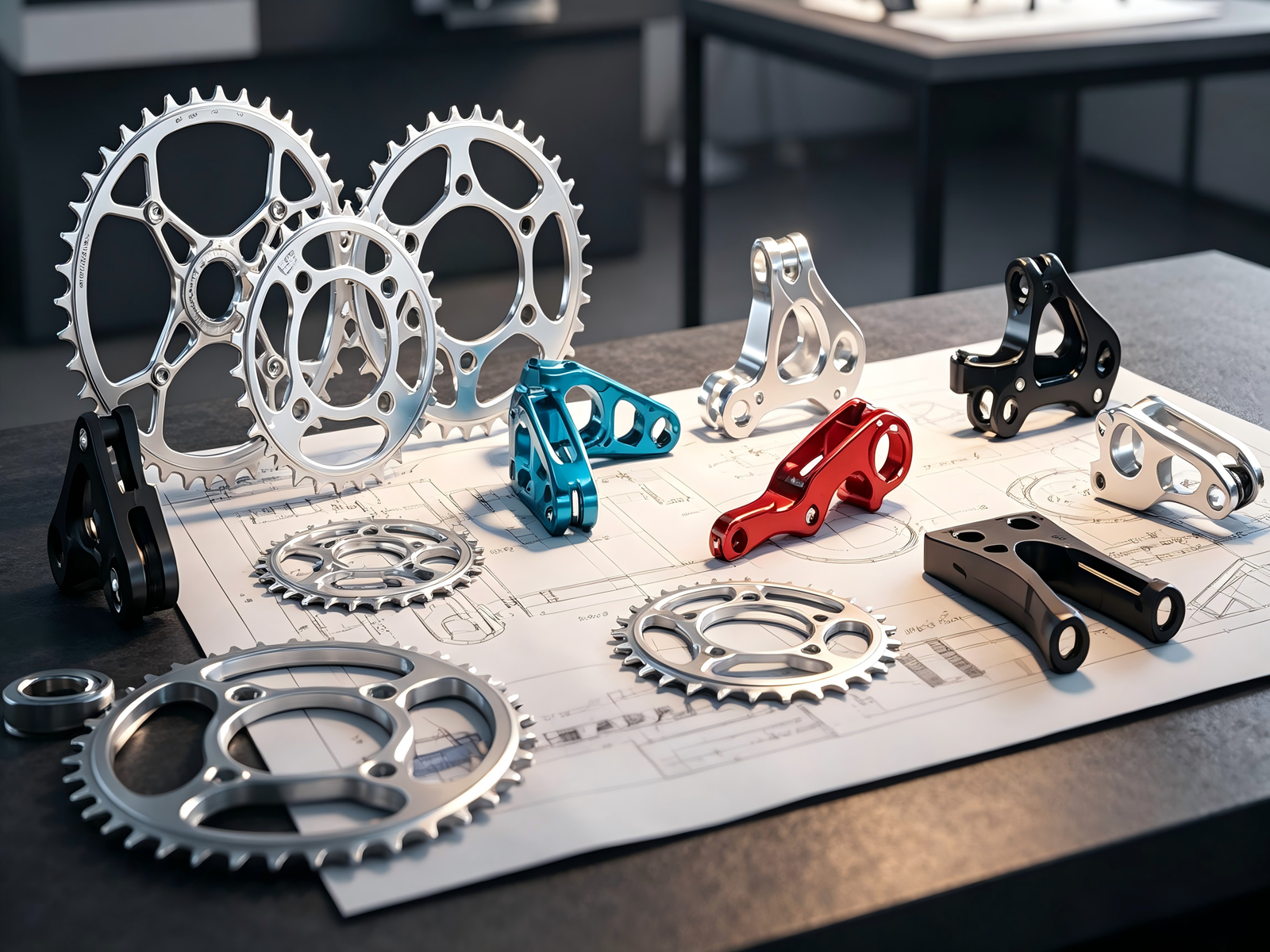
1.1 O que é usinagem CNC?
CNC significa Controle Numérico Computadorizado. Usinagem CNC é um processo de fabricação subtrativo no qual máquinas controladas por computador removem material de uma peça sólida para criar um componente acabado.
O processo de fabricação normalmente começa com um modelo CAD digital. Engenheiros convertem o projeto em instruções de máquina usando software CAM. A máquina CNC controla então o movimento das ferramentas de corte ao longo de vários eixos para remover o material com precisão de acordo com a geometria programada.
Dependendo do componente e dos requisitos de design, os fabricantes podem usar:
- 3-fresamento CNC de eixo
- 4-usinagem do eixo CNC
- 5-usinagem do eixo CNC
- Torneamento CNC
- Torneamento e fresamento CNC
- Usinagem CNC tipo suíço
Para componentes de bicicletas, Fresamento CNC é especialmente comum porque muitas peças requerem bolsões complexos, superfícies curvas, chatos, furos roscados, e estruturas leves.
O processo pode produzir componentes diretamente de materiais como alumínio, titânio, aço inoxidável, aço, latão, e plásticos de engenharia.
1.2 Por que a usinagem CNC é adequada para componentes de bicicletas?
Os componentes da bicicleta operam sob uma ampla gama de cargas mecânicas. Os braços da manivela experimentam torque repetido, cubos transportam cargas de rodas, as hastes devem suportar forças de direção, e os componentes do freio precisam manter um alinhamento preciso sob estresse mecânico e térmico.
Para essas aplicações, pequenos erros dimensionais podem afetar:
- Ajuste de componente
- Desempenho mecânico
- Segurança do piloto
- Peso
- Durabilidade
- Ruído e vibração
- Eficiência de montagem
A usinagem CNC é adequada a esses requisitos porque oferece excelente controle dimensional e repetibilidade.
Por exemplo, um cubo usinado em CNC pode ser fabricado com assentos de rolamento precisos e furos concêntricos. Uma haste usinada em CNC pode manter superfícies de fixação precisas. Um suporte de desviador pode ser produzido com furos de montagem precisos e recursos de alinhamento.
Este nível de precisão é particularmente valioso quando vários componentes devem funcionar juntos como um sistema de bicicleta completo.
2. Quais peças de bicicleta são comumente feitas com usinagem CNC?
Nem todo componente de bicicleta requer usinagem CNC. No entanto, peças que exigem alta precisão, geometria complexa, construção leve, ou personalização costumam ser excelentes candidatos.
Aqui estão algumas das peças de bicicleta usinadas CNC mais comuns.
2.1 Pedaleiras e braços de manivela usinados em CNC
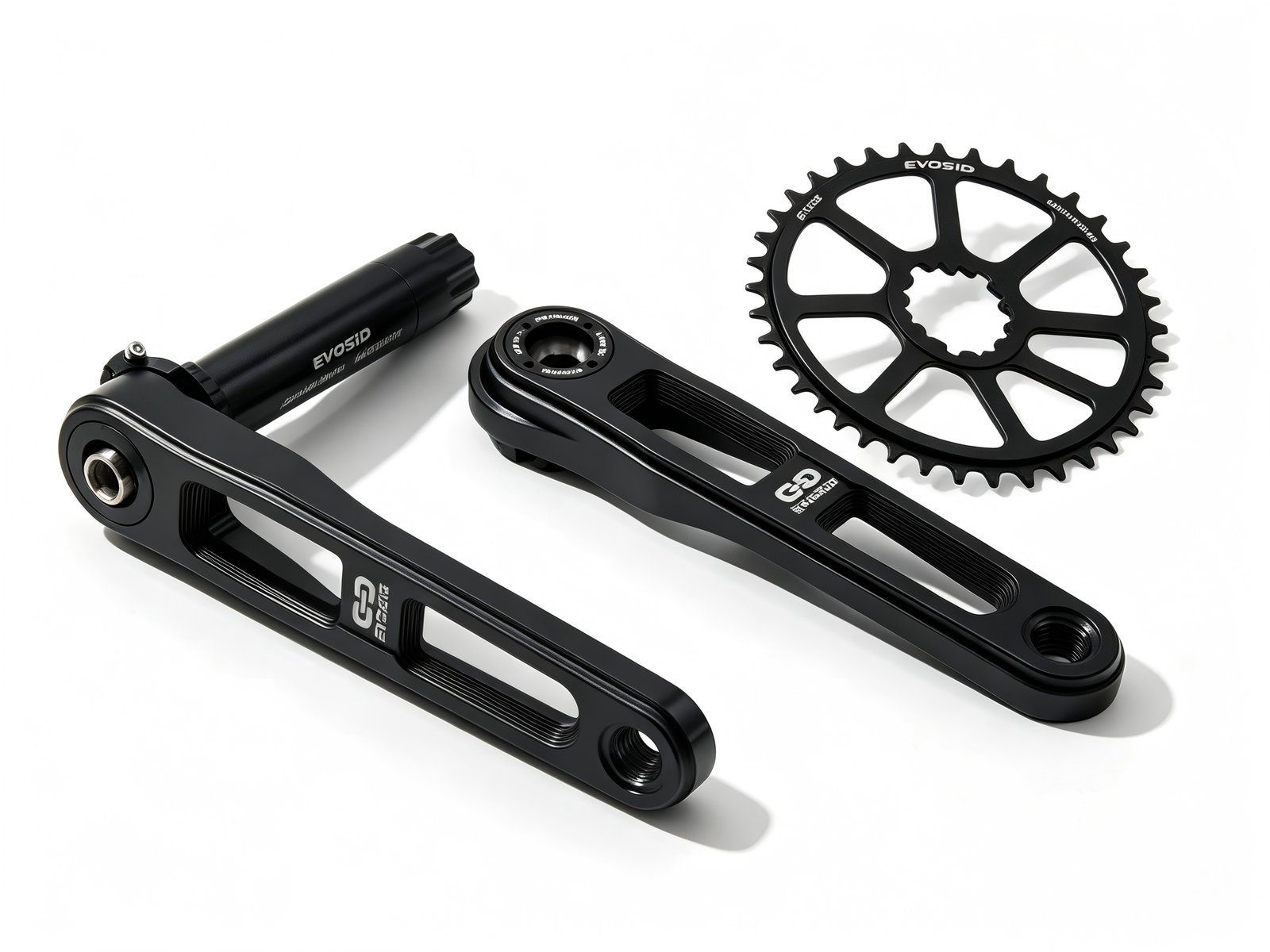
Os pedivelas estão entre os componentes mais exigentes da bicicleta porque transferem a força de pedalada do ciclista diretamente para o sistema de transmissão.
Durante a operação normal, os braços da manivela experimentam torque repetido e carga cíclica. Eles exigem, portanto, uma combinação de:
- Força elevada
- Baixo peso
- Precisão dimensional
- Rigidez estrutural
- Resistência à fadiga
A usinagem CNC permite que os fabricantes otimizem a geometria do braço do pedivela removendo material de áreas de baixa tensão e mantendo material suficiente em torno de zonas críticas de suporte de carga.
Ligas de alumínio como 6061-T6 e 7075-T6 são comumente consideradas para componentes de manivela de bicicleta usinados em CNC..
A usinagem CNC também pode criar:
- Fios de pedal
- Interfaces de suporte inferior
- Orifícios de montagem da coroa
- Bolsos para redução de peso
- Recursos decorativos
Para fabricantes de bicicletas premium, A usinagem CNC pode proporcionar maior liberdade de projeto do que os processos de fabricação convencionais.
No entanto, porque os braços da manivela são componentes críticos para a segurança, o projeto final deve ser adequadamente projetado e validado para as cargas e aplicações pretendidas.
2.2 Coroas Usinadas CNC
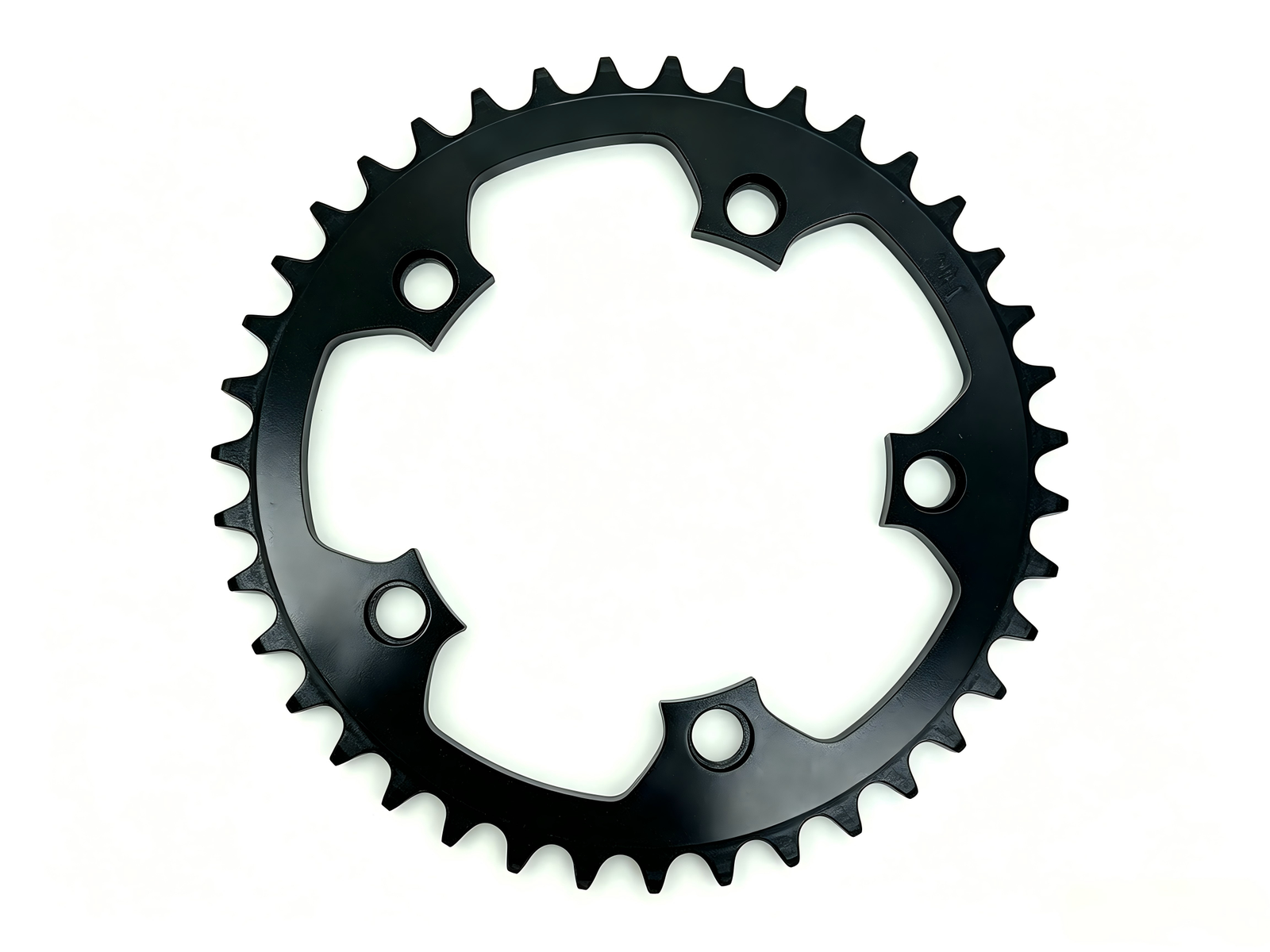
As coroas são outra aplicação comum para usinagem de precisão.
A forma e o espaçamento dos dentes da coroa influenciam diretamente o desempenho do sistema de transmissão. Pequenas variações na geometria do dente podem afetar:
- Engajamento em cadeia
- Mudança de desempenho
- Barulho
- Vestir
- Transmissão de energia
A usinagem CNC pode produzir perfis de dentes e interfaces de montagem altamente precisos.
Também é adequado para projetos especializados, como:
- Coroas redondas padrão
- Coroas ovais
- Coroas estreitas
- Correntes leves personalizadas
- Coroas de desempenho de produção limitada
A usinagem CNC permite que os fabricantes otimizem a estrutura da coroa removendo o excesso de material e mantendo resistência suficiente.
Após a usinagem, os fabricantes podem aplicar acabamentos como anodização, jateamento de contas, escovar, ou marcação a laser para melhorar a resistência à corrosão e a aparência visual.
2.3 Cubos e eixos usinados CNC
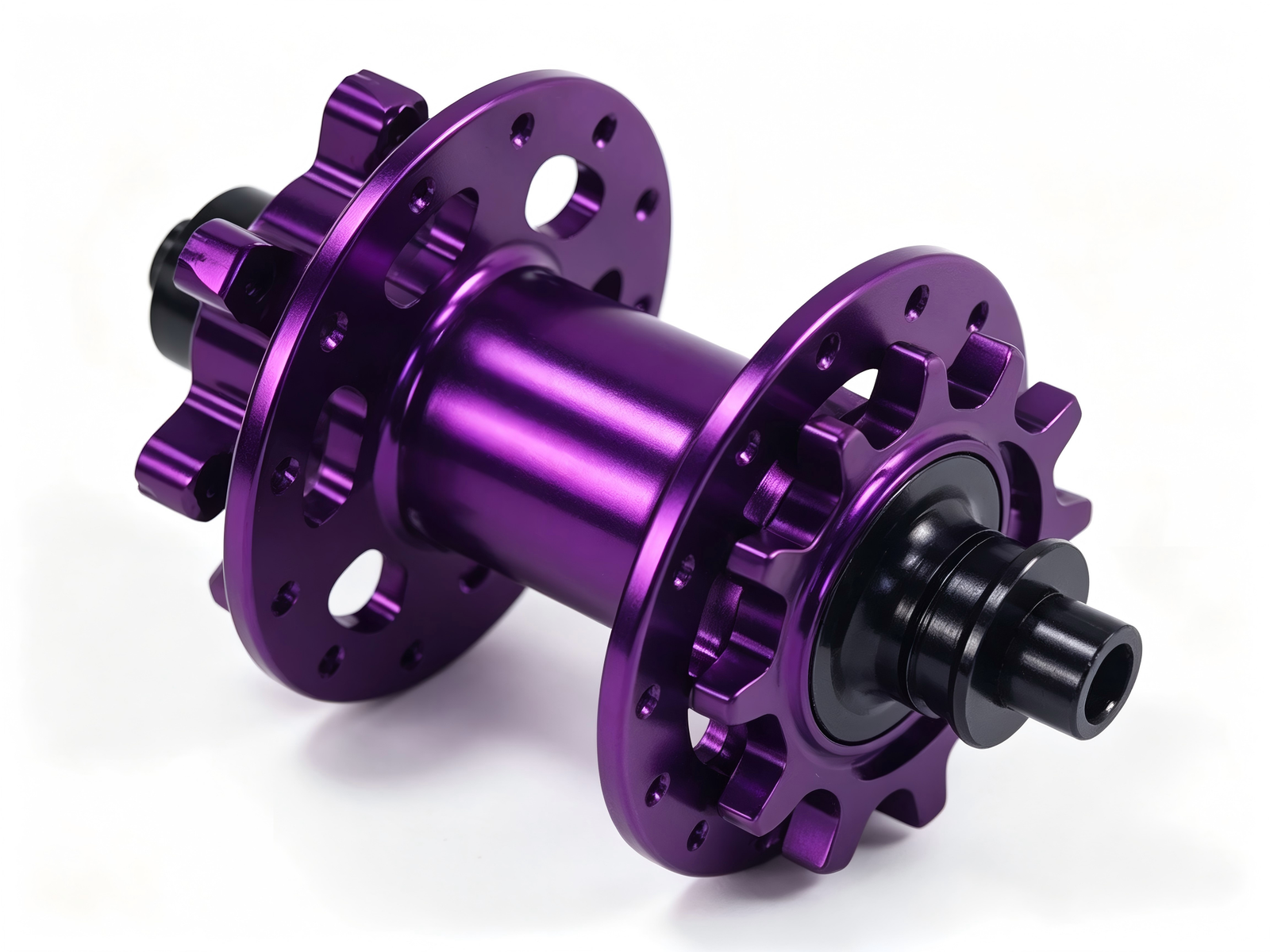
Os cubos das rodas são componentes rotativos críticos. Seu desempenho depende muito da precisão dimensional e do alinhamento.
Um cubo usinado CNC pode incluir:
- Furos de rolamento
- Interfaces de eixo
- Buracos de raios
- Flanges
- Recursos de montagem do rotor
- Interfaces freehub
Os assentos dos rolamentos e os furos centrais requerem atenção especial. Uma concentricidade deficiente ou dimensões imprecisas podem resultar em:
- Maior fricção
- Desgaste do rolamento
- Vibração
- Mau alinhamento das rodas
- Vida útil reduzida
A usinagem CNC permite que os fabricantes mantenham relações precisas entre esses recursos.
O processo também suporta designs complexos de flanges que podem ajudar a otimizar a geometria dos raios e reduzir o peso desnecessário.
Os eixos usinados em CNC também podem se beneficiar de operações precisas de torneamento e fresamento, especialmente quando são necessários ajustes justos e roscas precisas.
2.4 Pinças de freio e alavancas de freio usinadas CNC
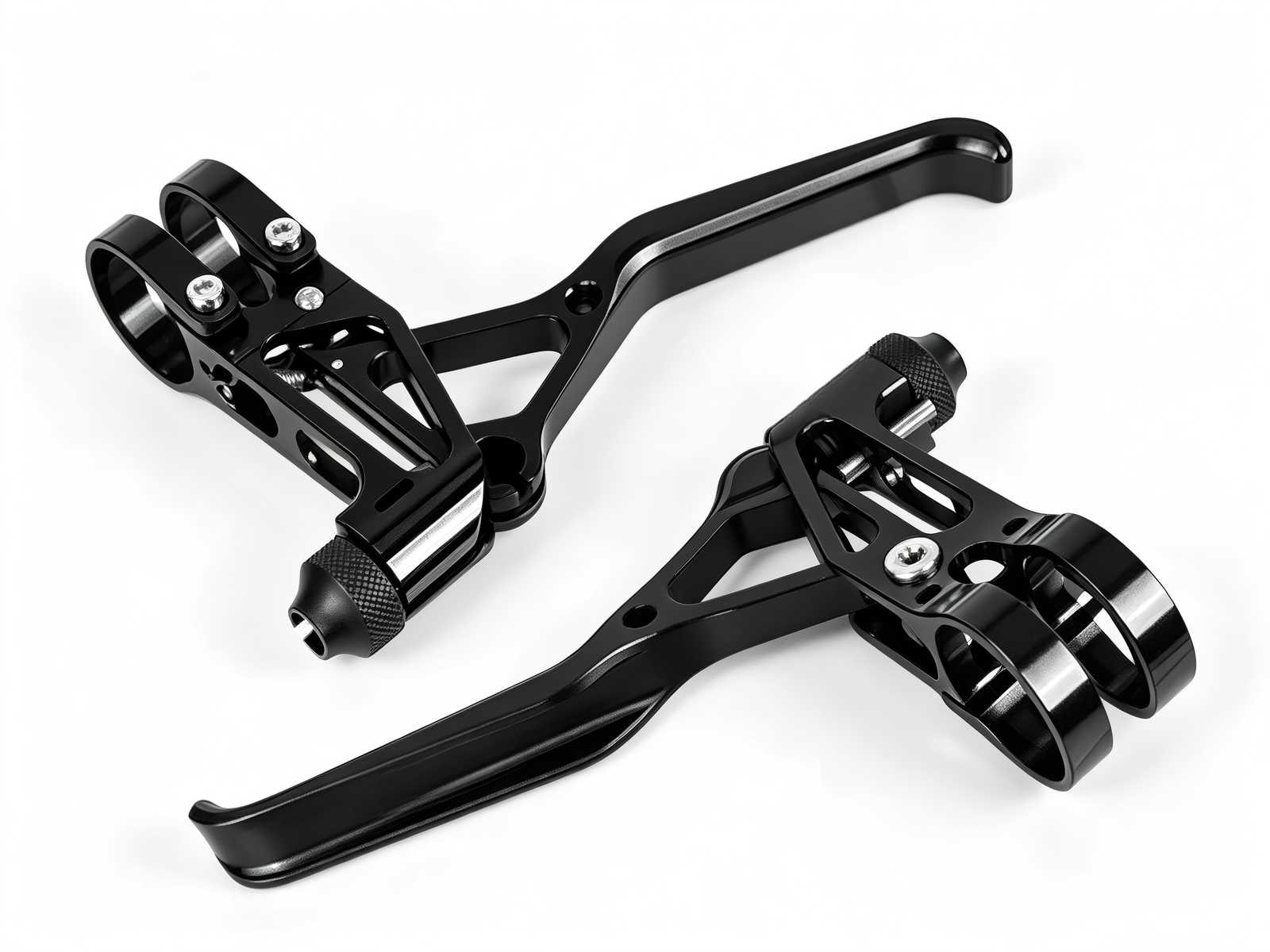
Os componentes do freio são peças críticas para a segurança que exigem alinhamento preciso e desempenho mecânico confiável.
A usinagem CNC pode produzir pinças e alavancas de freio com:
- Superfícies de montagem precisas
- Furos de pivô precisos
- Estruturas leves
- Geometria interna complexa
- Perfis ergonômicos suaves
Para bicicletas de alto desempenho, os projetistas geralmente desejam reduzir o peso enquanto mantêm rigidez suficiente.
A usinagem CNC permite que o material seja estrategicamente removido de áreas de baixa tensão, preservando o material estrutural em torno de interfaces críticas.
Para alavancas de freio, A usinagem CNC também permite que os fabricantes desenvolvam formas ergonômicas personalizadas e designs específicos para marcas.
Para sistemas hidráulicos, processos de fabricação adicionais podem ser necessários para criar passagens internas de fluido e interfaces de vedação.
Porque os sistemas de travagem afetam diretamente a segurança do condutor, componentes devem ser projetados, fabricado, e testado de acordo com os requisitos de aplicação relevantes.
2.5 Hastes de bicicleta usinadas CNC
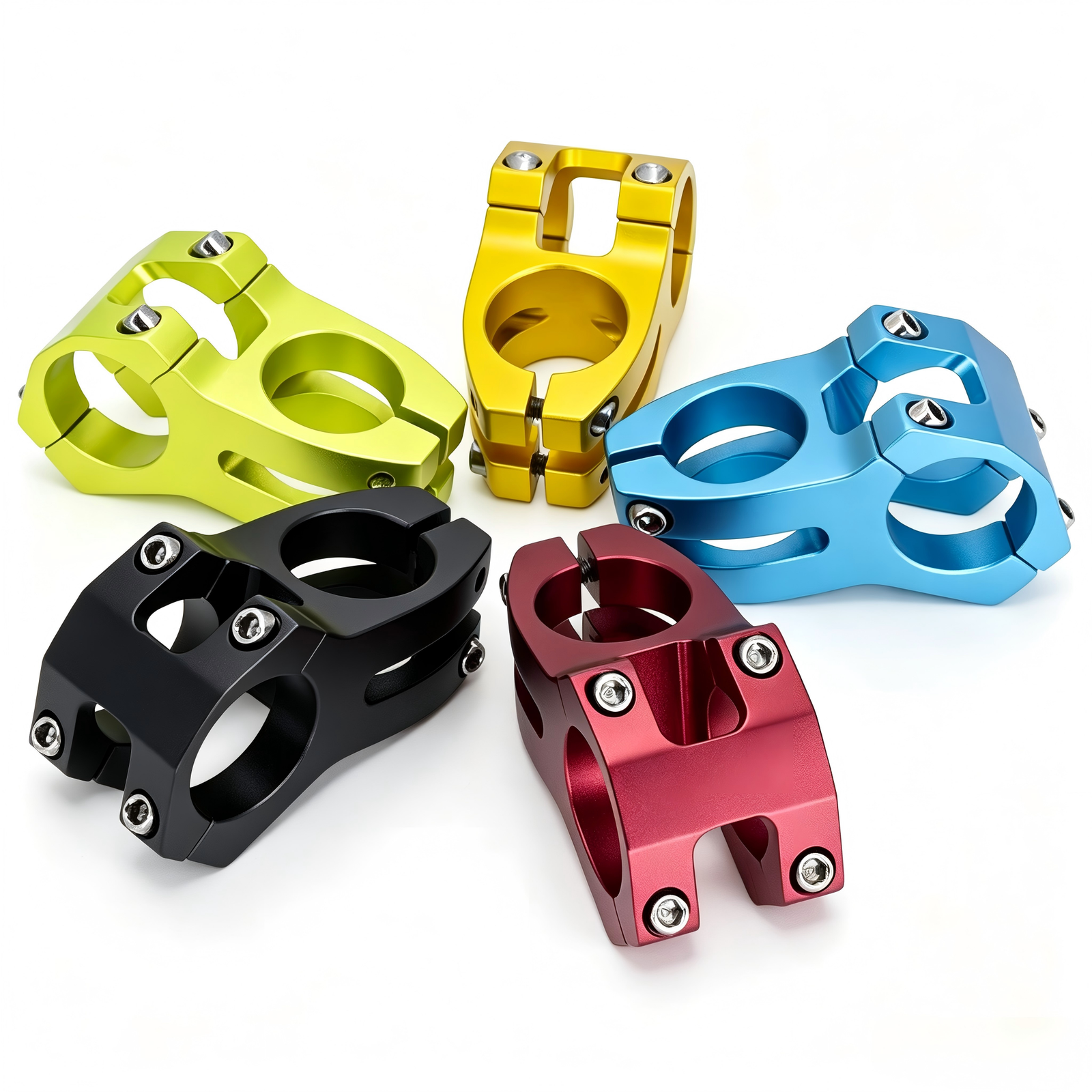
Um avanço de bicicleta conecta o guidão ao sistema de direção e desempenha um papel importante no manuseio e controle do ciclista.
Uma haste usinada em CNC normalmente requer precisão:
- Superfícies de fixação do guiador
- Interfaces do tubo de direção
- Furos de parafusos
- Furos roscados
- Recursos de alinhamento
Os fabricantes podem usar a usinagem CNC para criar designs leves com bolsos e recortes cuidadosamente posicionados.
As principais vantagens incluem:
- Alta precisão dimensional
- Fixação consistente
- Otimização de peso
- Geometria personalizada
- Acabamentos de superfície premium
A usinagem CNC também permite que marcas de bicicletas incorporem logotipos, detalhes decorativos, e elementos de design distintos.
Para estradas de alto padrão, montanha, cascalho, e bicicletas de corrida, a combinação de precisão e construção leve torna a usinagem CNC uma opção atraente.
2.6 Pedais de bicicleta usinados CNC
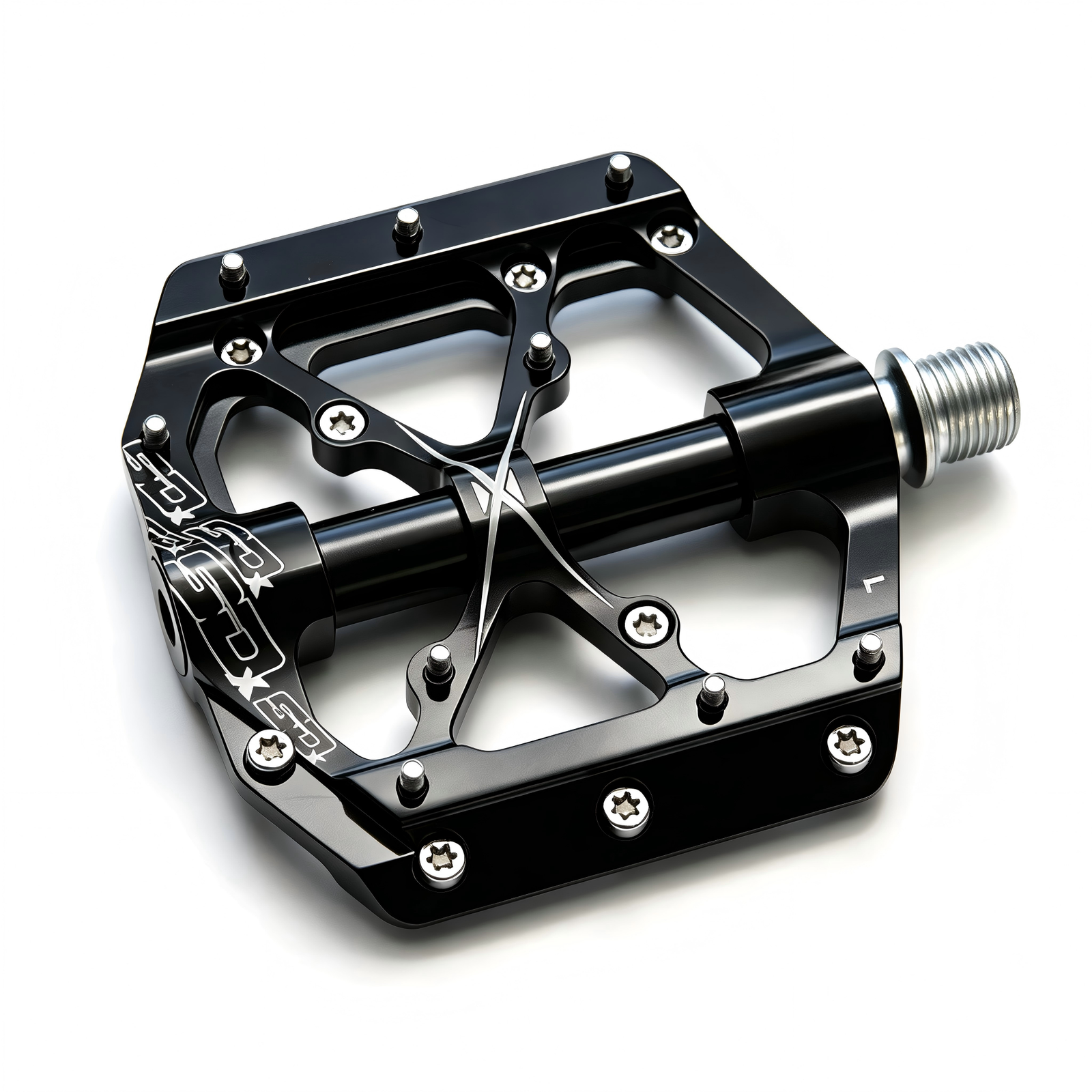
Os pedais devem resistir a impactos repetidos, forças rotacionais, e peso do piloto.
A usinagem CNC pode ser usada para fabricar corpos de pedais e outros componentes de pedais com recursos personalizados, como:
- Superfícies de aderência
- Orifícios de pinos
- Cavidades de rolamento
- Bolsos leves
- Contornos personalizados
As ligas de alumínio são comumente consideradas para corpos de pedais voltados para o desempenho.
A usinagem CNC permite que os fabricantes equilibrem força e peso enquanto criam designs exclusivos para diferentes estilos de pilotagem.
Por exemplo, pedais de mountain bike podem priorizar resistência ao impacto e aderência, enquanto os componentes das bicicletas de estrada podem se concentrar mais no baixo peso e no design aerodinâmico.
2.7 Braçadeiras de espigão usinadas CNC
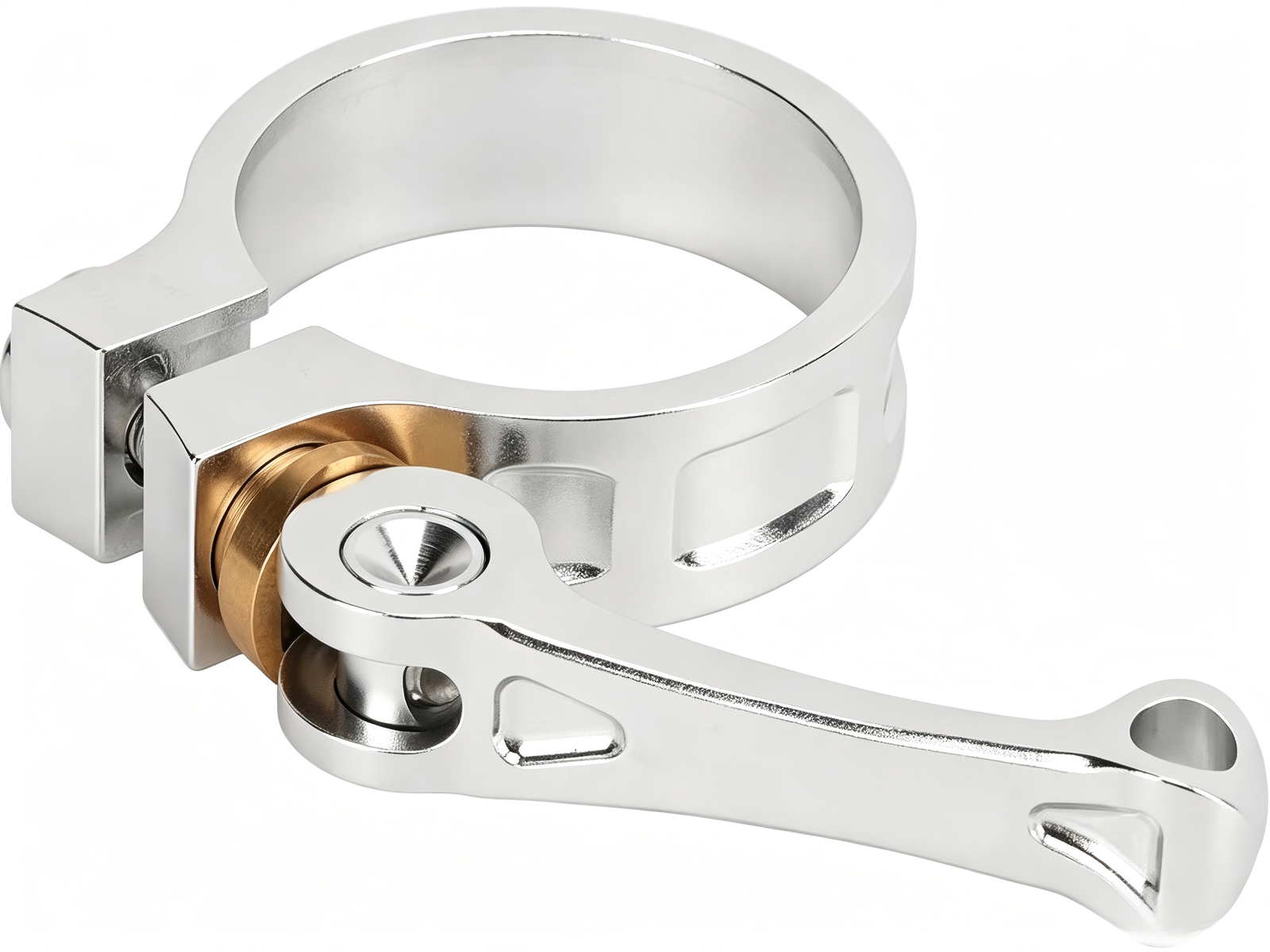
Embora relativamente pequeno, as braçadeiras do espigão do selim são componentes importantes que exigem força de fixação consistente.
A usinagem CNC pode produzir interfaces precisas que ajudam a distribuir a pressão de fixação uniformemente ao redor do espigão do selim.
Os benefícios incluem:
- Dimensões precisas
- Fixação consistente
- Construção leve
- Projetos personalizados
- Acabamentos de alta qualidade
Os fabricantes também podem adicionar logotipos gravados a laser ou outros elementos de marca para criar uma aparência premium.
2.8 Outras peças de bicicleta comumente usinadas em CNC
Além dos principais componentes acima, A usinagem CNC também é usada para muitas peças especializadas de bicicletas.
Estes podem incluir:
- Suportes de desviador
- Desistências
- Componentes do suporte inferior
- Componentes do fone de ouvido
- Tampas de manivela
- Componentes de suspensão
- Adaptadores de freio
- Guias de cabos
- Suportes de montagem
- Suportes para motor de bicicleta elétrica
- Componentes de montagem da bateria
- Acessórios de moldura personalizados
Para bicicletas elétricas, A usinagem CNC é cada vez mais útil para componentes mecânicos personalizados que conectam sistemas elétricos, baterias, motores, e quadros de bicicletas.
A adequação da usinagem CNC depende da geometria da peça, material, quantidade, Requisitos de tolerância, e orçamento de produção.
3. Por que os fabricantes de bicicletas preferem a usinagem CNC?
A usinagem CNC nem sempre é o processo de fabricação mais barato. No entanto, fornece uma combinação única de precisão, flexibilidade, liberdade de design, e qualidade.
3.1 Alta precisão e tolerâncias apertadas
A precisão é crítica quando os componentes da bicicleta devem se encaixar com precisão.
Exemplos incluem:
- Assentos de rolamento
- Interfaces de eixo
- Furos roscados
- Superfícies de fixação
- Furos de montagem
- Componentes do trem de força
A usinagem CNC permite que os fabricantes controlem esses recursos de forma consistente.
No entanto, é importante entender que nem todo recurso precisa de uma tolerância extremamente rígida.
A especificação excessiva de tolerâncias pode aumentar o tempo de usinagem e os requisitos de inspeção sem melhorar o desempenho real.
Um fornecedor profissional de CNC deve revisar os desenhos e recomendar tolerâncias apropriadas com base na função de cada recurso.
3.2 Excelente otimização de resistência/peso
Uma das maiores vantagens da usinagem CNC para bicicletas de alto desempenho é a capacidade de otimizar a distribuição do material.
Em vez de fabricar um bloco sólido com massa desnecessária, os engenheiros podem criar bolsas e contornos em áreas onde o material não é estruturalmente essencial.
Isto pode ajudar a alcançar um equilíbrio entre:
Força + rigidez + peso + funcionalidade
Esta abordagem é particularmente valiosa para:
- Braços de manivela
- Caules
- Pedais
- Centros
- Componentes do freio
O projeto final deve ser sempre validado para as cargas mecânicas pretendidas, especialmente para componentes críticos para a segurança.
3.3 Acabamento e aparência de superfície superiores
A usinagem CNC pode produzir bordas limpas, superfícies lisas, e detalhes precisos.
Processos de acabamento adicionais podem incluir:
- Anodização
- Bedia de contas
- Escovação
- Polimento
- Revestimento em pó
- Gravação a laser
Para marcas de bicicletas, a aparência pode ser quase tão importante quanto o desempenho.
Um acabamento superficial de alta qualidade pode ajudar a criar uma identidade visual premium e melhorar a resistência à corrosão, dependendo do processo de acabamento selecionado.
3.4 Flexibilidade e personalização de design
A usinagem CNC é particularmente valiosa para marcas que desejam diferenciar seus produtos.
Os fabricantes podem criar:
- Logotipos personalizados
- Recortes exclusivos
- Geometrias específicas da marca
- Dimensões personalizadas
- Projetos de edição limitada
- Estruturas específicas de desempenho
Ao contrário dos processos que exigem moldes ou matrizes dedicadas, A usinagem CNC muitas vezes pode acomodar alterações de projeto modificando o programa CAD/CAM.
Isso o torna atraente para o desenvolvimento de produtos e componentes de bicicletas personalizados.
3.5 Ideal para prototipagem e produção de pequenos lotes
A usinagem CNC costuma ser uma excelente escolha quando as quantidades de produção são relativamente baixas.
Pode ser usado para:
- 1-10 peças de protótipo
- Validação de engenharia
- 10-100 produção piloto de peças
- Produção comercial de pequenos lotes
- Revisões do produto
A ausência de moldes de injeção ou matrizes de forjamento dispendiosos pode tornar a usinagem CNC economicamente atraente para o desenvolvimento de produtos em estágio inicial..
Depois que o projeto for validado e os volumes de produção aumentarem significativamente, os fabricantes podem avaliar se outro processo proporcionaria um custo unitário menor.
3.6 Qualidade consistente e repetibilidade
Para marcas de bicicletas, consistência é crítica.
Um processo de usinagem CNC confiável pode ajudar a manter a consistência:
- Dimensões
- Acabamentos de superfície
- Locais dos furos
- Tópicos
- Interfaces de montagem
Um fornecedor profissional também deve ter um sistema de controle de qualidade documentado e equipamento de inspeção apropriado.
Dependendo do componente, a inspeção pode incluir:
- Pinças
- Micrômetros
- Medidores de altura
- Inspeção CMM
- Medidores de linha
- Medição de rugosidade superficial
4. Usinagem CNC vs.. Outros processos de fabricação de peças de bicicletas
A escolha do processo de fabricação correto depende do volume de produção, complexidade do projeto, material, tolerância, e custo alvo.
4.1 Usinagem CNC vs.. Fundição
A fundição é geralmente mais adequada para produção de alto volume porque o custo do ferramental pode ser distribuído por um grande número de peças.
As vantagens da fundição incluem:
- Menor custo unitário em grandes volumes
- Produção complexa em formato quase líquido
- Produção em massa eficiente
No entanto, a fundição pode exigir usinagem adicional para obter tolerâncias restritas.
A usinagem CNC é geralmente preferida quando:
- As quantidades são baixas ou moderadas
- Tolerâncias rigorosas são necessárias
- O acabamento da superfície é importante
- É necessária personalização
- O investimento em ferramentas deve ser minimizado
4.2 Usinagem CNC vs.. Forjamento
O forjamento pode fornecer excelentes propriedades mecânicas porque o processo de fabricação pode melhorar o fluxo de grãos do material.
Muitas vezes é atraente para componentes estruturais de alto volume.
No entanto, o forjamento geralmente requer ferramentas dedicadas e pode ser menos flexível para projetos altamente personalizados.
A usinagem CNC é frequentemente preferida para:
- Protótipos
- Componentes personalizados
- Geometrias complexas
- Produção de baixo volume
- Mudanças freqüentes de design
Para alguns componentes de bicicletas, uma combinação de forjamento e usinagem CNC pode fornecer o melhor equilíbrio entre resistência, custo, e precisão.
4.3 Usinagem CNC vs.. Moldagem por injeção
A moldagem por injeção é usada principalmente para componentes plásticos.
É altamente eficiente para produção em massa, mas requer um investimento inicial no molde.
A usinagem CNC é mais adequada quando:
- O componente é metálico
- As quantidades são relativamente baixas
- O design ainda está evoluindo
- Tolerâncias rigorosas são necessárias
Para componentes plásticos de bicicletas, A usinagem CNC pode ser útil para protótipos, enquanto a moldagem por injeção pode se tornar mais econômica para produção em alto volume.
4.4 Quando você deve escolher a usinagem CNC?
A usinagem CNC geralmente é uma escolha forte quando você precisa:
- Alta precisão dimensional
- Tolerâncias funcionais rigorosas
- Geometria complexa
- Projetos leves
- Acabamentos de superfície premium
- Componentes de bicicleta personalizados
- Protótipos rápidos
- Baixo- para produção de médio volume
Se o seu projeto requer milhões de peças idênticas ao menor custo unitário possível, outros processos podem ser mais apropriados.
O melhor processo de fabricação deve sempre ser selecionado com base no ciclo de vida completo do produto, e não apenas no preço unitário..
4.5 Usinagem CNC vs.. Outros processos de fabricação: Comparação rápida
| Processo de manufatura | Precisão | Custo de ferramentas | Flexibilidade de projeto | Melhor Volume de Produção | Aplicações típicas de bicicletas |
| Usinagem CNC | Alto | Baixo a moderado | Excelente | Baixo a médio | Peças personalizadas e de precisão |
| Fundição | Moderado a alto | Moderado a alto | Alto | Médio a alto | Peças complexas produzidas em massa |
| Forjamento | Alto | Alto | Moderado | Médio a alto | Peças estruturais de alta resistência |
| Moldagem por injeção | Alto para plásticos | Alto | Moderado | Alto | Componentes plásticos |
A escolha certa depende do design da peça, material, quantidade, tolerância, e custo alvo.
5. Quais materiais são comumente usados para peças de bicicletas CNC?
A seleção do material afeta diretamente o peso do componente, força, durabilidade, maquinabilidade, e custo.
5.1 Ligas de alumínio
O alumínio é um dos materiais mais comuns para componentes de bicicletas usinados em CNC.
As opções populares incluem:
- 6061 alumínio
- 7075 alumínio
6061 Alumínio
6061 é amplamente utilizado porque oferece:
- Boa usinabilidade
- Boa resistência à corrosão
- Força equilibrada
- Custo competitivo
- Excelente disponibilidade
É adequado para muitos componentes de bicicletas de uso geral.
7075 Alumínio
7075 o alumínio oferece maior resistência do que 6061 em muitas condições e é frequentemente selecionado para aplicações orientadas para o desempenho onde a relação resistência/peso é crítica.
As aplicações potenciais incluem:
- Caules
- Componentes da manivela
- Centros
- Suportes de alto desempenho
- Componentes estruturais de bicicletas
A escolha final do material deve ser baseada nas condições reais de carga e nas propriedades mecânicas exigidas..
5.2 Titânio
O titânio é valorizado por:
- Alta relação resistência-peso
- Excelente resistência à corrosão
- Durabilidade a longo prazo
- Aparência premium
No entanto, o titânio é geralmente mais caro e mais desafiador de usinar do que o alumínio.
Pode ser usado para componentes premium de bicicletas onde o desempenho e a durabilidade justificam o maior custo de fabricação.
5.3 Aço inoxidável
Ofertas de aço inoxidável:
- Alta durabilidade
- Resistência à corrosão
- Boa resistência ao desgaste
Pode ser adequado para componentes que exigem maior resistência ou resistência ao desgaste do que o alumínio pode fornecer.
A desvantagem é sua maior densidade, o que o torna menos atraente para aplicações onde a minimização do peso é o objetivo principal.
5.4 Plastics de engenharia
Certos plásticos de engenharia também podem ser usinados CNC para aplicações em bicicletas.
Materiais potenciais incluem:
- POM
- Nylon
- OLHADINHA
Esses materiais podem ser selecionados para:
- Componentes leves
- Buchas
- Espaçadores
- Guias
- Componentes isolantes
- Peças de protótipo
O material específico deve ser selecionado com base na temperatura, vestir, atrito, força, e requisitos ambientais.
5.5 Como escolher o material certo
Ao selecionar um material para peças de bicicletas CNC, considerar:
- Cargas mecânicas
- Força necessária
- Meta de peso
- Ambiente de corrosão
- Resistência ao desgaste
- Maquinabilidade
- Requisitos de acabamento de superfície
- Quantidade de produção
- Orçamento
Um fornecedor qualificado de usinagem CNC deve ser capaz de fornecer recomendações de materiais durante a revisão do DFM.
6. Quanto custa para usinar peças de bicicleta CNC?
Não existe um preço universal para peças de bicicletas CNC porque o custo depende do projeto específico e dos requisitos de produção.
Os principais fatores de custo incluem:
Material
O titânio geralmente custa mais para usinar do que o alumínio.
Complexidade da peça
Geometrias mais complexas requerem programação adicional, ferramentas, e tempo de usinagem.
Tolerâncias
Tolerâncias extremamente restritas podem exigir operações de usinagem e inspeção adicionais.
Tempo de usinagem
Quanto mais tempo uma máquina CNC funciona, quanto maior o custo de fabricação.
Acabamento superficial
Anodização, polimento, escovar, e outros processos aumentam o custo total.
Quantidade
Maiores quantidades de produção podem reduzir o custo médio por peça.
Fixação
Componentes complexos podem exigir acessórios personalizados para garantir uma usinagem estável e precisa.
Inspeção
Componentes críticos podem exigir inspeção dimensional detalhada ou medição CMM.
Para reduzir custos de usinagem CNC, considerar:
- Usando materiais padrão
- Evitando tolerâncias apertadas desnecessárias
- Simplificando recursos complexos
- Otimizando a orientação da peça
- Projetando para ferramentas de corte padrão
- Aumentar a quantidade do pedido quando apropriado
- Combinando operações compatíveis
A maneira mais eficaz de obter um preço preciso é enviar ao fornecedor um 2Desenho D e modelo CAD 3D, juntamente com o material necessário, acabamento superficial, quantidade, e requisitos de entrega.
7. Perguntas frequentes sobre peças de bicicletas CNC
1. Quais peças de bicicleta são comumente usinadas em CNC?
Peças comuns de bicicletas CNC incluem braços de manivela, coroas, centros, eixos, caules, componentes de freio, pedais, braçadeiras de espigão, cabides de desviador, desistências, e componentes de estrutura personalizados.
2. Qual é o melhor material para peças de bicicletas CNC?
Não existe um único material melhor. 6061 o alumínio é uma escolha versátil para muitas aplicações, enquanto 7075 o alumínio é frequentemente selecionado para requisitos de maior resistência. Titânio e aço inoxidável também são adequados para aplicações especializadas.
3. A usinagem CNC é melhor do que o forjamento de componentes de bicicletas??
Não necessariamente. A usinagem CNC oferece maior flexibilidade de projeto e é excelente para protótipos e produção de baixo volume. O forjamento pode oferecer excelentes propriedades mecânicas e custos unitários mais baixos para produção em alto volume.
4. A usinagem CNC pode produzir peças leves para bicicletas?
Sim. A usinagem CNC permite que os engenheiros removam o material estrategicamente através dos bolsões, cavidades, e geometrias otimizadas, mantendo o material estrutural em áreas críticas.
5. Qual liga de alumínio é melhor para componentes de bicicletas CNC?
6061 e 7075 ambos são amplamente utilizados. 6061 oferece excelente usinabilidade e desempenho equilibrado, enquanto 7075 geralmente fornece maior resistência e é frequentemente escolhido para componentes orientados para o desempenho.
6. Quão precisas são as peças de bicicleta usinadas em CNC?
A precisão depende da máquina, material, geometria, Requisitos de tolerância, ferramentas, e processo de inspeção. Um fornecedor CNC qualificado pode estabelecer tolerâncias realistas com base na função de cada componente.
7. A usinagem CNC pode ser usada para peças de bicicletas personalizadas?
Sim. A usinagem CNC é particularmente adequada para componentes personalizados porque os projetos podem ser fabricados diretamente a partir de arquivos CAD sem a necessidade de moldes ou matrizes caras..
8. A usinagem CNC é adequada para protótipos de bicicletas??
Sim. A usinagem CNC é amplamente utilizada para protótipos porque permite que os engenheiros testem materiais de produção reais e geometrias funcionais antes de se comprometerem com a fabricação em alto volume..
9. Como posso reduzir o custo de peças de bicicleta usinadas CNC?
Você pode reduzir custos otimizando o design para capacidade de fabricação, evitando tolerâncias apertadas desnecessárias, usando materiais e ferramentas padrão, simplificando as operações de usinagem, e selecionando quantidades de produção apropriadas.
10. Como escolho um fabricante confiável de peças de bicicletas CNC?
Procure um fornecedor com equipamento CNC adequado, experiência com componentes de bicicletas, forte controle de qualidade, Suporte DFM, experiência em material, capacidades de acabamento de superfície, e um histórico comprovado de fornecimento de peças consistentes.
8. Conclusão: Escolhendo o processo de fabricação CNC correto para peças de bicicletas
De braços de manivela, coroas, centros, e eixos para caules, pedais, componentes de freio, e suportes de desviador, A usinagem CNC fornece a precisão e a flexibilidade necessárias para aplicações exigentes em bicicletas.
Suas principais vantagens incluem:
- Alta precisão dimensional
- Repetibilidade consistente
- Capacidade de geometria complexa
- Otimização de design leve
- Ampla compatibilidade de materiais
- Costumização
- Excelentes acabamentos superficiais
- Prototipagem eficiente e produção de baixo volume
No entanto, A usinagem CNC não é automaticamente a melhor solução para cada peça de bicicleta. O processo certo depende do material do componente, geometria, tolerância, quantidade, requisitos de desempenho, e custo alvo.
Para fabricantes de bicicletas e desenvolvedores de produtos, a melhor abordagem é avaliar todo o processo de fabricação antes do início da produção. Um parceiro profissional de usinagem CNC pode fornecer feedback DFM, recomendar materiais e tolerâncias adequados, otimizar o design, e ajudar a determinar se a usinagem CNC, fundição, forjamento, ou outro processo é a escolha certa.
Procurando um parceiro confiável de usinagem CNC para componentes de bicicletas personalizados?
Envie seu 2Desenhos D ou arquivos CAD 3D para uma revisão e cotação profissional do DFM. Se você precisa de um único protótipo, um pequeno lote de produção, ou suporte contínuo à fabricação, trabalhando com Precisão máxima-um fornecedor CNC experiente pode ajudá-lo a alcançar o equilíbrio certo de precisão, desempenho, custo, e confiabilidade de produção.


