


Сред различните технологии за линейно движение, налични днес, водещите винтове остават едно от най-широко използваните и рентабилни решения. Техният прост дизайн, висока точност на позициониране, възможност за самозаключване, и лекотата на поддръжка ги правят предпочитан избор в много индустрии.
В това цялостно ръководство, ние ще проучим всичко, което трябва да знаете за водещите винтове, включително техните принципи на работа, типове нишки, материали, предимства, ограничения, приложения, и критерии за подбор.
Какво е водещ винт?
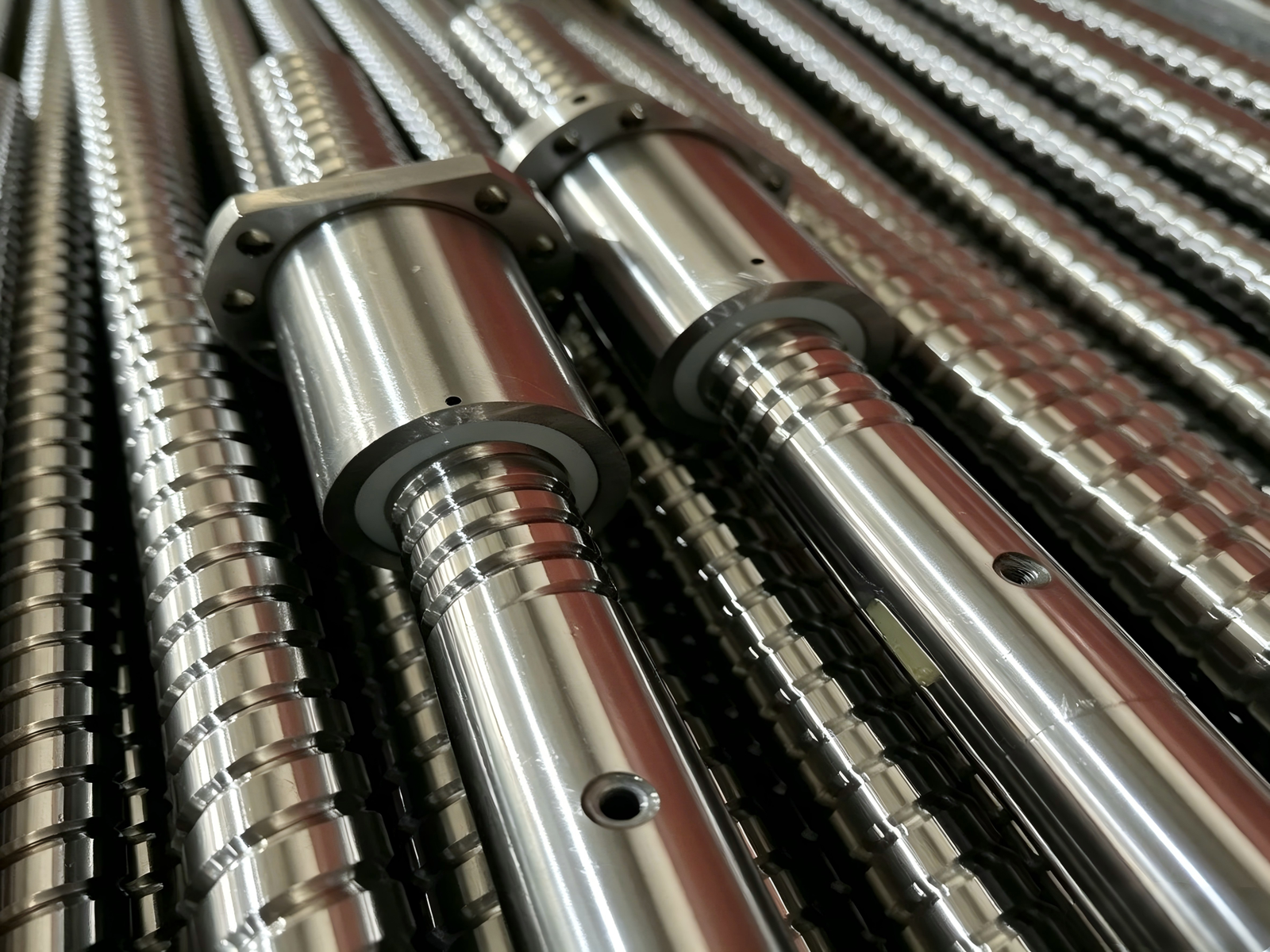
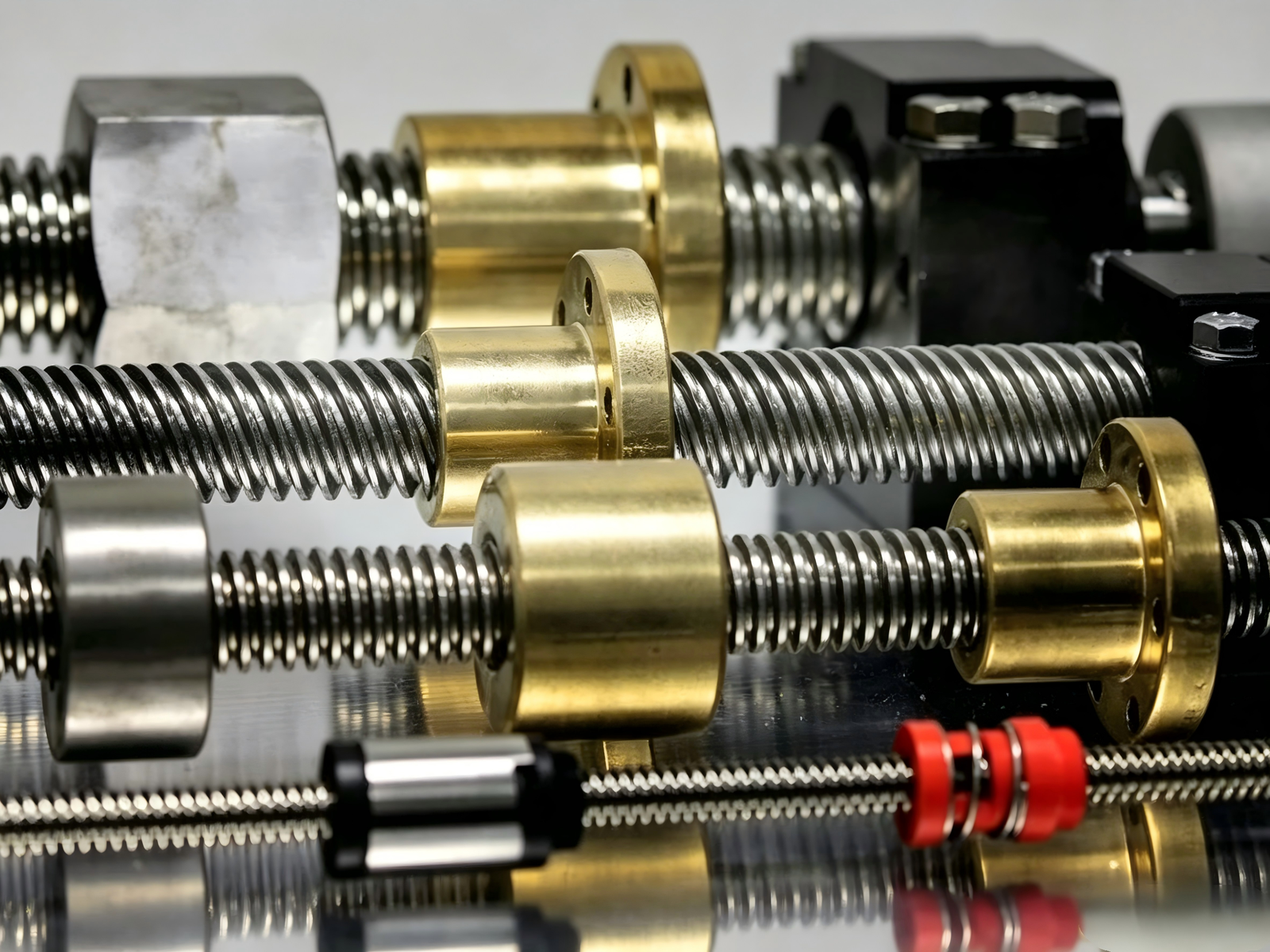
Ходовият винт е механичен компонент за предаване на мощност, който преобразува въртеливото движение в линейно движение. Състои се от вал с резба и съвпадаща гайка, която се движи по вала, когато някой от компонентите се върти.
За разлика от сферичните винтове, водещите винтове разчитат на плъзгащо триене между винта и гайката, а не на търкалящите сачмени лагери.
Този дизайн осигурява няколко предимства:
- По-ниски производствени разходи
- По-проста структура
- Тиха работа
- Възможност за самозаключване
- Лесна поддръжка
Поради тези характеристики, водещите винтове обикновено се използват в приложения, където се изискват умерена скорост и висока точност.
Основни компоненти на монтаж на водещ винт
Пълната система с водещи винтове обикновено включва следните компоненти:
Винтов вал
Валът на винта съдържа външни резби, които направляват движението на гайката. Обикновено се произвежда от:
- Неръждаема стомана
- Въглеродна стомана
- Легирана стомана
- Алуминий
- Титан
Оловна гайка
Гайката съдържа вътрешни резби, които съответстват на профила на винта.
Общите материали за гайки включват:
- бронз
- Месинг
- Инженерни пластмаси
- PTFE композити
- Самосмазващи се полимери
Лагери
Лагерите поддържат винтовия вал и намаляват нежеланото движение.
Съединители
Съединителите свързват водещия винт към двигатели или задвижващи системи.
Крайни опори
Тези компоненти осигуряват стабилност и подравняване по време на работа.
Как работи водещият винт?
Принципът на работа на водещия винт е сравнително прост.
Когато се прилага сила на въртене към винта или гайката, резбовото взаимодействие преобразува въртеливото движение в линейно движение.
Това движение възниква, защото гайката следва спиралната траектория, създадена от резбите на винта.
Въртящ се винт, Пътуваща гайка
Това е най-често срещаната конфигурация.
Винтът се върти, докато гайката се движи линейно по вала.
Приложенията включват:
- Оборудване на ЦПУ
- Машини за опаковане
- Системи за автоматизация
Въртяща се гайка, Фиксиран винт
В тази конфигурация, винтът остава неподвижен, докато гайката се върти и движи.
Приложенията включват:
- Високоскоростни системи за позициониране
- Ограничени в пространството машини
Разбиране на Оловото, Стъпка, и Геометрия на резбата
Преди да изберете водещ винт, важно е да разберете няколко ключови параметъра.
Стъпка
Стъпката е разстоянието между съседни нишки.
например:
Ако разстоянието между нишките е 5 мм, стъпката е равна 5 мм.
Водя
Оловото се отнася до линейното разстояние, изминато по време на един пълен оборот.
За винтове с един старт:
Преднина = стъпка
За многостартови винтове:
Преднина = стъпка × брой стартове
Ъгъл на спирала
Ъгълът на спиралата влияе:
- Ефективност
- Товароносимост
- Скорост
По-големите ъгли на спиралата обикновено осигуряват по-висока скорост, но по-ниска способност за самозаключване.
Видове резби на водещи винтове
Геометрията на резбата значително влияе върху производителността.
Най-често срещаните типове резба на водещия винт включват:
1. Квадратна нишка
Квадратните нишки се считат за най-ефективния дизайн на резбите, тъй като минимизират триенето.
Предимства
- Най-висока ефективност
- Намалено износване
- По-ниски загуби от триене
- Отлично предаване на мощността
Недостатъци
- Трудна за производство
- По -високи производствени разходи
- По-ниска сила на корена
Типични приложения
- Тежкотоварни системи за повдигане
- Прецизни машини
- Индустриални преси
2. Нишка Acme
Резбите Acme имат трапецовиден профил с ъгъл на резбата 29°.
Те са сред най-широко използваните видове конци в световен мащаб.
Предимства
- Силен профил на резбата
- Лесна изработка
- Добра товароносимост
- По-ниски производствени разходи
Недостатъци
- Малко по-ниска ефективност от квадратните нишки
- Повишено триене
Типични приложения
- CNC машини
- Индустриална автоматизация
- Инструментални машини
3. Трапецовидна резба
Трапецовидните резби са метричният еквивалент на резбите Acme и отговарят на международните стандарти.
Предимства
- Здрава структура
- Висока издръжливост
- Стандартизирани размери
- Рентабилно производство
Приложения
- европейски машини
- Оборудване за автоматизация
- Индустриални актуатори
4. Подпорна резба
Подпорните нишки са проектирани да издържат на изключително високи натоварвания в една посока.
Предимства
- Много висока товароносимост
- Силен корен на резбата
- Отлично предаване на аксиална сила
Недостатъци
- Не е подходящ за двупосочно зареждане
Приложения
- Джакове
- Преси
- Системи за повдигане на тежки предмети
Материали на водещия винт
Изборът на материал пряко влияе върху производителността, издръжливост, и експлоатационен живот.
Общи винтови материали
Неръждаема стомана
Ползи:
- Устойчивост на корозия
- Дълъг експлоатационен живот
- Подходящ за хранително-вкусовата и медицинската промишленост
Въглеродна стомана
Ползи:
- Рентабилно
- Висока якост
- Лесна механична обработка
Стомана
Ползи:
- Превъзходна твърдост
- Висока устойчивост на износване
- Изпълнение при тежки условия
Титан
Ползи:
- Лек
- Отлична устойчивост на корозия
- Аерокосмически приложения
Общи материали за гайка
бронз
Традиционният избор за гайки с водещи винтове.
Ползи:
- Отлична устойчивост на износване
- Капацитет на високо натоварване
- Дълъг живот
Инженерна пластмаса
Ползи:
- Самозамаляване
- Нисък шум
- Устойчив на корозия
Композитни материали
Ползи:
- Ниско триене
- Работа без поддръжка
- Удължен експлоатационен живот
Предимства на водещите винтове
Оловните винтове продължават да бъдат популярни поради няколко значителни предимства.
Висока точност на позициониране
Водещите винтове осигуряват прецизно и повторяемо линейно движение.
Възможност за самозаключване
Много дизайни на водещи винтове предотвратяват обратно задвижване.
Тази функция подобрява безопасността при приложения за вертикално повдигане.
По-ниска цена
В сравнение със сферичните винтове, водещите винтове са значително по-достъпни.
Компактен дизайн
Системите с водещи винтове изискват по-малко компоненти.
Тиха работа
Липсата на рециркулиращи топки води до по-ниски нива на шум.
Лесна поддръжка
Оловните винтове са лесни за проверка, смазвам, и заменете.
Ограничения на водещите винтове
Макар и универсален, водещите винтове също имат определени ограничения.
По-ниска ефективност
Типичната ефективност варира от:
- 20% да се 80%
Сферичните винтове често надвишават 90%.
Триене и износване
Непрекъснатият плъзгащ контакт създава износване с течение на времето.
Генериране на топлина
По-високото триене може да генерира топлина по време на работа.
Ограничена скорост
Ходовите винтове обикновено работят при по-ниски скорости от сферичните винтове.
Водещ винт срещу сферичен винт
Изборът между водещ винт и сферичен винт зависи от приложението.
| Особеност | Водещ винт | Сачмен винт |
| цена | ниско | високо |
| Ефективност | 20–80% | 90–98% |
| Поддръжка | просто | Умерен |
| Скорост | Умерен | високо |
| Самозаключващ се | да | не |
| Шум | ниско | Умерен |
| Прецизност | високо | Много високо |
Изберете водещи винтове Когато:
- Цената е важна
- Изискванията за скорост са умерени
- Необходимо е самозаключване
- Предпочита се опростената поддръжка
Изберете сферични винтове, когато:
- Изисква се максимална ефективност
- Работата с висока скорост е критична
- Необходима е изключително висока точност
Общи промишлени приложения
Оловните винтове се използват в много индустрии.
CNC машини
Осигурете точно позициониране на машинните оси.
3D принтери
Разрешаване на контролирано движение на печатащите глави и изграждане на платформи.
Медицинско оборудване
Използва се в:
- Системи за изображения
- Диагностични уреди
- Хирургично оборудване
Системи за автоматизация
поддържа:
- Машини за вземане и поставяне
- Роботизирано позициониране
- Оборудване за обработка на материали
Машини за опаковане
Осигурете повторяемо и надеждно движение.
Аерокосмическо оборудване
Използва се в механизми за прецизно управление.
Полупроводниково производство
Осигурете свръхпрецизни възможности за позициониране.
Как да изберете правилния водещ винт
Изборът на правилния водещ винт изисква оценка на няколко фактора.
1. Товароносимост
Помислете и за двете:
Статично натоварване
Заредете в покой.
Динамично натоварване
Натоварване по време на работа.
2. Изисквания за скорост
Приложенията с по-висока скорост изискват по-големи изводи и оптимизиран дизайн на резбата.
3. Точност на позициониране
Определете необходимите нива на толеранс, преди да изберете геометрията на резбата.
4. Изисквания за хлабина
Луфтът пряко влияе върху прецизността на позициониране.
Гайките против люфт могат да сведат до минимум този проблем.
5. Работна среда
Оценете:
- температура
- Влажност
- Химикали
- Излагане на прах
6. Съвместимост на материалите
Изберете балансирани материали:
- Сила
- Устойчивост на износване
- Устойчивост на корозия
- цена
7. PV фактор
Налягане-скорост (PV) изчисленията помагат да се определят безопасни условия на работа и очакван експлоатационен живот.
8. Анализ на критичната скорост
Превишаването на критичната скорост може да причини вибрации и повреда на винта.
Винаги проверявайте ограниченията на скоростта по време на проектирането на системата.
Най-добри практики за поддръжка на водещия винт
Правилната поддръжка удължава експлоатационния живот и подобрява производителността.
Редовна проверка
Проверете за:
- Износване
- Корозия
- Повреда на резбата
- Разминаване
Правилно смазване
Смазването намалява триенето и генерирането на топлина.
Поддържайте компонентите чисти
Предотвратете замърсяване от:
- Прах
- Метални чипове
- Отломки
Луфт на монитора
Прекомерната хлабина често показва износване и необходимост от подмяна.
Нововъзникващи тенденции в технологията на водещия винт
Индустрията на водещите винтове продължава да се развива.
Самосмазващи се гайки
Намалете изискванията за поддръжка.
Усъвършенствани инженерни полимери
Подобрете устойчивостта на износване и ефективността.
Прецизни винтове за заземяване
Предлагат по-висока точност за взискателни приложения.
Интелигентни системи за движение
Интегрирайте сензори и възможности за наблюдение в реално време.
Индустрия 4.0 Съвместимост
Съвременните системи с водещи винтове все повече поддържат инициативи за предсказуема поддръжка и цифрово производство.
Често задавани въпроси
1.Каква е разликата между терена и лидерството?
Стъпката е разстоянието между съседни нишки, докато олово е разстоянието, изминато по време на един оборот.
2.Оловните винтове са самозаключващи се?
Много водещи винтове са самозаключващи се поради триене между винта и гайката.
3.Кой тип нишка е най-ефективен?
Квадратните нишки обикновено предлагат най-висока ефективност.
4.Могат ли водещите винтове да заменят сферичните винтове?
В много приложения, да. въпреки това, високоскоростните и високоефективни системи може да изискват сферични винтове.
5.Колко дълго издържат водещите винтове?
Срокът на експлоатация зависи от:
- Заредете
- Скорост
- Смазване
- Избор на материали
- Работна среда
Заключение
При избор на водещ винт, инженерите и специалистите по доставки трябва внимателно да оценят товароносимостта, скорост, точност, тип резба, Избор на материали, и условия на околната среда. Правилно избраният водещ винт може значително да подобри надеждността на оборудването, ефективност, и експлоатационен живот.
Ако разработвате нова машина, надграждане на система за автоматизация, или снабдяване с прецизни механични компоненти, партнира си с Най-висока точност може да ви помогне да осигурите оптималното решение за водещ винт за вашето приложение и бюджет.