



Днес, производителите имат достъп до широка гама резбови кранове, всеки е проектиран за специфични материали, видове дупки, производствени среди, и стандарти за нишки. От ръчни метчици, използвани при ремонтни дейности, до високоефективни машинни метчици от твърд сплав за CNC обработка, всеки кран предлага уникални предимства за различни приложения.
В това цялостно ръководство, ще научиш:
Какво представляват резбовите кранове и как работят
Различните видове резбови метчици и тяхното приложение
Как да четем маркировките на резбовите кранове
Как да изберем правилния метчик въз основа на материала и вида на отвора
Често срещани проблеми с подслушване и професионални решения
Най-добри практики за постигане на висококачествени вътрешни нишки
Независимо дали сте производствен инженер, CNC машинист, мениджър покупки, или продуктов дизайнер, това ръководство ще ви помогне да изберете най-подходящото решение за подслушване за следващия ви проект.
Какво е кран за резба?
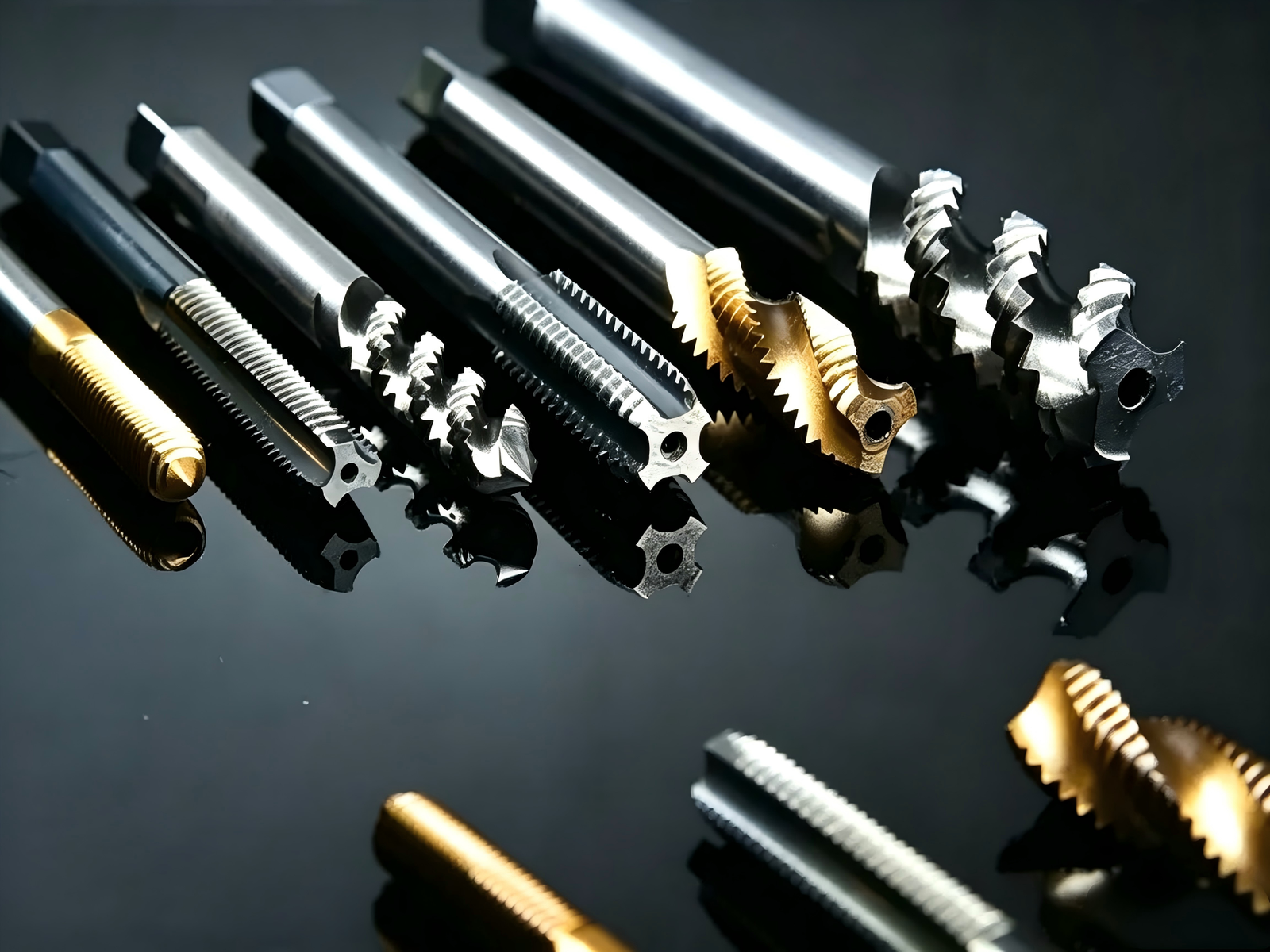
А кран за резба е инструмент за прецизно рязане или формоване, използван за създаване на вътрешни резби на винтове вътре в пробит отвор. Завършените резби позволяват свързващите крепежни елементи като болтове и винтове да бъдат монтирани сигурно, осигуряване на правилен механичен монтаж.
За разлика от външната резба, който се произвежда с помощта на матрици или операции на струговане, вътрешната резба изисква специално проектирани метчици, които постепенно създават профила на резбата по вътрешната стена на отвора.
Резбовите кранове се използват широко в:
Фрезови операции
Сондажни центрове
Ръчна обработка
Производство на автомобили
Аерокосмическо производство
Производство на медицинска апаратура
Монтаж на електроника
Производство на тежко оборудване
Тъй като отворите с резба често са критични носещи характеристики, правилното потупване влияе пряко върху работата на продукта, точност на сглобяване, и дългосрочна надеждност.
Как резбовите кранове създават вътрешни нишки
Накрайниците за резба работят, като влизат в предварително пробит отвор, докато се въртят при контролирана скорост и условия на подаване.
В зависимост от дизайна на крана, те създават нишки по един от двата начина:
Премахване на материал (Режещи кранове)
Традиционните режещи кранове отстраняват материала с помощта на остри режещи ръбове, разположени по протежение на жлебовете.
По време на въртене:
Материал за срязване на режещи ръбове
Канелите евакуират чипове
Профилът на резбата се оформя постепенно
Вътрешните резби са завършени до необходимата стъпка
Режещите метчици са най-често срещаният тип, използван за стомани, неръждаема стомана, чугун, и много инженерни пластмаси.
Деформация на материал (Оформящи кранове)
Резбообразуващи кранове, известни още като ролкови кранове, не режете материала.
Вместо това, те пластично деформират материала под високо налягане, производство на нишки без генериране на чипове.
Предимствата включват:
По-здрави нишки
По -добър повърхностно покритие
По-дълъг живот на инструмента
Няма проблеми с евакуацията на чипа
въпреки това, кранове за формоване работят само с пластични материали като напр:
Алуминий
Мед
Месинг
Мека стомана
Някои неръждаеми стомани
Основни компоненти на резбов метчик
Въпреки че резбовите кранове се предлагат в много стилове, повечето споделят едни и същи основни компоненти.
фаска
Фаската е заострената режеща част в предната част на крана.
Той постепенно въвежда действието на рязане в детайла, като същевременно намалява силата на рязане.
Различните типове метчици имат различна дължина на фаската:
Дълга фаска — конусни кранове
Средна фаска — тапи
Къса фаска — долни кранове
Режещи зъби
Режещите зъби премахват материала или го деформират, за да генерират профила на резбата.
Геометрията им влияе пряко:
Точност на резбата
Живот на инструмента
Повърхностно покритие
Въртящ момент на рязане
Флейти
Жлебовете са канали, минаващи по тялото на крана.
Те изпълняват множество функции:
Водеща течност за рязане
Отстранете чиповете
Намалете силите на рязане
Подобрете охлаждането
Дизайнът на канавката е една от най-големите разлики между видовете кранове.
джолан
Стъблото свързва режещата част с държача на машината или гаечния ключ.
Промишлените кранове могат да включват:
Прав джолан
Плосък Уелдън
Подсилена опашка
Удължена дръжка
Square Drive
Ръчните кранове включват квадратно задвижване в края.
Това позволява на кран ключ да захваща и върти инструмента ръчно.
Машинните метчици обикновено пропускат тази функция, защото се държат от държачи за CNC инструменти.
Как работи процесът на нарязване на резба
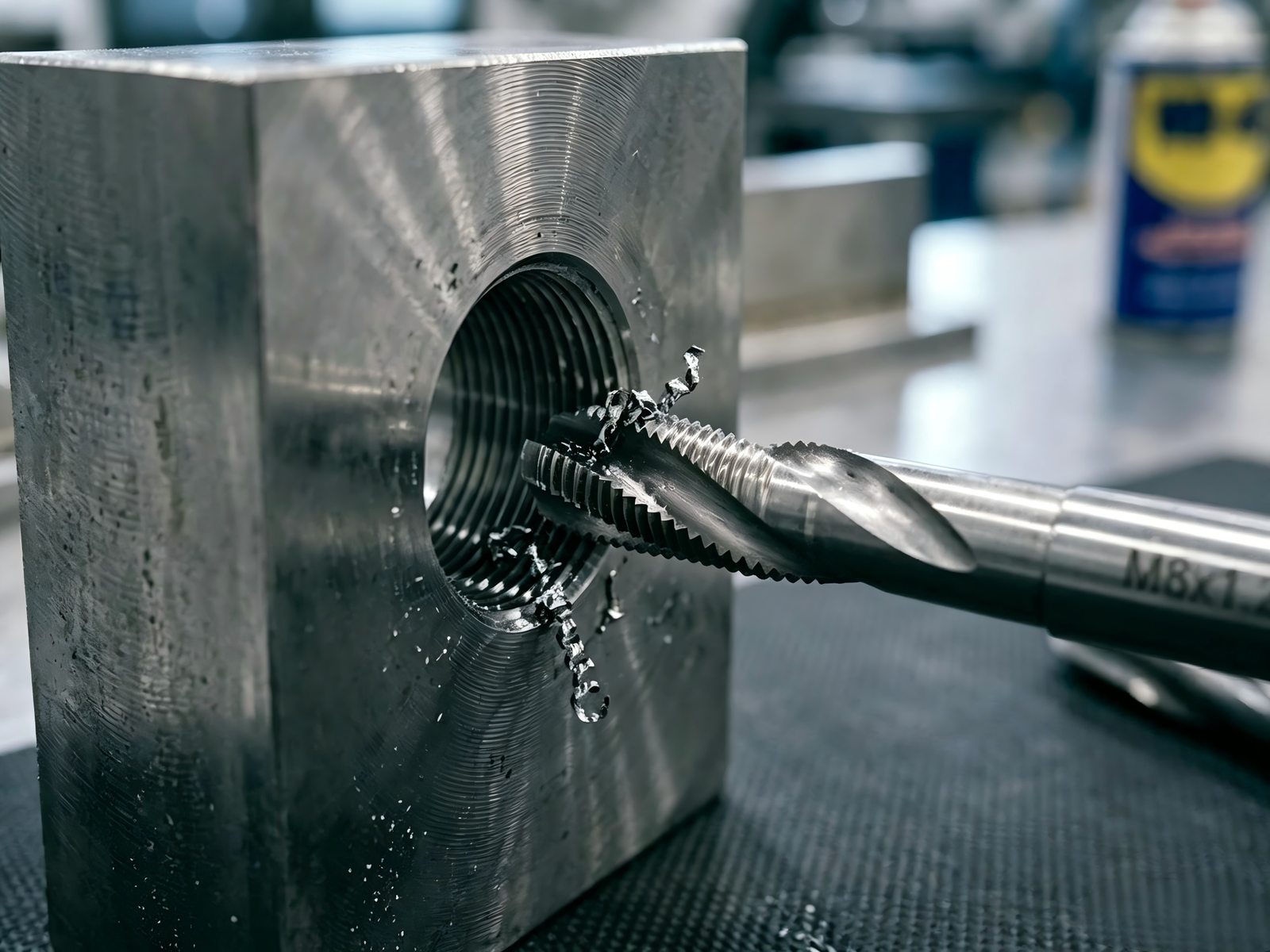
Въпреки че резбоването често се счита за вторичен процес на обработка, постигането на висококачествени нишки изисква внимателно планиране.
Общият работен процес включва:
стъпка 1: Пробийте дупката
Свредлото с правилен размер създава пилотния отвор.
Диаметърът на свредлото трябва да съответства на желания размер и стъпка на резбата.
Големият отвор води до разхлабване на нишки.
Малкият отвор драстично увеличава въртящия момент.
стъпка 2: Подравнете крана
Правилното подравняване е от решаващо значение.
Причини за несъответствие:
Счупени кранове
Криви нишки
Лоша сглобка
Прекомерно износване на инструмента
CNC машините автоматично поддържат центровката, докато ръчното нарязване често изисква водачи или приспособления.
стъпка 3: Изрежете или оформете конеца
Кранът се върти в отвора.
В зависимост от дизайна му, то или:
Отстранява материал
Форми материал
Евакуацията на стружки става особено важна за глухите отвори.
стъпка 4: Премахнете крана
След достигане на необходимата дълбочина, кранът се обръща от отвора.
Съвременните CNC машини извършват синхронизирано твърдо нарязване на резба за максимална прецизност.
стъпка 5: Проверете нишките
Проверката на качеството обикновено включва:
Датчици Go/No-Go
Резбови щепсели
Координирани измервателни машини (CMM)
Системи за оптичен контрол
Проверката гарантира точността на размерите преди монтажа.
Разбиране на стандартните маркировки за резба
Всеки качествен метчик за резба съдържа лазерни маркировки или гравирана информация, която помага на машинистите да идентифицират неговите спецификации.
Разбирането на тези маркировки гарантира, че е избран правилният кран за заданието.
Номинален размер
Номиналният размер показва основния диаметър на резбата.
Примерите включват:
М3
M6
M10
М16
например:
M8 × 1.25
означава:
Основен диаметър: 8 мм
Стъпка на резбата: 1.25 мм
Стандартна нишка
Различните индустрии следват различни системи от нишки.
Общите стандарти включват:
| Стандартен | Приложение |
| Метрика (ISO) | Производство в цял свят |
| UNC | Крепежни елементи с общо предназначение |
| UNF | Фини конци |
| UNEF | Прецизни приложения |
| NPT | Уплътнение на тръби |
| БСП | Хидравлични системи |
| ACME | Предаване на мощност |
Изборът на грешен стандарт на резба прави сглобяването невъзможно.
Докоснете Материал
Различните материали осигуряват различни нива на устойчивост на износване.
Бързорежеща стомана (HSS)
Предимства:
Достъпни
Твърд
Лесен за заточване
Добър за алуминий и мека стомана
Най -доброто за:
Обща механична обработка
Производство с нисък обем
Кобалт HSS (HSS-Co)
Съдържа допълнително кобалт за:
По-висока устойчивост на топлина
По-добра твърдост
Подобрена устойчивост на износване
Подходящ за:
Неръждаема стомана
Легирана стомана
Титанови сплави
Твърд карбид
Карбидни кранове осигуряват:
Изключителна твърдост
Изключителна устойчивост на износване
Дълъг експлоатационен живот
Отлична стабилност на размерите
Най -доброто за:
Закалена стомана
Чугун
Масово производство с ЦПУ
Метален прах
Комбайн за кранове за прахова металургия:
Издръжливост
Устойчивост на износване
Подобрена устойчивост на счупване
Често се използва в автоматизирани производствени линии.
Кранове с TiN покритие
Покритието от титанов нитрид осигурява:
Намалено триене
Подобрена смазваща способност
По-добра устойчивост на топлина
По-дълъг живот на инструмента
Идеален за:
Въглеродна стомана
Легирана стомана
Среднообемна обработка
Диаметър на стъпката
Диаметърът на стъпката определя колко плътно вътрешната резба приляга към свързващия крепеж.
Правилният диаметър на стъпката влияе:
Качество на сглобяване
Якост на резбата
Захващане на закопчалка
Устойчивост на вибрации
Прецизните индустрии като космическото и медицинското производство често изискват много тесни толеранси на диаметъра на стъпката.
Класове на толерантност към резби
Международните стандарти определят допустимите вариации на размерите.
Общите класове на толерантност към крана включват:
| Докоснете Клас | Типична вътрешна резба |
| H1 | 4H–5H |
| H2 | 5G–6H |
| H3 | 6G–7H |
| H4 | 6H-7H |
Избирането на подходящ толеранс гарантира желаното прилягане между вътрешните и външните резби, като същевременно се запазва взаимозаменяемостта.
Видове резбови метчици
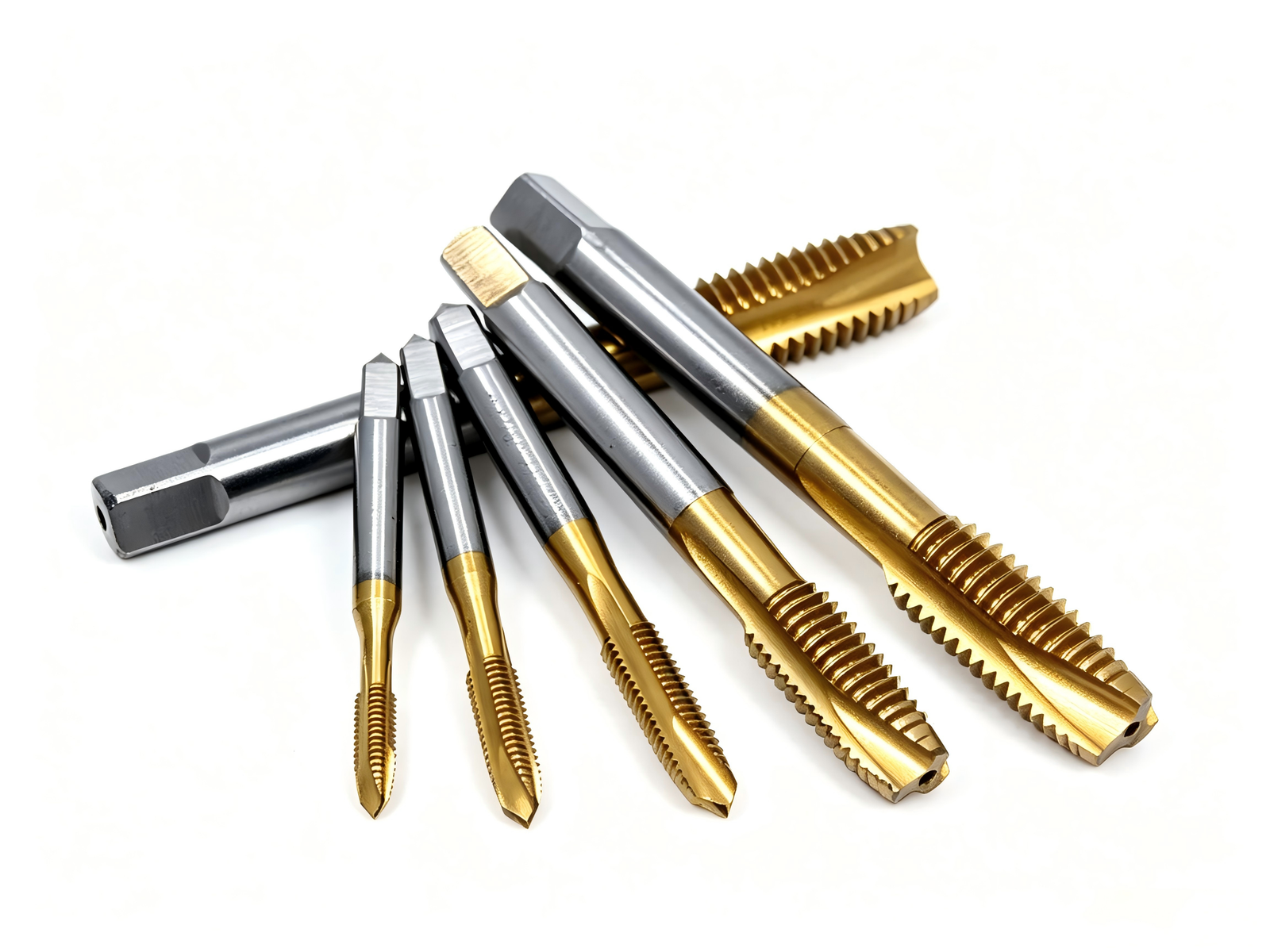
Изборът на правилния метчик за резба е от съществено значение за точното производство, издръжлив, и висококачествени вътрешни резби. Всеки кран е проектиран със специфична геометрия на рязане, дизайн на флейта, дължина на фаската, и характеристики за евакуация на стружки за ефективна работа при определени условия на обработка.
Фактори като материал на детайла, тип дупка, обем на производството, способност на машината, и стандартната резба влияят върху това кой кран трябва да се използва. Разбирането на тези разлики позволява на производителите да подобрят ефективността на машинната обработка, намаляване на износването на инструмента, минимизирайте времето за престой, и постигане на постоянно качество на резбата.
По-долу са изброени най-често срещаните типове резбови метчици и техните идеални приложения.
Ръчни кранове
Ръчните метчици са традиционните инструменти, използвани за ръчно нарязване на вътрешни резби. Те се използват широко в поддръжката, ремонтна дейност, създаване на прототипи, и производство в малък обем, където не е необходима CNC обработка.
За разлика от машинните кранове, ръчните метчици обикновено се доставят като комплект от три метчици, които работят заедно, за да произвеждат постепенно готовата резба.
Конусен кран
Конусният метчик е предназначен да стартира процеса на резба.
Той разполага с дълга фаска с приблизително 8–10 постепенно заострени нишки, което позволява натоварването при рязане да бъде разпределено равномерно между множество режещи ръбове.
Предимства
Лесно подравняване на резбата
Намалена сила на рязане
По-малък шанс за счупване на крана
Идеален за начинаещи
Гладко влизане на резбата
Ограничения
Не могат да се нарязват резби до дъното на глухите отвори
Изисква допълнителни кранове за завършване на резбата
Най-добрите приложения
Стартиране на ръчни нишки
През дупки
Обща поддръжка
Ремонтни дейности
Щепсел кран
Щепселният кран се счита за най-универсалния ръчен кран.
Съдържа приблизително 3–5 скосени резби, което му позволява да продължи резбата след конусен метчик или, в много случаи, започнете директно резба.
Заради балансираната си геометрия, щепселният кран обикновено се използва в работилници и машинни цехове.
Предимства
Разнообразен
Подходящ за повечето материали
По-бързо от конусните кранове
Отличен за проходни отвори
Най-добрите приложения
Резба с общо предназначение
Производствен ремонт
Операции по поддръжката
Дупки със средна дълбочина
Долен кран
Долните кранове са специално проектирани за глухи отвори.
За разлика от конусните кранове, съдържат само 1– 2 скосени резби, което позволява на режещите ръбове да продължават почти до върха на инструмента.
Това позволява на крана да създава резби почти до дъното на отвора.
Предимства
Максимална дълбочина на резбата
Идеален за глухи дупки
Произвежда нишки с пълна дължина
Ограничения
Не може сам да стартира нишки
Изисква първо конусен или щепсел кран
Най-добрите приложения
Слепи дупки
Прецизни възли
Аерокосмически компоненти
Хидравлични колектори
Машинни кранове
Машинните метчици са проектирани за автоматични операции по нарязване на резби с помощта на CNC обработващи центри, Пресоване на тренировки, и нарезни машини.
За разлика от ръчните кранове, те са проектирани да завършат операцията по резба в един цикъл, като същевременно поддържат висока точност и производителност.
Съвременните машинни метчици се произвеждат от първокласни материали за инструменти като напр:
Бързорежеща стомана (HSS)
Метален прах
HSS-Co (Кобалт)
Твърд карбид
Много от тях са допълнително подобрени с модерни покрития като напр:
TiN
TiCN
Тиал
AlCrN
Тези покрития значително подобряват устойчивостта на износване и разсейването на топлината.
Предимства
Висока производствена ефективност
Отлична повторяемост
Съвместим с твърдо нарязване
Подходящ за автоматизация
По-дълъг живот на инструмента
Най-добрите приложения
CNC обработка
Масово производство
Производство на автомобили
Аерокосмическа обработка
Производство на медицински компоненти
Спирални кранове
Спиралните кранове са едни от най-често използваните кранове за слепи дупки.
Техният дизайн със спираловидни канали повдига стружките нагоре и извън отвора по време на обработката.
Това значително намалява опаковането на чипове, което е една от основните причини за счупени кранове.
Как работят
Докато кранът се върти:
Режещите ръбове отстраняват материала.
Спиралните канали издърпват стружки нагоре.
Охлаждащата течност достига ефективно до зоната на рязане.
Качеството на резбата се подобрява.
Избор на спирален ъгъл
Ъгълът на спиралата влияе върху ефективността на рязане.
| Ъгъл на спирала | Най -доброто за |
| 15° | Твърди материали |
| 25° | Обща механична обработка |
| 35° | Неръждаема стомана |
| 45° | Алуминий и меки материали |
Предимства
Отлично отстраняване на стружките
Намалено счупване на крана
Подобрено покритие на повърхността
Идеален за дълбоки глухи отвори
Най-добрите приложения
Неръждаема стомана
Алуминий
Титан
Слепи дупки
Дълбоки отвори с резба
Спирални кранове (Пистолетни кранове)
Въпреки че често се бърка с кранове със спирални флейти, спиралните кранове работят по различен начин.
Вместо да дърпате чипове нагоре, те бутане на чипове напред през дупката.
По тази причина, спираловидните кранове са най-подходящи за през дупки.
Как работят
По време на рязане:
Чиповете се движат пред крана.
Зоната на рязане остава чиста.
Генерира се по-нисък въртящ момент на рязане.
Става възможна по-бърза обработка.
Предимства
Висока скорост на производство
Отлично отстраняване на стружките
По-дълъг живот на инструмента
Намалена устойчивост на рязане
Най-добрите приложения
През дупки
CNC обработка
Производствена механична обработка
Въглеродна стомана
Легирана стомана
Тръбни кранове
Тръбните кранове произвеждат вътрешни тръбни резби, използвани за уплътняване на течности и газове.
За разлика от стандартните конци за закрепване, тръбните резби са предназначени за създаване на херметични съединения.
Най-често срещаните стандарти включват:
NPT
NPTF
BSPT
BSPP
Тръбните кранове се използват широко в:
Хидравлични системи
Пневматични системи
Нефтено и газово оборудване
Водопроводи
Индустриална арматура
Предимства
Устойчиви на теч връзки
Стандартизирани форми на резби
Надеждно уплътняване
Резбообразуващи метчици (Ролкови кранове)
Метчовете за формиране на резби създават резби без премахване на материал.
Вместо да се реже, те пластично деформират материала на детайла.
Тъй като не се генерират чипове, метчиците за формиране на резба елиминират изцяло проблемите с евакуацията на стружките.
Предимства
Без чипове
По-здрави нишки
По-добра устойчивост на умора
Подобрено покритие на повърхността
По-дълъг живот на инструмента
Ограничения
Те изискват пластични материали.
Подходящите материали включват:
Алуминий
Мед
Месинг
Мека стомана
Нисковъглеродна стомана
Някои неръждаеми стомани
Те не трябва да се използват върху крехки материали като чугун.
Типични приложения
Автомобилни части
електроника
Алуминиеви корпуси
Масово производство
Комбинирана бормашина и метчик
Комбинираното свредло и метчик интегрира две операции на обработка в един инструмент.
Точката на пробиване първо създава дупката.
Веднага след това, секцията за резба нарязва вътрешните резби.
Това елиминира смяната на инструменти и намалява времето на цикъла.
Предимства
По-бързо производство
Намалено време за настройка
По-ниски разходи за обработка
Подобрена позиционна точност
Ограничения
Най-подходящ за:
Тънки материали
Алуминий
Месинг
Пластмаси
Средно тежко производство
Твърдосплавни метчици
Твърдосплавните метчици са първокласни инструменти, предназначени за взискателни работни среди.
В сравнение с HSS кранове, оферта за карбидни метчици:
По-висока твърдост
Превъзходна устойчивост на износване
По-голяма стабилност на размерите
Отлично високоскоростно представяне
Тъй като карбидът е по-малко гъвкав, тези кранове изискват твърди машини и прецизно подравняване.
Най-добрите приложения
Закалена стомана
Чугун
Високотемпературни сплави
Титанови сплави
CNC обработка в голям обем
Удължителни кранове
Удължителните метчици имат удължена опашка, която позволява обработка на места, където стандартните метчици не могат да достигнат.
Тези кранове обикновено се използват за:
Дълбоки кухини
Дълги глухи дупки
Производство на мухъл
Аерокосмически структури
Големи произведени компоненти
Предимства
Дълъг обсег
Подобрена достъпност
Стабилна резба в ограничени зони
Прекъснати кранове на резба
Накрайниците с прекъсната резба имат редуващи се режещи зъби, отстранени от профила на резбата.
Тази уникална геометрия създава по-големи пространства за евакуация на стружките.
В резултат на това:
Въртящият момент на рязане намалява.
Генерирането на топлина е намалено.
Вероятността от запушване на чипа става по-малка.
Тези метчици се представят особено добре при гумени материали и сплави с дълги стружки.
Най-добрите приложения
Неръждаема стомана
Никелови сплави
Обработка на дълбоки отвори
Тежкотоварна продукция
Останете болтови кранове
Метчиците за опорни болтове са специализирани инструменти, предназначени за обработка на опорни болтове с голям диаметър, използвани в котли, съдове под налягане, и оборудване за производство на електроенергия.
Тези кранове обикновено се отличават:
Големи диаметри
Дълбоки флейти
Тежка конструкция
Приложения
Производство на котли
Парни системи
Електрически централи
Тежко индустриално оборудване
Газови кранове
Газовите кранове са специално проектирани за свързване на газопроводи.
Те произвеждат прецизни вътрешни резби, които осигуряват уплътнение без течове под налягане.
Обичайните приложения включват:
Системи за природен газ
LPG оборудване
Промишлени газопроводи
Производство на вентили
Главни кранове
За разлика от стандартните производствени кранове, главните кранове се използват предимно за проверка и калибриране на резби.
Те помагат на производителите:
Проверете качеството на конеца
Проверете размерите на резбата
Възстановете леко повредени нишки
Поддържайте точността на обработката
Главните метчици обикновено се намират в лаборатории за контрол на качеството и съоръжения за прецизна обработка.
Сравнение на различни видове резбови метчици
Изборът на правилния кран става много по-лесен, когато сравните характеристиките им един до друг.
| Докоснете Тип | Най-добър тип дупка | Евакуация на чип | Най-добри материали | Обем на производство | Основно предимство |
| Конусен кран | Чрез | Умерен | Общи метали | ниско | Лесно стартиране на нишка |
| Щепсел кран | Чрез | Умерен | Обща механична обработка | Ниска средна | Най-универсален |
| Долен кран | Сляп | Ограничен | Общи метали | ниско | Максимална дълбочина на резбата |
| Машинен кран | И двете | Зависи от дизайна | Повечето метали | високо | Автоматизирано производство |
| Спирална флейта | Сляп | Нагоре | Неръждаема стомана, алуминий | високо | Отлично отстраняване на стружки |
| Спирална точка кран | Чрез | Напред | Стомана, легирана стомана | високо | Високоскоростна резба |
| Кран за тръба | Дупки за тръби | Умерен | Стомана, месинг | Среден | Херметични тръбни резби |
| Кран за формиране на резба | И двете | Без чипове | Алуминий, мед | високо | По-здрави нишки |
| Комбинирана бормашина & Докоснете | Чрез | Умерен | Меки метали | високо | Едноетапна обработка |
| Масивен карбиден метчик | И двете | Отлично | Втвърдени материали | високо | Най-дълъг живот на инструмента |
| Докоснете разширение | Дълбоки дупки | Зависи | различни | Среден | Дълъг обсег |
| Прекъснато кранче на резбата | Дълбоки дупки | Отлично | Неръждаема стомана | високо | Намален въртящ момент |
| Остани болтов кран | Големи дупки | Отлично | Тежка стомана | ниско | Големи индустриални нишки |
| Главен кран | инспекция | N/A | различни | Qc | Проверка на нишка |
Защо разбирането на типовете докосвания има значение
Използването на правилния кран за резба е нещо повече от просто създаване на нишки. Това пряко влияе върху ефективността на обработката, Животът на инструмента, размерна точност, качество на сглобяване, и производствени разходи. Съгласуване на дизайна на крана с материала, тип дупка, и процесът на обработка помага за намаляване на времето за престой, подобряване на консистенцията, и постигане на надеждни резултати както при производството на прототипи, така и при производството на голям обем.
Следваща част: Таблица с размери на резба, Ръководство за толерантност към конци, Как да изберете правилния кран за резба, и експертни съвети за избор на различни материали и приложения.
Таблица с размери на резба
Изборът на правилния размер на свредлото за метчик е една от най-важните стъпки във всяка операция по нарязване на резба. Дори най-висококачественият метчик не може да произведе точни резби, ако пилотният отвор е твърде голям или твърде малък.
Малкият отвор увеличава въртящия момент на рязане, генерира прекомерна топлина, и значително повишава риска от счупване на крана. И обратно, голям отвор произвежда плитки нишки с намалена якост на задържане, потенциално водещи до повреда на сглобяването.
Подходящият размер на свредлото за метчик зависи от няколко фактора:
Размер на резбата
Стъпка на резбата
Стандартна резба (Метрика, UNC, UNF, NPT, и т.н.)
Материал на детайла
Изисква се процент нишка
Тип кран (рязане или формоване)
За повечето общи машинни приложения, зацепване на резба на 65%–75% осигурява отличен баланс между здравина на резбата и въртящ момент на резба.
Стандартна метрична диаграма за пробиване на метчици
Следващата диаграма изброява често използваните метрични размери на резбата заедно с техните препоръчителни диаметри на пробиване.
| Размер на резбата | Стъпка (мм) | Препоръчителен размер на свредлото |
| M2 × 0.4 | 0.40 | 1.60 мм |
| M2,5× 0.45 | 0.45 | 2.05 мм |
| M3 × 0.5 | 0.50 | 2.50 мм |
| M4 × 0.7 | 0.70 | 3.30 мм |
| M5× 0.8 | 0.80 | 4.20 мм |
| M6 × 1.0 | 1.00 | 5.00 мм |
| M8 × 1.25 | 1.25 | 6.80 мм |
| M10 × 1.5 | 1.50 | 8.50 мм |
| M12 × 1.75 | 1.75 | 10.20 мм |
| M16× 2.0 | 2.00 | 14.00 мм |
| M20 × 2.5 | 2.50 | 17.50 мм |
| M24 × 3.0 | 3.00 | 21.00 мм |
Съвет: Винаги се консултирайте с препоръките на производителя за бормашина, особено при използване на резбови метчици, тъй като те обикновено изискват малко по-голям пилотен отвор от рязане на кранове.
Разбиране на ангажираността на нишката
Зацепването на резбата се отнася до процента от профила на резбата, който е напълно оформен вътре в отвора.
Много инженери погрешно приемат, че по-високото захващане на нишката винаги води до по-здрави нишки. В реалността, увеличаване на ангажираността на нишката над приблизително 75% драстично повишава въртящия момент на рязане, като същевременно предлага само незначителни подобрения в здравината на резбата.
Общите препоръки включват:
| Ангажиране на нишка | Типично приложение |
| 55–60% | Меки материали, Високоскоростно производство |
| 65–70% | Обща механична обработка |
| 70–75% | Повечето индустриални приложения |
| 75–85% | Високоякостни връзки (когато се изисква) |
Повечето CNC машинни операции са насочени към 70% зацепване на резбата защото осигурява отличен баланс между здравина, Животът на инструмента, и производителност.
Ръководство за толерантност към докосване на резба
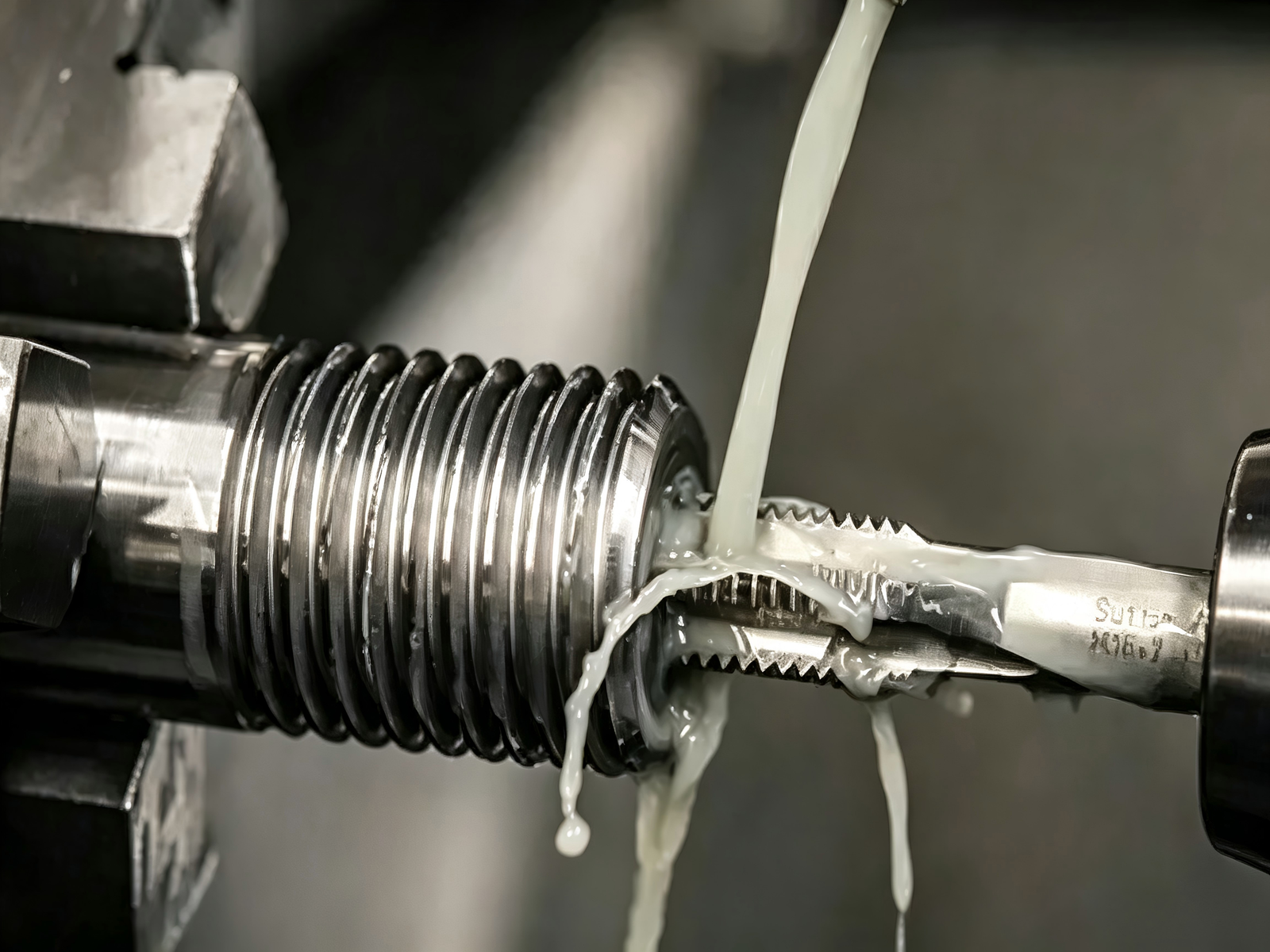
Допустимите отклонения на резбата определят колко плътно приляга вътрешната резба към свързващата я външна резба. Правилният избор на толеранс осигурява гладко сглобяване, като същевременно поддържа достатъчна здравина на задържане и взаимозаменяемост.
Допустимите отклонения на резбата са стандартизирани съгласно международни спецификации, като напр ISO, ANSI, и ОТ.
Защо допустимите отклонения на резбите са от значение
Неправилните допустими отклонения могат да доведат до:
Разхлабени възли
Прекомерна вибрация
Лошо разпределение на натоварването
Трудности по време на монтажа
Преждевременно износване на закопчалка
Повреда на компонент
Изборът на правилния клас на толерантност е особено важен в индустрии като космическата индустрия, медицински изделия, автомобилен, и прецизна апаратура.
Общи класове на толерантност към кран
| Докоснете Толерантност | Типична вътрешна резба |
| H1 | 4з, 5з |
| H2 | 5G, 6з |
| H3 | 6G, 7з |
| H4 | 6з, 7з |
Общо взето:
H1 произвежда по-стегнати нишки.
H2 е най-често срещаният клас с общо предназначение.
H3 позволява малко по-свободни кройки.
H4 се използва, когато е необходимо допълнително разстояние.
Видове напасване на резбата
Инженерите обикновено избират една от трите категории за годност в зависимост от функционалните изисквания на приложението.
Close Fit
Проектиран за прецизни сглобки, изискващи минимално пространство.
Типичните приложения включват:
Аерокосмически компоненти
Медицинско оборудване
Прецизни инструменти
Нормално прилягане
Най-често използваният фит в индустриалното производство.
Подходящ за:
Общи машини
Автомобилни части
Потребителски продукти
Индустриално оборудване
Свободна кройка
Осигурява допълнително разрешение за приложения, включващи:
Мръсотия или отломки
Чест монтаж/демонтаж
Термично разширение
Закопчалки с покритие
Експертни съвети за избор на най-добрия метчик за резба
Опитните машинисти често вземат предвид допълнителни фактори извън основните спецификации, за да оптимизират производителността на нарязване:
Употреба спираловидни кранове за слепи отвори за подобряване на евакуацията на стружките.
Изберете спираловидни кранове за проходни отвори за максимизиране на производителността.
Изберете резбообразуващи кранове за пластични материали, когато са по-здрави, желани са резби без чипове.
Съобразете материала на метчика и покритието с материала на детайла за оптимален живот на инструмента.
Уверете се, че машината има достатъчна твърдост, особено при използване на карбидни кранове.
Проверете подаването на охлаждаща течност, за да намалите натрупването на топлина и да подобрите отстраняването на стружките.
Използвайте правилната скорост на нарязване и подаване въз основа на препоръките на производителя на материала и метчика.
Редовно проверявайте крановете за износване и ги сменете, преди качеството на резбата да се влоши.
Правенето на информиран избор на метчик не само подобрява качеството на резбата, но също така намалява разходите за обработка, минимизира времето за престой, и повишава общата ефективност на производството. Свържете се с нас за повече информация.


