

L'usinage CNC convertit une conception numérique en un, partie physique reproductible. Vous obtenez des tolérances strictes, qualité constante, prototypes rapides, and access to nearly any machinable material. It works from one-off prototypes through production runs without dedicated hard tooling. Here are the 10 top benefits and what they mean for your parts.
10 Benefits At A Glance
| Avantage | What It Means For You |
| Tolérances étroites | Parts fit, joint, and move as designed |
| Répétabilité | Identical geometry from first part to last |
| Géométrie complexe | Angled features and contours in fewer setups |
| Wide material range | Metals and engineering plastics |
| Fast prototyping | CAD to part in days |
| Faible coût d’outillage | No dedicated hard mold or die |
| Flexibilité de conception | Easy changes without new tooling |
| Évolutivité | Du prototype à la production, with automation |
| Finition de surface | As-machined or finished with coating |
| Part integrity | Full strength from solid stock |
1. Tight Tolerances And High Precision
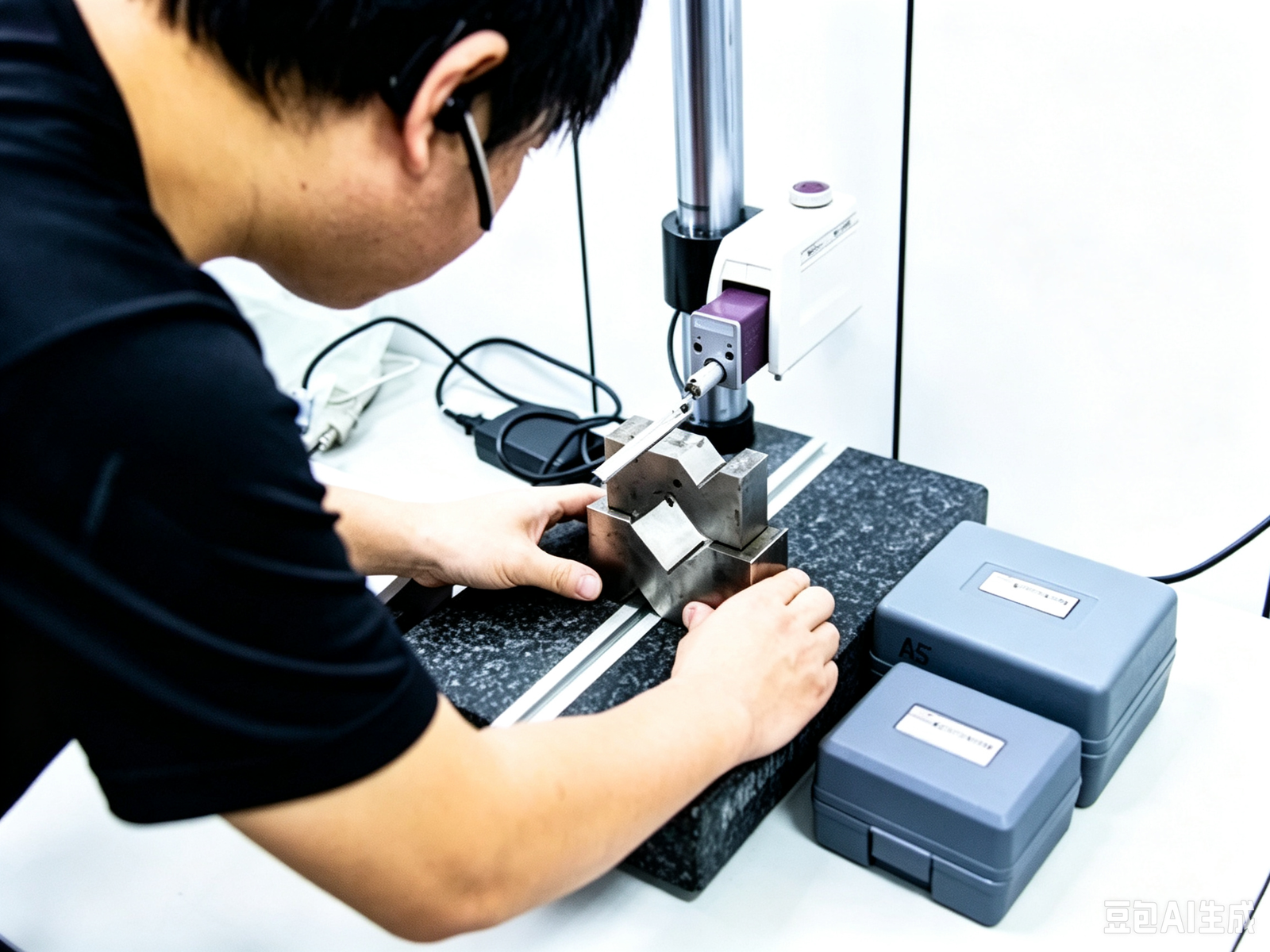
CNC machining can achieve tight and repeatable tolerances. Achievable values depend on the machine, matériel, géométrie, outillage, et méthode d'inspection.
This makes CNC machining well suited to parts that must fit, joint, aligner, or move precisely. Apprenez-en davantage dans notre guide pour Tolérances d'usinage CNC.
2. Repeatability And Consistency
CNC machining produces part-to-part consistency that manual methods cannot match.
Once a program is proven, the machine repeats the same toolpaths on every part. You get identical geometry across small or large runs. That repeatability simplifies assembly, inspection, and supplier qualification.
3. Complex Geometry And Multi-Axis Capability
3-axe, 4-axe, and 5-axis machines can access angled features, contours complexes, and some undercuts with fewer setups, depending on the geometry and machine configuration.
Fewer setups mean less handling and less chance for error.
4. Sélection de matériaux larges
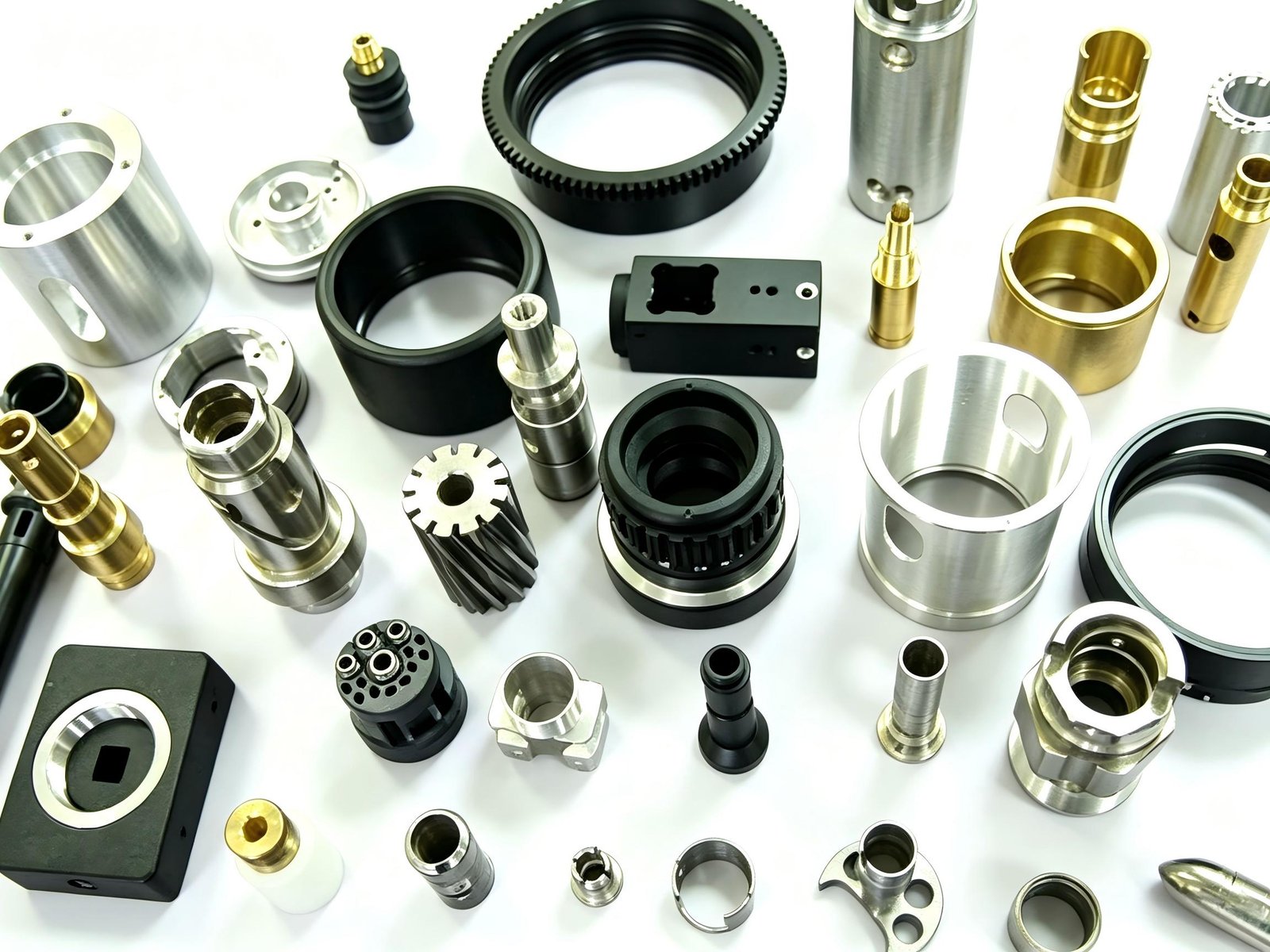
CNC machining works with a broad range of metals and plastics.
Aluminum is widely used for lightweight structural parts, acier inoxydable pour la résistance à la corrosion, titanium for high strength-to-weight requirements, and engineering plastics such as PEEK and Delrin when low weight, isolation, résistance chimique, or low friction is important. Voir notre CNC machining materials guide to match material to your application.
5. Rapid Prototyping And Fast Lead Times
CNC machining turns CAD files into prototype parts quickly, often in days.
You can validate fit, fonction, and material before committing to expensive tooling. Read our CNC prototype machining guide for the full workflow.
6. Low Upfront Tooling Cost
CNC machining generally requires no dedicated hard mold or production die.
It still uses cutting tools, porte-pièce, and sometimes soft jaws, but you do not build a mold. That makes CNC cost-effective for low-to-medium volumes and for parts that will change. Compare it with Usinage CNC vs moulage par injection et die casting vs CNC machining.
7. Design Flexibility And Easy Design Changes
CNC machining lets you change dimensions, trous, les poches, and features without redesigning a production mold.
This makes it useful for prototypes, engineering changes, customized components, et production à faible volume.
8. Scalability And Efficient Production
CNC machining scales from a single prototype to repeat production runs.
At higher volumes, you may add dedicated fixturing or adjust the process, but the same part data carries through. Once a program is proven, machines can run unattended for efficient production. Notre precision manufacturing service supports both ends of that range.
9. Excellent Surface Finish Options
CNC machining leaves a clean, machined surface that can be further finished.
Anodisation, placage, passivation, or polishing add function and appearance. Voir finitions de surface pour l'usinage CNC to choose the right finish.
10. High Strength And Part Integrity
CNC machining cuts parts from solid stock, so parts avoid mold-related porosity and layer weaknesses.
The exact strength still depends on the material grade and part design. Pour les applications exigeantes, specify the grade, caractère, and heat treatment on your drawing.
CNC Machining vs Other Manufacturing Methods
| Facteur | Usinage CNC | Moulage par injection | Moulage sous pression | 3D Impression |
| Initial tooling | Faible | Haut | Haut | Très faible |
| Production à faible volume | Excellent | Usually poor | Usually poor | Excellent |
| Material range | Very broad | Plastics mainly | Metal alloys | Polymer or metal, process dependent |
| Précision | Haut | Moderate-high | Moderate-high | Process dependent |
| Design changes | Facile | Mold modification required | Die modification required | Facile |
| Volume de production | Low-high | Medium-very high | Medium-very high | Low-medium |
CNC machining is not the only option. It wins on material range, précision, et flexibilité de conception. Molding and casting win at very high volume.
When CNC Machining Is Not The Best Choice
CNC machining is not always the cheapest or fastest option.
- High-volume plastic parts may cost less with moulage par injection.
- High-volume near-net metal shapes may cost less with moulage sous pression.
- Mince, creux, or deeply internal channels may suit casting or additive methods better.
- Parts machined from solid stock generate more material waste.
- At very high volume, the unit cost can exceed molded or cast parts.
Questions fréquemment posées
What are the main benefits of CNC machining?
Tolérances étroites, répétabilité, géométrie complexe, choix de matériaux larges, fast prototyping, and no dedicated hard mold.
What is the biggest advantage of CNC machining?
It combines precision and repeatability with material flexibility and tooling-free production. The same process handles prototypes and production parts.
Is CNC machining accurate?
Oui. It holds tight tolerances, but achievable values depend on geometry, matériel, et la machine.
Is CNC machining good for low-volume production?
Oui. There is no mold or die to build, so setup cost stays low. That makes it ideal for small batches.
Is CNC machining suitable for mass production?
Oui, up to a point. For very high volumes, compare the unit economics with injection molding or die casting.
Is CNC machining cheaper than injection molding?
It depends on volume. CNC usually wins at low volume. Injection molding wins at high volume.
What materials can be CNC machined?
Metals such as aluminum, acier, acier inoxydable, et titane, plus plastics such as PEEK, Delrin, et du nylon.
What are the disadvantages of CNC machining?
Déchets de matériaux, temps machine, usure des outils, higher unit cost at very high volume, and limits on certain deeply internal features.
Get A Quote For Your Next CNC Project
Nous usinons 100+ metals and plastics under an ISO 9001:2015 quality system. Our shop covers Fraisage CNC, Tournage CNC, 5-usinage sur l'axe, et Usinage EDM. For suitable prototype projects, we can complete machining in as little as 1–3 days.
Send your 3D CAD file, 2Dessin D, sample, quantité, exigences matérielles, and finishing specifications. Our engineers can review the design for manufacturability and recommend the appropriate CNC machining process before quotation.