

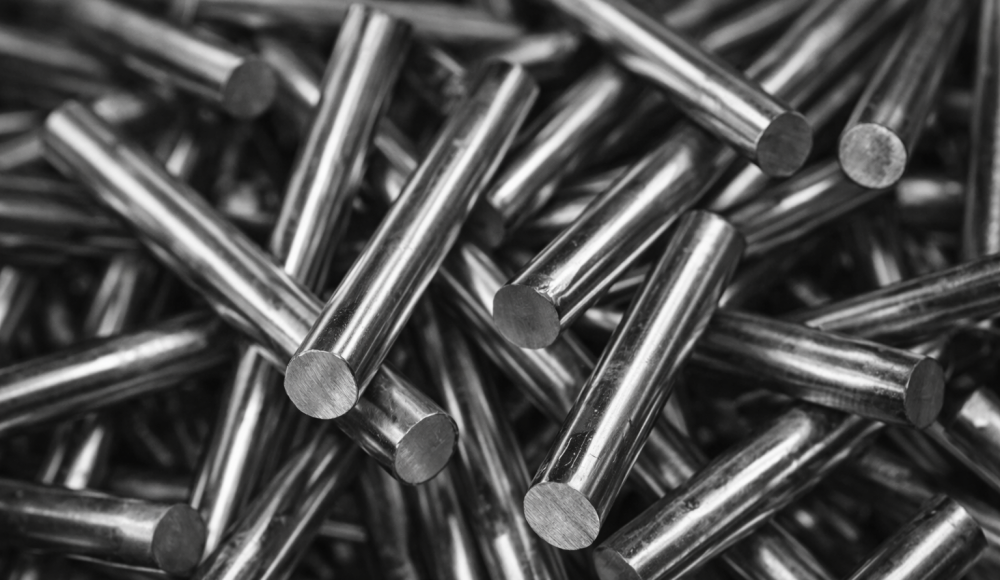
Parmi la large gamme d'aciers au carbone disponibles, 12Acier au carbone L14 stands out as one of the most widely used materials for grande vitesse, high-precision machining applications.
Connu pour son machinabilité exceptionnelle, 12L14 is the preferred choice for producing components such as bornes électriques, bagues, raccords, attaches, et CNC turned parts. Its unique composition—especially the addition of plomb (Pb)—provides internal lubrication during machining, significantly reducing tool wear and improving production efficiency.
Pour les fabricants, sourcing managers, et ingénieurs, understanding the properties and limitations of 12L14 is essential for making informed decisions that impact production cost, qualité du produit, and delivery timelines.
What Is 12L14 Carbon Steel?
12L14 is a low-carbon, free-machining steel specifically engineered for usinabilité supérieure. It belongs to the AISI 12xx series, où:
“12” indicates resulfurized and rephosphorized steel
“L” indicates the addition of plomb
“14” refers to the approximate carbon content (~0.14%)
Caractéristiques clés
Extremely easy to machine
Produces small, chips cohérentes
Usure minimale des outils
Excellent surface finish
Idéal pour la production à haut volume
This makes 12L14 particularly suitable for automatic screw machines, Tours CNC, and high-speed machining centers.
Chemical Composition of 12L14 Steel
The superior machinability of 12L14 comes directly from its carefully engineered chemical composition.
| Élément | Contenu (%) | Fonction |
| Fer (Fe) | Équilibre | Base metal |
| Carbone (C) | ≤ 0.15 | Strength and hardness |
| Manganèse (Mn) | 0.85 – 1.15 | Améliore la résistance et la trempabilité |
| Phosphore (P.) | 0.04 – 0.09 | Enhances machinability |
| Soufre (S) | 0.26 – 0.35 | Promotes chip breaking |
| Plomb (Pb) | 0.15 – 0.35 | Reduces friction, acts as lubricant |
Why This Composition Matters
Soufre + Manganese → Manganese sulfide inclusions
These act as briseurs de puce, preventing long, Chips filandreux
Lead → Internal lubrication
Reduces cutting resistance
Extends tool life
Phosphorus → Improved rigidity
Enhances dimensional stability during machining
👉 This combination makes 12L14 one of the highest machinability-rated steels (jusqu'à 170% of baseline 1212 acier).
Physical Properties of 12L14 Carbon Steel
| Propriété | Valeur |
| Densité | 7.87 g/cm³ |
| Conductivité thermique | ~51.9 W/m·K |
| Résistivité électrique | 0.174 µΩ·m |
| Module élastique | 190–210 GPa |
| Expansion thermique | 11.5 × 10⁻⁶ /K |
Engineering Interpretation
Good thermal conductivity
→ Helps dissipate heat during machining
Stable elastic modulus
→ Maintains dimensional consistency
Controlled thermal expansion
→ Reduces deformation in precision parts
These properties make 12L14 ideal for tight-tolerance machining environments.
Mechanical Properties of 12L14 Carbon Steel
| Propriété | Valeur |
| Résistance à la traction | ~540 MPa |
| Limite d'élasticité | ~415 MPa |
| Élongation | ~10% |
| Dureté (Brinell) | ~163 HB |
| Dureté (Rockwell B) | ~84 HRB |
Performance Insights
Force modérée
→ Suitable for non-structural applications
Good ductility
→ Supports machining without cracking
Not ideal for heavy load-bearing parts
👉 This positions 12L14 as a machining-optimized material rather than a structural steel.
Key Advantages of 12L14 Carbon Steel
1. Exceptional Machinability
12L14 is widely recognized as one of the best machining steels available.
Vitesses de coupe 30–50% faster que 1018 acier
Reduced cutting forces
Minimal built-up edge
Résultat:
✔ Higher productivity
✔ Lower tooling costs
✔ Faster cycle times
2. Finition de surface supérieure
Parts machined from 12L14 often come out with:
Lisse, polished surfaces
Formation minimale de bavures
Reduced need for grinding or polishing
Idéal pour:
Electrical terminals
Precision connectors
Composants décoratifs
3. Production rentable
From a business perspective, 12L14 delivers:
Lower machining time
Extended tool life
Reduced secondary processing
👉 This translates directly into lower unit cost, surtout dans séries de production en grand volume.
4. Précision dimensionnelle élevée
12L14 offers:
Predictable machining behavior
Excellent repeatability
Tight tolerance capability
Critical for industries such as:
Automobile
Électronique
Aérospatial (non-critical components)
5. Polyvalence dans les applications
12L14 can be used to manufacture:
Géométries complexes
Threaded components
Small precision parts
Its adaptability makes it a go-to material for CNC machining workshops worldwide.
Limites et considérations
Malgré ses avantages, 12L14 is not suitable for all applications.
1. Mauvaise soudabilité
High sulfur and lead content cause:
Porosité
Craquage
Welding is generally non recommandé
2. Limited Heat Treatment Capability
Low carbon content restricts hardening
Can only be case hardened
3. Environmental & Safety Concerns
Lead content requires:
Une bonne ventilation
Dust/fume control
Worker protection
4. Not Suitable for Structural Use
Moderate strength limits its use in:
Structures porteuses
High-stress applications
Common Applications of 12L14 Steel
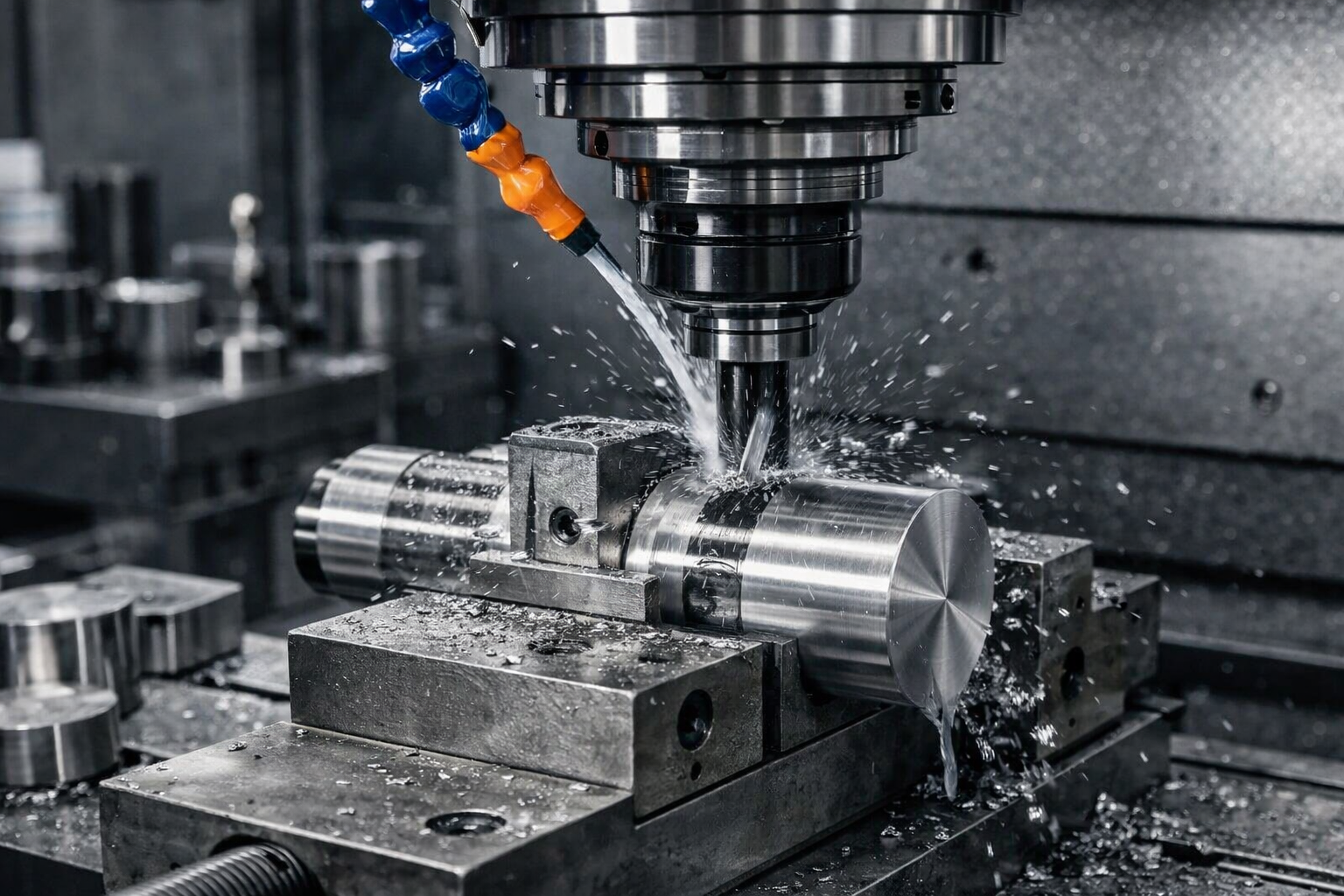
1. Precision Machined Components
Bagues
Épingles
Inserts
Used where Tolérances serrées et finitions lisses sont requis.
2. Attaches
Vis
Boulons
Noix
Studs
Parfait pour high-speed automated production.
3. Composants automobiles
Arbres
Broches
Bagues
Provides a balance between machinability and functional performance.
4. Couplings and Fittings
Connecteurs hydrauliques
Fluid system fittings
Allows for precise threading and sealing surfaces.
5. Électrique & Terminal Components (High-Relevance for Your Business)
12L14 is widely used in:
Cable lugs
Connector pins
Terminal contacts
Pourquoi?
Excellente conductivité (for steel-based parts)
High precision machining
Cost efficiency in mass production
12L14 vs Other Carbon Steels
12L14 vs 1018 Acier
| Fonctionnalité | 12L14 | 1018 |
| Usinabilité | Excellent | Modéré |
| Finition de surface | Supérieur | متوسط |
| Soudabilité | Pauvre | Bien |
| Force | Modéré | Slightly higher |
👉 Conclusion:
Choisir 12L14 for machining efficiency,
Choisir 1018 for welding and structural use.
12L14 vs 1215 Acier
Both are free-machining steels
12L14 includes plomb, giving:
Better tool life
Higher machining speeds
Machining Best Practices for 12L14
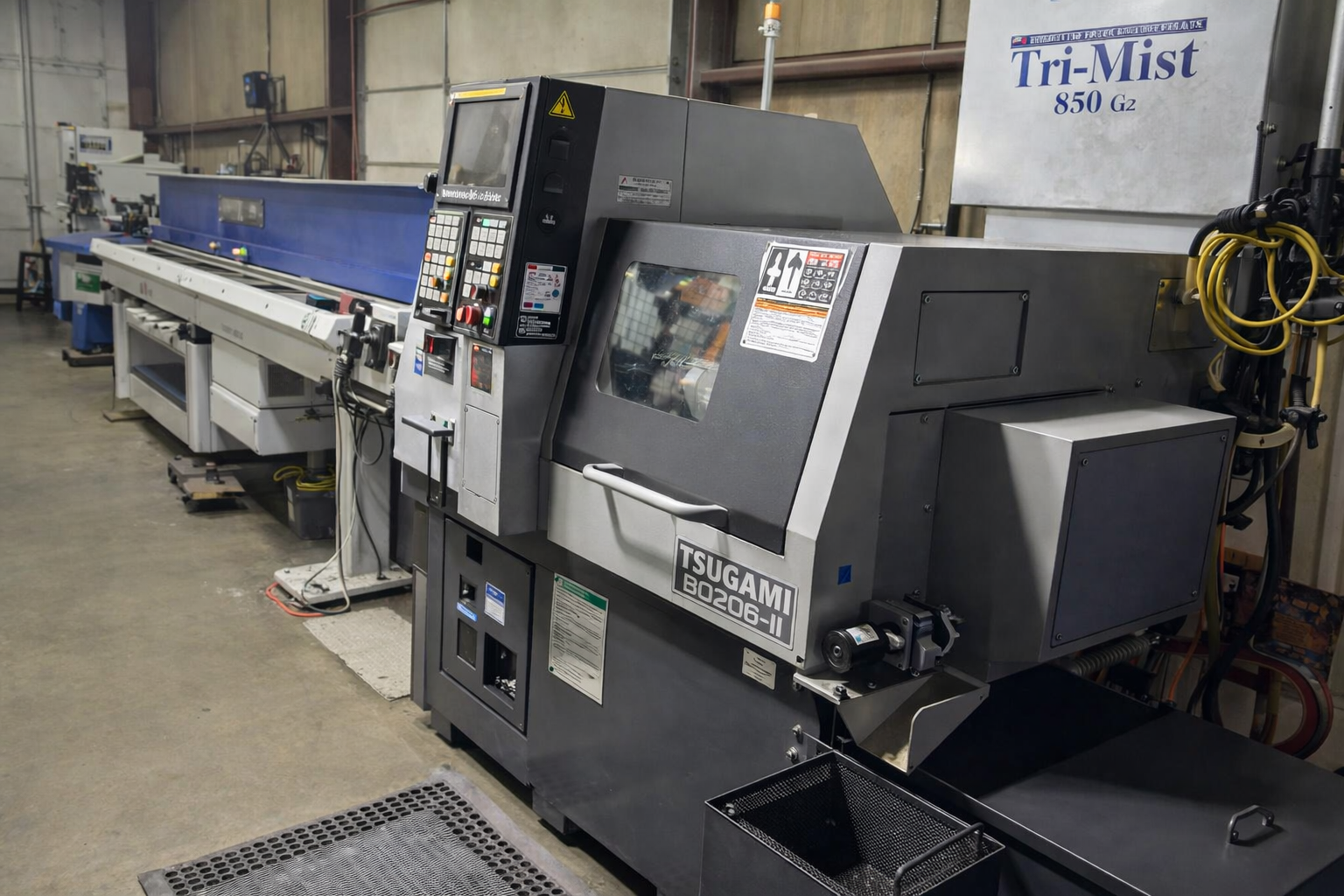
To maximize performance:
Recommended Processes
Forage
Tapotement
Automatic screw machining
Tooling Tips
Use high-speed steel (HSS) or carbide tools
Optimize cutting speeds (high-speed capable)
Conditions de coupe
Lower cutting forces allow aggressive parameters
Minimal coolant required (depending on setup)
Mesures de sécurité
Use proper ventilation systems
Avoid inhalation of lead particles
Follow OSHA or equivalent safety standards
Conclusion
12L14 carbon steel remains one of the most efficient and cost-effective materials for precision machining. Its unmatched machinability, combined with excellent surface finish and dimensional accuracy, makes it the top choice for high-volume production of small, complex components.
Cependant, engineers and buyers must carefully evaluate its limitations—particularly weldability and lead content—before selecting it for specific applications.
👉 Fin de compte:
If your priority is vitesse, précision, and cost efficiency in machining, 12L14 is one of the best materials available.
FAQ
1. What does the “L” stand for in 12L14 steel?
It indicates the addition of plomb, which improves machinability.
2. Can 12L14 be welded?
Not recommended due to sulfur and lead, which can cause cracking.
3. Can 12L14 be heat treated?
It cannot be significantly hardened, mais case hardening is possible.
4. Is 12L14 safe to machine?
Oui, with proper safety measures such as:
Ventilation
Protective equipment
5. How does 12L14 compare to 1018 acier?
12L14 offers much better machinability, alors que 1018 offres better weldability and strength.
Looking for a reliable supplier of precision machined parts or electrical terminals using 12L14 steel?
✔ High-volume production capability
✔ Strict tolerance control
✔ Livraison mondiale rapide
👉 Contactez-nous aujourd'hui to get a quote or technical support for your next project.