


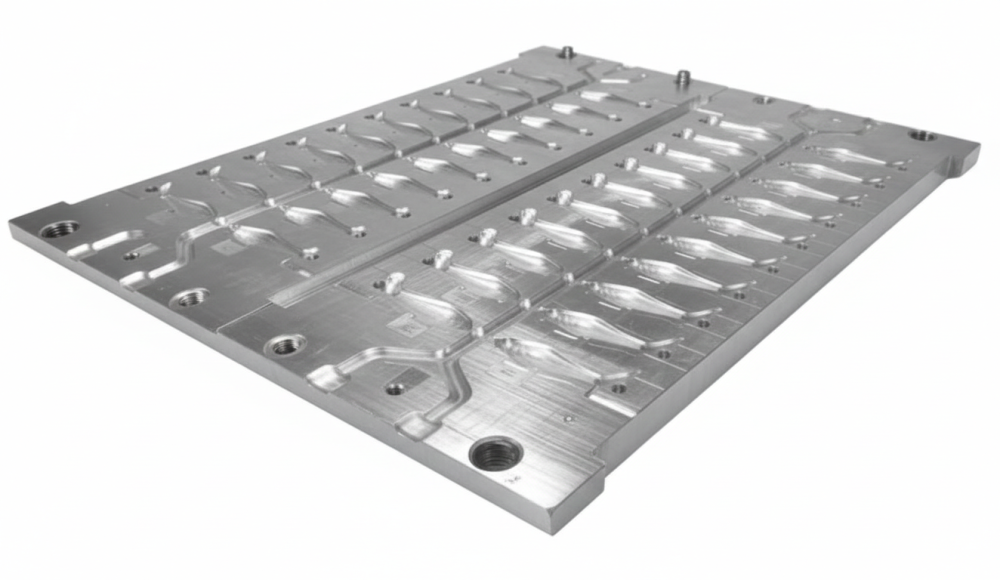
Les moules à appâts en aluminium sont la référence pour les pêcheurs, créateurs de leurres, et les fabricants d'appâts commerciaux qui exigent de la précision, durabilité, et des résultats cohérents. Que vous soyez un amateur fabriquant des leurres en plastique souple personnalisés ou une entreprise produisant des appâts à grande échelle, les moules en aluminium offrent des performances inégalées par rapport aux alternatives en plastique ou en silicone.
Dans ce guide détaillé, we will explain what aluminum bait molds are, why they outperform other mold types, how they are designed and manufactured, et why choosing the right mold supplier directly impacts your fishing success and production efficiency.
What Are Aluminum Bait Molds?

An aluminum bait mold is a precision-machined tool used to produce artificial fishing lures, most commonly soft plastic baits. These molds are typically made from high-quality aluminum alloys and are designed to withstand repeated exposure to molten plastisol or other soft plastic materials.
Much like a baking pan determines the final shape of a cake, a bait mold defines the forme, taille, texture, and action of the fishing lure. Aluminum bait molds are widely used to produce:
Soft plastic worms
Grubs and craws
Swimbaits and minnows
Creature baits and custom lure designs
Compared to silicone or plastic molds, aluminum molds deliver longer service life, sharper details, and consistent results over thousands of cycles—making them ideal for both prototyping and commercial production.
Advantages of Aluminum Bait Molds for Soft Plastic Baits
1. Exceptional Durability and Long Service Life
Aluminum is inherently strong and resistant to deformation. Unlike silicone or plastic molds that degrade, tear, or lose shape over time, aluminum bait molds maintain their dimensional stability even after years of continuous use.
This durability makes aluminum molds a long-term investment, especially for anglers or businesses producing large quantities of lures. Once properly machined, an aluminum mold can last for tens of thousands of injection cycles with minimal wear.
2. Superior Heat Resistance
Soft plastic baits are typically produced using plastisol heated to 150–180°C (300–356°F). Many non-metal molds struggle to withstand these temperatures, leading to warping or surface damage.
Aluminium easily tolerates high temperatures without losing structural integrity. This heat resistance ensures:
Stable mold geometry
Safer injection processes
Consistent bait quality across production runs
3. Fast Cooling for Higher Productivity
Aluminum has excellent thermal conductivity, allowing it to absorb and dissipate heat quickly. This means molten plastic cools and solidifies faster inside the mold.
Les avantages:
Des temps de cycle plus courts
Faster production rates
Reduced waiting time between pours or injections
For commercial bait makers, faster cooling directly translates into higher output and lower labor costs.
4. High Detail and Precision
One of the biggest advantages of aluminum bait molds is their ability to capture détails fins. Aluminum is easy to machine using CNC equipment, enabling precise reproduction of:
Scale patterns
Ridges and ribs
Tail contours and fins
Realistic textures that enhance bait action
These fine details improve the lure’s realism in the water—often making the difference between a strike and a missed opportunity.
5. Consistent Results Over Time
Aluminum molds do not flex or stretch like silicone molds. Once machined, the cavity dimensions remain unchanged, garantissant identical results every time you produce a bait.
This consistency is critical for:
Brand identity
Repeat performance in fishing conditions
Commercial-scale lure production
Reliable consistency allows lure makers to scale production without sacrificing quality.
6. Injection-Ready for Advanced Designs
Most aluminum bait molds are designed for moulage par injection, making them ideal for:
High-pressure plastisol injection
Multi-color baits
Laminated and layered designs
Injection-ready aluminum molds allow precise control over material flow, resulting in cleaner fills, moins de défauts, and more complex bait designs.
7. Compatibility With Multiple Materials
Aluminum bait molds are highly versatile and compatible with various materials, y compris:
Plastisol
Polyuréthane
Other soft plastic compounds
The mold’s stability ensures these materials maintain their intended properties during molding, preserving flexibility, buoyancy, and durability in the final bait.
How to Design Aluminum Bait Molds
Designing a high-performance aluminum bait mold requires careful planning and engineering.
1. Define Your Bait Requirements
Start by determining:
Bait type (worm, craw, swimbait, etc.)
Size and thickness
Desired swimming action
Floating or sinking behavior
Special features such as ribs, paddle tails, or appendages
Clear design goals ensure the final mold performs exactly as intended.
2. Sketch the Bait Concept
A rough sketch helps visualize the bait before digital modeling. This can be done:
By hand for concept development
Directly in CAD software for precision
The sketch serves as the foundation for all subsequent design steps.
3. Create a 3D CAD Model
Using CAD software, designers create a precise 3D model of the bait and mold cavity. A proper aluminum bait mold design includes:
One-half or two mirrored halves of the bait cavity
Injection port location
Air vents for smooth filling
Alignment pins to ensure accurate mold closure
This stage is critical for ensuring manufacturability and performance.
4. Test and Validate the Design
Before machining aluminum, it’s advisable to:
3D print prototypes
Test bait action in water
Adjust dimensions or features as needed
Early testing helps avoid costly machining revisions.
5. CNC Machining the Mold
Once finalized, the mold is machined using CNC milling equipment. 6061 alliage en aluminium is commonly used due to its excellent machinability, force, et résistance à la corrosion.
Precision CNC machining ensures:
Tolérances étroites
Smooth cavity surfaces
Accurate alignment between mold halves
6. Finishing and Polishing
Après l'usinage, the mold is tested with plastisol. Polishing is often applied to:
Improve bait release
Enhance surface finish
Reduce defects
Optional branding, such as engraved logos, can be added for commercial products.
Why Choose a Professional Aluminum Bait Mold Manufacturer?

Not all aluminum bait molds are created equal. Mauvaise sélection de matériaux, inaccurate machining, or lack of engineering support can lead to defects, leaks, or inconsistent bait quality.
A professional manufacturer offers:
High-grade aluminum materials
CNC machining expertise
Mold flow and design optimization
Quality control and long-term support
Choosing the right supplier ensures you receive a mold that performs reliably and delivers long-term value.
Applications of Aluminum Bait Molds
Aluminum bait molds are widely used by:
Hobby anglers and DIY lure makers
Small fishing lure brands
Commercial bait manufacturers
Product developers and prototyping teams
They support both low-volume custom projects et production en grand volume.
Conclusion
Aluminum bait molds are one of the most effective tools for producing high-quality soft plastic fishing lures. Their durability, précision, résistance à la chaleur, and consistency make them the preferred choice for serious anglers and professional lure manufacturers alike.
By investing in well-designed, professionally machined aluminum bait molds, you gain better control over lure performance, efficacité de production, and long-term cost savings—ultimately helping you fish smarter and build better products.
Ready to Build Your Custom Aluminum Bait Mold?
If you are looking for custom aluminum bait molds, CNC-machined mold solutions, ou engineering support for lure production, working with us, Précision au sommet is an experienced manufacturer, we can turn your design into a high-performance fishing product.
FAQs
- What materials can I use with aluminum bait molds?
Aluminum molds are compatible with plastisol, polyuréthane, and most soft plastic compounds used for fishing baits. - How long does an aluminum bait mold last?
Avec des soins appropriés, aluminum molds can last for tens of thousands of cycles, far outlasting silicone or plastic molds. - Can I produce multi-color or complex baits?
Oui, aluminum molds support multi-color injection and intricate bait designs with precise detail. - Are aluminum bait molds suitable for small-batch production?
Absolument. They are ideal for both prototypes and small or large-scale production runs. - How precise are the details in aluminum molds?
CNC-machined aluminum molds capture fine textures, côtes, tails, and realistic features with high accuracy. - Do I need special equipment to use aluminum molds?
You need an injection system or pouring setup compatible with molten plastisol or similar materials. - Can aluminum molds improve my bait production efficiency?
Oui, their fast cooling and durability reduce cycle times and maintenance, allowing faster, consistent production. - How do I choose a reliable aluminum bait mold supplier?
Look for suppliers offering high-grade aluminum, CNC machining expertise, engineering support, et assurance qualité.


