



L'aluminium à revêtement époxy est largement utilisé dans la construction, marin, automobile, and industrial manufacturing due to its excellent corrosion resistance, durabilité, and surface versatility. By combining aluminum’s lightweight strength with a high-performance epoxy coating, manufacturers achieve long service life, improved aesthetics, and lower maintenance costs.
This guide explains what epoxy coated aluminum is, how it is produced, où il est utilisé, et how to choose the right solution for your project, helping engineers, acheteurs, and project managers make informed sourcing decisions.
What Is Epoxy Coated Aluminum?
Epoxy coating is a thermosetting polymer coating that forms a hard, chemically resistant layer when cured.
Epoxy coated aluminum refers to aluminum sheets, assiettes, extrusions, or fabricated parts that are coated with an epoxy resin system to enhance surface protection and performance.
This coating creates a sealed barrier that protects aluminum from:
Moisture and humidity
Saltwater and marine exposure
Industrial chemicals
UV radiation and weathering
Epoxy coated aluminum can be applied to:
Flat aluminum sheets and plates
CNC-machined aluminum components
Welded and fabricated aluminum assemblies
Why Epoxy Coating Is Applied to Aluminum
Bien que aluminium naturally forms a thin oxide layer, this layer alone is not sufficient in aggressive or long-term environments. Epoxy coating is applied to aluminum to overcome key limitations of bare metal.
Key reasons include:
Enhanced corrosion resistance in marine and chemical environments
Improved abrasion and impact resistance
Better surface appearance and color consistency
Extended service life with reduced maintenance
For applications where reliability and appearance matter, epoxy coating offers a strong performance advantage.
Epoxy Coating Process for Aluminum (Step-by-Step)
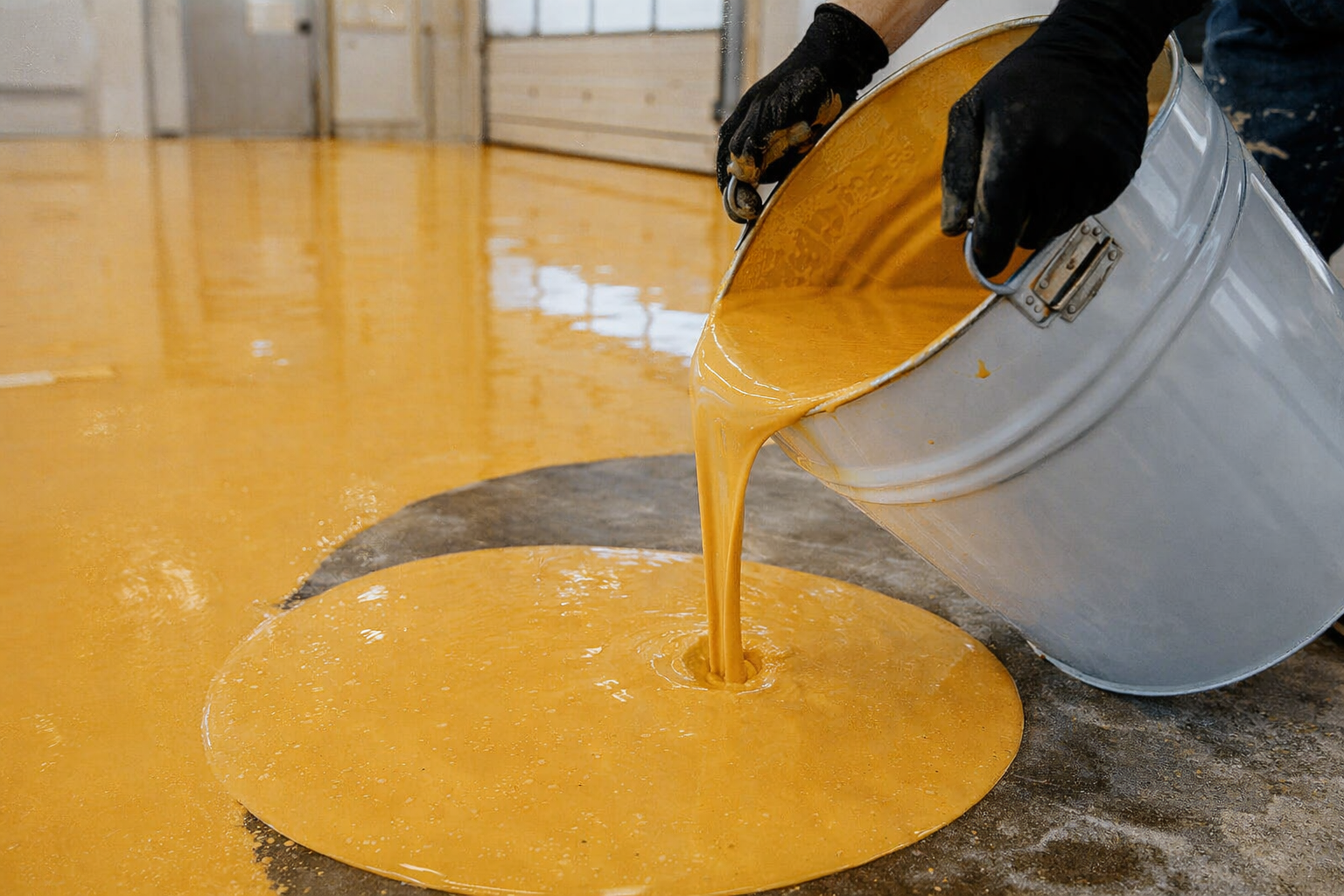
Proper process control is critical to coating quality and durability.
Préparation de surface
Surface preparation determines coating adhesion and longevity. Typical steps include:
Degreasing and cleaning to remove oils, saleté, et contaminants
Oxide removal using chemical or mechanical methods
Etching to create microscopic surface roughness for better adhesion
Amorçage, which enhances corrosion resistance and bonding strength
Poor surface preparation is the leading cause of coating failure.
Epoxy Application Methods
Several epoxy coating methods are used depending on part geometry and performance requirements.
Liquid Epoxy Coating
Applied by spraying, roulement, or brushing
Suitable for large or irregular components
Allows precise thickness control
Waterborne Epoxy Coating
Applied via electrodeposition or controlled spraying
Lower VOC emissions
Improved environmental performance
Revêtement en poudre époxy
Applied electrostatically
Cured at elevated temperatures
Ideal for complex CNC-machined parts and uniform coverage
Each method has advantages depending on cost, épaisseur, and part complexity.
Curing and Quality Control
After application, epoxy coatings must be cured under controlled temperature conditions. Proper curing:
Activates chemical cross-linking
Maximizes mechanical strength
Ensures chemical and UV resistance
Quality control checks include:
Coating thickness measurement
Adhesion testing
Visual and surface uniformity inspection
Key Benefits of Epoxy Coated Aluminum
Résistance supérieure à la corrosion
Epoxy coatings isolate aluminum from oxygen, humidité, et produits chimiques, preventing oxidation, piqûre, and surface degradation.
High Wear and Abrasion Resistance
Epoxy resin forms a tough protective layer that resists scratches, friction, and mechanical wear in high-use environments.
UV and Weather Protection
Advanced epoxy systems maintain color stability and structural integrity under sunlight, rain, and temperature fluctuations.
Flexibilité esthétique
Epoxy coatings offer:
Wide color selection
Brillant, mat, ou finitions texturées
Uniform, high-quality appearance
Cost Efficiency and Long-Term Value
By extending service life and reducing maintenance, epoxy coated aluminum lowers total ownership cost over time.
Common Applications of Epoxy-Coated Aluminum
Architectural and Construction Uses
Facades and curtain walls
Window and door frames
Decorative panels and roofing systems
Marine and Offshore Applications
Boat fittings and structures
Deck components
Offshore platforms and ladders
Composants automobiles
Panneaux de carrosserie
Wheel components
Interior decorative parts
Industrial Machinery and Equipment
Machine housings and guards
Structural frames
Precision CNC-machined components
Consumer and Decorative Products
Furniture and appliances
Luminaires
Home décor products
Epoxy Coated Aluminum vs Other Coating Options
Epoxy Coating vs Anodized Aluminum
| Aspect | Epoxy Coating | Anodisation |
| Résistance à la corrosion | Excellent | Bien |
| Options de couleur | Wide | Limité |
| Surface Appearance | Customizable | Métallique |
| Résistance chimique | Haut | Modéré |
Anodizing hardens the surface but offers limited color flexibility compared to epoxy coatings.
Epoxy Coating vs Powder Coating
Epoxy coatings are lighter and provide better chemical resistance, while powder coatings (especially on steel) offer higher structural load capacity but are more prone to corrosion if damaged.
Epoxy coated aluminum excels in environments where corrosion resistance and weight reduction sont critiques.
Is Epoxy Coated Aluminum Right for Your Project?
Epoxy coated aluminum is ideal when:
Corrosion resistance is a priority
Weight reduction is required
Long-term durability is critical
Appearance and color consistency matter
It may not be suitable for extremely high-temperature environments where alternative coatings perform better.
Buying Guide: What to Consider When Choosing Epoxy-Coated Aluminum
Before purchasing, évaluer:
Coating type (liquid vs powder epoxy)
Required coating thickness
Operating environment (marin, chimique, de plein air)
Mechanical and abrasion requirements
Supplier quality control and inspection capability
Compliance with industry standards
Working with an experienced supplier ensures consistent coating quality and reliable performance.
FAQ
How long does epoxy coating last on aluminum?
With proper application and maintenance, epoxy coatings can last 15–25 years.
How do you maintain epoxy-coated aluminum?
Routine cleaning with mild soap and water is sufficient. Avoid abrasive cleaners.
Is epoxy coating environmentally friendly?
Modern water-based and low-VOC epoxy systems significantly reduce environmental impact.
Can epoxy-coated aluminum be repaired?
Oui, damaged areas can often be recoated after surface preparation.
How strong is epoxy-coated aluminum?
The coating preserves aluminum’s excellent strength-to-weight ratio while improving impact and scratch resistance.
Conclusion
Epoxy coated aluminum combines résistance légère, résistance à la corrosion, surface durability, and aesthetic flexibility, making it a preferred choice across many industries. When properly specified and sourced, it delivers long-term value, reduced maintenance, and reliable performance.
Pour les fabricants, ingénieurs, and buyers seeking a durable aluminum solution, epoxy coating remains a smart and cost-effective investment.


