


Your salt spray test specification needs more than an exposure duration. Define the method, specimen condition, evaluated surfaces, and acceptance criteria before ordering coated parts. A chamber standard describes testing conditions. It does not automatically define a passing product or predict years of outdoor service.
Separate The Test Method From Product Acceptance
Your purchase specification must identify both how testing is performed and what results you will accept.
ASTM B117 is a practice for operating salt spray apparatus. Specify the agreed edition rather than an undated reference. Confirm whether your customer requires that edition or another contractual version.
OIN 9227 covers several salt spray methods, including neutral and acidified exposures. Those methods are not interchangeable. Its public scope leaves product exposure duration and result interpretation to appropriate product specifications.
Do not accept “salt spray tested” as a complete requirement. Ask which method was used, for how long, on what specimens, and against which criteria.
Define The Specimen You Actually Need Tested
Your specimens should represent the coating system and production condition covered by the approval.
Identify the substrate, alloy or steel grade, prétraitement, coating layers, exigences d'épaisseur, and curing or sealing condition. Record the production lot and finishing stage. A coating name alone does not identify the complete protective system.
Decide whether testing requires actual parts, representative coupons, ou les deux. Flat panels can support coating process checks. They may not represent difficult recesses, bords tranchants, zones masquées, or assembled interfaces on your component.
State whether coupons must be processed with production parts. Ask how their material, prétraitement, application, and cure remain representative. Keep panel qualification separate from acceptance of every geometric feature.
Agree Surface Preparation And Evaluation Areas
Your test plan should define specimen preparation and the exact surfaces included in acceptance.
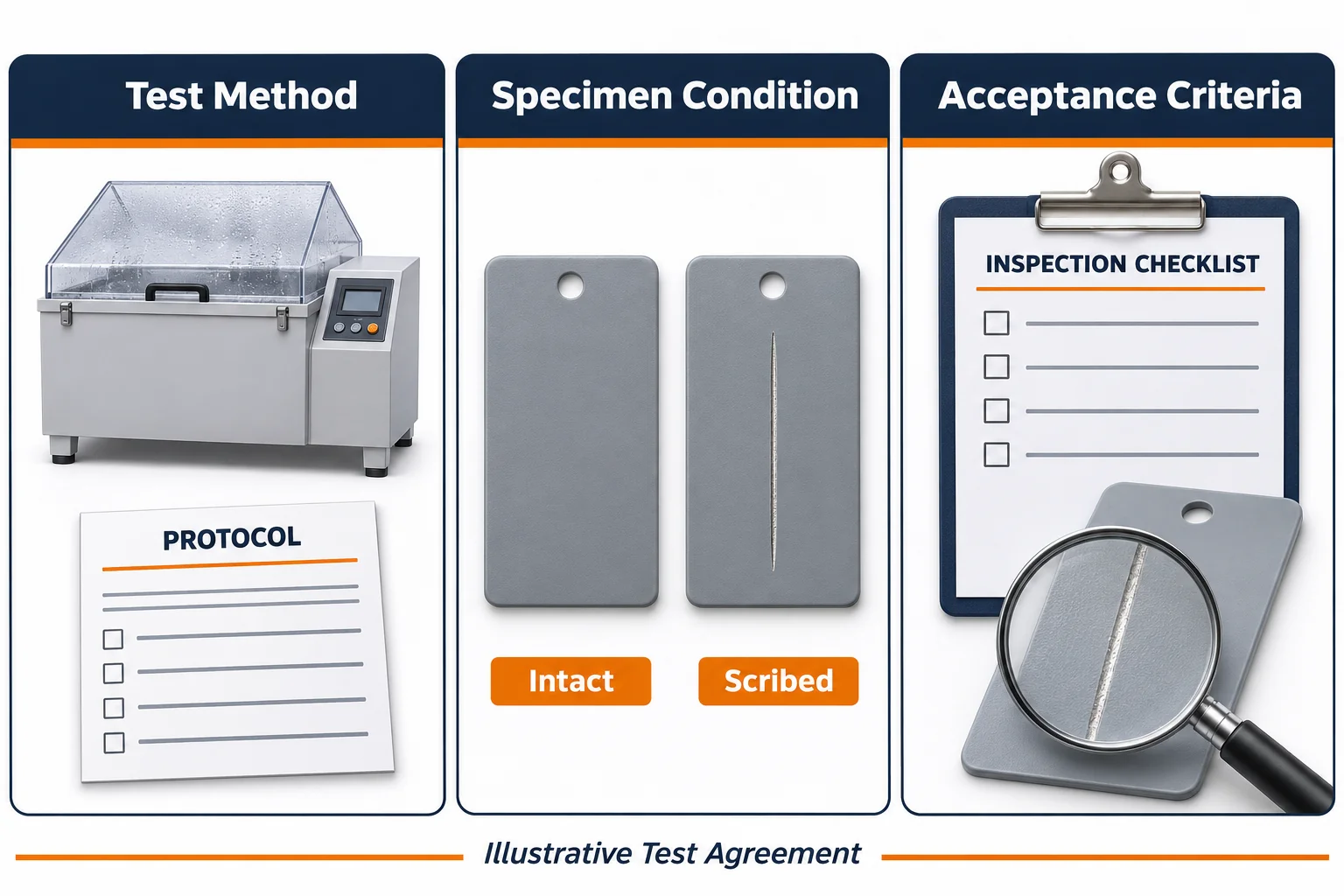
Specify whether the coating remains intact or receives an intentional scribe. A scribed evaluation examines behavior near deliberately exposed substrate. An intact-surface evaluation addresses a different condition. Never compare their results without identifying that difference.
Define treatment of cut edges, trous, hanging points, and masked contacts. If the specification excludes an area, identify its boundary before testing. Do not invent exclusions after corrosion appears.
For functional contact pads and threaded regions, align the test plan with your drawing. Notre powder coating masking guide explains how deliberately uncoated features require separate agreement.
Write Acceptance Criteria That Match The Coating System
Your criteria should distinguish the type, location, and permitted extent of deterioration.
White corrosion products on zinc and red corrosion of a steel substrate describe different observations. Aluminum requires appropriate corrosion assessment rather than a steel red-rust rule. Organic coatings may require evaluation of blistering or deterioration around a scribe.
ASTM D1654 provides an evaluation framework for painted or coated specimens after corrosive exposure. Choose an applicable assessment method and define limits in the product specification. Agree how measurements, ratings, or images demonstrate compliance. Do not copy a universal hours-to-failure target from an unrelated coating.
| Test Agreement | Define Before Testing | Avoid This Ambiguity |
|---|---|---|
| Méthode | Standard, edition, specific exposure | An unexplained salt spray label |
| Specimens | Matériel, système de revêtement, parcelle, quantité | Coupons unrelated to production |
| Préparation | Scribe, bords, nettoyage, masquage | Unrecorded specimen changes |
| Duration | Required exposure and inspection schedule | A duration treated as a pass criterion |
| Évaluation | Surfaces, defect types, rating method, limits | Different interpretations of corrosion |
| Rapports | Photos, identification, observations, deviations | A certificate showing only test hours |
If an approved specification already defines these items, reference it precisely. Resolve conflicts between drawings, coating notes, and supplier quotations before placing the order.
Request A Traceable Laboratory Report
Your report should connect the observed result to identifiable specimens and documented test conditions.
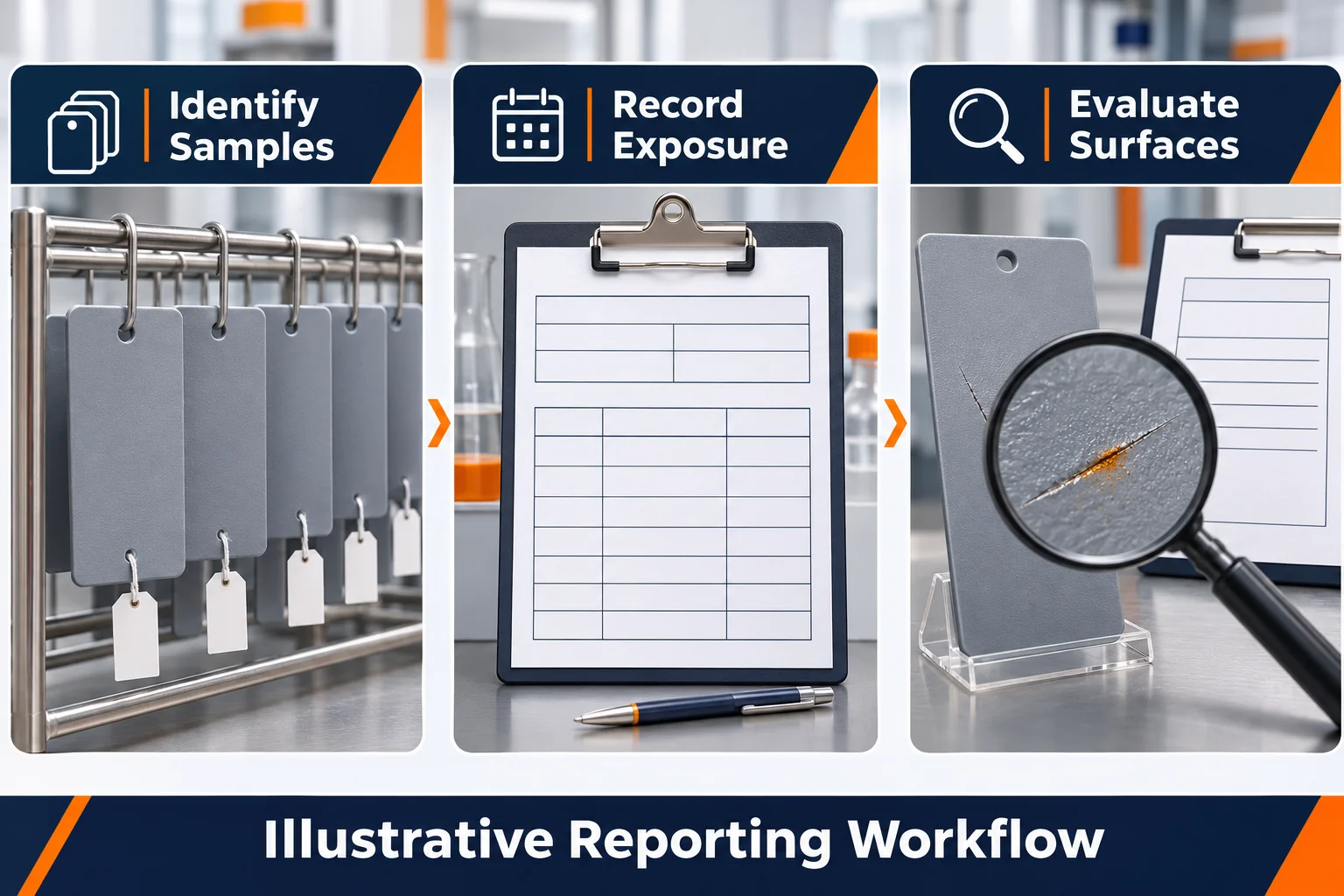
Request specimen identifiers, material and coating description, exposure method, rendez-vous, durée, and evaluation results. Include photographs that show orientation and relevant surfaces. Record preparation, exclusions, interruptions, and deviations according to the agreed procedure.
Distinguish observed exposure completion from a formal acceptance decision. A report may state what happened without judging compliance with your drawing. Identify who reviews the evidence and authorizes shipment.
Confirm any required laboratory accreditation and whether its scope covers the requested method. Do not infer laboratory competence from a generic certificate alone.
Understand What Salt Spray Results Cannot Prove
Your salt spray result is evidence under the stated test conditions, not a direct conversion into service life.
ASTM B117 cautions that standalone salt spray results generally lack reliable correlation with natural exposure performance. OIN 9227 also limits their use for ranking different materials and predicting long term corrosion resistance.
An exposure hour does not equal a fixed number of outdoor days. Actual service can involve drying, sunlight, abrasion, changements de température, and chemical contact. Your engineer may require other environmental or functional tests for the application.
Use the agreed salt spray test for its defined quality or acceptance purpose. Keep any service life claim supported by separate, relevant evidence.
Compare Finishing Quotes With The Same Test Scope
Your supplier comparison should include specimen preparation, travail de laboratoire, evaluation, et les exigences en matière de déclaration.
TOPS Précision fournit services de fabrication de tôle. Submit your finishing and corrosion test requirements during project review. Confirm the proposed coating route, sample preparation, and testing arrangements for your specific component.
Separate initial qualification from recurring lot tests. Test duration, sample quantities, specialist preparation, and reporting can affect cost and delivery. Agree the response to failed results before production starts.
Questions fréquemment posées
Your acceptance decision should follow the complete test agreement rather than exposure duration alone.
Does ASTM B117 Specify The Required Test Hours
The apparatus practice does not establish a universal product exposure requirement. Use your applicable product or customer specification.
Can Salt Spray Hours Predict Outdoor Service Years
No fixed conversion is justified by the test alone. Evaluate service performance using application-specific evidence.
Are Test Coupons Enough To Approve Complex Parts
Only when your approval plan justifies their representativeness. Actual component geometry may need additional verification.
Request A Coating Test Review
Contactez-nous avec ton dessin, substrat, coating specification, quantités, and required test method. Include specimen preparation and acceptance criteria. Agree the evidence before approving your finishing order.