



すべてのプロジェクトに最適な単一の 3D プリント素材はありません。. PLA may be an excellent choice for a low-cost visual prototype, while PA12 may be better for a functional mechanical component. TPU is suitable for flexible parts, PEEK for demanding high-temperature environments, and titanium or Inconel for specialized metal applications.
The right choice therefore depends on the 応用, required material properties, 3D printing process, 生産量, 寸法要件, 後処理, and total cost.
This guide explains the major types of 3D printing materials, their properties and applications, how they compare, and how engineers and purchasing teams can select the most suitable material for a specific project.
簡単な回答: What Is the Best Material for 3D Printing?
There is no universal best material. The appropriate material depends on the application.
- 人民解放軍:Best for low-cost prototypes, models, and visual concepts.
- ABS:Suitable for impact-resistant functional prototypes and housings.
- PETG:A good general-purpose material when toughness and chemical resistance are important.
- PA11/PA12 Nylon:Excellent for functional mechanical components, エンクロージャ, 括弧, 歯車, そして小ロット生産.
- TPU:Best for flexible and shock-absorbing components.
- パソコン:Suitable for strong, impact-resistant technical parts.
- ASA:Recommended for outdoor applications requiring UV and weather resistance.
- ピーク:Designed for demanding applications involving high temperature, 化学薬品, and mechanical loads.
- Engineering resins:Suitable for high-detail prototypes, ツーリング, and specialized functional parts.
- アルミニウム:A strong, lightweight option for metal components.
- チタン:Suitable for high-performance applications where strength-to-weight ratio and corrosion resistance are critical.
- インコネル:Appropriate for extreme-temperature and highly corrosive environments.
重要な点は、 material selection should begin with application requirements rather than material popularity or price alone.
1. Why Choosing the Right 3D Printing Material Matters
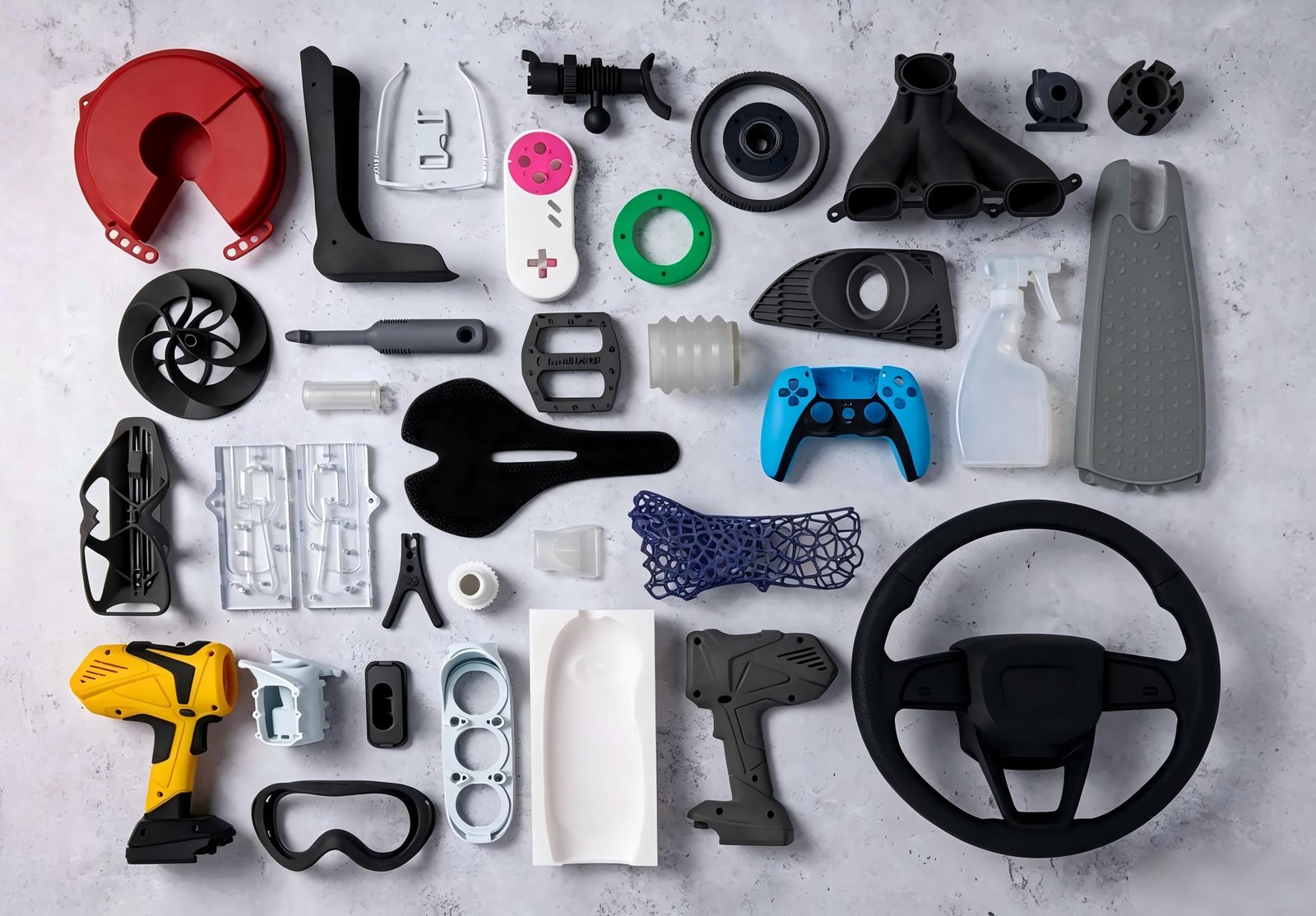
3D printing makes it possible to manufacture components with a wide range of materials. しかし, different materials behave very differently during printing and actual service.
A material that works perfectly for a prototype may fail when exposed to continuous heat, 機械的負荷, 化学薬品, 紫外線, または繰り返しの衝撃.
Material properties such as tensile strength, modulus, 伸長, 耐薬品性, 熱性能, and optical characteristics should therefore be evaluated against the actual operating environment.
1.1 Material Determines Part Performance
Important properties include:
- 抗張力
- Tensile modulus
- 耐衝撃性
- 伸長
- 硬度
- 柔軟性
- 耐疲労性
- 耐摩耗性
- Temperature resistance
- 耐薬品性
- UV抵抗
- Moisture resistance
- Electrical properties
例えば, a rigid material may be suitable for a structural bracket but inappropriate for a component that must repeatedly flex.
同様に, a material with high tensile strength is not automatically the best choice if the component requires high impact resistance or fatigue performance.
1.2 Material Affects Manufacturing Cost
Material selection also influences production economics.
The total cost of a 3D printed component can include:
- Raw material
- マシンタイム
- Energy consumption
- Support structures
- Powder or resin utilization
- 労働
- 後処理
- CNC加工
- 表面仕上げ
- 検査
- 包装
したがって, choosing the lowest-cost filament or resin does not necessarily produce the lowest-cost finished component.
1.3 Material Affects Product Life
A component used for five minutes during a design review has very different requirements from a component expected to operate continuously for several years.
Before selecting a material, determine:
- What will the part do?
- What loads will it experience?
- What temperature will it see?
- What chemicals or environmental conditions will it encounter?
- How long must it remain functional?
- What dimensional accuracy is required?
These questions establish the material-selection criteria.
2. Main Categories of 3D Printing Materials
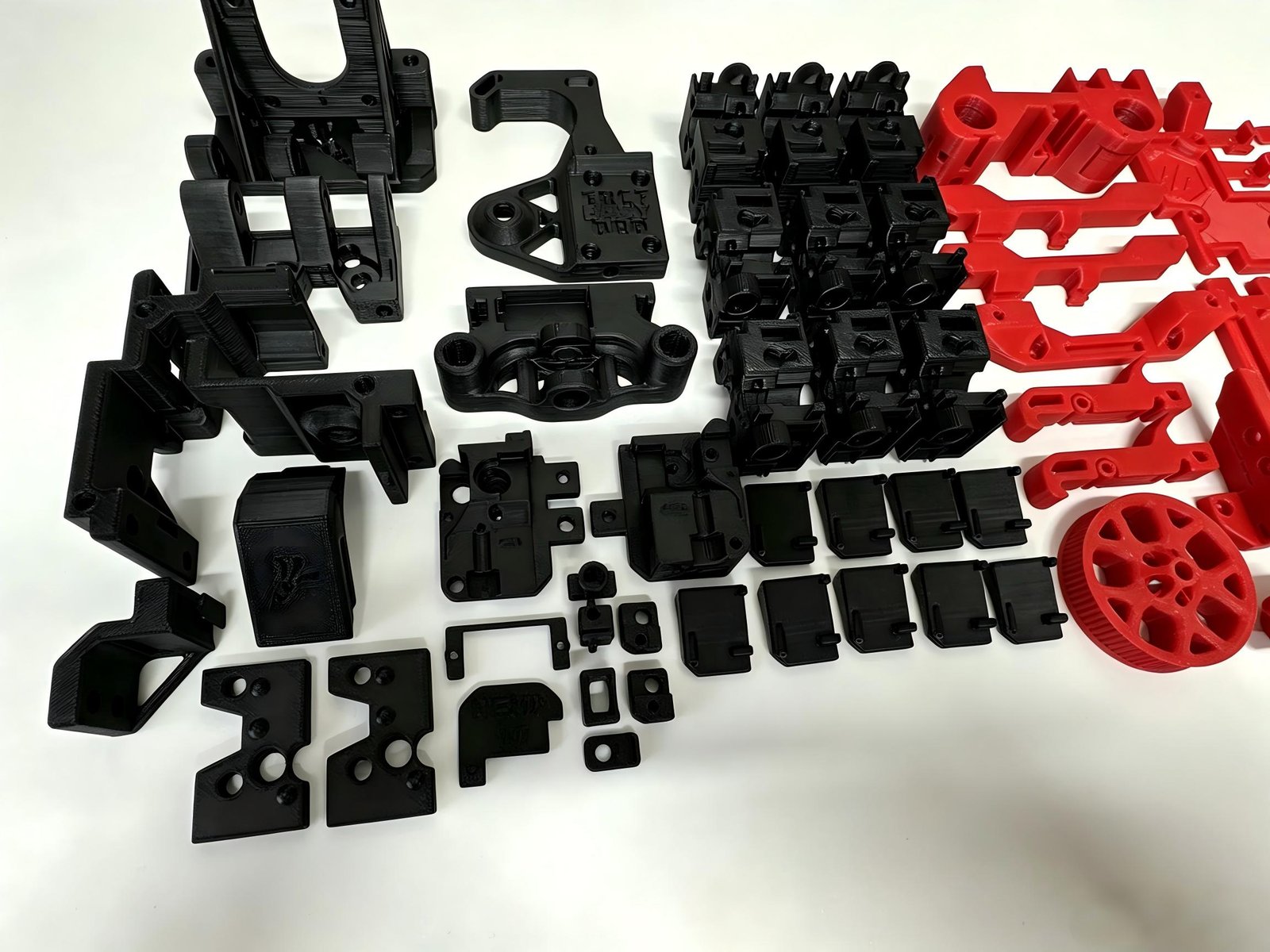
3D printing materials can broadly be divided into several groups:
- 熱可塑性科学
- Photopolymer resins
- Metal materials
- Ceramic materials
- 複合材料
Different additive manufacturing technologies use different forms of these materials.
例えば, FDM/FFF primarily processes thermoplastic filaments, SLA and DLP use liquid photopolymer resins, while SLS and MJF commonly process polymer powders.
3. Thermoplastic 3D Printing Materials
Thermoplastics are among the most widely used materials in 3D printing.
They can be heated, 形成された, and solidified again, making them suitable for processes such as FDM/FFF and, in powder form, SLS and MJF.
3.1 人民解放軍
人民解放軍 (polylactic acid) is one of the easiest materials to print.
主要なプロパティ
- 加工が簡単
- Good dimensional accuracy
- High rigidity
- Low printing difficulty
- Good visual quality
- Relatively low material cost
代表的な用途
- コンセプトモデル
- Design prototypes
- 展示モデル
- Educational models
- Low-load housings
- ビジュアルプロトタイプ
制限事項
PLA is not normally the first choice for demanding functional components exposed to elevated temperatures, sustained loads, or harsh environments.
Best choice when: 低コスト, 印刷のしやすさ, 外観, and rapid prototyping are more important than long-term mechanical performance.
3.2 ABS
ABS (acrylonitrile butadiene styrene) is an established engineering thermoplastic.
It provides a useful combination of toughness, 耐衝撃性, and temperature performance.
代表的な用途
- 機能的なプロトタイプ
- ハウジング
- 自動車部品
- 消費者製品
- Mechanical prototypes
Compared with PLA, ABS is generally better suited to functional applications where impact resistance and temperature performance are important.
しかし, ABS can be more challenging to print because thermal shrinkage and warping need to be controlled.
3.3 PETG
PETG (polyethylene terephthalate glycol-modified) combines relatively easy processing with good toughness and chemical resistance.
利点
- 優れた耐衝撃性
- 良好な靭性
- 耐薬品性
- Reasonable dimensional stability
- Relatively easy processing
アプリケーション
- コンテナ
- Protective components
- 機能的なプロトタイプ
- 機械部品
- ディスプレイ
- General-purpose industrial components
PETG is often a practical middle ground between easy-to-print materials and more demanding engineering polymers.
3.4 ナイロン / PA
ポリアミド (PA), commonly called nylon, is one of the most important engineering materials for functional 3D printed components.
Nylon offers a useful combination of strength, 靭性, 耐摩耗性, and environmental durability.
PA11 and PA12 are especially common in powder-based processes such as SLS. ナイロン 11 そしてナイロン 12 can also be reinforced with glass or carbon fiber when greater stiffness or strength is required.
代表的な用途
- 歯車
- ブラケット
- ヒンジ
- 機械的ハウジング
- Functional assemblies
- クリップ
- 備品
- End-use components
Important consideration: 水分
Nylon absorbs moisture, which can affect processing and final properties. Proper material storage and preparation are therefore important.
Best choice when: you need a durable engineering polymer for mechanically loaded components.
3.5 TPU
TPU (thermoplastic polyurethane) is a flexible elastomeric material.
Unlike rigid thermoplastics, TPU can deform significantly and return toward its original shape.
プロパティ
- High flexibility
- 弾性
- 耐摩耗性
- 衝撃吸収
- 優れた耐衝撃性
アプリケーション
- シール
- ガスケット
- Flexible covers
- Protective cases
- Vibration dampers
- Flexible connectors
- Wearable components
TPU is particularly useful when a component must behave more like rubber than conventional rigid plastic.
3.6 ポリカーボネート (パソコン)
ポリカーボネート is a strong, tough engineering thermoplastic known for high impact resistance.
に使用できます:
- 機械部品
- 保護カバー
- Structural prototypes
- Technical housings
- 備品
PC is generally more demanding to print than PLA or PETG, so appropriate machine capability and process control are important.
3.7 ASA
ASA (acrylonitrile styrene acrylate) is often selected for outdoor applications because of its UV and weather resistance.
アプリケーション
- Outdoor housings
- Automotive exterior components
- Industrial covers
- アウトドア用品
- Weather-exposed prototypes
If a component will spend significant time outdoors, ASA can be a better option than materials that are more susceptible to UV degradation.
3.8 ピーク
ピーク (ポリエーテルエーテルケトン) is a high-performance engineering thermoplastic.
It is used when conventional polymers cannot meet the requirements for temperature, 耐薬品性, 機械的性能, or dimensional stability.
アプリケーション
- 航空宇宙
- 医療機器
- 半導体装置
- 石油とガス
- 化学処理
- High-temperature machinery
PEEK is significantly more expensive and more difficult to process than common 3D printing materials.
It should therefore be selected because its performance is necessary—not simply because it is a premium material.
4. Resin 3D Printing Materials
SLA, DLP, and related resin-based technologies use liquid photopolymer materials that are selectively cured using light.
Resin 3D printing is particularly attractive when 細かい部分, 寸法精度, および表面の品質 are priorities. SLA can produce smoother surfaces and fine features than many FDM processes.
4.1 Standard Resin
に適しています:
- コンセプトモデル
- ビジュアルプロトタイプ
- Detailed models
- Product design validation
4.2 Tough Resin
Designed to provide better impact resistance and durability than standard resin.
アプリケーションには以下が含まれます:
- 機能的なプロトタイプ
- Snap-fit components
- エンクロージャー
- Mechanical prototypes
4.3 Flexible Resin
に使用されます:
- Flexible components
- Soft-touch prototypes
- シール
- ガスケット
- Elastomer-like parts
4.4 High-Temperature Resin
Useful for applications requiring dimensional stability under elevated temperatures.
4.5 Engineering Resin
Engineering resins are formulated to provide more specific mechanical, 熱の, or chemical characteristics.
Some specialized resin systems can target properties such as flame retardancy, electrical dissipation, 生体適合性, or high stiffness.
5. Metal 3D Printing Materials
Metal additive manufacturing is increasingly used for complex engineering components, 少量生産, lightweight structures, and applications where conventional manufacturing may be difficult or expensive.
Common metal 3D printing materials include:
- ステンレス鋼
- アルミニウム
- チタン
- インコネル
- 工具鋼
- 銅および銅合金
5.1 ステンレス鋼
Stainless steel offers a combination of:
- 強さ
- 耐食性
- 耐久性
- Temperature performance
アプリケーションには以下が含まれます:
- 産業コンポーネント
- 備品
- 機能的なプロトタイプ
- 機械部品
- 医療要素
5.2 アルミニウム
Aluminum is attractive when low weight and good mechanical performance are required.
アプリケーション
- 自動車
- 航空宇宙
- ロボット工学
- Heat-management components
- 軽量構造部品
5.3 チタン
Titanium provides an excellent strength-to-weight ratio and strong corrosion resistance.
It is commonly considered for:
- 航空宇宙
- 医療要素
- High-performance engineering
- 軽量構造コンポーネント
5.4 インコネル
Inconel nickel-based alloys are designed for demanding environments involving high temperatures, 腐食, and mechanical stress.
代表的なアプリケーションには次のものがあります。:
- 航空宇宙
- Turbomachinery
- エネルギー
- 化学処理
- 高温部品
5.5 工具鋼
Tool steels can be used for:
- 死ぬ
- 金型
- ツーリング
- 耐摩耗性コンポーネント
6. Composite 3D Printing Materials
Composite materials combine a polymer matrix with reinforcement fibers.
The most common reinforcement materials include:
- 炭素繊維
- グラスファイバー
- Kevlar and other specialty fibers
6.1 Carbon-Fiber Reinforced Materials
Carbon fiber can significantly increase stiffness and reduce deformation compared with an equivalent unreinforced polymer.
アプリケーションには以下が含まれます:
- Lightweight fixtures
- ロボット工学
- Automotive prototypes
- 構造括弧
- Industrial tooling
6.2 Glass-Fiber Reinforced Materials
Glass fiber is another common reinforcement option.
It can provide increased stiffness and dimensional stability while often being more economical than carbon fiber.
When should you choose a composite?
Consider fiber-reinforced materials when:
- High stiffness is required
- Weight must be minimized
- Dimensional stability is important
- The component must withstand mechanical loads
しかし, fiber orientation and printing parameters can affect final mechanical properties, so material selection should be evaluated together with the printing process.
7. 3D Printing Materials by Printing Technology
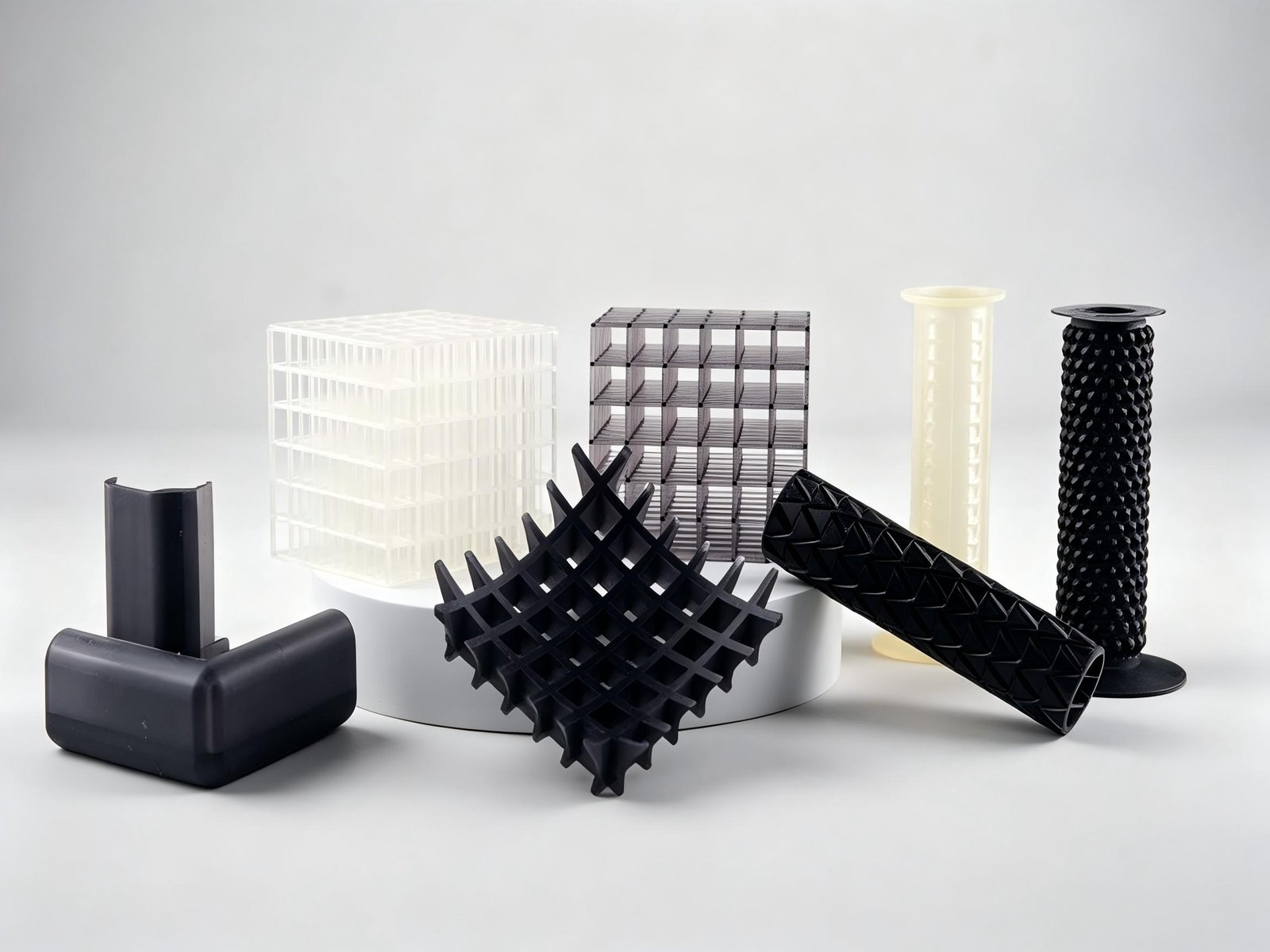
Material selection cannot be separated from process selection.
The same basic polymer family can behave differently depending on whether it is processed as filament, 樹脂, or powder. したがって, engineers should select the material-process combination, not simply the material name.
| 3D Printing Process | Typical Materials | 代表的なアプリケーション |
| FDM / FFF | 人民解放軍, ABS, PETG, TPU, PA, パソコン, ピーク | プロトタイプ, 備品, 機能部品 |
| SLA / DLP | 標準, 厳しい, flexible and engineering resins | High-detail prototypes and specialized components |
| SLS | PA11, PA12, TPU, reinforced nylon | Functional parts and complex geometries |
| mjf | PA11, PA12, TPU and related powders | Functional prototypes and small-batch production |
| Metal LPBF / SLM / DMLS | アルミニウム, ステンレス鋼, チタン, インコネル | High-performance metal components |
| バインダージェッティング | 金属, セラミックス, 砂 | Production and specialized applications |
| PolyJet / MJM | フォトポリマー | Detailed and multi-material prototypes |
| DED | チタン, ステンレス鋼, インコネル, アルミニウム | Large components and repair applications |
FDM / FFF
FDM is attractive for its relatively simple workflow, broad material availability, and low-cost prototyping capability.
SLA / DLP
Resin-based processes are strong choices when surface quality, 細かい詳細, and dimensional accuracy are important.
SLS
SLS uses powder to create self-supporting parts, allowing complex geometries, internal features, アンダーカット, and thin walls without conventional support structures. Nylon is one of the most established SLS materials.
mjf
MJF is widely used for functional polymer components and can be attractive for small-batch production.
8. How to Choose the Right 3D Printing Material
The most reliable way to select a material is to work through the application requirements systematically.
ステップ 1: Define the Application
First determine what the component is supposed to do.
Is it:
- A visual prototype?
- A functional prototype?
- A production component?
- A fixture?
- A housing?
- A seal?
- A tooling component?
- A structural part?
A visual prototype may only require good appearance, while an end-use component may require validated mechanical and environmental performance.
ステップ 2: Identify Mechanical Requirements
考慮する:
- 抗張力
- 剛性
- 耐衝撃性
- 伸長
- 硬度
- 耐摩耗性
- 耐疲労性
例えば, a gear may need wear resistance and dimensional stability, while a protective cover may prioritize impact resistance.
ステップ 3: Evaluate Temperature
Determine both the minimum and maximum operating temperatures.
Also consider:
- Continuous temperature
- Short-term temperature peaks
- Mechanical load at temperature
- サーマルサイクリング
Do not select a material based only on its published melting point. Real-world performance also depends on factors such as glass transition temperature, crystallinity, applied load, and exposure duration.
ステップ 4: 動作環境を考慮する
Ask whether the component will encounter:
- 水
- 湿度
- 油
- Solvents
- Acids
- Alkalis
- 紫外線
- ほこり
- 塩水噴霧
- Vacuum
A material with excellent mechanical properties may still be unsuitable if it is chemically incompatible with the operating environment.
ステップ 5: Define Dimensional Requirements
Determine:
- Required tolerance
- 表面粗さ
- Feature size
- 壁の厚さ
- 寸法安定性
- Visual requirements
SLA can be advantageous when very fine details and smooth surfaces are important, while SLS is attractive for complex functional geometries.
ステップ 6: Consider Production Volume
The ideal process and material can change significantly with volume.
1–10 parts
FDM, SLA, or other rapid prototyping processes may be appropriate.
10–1,000 parts
SLS, mjf, resin printing, or industrial FDM may become attractive depending on the component.
Higher volumes
Compare additive manufacturing against injection molding, CNC加工, ダイカスト, or other conventional processes.
3D printing is particularly valuable when low-volume production, 設計の柔軟性, or complex geometry makes traditional tooling-intensive manufacturing less attractive. SLS, 例えば, can support low-volume and bridge manufacturing without dedicated injection molds.
9. 3D Printing Material Comparison
The following table provides a practical starting point for material selection.
| 材料 | 強さ | 耐熱性 | 柔軟性 | 耐薬品性 | 代表的なアプリケーション | Relative Cost |
| 人民解放軍 | 中くらい | 低い | 低い | 中くらい | ビジュアルプロトタイプ | 低い |
| ABS | 中~高 | 中くらい | 低中程度 | 中くらい | 機能的なプロトタイプ | 低中程度 |
| PETG | 中くらい | 中くらい | 中くらい | 良い | General functional parts | 低中程度 |
| PA12 | 高い | 中くらい | 中くらい | 良い | 機械コンポーネント | 中くらい |
| PA11 | 高い | 中くらい | Higher toughness | 良い | Impact-resistant parts | 中くらい |
| TPU | 中くらい | 中くらい | 非常に高い | 良い | Flexible parts | 中くらい |
| パソコン | 高い | 高い | 中くらい | 中くらい | Technical components | 中~高 |
| ASA | 中~高 | 中~高 | 低中程度 | 良い | Outdoor components | 中くらい |
| ピーク | 非常に高い | 非常に高い | 中くらい | 素晴らしい | 高性能アプリケーション | 非常に高い |
| Engineering Resin | Application-dependent | Application-dependent | Application-dependent | Application-dependent | Specialized prototypes | 中~高 |
| アルミニウム | 高い | 高い | 低い | 良い | 軽量金属パーツ | 高い |
| ステンレス鋼 | 非常に高い | 非常に高い | 低い | 素晴らしい | Industrial parts | 高い |
| チタン | 非常に高い | 非常に高い | 低い | 素晴らしい | 航空宇宙および医療 | 非常に高い |
| インコネル | 非常に高い | 素晴らしい | 低い | 素晴らしい | Extreme environments | 非常に高い |
重要: These are general comparisons, not material certifications or design allowables. Actual properties depend on the specific grade, プリンター, プロセスパラメーター, build orientation, 熱処理, および後処理.
10. Choosing 3D Printing Materials by Application
Sometimes the fastest way to select a material is to start with the application rather than the material family.
Best Materials for Prototypes
考慮する:
- 人民解放軍
- ABS
- PETG
- Standard resin
Choose based on whether appearance, 強さ, 料金, or dimensional accuracy is the primary requirement.
Best Materials for Functional Mechanical Parts
考慮する:
- PA11
- PA12
- パソコン
- Reinforced nylon
- その他のエンジニアリングポリマー
Nylon is particularly established for functional SLS applications because of its combination of strength, 靭性, 耐久性, 耐環境性.
Best Materials for Flexible Components
考慮する:
- TPU
- Flexible resin
- Elastomeric materials
Best Materials for Outdoor Applications
考慮する:
- ASA
- UV-resistant engineering polymers
- Appropriate weather-resistant resins
Best Materials for High-Temperature Applications
考慮する:
- ピーク
- PEI
- High-temperature engineering polymers
- Specialized high-temperature resins
- Inconel for demanding metal applications
Best Materials for Lightweight Components
考慮する:
- アルミニウム
- チタン
- Carbon-fiber reinforced polymers
The correct choice depends on whether the priority is low mass, 剛性, 強さ, 熱性能, or a combination of these factors.
11. Post-Processing for Different 3D Printing Materials
Printing is not necessarily the final manufacturing step.
Post-processing can improve:
- 表面仕上げ
- 寸法精度
- 機械的性能
- 外観
- 耐食性
- 耐摩耗性
- 機能性能
Plastic Parts
考えられるプロセスには次のものがあります。:
- サンディング
- 機械加工
- Chemical smoothing
- 絵画
- コーティング
- 研磨
Resin Parts
Typical processes include:
- Washing
- UV post-curing
- サンディング
- 研磨
- 絵画
- コーティング
Metal Parts
一般的なプロセスには次のものがあります。:
精密部品用, CNC machining after 3D printing can be used to achieve tighter dimensional requirements on selected surfaces.
Ceramic Parts
Ceramic additive manufacturing may require:
- Debinding
- Sintering
- 研削
- 研磨
The post-processing route should be considered before material selection because it can affect both the final performance and total manufacturing cost.
12. Common Mistakes When Selecting 3D Printing Materials
間違い 1: Choosing Only by Price
A low-cost material can become expensive if it produces failures, excessive post-processing, or premature component replacement.
間違い 2: Using PLA for Every Prototype
PLA is excellent for many visual prototypes, but it is not automatically suitable for functional testing.
間違い 3: Ignoring Operating Temperature
A component that works at room temperature may deform or lose performance at elevated temperatures.
間違い 4: Ignoring Moisture
Some polymers, especially nylon, are sensitive to moisture during processing and storage.
間違い 5: Selecting Material Without Considering the Printing Process
Material and process should be evaluated together.
A material available for FDM may have different performance characteristics when processed using another technology.
間違い 6: Ignoring Post-Processing
A printed part may require machining, 熱処理, コーティング, or other finishing operations to achieve its final specification.
間違い 7: Over-Specifying the Material
Not every application requires PEEK, チタン, or Inconel.
If PETG or PA12 satisfies the actual requirements, using a much more expensive material can unnecessarily increase the project cost.
13. 3D Printing vs. CNCの機械加工と. 射出成形
3D printing is not automatically better than traditional manufacturing.
The right technology depends on geometry, 量, 許容範囲, 材料, 表面仕上げ, and economics.
| 要件 | 3D 印刷 | CNC加工 | 射出成形 |
| プロトタイプ | 素晴らしい | 素晴らしい | 貧しい |
| Low volume | 素晴らしい | 良い | Often expensive |
| Complex geometry | 素晴らしい | 良い | Design-dependent |
| Very tight tolerances | Process-dependent | 素晴らしい | 良い |
| 表面仕上げ | Process-dependent | 素晴らしい | 素晴らしい |
| High-volume plastic production | 限定 | Limited/expensive | 素晴らしい |
| No tooling required | はい | はい | いいえ |
| デザインの変更 | 簡単 | 適度 | Expensive after tooling |
| Internal channels | Excellent for suitable processes | 難しい | Design-dependent |
Choose 3D Printing When:
- You need prototypes quickly.
- Production volume is low.
- Geometry is complex.
- Tooling costs are difficult to justify.
- Design changes are frequent.
- Internal structures or channels are required.
- You need customized or highly individualized parts.
Consider CNC Machining When:
- Tight tolerances are critical.
- Excellent surface finish is required.
- The component is made from a machinable metal.
- Material properties need to closely match a solid billet or bar.
Consider Injection Molding When:
- Production volume is high.
- Unit cost is a major consideration.
- The geometry is suitable for molding.
- The tooling investment can be amortized over a large production quantity.
In many real projects, these technologies are complementary rather than competing.
14. Frequently Asked Questions About 3D Printing Materials
What is the best material for 3D printing?
There is no universal best material. PLA is suitable for many visual prototypes, PA12 for functional components, TPU for flexible parts, PEEK for high-performance applications, and metals such as aluminum or titanium for demanding structural components.
What is the strongest 3D printing material?
The answer depends on whether you mean tensile strength, 剛性, 耐衝撃性, temperature performance, or strength-to-weight ratio. High-performance polymers, fiber-reinforced materials, and metal alloys can all provide very high performance in different ways.
Is PLA stronger than ABS?
必ずしもではありません. Strength depends on the specific grade, printing process, 向き, and property being measured. ABS is often preferred when toughness and impact resistance are more important.
Is PETG better than PLA?
Neither is universally better. PLA is often easier to print and provides excellent appearance and rigidity, while PETG is often preferred for applications requiring greater toughness and chemical resistance.
What is the best material for functional 3D printed parts?
PA11 and PA12 are widely used for functional polymer parts, especially with powder-based technologies such as SLS. Engineering polymers, reinforced materials, and metal alloys may be more appropriate when the application requires higher temperature or mechanical performance.
What is the best material for outdoor 3D printing?
ASA is a common choice for outdoor components because of its UV and weather resistance. The specific environmental exposure should still be evaluated before final material selection.
What is the best material for flexible 3D printed parts?
TPU and flexible photopolymer resins are common choices. The required hardness, 伸長, 耐摩耗性, and chemical environment should determine the final material.
What is the best material for high-temperature 3D printing?
For polymer applications, materials such as PEEK and PEI can be appropriate when the process and design requirements support them. For extreme metal applications, nickel-based alloys such as Inconel may be considered.
What is the difference between PA11 and PA12?
Both are engineering polyamides used for functional 3D printed components. Their mechanical behavior, 靭性, 剛性, processing characteristics, and application suitability differ, so the choice should be based on the specific performance requirements.
Is 3D printing cheaper than CNC machining?
部位にもよりますが. 3D printing is often attractive for prototypes, 少量生産, 複雑なジオメトリ, and parts that would require substantial machining or tooling. CNC machining can be more economical when tight tolerances, 優れた表面仕上げ, or relatively simple geometry are required.
How do I choose between FDM, SLA, SLS, and metal 3D printing?
Start with the application requirements:
- 選ぶ FDMfor economical prototypes and selected functional parts.
- 選ぶ SLA/DLPfor fine details and smooth surfaces.
- 選ぶ SLS/MJFfor durable functional polymer parts and complex geometries.
- 選ぶ metal additive manufacturingwhen the application requires metal performance or geometries that justify metal AM.
The material and process should ultimately be selected together.
Final Takeaway
The right 3D printing material is determined by the application—not by the material’s popularity or price alone.
The most effective approach is to evaluate 材料 + printing technology + 幾何学 + 生産量 + 後処理 + total cost as one manufacturing decision.
For engineering and production projects, the goal is not to find the most advanced material. It is to find the least expensive material that reliably meets the required performance and manufacturing specifications.


