



O desempenho mecânico de um componente impresso em 3D depende da interação entre propriedades dos materiais, geometria de parte, espessura da parede, preencher, orientação de impressão, adesão da camada, parâmetros de processo, e cargas de aplicativos. Para peças FDM em particular, a orientação da construção e a ligação entre camadas podem ter um efeito significativo nas propriedades mecânicas.
Então, como tornar as peças impressas em 3D mais resistentes sem aumentar desnecessariamente o consumo de material, peso, custo, e tempo de produção?
Este guia explica os fatores mais importantes que os fabricantes e engenheiros de produto devem considerar ao projetar e produzir peças impressas em 3D mais resistentes..
O que determina a resistência de uma peça impressa em 3D?
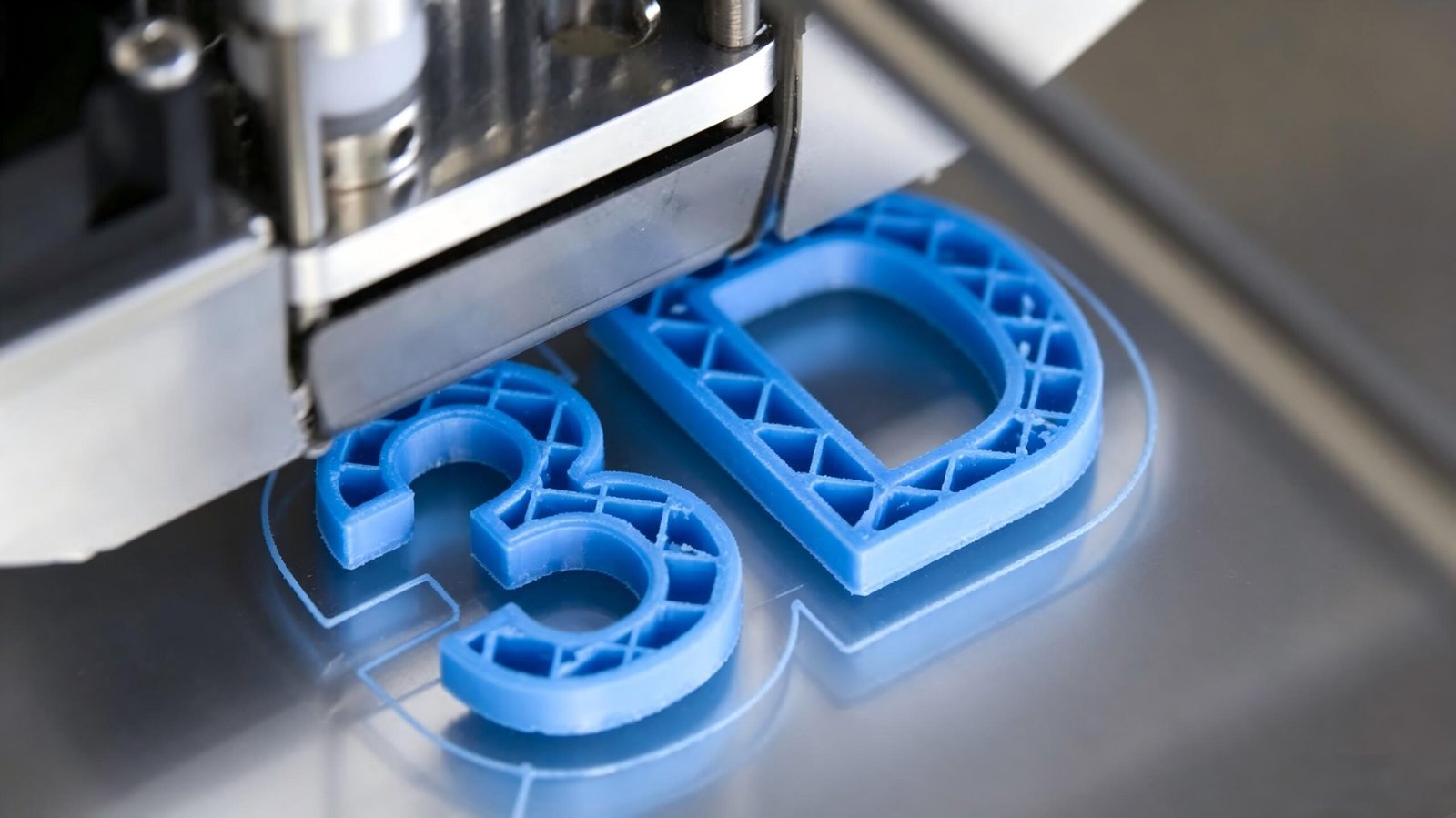
Não existe uma configuração única que determine se um componente impresso em 3D será forte ou fraco.
Uma maneira melhor de pensar sobre a resistência da peça é:
Material + Geometria + Orientação + Paredes + Preencher + Parâmetros do processo + Controle de qualidade
Compreender como esses fatores interagem é essencial na produção de peças funcionais em vez de modelos decorativos.
Seleção de Materiais: Comece com o material de impressão 3D certo
A seleção de materiais deve ser uma das primeiras decisões ao projetar um componente funcional impresso em 3D.
Diferentes materiais proporcionam diferentes combinações de:
Resistência à tracção
Rigidez
Resistência ao impacto
Flexibilidade
Resistência ao calor
Resistência química
Resistência ao desgaste
Resistência à fadiga
Estabilidade dimensional
Por exemplo, o náilon é comumente selecionado para componentes que exigem resistência, resistência ao desgaste, e carregamento mecânico repetido, enquanto os polímeros reforçados com fibra de carbono são frequentemente selecionados quando o desempenho de alta rigidez em relação ao peso é importante.
PLA: Bom para protótipos e peças de uso geral
O PLA é um dos materiais mais fáceis de imprimir e é amplamente utilizado para:
Modelos conceituais
Protótipos visuais
Jogos
Componentes de baixo estresse
Peças de demonstração
Suas vantagens incluem boa rigidez, facilidade de impressão, e estabilidade dimensional relativamente boa.
No entanto, O PLA nem sempre é a melhor escolha para peças expostas a altas temperaturas, impacto, ou carregamento mecânico contínuo.
PETG: Resistente e versátil
PETG fornece uma combinação útil de:
Resistência
Flexibilidade moderada
Resistência química
Facilidade de impressão
Pode ser adequado para protótipos funcionais, alojamentos, colchetes, capas protetoras, e muitos componentes industriais em geral.
abdômen: Bom para resistência ao calor e ao impacto
O ABS é comumente usado quando um componente precisa de melhor desempenho de impacto e temperatura do que o PLA.
No entanto, ABS é mais sensível à contração térmica e empenamento, portanto, o gabinete da impressora e o gerenciamento térmico podem se tornar importantes.
Nylon: Resistência e durabilidade mecânica
O nylon é particularmente útil para peças que apresentam:
Impacto repetido
Atrito
Estresse mecânico
Vestir
Flexão
É comumente considerado para engrenagens, dobradiças, colchetes, componentes móveis, e outras peças funcionais.
Uma consideração importante é a umidade. O nylon é higroscópico, portanto, o controle de umidade é essencial para uma qualidade de impressão e desempenho mecânico consistentes.
Materiais Reforçados com Fibra de Carbono
Materiais preenchidos com fibra de carbono podem aumentar significativamente a rigidez e reduzir a deformação.
O ponto importante é que o material mais forte não é necessariamente o melhor material. A escolha correta depende do ambiente operacional real e dos requisitos mecânicos.
Como aumentar a resistência das peças impressas em 3D por meio do design
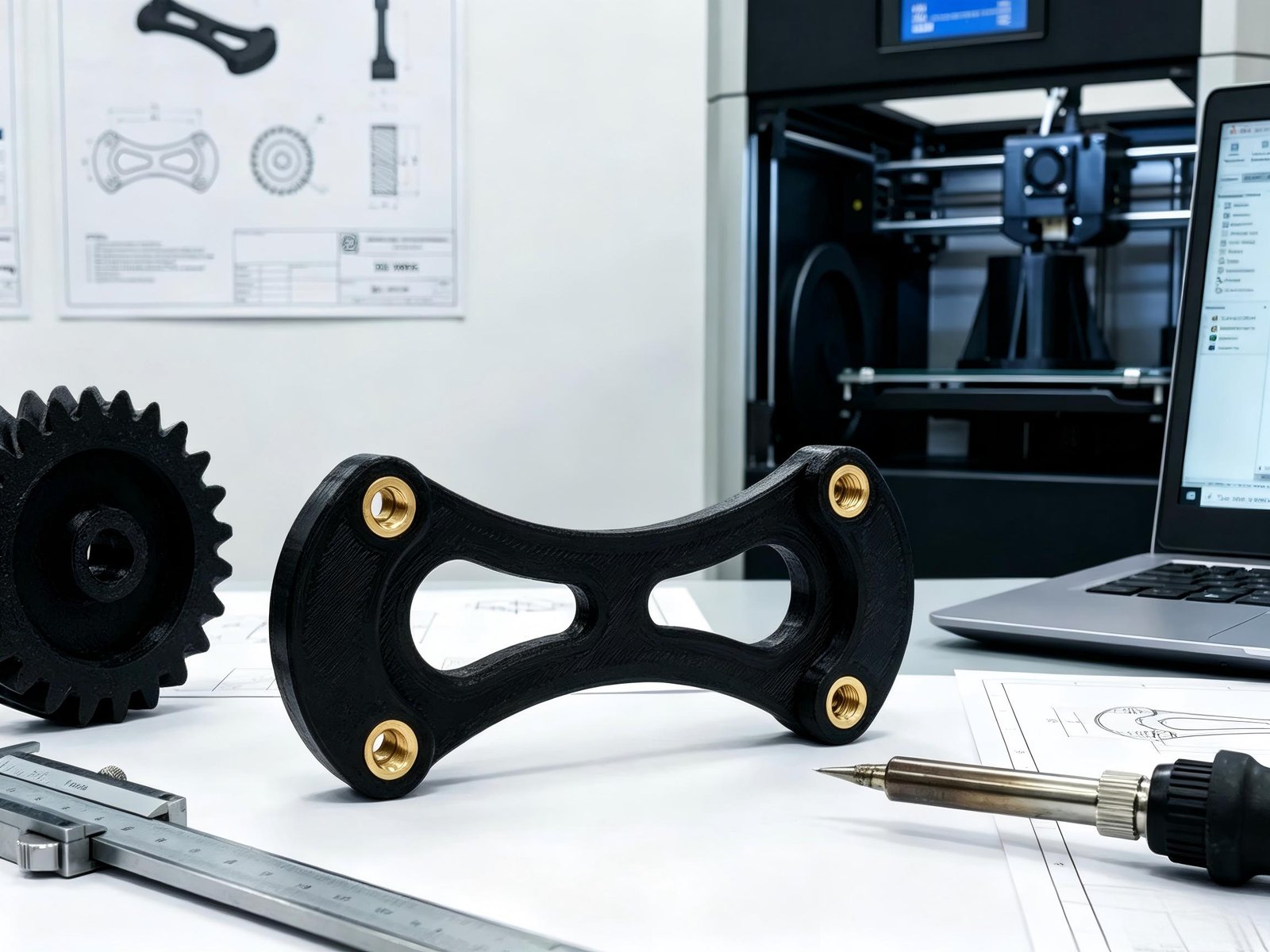
A seleção de materiais é apenas parte da solução.
Uma peça bem projetada muitas vezes pode alcançar melhor desempenho sem simplesmente aumentar a quantidade de material utilizado.
Aumentar a espessura da parede
As paredes externas de um componente FDM podem ter uma grande influência no seu desempenho mecânico.
O aumento da espessura da parede pode melhorar a resistência a:
Dobrando
Rachadura
Impacto
Deformação local
Carregamento de tração
Para muitas peças, aumentar o número de perímetros pode ser mais eficiente do que simplesmente aumentar o preenchimento.
É por isso que um componente forte impresso em 3D não deve ser projetado apenas com base na porcentagem de preenchimento.
Aumente o número de perímetros
Perímetros são as linhas de extrusão externas que formam a casca do componente.
Aumentar a contagem do perímetro pode fortalecer:
Suportes
Pontos de montagem
Caixas
Paredes estruturais
Bordas
Buracos
O número ideal depende da geometria e do carregamento, mas o princípio da engenharia é simples:
Use o casco estrategicamente para transportar cargas externas, em vez de preencher todo o volume interno desnecessariamente.
É também por isso 100% o preenchimento não deve ser automaticamente considerado a solução mais forte. Em muitos projetos FDM, paredes externas têm uma grande influência na flexão, tração, e desempenho de torção.
Adicione filetes para reduzir a concentração de estresse
Cantos internos afiados podem criar concentrações de tensão.
Quando um componente é submetido a flexão ou carregamento cíclico, essas áreas podem se tornar pontos de iniciação de fissuras.
Para componentes mecânicos, isso geralmente é uma melhoria de projeto mais eficaz do que simplesmente aumentar o preenchimento.
Reforce as áreas de alto estresse
Nem todas as regiões de uma peça precisam da mesma quantidade de material.
Mais material onde ocorre a carga + menos material onde não.
Esse princípio é especialmente valioso quando o objetivo é reduzir o peso e os custos de fabricação.
O preenchimento mais alto torna uma peça impressa em 3D mais forte?
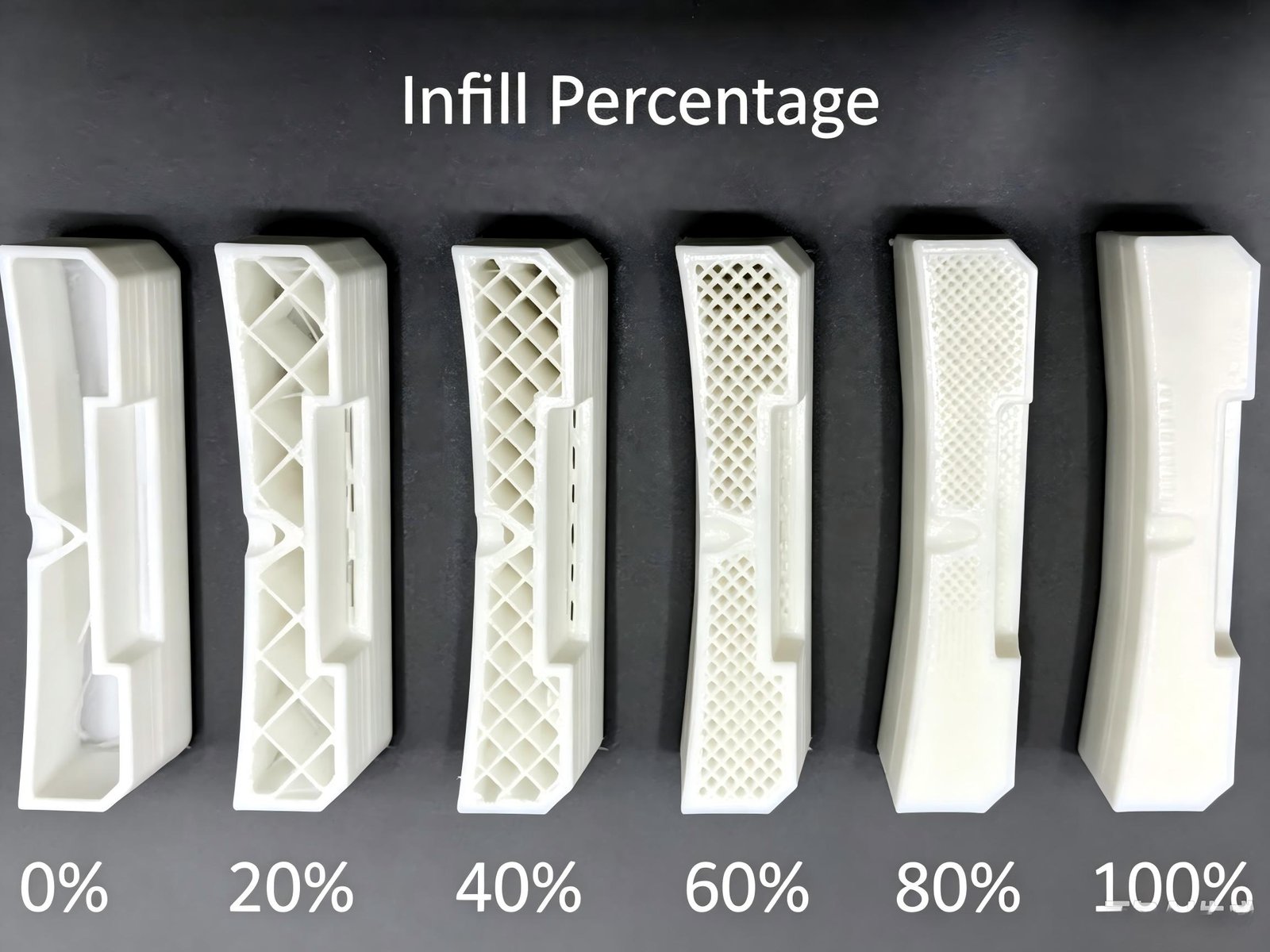
Geralmente, aumentar o preenchimento pode aumentar o suporte estrutural e a resistência à compressão, mas preenchimento mais alto não produz automaticamente resistência proporcionalmente maior.
Por exemplo, aumentando um componente de 20% para 40% o preenchimento pode produzir uma melhoria de desempenho útil, enquanto aumenta de 70% para 90% pode fornecer muito menos benefícios adicionais em relação ao material adicional e ao tempo de impressão.
As orientações práticas atuais também enfatizam que mais preenchimento nem sempre significa uma parte mais forte, particularmente quando a espessura da parede e os caminhos de carga não foram otimizados.
Qual densidade de preenchimento você deve usar para peças impressas em 3D fortes?
Não há porcentagem de preenchimento universal.
Como estrutura inicial:
| Aplicativo | Faixa de preenchimento inicial | Prioridade Típica |
| Modelos decorativos | 0–15% | Velocidade e economia de material |
| Protótipos visuais | 10–20% | Aparência e velocidade |
| Protótipos gerais | 15–30% | Desempenho equilibrado |
| Peças funcionais | 20–40% | Força e eficiência |
| Componentes para serviços pesados | 40–60%+ | Desempenho estrutural |
| Componentes altamente compactados | 60–100% | Resistência à compressão |
Estes são pontos de partida e não especificações de engenharia garantidas.
Para um componente crítico, a densidade correta deve ser estabelecida através da análise de projeto, teste de protótipo, ou validação específica do aplicativo.
Escolhendo o padrão de preenchimento correto
A densidade é apenas uma parte da equação.
A geometria interna também pode influenciar como as cargas são distribuídas por todo o componente.
Giroide
Gyroid fornece uma estrutura tridimensional contínua e é frequentemente considerado para componentes funcionais que requerem suporte multidirecional.
Cúbico
Cubic cria uma rede tridimensional e pode ser útil para componentes mecânicos sujeitos a cargas complexas.
Grade
A grade é relativamente simples e pode fornecer um equilíbrio eficaz entre resistência e eficiência de impressão.
Retilíneo
Retilíneo usa caminhos lineares relativamente simples e pode ser útil quando a velocidade de impressão e a eficiência do material são importantes.
Concêntrico
Concêntrico segue o formato das paredes externas e pode ser útil para geometrias específicas e aplicações flexíveis.
O princípio importante é:
Não selecione um padrão de preenchimento simplesmente porque ele é comercializado como “forte”. Selecione-o de acordo com o caso de carga real.
A pesquisa também mostrou que tanto o padrão de preenchimento quanto a orientação de construção influenciam as propriedades mecânicas das peças FDM, reforçando a importância de avaliar toda a estratégia de impressão em vez de um único parâmetro de segmentação.
Espessura da parede vs.. Preencher: Qual você deve aumentar primeiro?
Esta é uma das perguntas mais comuns quando se tenta fortalecer uma peça FDM.
Em muitos casos, aumentar a espessura da parede ou a contagem do perímetro é um primeiro passo melhor do que aumentar drasticamente o preenchimento.
Considere um suporte que falha porque a parede externa racha em torno de um orifício de montagem.
Aumentando o preenchimento de 20% para 60% pode adicionar material significativo dentro do braquete sem abordar adequadamente o local da trinca.
A orientação da impressão tem um efeito importante na resistência
As peças FDM são inerentemente anisotrópicas porque são construídas camada por camada.
Isto significa que o comportamento mecânico pode diferir dependendo da direção da carga aplicada em relação às camadas impressas.
Se a carga for aplicada em uma direção que tende a separar as camadas, o componente pode ser significativamente mais fraco do que se a carga fosse transportada principalmente dentro dos caminhos do filamento depositado.
Portanto, a orientação da impressão deve ser considerada durante o projeto CAD – e não após a conclusão do projeto.
Um processo de design prático é:
Carga esperada → Direção da carga → Orientação da peça → Direção da camada → Geometria estrutural
Por exemplo, se for esperado que um suporte sofra flexão, a orientação deve ser selecionada de modo que a carga crítica seja suportada da forma mais eficaz possível pela estrutura impressa.
A orientação de construção é um fator reconhecido no desempenho mecânico do FDM, juntamente com padrão de preenchimento e parâmetros de processo.
Como a temperatura de impressão afeta a resistência da peça
A temperatura afeta diretamente o fluxo do material e a ligação entre camadas na impressão termoplástica.
Se a temperatura do bico estiver muito baixa:
O material pode não fluir corretamente
A ligação da camada pode ser ruim
Pode ocorrer subextrusão
Vazios podem aparecer
Se a temperatura estiver muito alta:
Pode ocorrer extrusão excessiva
A geometria pode se tornar menos precisa
A amarração pode aumentar
A degradação do material pode se tornar uma preocupação
Portanto, a temperatura correta deve ser estabelecida de acordo com o material específico, impressora, bocal, e condições de processo.
Como a velocidade de impressão afeta a resistência
Alta velocidade de impressão pode melhorar a produtividade, mas a velocidade excessiva pode comprometer a consistência da deposição e a ligação da camada.
Para peças mais fortes, considerar:
Reduzindo a velocidade em áreas críticas
Manter o fluxo de fusão adequado
Garantindo ligação térmica suficiente
Velocidade correspondente ao diâmetro do bico e ao material
Um processo de produção deve equilibrar:
Força + Tempo de ciclo + Precisão dimensional + Custo
O objetivo não é necessariamente a impressão mais lenta.
É o processo mais rápido que atende consistentemente às especificações exigidas.
Resfriamento e adesão de camadas
O resfriamento tem um papel particularmente importante na impressão termoplástica.
Muito resfriamento pode reduzir a ligação entre camadas em alguns materiais, enquanto o resfriamento insuficiente pode criar:
Deformação
Ponte ruim
Superaquecimento
Problemas dimensionais
Perfis de resfriamento específicos do material são, portanto, importantes.
Por exemplo, materiais como ABS e náilon geralmente exigem estratégias de gerenciamento térmico diferentes do PLA.
Problemas comuns que tornam as peças impressas em 3D fracas
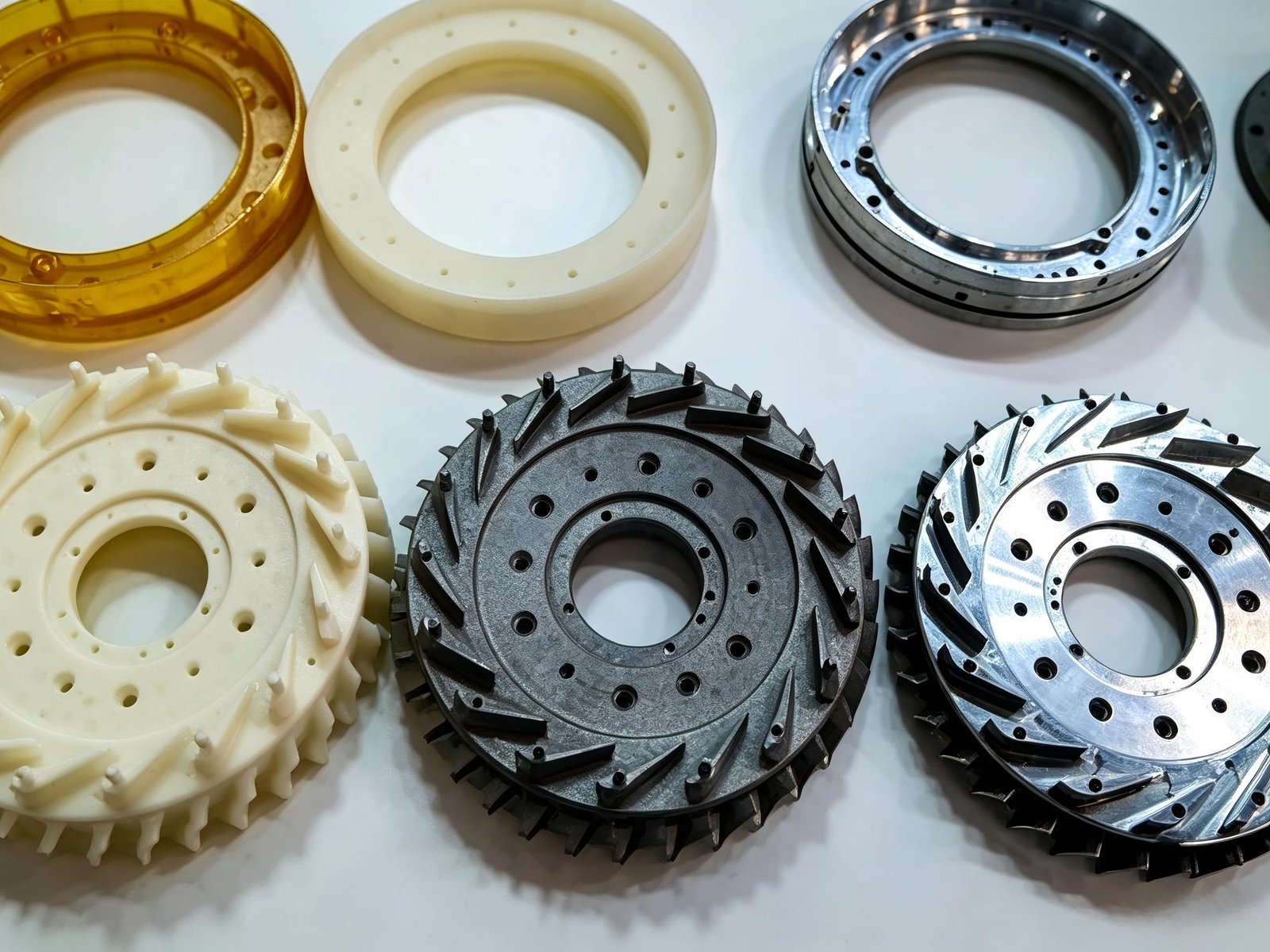
Deformação
A deformação ocorre quando a contração térmica faz com que partes da peça se levantem ou se deformem.
Possíveis soluções incluem:
Placa de construção aquecida
Gabinete
Melhor adesão à cama
Orientação de impressão apropriada
Controle térmico específico do material
Adesão fraca ao leito
Se a primeira camada não aderir corretamente, toda a parte pode ser comprometida.
Subextrusão
Subextrusão significa que material insuficiente é depositado.
O resultado pode ser:
Vazios
Paredes fracas
Má ligação da camada
Preenchimento incompleto
Má ligação da camada
Se as camadas adjacentes não se unirem adequadamente, o componente pode se dividir ao longo das linhas da camada.
Quando a falha segue a interface da camada, simplesmente aumentar o preenchimento pode não resolver o problema. O processo em si precisa ser corrigido.
Como tornar as peças impressas em 3D mais resistentes sem aumentar os custos
Uma parte forte não precisa necessariamente conter mais material.
Em vez de, otimizar o material onde ele proporciona o maior benefício estrutural.
1. Otimize a orientação de impressão
Mudar a orientação pode melhorar a resistência sem aumentar o consumo de material.
2. Aumentar perímetros
Adicionar um ou dois perímetros adicionais pode, às vezes, fornecer um reforço mais útil do que um grande aumento no preenchimento.
3. Adicione costelas e filés
Melhore o caminho da carga através da geometria em vez de simplesmente adicionar volume.
4. Use reforço local
Concentre o material ao redor dos furos de montagem, cantos, e áreas de suporte de carga.
5. Selecione um material mais adequado
Um material mais resistente ou mais rígido pode proporcionar melhor desempenho do que simplesmente aumentar a quantidade de um material mais fraco..
6. Use preenchimento variável ou adaptativo
O preenchimento de alta densidade pode ser concentrado em áreas críticas, enquanto áreas menos importantes permanecem leves.
Esta abordagem pode reduzir:
Consumo de materiais
Peso
Tempo de impressão
Custo de produção
mantendo o desempenho necessário.
Qual processo de impressão 3D é melhor para peças funcionais fortes?
FDM não é a única tecnologia de fabricação aditiva disponível.
The best process depends on the required combination of:
Força
Precisão
Acabamento superficial
Material
Volume de produção
Tamanho da peça
Geometria
Custo
Impressão 3D FDM
FDM is attractive because of its:
Broad thermoplastic material selection
Relatively low cost
Simple digital workflow
Suitability for prototypes and functional components
SLA / Impressão 3D em resina
SLA can provide excellent:
Acabamento superficial
Fine details
Dimensional resolution
No entanto, resin mechanical properties vary significantly by formulation and application.
SLS
SLS is particularly useful for polymer functional parts with complex geometries.
Nylon-based SLS materials can provide strong, durable components without conventional support structures.
mjf
Multi Jet Fusion is another option for functional polymer parts. Current manufacturing guidance commonly positions nylon-based MJF as suitable for demanding functional applications where more uniform properties are desirable.
Portanto, if mechanical performance is critical, the question should not simply be:
“What infill should I use?”
It should be:
“Which material and additive manufacturing process are best suited to the required performance?”
3D Peças impressas para prototipagem vs.. Aplicativos de uso final
The optimization strategy changes according to the purpose of the part.
Protótipos Rápidos
Main priorities:
Speed → Cost → Basic Functionality
Low-to-medium infill and fast printing parameters may be appropriate.
Protótipos Funcionais
Main priorities:
Mechanical Performance → Dimensional Accuracy → Cost → Speed
O material, orientação, paredes, and infill need more careful optimization.
Peças de uso final
Main priorities:
Reliability → Mechanical Performance → Repeatability → Environmental Resistance
Para essas aplicações, engineering validation becomes much more important.
Examples of real-world functional 3D printed applications include automotive brackets, drone components, gabaritos, jogos, gabinetes eletrônicos, dobradiças, and replacement machine components.
Perguntas frequentes sobre peças impressas em 3D resistentes
Qual é o material mais resistente para impressão 3D?
There is no single strongest material for every application. Nylon and carbon-fiber-reinforced polymers are frequently considered for demanding functional components, while materials such as PETG and ABS can be better choices for specific combinations of toughness, temperature resistance, custo, and printability.
O preenchimento mais alto torna uma impressão 3D mais forte?
Geralmente, higher infill can improve certain aspects of mechanical performance, mas a relação não é linear. Espessura da parede, orientação de impressão, material, and layer adhesion can be equally or more important depending on the load case.
Qual é a melhor densidade de preenchimento para peças impressas em 3D fortes?
There is no universal value. A practical starting point for many functional parts is around 20–40%, but demanding components may require substantially more or may benefit more from additional perimeters and better geometry.
A espessura da parede é mais importante que o preenchimento?
Para muitos componentes FDM, increasing wall thickness or perimeter count can be a very effective way to improve strength, particularly for bending, tensão, and loads concentrated near external surfaces.
Qual é o padrão de preenchimento de impressão 3D mais forte?
There is no universal strongest pattern. Giroide, cubic, grid, and other patterns have different structural characteristics. The correct choice depends on geometry, loading direction, material, and print orientation.
A orientação da impressão afeta a resistência da peça impressa em 3D?
Sim. FDM parts are built layer by layer, so mechanical properties can vary with build orientation and layer direction.
Como posso melhorar a adesão da camada?
Start by checking nozzle temperature, extrusão, resfriamento, print speed, and material moisture. Moisture-sensitive materials such as nylon require particular attention to drying and storage.
Por que minhas peças impressas em 3D são quebradiças?
Potential causes include:
Unsuitable material
Excessive cooling
Má ligação da camada
Under-extrusion
Incorrect temperature
Umidade
Poor print orientation
Stress concentrations in the CAD design
The correct solution depends on where and how the part is failing.
Como posso tornar uma peça impressa em 3D mais resistente sem torná-la mais pesada?
Focar em structural efficiency rather than simply adding material.
Possible approaches include:
Melhor orientação de impressão
Additional perimeters
Filetes
Costelas
Local reinforcement
Stronger materials
Optimized infill
Variable-density structures
As peças impressas em 3D podem ser usadas como componentes de uso final??
Sim. With appropriate material selection, manufacturing technology, otimização de projeto, controle de processo, and validation, 3D printed components can be used for functional and end-use applications. Current industrial applications include brackets, jogos, alojamentos, dobradiças, ferramentas, and replacement machine components.
Conclusão: Peças impressas em 3D fortes exigem mais do que preenchimento superior
Producing stronger 3D printed parts is not simply a matter of increasing infill to 50%, 80%, ou 100%.
The best results come from optimizing the entire manufacturing system:
Material + Projeto CAD + Espessura da Parede + Preencher + Print Orientation + Temperatura + Velocidade + Layer Adhesion + Controle de qualidade
The most effective approach is therefore not:
“How much more material can I put into this part?”
Isso é:
“Where does this part need strength, what causes it to fail, and what is the most efficient way to reinforce it?”
For an engineering evaluation, provide your 2D drawing or 3D CAD file, necessidade de materiais, estimated quantity, critical tolerances, and application/load requirements. This allows Precisão máxima to recommend the appropriate 3D printing process and optimize the design for força, precisão dimensional, custo, and production repeatability.


