



Ao investir em um sistema de display LED, muitos compradores se concentram principalmente no tamanho dos pixels, brilho, e qualidade de exibição. No entanto, um dos componentes mais críticos, mas muitas vezes esquecidos, é o gabinete da tela LED.
Um gabinete de tela LED serve como base estrutural de um display LED. Suporta módulos LED, protege a eletrônica interna, garante a dissipação de calor, facilita a manutenção, e afeta diretamente o desempenho geral e a vida útil da tela.
Este guia completo explica tudo o que você precisa saber sobre gabinetes de tela LED, incluindo seus componentes, materiais, processos de fabricação, aplicações, critérios de seleção, e requisitos de manutenção.
O que é um gabinete de tela LED?
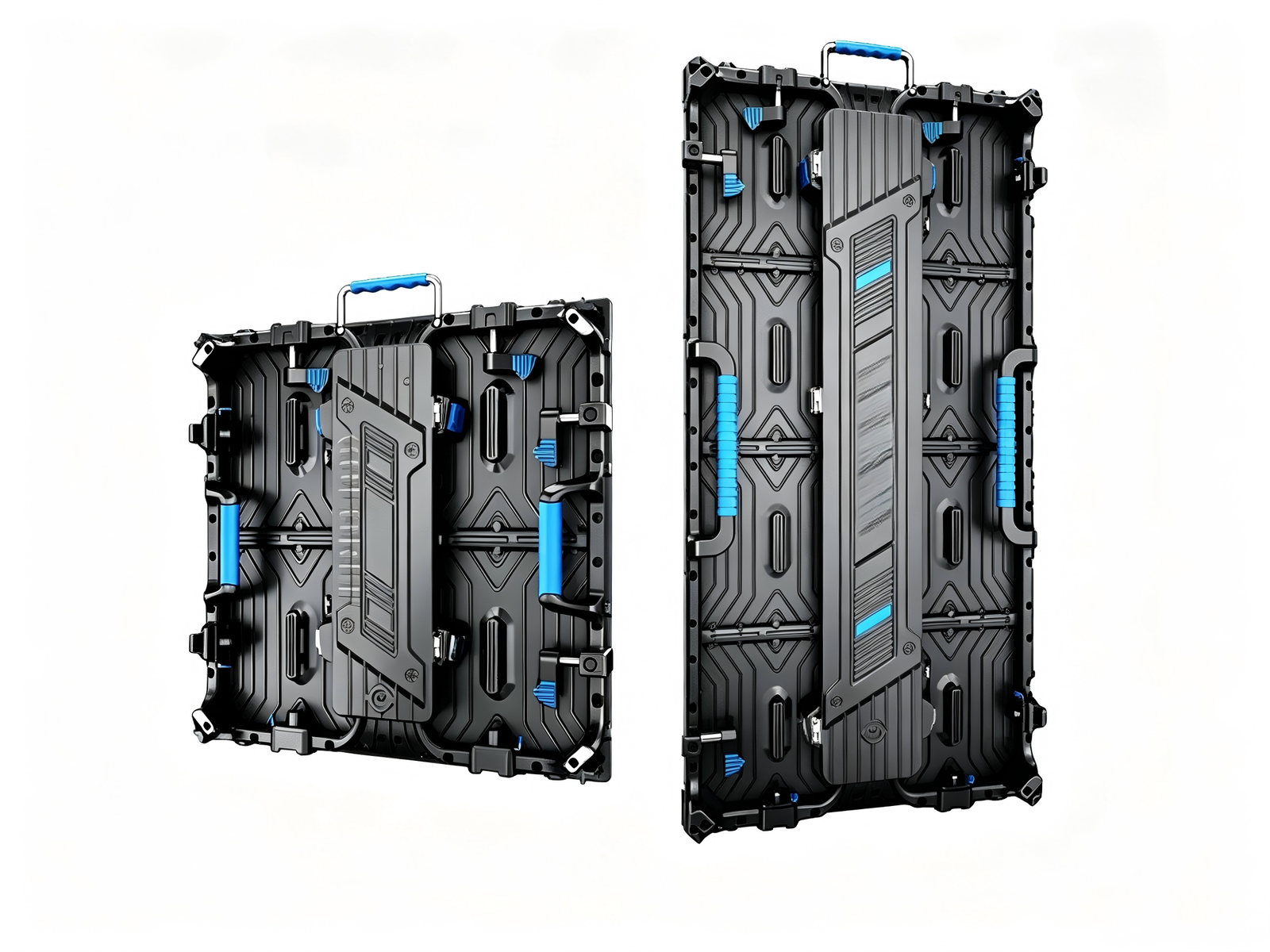
Um gabinete de tela LED, também conhecido como gabinete de display LED ou gabinete de display LED, é o alojamento estrutural que contém e suporta os vários componentes do um sistema de display LED.
O gabinete serve como estrutura que mantém:
Módulos LED
Fontes de alimentação
Recebendo cartões
Placas HUB
Sistemas de refrigeração
Cabos de sinal
Cabos de alimentação
Sistemas de proteção
Sem um gabinete devidamente projetado, mesmo os módulos LED da mais alta qualidade não conseguem atingir o desempenho de exibição ideal.
Principais componentes de um gabinete de tela LED
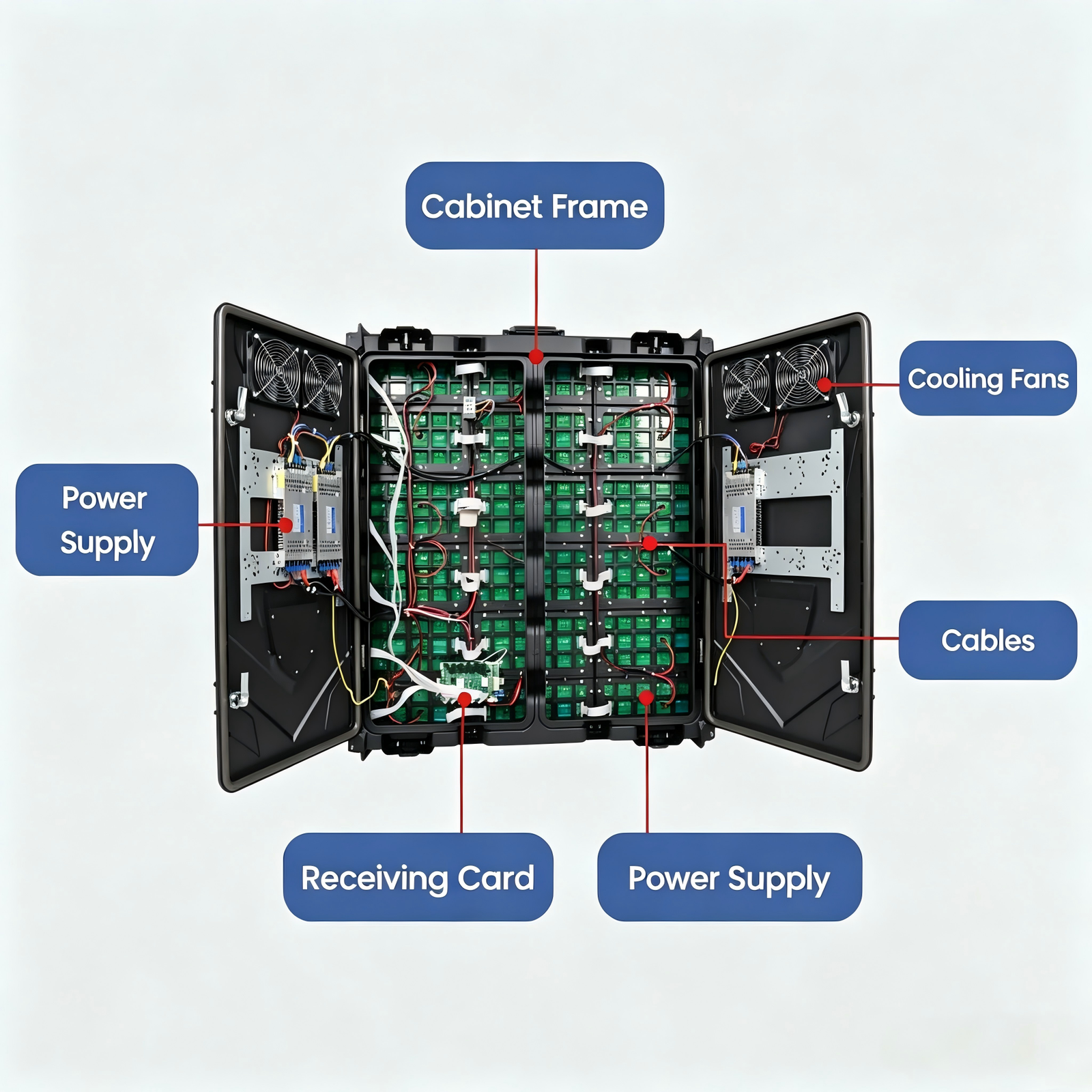
Estrutura do gabinete
A estrutura do gabinete é o principal componente estrutural da tela.
Funções principais
Suporta todos os componentes internos
Mantém a estabilidade estrutural
Garante o nivelamento da tela
Facilita a conexão do gabinete
Fatores importantes de design
Força mecânica
Precisão dimensional
Otimização de peso
Resistência à corrosão
A usinagem CNC de precisão é comumente usada para obter tolerâncias restritas e alinhamento perfeito do painel.
Módulos LED
Os módulos LED são montados diretamente na superfície do gabinete e geram o conteúdo visual exibido na tela.
Cada módulo consiste em:
Chips LED
Placas de PCB
CIs de driver
Conectores
O gabinete deve suportar os módulos com segurança, mantendo o alinhamento perfeito.
Sistema de alimentação
A fonte de alimentação converte a energia elétrica recebida em tensão estável para operação do LED.
Requisitos
Alta eficiência
Saída estável
Proteção contra surtos
Longa vida útil
Aplicações externas normalmente exigem fontes de alimentação à prova d'água.
Cartão de recebimento e placa HUB
Esses componentes eletrônicos gerenciam a transmissão do sinal.
Funções do Cartão de Recebimento
Recebe sinais de vídeo
Processa dados de exibição
Controla módulos LED
Funções da placa HUB
Distribui poder
Simplifica a fiação
Melhora a confiabilidade
Juntos, eles garantem uma reprodução precisa da imagem.
Sistema de resfriamento
Os displays LED geram calor considerável durante a operação.
O gerenciamento térmico adequado evita:
Degradação de brilho
Inconsistência de cores
Falhas eletrônicas
Vida útil reduzida
Métodos comuns de resfriamento
Convecção Natural
Adequado para displays internos.
Resfriamento por Ventilador
Comum em displays externos.
Gerenciamento térmico avançado
Usado em telas de alto brilho e de grande formato.
Sistemas de travamento e montagem
Os gabinetes de LED modernos geralmente incluem mecanismos de travamento rápido.
Benefícios
Instalação mais rápida
Alinhamento aprimorado
Custos trabalhistas reduzidos
Melhor integridade estrutural
Esses sistemas são particularmente valiosos para telas LED de aluguel.
Componentes impermeáveis e protetores
Armários LED para exteriores incorporam:
Tiras de vedação de borracha
Juntas impermeáveis
Barreiras à prova de poeira
Revestimentos resistentes à corrosão
Esses recursos ajudam a alcançar classificações de proteção como IP65 ou superior.
Tipos de gabinetes de tela LED
Armários LED internos
Armários internos são projetados para ambientes controlados.
Características
Construção leve
Perfil fino
Alta precisão
Excelente planicidade
Formulários
Lojas de varejo
Shopping centers
Salas de conferência
Lobbys corporativos
Estúdios de transmissão
Armários LED para exteriores
Armários externos devem sobreviver a condições ambientais adversas.
Características
Design à prova d'água
Resistência à poeira
Resfriamento aprimorado
Alta resistência estrutural
Formulários
Outdoors
Estádios
Centros de transporte
Fachadas de edifícios
Aluguel de gabinetes LED
Os displays de aluguel priorizam a mobilidade e a implantação rápida.
Características
Materiais leves
Sistemas de bloqueio rápido
Construção modular
Alta durabilidade
Formulários
Concertos
Exposições
Feiras
Eventos ao vivo
Apresentações corporativas
Gabinetes LED de serviço frontal
Esses gabinetes permitem a manutenção pela parte frontal.
Vantagens
Economia de espaço
Manutenção mais fácil
Ideal para instalações montadas na parede
Formulários
Displays de varejo
Telas de publicidade interna
Aeroportos
Hotéis
Gabinetes LED de serviço traseiro
A manutenção é realizada pela parte traseira.
Vantagens
Menor custo de fabricação
Estrutura mais simples
Melhor ventilação
Formulários
Expositores externos
Telas de estádio
Grandes outdoors digitais
Armários de Instalação Fixa
Projetado para projetos permanentes.
Benefícios
Alta durabilidade
Eficiência de custos
Longa vida útil
Formulários
Publicidade comercial
Projetos governamentais
Exibições de cidades inteligentes
Armários LED Curvos
Armários curvos permitem designs de exibição criativos.
Exibir formas
Curvas convexas
Curvas côncavas
Telas circulares
Desenhos de ondas
Formulários
Museus
Salas de exposição
Lojas de varejo de luxo
Centros de experiência de marca
Materiais comuns usados para gabinetes de LED
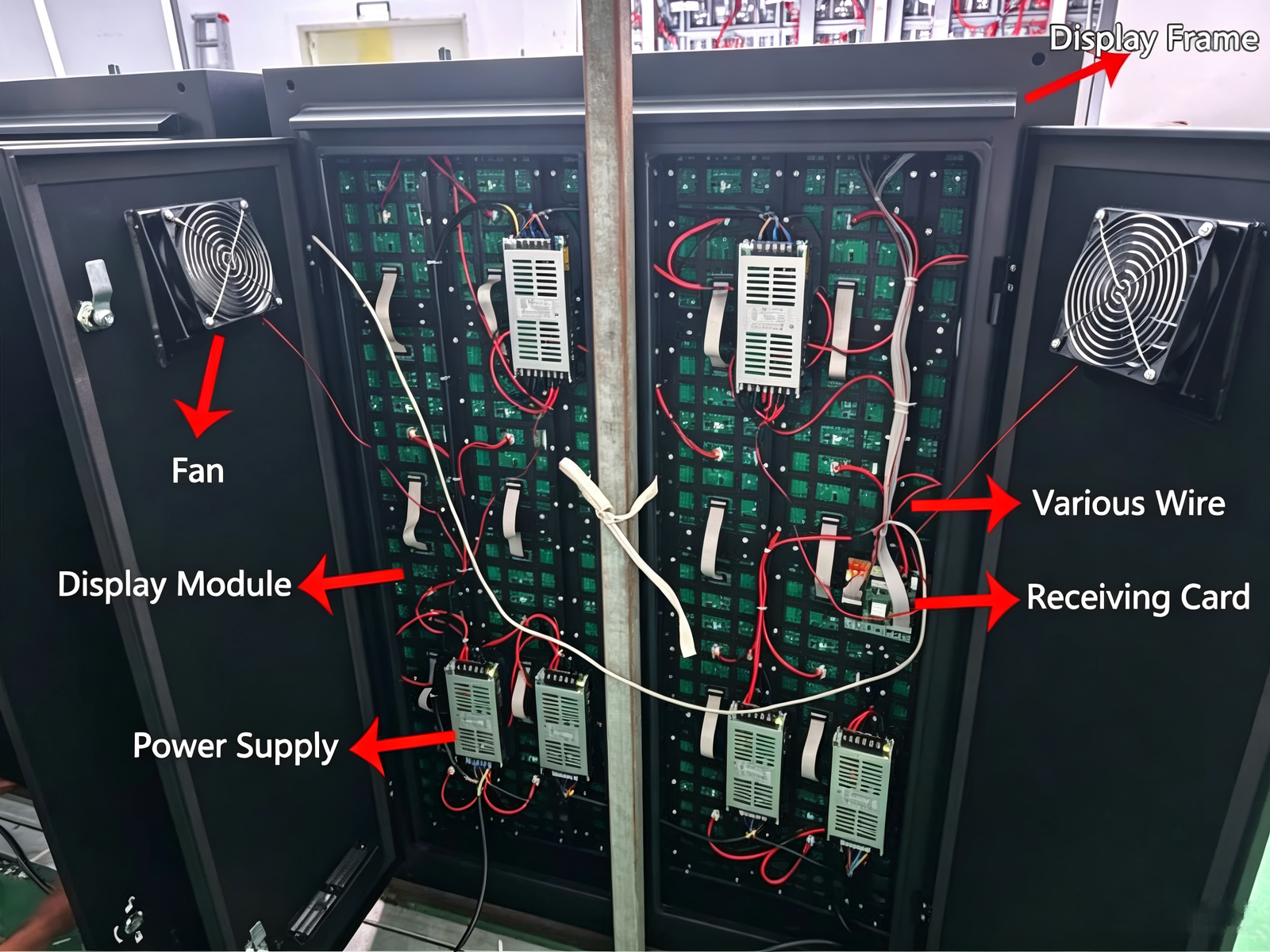
A seleção de materiais afeta significativamente o desempenho, peso, durabilidade, e custo.
Alumínio fundido Armários
O padrão da indústria para telas LED premium.
Vantagens
Leve
Excelente dissipação de calor
Alta precisão
Resistência à corrosão
Melhores aplicativos
Expositores para aluguel
Telas de pitch fino
Instalações de alto padrão
Limitações
Maior custo de fabricação
Armários de aço
Uma opção econômica para grandes projetos.
Vantagens
Força elevada
Menor custo de material
Excelente durabilidade
Melhores aplicativos
Outdoors ao ar livre
Grandes instalações fixas
Limitações
Peso pesado
Transporte mais difícil
Liga de magnésio Armários
Um material leve e avançado.
Vantagens
Extremamente leve
Excelente rigidez
Excelente dissipação de calor
Melhores aplicativos
Expositores de aluguel premium
Projetos de exibição de nível aeroespacial
Limitações
Maior custo de material
Armários de alumínio extrudado
Uma solução equilibrada entre custo e desempenho.
Vantagens
Peso moderado
Boa estabilidade estrutural
Excelente resistência à corrosão
Melhores aplicativos
Exibições internas
Sinalização comercial
Sistemas de transporte
Processo de fabricação de gabinete de LED
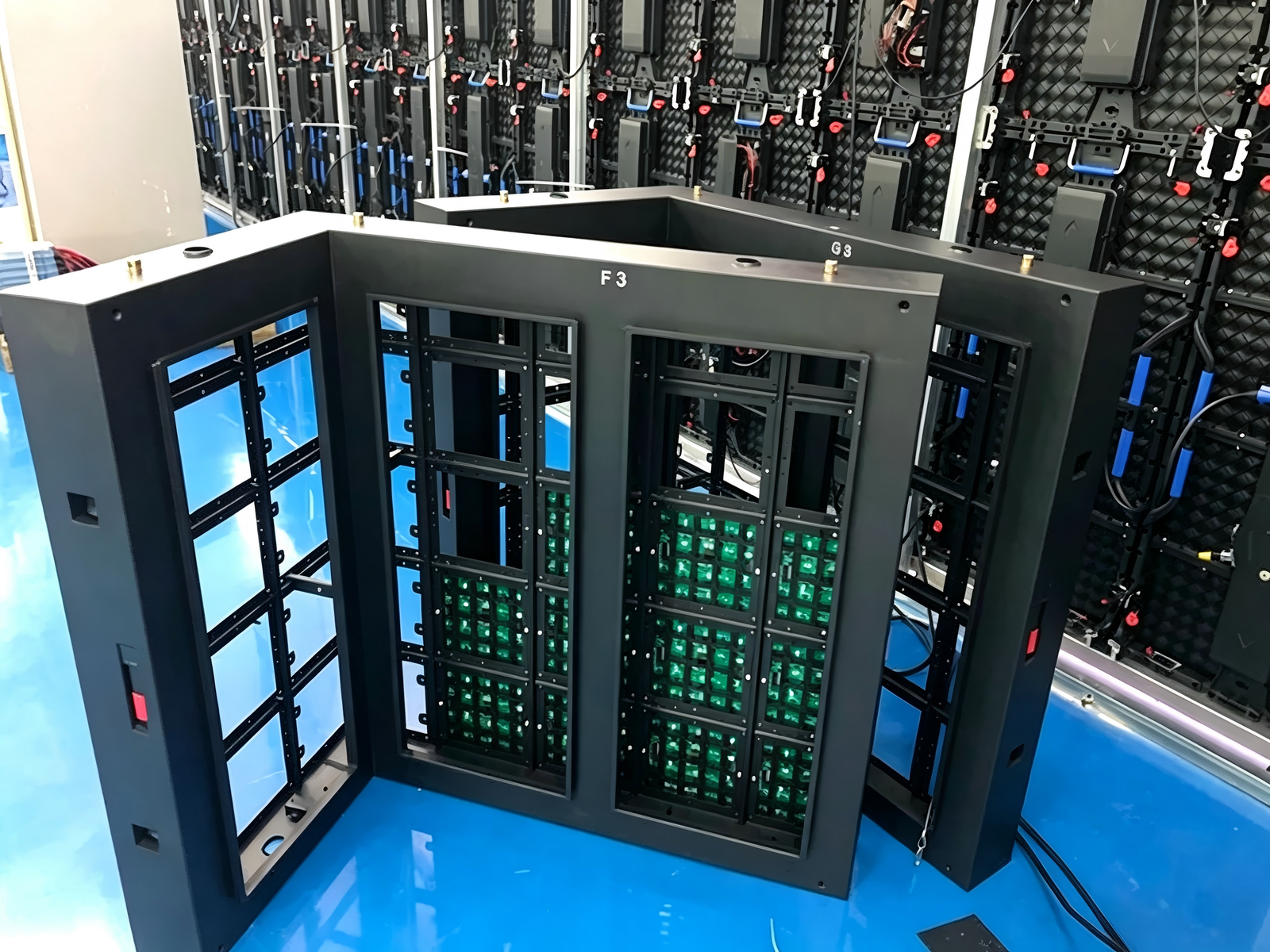
Compreender o processo de fabricação ajuda os compradores a avaliar as capacidades do fornecedor.
Engenharia de Projetos
Engenheiros desenvolvem:
Desenhos estruturais
Simulações térmicas
Cálculos de carga
Planos de instalação
Seleção de Materiais
A escolha do material depende:
Orçamento
Requisitos de peso
Condições ambientais
Tipo de aplicativo
Usinagem CNC
A usinagem CNC de precisão cria:
Superfícies de montagem
Recursos de alinhamento
Interfaces de conexão
A alta precisão de usinagem garante uma montagem perfeita da tela.
Fabricação de chapas metálicas
Os processos incluem:
Corte a laser
Soco
Dobrando
Formando
Soldagem e Montagem
Soldagem profissional garante:
Resistência estrutural
Consistência dimensional
Durabilidade a longo prazo
Tratamento de superfície
Revestimento em pó
Fornece:
Resistência à corrosão
Aparência melhorada
Maior durabilidade
Anodização
Comum para armários de alumínio.
Tratamento Anticorrosivo
Essencial para aplicações externas.
Inspeção de qualidade
Os fabricantes normalmente realizam:
Inspeção dimensional
Teste de planicidade
Teste de carga
Teste à prova d'água
Verificação de montagem
Fatores-chave ao escolher um gabinete de tela LED
Aplicação interna ou externa
As condições ambientais determinam os requisitos de design do gabinete.
Requisitos de peso
Armários mais leves reduzem:
Custos de envio
Esforço de instalação
Carga estrutural
Acessibilidade de manutenção
Escolher:
Projetos de serviço frontal para espaços limitados
Projetos de serviço traseiro quando existe espaço de manutenção suficiente
Classificação de proteção
Projetos externos geralmente exigem:
Mínimo IP65
Classificações mais altas para ambientes extremos
Gestão Térmica
O resfriamento eficaz aumenta:
Confiabilidade
Consistência de brilho
Vida útil
Considerações orçamentárias
Equilibrar custo e desempenho é essencial.
Um investimento inicial mais elevado resulta frequentemente em custos de propriedade mais baixos a longo prazo.
Tamanhos de gabinete de LED padrão
Dimensões comuns da indústria incluem:
500 × 500 milímetros
Ideal para aplicações de aluguel.
500 × 1000 milímetros
Popular para exibições de palco e eventos.
Tamanhos personalizados
Usado para:
Exibições arquitetônicas
Instalações criativas
Formatos de tela irregulares
Classificações de proteção do gabinete de LED explicadas
O que é uma classificação IP?
As classificações IP medem a proteção contra:
Pó
Intrusão de água
IP54
Proteção externa básica.
IP65
Padrão da indústria para telas LED externas.
IP67
Adequado para ambientes extremos.
Problemas e soluções comuns de gabinetes de LED
Deformação do gabinete
Causas
Má qualidade do material
Instalação inadequada
Solução
Use gabinetes de alumínio usinados com precisão.
Má dissipação de calor
Causas
Ventilação inadequada
Design de gabinete de baixa qualidade
Solução
Melhore o fluxo de ar e o gerenciamento térmico.
Vazamento de água
Causas
Selos falhados
Design à prova d'água ruim
Solução
Substitua as juntas e melhore os sistemas de vedação.
Falhas na transmissão de sinal
Causas
Cabos danificados
Conexões ruins
Solução
Inspeção e manutenção de rotina.
Indústrias que usam gabinetes com tela de LED
Armários de LED são amplamente utilizados em:
Publicidade digital
Instalações esportivas
Sistemas de transporte
Ambientes de varejo
Shopping centers
Centros de comando
Instalações corporativas
Locais de entretenimento
Museus
Centros de exposições
Como fazer a manutenção de um gabinete com tela de LED
Inspeção Diária
Verificar:
Integridade estrutural
Conexões elétricas
Limpeza de superfície
Procedimentos de limpeza
Usar:
Panos macios
Produtos de limpeza não corrosivos
Ar comprimido para áreas de ventilação
Manutenção à prova d'água
Inspecionar:
Tiras de vedação
Juntas
Juntas impermeáveis
Inspeção de cabos
Verifique regularmente:
Cabos de alimentação
Cabos de sinal
Conectores
Armazenamento adequado
Armazene armários em:
Ambientes secos
Temperaturas controladas
Condições livres de poeira
Por que trabalhar com um fabricante profissional de gabinetes de LED?
Um fabricante profissional oferece:
Experiência em Engenharia
Soluções estruturais personalizadas.
Fabricação Avançada
Usinagem e fabricação CNC de precisão.
Rigoroso controle de qualidade
Qualidade consistente do produto.
Produção mais rápida
Execução eficiente do projeto.
OEM & Serviços ODM
Soluções sob medida para projetos específicos.
Suporte Técnico
Manutenção de longo prazo e assistência de engenharia.
A escolha do parceiro de fabricação certo reduz significativamente o risco do projeto e melhora o desempenho geral do display.
Considerações Finais
Um gabinete de tela LED é muito mais do que um simples gabinete – é a espinha dorsal estrutural de todo o sistema de tela LED. O gabinete certo melhora o nivelamento da tela, protege componentes eletrônicos críticos, aumenta a dissipação de calor, simplifica a manutenção, e prolonga a vida útil da tela.
Se você está comprando um outdoor fixo para exterior, um display de palco para aluguel, ou uma parede de vídeo interna de boa resolução, entendendo os materiais do gabinete, processos de fabricação, classificações de proteção, e os requisitos de manutenção irão ajudá-lo a fazer um investimento mais inteligente.
Para projetos comerciais de grande escala, a parceria com um fabricante experiente de gabinetes de LED garante melhor qualidade, vida útil mais longa, e menores custos totais de propriedade.
FQAé
1.Qual é a vida útil de um gabinete de LED?
Gabinetes de LED de alta qualidade normalmente duram entre 8 e 15 anos dependendo dos materiais, ambiente, e manutenção.
2.Qual material é melhor para gabinetes de LED?
O alumínio fundido é geralmente considerado o melhor equilíbrio de precisão, peso, e durabilidade.
3.Armários leves são melhores para telas de aluguel?
Sim. Armários leves simplificam o transporte, instalação, e desmontagem.
4.Qual classificação IP os gabinetes de LED para exteriores devem ter?
IP65 é geralmente recomendado para a maioria das aplicações externas.
5.Qual é a diferença entre gabinetes de serviço frontal e de serviço traseiro?
Armários de serviço frontal permitem manutenção pela frente, enquanto os gabinetes de serviço traseiro exigem acesso traseiro.
6.Os gabinetes de LED podem ser personalizados?
Sim. Os fabricantes podem personalizar as dimensões, materiais, estruturas, e métodos de montagem.
7.Com que frequência os gabinetes de LED devem ser mantidos?
Recomenda-se uma inspeção visual mensal e uma manutenção abrangente a cada seis meses.
8.Os gabinetes de LED afetam a qualidade da exibição?
Absolutamente. A precisão do gabinete afeta diretamente o nivelamento da tela, alinhamento, e desempenho visual.


