



Ao contrário dos eixos chaveados tradicionais, eixos estriados distribuem cargas por vários dentes, resultando em maior capacidade de torque, maior durabilidade, desgaste reduzido, e maior eficiência operacional. Estas vantagens fazem deles a escolha preferida para aplicações exigentes onde a precisão, força, e longa vida útil são essenciais.
Neste guia abrangente, vamos explorar o que são eixos estriados, como eles funcionam, os diferentes tipos disponíveis, métodos de fabricação, Seleção de material, aplicações industriais, e principais considerações de design.
O que é um eixo estriado?
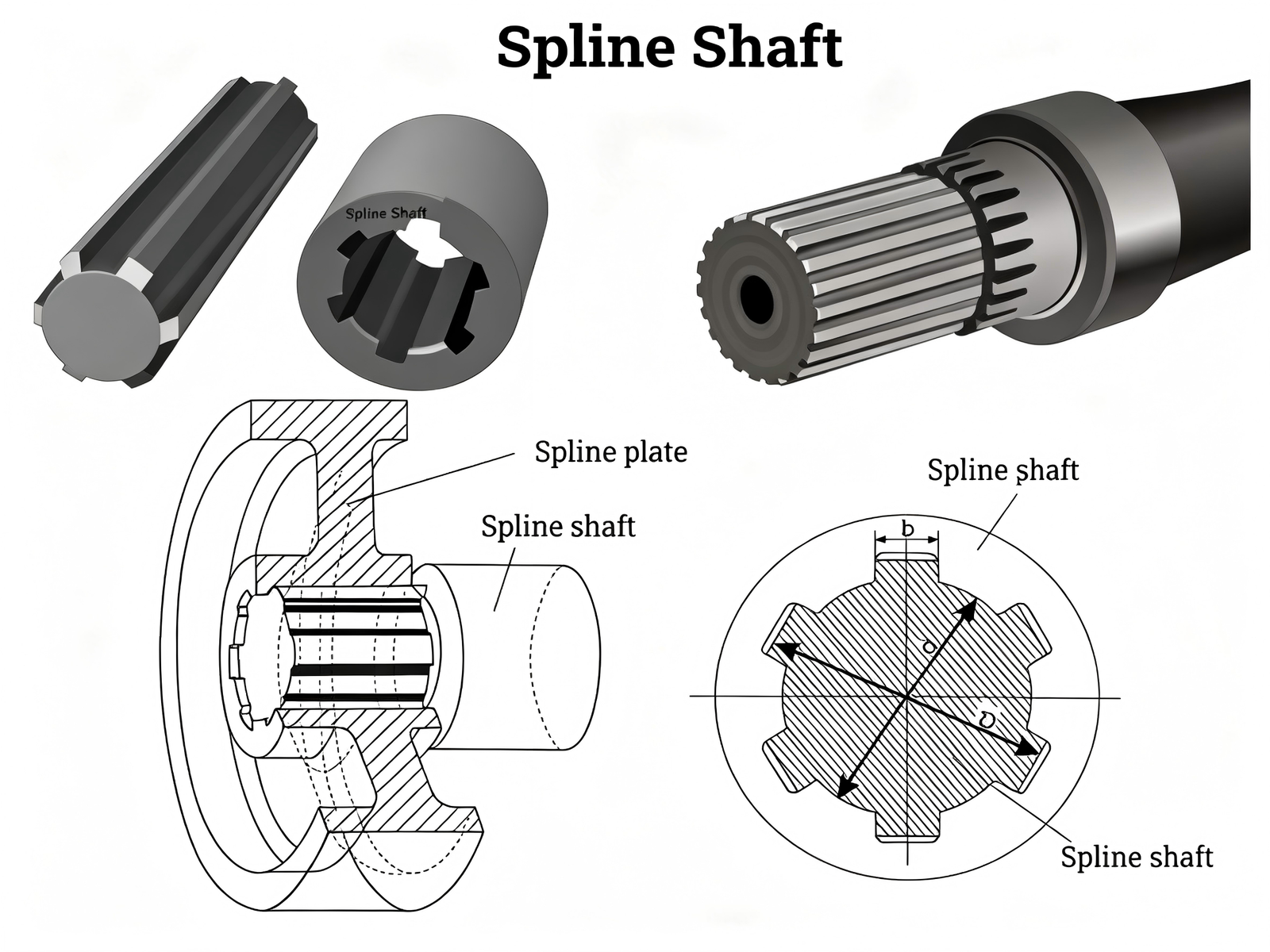
Um eixo estriado é um componente mecânico cilíndrico que apresenta uma série de saliências ou dentes externos conhecidos como estrias. Essas estrias combinam com ranhuras correspondentes dentro de um cubo, engrenagem, acoplamento, polia, ou outro componente mecânico.
Os dentes interligados criam uma conexão mecânica positiva que permite uma transmissão de torque eficiente, mantendo ao mesmo tempo um alinhamento rotacional preciso.
Eixos estriados são amplamente utilizados porque oferecem:
- Capacidade de transmissão de alto torque
- Alinhamento preciso do eixo ao cubo
- Folga reduzida
- Melhor distribuição de carga
- Maior durabilidade
- Capacidade de movimento axial em certos projetos
Principais componentes de um eixo estriado
Um eixo estriado típico consiste em:
Corpo do eixo
A seção cilíndrica central que suporta as estrias e transfere a força rotacional.
Dentes estriados
As saliências elevadas usinadas ao longo da superfície do eixo que engatam nos componentes correspondentes.
Diâmetro Maior
O diâmetro externo medido na parte superior dos dentes estriados.
Diâmetro Menor
O diâmetro medido na raiz dos dentes estriados.
Raio Raiz
A área de transição curva entre os dentes estriados que ajuda a reduzir a concentração de tensão.
Ângulo de Pressão
O ângulo entre as superfícies spline correspondentes que afeta a distribuição de carga e as características de engate.
Como funciona um eixo estriado?
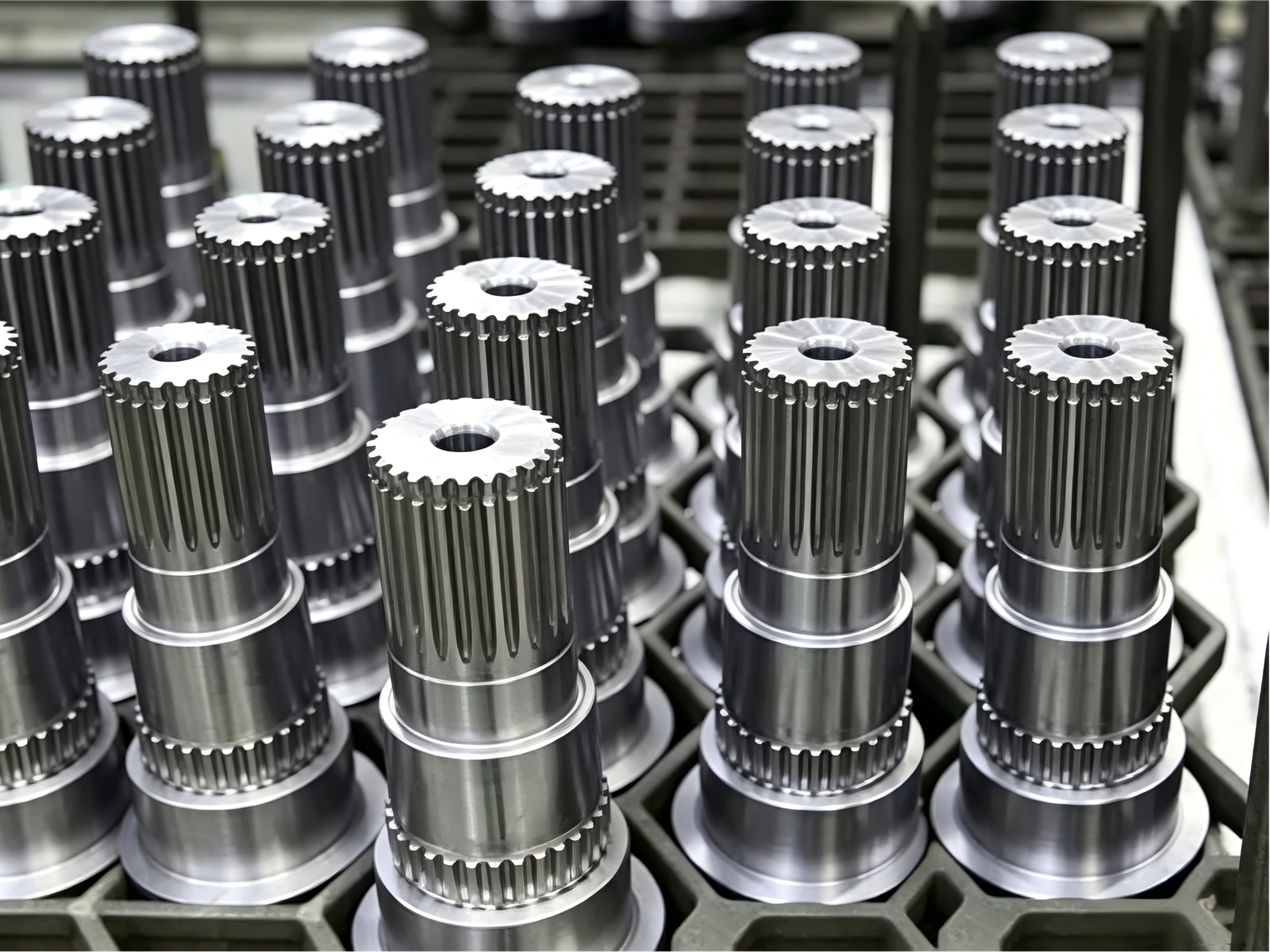
Um eixo estriado transmite força rotacional através do engate mecânico direto entre estrias externas e internas.
Quando o torque é aplicado:
- O eixo gira.
- Os dentes estriados engatam no componente correspondente.
- A carga é distribuída entre múltiplas superfícies spline.
- Transferências de torque eficientes com deslizamento mínimo.
Ao contrário das conexões baseadas em fricção, eixos estriados fornecem um mecanismo de acionamento positivo, tornando-os altamente confiáveis em aplicações de alta carga.
Splines Fixas
As estrias fixas fixam o eixo e o componente correspondente, impedindo o movimento axial.
Aplicações comuns incluem:
- Caixas de câmbio
- Acoplamentos
- Sistemas de transmissão de energia
Splines Deslizantes
As estrias deslizantes permitem que os componentes se movam ao longo do eixo enquanto ainda transmitem torque.
Estes são comumente encontrados em:
- Eixos de transmissão automotivos
- Eixos telescópicos
- Sistemas de tomada de força
Eixos estriados versus eixos chaveados
| Recurso | Eixo estampado | Eixo chaveado |
| Capacidade de Torque | Alto | Moderado |
| Distribuição de carga | Uniforme | Concentrado |
| Resistência ao desgaste | Excelente | Bom |
| Precisão de alinhamento | Alto | Moderado |
| Vida de fadiga | Mais longo | Mais curto |
| Retaliação | Mais baixo | Mais alto |
| Custo de fabricação | Mais alto | Mais baixo |
Para aplicações de alto desempenho, eixos estriados geralmente superam os eixos chavetados tradicionais.
Por que os eixos estriados são importantes?
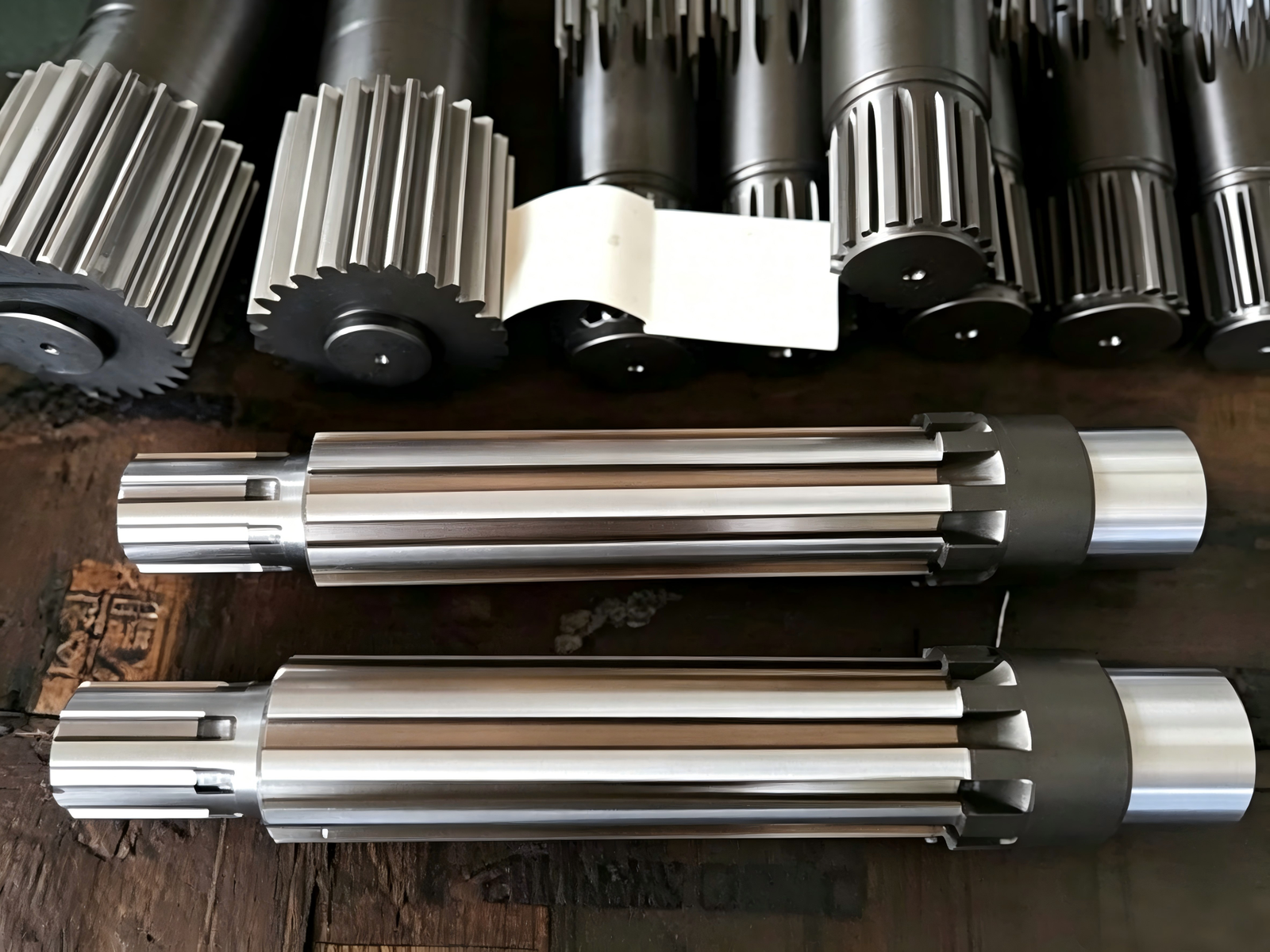
Transmissão de Torque Eficiente
Como o torque é distribuído por vários dentes, eixos estriados podem suportar cargas significativamente maiores do que conexões chavetadas.
Alinhamento de precisão
A geometria interligada mantém o posicionamento rotacional preciso entre os componentes conectados.
Melhor distribuição de carga
Vários pontos de contato distribuem forças uniformemente, reduzindo o estresse localizado.
Desgaste reduzido
O compartilhamento de carga minimiza danos à superfície e prolonga a vida útil dos componentes.
Maior confiabilidade
Os eixos estriados funcionam de forma consistente, mesmo sob condições operacionais pesadas.
Tipos de eixos estriados
Vários perfis spline estão disponíveis dependendo dos requisitos da aplicação.
Splines envolventes
Splines envolventes são o projeto de spline mais comumente usado em todo o mundo.
Características
- Perfil de dente curvo
- Distribuição uniforme de carga
- Fácil fabricação e inspeção
- Excelente capacidade de autocentralização
Formulários
- Transmissões automotivas
- Caixas de câmbio industrial
- Sistemas aeroespaciais
- Máquinas pesadas
Vantagens
- Alta capacidade de torque
- Longa vida à fadiga
- Dimensões padronizadas
Lado reto (Paralelo) Splines
As estrias de lados retos apresentam flancos de dentes paralelos.
Características
- Geometria simples
- Usinagem fácil
- Produção econômica
Formulários
- Maquinaria agrícola
- Equipamento industrial
- Sistemas gerais de transmissão de energia
Vantagens
- Custos de fabricação mais baixos
- Fácil montagem e desmontagem
Splines serrilhadas
As estrias serrilhadas utilizam dentes em forma de V ou triangulares.
Características
- Alta precisão de posicionamento
- Forte capacidade de bloqueio
- Maior resistência ao atrito
Formulários
- Sistemas de direção
- Máquinas de precisão
- Componentes aeroespaciais
Vantagens
- Excelente desempenho antiderrapante
- Posicionamento angular preciso
Splines helicoidais
As estrias helicoidais apresentam dentes cortados em ângulo ao redor do eixo.
Características
- Envolvimento suave
- Vibração reduzida
- Menor ruído operacional
Formulários
- Transmissões de alta velocidade
- Máquinas de precisão
- Sistemas de acionamento aeroespacial
Vantagens
- Operação silenciosa
- Compartilhamento de carga aprimorado
Splines Coroados
As estrias coroadas têm superfícies dentárias ligeiramente curvadas.
Características
- Compensar o desalinhamento
- Reduza o carregamento nas bordas
Formulários
- Sistemas de aeronaves
- Acoplamentos flexíveis
- Equipamento pesado
Vantagens
- Vida útil melhorada
- Melhor tolerância de alinhamento
Estrias de bola
As estrias esféricas incorporam rolamentos de esferas recirculantes.
Características
- Movimento rotacional e linear simultâneo
- Fricção extremamente baixa
Formulários
- Robótica
- Sistemas de automação
- Máquinas CNC
Vantagens
- Movimento suave
- Alta precisão
Materiais usados para eixos estriados
A seleção de materiais impacta significativamente o desempenho e a vida útil.
Aço carbono
As notas comuns incluem:
- AISI 1045
- AISI 1050
Benefícios:
- Boa usinabilidade
- Econômico
- Força moderada
Liga de aço
Notas populares:
- 4140
- 4340
- 8620
Benefícios:
- Força elevada
- Excelente resistência ao desgaste
- Propriedades superiores de fadiga
Aço inoxidável
Notas comuns:
- 304
- 316
- 17-4PH
Benefícios:
- Resistência à corrosão
- Adequado para ambientes agressivos
- Excelente durabilidade
Ligas de alumínio
Notas comuns:
- 6061-T6
- 7075-T6
Benefícios:
- Leve
- Resistente à corrosão
- Boa relação resistência/peso
Ligas de titânio
Benefícios:
- Força excepcional
- Baixo peso
- Excelente resistência à corrosão
Formulários:
- Aeroespacial
- Defesa
- Equipamento médico
Processos de fabricação de eixo estriado
A fabricação de precisão é crítica para o desempenho do spline.
Torneamento CNC
O corpo do eixo é inicialmente usinado nas dimensões exigidas.
Fresamento Spline
Fresamento CNC cortadores criam perfis spline.
Vantagens:
- Produção flexível
- Adequado para protótipos
Fresagem Spline
Um dos métodos mais eficientes para produção em grande volume.
Benefícios:
- Alta precisão
- Excelente produtividade
Brochamento
Usado principalmente para splines internos.
Benefícios:
- Alta precisão
- Tempos de ciclo rápidos
Modelagem de engrenagem
Ideal para splines internos e externos.
Benefícios:
- Versátil
- Adequado para perfis complexos
Fio EDM
Usado para geometrias de splines complexas e tolerâncias restritas.
Benefícios:
- Precisão excepcional
- Capacidade de perfil complexo
Tratamentos de superfície para eixos estriados
O tratamento de superfície aumenta a durabilidade e a resistência ao desgaste.
Endurecimento por indução
Fornece dureza localizada em dentes estriados.
Carburismo
Cria uma superfície dura e resistente ao desgaste, mantendo um núcleo resistente.
Nitretagem
Melhora a resistência ao desgaste sem distorção significativa.
Óxido Negro
Fornece proteção leve contra corrosão.
Zincagem
Melhora a resistência à corrosão.
Cromado duro
Melhora a resistência ao desgaste e a dureza superficial.
Considerações de design -chave
O design adequado garante um desempenho confiável a longo prazo.
Requisitos de torque
O perfil estriado deve acomodar o torque operacional máximo.
Número de dentes
Mais dentes geralmente melhoram a distribuição de carga.
Diâmetro do eixo
Determina a resistência geral e a rigidez torcional.
Ângulo de Pressão
Afeta as características de engajamento e transferência de carga.
Tolerância ao desalinhamento
Importante para sistemas sujeitos a vibração ou movimento.
Vida de fadiga
Crítico para aplicações de carregamento cíclico.
Padrões da indústria para eixos estriados
Vários padrões regem as dimensões e tolerâncias do spline.
ANSI B92.1
Amplamente utilizado na América do Norte.
DE 5480
Popular na Europa.
DE 5482
Comum para sistemas spline métricos.
ISO 4156
Padrão internacional para splines envolventes.
Normas SAE
Frequentemente usado em aplicações automotivas.
Seguir esses padrões garante compatibilidade e intercambialidade.
Aplicações comuns de eixos estriados
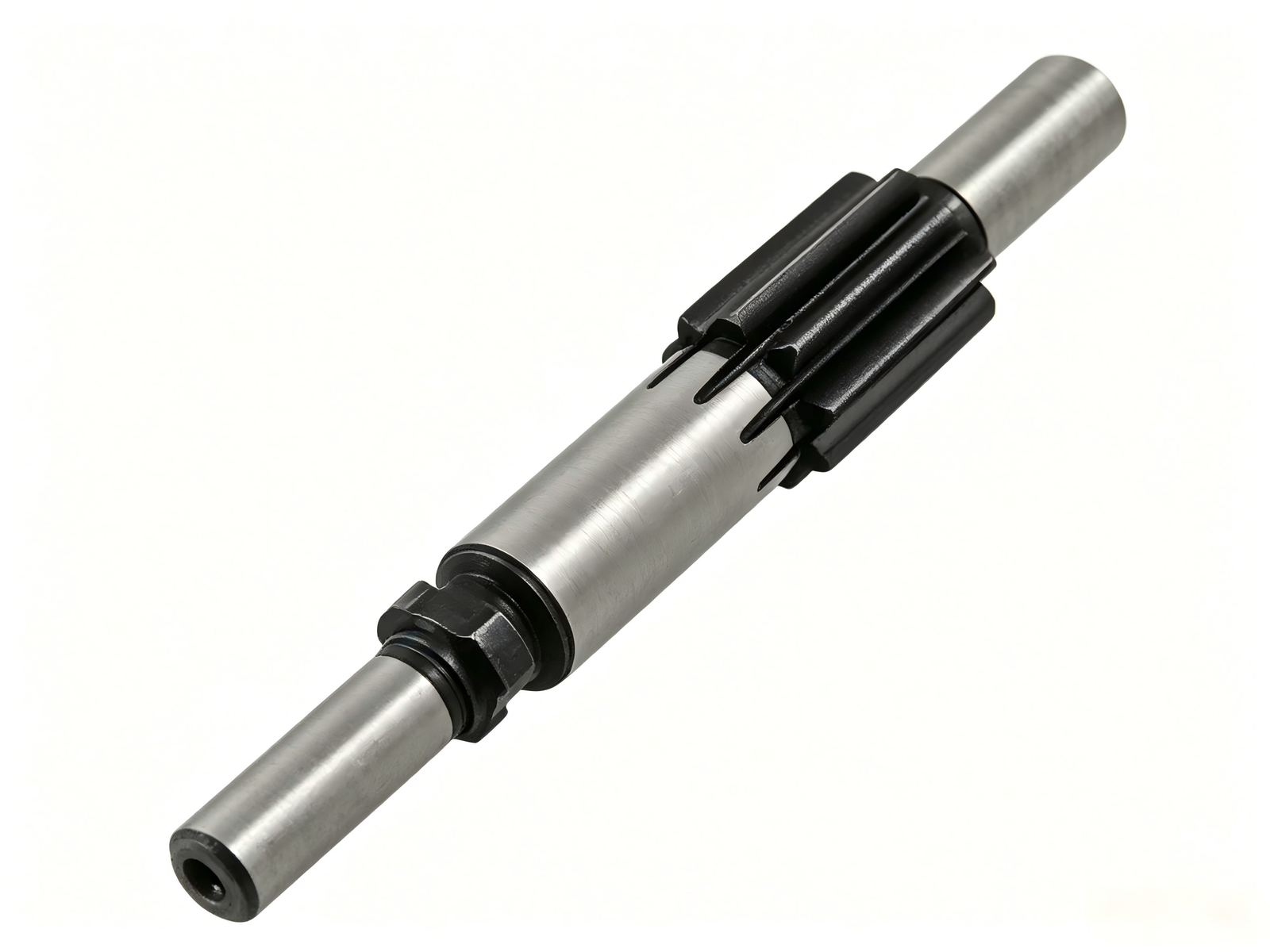
Indústria automobilística
As aplicações incluem:
- Eixos de transmissão
- Eixos de acionamento
- Colunas de direção
- Sistemas diferenciais
Indústria aeroespacial
As aplicações incluem:
- Sistemas de controle de vôo
- Mecanismos de trem de pouso
- Sistemas de transmissão de potência do motor
Maquinaria industrial
As aplicações incluem:
- Caixas de câmbio
- Bombas
- Compressores
- Transportadores
Robótica e automação
As aplicações incluem:
- Servoacionamentos
- Atuadores de precisão
- Sistemas de movimento linear
Equipamento Agrícola
As aplicações incluem:
- Eixos de tomada de força
- Colheitadeiras
- Tratores
Equipamento de construção
As aplicações incluem:
- Escavadeiras
- Carregadeiras de rodas
- Sistemas de acionamento hidráulico
Falhas comuns e prevenção de eixo estriado
Desgaste dos dentes
Causa:
- Lubrificação insuficiente
Prevenção:
- Cronogramas de lubrificação adequados
Corrosão por desgaste
Causa:
- Micromovimento entre superfícies conjugadas
Prevenção:
- Ajuste e lubrificação corretos
Rachaduras de fadiga
Causa:
- Carregamento cíclico repetido
Prevenção:
- Seleção adequada de materiais
- Endurecimento superficial
Danos por desalinhamento
Causa:
- Instalação inadequada
Prevenção:
- Procedimentos de montagem de precisão
Como escolher o eixo estriado correto
Considere os seguintes fatores:
Requisitos de torque
Determinar cargas operacionais e de pico.
Seleção de Materiais
Combine as propriedades do material com os requisitos da aplicação.
Condições Ambientais
Considere a temperatura, umidade, produtos químicos, e corrosão.
Tolerâncias de fabricação
Garanta a precisão para o envolvimento adequado.
Requisitos de tratamento de superfície
Melhorar a resistência ao desgaste e a vida útil.
Padrões da Indústria
Verifique a conformidade com as especificações do cliente.
Por que escolher um fornecedor profissional de usinagem CNC para eixos estriados personalizados?
A escolha de um parceiro de usinagem experiente pode melhorar significativamente a qualidade e a confiabilidade do produto.
Um fabricante profissional deve oferecer:
- Usinagem CNC de precisão
- Recursos de fresamento e fresamento spline
- Controle de tolerância rígido
- Rastreabilidade de materiais
- Opções de tratamento de superfície
- Relatórios de inspeção abrangentes
- Protótipo e suporte à produção
Se você precisa de splines envolventes personalizadas, splines de lados retos, ou eixos estriados complexos de nível aeroespacial, trabalhar com um fornecedor qualificado de usinagem CNC garante qualidade e desempenho consistentes.
perguntas frequentes
1.Qual é a finalidade de um eixo estriado?
Um eixo estriado transmite torque enquanto mantém o alinhamento preciso entre os componentes conectados.
2.Qual é a diferença entre um spline e um rasgo de chaveta?
Uma spline usa vários dentes para distribuição de carga, enquanto um rasgo de chaveta depende de uma única chave.
3.Qual tipo de spline é mais comum?
Splines envolventes são as mais utilizadas devido à sua resistência e padronização.
4.Os eixos estriados podem acomodar o movimento axial?
Sim. As estrias deslizantes são projetadas especificamente para movimento axial enquanto transmitem torque.
5.Quais materiais são comumente usados para eixos estriados?
Aço carbono, Liga de aço, aço inoxidável, alumínio, e titânio são os materiais mais comuns.
6.Como são fabricados os eixos estriados?
Eles normalmente são produzidos através de torneamento CNC, fresagem, fresagem, brochamento, modelagem, ou usinagem EDM.
Conclusão
Compreendendo os tipos de spline, materiais, métodos de fabricação, e considerações de design permitem que engenheiros e compradores selecionem a solução mais adequada para sua aplicação. Se você precisa de eixos estriados padrão ou componentes de precisão altamente personalizados, parceria com Precisão máxima pode ajudar a garantir o desempenho ideal, durabilidade, e eficiência de custos.


