


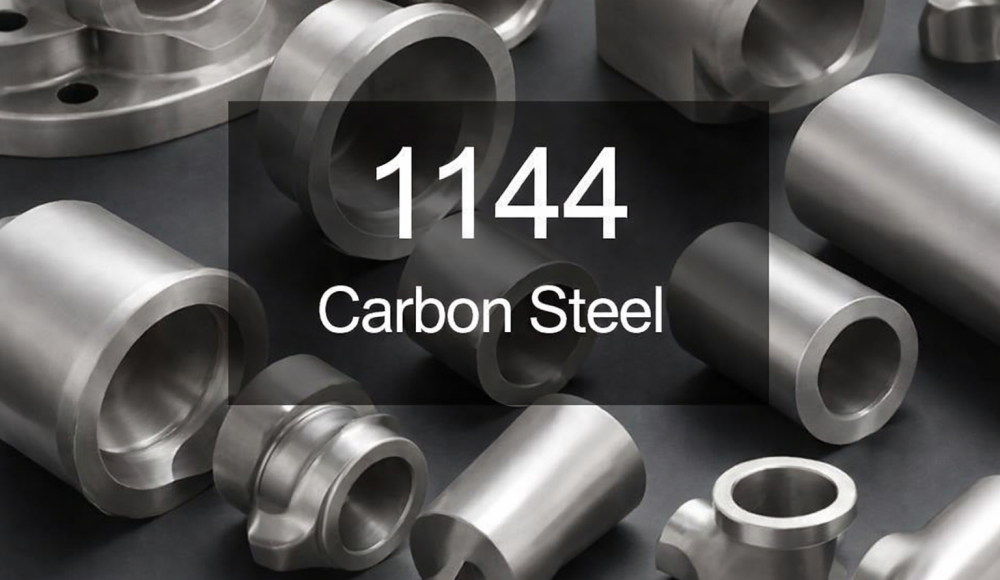
When it comes to selecting a material for precision-machined components, engineers and manufacturers often prioritize machinability, strength, and dimensional stability. Among medium carbon steels, 1144 carbon steel stands out as a preferred choice for high-performance applications.
Although it may not be as widely discussed as other grades, 1144 carbon steel offers a unique combination of excellent machinability, high strength, and stress-relieved stability, making it ideal for demanding industrial environments.
This guide provides a comprehensive breakdown of its properties, advantages, applications, and selection criteria—helping you determine whether it is the right material for your project.
Quick Answer: What Is 1144 Carbon Steel?
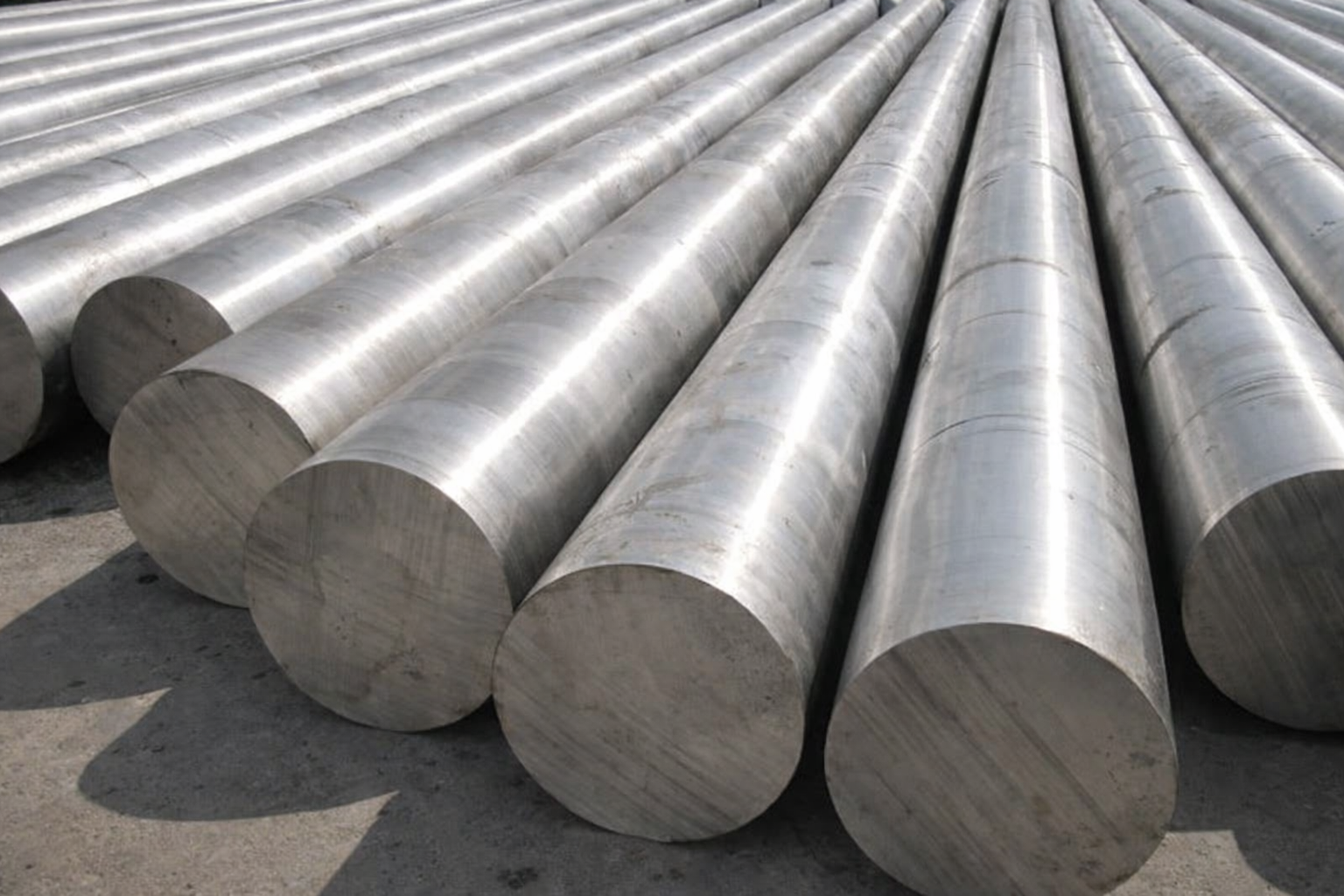
1144 carbon steel is a medium-carbon, resulfurized free-machining steel designed for high-speed precision machining.
Key Composition
Carbon: 0.40–0.48%
Manganese: 1.35–1.65%
Sulfur: 0.24–0.33%
Core Advantages
Excellent machinability (~83% of free-cutting steel)
High tensile strength (~745 MPa)
Good wear resistance
Superior dimensional stability
👉 Best suited for: shafts, gears, fasteners, and precision components where machining efficiency and strength are critical.
Chemical Composition of 1144 Carbon Steel
The performance of 1144 steel is directly influenced by its chemical composition.
Carbon (C)
Provides strength and hardness
Enables good wear resistance
Manganese (Mn)
Enhances toughness and strength
Improves hardenability
Sulfur (S)
Improves machinability by promoting chip breaking
Reduces tool wear
Trade-off: lowers weldability
Engineering Insight
The relatively high sulfur content is what differentiates 1144 from standard carbon steels, making it particularly suitable for high-volume machining operations.
Key Properties of 1144 Carbon Steel
Mechanical Strength
1144 carbon steel offers strong mechanical performance:
Tensile strength: ~745 MPa (108,000 psi)
Yield strength: ~620 MPa (90,000 psi)
👉 This makes it suitable for components exposed to:
High loads
Repetitive stress
Mechanical fatigue
Machinability
One of the defining features of 1144 steel is its excellent machinability.
Rated ~83% compared to free-cutting steels
Sulfur improves chip formation
Reduces cutting forces and tool wear
Benefits
Faster production cycles
Improved surface finish
Lower tooling costs
Hardness and Wear Resistance
Brinell hardness: ~217 HB
Good resistance to abrasion and friction
👉 Ideal for:
Bushings
Spindles
Mechanical wear components
Thermal and Magnetic Properties
Thermal conductivity: ~49.8 W/m·K
Coefficient of expansion: ~13 µm/m·K
Ferromagnetic behavior
Applications
Heat transfer components
Magnetic-responsive systems
Stress Relief and Dimensional Stability
1144 steel is typically stress-relieved during processing, which provides:
Reduced internal stress
Minimal warping during machining
High dimensional accuracy
👉 Critical for:
Precision components
Tight tolerance applications
Benefits of Using 1144 Carbon Steel
Superior Machinability
Enables high-speed machining
Reduces production time
Ideal for mass production
High Strength and Durability
Withstands heavy loads
Maintains structural integrity over time
Enhanced Wear Resistance
Extends component lifespan
Reduces maintenance frequency
Dimensional Stability
Maintains tight tolerances
Minimizes distortion
Cost-Effectiveness
Lower machining cost
Reduced secondary processing
High production efficiency
👉 Overall, it offers an excellent cost-performance ratio.
Common Applications of 1144 Carbon Steel
Precision Machined Components
Shafts
Pins
Bushings
Spindles
Gears and Pinions
High strength and wear resistance
Suitable for power transmission systems
Automotive Components
Crankshafts
Transmission parts
Connecting rods
Hydraulic and Pneumatic Shafts
Handles high pressure
Suitable for repetitive motion systems
Fasteners
Bolts
Studs
Screws
👉 Especially in heavy machinery and construction
Heat Treatment and Weldability
Heat Treatment
1144 steel can be heat treated to enhance properties:
Process:
Heating: 830–860°C
Quenching (oil/water)
Tempering: 150–200°C
Challenges
Risk of brittleness
Risk of quench cracking due to sulfur
Weldability
1144 carbon steel has limited weldability.
Reasons:
High sulfur content
Increased cracking risk
If Welding Is Required
Preheat to 150–200°C
Use low-hydrogen electrodes
Apply post-weld stress relief
👉 In most cases, welding is not recommended.
1144 Carbon Steel vs Other Carbon Steels
1144 vs 1018 Steel
| Property | 1144 Steel | 1018 Steel |
| Strength | Higher | Lower |
| Machinability | Excellent | Good |
| Weldability | Poor | Excellent |
👉 1018 is better for welding, but 1144 is superior for machining.
1144 vs 1045 Steel
| Property | 1144 Steel | 1045 Steel |
| Machinability | Better | Moderate |
| Strength | Comparable | High |
| Versatility | Lower | Higher |
👉 1045 offers more versatility, but 1144 excels in machining efficiency.
How to Choose 1144 Carbon Steel (Decision Guide)
Choose 1144 if your application requires:
✅ High machining efficiency
✅ Tight dimensional tolerances
✅ High strength components
✅ Cost-effective mass production
Avoid 1144 if you need:
High corrosion resistance
Good weldability
Outdoor or chemical exposure
Limitations of 1144 Carbon Steel
Despite its advantages, 1144 has some drawbacks:
Poor corrosion resistance
Limited weldability
Not suitable for harsh environments
Potential brittleness after heat treatment
Conclusion
1144 carbon steel is a high-performance material designed for applications where machinability, strength, and precision are critical.
It offers:
Excellent machining efficiency
High strength and durability
Stable dimensional performance
However, it is best suited for controlled environments where corrosion resistance and weldability are not primary concerns.
FAQs
1. Is 1144 carbon steel corrosion-resistant?
No, it requires coatings or protection in corrosive environments.
2. Is it magnetic?
Yes, it is ferromagnetic.
3. Can it be heat treated?
Yes, but care must be taken to avoid cracking.
4. Is it weldable?
Limited weldability; not recommended for most applications.
5. Is it leaded steel?
No, it is resulfurized, not leaded.
Get Custom Machined Parts
If you are considering 1144 carbon steel for your project, choosing the right manufacturing partner is essential.
We offer:
Precision machining of carbon steel components
Custom shafts, terminals, and metal parts
Material selection support
Fast prototyping and mass production
👉 Send us your drawings or requirements today
👉 Get a professional recommendation + competitive quote
Optimize your production with the right material and the right partner.


