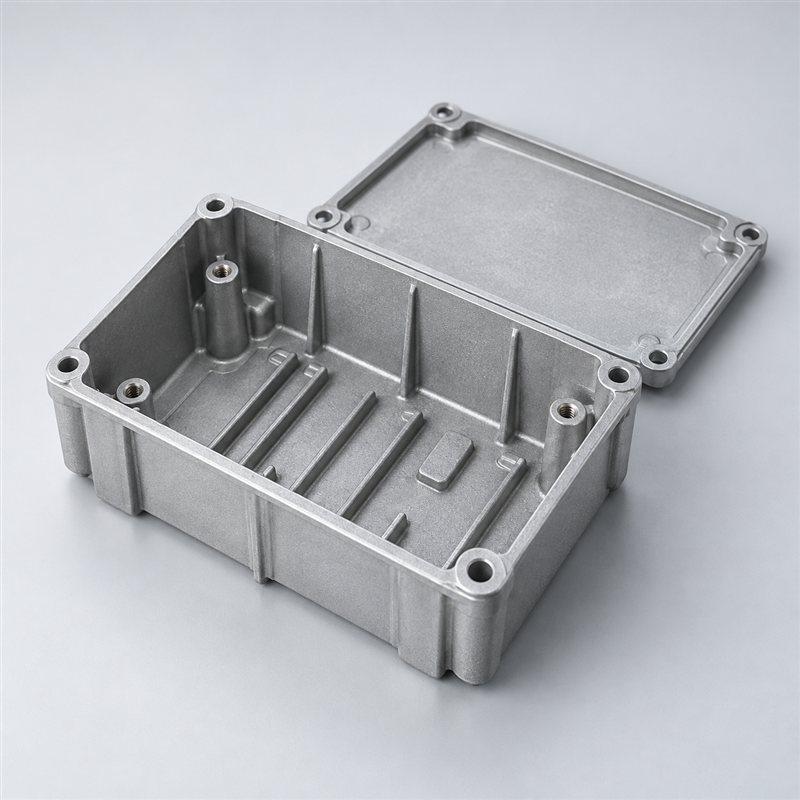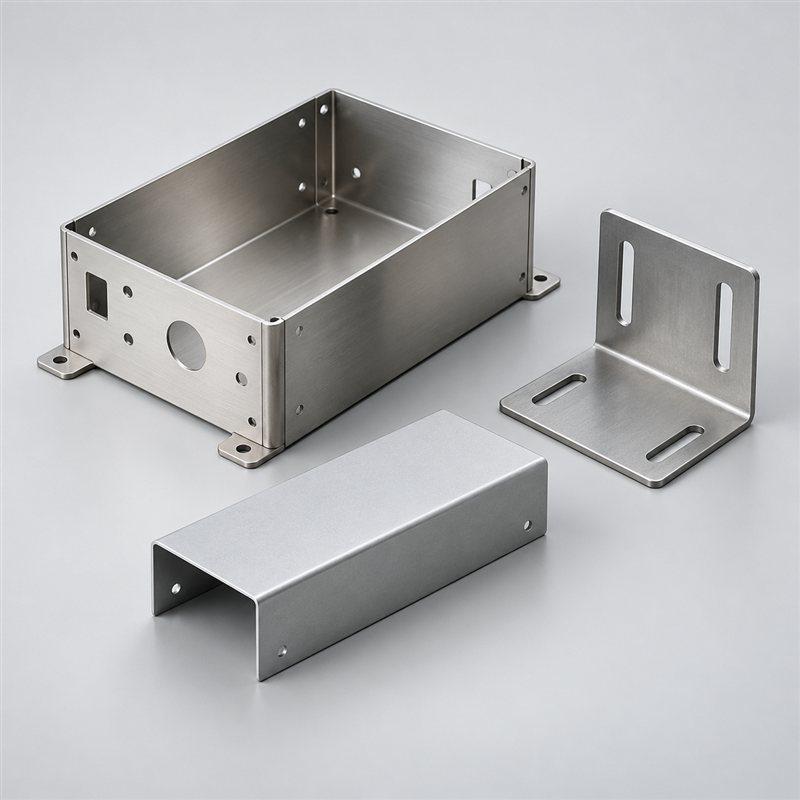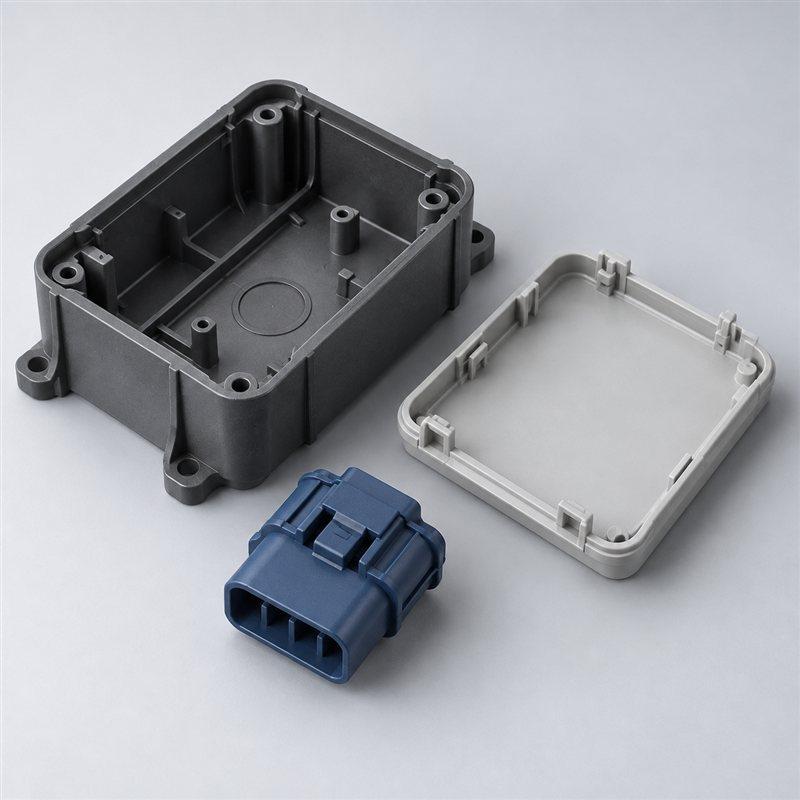

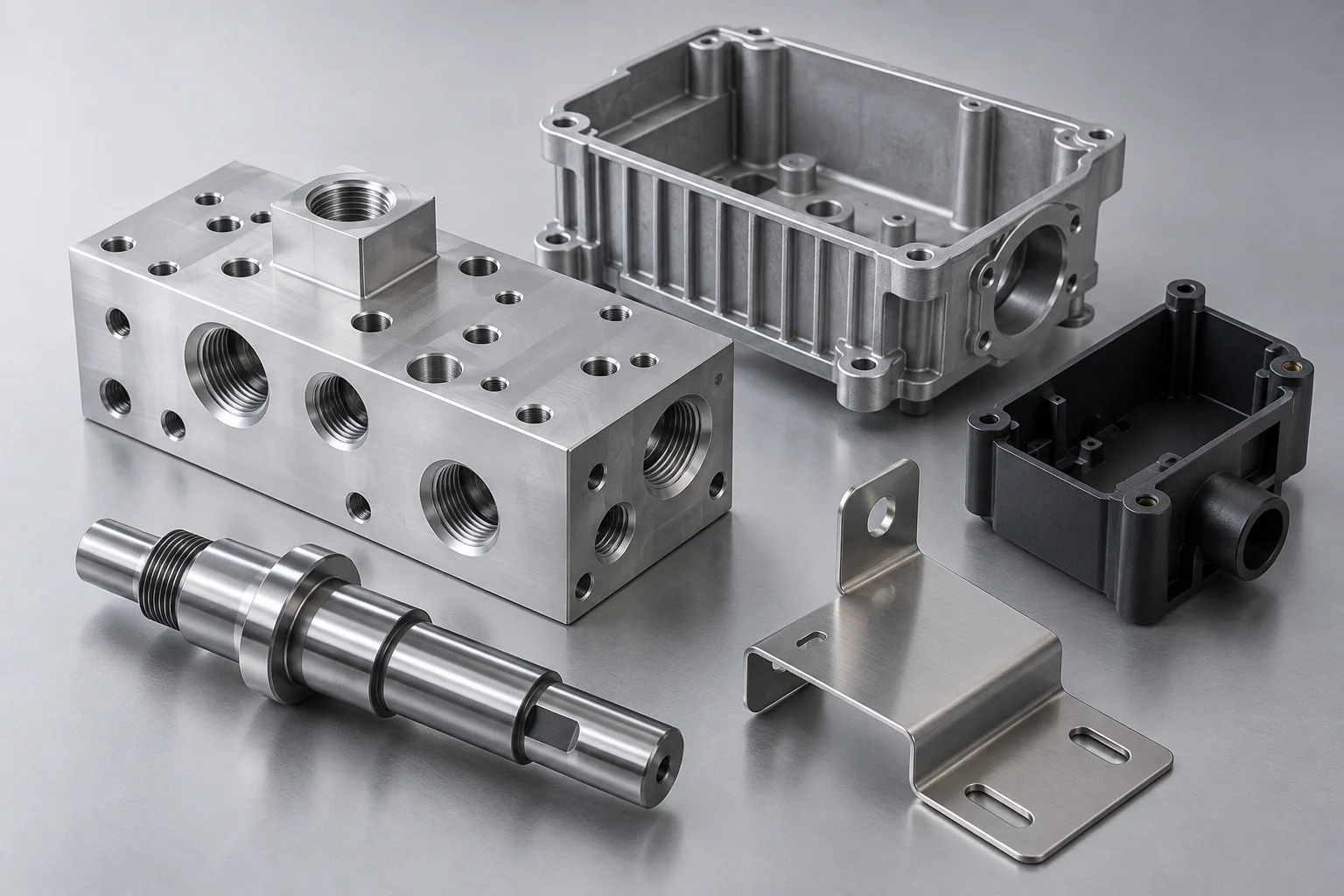
Machined manifold, precision shaft, cast housing, sheet metal bracket and molded enclosure

Home / Custom Precision Manufacturing

CUSTOM METAL & PLASTIC COMPONENTS · DONGGUAN, CHINA

Custom Precision Manufacturing Services

Precision metal and plastic components. From your first prototype to repeat production.

TOPS Precision supports engineering teams worldwide with CNC machining, die casting, sheet metal fabrication and plastic injection molding under one manufacturing partner.

Upload STEP / STP / IGES / PDF / DWG files
Engineering review and DFM support available.

±0.005 mmFor suitable CNC features*
10+ yearsManufacturing experience
100+ materialsMetal & plastic options
Prototype → ProductionFrom development to repeat orders
ISO 9001:2015Quality management system

One partner. Four manufacturing routes.

Precision Manufacturing Capabilities

Choose the process around geometry, tolerance, material, quantity and total program cost. Start with the capability you need—or send your drawings for an engineering review.

Who is TOPS Precision?

TOPS Precision is a custom precision manufacturing company in Dongguan, China, providing CNC machining, die casting, sheet metal fabrication and plastic injection molding for metal and plastic components from prototype through production.

*The ±0.005 mm capability is feature- and process-specific. Critical dimensions are confirmed during quotation; it is not a blanket tolerance for cast, formed or molded parts.

The facts, in one place

Precision Manufacturing Capabilities at a Glance

CapabilityTOPS Manufacturing Range
Manufacturing processesCNC machining, die casting, sheet metal fabrication and plastic injection molding
CNC axes and methods3-axis, 4-axis and 5-axis machining; turning, mill-turn, EDM and grinding subject to feature review
CNC toleranceDown to ±0.005 mm for suitable features, geometry and materials; acceptance criteria agreed before manufacture
Production volumePrototype, pilot build, low-volume batch and repeat production; quantities quoted per project
MetalsAluminum, stainless steel, steel, brass, copper, titanium and selected advanced alloys
PlasticsABS, PC, POM, PEEK, Nylon, PP, PMMA, PTFE and other suitable grades
InspectionCMM, optical measurement, micrometers and gauges; XRF for suitable alloy-composition screening
DocumentationFAI, dimensional reports, material certificates, RoHS documentation and CoC as specified
Surface finishingAnodizing, hard anodizing, plating, passivation, powder coating, electropolishing and polishing
Secondary operationsDeburring, heat treatment, hardware installation and assembly operations as agreed
Quality systemISO 9001:2015
File formatsSTEP, STP, IGES, X_T, STL, DWG, DXF and PDF

Material grades, part envelope, tooling scope, lead time and inspection coverage are confirmed against your drawing and order requirements.

Keep the program moving

From Prototype to Production

Your manufacturing route can evolve as a design matures. We review what must stay consistent—and what should change—between development, pilot builds and repeat production.

DEVELOP & VALIDATE

Prototype Manufacturing

Evaluate fit, assembly and function before committing to production tooling.

  • Design verification
  • Functional testing
  • Engineering development
  • Fit and assembly testing

Manufacturing route: CNC machining and suitable rapid manufacturing routes. Test material and process should reflect the intended evaluation.

BRIDGE & REFINE

Low-Volume Production

Build the quantity you need while designs, demand or production tooling are still developing.

  • Bridge production
  • Market testing
  • Pilot runs
  • Custom industrial equipment

Manufacturing route: CNC machining, soft tooling where suitable and other project-specific methods. Tooling investment is assessed against unit cost.

REPEAT & SCALE

Production Manufacturing

Move approved designs into a repeatable manufacturing program.

  • Repeat orders
  • Mature product programs
  • Cost optimization
  • Higher-volume components

Manufacturing route: Die casting, injection molding or optimized machining, selected around the part, annual demand and approved quality plan.

Geometry. Material. Quantity. Cost.

Choosing the Right Manufacturing Process for Your Part

Engineers review geometry, tolerances, material, annual quantity, surface requirements and target cost before recommending a manufacturing route.

Your requirementProcess to evaluateWhy it may fit
Complex precision metal prototypeCNC machiningLimited tooling investment; direct access to 3D geometry and drawing-defined features.
Tight-tolerance low-volume partsCNC machiningCritical features can be machined and inspected individually.
Repeat aluminum housingDie casting + secondary machiningEvaluate alloy, draft, wall thickness, tool cost and volume. Machine critical interfaces after casting.
Thin metal enclosureSheet metal fabricationUse cut patterns, bends, welds and hardware to create a functional assembly.
Repeat thermoplastic enclosureInjection moldingReview resin, uniform walls, draft, gates, shrinkage and tooling investment.
Cylindrical or rotational componentCNC turning / mill-turnRotational features suit turning; cross-features may require additional milling.
Complex multi-sided geometry5-axis CNC machiningCan reduce setups or improve cutter access when the part and fixture support it.

These are starting points for DFM, not automatic process assignments. Undercuts, accessible datums, wall thickness and inspection requirements may change the route.

CONTROL THE FEATURES THAT MATTER

Precision Manufacturing for Tight-Tolerance Components

Precision depends on part geometry, material, feature size and manufacturing method. TOPS supports tolerances down to ±0.005 mm for suitable CNC-machined features.

Critical dimensions are reviewed during quotation and verified using an agreed inspection method. Surface finishing, heat treatment and assembly conditions are considered before dimensions are finalized.

±0.005 mm

For suitable CNC features. Confirmed by drawing review.

Complex geometry

3-, 4- and 5-axis machining, with access and workholding reviewed.

Inspection

CMM, optical measurement, micrometers and gauges selected for the feature.

Documentation

Dimensional reports, FAI and material certificates as specified.

Acceptance criteria

Datum scheme, sampling and measurement conditions agreed before production.

Documented checks. Defined acceptance.

Quality Control for Precision Manufactured Parts

TOPS operates an ISO 9001:2015 quality management system. Inspection planning connects the drawing requirements to checks at each stage of manufacturing.

Tell us which dimensions are critical, which reports you need and how the parts will be used. A clear inspection plan makes acceptance criteria visible before the first part is made.

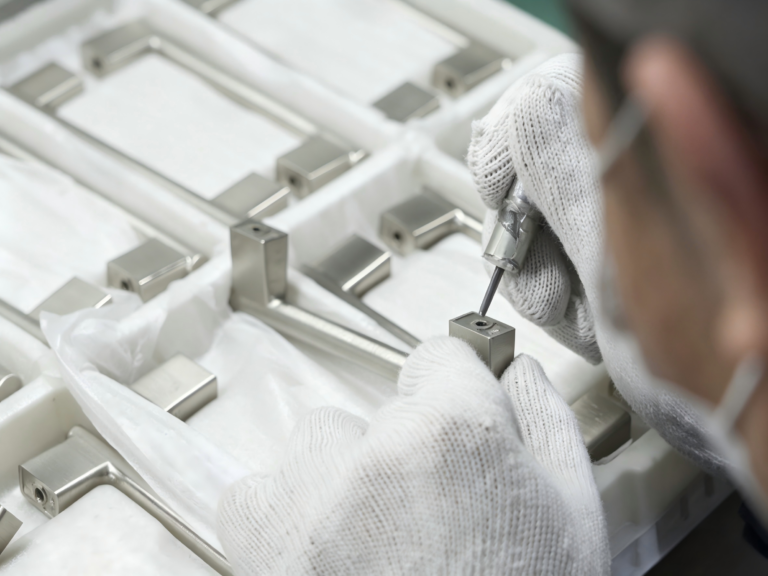
Manual dimensional inspection of a metal component, from the existing TOPS website image library

Dimensional verification selected around the part and drawing requirements.

  1. Incoming material
  2. First article
  3. In-process checks
  4. Final inspection
  5. Documentation
  6. Packaging & shipment

Incoming Material Verification

Review material grade, condition and traceability. Material certificates and incoming checks are specified by the purchase requirements. XRF can support alloy screening where appropriate.

First Article Inspection

Check the first manufactured parts against the drawing and critical characteristics before releasing the approved production route. Agree the FAI format and sample quantity in advance.

In-Process Inspection

Monitor key dimensions at defined manufacturing stages. Checks are selected around process risk, tool wear, stability and the features that cannot be verified after assembly.

Final Dimensional Inspection

Verify agreed characteristics using CMM, optical systems, gauges, micrometers or other suitable equipment. Specify whether sampling or full inspection is required.

Quality Documentation

FAI, dimensional inspection reports, material certificates, RoHS documentation and CoC are available as agreed. Specify the required standard and traceability level at RFQ stage.

Packaging & Shipment

Select packaging around surface protection, cleanliness and transport requirements. Shipping documents and identification are checked against the approved order.

100+ metal & plastic options

Materials for Precision Manufacturing

Select the exact grade around performance, environment, manufacturing method and cost. Material families alone are not enough to define a part.

Aluminum

6061 · 5052 · 7075 · 2024 · A380 · A360 · A356

Wrought grades and casting alloys are selected for different processes. A356 is evaluated for suitable casting routes; it is not treated as an interchangeable pressure-die-casting alloy.

Stainless Steel

304 · 316 · 17-4 PH · 420

Review corrosion resistance, machinability, hardness condition and post-processing requirements.

Steel

Mild steel · 1045 · A36 · Tool steels · Alloy steels

Specify the full grade, supply condition and any heat treatment or hardness requirements.

Copper & Brass

Copper · C360 · C260 · C280

Select around conductivity, corrosion behavior, strength and machinability. Grade suitability depends on the part.

Advanced Alloys

Titanium · Inconel · Invar · Kovar

Exact alloy, stock availability, tool wear and inspection scope require project review.

Engineering Plastics

ABS · POM · PC · PEEK · Nylon · PP · PMMA · PTFE · Torlon

Machining and molding suitability differ. PTFE and Torlon require process-specific review; not all materials suit conventional thermoplastic injection molding.

Grades shown are options for engineering review, not a claim that every grade is stocked or suitable for every process. Confirm grade, temper, color, additives and documentation before ordering.

Function, appearance and assembly

Surface Finishing & Secondary Operations

Finishing changes a part’s surface—and can change the fit. Confirm thickness, masking, roughness and inspection requirements with the drawing.

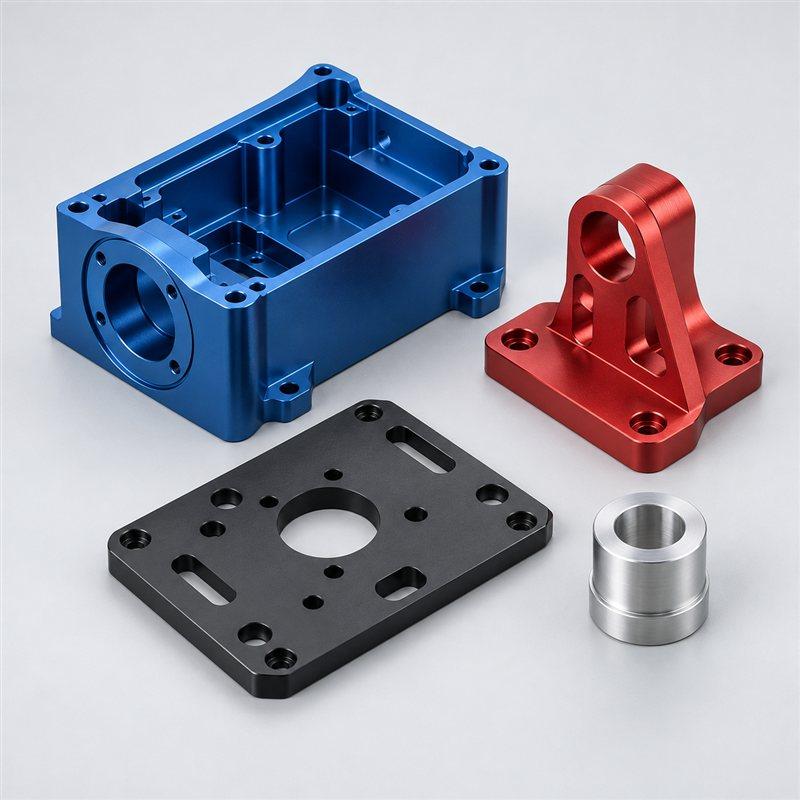
Silver and colored anodized component examples

Finish appearance depends on substrate, alloy, preparation and processing.

Plan the complete part

We review deburring, polishing, anodizing, plating, coatings, heat treatment and assembly operations together with the manufacturing route. Critical interfaces should be checked in their required final condition.

Explore Surface Finishes →
Anodized CNC Machining Parts →

Anodizing

Protective and decorative aluminum oxide finish. Specify color, thickness, masking and sealing.

Hard Anodizing

Wear-focused aluminum finish. Review dimensional growth, alloy response and sealing requirements.

Powder Coating

Durable coated surface for suitable substrates. Specify color, texture, thickness and masked interfaces.

Electropolishing

Electrochemical finishing for suitable alloys. Review surface targets and dimensional effects.

Passivation

Surface treatment for suitable stainless steels. Specify the required standard and cleanliness criteria.

Plating

Select coating chemistry and thickness around corrosion, wear, conductivity and substrate compatibility.

Polishing

Define the intended appearance and surface roughness. Cosmetic expectations should be agreed with a sample.

Heat Treatment

A secondary operation selected for material condition and hardness. Review distortion and any final machining allowance.

From a single interface to a complete component

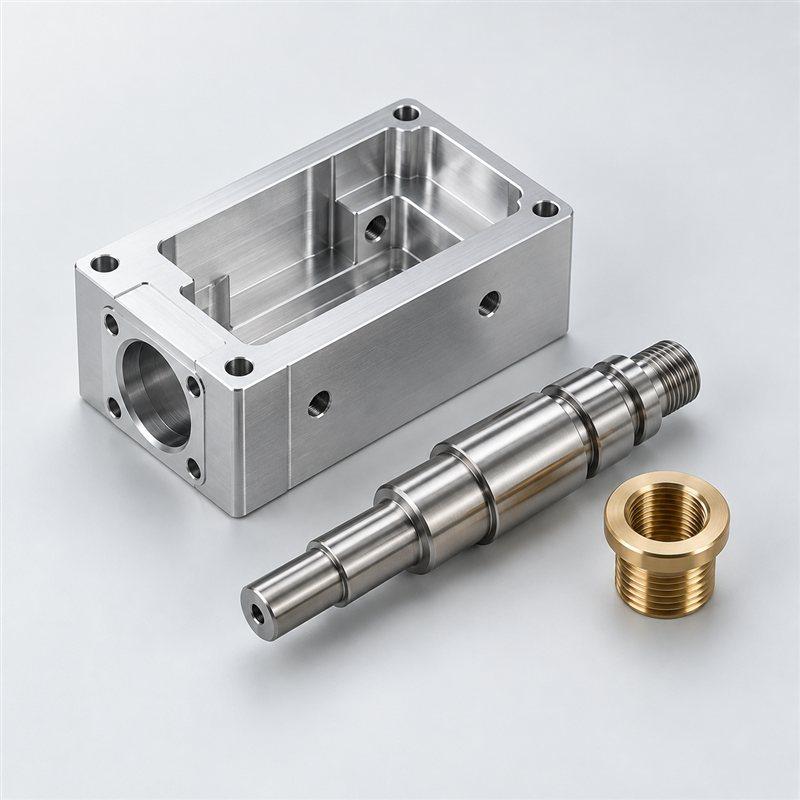
Custom Precision Parts We Manufacture

Metal and plastic components are made to your drawings. Send the geometry, material and intended use so we can assess the right process and inspection plan.

Application-driven manufacturing

Precision Manufacturing for Demanding Industries

Match the manufacturing route to the operating environment, critical features and documentation requirements—not just the industry name.

AEROSPACE

Aerospace

Lightweight brackets, housings, mechanical components and precision assemblies.

Explore Aerospace →
AUTOMOTIVE & EV

Automotive

Powertrain, testing, vehicle, EV and production-equipment components.

Explore Automotive →
MEDICAL EQUIPMENT

Medical

Precision housings, fixtures and mechanical components made to the specified drawing.

Explore Medical →
INDUSTRIAL AUTOMATION

Automation

Fixtures, grippers, tooling, machine components and custom assemblies.

Explore Automation →

Industry examples do not imply application approval or sector-specific certification. Regulated or safety-critical requirements must be identified and agreed during quotation.

Decisions supported by manufacturing detail

Why Engineers Choose TOPS Precision

Feature-specific precision

Down to ±0.005 mm for suitable CNC features, with critical dimensions reviewed before quotation.

Prototype to production

Continue from development into pilot builds and repeat orders with an agreed drawing and manufacturing route.

Multi-process manufacturing

Compare CNC machining, casting, sheet metal and molding through one manufacturing partner.

Engineering DFM support

Review tool access, wall thickness, datums, tolerances and finishing risks before committing to production.

Documented quality control

ISO 9001:2015 quality management, agreed inspection planning and project-specific reports.

100+ material options

Metal and plastic grades evaluated around the application, process, availability and documentation needs.

Global manufacturing support

Manufacturing from Dongguan, China, with packaging and delivery planned for overseas engineering and sourcing teams.

A clear path from CAD to delivery

How Our Precision Manufacturing Process Works

  1. Upload Your Drawings

    Send 2D drawings and/or 3D CAD files, material grade, quantity, finish and the requirements that control acceptance.

  2. Engineering Review & DFM

    We evaluate geometry, critical tolerances, material, tooling and the manufacturing route. Design risks are discussed before production.

  3. Receive Your Quote

    Review pricing, process recommendations, tooling scope and estimated lead time. Confirm inspection, packaging and delivery requirements.

  4. Manufacturing

    Production starts after drawing revisions, specifications and commercial terms are approved.

  5. Inspection

    Critical dimensions and agreed requirements are checked against the approved inspection plan. Required documentation is prepared.

  6. Delivery

    Parts are protected, packaged and shipped to the agreed destination. Delivery terms and transport arrangements follow the confirmed order.

Start Your Project →

Send the details that determine the quote

Get an Accurate Manufacturing Quote

Share your design and application. Our engineering team reviews the material, manufacturing route and critical requirements before confirming pricing and lead time.

  • Latest 2D drawing and 3D CAD model
  • Material grade and supply condition
  • Quantity per part and expected repeat demand
  • Critical tolerances and surface finish
  • Inspection, certification and traceability requirements
  • Required delivery date and shipping destination

STEP | STP | IGES | X_T | STL | DWG | DXF | PDF

Prefer email?
info@tops-precision.com

    Tell us about your part

    STEP, STP, IGES, X_T, STL, DWG, DXF or PDF; up to 10 MB. For multiple files or larger models, contact us for a file-transfer option.

    Answers for engineering and procurement

    Precision Manufacturing FAQs

    What is precision manufacturing?

    Precision manufacturing produces components to defined dimensional, geometric, material and surface requirements. The process is selected around the drawing and application, then checked against agreed inspection criteria.

    What precision manufacturing services does TOPS provide?

    TOPS Precision provides CNC machining, die casting, sheet metal fabrication and plastic injection molding for custom metal and plastic components. Engineering review, tooling, secondary operations, finishing and inspection are planned around each project.

    What tolerances can TOPS achieve?

    For suitable CNC-machined features, TOPS can support tolerances down to ±0.005 mm. This is not a default tolerance for every dimension or process. Material, geometry, feature size, temperature, finishing and measurement method must be reviewed before the tolerance is confirmed in the quotation.

    What materials can be used for precision manufacturing?

    TOPS supports more than 100 metal and plastic material options across its manufacturing services. Common families include aluminum, stainless steel, steel, copper, brass, titanium and engineering plastics such as ABS, PC, POM, PEEK, Nylon, PP, PMMA and PTFE. Exact grade, stock condition and process suitability are confirmed during review.

    Can TOPS manufacture prototypes?

    Yes. CNC machining and other suitable rapid manufacturing methods can produce prototypes for fit, assembly and functional evaluation. Send your CAD model, critical dimensions and intended test conditions so the prototype material and manufacturing route can be selected appropriately.

    Can you support low-volume manufacturing?

    Yes. TOPS supports low-volume batches, pilot builds and bridge production. CNC machining, soft tooling where suitable, or other processes are compared using geometry, unit quantity, tooling cost and the expected path to production.

    Can TOPS handle repeat or production orders?

    Yes. TOPS supports repeat manufacturing programs. Approved drawing revisions, process settings, inspection requirements and material specifications are used to control subsequent orders. Tooling capacity, lead time and batch size are confirmed for the program.

    How do you inspect precision manufactured parts?

    Inspection is planned around the drawing. TOPS uses CMM, optical measurement, micrometers, gauges and other suitable equipment for dimensional checks. XRF can support alloy-composition screening where appropriate; it does not replace every required material test or certificate.

    Do you provide material certificates and inspection reports?

    Yes. Material certificates, dimensional inspection reports, FAI, certificates of conformity (CoC) and RoHS documentation can be provided as agreed for the project. Specify the required standard, report format, sampling plan and traceability level before quotation.

    Can you manufacture both metal and plastic components?

    Yes. TOPS manufactures metal components through machining, casting and sheet metal fabrication, and plastic components through machining and injection molding. Material behavior and manufacturing constraints are reviewed separately for each part.

    What information is required for a manufacturing quote?

    Send the latest 2D drawing and 3D model, material grade, quantity per part, critical tolerances, finish, inspection and documentation requirements, delivery date and shipping destination. STEP, STP, IGES, X_T, STL, DWG, DXF and PDF files can be reviewed.

    How do I choose between CNC machining, die casting and injection molding?

    CNC machining often suits prototypes, lower quantities and critical features without dedicated production tooling. Die casting can suit repeat metal parts when alloy, geometry and quantity justify the tool. Injection molding can suit thermoplastic parts at repeat volumes. Engineers compare total program cost, tolerance, material, tooling and production quantity before recommending a route.

    LET’S REVIEW YOUR NEXT COMPONENT

    Bring your design.
    We’ll help define the manufacturing route.

    Send the drawing, material and quantity. Start with a practical engineering review of your custom metal or plastic part.

    Get a Manufacturing Quote ↗

    Let's Start A New Project Today

    Send Your Inquiry Today

      Request a quote

      STEP, STP, IGES, PDF, DWG or DXF; up to 10 MB.

      Your details and files are used to review and respond to your enquiry. Discuss any NDA requirements before sending confidential information.

      Start typing to see posts you are looking for.