



If you are involved in die casting, product design, or industrial sourcing, you have likely encountered Aluminum Alloy 383 (A383 / ADC12). But selecting the right material is not just about familiarity—it’s about performance, manufacturability, and cost efficiency.
Aluminum 383 stands out as one of the most widely used die casting alloys due to its:
Excellent fluidity for complex geometries
Strong corrosion resistance
Reliable mechanical performance
Cost-effective mass production capability
This guide provides a comprehensive, engineer-level breakdown to help you determine whether Aluminum 383 is the right material for your next project—and how to optimize its use.
What is Aluminum Alloy 383?
Aluminum Alloy 383 is an Aluminum-Silicon-Copper (Al-Si-Cu) die casting alloy specifically developed to improve:
Casting performance
Dimensional stability
Resistance to hot cracking
Equivalent Standards
A383 (ASTM)
ADC12 (JIS)
Typical Manufacturing Processes
High-pressure die casting (HPDC)
CNC machining (secondary operations)
Surface finishing (coating, plating)
👉 Compared to other alloys, 383 is particularly suitable for intricate, thin-walled components where precision and repeatability are critical.
Chemical Composition of Aluminum Alloy 383
Composition Overview
| Element | Percentage | Function |
| Aluminum (Al) | Balance | Lightweight, corrosion resistance |
| Silicon (Si) | 9.5–11.5% | Improves fluidity and wear resistance |
| Copper (Cu) | 2.0–3.0% | Increases strength and hardness |
| Iron (Fe) | ≤1.3% | Prevents die sticking |
| Zinc (Zn) | ≤3.0% | Enhances machinability |
| Magnesium (Mg) | ≤0.1% | Minor strengthening |
| Manganese (Mn) | ≤0.5% | Grain refinement |
| Nickel (Ni) | ≤0.5% | Heat resistance |
| Others | ≤0.5% | Trace adjustments |
Why Composition Matters
Each element plays a strategic role:
High Silicon → Superior Castability
Enables thin walls and complex shapes with minimal defects.
Copper Addition → Mechanical Strength
Improves load-bearing capability for structural parts.
Controlled Iron Content → Mold Release
Prevents sticking during die casting, improving cycle time.
👉 This balance makes 383 ideal for high-volume, precision die casting applications.
Key Properties of Aluminum Alloy 383
Physical Properties
| Property | Value | Engineering Significance |
| Density | 2.74 g/cm³ | Lightweight design |
| Melting Point | ~549°C | Efficient casting |
| Thermal Conductivity | 96 W/m·K | Heat dissipation |
| Electrical Conductivity | ~23% IACS | Moderate conductivity |
| Thermal Expansion | 21.1 µm/m·°C | Dimensional stability |
👉 These properties make 383 ideal for thermal management applications, such as housings and heat sinks.
Mechanical Properties
| Property | Value |
| Ultimate Tensile Strength | ~310 MPa |
| Yield Strength | ~150 MPa |
| Elongation | ~3.5% |
| Hardness | ~75 HB |
| Fatigue Strength | ~140 MPa |
| Elastic Modulus | ~71 GPa |
👉 Interpretation:
High strength + moderate ductility
Performs well under cyclic loads and vibration
Suitable for structural and semi-structural components
Advantages of Aluminum Alloy 383
Exceptional Castability
Flows easily into complex molds
Reduces porosity and shrinkage defects
Cost Efficiency
Lower scrap rates
Reduced machining requirements
Ideal for large production runs
Good Corrosion Resistance
Suitable for outdoor and industrial environments
Excellent Machinability
Enables tight tolerances in post-processing
High Strength-to-Weight Ratio
Critical for automotive and electronics industries
Limitations of Aluminum Alloy 383
For informed decision-making, it’s essential to consider the downsides:
❌ Not suitable for welding (risk of cracking)
❌ Moderate ductility (not ideal for deformation-heavy applications)
❌ Porosity risk in die casting
❌ Lower strength than wrought alloys
👉 Best practice: Use 383 for cast components, not welded structures.
Aluminum 383 vs Aluminum 380: Key Differences
| Feature | Aluminum 383 | Aluminum 380 |
| Fluidity | Higher | Moderate |
| Crack Resistance | Better | Lower |
| Strength | Slightly lower | Higher |
| Complexity | Better for intricate parts | Less suitable |
When to Choose 383
Complex geometries
Thin-wall structures
Reduced casting defects required
When to Choose 380
Higher mechanical strength needed
Simpler designs
Manufacturing Considerations
Die Casting Performance
Excellent mold filling capability
Reduced cycle times
Lower defect rates
👉 Ideal for high-volume OEM production
Machining Characteristics
Good chip formation
Low tool wear
High precision achievable
Surface Finishing Options
Powder coating (recommended)
Electroplating
Painting
⚠️ Anodizing is limited due to high silicon content.
Applications of Aluminum Alloy 383
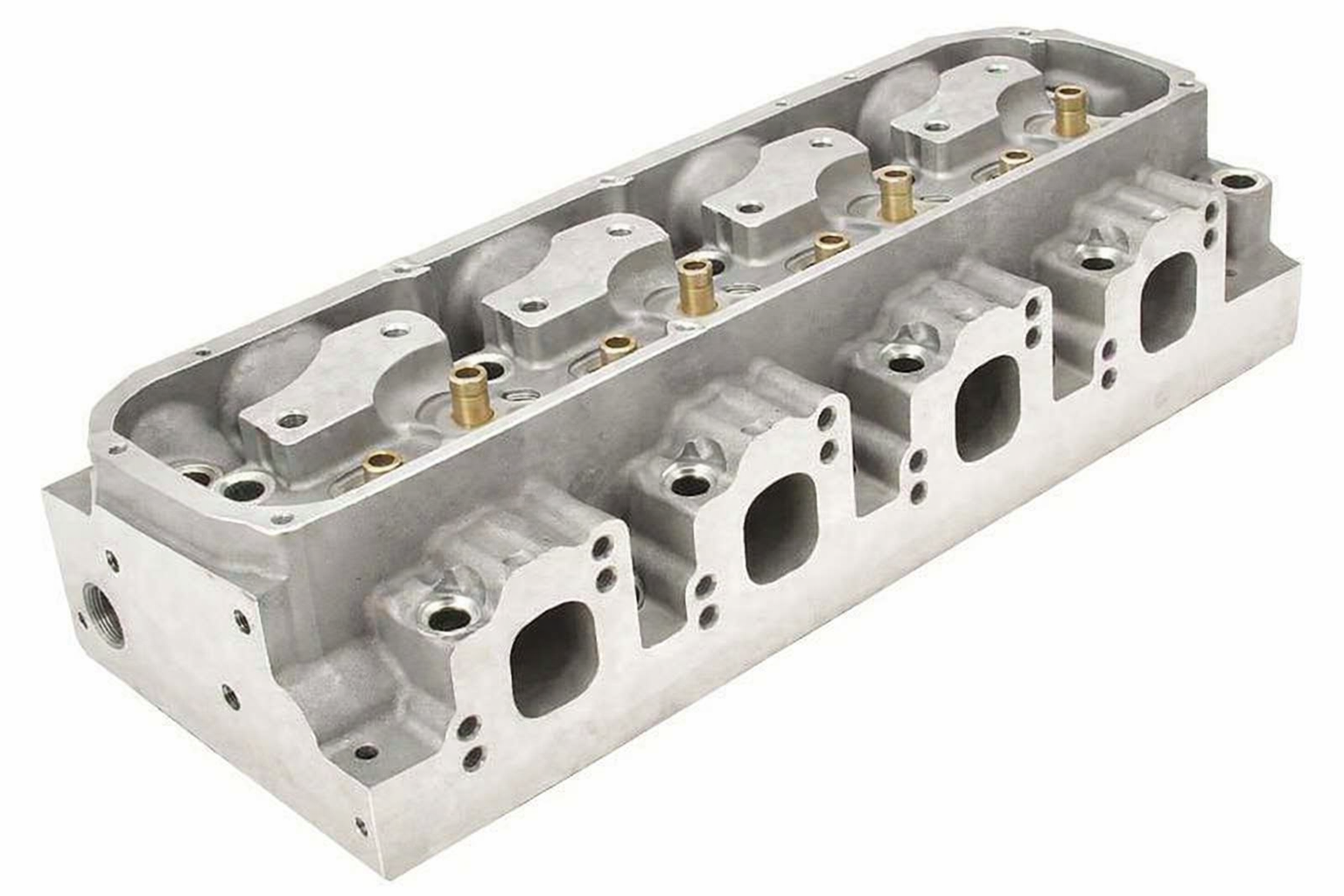
Automotive Industry
Transmission housings
Engine brackets
Structural components
👉 Benefits: lightweight + thermal performance
Electronics & Electrical
Heat sinks
Enclosures
Connector housings
👉 Critical for thermal management
Home Appliances
Motor housings
Frames
Heat-resistant components
Industrial Machinery
Pumps
Valves
Gearboxes
👉 Provides durability under heavy operation
Consumer Products
Bicycle parts
Furniture hardware
Power tools
Is Aluminum Alloy 383 Right for Your Project?
Use this quick decision checklist:
✅ Choose Aluminum 383 if:
You need complex die-cast shapes
Your project requires high production volume
Heat dissipation is important
Cost optimization is critical
❌ Avoid if:
Welding is required
High ductility is needed
Extreme mechanical strength is the priority
Conclusion
Aluminum Alloy 383 remains one of the most practical and cost-effective die casting materials in modern manufacturing.
Its combination of:
Excellent castability
Reliable strength
Good corrosion resistance
Competitive cost
…makes it a top choice across automotive, electronics, and industrial sectors.
FAQs
1. What is Aluminum Alloy 383?
A die casting aluminum alloy known for excellent castability and balanced mechanical properties.
2. Is it the same as ADC12?
Yes, Aluminum 383 is equivalent to ADC12 in many applications.
3. Is Aluminum 383 corrosion-resistant?
Yes, it offers good corrosion resistance for industrial and consumer use.
4. Can it be welded?
No, welding is not recommended due to cracking risks.
5. Is Aluminum 383 recyclable?
Yes, it is fully recyclable and environmentally sustainable.
🚀 Ready to Start Your Project?
If you are evaluating Aluminum 383 for your application, we can help you:
Optimize DFM (Design for Manufacturability)
Reduce production costs
Improve part performance
Deliver fast quotations
👉 Send us your drawings today for a free engineering review and quotation.
👉 Our team will respond within 24 hours.