



A500 carbon steel is the most widely used structural steel materials in modern construction, manufacturing, infrastructure, and industrial fabrication. Known for its excellent strength-to-weight ratio, superior weldability, and cost-effectiveness, ASTM A500 steel has become the preferred choice for engineers, fabricators, and project managers worldwide.
Whether you are designing a commercial building, manufacturing industrial equipment, constructing transportation infrastructure, or sourcing materials for custom fabrication projects, understanding the characteristics of A500 carbon steel can help you make the right material selection.
In this comprehensive guide, we will explore A500 steel grades, chemical composition, mechanical properties, applications, fabrication methods, and key factors to consider when choosing A500 steel for your project.
What Is ASTM A500 Carbon Steel?
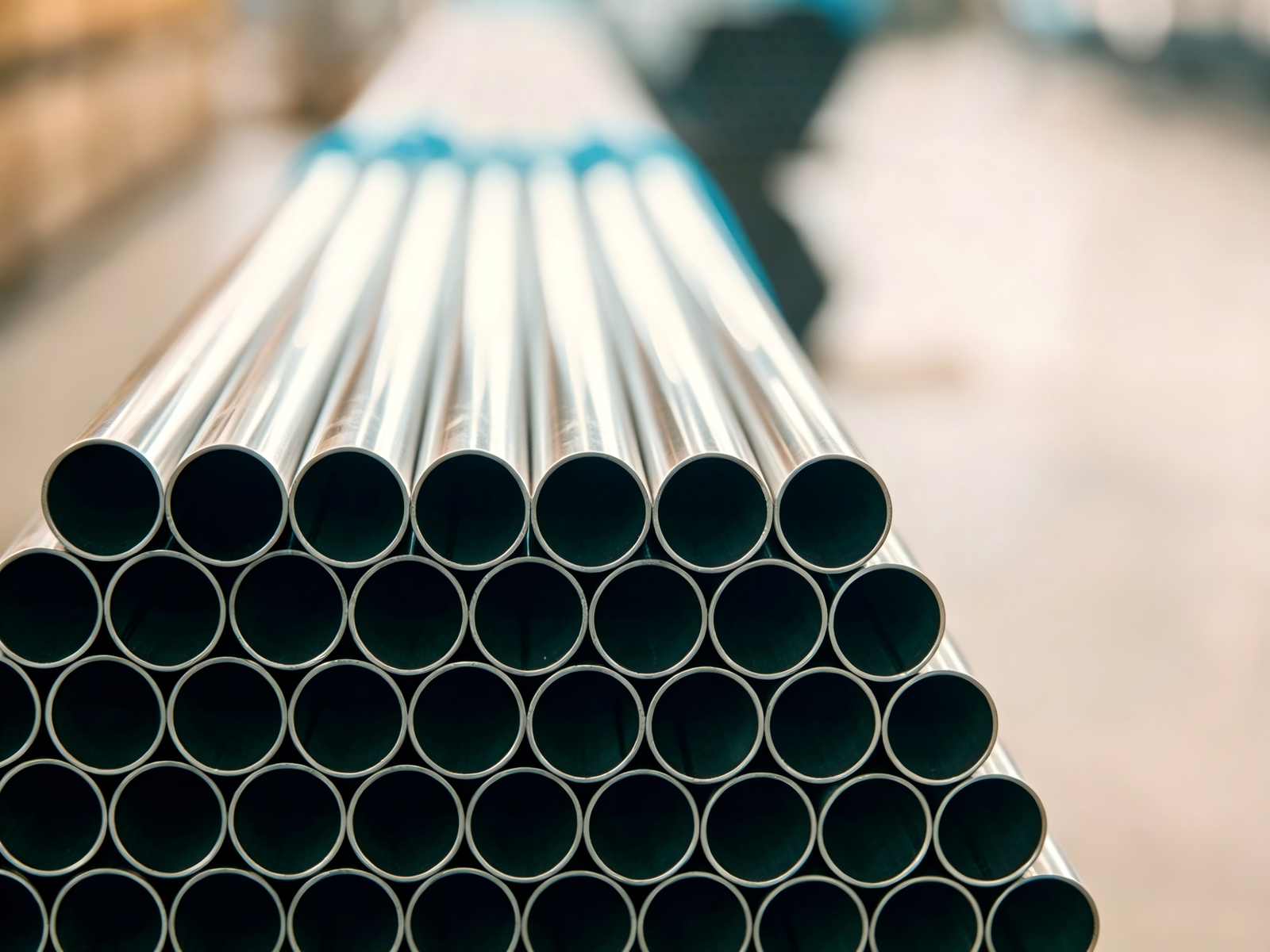
ASTM A500 is a standard specification developed by the American Society for Testing and Materials (ASTM) for cold-formed welded and seamless carbon steel structural tubing.
The material is primarily used in structural applications where strength, durability, and dimensional consistency are critical.
A500 steel is commonly manufactured into:
Square tubing
Rectangular tubing
Round tubing
Structural Hollow Sections (HSS)
Compared with traditional structural shapes, hollow structural sections provide higher strength-to-weight ratios and better resistance to torsional loads.
This makes A500 steel an ideal solution for structural frameworks, industrial equipment, machinery supports, and transportation systems.
Manufacturing Process of A500 Carbon Steel
The production process begins with carbon steel coils or sheets that are cold-formed into tubular shapes.
The manufacturing process generally includes:
Material Preparation
High-quality carbon steel strip is selected according to ASTM requirements.
Roll Forming
Steel strips are formed into tubular sections through precision rolling equipment.
Welding
The edges are joined using high-frequency electric resistance welding (ERW).
Sizing and Straightening
The tube is sized to exact dimensions and straightened for dimensional accuracy.
Inspection and Testing
Mechanical testing, dimensional inspection, and quality verification ensure compliance with ASTM A500 standards.
The cold-forming process increases strength while maintaining excellent dimensional consistency.
Chemical Composition of A500 Carbon Steel
The chemical composition of A500 steel contributes significantly to its mechanical properties and fabrication performance.
Major Elements
| Element | Function |
| Carbon (C) | Improves strength and hardness |
| Manganese (Mn) | Enhances toughness and wear resistance |
| Phosphorus (P) | Improves corrosion resistance |
| Sulfur (S) | Enhances machinability |
| Copper (Cu) | Improves atmospheric corrosion resistance |
The exact composition varies depending on the grade and manufacturer specifications.
Mechanical Properties of A500 Carbon Steel
One of the main reasons A500 steel is widely used is its outstanding mechanical performance.
Yield Strength
Yield strength determines the load at which permanent deformation begins.
Higher yield strength allows structural members to support heavier loads without bending.
Tensile Strength
Tensile strength measures the maximum stress the material can withstand before failure.
A500 steel exhibits excellent tensile properties suitable for demanding structural applications.
Elongation
Elongation indicates the material’s ductility.
Good elongation enables A500 steel to absorb impact loads without fracturing.
Toughness
A500 steel maintains excellent toughness, making it suitable for both static and dynamic loading conditions.
A500 Steel Grades Explained
ASTM A500 is available in several grades.
A500 Grade A
Features
Lower strength
Excellent formability
Good weldability
Typical Applications
Light structural components
General fabrication
Architectural structures
A500 Grade B
Features
Most commonly used grade
Balanced strength and cost
Excellent fabrication characteristics
Typical Applications
Building structures
Machinery frames
Equipment supports
A500 Grade C
Features
Higher yield strength
Improved load-bearing capacity
Enhanced structural performance
Typical Applications
Bridges
Heavy industrial structures
High-load applications
A500 Grade D
Features
Special mechanical requirements
Additional testing requirements
Typical Applications
Specialized engineering projects
Key Advantages of A500 Carbon Steel
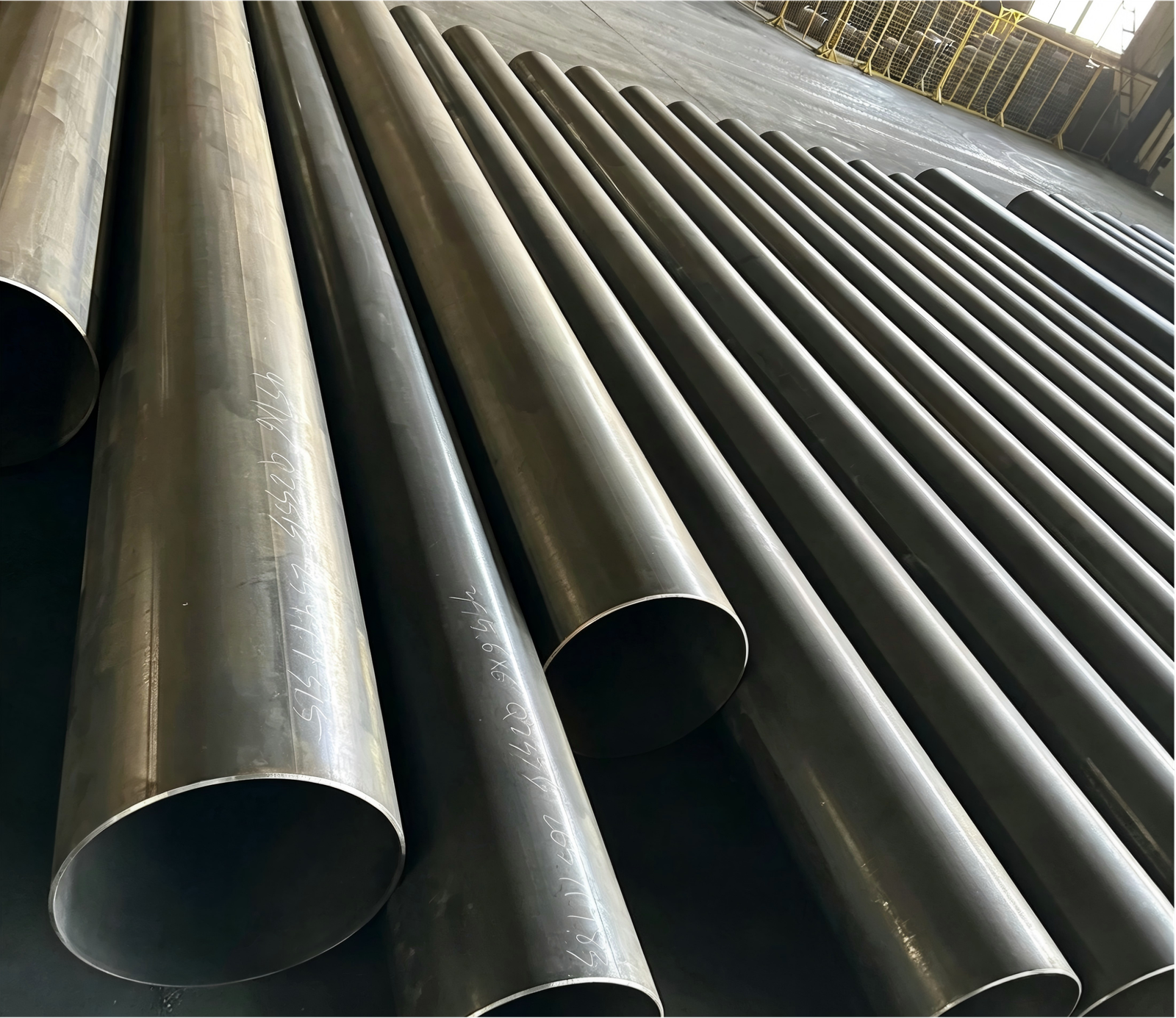
High Strength-to-Weight Ratio
A500 steel provides exceptional structural performance while minimizing overall weight.
This allows engineers to design lighter yet stronger structures.
Excellent Weldability
The material can be welded using common welding methods, including:
MIG welding
TIG welding
Stick welding
This reduces fabrication complexity and manufacturing costs.
Superior Formability
A500 steel can be cut, drilled, bent, and fabricated into complex shapes without sacrificing structural integrity.
Cost-Effective Material
Compared with many alloy steels, A500 provides excellent performance at a competitive cost.
Consistent Quality
ASTM specifications ensure consistent material properties across production batches.
Long Service Life
Properly protected A500 structures can remain in service for decades.
Common Applications of A500 Carbon Steel
Construction Industry
A500 steel is extensively used in:
Building frames
Structural columns
Roof supports
Mezzanine structures
Commercial buildings
Its combination of strength and lightweight design makes it ideal for modern construction.
Bridge and Infrastructure Projects
Engineers frequently select A500 steel for:
Pedestrian bridges
Highway sign supports
Guardrail systems
Utility structures
Its durability helps reduce long-term maintenance costs.
Industrial Equipment Manufacturing
Manufacturers use A500 steel for:
Machine bases
Equipment frames
Conveyor systems
Material handling equipment
The material’s rigidity ensures reliable operation under heavy loads.
Transportation Industry
A500 steel is commonly found in:
Truck chassis
Trailer frames
Railway components
Transportation support structures
The strength-to-weight advantage improves efficiency and payload capacity.
Oil and Gas Industry
Applications include:
Equipment skids
Pipe supports
Processing structures
Platform components
Its structural performance makes it suitable for demanding industrial environments.
Renewable Energy Projects
A500 steel is increasingly used in:
Solar mounting systems
Wind turbine structures
Energy storage platforms
The material provides the durability required for long-term outdoor installations.
A500 vs Other Structural Steel Grades
A500 vs A36 Steel
| Feature | A500 | A36 |
| Product Form | Tubing | Plate & Shapes |
| Strength-to-Weight Ratio | Higher | Lower |
| Structural Efficiency | Excellent | Good |
| Torsional Resistance | Excellent | Moderate |
A500 is generally preferred when hollow structural sections are required.
A500 vs A53 Steel
A53 is primarily intended for pressure and piping applications.
A500 is specifically designed for structural applications.
For structural frameworks, A500 is usually the better choice.
A500 vs A572 Steel
A572 offers higher strength but often comes at a higher cost.
A500 remains one of the most economical structural steel options available.
Welding and Fabrication of A500 Steel
Welding
A500 steel offers excellent weldability.
Common welding processes include:
MIG Welding
TIG Welding
Stick Welding
Flux-Core Welding
Proper welding procedures help maintain mechanical integrity.
Machining
A500 steel can be machined using standard CNC equipment.
Common operations include:
Drilling
Tapping
Boring
Proper tooling selection improves productivity and surface finish quality.
Cutting Methods
Laser Cutting
Provides excellent precision and clean edges.
Plasma Cutting
Suitable for thicker sections and large production runs.
Waterjet Cutting
Produces high-quality cuts without heat-affected zones.
Surface Finishing Options
Popular finishing methods include:
Powder coating
Painting
Electroplating
Galvanizing
Black oxide treatment
These finishes improve appearance and corrosion resistance.
Corrosion Resistance and Surface Protection
Although A500 steel possesses reasonable atmospheric corrosion resistance, it is still a carbon steel material and can rust when exposed to moisture over time.
Hot-Dip Galvanizing
Galvanized A500 steel offers significantly improved outdoor durability.
Benefits include:
Long-term corrosion protection
Reduced maintenance costs
Extended service life
Powder Coating
Powder coating provides:
Attractive appearance
Chemical resistance
Additional corrosion protection
Painting Systems
Industrial paint systems remain a cost-effective solution for many applications.
Design Considerations When Selecting A500 Steel
Before selecting A500 steel, engineers should evaluate:
Load Requirements
Determine expected static and dynamic loads.
Environmental Conditions
Consider exposure to:
Moisture
Salt spray
Chemicals
UV radiation
Section Shape
Available options include:
Round tubing
Square tubing
Rectangular tubing
Each shape offers unique structural advantages.
Wall Thickness
Selecting the appropriate wall thickness ensures safety while minimizing material costs.
Budget Requirements
A500 steel provides an excellent balance between performance and affordability.
CNC Machining and Fabrication Services for A500 Carbon Steel
Choosing the right fabrication partner is just as important as selecting the right material.
At Tops Precision, we provide comprehensive A500 carbon steel fabrication services, including:
CNC Machining
Precision milling
CNC turning
Drilling and tapping
Custom machined components
Laser Cutting
High-accuracy laser cutting for prototypes and production parts.
Welding and Assembly
Professional fabrication and assembly services for structural and industrial components.
Surface Treatments
Powder coating
Plating
Painting
Custom finishing
Quality Inspection
Every project undergoes rigorous inspection to ensure dimensional accuracy and compliance with customer specifications.
Whether you require prototypes, low-volume production, or large-scale manufacturing, our engineering team can provide customized fabrication solutions tailored to your application.
Conclusion
ASTM A500 carbon steel remains one of the most versatile and cost-effective structural materials available today. Its combination of high strength, excellent weldability, superior formability, and long-term durability makes it the preferred choice for countless structural and industrial applications.
Whether you are building commercial structures, manufacturing industrial equipment, designing transportation systems, or fabricating custom components, selecting the appropriate A500 steel grade can significantly improve performance and project efficiency.
If you are looking for a reliable partner for A500 carbon steel CNC machining, laser cutting, welding, and custom fabrication, Tops Precision can provide complete manufacturing solutions from prototype development to full-scale production.
Contact our engineering team today to discuss your project requirements and request a customized quotation.
FAQs
1.What is ASTM A500 steel used for?
A500 steel is primarily used for structural tubing, construction frameworks, industrial equipment, transportation structures, and infrastructure projects.
2.Is A500 stronger than A36 steel?
Generally, A500 structural tubing offers a higher strength-to-weight ratio and improved structural efficiency compared to A36 steel.
3.Can A500 steel be galvanized?
Yes. A500 steel is commonly hot-dip galvanized to improve corrosion resistance for outdoor applications.
4.Is A500 steel easy to weld?
Yes. A500 steel has excellent weldability and is compatible with most standard welding methods.
5.What is the difference between Grade B and Grade C?
Grade C generally offers higher yield and tensile strength than Grade B, making it suitable for more demanding structural applications.
6.Is A500 steel suitable for outdoor use?
Yes. When combined with protective coatings such as galvanizing or powder coating, A500 steel performs exceptionally well outdoors.
7.Can A500 steel be CNC machined?
Absolutely. A500 steel can be machined using conventional CNC milling, turning, drilling, and tapping operations.
8.Which industries commonly use A500 carbon steel?
Construction, infrastructure, transportation, manufacturing, oil and gas, renewable energy, agriculture, and industrial equipment industries all widely utilize A500 steel.


