


A stainless steel passivation specification should identify the alloy, treatment standard, permitted process, acceptance test, and required records. Agree these before quoting. A note stating only “passivate” leaves the processor to interpret decisions that belong to your product requirements.
Separate Treatment Requirements From Product Acceptance
Your specification should define both the processing requirement and the evidence needed for acceptance.
ASTM A967/A967M-25 covers alternative chemical passivation treatments and qualitative verification tests. Its scope does not select the appropriate grade, treatment, or acceptance criteria for your particular application.
State the contractual edition and approved treatment route. Identify the applicable test and sampling requirements rather than assuming every listed test applies. Have the responsible engineering authority review suitability for the alloy and service.
Do not equate a successful passivation test with guaranteed corrosion resistance in every environment. Material selection and operating conditions still matter.
Review Incoming Surface Condition Before Choosing The Process
Effective procurement starts with the actual surface condition, rather than an assumption that passivation replaces all cleaning.
Carpenter Technology's passivation guidance emphasizes cleaning before treatment and alloy-specific considerations. Free-machining grades need appropriate process review. Do not apply one generic bath recipe to every stainless alloy.
Identify machining residues, scale, heat tint, prior treatments, and inaccessible passages. Ask the processor which conditions require additional preparation. Keep cleaning, oxide removal, and passivation distinguishable in the quotation.
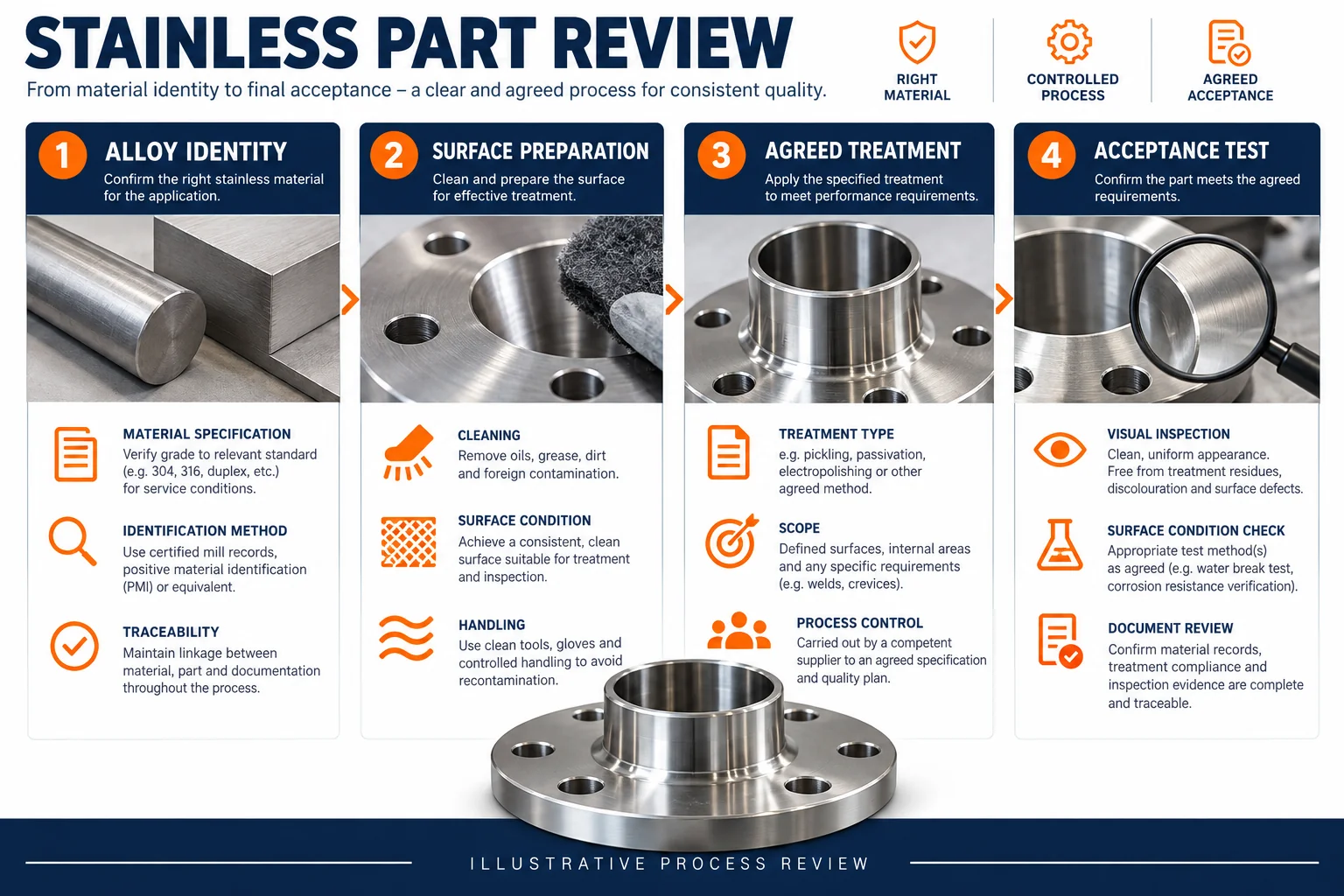
Review blind features and assemblies for chemical access, rinsing, drainage, and drying. Agree how the processor will protect finished surfaces during subsequent handling.
Put The Essential Requirements In Your RFQ
A clear RFQ connects material identity, process scope, and final verification to the delivered lot.
| Requirement | Information To Provide |
|---|---|
| Material | Exact alloy, material specification, and available certification |
| Incoming condition | Machining stage, residues, heat tint, and prior finishes |
| Treatment | Governing specification edition and permitted route |
| Restrictions | Critical dimensions, appearance, and protected features |
| Acceptance | Applicable test, sampling, criteria, and release responsibility |
| Records | Lot identity, treatment evidence, results, and deviations |
Ask the processor to identify exceptions before purchase approval. If the proposed route differs from the drawing, obtain an authorized disposition.
A quotation should separate any additional preparation and testing from the basic treatment scope. Difficult access, special handling, and documentation can change the work required.
Keep Verification And Shipment Evidence Traceable
Your acceptance evidence should identify which treated lot and agreed procedure the results represent.
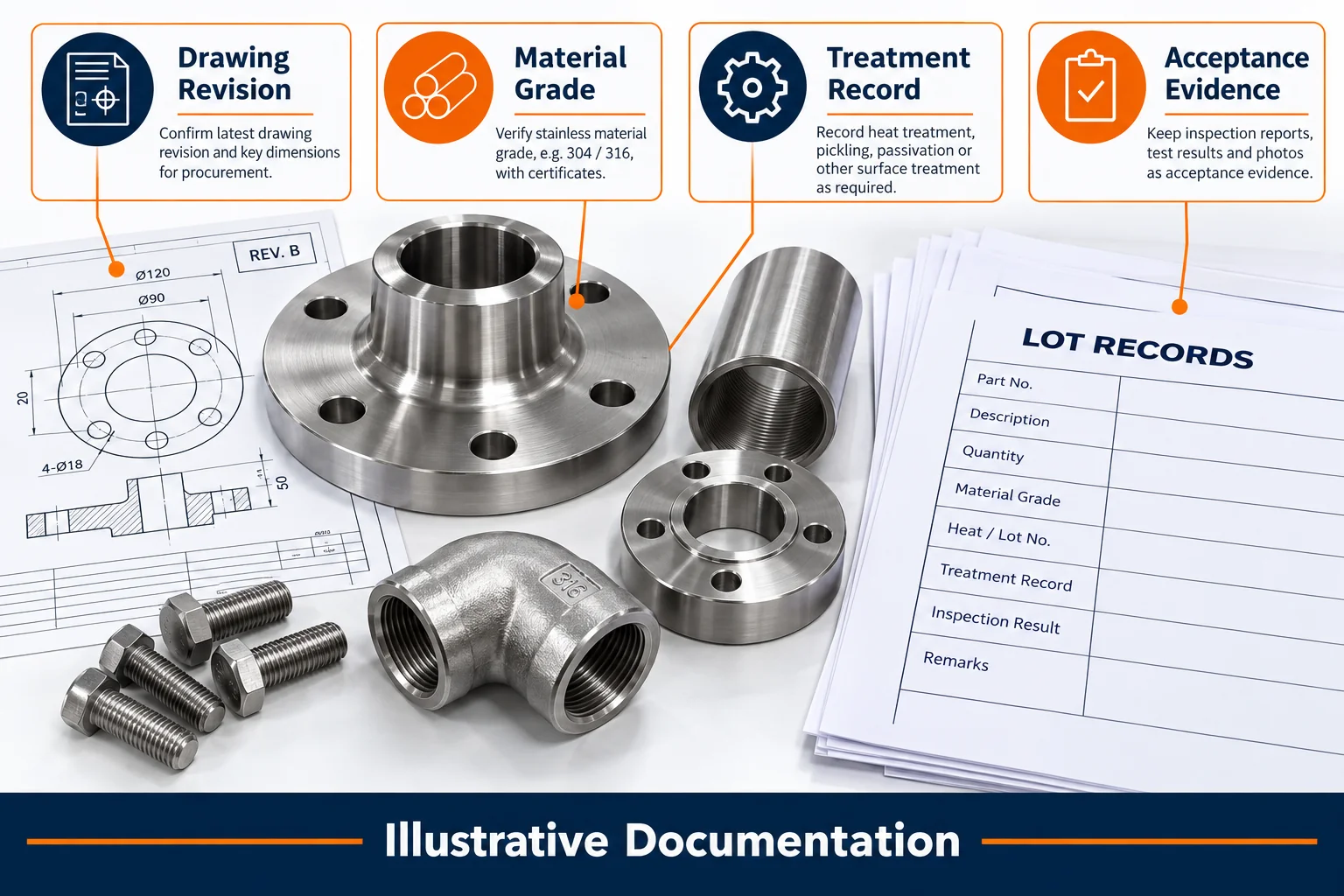
Request the part number, drawing revision, alloy identification, processing lot, specified treatment, and agreed test results. Record deviations and their authorization. Define retention requirements where your program needs them.
A bright appearance alone cannot establish compliance. Conversely, appearance acceptance should still address damage or surface changes prohibited by your drawing.
If testing fails, contain the lot and investigate the cause. Do not repeatedly process parts without an approved rework route. Review possible effects on dimensions, appearance, and remaining material condition.
Frequently Asked Questions
Your purchase agreement should resolve the practical assumptions behind a short finishing note.
Does Passivation Replace Cleaning
No. Establish the required surface preparation separately. The incoming condition and alloy determine the appropriate processing sequence.
Must Every Test In ASTM A967 Be Performed
Do not assume so. Agree the applicable verification requirements using the governing specification and authorized product requirements.
Does Passivation Guarantee Stainless Steel Will Never Corrode
No. The treatment cannot make an unsuitable alloy appropriate for every service environment.
Can A Supplier Change The Treatment Route
Only within the contract or an authorized deviation. Confirm alloy suitability and required verification before approving the change.
Request A Stainless Steel Manufacturing Review
TOPS provides custom CNC machining services. Send your drawing, alloy, quantities, surface condition, and finishing requirements. Contact us to review the machining, treatment, and acceptance scope before ordering.