


Transparent and translucent are terms used to describe how clearly light passes through materials. Selecting the appropriate method for producing these parts can significantly affect the final product’s performance, visual appeal, and cost-effectiveness. Understanding these differences ensures the best choices for various applications, from consumer electronics to automotive lighting.
Transparent Materials: Overview
Definition of Transparency
Transparent materials allow light to pass through completely, with minimal absorption or scattering. This enables clear imaging through the material.
Characteristics of Transparent Materials
Complete adherence to the laws of refraction.
Clear and consistent appearance.
Minimal internal defects or impurities.
Common Examples:
Glass
Clear acrylic (PMMA)
Polycarbonate (PC)
Diamond
Clear water
Practical Applications:
Eyeglasses
Camera lenses
Automotive headlamps
Computer screens
Aquariums and tanks
Translucent Materials: Overview
Definition of Translucency
Translucent materials allow partial transmission of light but scatter photons, preventing clear image formation.
Characteristics of Translucent Materials
Partial or diffuse transmission of light.
Does not necessarily adhere strictly to refraction laws.
Contains internal structural inconsistencies, promoting photon scattering.
Common Examples:
Frosted glass
Wax paper
Tinted plastics
Ice cubes
Jelly
Practical Applications:
Privacy glass
Light diffusers in lamps
Packaging materials
Decorative components
Material Selection: PMMA vs. Polycarbonate vs. Others
The choice of material is the single biggest factor in determining the final clarity and longevity of the part.
| Property | PMMA (Acrylic) | Polycarbonate (PC) | PETG | Clear Resin (SLA) |
| Optical Clarity | Highest ($92\%$ Transmittance) | High ($89\%$ Transmittance) | Moderate | Variable (Requires Coating) |
| Impact Strength | Low (Brittle) | Extreme (Bulletproof) | Moderate | Low to Moderate |
| Scratch Resistance | High | Low (Easily Scratched) | Moderate | Low |
| UV Stability | Excellent (Won’t Yellow) | Poor (Requires UV Stabilizers) | Good | Poor (Yellows over time) |
| Best Process | CNC, Laser, Molding | CNC, Injection Molding | 3D Printing, FDM |
Engineering Insight: PMMA vs. PC
Engineers often face a dilemma: PMMA offers the best clarity and won’t yellow over time, but it cracks under stress. PC is virtually unbreakable, but it is “soft,” scratches easily, and will turn yellow if exposed to sunlight unless treated with specialized UV-resistant coatings.
Transparent vs. Translucent: Key Differences

How Much Light Passes Through?
Transparent materials let almost all the light shine straight through. Imagine clear glass windows: you can easily see what’s on the other side.
Translucent materials only let some light through, scattering the rest. Think of frosted glass—you can tell something’s behind it, but details are fuzzy.
Can You See Clearly Through It?
Transparent means you get a clear view. If you hold up clear plastic, you can see clearly through it, like looking through a camera lens.
Translucent means your view is blurry or unclear. Like holding wax paper against a bright light, you know something’s there, but it’s not sharp.
Do They Follow the Rules of Refraction (Bending of Light)?
Transparent materials follow the rules of refraction. Light enters and exits smoothly, staying orderly. That’s why lenses and eyeglasses work so well.
Translucent materials scatter the light, so they don’t strictly follow these refraction rules. That’s why they glow softly rather than clearly.
How Good is the Image Quality?
With transparent materials, you get sharp images. Think of looking through a clean fish tank—you can see fish clearly.
With translucent materials, images are blurred or impossible to see clearly. Imagine looking through ice cubes—it’s unclear what’s behind.
Internal Material Quality
Transparent materials typically have fewer internal flaws or imperfections, so nothing blocks or scatters the light.
Translucent materials usually have internal imperfections or tiny particles that scatter and diffuse the light, making things look less clear.
Importance of Transparent and Translucent Parts in Manufacturing
Transparency allows direct observation of internal processes, which is essential for monitoring equipment operation. Meanwhile, translucency provides controlled illumination, aesthetic appeal, and privacy. Both properties play crucial roles in various applications, influencing a product’s practical usage and visual impact.
Manufacturing Processes for Transparent and Translucent Parts
Here are the most common ways manufacturers create transparent and translucent parts, explained in easy-to-follow terms:
3D Printing with SLA (Stereolithography)

SLA uses lasers to solidify liquid resin layer-by-layer into solid objects.
Good for: Quick prototypes, detailed shapes, and complex designs.
Pros:
Fast, great for quick tests
Affordable prototypes
Complex shapes possible
Cons:
Less durable and can be brittle
Needs extra work (polishing) to get clear finish
Not great for long-term use
CNC Machining (Computer-Controlled Cutting)
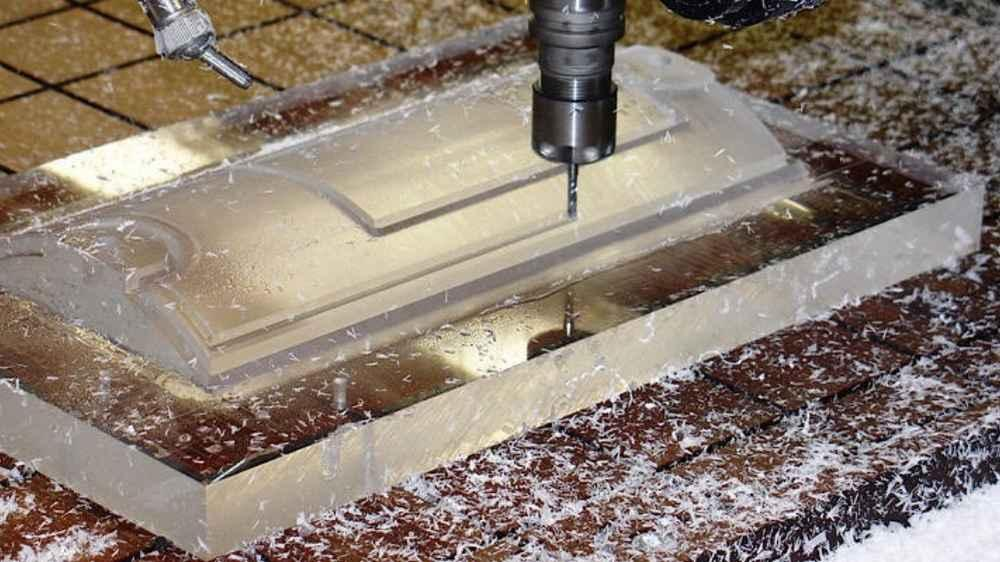
CNC machines carve transparent parts from solid blocks of clear plastics like acrylic.
Good for: Accurate parts with good strength, like car headlights or lenses.
Pros:
High precision and strength
Smooth, clear finish possible after polishing
Closer to real final products
Cons:
Expensive for large quantities
Takes longer, especially with polishing
Can’t easily make complicated internal shapes
Injection Molding

Injection molding melts clear plastic, then injects it into a mold to create many identical parts.
Good for: Mass-produced items, like clear cups or electronic covers.
Pros:
Fast and efficient for large volumes
Very consistent quality
Durable, high-quality finish
Cons:
High upfront costs (making molds is expensive)
Slow startup time (weeks/months for molds)
Not ideal for small batches or one-offs
Vacuum Casting (Silicone Mold Casting)
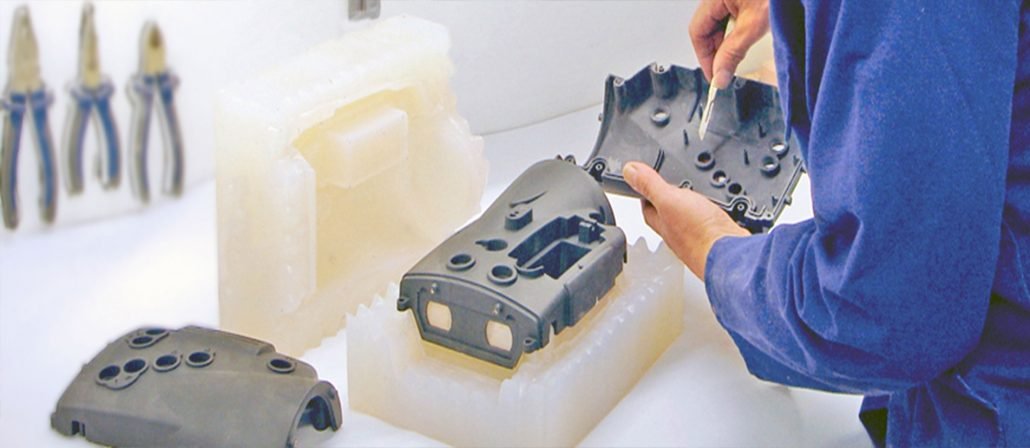
Vacuum casting uses silicone molds filled with clear resin, perfect for making small batches of parts.
Good for: Low-volume production, quick tests, and visual samples.
Pros:
Affordable for small batches
Fast turnaround
Easy color adjustments
Cons:
Not as strong or durable as injection molded parts
Each mold can only make around 20 copies
Other Techniques (Laser and Waterjet Cutting)
These methods cut flat shapes quickly from clear sheets.
Good for: Simple, flat designs.
Pros:
Quick for flat parts
Accurate cuts
Cons:
Limited to flat or simple designs
Costly for thick or complex shapes
Knowing these methods helps you pick the right technique depending on how strong, clear, complicated, or cost-effective you need your parts to be.
Post-processing Techniques for Enhanced Transparency and Translucency
Achieving desired transparency often requires additional finishing processes, including:
Sanding
Prepares surfaces for subsequent processes. Essential for removing roughness, tool marks, and enhancing transparency.
Polishing and Fumigation
Mechanical polishing smooths surfaces, increasing transparency. Acetone fumigation chemically smooths certain plastics (e.g., PC, PS), further improving clarity.
Among the materials commonly used for polishing, felt fabric offers the optimal level of softness; not only does it avoid scratching the surface, but it also ensures that pressure is applied evenly. Furthermore, it effectively distributes polishing paste across every minute detail of the surface. Most importantly—and this is a critical factor—it does not leave behind any visible scratches.
Spray Painting and Coating
Applies protective and aesthetic finishes, adjusting transparency or translucency levels and adding UV protection or coloration.
Resin Coating
Ideal for achieving high clarity on flat surfaces, resin coating fills minor imperfections, providing a clear, glass-like appearance.
Coloring Techniques
Adding tints or textures to enhance visual appeal and functionality, commonly through painting, tinting, or texture coating methods.
Factors to Consider When Choosing the Right Manufacturing Method
To select the appropriate method, consider:
Production volume: Injection molding for large volumes, SLA or vacuum casting for prototypes or small runs.
Material strength requirements: CNC machining or injection molding for robust parts.
Budget constraints: Vacuum casting or SLA for cost-sensitive prototype needs.
Transparency level: CNC machining and injection molding provide the highest clarity.
Geometric complexity: SLA for complex geometries; CNC for simpler shapes with higher precision.
Conclusion
Transparent and translucent materials enhance a product’s functionality and aesthetic appeal. Choosing the correct production method requires balancing transparency requirements, strength, complexity, volume, and cost considerations. By understanding the strengths and limitations of SLA, CNC machining, injection molding, and vacuum casting, manufacturers can make informed decisions that optimize both performance and profitability.
At Tops Precision, we combine high-speed 5-axis CNC machining with advanced vapor polishing and specialized clear-coat finishing to achieve optical-grade transparency that meets automotive and medical standards.”
FAQs
1. Why does my clear part look “milky” or “发蒙” after CNC machining?
This is caused by high Haze. Even if the part feels smooth, there are likely microscopic tool marks or “sub-surface damage” from a dull cutting tool. To fix this, you must sand through the damaged layer before beginning the final polish.
2. Can I make an internal hollow chamber in a plastic part perfectly clear?
Yes, but only via Vapor Polishing or Vacuum Casting. Manual polishing cannot reach internal chambers. Vapor polishing allows the solvent gas to enter the chamber and “melt” the internal surfaces to a clear finish.
3. What is “Crazing,” and why does it happen to my transparent parts?
Crazing looks like a web of tiny internal cracks. It is usually caused by chemical stress. If a part has high internal stress (from injection molding or aggressive machining) and is then exposed to a solvent (like alcohol or a polishing vapor), the stress is released violently, cracking the molecular chains.
4. Why should I use PMMA instead of Polycarbonate for a light pipe?
PMMA has a higher transmittance ($92\%$) and lower light absorption over distance. For “light pipes” or “fiber optic” applications, light will travel further in PMMA without losing intensity or changing color (shifting to yellow) compared to Polycarbonate.
5. How do I prevent “Sink Marks” from ruining my clear part’s optics?
In transparent parts, sink marks (small depressions caused by cooling) act like unintended lenses, distorting everything behind them. To prevent this, ensure your wall thicknesses are uniform and do not exceed $4\text{mm}$ for injection molded parts. If thick sections are needed, consider machining from a solid block.
6. Does clear 3D printing (SLA) meet medical biocompatibility standards?
Some resins are Class VI biocompatible, but the clear coat used to make them transparent often is not. If your part is for medical use (e.g., a clear manifold for blood), you must use a biocompatible resin and achieve clarity through mechanical polishing alone, or use a medical-grade clear coating.