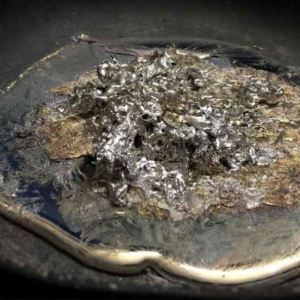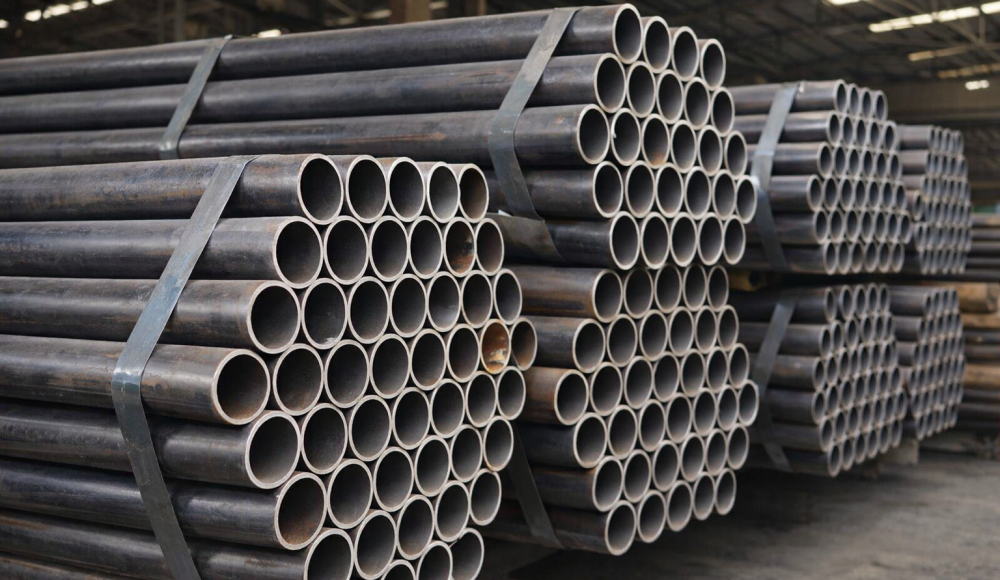
1004 El acero al carbono es un low-carbon steel grade widely used in manufacturing, construcción, y la industria automotriz. Debido a su excellent formability, buena soldadura, y rentabilidad, it is a practical material choice for many general fabrication applications.
With a carbon content of around 0.04–0.06%, 1004 steel offers a balanced combination of ductilidad, maquinabilidad, y fuerza, making it suitable for processes such as cold forming, estampado, doblando, soldadura, and light machining.
En esta guía, we will explain the chemical composition, propiedades mecánicas, ventajas, aplicaciones comunes, and machining characteristics of 1004 acero carbono. If you are selecting materials for manufacturing or engineering projects, este artículo le ayudará a determinar si 1004 steel is the right choice for your application.
Composición química de 1004 Acero carbono
Entendiendo el chemical composition of 1004 acero carbono is essential because each alloying element directly influences the material’s fortaleza, ductilidad, soldadura, y maquinabilidad.
1004 steel belongs to the AISI 10xx series of plain carbon steels, where the last two digits typically indicate the approximate carbon percentage.
Typical Chemical Composition
| Elemento | Percentage (%) | Función |
| Carbón (C) | Max 0.06 | Provides strength and hardness while maintaining ductility |
| Silicio (Y) | 0.10 – 0.35 | Improves strength and elasticity; acts as a deoxidizer |
| Manganeso (Minnesota) | 0.25 – 0.50 | Enhances strength and toughness |
| Fósforo (PAG) | Max 0.040 | Improves machinability but excessive amounts reduce ductility |
| Azufre (S) | Max 0.040 | Improves machinability but may reduce toughness |
debido a su bajo contenido de carbono, 1004 steel remains relatively soft and ductile, which is why it performs well in forming and welding processes.
Propiedades mecánicas de 1004 Acero carbono
When engineers select materials for manufacturing, propiedades mecánicas como la fuerza, dureza, and ductility are critical.
Below are the typical mechanical properties of 1004 acero carbono.
Mechanical Property Table
| Propiedad | Valor típico | Descripción |
| Resistencia a la tracción | ~231 MPa | Maximum stress the material can withstand before breaking |
| Fuerza de producción | ~154 MPa | Stress level where permanent deformation begins |
| Alargamiento | ~50–56% | Indicates ductility and formability |
| Dureza Brinell | 235–268 HB | Resistance to indentation |
| Dureza Rockwell | Around HRC 30 | Alternative hardness measurement |
Estas propiedades hacen 1004 steel particularly suitable for applications that require good flexibility and forming capability rather than extremely high strength.
Ventajas de 1004 Acero carbono
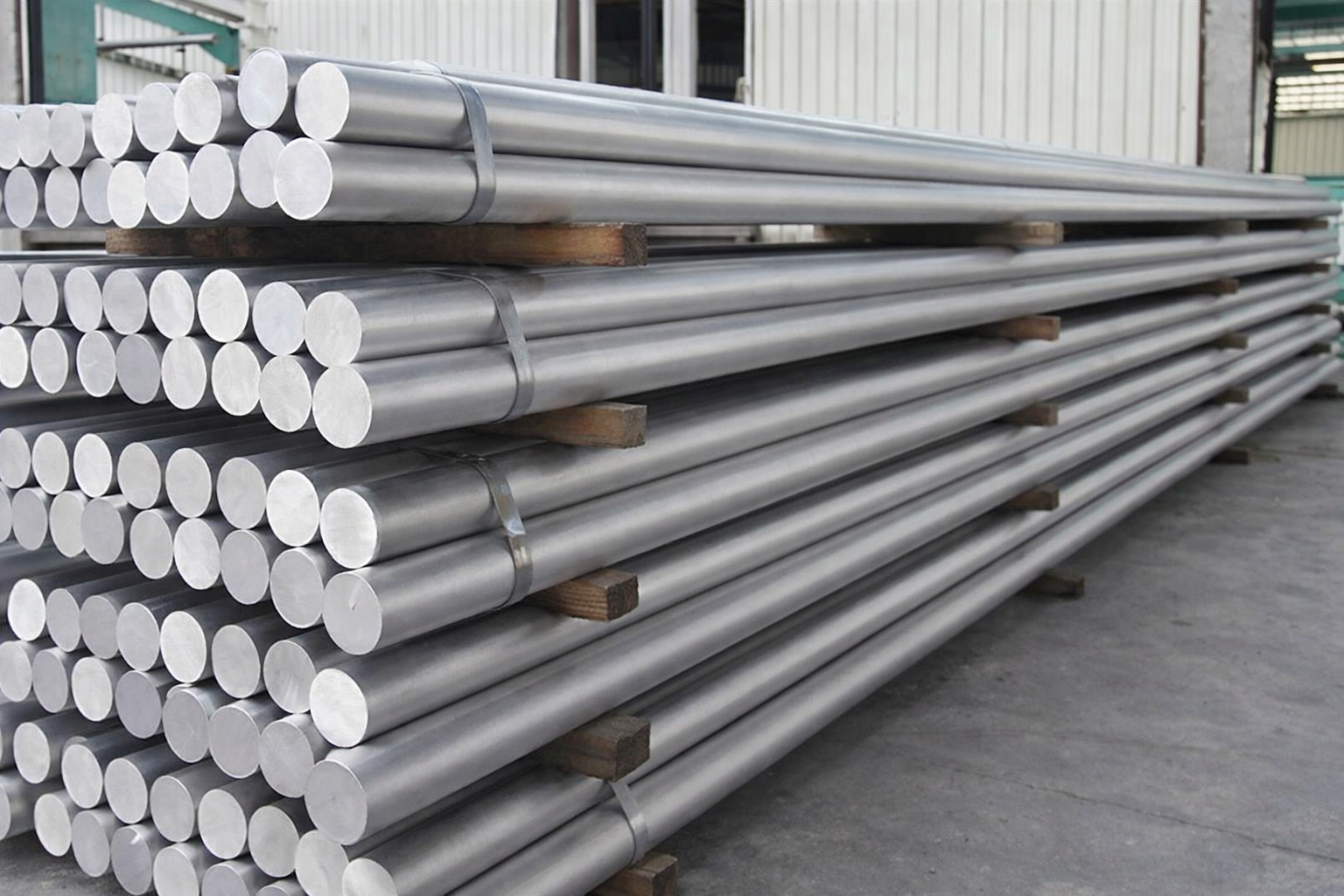
1004 carbon steel offers several advantages that make it a widely used material in manufacturing industries.
1. Excelente formabilidad
El bajo contenido de carbono provides excellent ductility, allowing the material to be easily shaped through:
Doblar
Laminación
Estampado
Deep drawing
Esto hace 1004 steel ideal for components requiring complex geometries and precise dimensions.
2. Soldabilidad superior
Because the carbon level is very low, welding defects such as cracking or brittleness are less likely to occur.
1004 carbon steel can be welded using common welding methods such as:
soldadura MIG
soldadura TIG
Soldadura por resistencia
Arc welding
This makes it suitable for structural assemblies and fabricated components.
3. Material rentable
1004 steel is produced using a simple manufacturing process without expensive alloying elements.
Como resultado, ofrece:
Bajo costo de material
Easy availability
Efficient production for high-volume manufacturing
Esto lo hace ideal para large-scale industrial production.
4. Aplicaciones versátiles
Due to its balanced properties, 1004 steel can be used across many industries including:
Fabricación de automóviles
Construcción
Machinery production
Fabricación de metal
5. Widely Available Supply
As a standard carbon steel grade, 1004 steel is widely available in various forms:
Steel sheets
Platos
Verja
tubos
Bobinas
This availability reduces lead time and procurement complexity for manufacturers.
Aplicaciones de 1004 Acero carbono
debido a su excellent formability and weldability, 1004 carbon steel is commonly used in many industrial applications.
1. Componentes automotrices
The automotive industry frequently uses 1004 steel to manufacture parts such as:
Corchetes
Structural panels
Engine support components
Suspension elements
Su formabilidad permite a los fabricantes crear complex shapes required for modern vehicle structures.
2. Materiales de construcción
1004 steel is also used in the construction industry for components such as:
vigas estructurales
Columns
Piezas de refuerzo
Building frames
Su combinación de resistencia y ductilidad ensures structural reliability.
3. Manufacturing Equipment
In industrial equipment manufacturing, 1004 carbon steel is used to produce:
Machine frames
Corchetes
Accesorios
Mounting components
These components require durability and easy fabrication.
4. General Metal Fabrication
Many metal fabrication projects use 1004 steel for products such as:
Tubería
tubos
Sheet metal parts
Gabinetes
Es flexibility and ease of processing make it a preferred material.
5. Bienes de consumo
Many consumer products incorporate 1004 acero carbono, incluido:
Electrodomésticos
Marcos de muebles
Hardware components
The material offers a good balance between strength, costo, y capacidad de fabricación.
Opciones de tratamiento de superficies para 1004 Acero carbono
Because plain carbon steel is prone to corrosion, surface treatments are often applied.
Common Surface Treatments
Galvanizante
Provides zinc coating to protect against rust.
Recubrimiento en polvo
Improves both appearance and corrosion resistance.
Cuadro
A cost-effective protective coating method.
Oiling
Used during storage or transportation to prevent oxidation.
These treatments can significantly increase the lifespan of 1004 steel components.
1004 Carbon Steel vs 1005 / 1006
1004, 1005, y 1006 steels all belong to the low-carbon steel family, but they differ slightly in carbon content and mechanical properties.
Comparison Table
| Calificación | Contenido de carbono | Fortaleza | Formabilidad | Uso típico |
| 1004 | ≤0.06% | Más bajo | Excelente | Deep forming and welding |
| 1005 | 0.05–0.08% | Moderado | Muy bien | General fabrication |
| 1006 | 0.06–0.08% | Ligeramente más alto | Bien | Partes estructurales |
Diferencias clave
1004 acero provides the best formability due to the lowest carbon content.
1005 acero offers a balance between strength and ductility.
1006 acero provides slightly higher strength but reduced formability.
Manufacturers typically choose 1004 steel for forming-intensive applications.
Es 1004 Carbon Steel Suitable for CNC Machining?
Sí, 1004 carbon steel can be used for CNC machining, but its machinability is considered moderate rather than excellent.
Machining Characteristics
Advantages for machining include:
Stable structure
Buena ductilidad
Desgaste de herramientas mínimas
Sin embargo, because it is relatively soft, some challenges may occur:
Chips may become long and stringy
Surface finishing may require optimized cutting parameters
Recommended Machining Processes
1004 carbon steel can be machined using:
Perforación
tocando
Typical Machined Components
Mechanical brackets
Soportes estructurales
Industrial fixtures
Machine components
Manufacturers often apply surface finishing processes such as coating or plating after machining to improve corrosion resistance.
Conclusión
1004 El acero al carbono es un versátil, económico, and easy-to-process material widely used in manufacturing, construcción, and fabrication industries.
Es low carbon content provides excellent formability and weldability, making it ideal for applications involving doblando, estampado, soldadura, and light machining.
Although it does not offer the highest strength among carbon steels, es cost-effectiveness and processing flexibility make it a reliable choice for many industrial applications.
When properly treated with protective coatings or surface finishes, 1004 carbon steel can deliver long-lasting performance in a wide range of products and structural components.
FAQs
1. How much carbon does 1004 carbon steel contain?
1004 carbon steel typically contains arriba a 0.06% carbón, which classifies it as a low-carbon steel.
2. Es 1004 carbon steel stronger than 1005 o 1006?
No. Because it contains less carbon, 1004 steel generally has slightly lower strength que 1005 o 1006 steel but better formability.
3. Poder 1004 carbon steel be cold formed?
Sí. Its excellent ductility makes it highly suitable for cold forming operations such as bending, estampado, and deep drawing.
4. Poder 1004 carbon steel be welded easily?
Sí. El low carbon content reduces the risk of weld cracking, making it compatible with most common welding processes.
5. What surface treatments are recommended for 1004 acero carbono?
Los tratamientos comunes incluyen:
Galvanizante
Revestimiento de polvo
Cuadro
Oiling
These treatments improve resistencia a la corrosión y durabilidad.