



Aluminio Es uno de los metales de ingeniería más utilizados en el mundo., en gran parte debido a su abundancia, naturaleza liviana, resistencia a la corrosión, y versatilidad. Como el elemento metálico más abundante en la corteza terrestre., El aluminio sirve a industrias que van desde la eléctrica y la construcción hasta la aeroespacial., procesamiento de alimentos, y energías renovables.
Al alear aluminio con cantidades controladas de otros elementos., Los fabricantes pueden adaptar su mecánica., físico, y propiedades químicas para aplicaciones específicas. Estas aleaciones se clasifican en series y grados., cada uno diseñado para equilibrar la fuerza, formabilidad, conductividad, y resistencia a la corrosión.
Entre estos, 1050 aleación de aluminio destaca como un grado de aluminio comercialmente puro. Con un contenido de aluminio excepcionalmente alto, prioriza la conductividad, ductilidad, y resistencia a la corrosión sobre la resistencia mecánica. Este artículo proporciona una descripción técnica completa del aluminio. 1050, incluyendo su composición, propiedades, comportamiento de fabricación, y aplicaciones industriales.
Qué es 1050 Aleación de aluminio?
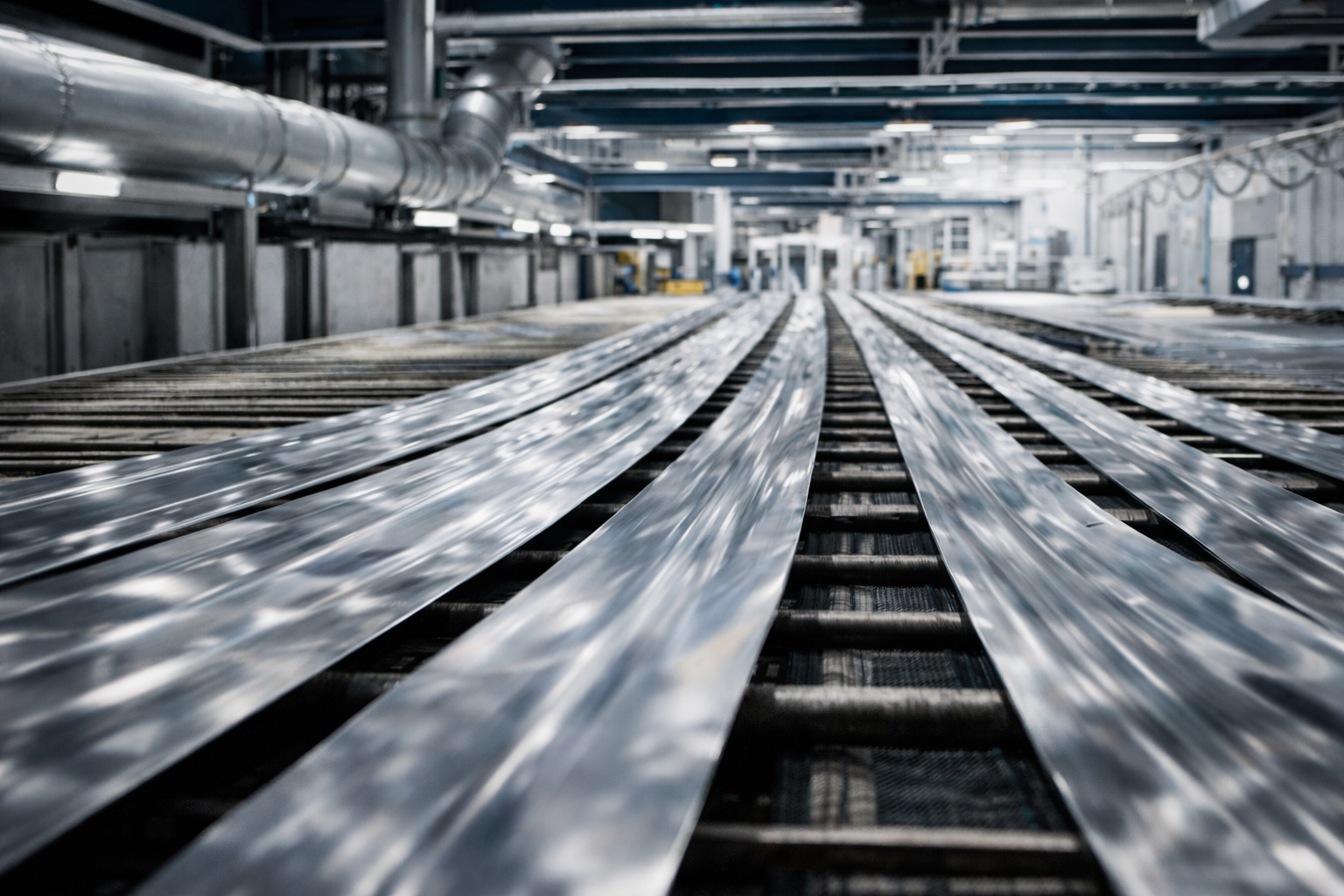
1050 La aleación de aluminio pertenece a la 1serie xxx, que representa aleaciones de aluminio comercialmente puras que contienen un mínimo de 99.0% aluminio. Específicamente, 1050 El aluminio contiene al menos 99.5% aluminio, convirtiéndolo en uno de los grados más puros utilizados en la fabricación industrial..
Está clasificado como un aleación no tratable térmicamente, lo que significa que su resistencia no se puede aumentar mediante el endurecimiento por precipitación.. En cambio, Los ajustes de fuerza se logran mediante trabajo en frio (endurecimiento por deformación), y la aleación está disponible en múltiples estados para adaptarse a diferentes requisitos de formación y servicio..
Designaciones internacionales
1050 El aluminio es reconocido mundialmente bajo varios estándares.:
YO ASI / EN: Al99.5, ES AW-1050A
Él: A1050
DE: 3.0255 (comúnmente referenciado)
Características clave
Pureza de aluminio extremadamente alta
Excelente conductividad térmica y eléctrica.
Excelente resistencia a la corrosión
Ductilidad y conformabilidad superiores
Resistencia mecánica relativamente baja
Debido a este equilibrio de propiedad, 1050 El aluminio es el más adecuado para aplicaciones donde conductividad, resistencia a la corrosión, y facilidad de formación son más críticos que la capacidad de carga.
Aluminio 1050 Composición química
Como aleación de aluminio comercialmente pura., la composición química de 1050 El aluminio está estrictamente controlado para mantener sus características definitorias..
Composición típica
Aluminio (Alabama): ≥ 99.5%
Hierro (fe): ≤ 0.40%
Silicio (Y): ≤ 0.25%
Cobre (Cu): ≤ 0.05%
Manganeso (Minnesota): ≤ 0.05%
Zinc (zinc): ≤ 0.05%
Titanio (De): ≤ 0.03%
El hierro y el silicio son las principales impurezas y contribuyen modestamente a la resistencia sin degradar significativamente la conductividad o la resistencia a la corrosión.. Los niveles extremadamente bajos de elementos de aleación son la razón principal de la suavidad y excelente trabajabilidad de la aleación..
Aluminio 1050 Propiedades mecánicas
Aluminio 1050 se considera un baja resistencia pero altamente dúctil material. Sus propiedades mecánicas varían dependiendo del temperamento. (oh, H12, H14, etc.), pero los valores típicos se resumen a continuación.
Propiedades físicas y mecánicas típicas
Densidad: 2.71 gramos/cm³
Punto de fusion: ~650°C
Módulo elástico: ~70 GPa
Relación de Poisson: ~0,33
Dureza Brinell: 20–30 HB
Resistencia a la tracción: 60–105 MPa
Fuerza de producción: 20–30 MPA
Alargamiento en rotura: 25–40%
Resistencia al corte: ~25MPa
Resistencia a la fatiga: ~30 MPa
Los altos valores de alargamiento demuestran claramente la idoneidad de la aleación para la embutición profunda., doblando, laminación, y otras operaciones de conformado severas. Sin embargo, El rendimiento relativamente bajo y las resistencias a la tracción limitan su uso en aplicaciones estructurales o de alta carga..
Fabricación de aleación de aluminio 1050
Soldabilidad
1050 exhibiciones de aluminio excelente soldabilidad, principalmente debido a su alta pureza y ausencia de elementos de aleación sensibles al agrietamiento, como magnesio o zinc..
Procesos de soldadura adecuados:
TIG (GTAW)
A MÍ (GMAW)
Para chapas finas y trabajos de precisión, Soldadura TIG CA se usa comúnmente, producir cordones de soldadura limpios y con buen control. Se emplean gases protectores de argón o helio para evitar la oxidación durante la soldadura..
Para secciones más gruesas o mayor productividad, soldadura MIG es preferido. El uso de alambre de relleno de composición coincidente o compatible ayuda a preservar la resistencia a la corrosión y la ductilidad.. La resistencia de la soldadura normalmente se aproxima a la del material base..
Preparación adecuada de la superficie, incluida la eliminación mecánica o química de la capa de óxido de aluminio, Es fundamental para evitar la falta de fusión y porosidad..
Soldadura
Soldadura 1050 El aluminio es más desafiante que la soldadura debido a:
La capa de óxido estable sobre las superficies de aluminio.
La diferencia de temperatura relativamente estrecha entre el metal de aportación y el metal base.
Comúnmente se requieren fundentes que contienen compuestos de fluoruro o cloruro para romper la capa de óxido.. Estos fundentes deben eliminarse completamente después de la soldadura fuerte para evitar la corrosión..
La soldadura fuerte al vacío es un método alternativo que elimina el uso de fundente y produce juntas más limpias., aunque a un mayor costo de procesamiento. Las uniones soldadas generalmente tienen menor resistencia mecánica en comparación con uniones soldadas.
Soldadura
Soldar implica unir a temperaturas típicamente inferiores 450 °C y es técnicamente posible con aluminio. 1050, aunque lo es no es ideal para requisitos de alta resistencia.
Los desafíos incluyen:
Rápida disipación del calor debido a la alta conductividad térmica.
Formación persistente de una capa de óxido.
Se requieren fundentes especiales y soldaduras a base de estaño., junto con una meticulosa preparación de la superficie. Las uniones soldadas ofrecen un rendimiento mecánico limitado y generalmente están restringidas a aplicaciones eléctricas o de sellado de baja carga..
Tratamiento térmico
Aluminio 1050 es no tratable térmicamente en el sentido de fortalecimiento convencional porque carece de elementos de aleación necesarios para el endurecimiento por precipitación..
Sin embargo, recocido se realiza comúnmente para:
Restaurar la ductilidad después del trabajo en frío.
Reducir las tensiones internas
Mejorar la formabilidad
El recocido típico se lleva a cabo en 360–400°C, seguido de enfriamiento por aire. Este proceso suaviza el material y lo devuelve a un estado altamente trabajable..
Aplicaciones clave de 1050 Aleación de aluminio
Debido a su combinación única de propiedades., 1050 El aluminio se utiliza ampliamente en las siguientes áreas.:
Industria electrica: conductores, barras colectoras, componentes del transformador
Procesamiento químico y alimentario.: tanques, contenedores, tubería, y revestimientos
Construcción y arquitectura: paneles decorativos, techumbre, brillante
Energía renovable: Reflectores solares y componentes reflectantes de la luz.
Fabricación industrial: intercambiadores de calor, escudos de calor, etiqueta, materiales de embalaje
Su excelente resistencia a la corrosión y su naturaleza segura para los alimentos lo hacen especialmente adecuado para entornos higiénicos y exteriores..
Conclusión
Aluminio 1050 Es un material de ingeniería muy versátil cuando la resistencia no es el requisito principal.. Su conductividad superior, resistencia a la corrosión, y su excepcional formabilidad lo hacen indispensable en el sector eléctrico., químico, y aplicaciones intensivas en conformado.
Para garantizar una calidad y un rendimiento constantes, es esencial obtener aluminio 1050 de fabricantes acreditados y fabricantes con estricto control de composición y proceso.
Preguntas frecuentes
¿Cuáles son las ventajas del aluminio? 1050?
Excelente resistencia a la corrosión
Excelente conformabilidad y ductilidad.
Alta conductividad térmica y eléctrica
Rentable y totalmente reciclable
¿Cuál es la diferencia entre el aluminio? 6061 y 1050?
| Aspecto | 6061 Aluminio | 1050 Aluminio |
| Contenido de aluminio | ≥ 98.85% | ≥ 99.5% |
| Principales elementos de aleación | Magnesio, Silicio | Hierro, Silicio |
| Tratable térmico | Sí | No |
| Fortaleza | Alto | Bajo |
| Uso típico | Partes estructurales | Piezas eléctricas y conformadas. |
es de aluminio 5055 mejor que 1050?
Ninguno de los dos es universalmente "mejor". Aluminio 5055 Ofrece mayor resistencia y es más adecuado para aplicaciones estructurales., mientras 1050 El aluminio destaca por su ductilidad., conductividad, y resistencia a la corrosión.
¿Cuál es el equivalente del aluminio? 1050?
ASTM: 1350 / A91050 (comúnmente referenciado)
DE: 3.0255
EN: ES AW-1050A
YO ASI: Al99.5
Él: A1050
cual es el precio del aluminio 1050?
Dependiendo de las condiciones del mercado, forma, y proveedor, aluminio 1050 normalmente oscila entre Dólar estadounidense 2,000 a 3,500 por tonelada métrica.


