



El acero al carbono A36 es uno de los aceros estructurales más utilizados en ingeniería y fabricación industrial.. Ya sea que esté construyendo estructuras de acero, fabricacion de maquinaria pesada, o fabricar componentes industriales, El acero A36 suele considerarse un material fiable y rentable.
Su popularidad proviene de una combinación equilibrada de fortaleza, soldadura, disponibilidad, y asequibilidad. Para ingenieros, fabricantes, y gerentes de adquisiciones, A36 ofrece un rendimiento mecánico predecible sin dejar de ser económico para proyectos a gran escala.
En esta guía, Exploraremos todo lo que necesita saber sobre el acero al carbono A36., incluyendo su composición química, propiedades mecánicas, ventajas, aplicaciones, y diferencias respecto a otros aceros. Si está considerando el acero A36 para su próximo proyecto, este artículo le ayudará a determinar si es la elección de material correcta.
¿Qué es el acero al carbono A36??
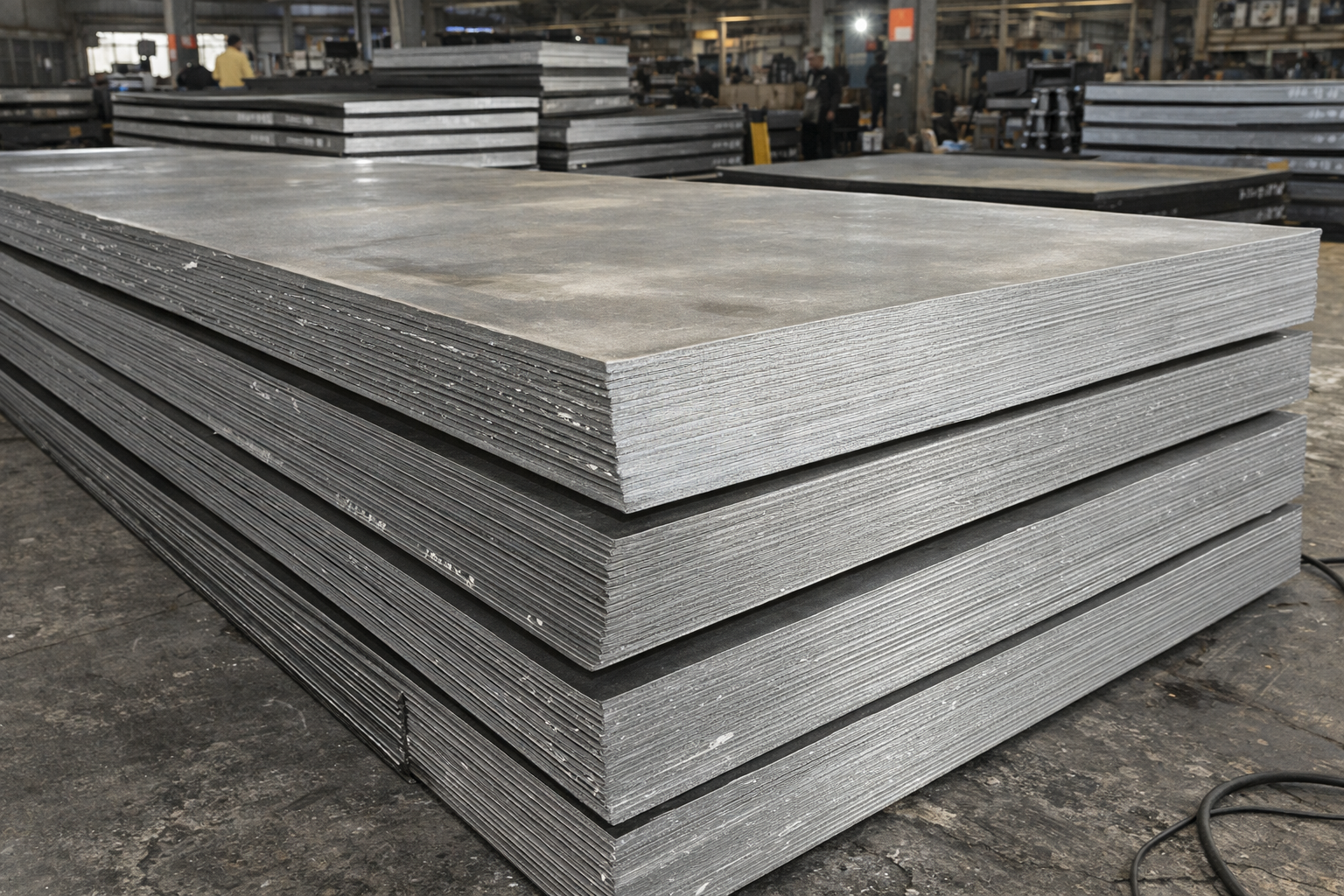
El acero al carbono A36 es un grado de acero estructural con bajo contenido de carbono definido bajo las normas de ASTM International. Está formalmente especificado bajo la norma. ASTM A36/A36M, que describe los requisitos para el acero estructural al carbono utilizado en la construcción y la fabricación industrial..
La característica que define al acero A36 es su bajo contenido de carbono, normalmente debajo 0.26%. Este nivel de carbono relativamente bajo mejora la calidad del material. soldadura, ductilidad, y formabilidad, facilitando la fabricación y la forma de componentes estructurales.
A diferencia de los aceros aleados diseñados para un rendimiento especializado, El acero A36 se centra en Resistencia estructural general y eficiencia de fabricación.. Como resultado, es ampliamente utilizado en:
Construcción estructural
Estructuras de acero
fabricación de maquinaria
Fabricación de equipos pesados.
Componentes de construcción naval
Plataformas y soportes industriales
El acero A36 normalmente se suministra en varias formas comunes., incluido:
Placas de acero
barras de acero
vigas estructurales
Canales de acero
Anglos
Tuberías y piezas fabricadas.
Porque es fácil de mecanizar y soldar., El acero A36 se utiliza frecuentemente en proyectos de fabricación personalizados, particularmente donde la fortaleza estructural y la asequibilidad son prioridades.
Composición química del acero al carbono A36
La composición química del acero A36 se controla cuidadosamente para mantener el equilibrio entre fortaleza, ductilidad, y capacidad de fabricación.
A continuación se muestra un rango de composición típico..
| Elemento | Composición (%) | Función |
| Carbón (C) | ≤ 0.26 | Proporciona resistencia manteniendo la soldabilidad. |
| Manganeso (Minnesota) | 0.60 – 1.20 | Mejora la tenacidad y la resistencia a la tracción. |
| Fósforo (PAG) | ≤ 0.04 | Limitado para mantener la ductilidad. |
| Azufre (S) | ≤ 0.05 | Mejora la maquinabilidad pero se mantiene baja para evitar la fragilidad. |
| Silicio (Y) | ≤ 0.40 | Actúa como desoxidante y fortalece el acero. |
| Cobre (Cu) | ≥ 0.20 (opcional) | Mejora la resistencia a la corrosión |
Carbón (C)
El carbono es el elemento principal que controla la resistencia del acero.. A36 utiliza un bajo nivel de carbono, lo que permite que el acero permanezca altamente soldable y dúctil.
Manganeso (Minnesota)
El manganeso aumenta la resistencia a la tracción y al desgaste.. También ayuda a eliminar el oxígeno durante el proceso de fabricación del acero..
Fósforo (PAG)
Aunque el fósforo puede aumentar la fuerza., cantidades excesivas hacen que el acero se vuelva quebradizo. Por lo tanto, su concentración está estrictamente controlada.
Azufre (S)
El azufre mejora la maquinabilidad pero puede reducir la tenacidad. Por esta razón, la cantidad permitida sigue siendo muy pequeña.
Silicio (Y)
El silicio funciona principalmente como elemento desoxidante, mejorar la estructura interna del acero y la estabilidad mecánica.
Cobre (Cu)
En algunas especificaciones, Se agrega cobre para mejorar la resistencia a la corrosión., especialmente para aplicaciones estructurales al aire libre.
Propiedades mecánicas del acero al carbono A36
Las propiedades mecánicas del acero A36 lo hacen adecuado para aplicaciones de ingeniería estructural donde resistencia y durabilidad son necesarios sin sacrificar la capacidad de fabricación.
Resistencia a la tracción
El acero A36 normalmente tiene una resistencia a la tracción entre 400 y 550 MPa (58,000 – 80,000 psi).
La resistencia a la tracción mide la tensión máxima que el material puede soportar antes de romperse.. Esta gama permite que el acero A36 maneje cargas pesadas en estructuras estructurales..
Fuerza de producción
El límite elástico mínimo es 250 MPa (36 ksi) para la mayoría de las secciones estructurales.
El límite elástico indica el punto en el que comienza la deformación permanente.. Para materiales de construcción, Este es un parámetro crítico porque determina cuánta carga puede soportar una estructura de manera segura..
Alargamiento
El acero A36 presenta buena ductilidad, normalmente ofreciendo:
20% elongación en 200 milímetros
23% elongación en 50 milímetros
El alto alargamiento significa que el acero puede deformarse sin fracturarse., haciéndolo más seguro para aplicaciones estructurales donde pueden ocurrir cargas dinámicas.
Dureza
Los valores típicos de dureza oscilan entre 119 a 162 Brinell (media pensión).
Este nivel de dureza moderado proporciona resistencia a las indentaciones y al desgaste y al mismo tiempo permite operaciones de mecanizado y conformado..
Módulo de elasticidad
El módulo de elasticidad es aproximadamente 200 GPa, que es típico de la mayoría de los aceros estructurales.
Este valor mide la resistencia del acero a la deformación elástica cuando se aplica tensión..
Relación de Poisson
La relación de Poisson del acero A36 es aproximadamente 0.26, indicando cómo el material se expande lateralmente cuando se estira.
Propiedades físicas del acero A36
Más allá del rendimiento mecánico, Varias propiedades físicas también influyen en el comportamiento del acero en aplicaciones de ingeniería..
Densidad
El acero A36 tiene una densidad de aproximadamente:
7.85 gramos/cm³ (0.284 lb/pulg³)
Esta densidad es similar a la de la mayoría de los aceros al carbono y permite a los ingenieros predecir el peso estructural con precisión..
Punto de fusion
La temperatura de fusión oscila entre:
1,425°C a 1.538°C (2,600°F a 2,800°F)
Este alto punto de fusión hace que el acero A36 sea adecuado para diversos procesos de fabricación., incluyendo soldadura y conformado en caliente.
Propiedades magnéticas
Como la mayoría de los aceros al carbono., El acero A36 es magnético por su contenido en hierro.
Ventajas clave del acero al carbono A36
Varios factores contribuyen al uso generalizado del acero A36 en aplicaciones industriales y estructurales..
1. Rentabilidad
Una de las mayores ventajas del acero A36 es su asequibilidad.. En comparación con aceros aleados o grados de alta resistencia, A36 proporciona resistencia adecuada a un costo significativamente menor.
Para proyectos de gran escala como edificios., puentes, y equipo industrial, esta ventaja de costos se vuelve muy significativa.
2. Excelente soldabilidad
Por su bajo contenido en carbono, El acero A36 se puede soldar utilizando los métodos de soldadura más comunes., incluido:
soldadura MIG
soldadura TIG
Soldadura por arco metálico protegido
Generalmente se requiere un precalentamiento mínimo., lo que simplifica la fabricación.
3. Buena formabilidad
El acero A36 puede ser fácilmente:
Doblado
Arrollado
Cortar
Formado
Esta flexibilidad lo hace ideal para fabricar componentes estructurales personalizados..
4. Alta fuerza y durabilidad
A pesar de ser económico, El acero A36 aún proporciona un fuerte rendimiento mecánico. Su combinación de resistencia a la tracción y ductilidad le permite soportar cargas pesadas y tensiones mecánicas..
5. Amplia disponibilidad
El acero A36 es uno de los aceros estructurales más producidos en el mundo.. Los fabricantes pueden obtenerlo rápidamente en varias formas y tamaños., reducir los tiempos de entrega del proyecto.
Aplicaciones comunes del acero al carbono A36
Por su versatilidad, El acero A36 se utiliza en muchas industrias.
Construcción Estructural
Una de las principales aplicaciones es en la construcción.. El acero A36 se utiliza ampliamente para:
vigas estructurales
Marcos de construcción
Puentes
columnas de soporte
Plataformas industriales
Formas estructurales como vigas I, vigas H, canales, y ángulos A menudo se fabrican con acero A36..
Fabricación de equipos pesados
La maquinaria industrial suele utilizar acero A36 para:
Marcos de equipos
Soportes de montaje
Placas base
Soportes estructurales
Su durabilidad permite que la maquinaria soporte cargas operativas pesadas..
Automoción y construcción naval
En la industria automotriz, El acero A36 se utiliza para:
Componentes del chasis
Estructuras de montaje
Soportes de refuerzo
en la construcción naval, Puede usarse para componentes estructurales como marcos de casco y estructuras de cubierta..
Industria del petróleo y el gas
El sector del petróleo y el gas utiliza con frecuencia acero A36 para:
Tanques de almacenamiento
Plataformas estructurales
Soportes para equipos
Tuberías y estructuras de fabricación.
Su resistencia y soldabilidad lo hacen apto para grandes instalaciones industriales..
Fabricación de tuberías y tubos
El acero A36 también se puede fabricar en tuberías y tubos utilizados para:
Tubería estructural
Soportes mecánicos
Sistemas de tuberías industriales
Acero A36 frente a otros aceros al carbono
Comprender cómo se compara el A36 con otros aceros ayuda a los ingenieros a seleccionar el material adecuado.
A36 frente a 1018 Acero
comparado con SAE 1018 acero, Ofertas de acero A36.:
| Propiedad | Acero A36 | 1018 Acero |
| Fortaleza | Mayor resistencia estructural | Moderado |
| maquinabilidad | Bien | Excelente |
| Uso típico | fabricación estructural | Piezas mecanizadas de precisión |
1018 El acero se utiliza a menudo para componentes mecanizados., mientras que A36 se prefiere para aplicaciones estructurales.
A36 frente a acero estructural de alta resistencia
Aceros de alta resistencia como Acero ASTM A572 Proporcionan mayor resistencia pero cuestan más.. A36 sigue siendo la opción económica cuando no se requiere una resistencia extrema.
Métodos de fabricación y procesamiento.
El acero A36 funciona bien en diversos procesos de fabricación.
Soldadura
El acero A36 se puede soldar mediante métodos estándar.:
soldadura MIG
soldadura TIG
Soldadura con electrodo revestido
Soldadura por arco sumergido
Mecanizado
La clasificación de maquinabilidad del acero A36 es aproximadamente 72%, que se considera bueno para el acero al carbono.
Tratamientos superficiales
Para mejorar la resistencia a la corrosión., El acero A36 se puede tratar con:
Galvanizante
Revestimiento de polvo
pintura industrial
Revestimiento de superficie
La galvanización es especialmente común para aplicaciones estructurales al aire libre..
Limitaciones del acero A36
A pesar de sus ventajas, El acero A36 también tiene algunas limitaciones..
Resistencia a la corrosión limitada
El acero A36 no es inherentemente resistente a la corrosión y puede requerir recubrimientos o galvanización cuando se usa en exteriores..
No es ideal para entornos de alta temperatura
El acero A36 generalmente funciona bien hasta aproximadamente 343°C (650°F). Para temperaturas más altas, Los aceros aleados pueden ser más adecuados..
Menor resistencia en comparación con los aceros aleados
Si bien es adecuado para muchas estructuras, El acero A36 no proporciona la misma relación resistencia-peso que las aleaciones estructurales avanzadas.
Conclusión
El acero al carbono A36 sigue siendo uno de los materiales más importantes utilizados en ingeniería estructural y fabricación industrial.. Su equilibrada combinación de fortaleza, asequibilidad, soldadura, y disponibilidad lo convierte en una opción práctica para muchos proyectos.
Desde construcción de edificios y maquinaria pesada hasta plataformas industriales y componentes fabricados., El acero A36 continúa sirviendo como material estructural confiable en múltiples industrias.
Para fabricantes e ingenieros que buscan un acero estructural rentable y versátil., El A36 sigue siendo una de las opciones más confiables disponibles en la actualidad.
FAQs
1. ¿Se puede galvanizar el acero A36??
Sí. El acero A36 se puede galvanizar en caliente para mejorar significativamente la resistencia a la corrosión..
2. ¿Cuál es la maquinabilidad del acero A36??
La clasificación de maquinabilidad del acero A36 es aproximadamente 72%, lo que permite operaciones de mecanizado eficientes.
3. ¿El acero A36 es magnético??
Sí. Porque contiene hierro, El acero A36 es naturalmente magnético..
4. ¿Qué temperatura puede soportar el acero A36??
El acero A36 normalmente puede funcionar de forma segura hasta 650°F (343°C).
5. ¿El acero A36 es adecuado para soldar??
Sí. Su bajo contenido de carbono lo hace altamente soldable utilizando la mayoría de las técnicas de soldadura estándar..


