


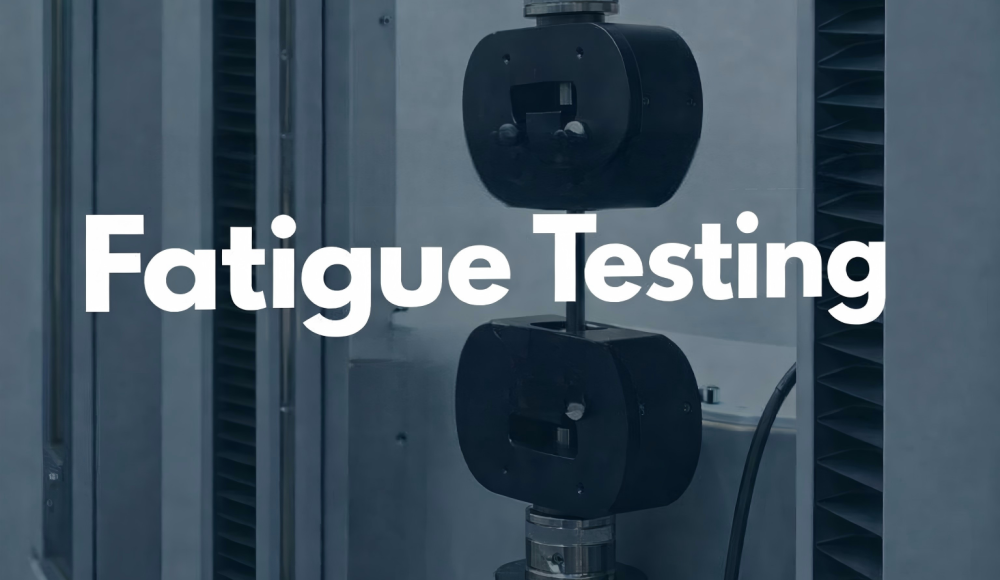
Las pruebas de fatiga son un método de evaluación fundamental en ciencia de materiales e ingeniería mecánica que se utiliza para comprender cómo se comportan los materiales bajo condiciones carga repetida o cíclica. A diferencia de las pruebas estáticas, que aplican una carga una vez hasta que falla, La prueba de fatiga simula condiciones de servicio del mundo real, donde los componentes experimentan tensiones fluctuantes durante largos períodos.
Las fallas relacionadas con la fatiga son particularmente peligrosas porque a menudo ocurren sin advertencia visible y a niveles de tensión muy por debajo de la resistencia máxima a la tracción del material. Como resultado, Las pruebas de fatiga juegan un papel crítico en industrias como aeroespacial, automotor, energía, construcción, dispositivos médicos, y electrónica, donde la confiabilidad y la seguridad son primordiales.
Fundamentos del comportamiento ante la fatiga
Carga cíclica y estrés repetido
La carga cíclica se refiere a tensiones que varían con el tiempo., como tensión-compresión, doblando, o torsión. Incluso los niveles de tensión relativamente bajos pueden causar daños si se aplican repetidamente.
Límite de vida útil y resistencia a la fatiga
Vida fatigada (nf): El número de ciclos que un material puede soportar antes de fallar..
Límite de resistencia: Para algunos materiales (en particular ciertos aceros), Existe un nivel de tensión por debajo del cual, en teoría, la falla por fatiga no ocurre..
Iniciación y propagación de grietas
La falla por fatiga generalmente progresa a través de:
Iniciación de crack en defectos superficiales, inclusiones, o concentradores de estrés
Propagación de grietas con cada ciclo de carga
Fractura final cuando la sección transversal restante ya no puede soportar la carga
Comportamiento tensión-deformación bajo cargas cíclicas
La carga repetida hace que los materiales se exhiban. endurecimiento o ablandamiento cíclico, visible en bucles de histéresis tensión-deformación. Estos bucles revelan cómo se absorbe y disipa la energía durante cada ciclo..
¿Qué miden las pruebas de fatiga??

Las pruebas de fatiga proporcionan datos cuantitativos y cualitativos., incluido:
Límite de resistencia
Ciclos hacia el fracaso (Vida fatigada)
Relación tensión-deformación bajo cargas cíclicas
Puntos de inicio del crack y tasas de crecimiento
Amortiguación de materiales y disipación de energía
Efectos del acabado superficial, Geometría, y Medio Ambiente
Esta información es esencial para selección de material, diseño de componentes, predicción de por vida, y evaluación de seguridad.
Propósito y objetivos de las pruebas de fatiga
Las pruebas de fatiga sirven para múltiples objetivos de ingeniería:
Comprender la respuesta del material a cargas de servicio reales
Predicción de mecanismos de falla y vida útil.
Mejorar el diseño del producto y la integridad estructural
Garantizar el cumplimiento de las normas internacionales
Apoyar el control de calidad en la fabricación.
Reducir el mantenimiento, falta del tiempo, y costos de garantía
Mejora de la seguridad en sistemas críticos
Permitir la investigación y el desarrollo de materiales avanzados.
Tipos de pruebas de fatiga
Fatiga de ciclo alto (HCF)
Bajo estrés, alto recuento de ciclos (>10⁶ ciclos)
Común en maquinaria rotativa y estructuras aeroespaciales.
Fatiga de ciclo bajo (LCF)
Alto estrés, recuento de ciclos bajo (<10⁴ ciclos)
Típico en recipientes a presión y estructuras sísmicas.
Pruebas de fatiga controladas por deformación
Se controla la tensión en lugar del estrés.
Útil para análisis de deformación plástica.
Fatiga Termo-Mecánica (TMF)
Carga mecánica combinada y ciclos de temperatura.
Crítico para turbinas y sistemas de escape.
Pruebas de fatiga multiaxial
Carga simultánea en múltiples direcciones.
Representa estados de estrés complejos del mundo real.
Pruebas de fatiga por corrosión
Fatiga en ambientes corrosivos.
Esencial para aplicaciones marinas y químicas.
Prueba de fatiga por inquietud
Fatiga causada por movimientos relativos de pequeña amplitud.
Común en uniones atornilladas y a presión.
Pruebas de fatiga por vibración
Cargas oscilatorias de alta frecuencia.
Utilizado para equipos electrónicos y de transporte.
Métodos de cálculo y análisis de pruebas de fatiga.
Definición de condición de carga
rango de estrés (ds)
estrés medio (σₘ)
amplitud de tensión (σₐ)
Relación de carga (R)
Número de ciclos
Caracterización de las propiedades materiales
El curva S-N (curva de Wöhler) Relaciona la amplitud de la tensión con la vida a fatiga y es fundamental para el diseño de fatiga..
Modelos de predicción de vida por fatiga
buen hombre: Lineal, conservador
Gerbera: Parabólico, menos conservador
Söderberg: Altamente conservador para diseños críticos para la seguridad.
Consideraciones estadísticas y ambientales
Los datos de fatiga a menudo muestran dispersión; Se utilizan herramientas estadísticas e intervalos de confianza para garantizar la confiabilidad.. Temperatura, humedad, y los efectos de la corrosión también deben ser considerados.
Software y validación experimental
Análisis de elementos finitos (FEA) y el software de simulación de fatiga se utilizan ampliamente, pero deben validarse mediante pruebas físicas..
Pruebas de fatiga de diferentes tipos de materiales
Materiales Metálicos
Acero
Fuerza de fatiga: ~250–500 MPa
Exhibe límite de resistencia
Utilizado en aviones, puentes, componentes automotrices
Aleaciones de aluminio
Fuerza de fatiga: ~50–150 MPa
No hay un límite de resistencia claro
Ampliamente utilizado para estructuras ligeras.
Materiales poliméricos
Polietileno (EDUCACIÓN FÍSICA)
Fuerza de fatiga: ~5–20MPa
Flexible pero sensible a la temperatura.
policarbonato (ordenador personal)
Fuerza de fatiga: ~20–40 MPa
Buena resistencia al impacto, sin límite de resistencia
Materiales cerámicos
Alúmina (Al₂O₃)
Fuerza de fatiga: ~300–400 MPa
Comportamiento frágil
circonita (Zro₂)
Fuerza de fatiga: ~800–1200 MPa
El endurecimiento por transformación mejora la resistencia a la fatiga
Materiales compuestos
CFRP
Fuerza de fatiga: ~150–200 MPa
Altamente dependiente de la orientación de la fibra.
PRFV
Fuerza de fatiga: ~70–100 MPa
Utilizado en palas de turbinas eólicas y estructuras marinas.
Máquinas y equipos de prueba de fatiga
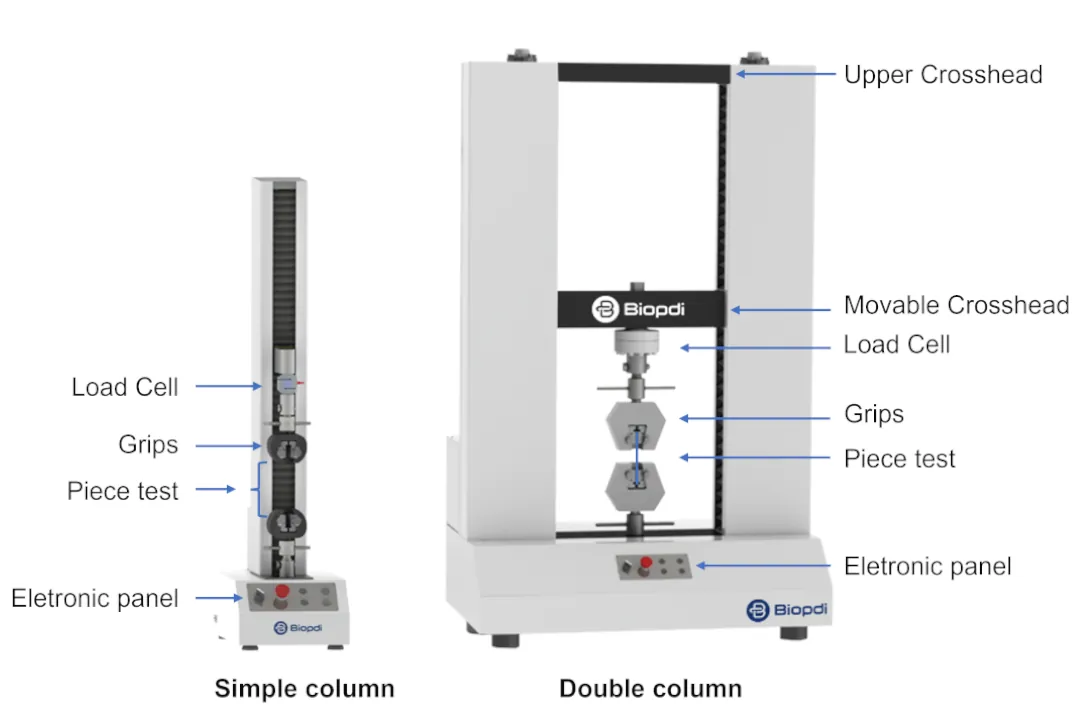
Componentes principales
Solenoide (hidráulico o electromagnético)
celda de carga
Cruceta y marco
Sistemas ambientales y de control
Cámaras ambientales
Controladores de temperatura y humedad.
Consolas y software de control digital.
Adquisición de datos y seguridad
Medidores de deformación, extensómetros, sensores de desplazamiento
Sistemas de adquisición de datos de alta velocidad.
Blindajes de protección y paradas de emergencia.
Datos obtenidos de pruebas de fatiga
Historial de estrés y tensión.
Bucles de histéresis
Recuentos y frecuencias de ciclos.
Límites de vida útil y resistencia a la fatiga
Modos de falla y ubicaciones
Geometría de la muestra y detalles del material.
Observaciones microscópicas de grietas.
Estos datos apoyan validación de diseño, mantenimiento predictivo, y prevención de fallas.
Análisis de fallas por fatiga
Etapas de la falla por fatiga
Iniciación de crack
Propagación de grietas
Fractura final repentina
Características de la fractura
marcas de playa
estrías
Zonas suaves de inicio de grietas.
Causas comunes
Concentraciones de estrés
Defectos superficiales
Mala selección de materiales.
Ambientes adversos
Estándares internacionales para pruebas de fatiga
Normas ISO
YO ASI 1099
YO ASI 12107
YO ASI 12110-1
YO ASI 11405
YO ASI 13003
Normas ASTM
ASTM E466
ASTM E647
ASTM E1820
Norma ASTM D7791
Norma ASTM D3479
Estas normas garantizan repetibilidad, exactitud, y aceptación mundial de los resultados de las pruebas de fatiga.
Aplicaciones de las pruebas de fatiga
Aeroespacial y Aviación
Las piezas de los aviones están expuestas a carga y descarga constante. Cada despegue, vuelo, y el aterrizaje añade otro ciclo de carga.
Las pruebas de fatiga se utilizan para:
Alas de aviones y estructuras de fuselaje.
Piezas del motor como álabes de turbina.
sujetadores, articulaciones, y paréntesis
Porque el fallo por fatiga en la aviación puede ser catastrófico, las pruebas se centran en larga vida, crecimiento de grietas, y tolerancia al daño. Muchos componentes de aviones están diseñados para permanecer seguros incluso después de que aparecen pequeñas grietas..
Industria automotriz
Los automóviles y camiones experimentan millones de ciclos de carga durante el uso diario. Golpes en el camino, frenado, y la vibración contribuyen al daño por fatiga.
Las pruebas de fatiga ayudan a evaluar:
Sistemas de suspensión
Componentes del chasis y del marco.
Piezas de motor y transmisión
Uniones soldadas y atornilladas
Las pruebas de fatiga en automóviles son especialmente importantes para diseños livianos, donde los materiales más delgados aún deben sobrevivir años de uso.
Ingeniería Civil y Estructural
Puentes, edificios, y los sistemas ferroviarios transportan cargas durante décadas. Incluso pequeñas cargas repetidas pueden causar daños con el tiempo..
Las pruebas de fatiga se aplican a:
Cables de puentes y vigas de acero.
Vías de ferrocarril y sujetadores.
Estructuras expuestas al viento
Diseños resistentes a los sismos
Estas pruebas ayudan a los ingenieros a prevenir fracasos a largo plazo y reducir costosas reparaciones o paradas inesperadas.
Dispositivos médicos y biomédicos
Los implantes médicos están expuestos a movimiento constante dentro del cuerpo humano. Un implante fallido puede dañar gravemente a un paciente.
Las pruebas de fatiga se utilizan para:
Implantes de cadera y rodilla
Implantes dentales
Stents y herramientas quirúrgicas.
Las pruebas garantizan que los implantes puedan sobrevivir millones de ciclos bajo cargas corporales sin dejar de ser seguro y confiable durante muchos años.
Energía y Generación de Energía
Los sistemas de energía funcionan continuamente., a menudo bajo cargas y temperaturas cambiantes.
Soportes para pruebas de fatiga:
Palas de turbina eólica
Componentes de turbinas de vapor y gas.
Equipos de energía nuclear y térmica.
Recipientes y tuberías a presión
En aplicaciones energéticas, Las pruebas de fatiga ayudan a prevenir paradas inesperadas y mejora confiabilidad a largo plazo.
Equipos marinos y offshore
Frente de estructuras marinas ondas, corrientes, corrosión, y vibración todo al mismo tiempo.
Las pruebas de fatiga son fundamentales para:
Plataformas marinas
cascos de barcos
Sistemas de amarre
Tuberías submarinas
Aquí, Las pruebas de fatiga a menudo se combinan con prueba de corrosión para reflejar los duros entornos marinos.
Electrónica y Equipos Industriales
Las piezas más pequeñas también sufren fatiga, especialmente cuando se trata de vibraciones.
Las pruebas de fatiga se utilizan para:
Conectores y cables electrónicos.
placas de circuito
Maquinaria industrial
Equipo de transporte
Estas pruebas ayudan a evitar fallas causadas por vibración, ciclo térmico, y movimiento repetido.
Productos de Consumo y Equipamiento Deportivo
Los productos de uso diario también se someten a pruebas de fatiga para mejorar la durabilidad y la seguridad del usuario..
Los ejemplos incluyen:
Bicicletas y material deportivo.
Herramientas eléctricas
Mobiliario y conjuntos mecánicos.
Las pruebas de fatiga ayudan a los fabricantes a diseñar productos que dura más y se siente más confiable.
Ventajas de las pruebas de fatiga
1. Muestra cómo fallan las piezas en la vida real
La mayoría de las piezas no se rompen con una carga grande.. Fallan debido a muchas cargas pequeñas a lo largo del tiempo. Las pruebas de fatiga copian esta condición de trabajo real, haciéndolo mucho más útil que las simples pruebas estáticas.
2. Ayuda a predecir la vida útil
Las pruebas de fatiga informan a los ingenieros ¿cuánto puede durar una pieza? antes de que falle. Esto ayuda con:
Predicción de por vida
Planificación de mantenimiento
Horarios de reemplazo
Esto es especialmente importante para piezas que deben funcionar de forma segura durante muchos años..
3. Mejora la seguridad
En productos críticos para la seguridad como aviones, carros, puentes, o implantes médicos, Las pruebas de fatiga ayudan a prevenir fallos repentinos y peligrosos. Los ingenieros pueden encontrar puntos débiles temprano y solucionarlos antes de que los productos entren en servicio..
4. Apoya mejores decisiones de diseño
Con datos de pruebas de fatiga, los ingenieros pueden:
Elige mejores materiales
Mejorar las formas y la geometría.
Reducir las concentraciones de estrés.
Optimizar peso sin perder fuerza
Esto lleva a más fuerte, encendedor, y diseños más confiables.
5. Ayuda a cumplir con los estándares de la industria
Muchas industrias requieren pruebas de fatiga para cumplir YO ASI, ASTM, o estándares del cliente. Las pruebas ayudan a demostrar que un producto cumple con estas reglas y puede venderse y usarse de manera segura..
6. Reduce los costos a largo plazo
Aunque las pruebas de fatiga pueden resultar costosas al principio, a menudo ahorra dinero a largo plazo por:
Evitar retiradas de productos
Reducir las reclamaciones de garantía
Prevenir fallos tempranos
Solucionar problemas en las pruebas es mucho más económico que solucionarlos en el campo..
Limitaciones de las pruebas de fatiga
1. Lleva mucho tiempo
Las pruebas de fatiga de ciclos altos pueden requerir millones de ciclos, que puede tardar días o incluso semanas en completarse. Esto puede ralentizar el desarrollo de productos..
2. Puede ser caro
Máquinas de ensayo de fatiga, operadores calificados, y los largos tiempos de prueba añaden costos. Las pruebas avanzadas como la fatiga por corrosión o la fatiga térmica son aún más caras.
3. Los resultados pueden variar
Los resultados de las pruebas de fatiga a menudo muestran dispersión, incluso para muestras similares. Pequeñas diferencias en el acabado superficial., calidad de los materiales, o la configuración de la prueba puede afectar los resultados.
Debido a esto, Los datos sobre fatiga deben tratarse con cuidado y, a menudo, analizarse estadísticamente..
4. Es difícil copiar exactamente las condiciones de servicio reales
La carga en el mundo real suele ser compleja e impredecible. Las pruebas de laboratorio suelen utilizar patrones de carga simplificados, que pueden no coincidir completamente con las condiciones de servicio reales.
5. Tamaño de muestra limitado
Por lo general, solo se puede analizar un número limitado de muestras debido al costo y al tiempo.. Esto hace que sea más difícil capturar completamente todas las posibles variaciones en materiales y fabricación..
6. No siempre es suficiente por sí solo
Es posible que las pruebas de fatiga por sí solas no cuenten toda la historia. Los ingenieros a menudo necesitan combinarlo con:
Simulaciones por computadora (FEA)
Datos de campo
Pruebas no destructivas (NDT)
Juntos, estas herramientas dan una imagen más completa.
Conclusión
Las pruebas de fatiga son una herramienta indispensable en la ingeniería moderna, ofreciendo una visión profunda de cómo se comportan los materiales en condiciones de carga del mundo real. Al comprender los mecanismos de fatiga, seleccionar métodos de prueba apropiados, y adhiriéndonos a los estándares internacionales, Los ingenieros pueden diseñar de forma más segura., más confiable, y productos más duraderos.
A medida que los materiales y las tecnologías de fabricación continúan evolucionando, Las pruebas de fatiga, respaldadas por herramientas de simulación avanzadas y validación experimental, seguirán siendo fundamentales para innovación, seguridad, y optimización del rendimiento en todas las industrias.
A continuación se muestra un conjunto de Preguntas frecuentes de nivel de ingeniería avanzada diseñado para complementar el artículo. estos van más allá de las definiciones básicas, centrándose en decisiones de diseño, estrategia de prueba, interpretación de datos, y compensaciones de ingeniería del mundo real. Son adecuados para ingenieros profesionales, equipos de control de calidad, y r&especialistas D.
Preguntas frecuentes
1. ¿Cómo afecta el estrés a la vida fatigada?, y cómo se debe corregir en el diseño?
El estrés medio influye significativamente en la vida en fatiga. La tensión media de tracción acelera el crecimiento de grietas, mientras que la tensión media de compresión mejora la resistencia a la fatiga. Los ingenieros suelen aplicar modelos de corrección como buen hombre, Gerbera, o Söderberg para ajustar los datos S – N y tener en cuenta los efectos de la tensión media en los cálculos de diseño.
2. ¿Cuándo se deben utilizar pruebas de fatiga controladas por deformación en lugar de pruebas controladas por estrés??
Se prefiere la prueba de fatiga controlada por deformación cuando:
La deformación plástica ocurre durante el servicio.
Predominan las condiciones de fatiga de ciclo bajo
Los efectos de expansión y restricción térmica son significativos.
Es especialmente relevante para recipientes a presión, componentes de la turbina, y estructuras sísmicas, donde la tensión, no estresarse, gobierna el fracaso.
3. ¿Por qué los resultados de las pruebas de fatiga muestran una gran dispersión de datos?, incluso para especímenes idénticos?
El comportamiento de fatiga es muy sensible a:
Rugosidad superficial y tensiones residuales.
Variaciones microestructurales
Inclusiones y defectos
Cambios ambientales menores
Porque la falla por fatiga se inicia en fallas microscópicas., la dispersión estadística es inherente. Los ingenieros explican esto usando análisis de fatiga probabilística e intervalos de confianza.
4. ¿Cómo influye el acabado superficial en el rendimiento ante la fatiga??
El acabado superficial juega un papel crítico en la vida a fatiga:
Las superficies rugosas aumentan las concentraciones de tensión.
Las superficies pulidas o granalladas retrasan la iniciación de grietas
Las tensiones residuales de compresión mejoran la resistencia a la fatiga
Los tratamientos superficiales suelen ser más eficaces que los cambios de materiales para mejorar la vida útil a la fatiga..
5. ¿Cuál es la diferencia entre la vida de iniciación de grietas por fatiga y la vida de propagación de grietas??
vida de iniciación se refiere a los ciclos necesarios para formar una grieta detectable
Vida de propagación es el tiempo necesario para que la grieta alcance un tamaño crítico
La fatiga de ciclo alto a menudo está dominada por la iniciación., mientras que los diseños tolerantes a daños se centran en Monitoreo y control del crecimiento de grietas..
6. ¿Cómo se integran las pruebas de fatiga con el análisis de elementos finitos? (FEA)?
FEA se utiliza para:
Identificar regiones de alto estrés
Calcular la tensión local o las amplitudes de deformación.
Aplicar modelos de daño por fatiga.
Los datos de prueba validan los resultados de la simulación., Asegurar que las predicciones numéricas representen con precisión el comportamiento del mundo real..
7. ¿Por qué algunos materiales no presentan un límite de resistencia real??
Materiales como aleaciones de aluminio, polímeros, y compuestos carecen de un límite de resistencia claro porque:
Las microfisuras siguen creciendo incluso con niveles de tensión bajos
La acumulación de daños no se estabiliza
Para estos materiales, La vida a fatiga se define en un recuento de ciclos especificado, en lugar de vida infinita.
8. ¿Cómo afecta la frecuencia a los resultados de las pruebas de fatiga??
Las frecuencias más altas reducen el tiempo de prueba pero pueden:
Introducir el autocalentamiento en polímeros y compuestos.
Alterar el comportamiento de crecimiento de las grietas
Enmascarar los efectos ambientales.
Los estándares a menudo limitan los rangos de frecuencia para garantizar que los resultados sigan siendo representativos de las condiciones de servicio..
9. ¿Qué desafíos existen en las pruebas de fatiga multiaxial??
La fatiga multiaxial introduce:
Estados de estrés complejos
Rutas de carga no proporcionales
Dificultad para definir parámetros de tensión equivalentes
Se requieren modelos avanzados y equipos especializados para replicar con precisión condiciones de carga realistas..
10. ¿En qué se diferencia la fatiga por corrosión de las pruebas de fatiga estándar??
La fatiga por corrosión implica la exposición simultánea a cargas cíclicas y un ambiente corrosivo.. Él:
Acelera la iniciación del crack.
Elimina los límites de resistencia
Requiere cámaras ambientales y medios controlados.
Los diseños deben considerar Degradación mecánica y química combinada..


