



SChoisir le nickel pour un composant d'ingénierie n'est pas simplement une question de choix d'un matériau avec un pourcentage élevé de nickel.. Le matériau correct dépend du qualité d'alliage exacte, composition chimique, état matériel, forme de produit, environnement opérationnel, processus de fabrication, et critères d'inspection requis.
Pour les fabricants et les ingénieurs, ces distinctions deviennent particulièrement importantes lors de la production de composants de précision en nickel par usinage CNC, tournant, fraisage, affûtage, soudage, formation, ou nickelage.
Ce guide explique ce qu'est le nickel, comment les alliages de nickel sont classés, quelles propriétés sont importantes en ingénierie, où le nickel est utilisé, comment sélectionner la bonne note, comment sont usinés les alliages de nickel, et quelles informations doivent être incluses dans une demande de prix pour l'usinage du nickel.
Qu'est-ce que le nickel?
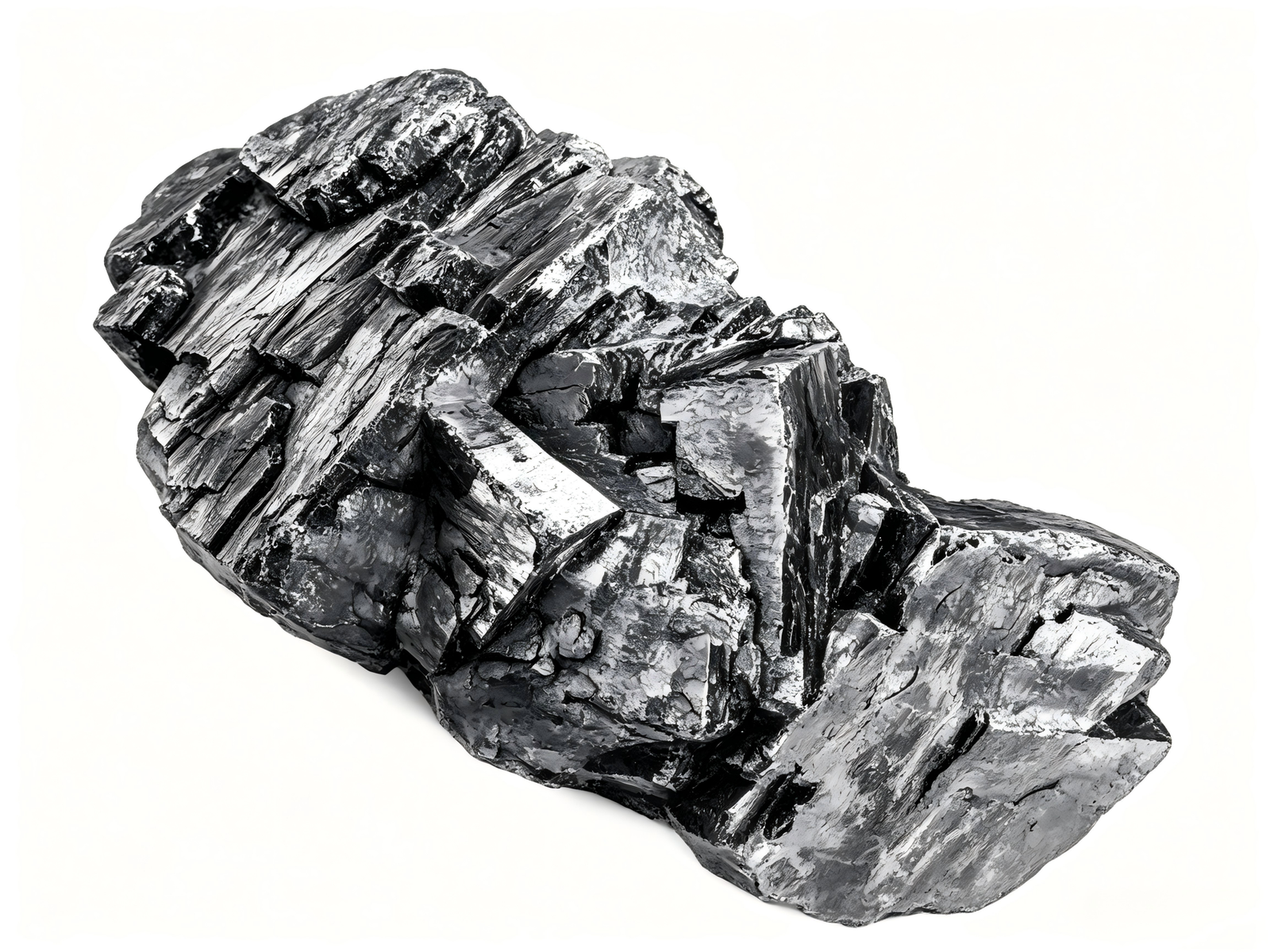
Le nickel est un élément métallique avec le numéro atomique 28. Le nickel pur a un aspect argenté et est ferromagnétique à température ambiante.. Sa plus grande valeur industrielle, cependant, vient de la façon dont le nickel modifie les propriétés des systèmes d'alliage.
Le nickel peut contribuer à la résistance à la corrosion, performances à haute température, dureté, et stabilité structurelle. Ces caractéristiques le rendent précieux dans le traitement chimique, aérospatial, production d'électricité, équipement marin, électronique, systèmes énergétiques, et autres applications exigeantes.
Le point important pour les ingénieurs est que la teneur en nickel à elle seule ne définit pas un matériau d'ingénierie utilisable.
Un dessin ou une spécification d'achat doit identifier la désignation complète du matériau., norme applicable, forme de produit, et l'état. La même famille générale de nickel peut contenir des matériaux ayant des caractéristiques mécaniques sensiblement différentes., thermique, corrosion, et caractéristiques d'usinage.
Par exemple, Nickel commercialement pur 200 et Nickel 201 sont des matériaux étroitement liés, mais nickel 201 a une teneur en carbone contrôlée et inférieure, ce qui le rend plus adapté à certaines applications à température élevée.
Itinéraires courants des matériaux de nickel
Les matériaux en nickel utilisés dans la fabrication peuvent généralement être divisés en plusieurs groupes:
|
Famille de matériaux |
Objectif typique |
Considération de sélection clé |
|
Nickel commercialement pur |
Composants résistants à la corrosion et équipements chimiques |
Grade, niveau de carbone, température de service |
|
Acier inoxydable contenant du nickel |
Structures générales résistantes à la corrosion |
Désignation complète en acier inoxydable |
|
Alliages à base de nickel |
Haute température, à haute résistance, ou applications à corrosion sévère |
État exact de l’alliage et du traitement thermique |
|
Alliages cuivre-nickel |
Systèmes marins et de transfert de chaleur |
Chimie de l'eau et conditions de fonctionnement |
|
Revêtements de nickel |
Protection des surfaces et résistance à l’usure/corrosion |
Système de revêtement, épaisseur, substrat |
L'acheminement des matériaux doit donc être établi avant qu'un fabricant établisse un devis.
Propriétés du nickel importantes en ingénierie
Comprendre les propriétés techniques du nickel est essentiel pour décider s’il convient à un composant spécifique..
Densité
Le nickel pur a une densité d'environ 8.90 g/cm³. Cette densité relativement élevée peut affecter le poids des composants, consommation de matière, inertie, et frais de port.
Pour les composants de précision, cependant, la densité de l'alliage exact doit être utilisée plutôt que d'appliquer automatiquement la valeur du nickel pur.
Point de fusion et performances thermiques
Le nickel pur fond à environ 1,455°C (2,651°F).
Cette valeur est utile pour comprendre les caractéristiques thermiques générales du nickel, mais elle ne doit pas être utilisée comme limite de température de service d'un alliage de nickel.
Les alliages à base de nickel sont spécialement conçus pour différentes combinaisons de résistance à haute température, résistance à l'oxydation, résistance au fluage, et résistance à la corrosion. Leurs températures solidus et liquidus peuvent différer considérablement de celles du nickel pur..
Donc:
N'utilisez pas le point de fusion du nickel pur comme température de fonctionnement maximale d'un composant en alliage de nickel..
La sélection des matériaux doit toujours être basée sur les données certifiées pour l'alliage et l'état exacts..
Résistance à la corrosion
La résistance à la corrosion est l’un des avantages techniques les plus importants du nickel.
Le nickel et les alliages à base de nickel sont utilisés dans des environnements impliquant:
· Traitement chimique
· Solutions caustiques
· Milieux marins
· Gaz à haute température
· Procédés pétrochimiques
· Équipement de production d'électricité
· Systèmes de transformation des aliments
· Production de sel
· Certains environnements acides ou alcalins
Cependant, il est faux de dire que le nickel résiste à tous les environnements corrosifs.
La performance contre la corrosion dépend de:
· Composition chimique
· Nuance d'alliage
· Température
· Concentration
· Vitesse d'écoulement
· Pression
· Délai d'exposition
· Contaminants
· État de soudage
· État des surfaces
Nickel 200 et Nickel 201, Par exemple, sont connus pour leur résistance à la corrosion dans une gamme d’environnements, service particulièrement caustique, mais la qualité correcte doit encore être sélectionnée en fonction des conditions de fonctionnement réelles.
Propriétés magnétiques
Le nickel pur est ferromagnétique proche de la température ambiante.
Cela peut être important dans:
· Capteurs
· Assemblages électromagnétiques
· Équipement électrique
· Instruments scientifiques
· Appareils de précision
Cependant, les alliages contenant du nickel n'ont pas nécessairement le même comportement magnétique que le nickel pur.
Travail à froid, traitement thermique, chimie des alliages, température, et l'état du matériau fini peuvent tous influencer la réponse magnétique.
Si les performances non magnétiques sont une exigence de conception, l'alliage exact et l'état fini doivent être spécifiés et vérifiés.
Performances thermiques et mécaniques
Les alliages à base de nickel sont particulièrement précieux car beaucoup conservent une résistance utile à des températures où les métaux d'ingénierie conventionnels perdent des performances mécaniques significatives..
Cela les rend attrayants pour:
· Composants de turbines
· Systèmes d'échappement
· Vannes haute température
· Composants de combustion
· Équipement de traitement chimique
· Équipements pétroliers et gaziers
· Matériel aérospatial
Les propriétés mécaniques spécifiques dépendent de la qualité de l'alliage, traitement thermique, forme de produit, et conditions de test.
Pour cette raison, les dessins techniques ne doivent pas simplement indiquer « alliage de nickel ». Ils doivent identifier la spécification exacte.
Formes de matériaux en nickel et familles d'alliages
Le nickel est disponible dans plusieurs familles de matériaux et formes de produits, y compris:
· Feuille
· Plaque
· Bar
· Tige
· Tube
· Tuyau
· Fil
· Pièces forgées
· Poudre
· Ebauches usinées
Le processus de fabrication peut changer en fonction de la forme du matériau fourni.
Nickel commercialement pur
Nickel 200 et Nickel 201 sont deux qualités importantes de nickel commercialement pur.
Nickel 200 offre de bonnes propriétés mécaniques et une résistance à la corrosion sur une large plage de températures.
Nickel 201 a une limite de carbone inférieure à celle du nickel 200. Cette différence devient particulièrement importante à des températures élevées car un excès de carbone peut contribuer aux mécanismes de fragilisation dans certaines conditions de service..
Les applications typiques incluent:
· Traitement chimique
· Manipulation caustique
· Équipement de transformation des aliments
· Équipement marin
· Électronique
· Équipement de galvanoplastie
· Équipement de traitement de haute pureté
Nickel en acier inoxydable
Le nickel est également un élément d'alliage important dans de nombreux aciers inoxydables austénitiques..
Son rôle peut inclure la stabilisation de la structure austénitique et la contribution à la résistance à la corrosion et à la ténacité..
Cependant, la teneur en nickel ne garantit pas à elle seule la résistance à la corrosion.
Par exemple, La sélection de l'acier inoxydable pour les environnements contenant des chlorures doit prendre en compte la chimie complète de l'alliage et le mécanisme d'exposition réel..
Alliages à base de nickel
Les alliages à base de nickel utilisent le nickel comme matrice principale et ajoutent des éléments tels que:
· Chrome
· Molybdène
· Fer
· Cobalt
· Titane
· Aluminium
· Tungstène
· Niobium
Différentes combinaisons sont conçues pour différentes exigences techniques.
Les familles courantes d'alliages à base de nickel comprennent:
· Inconel
· Hastelloy
· Monel
· Incoloy
· Nickel 200/201
Ces matériaux sont souvent sélectionnés pour leur résistance à haute température, résistance à la corrosion, résistance à l'oxydation, ou une combinaison de ces propriétés.
Alliages cuivre-nickel
Les alliages cuivre-nickel sont généralement associés aux applications marines et de transfert de chaleur.
Ils peuvent être utilisés dans:
· Systèmes d'eau de mer
· Échangeurs de chaleur
· Condensateurs
· Tuyauterie marine
· Équipement de dessalement
La chimie réelle de l'eau, vitesse, température, et les conditions de mise en service doivent être prises en compte lors de la sélection de l'alliage.
Revêtements de nickel
Le nickel peut également être appliqué comme revêtement plutôt que comme matériau en vrac..
Le nickelage peut fournir:
· Protection contre la corrosion
· Résistance à l'usure
· Dureté superficielle
· Caractéristiques de surface améliorées
· Restauration dimensionnelle dans des applications sélectionnées
Le revêtement ne transforme pas le substrat en nickel massif.
Le dessin doit donc spécifier à la fois les exigences en matière de substrat et de revêtement..
Applications industrielles du nickel
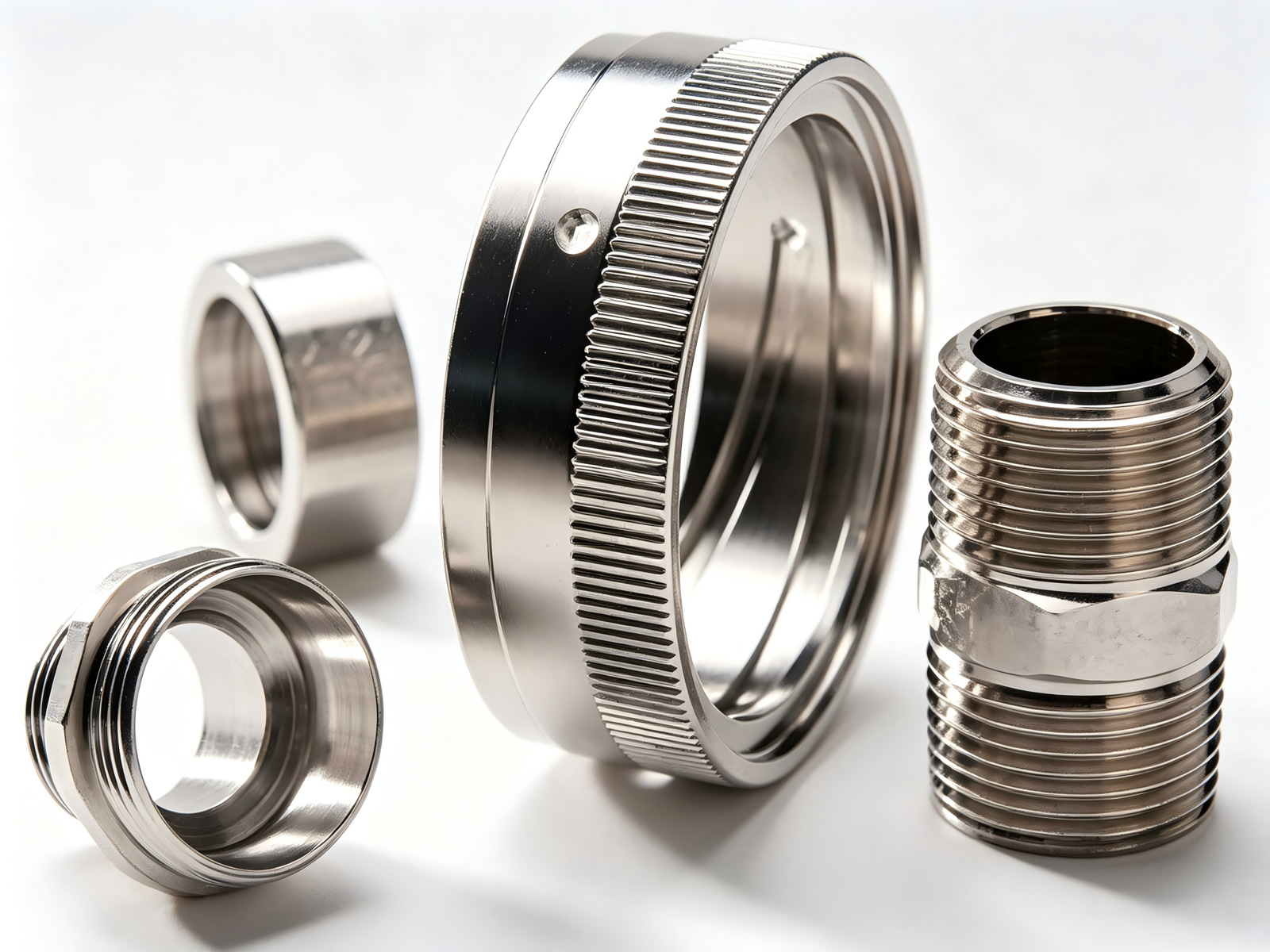
Le nickel est utilisé dans de nombreuses industries car il peut résoudre plusieurs problèmes d'ingénierie différents..
Traitement chimique
Le nickel et les alliages à base de nickel sont largement pris en compte lorsque les équipements doivent résister à des produits chimiques agressifs., températures élevées, ou solutions caustiques.
Les composants typiques incluent:
· Vannes
· Pompes
· Raccords
· Buts
· Composants du réacteur
· Attaches
· Échangeurs de chaleur
Le matériau doit être sélectionné en fonction de l'environnement chimique réel plutôt que de simplement choisir la teneur en nickel disponible la plus élevée..
Aérospatial
Les superalliages à base de nickel sont importants dans l'aérospatiale car beaucoup conservent leur résistance à des températures élevées..
Les applications typiques incluent:
· Composants de turbines
· Matériel moteur
· Composants de combustion
· Fixations haute température
· Raccords aérospatiaux de précision
Les exigences d'usinage peuvent être exigeantes car les propriétés qui rendent les superalliages de nickel précieux en service les rendent également difficiles à couper..
Pétrole et Gaz
Les alliages de nickel sont utilisés dans certaines applications pétrolières et gazières où les composants sont confrontés à des combinaisons de:
· Haute pression
· Haute température
· Fluides corrosifs
· Environnements acides
· Exigences de longue durée de service
La sélection des matériaux doit être basée sur le fluide de procédé réel et les spécifications industrielles applicables..
Applications marines
Le nickel et les alliages cuivre-nickel peuvent être utilisés pour:
· Tuyauterie marine
· Échangeurs de chaleur
· Pompes
· Vannes
· Équipement offshore
· Systèmes d'eau de mer
L'alliage exact doit être sélectionné en fonction de l'environnement marin et des conditions de fonctionnement attendues.
Production d'énergie et d'électricité
Les alliages à base de nickel sont utilisés dans des environnements de production d'énergie exigeants où les composants peuvent subir des températures élevées., cyclage thermique, pression, et corrosion.
Les applications potentielles incluent:
· Composants de turbines
· Équipements liés à la chaudière
· Échangeurs de chaleur
· Vannes
· Fixations haute température
Équipement électronique et électrique
Le nickel commercialement pur peut également être utilisé dans les applications électriques., thermique, corrosion, ou les caractéristiques magnétiques sont importantes.
Les applications peuvent inclure:
· Contacts électriques
· Composants liés à la batterie
· Matériel électronique
· Équipement de galvanoplastie
· Composants conducteurs de précision
Comment sélectionner le bon matériau en nickel
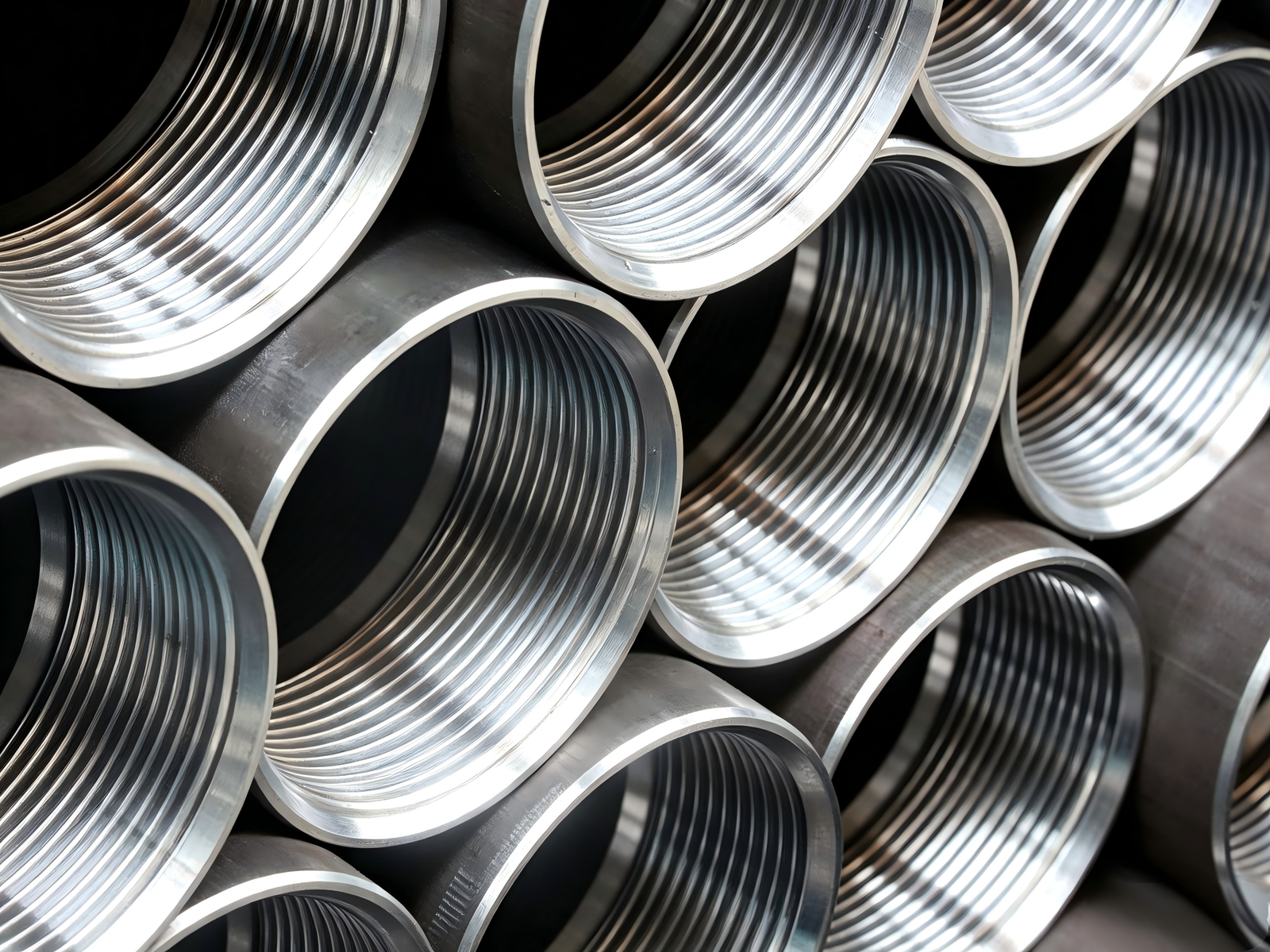
Le choix du bon alliage de nickel doit suivre un processus d'ingénierie systématique.
Étape 1: Définir l'environnement de service
Commencez par identifier:
· Température de fonctionnement
· Pression
· Exposition chimique
· Humidité
· Médias corrosifs
· Charge mécanique
· Vibration
· Nombre de cycles de manœuvres
· Durée de vie requise
Un matériau qui fonctionne bien dans un environnement peut échouer dans un autre.
Étape 2: Identifiez le mode de défaillance principal
Ask what could cause the component to fail.
Possible failure modes include:
· Corrosion
· Porter
· Fatigue
· Dégradation thermique
· Craquage
· Distorsion
· Dimensional instability
· Magnetic interference
This approach is more reliable than selecting material based solely on price or nickel percentage.
Étape 3: Sélectionnez la famille de matériaux
Determine whether the component requires:
· Nickel commercialement pur
· Nickel-base alloy
· Acier inoxydable
· Copper-nickel alloy
· Nickel coating
The goal is to select the least expensive material that provides adequate performance, rather than automatically selecting the most expensive alloy.
Étape 4: Considérez le processus de fabrication
The material and manufacturing process must be evaluated together.
Possible processes include:
· Fraisage CNC
· Tournage CNC
· Usinage CNC suisse
· Affûtage
· GED
· Formant
· Soudage
· Traitement thermique
· Placage nickel
A material may meet the service requirement but still be difficult or expensive to manufacture.
Étape 5: Définir les critères d'acceptation
The purchasing specification should identify what evidence is required.
This can include:
· Certificats de matériaux
· Composition chimique
· PMI
· Dureté
· Tensile testing
· Contrôle dimensionnel
· Rugosité de surface
· NDT
· Coating thickness
· Inspection du premier article
Étape 6: Évaluer le coût total
The lowest material price does not necessarily produce the lowest total cost.
Considérer:
Matériel + usinage + outillage + inspection + finition + scrap + entretien + service life
For high-value industrial components, lifecycle cost can be more important than initial purchase price.
Usinage CNC du nickel et des alliages de nickel
Nickel alloys can be significantly more difficult to machine than common materials such as aluminum and mild steel.
The main challenges include:
· Travail en durcissant
· High cutting temperatures
· Faible conductivité thermique
· Usure
· Tough chip formation
· Difficult surface finishing
· Dimensional instability
Technical literature and current machining guidance consistently identify work hardening and heat concentration as major factors in nickel-alloy machining.
Pourquoi les alliages de nickel durcissent-ils
Many nickel alloys harden rapidly when subjected to mechanical deformation.
If a cutting tool rubs against the material rather than removing material efficiently, the surface can become harder.
The next cutting pass then encounters a hardened layer.
Cela peut conduire à:
· Accelerated tool wear
· Chipping
· Notching
· Mauvaise finition de surface
· Variation dimensionnelle
Donc, machining strategy must minimize rubbing and unnecessary dwell.
Gestion de la chaleur pendant l'usinage CNC
Nickel alloys generally have relatively low thermal conductivity compared with many conventional machining materials.
Par conséquent, more heat can remain concentrated near the cutting zone and tool edge.
Current machining references identify heat concentration as a major contributor to tool wear when machining nickel alloys.
A professional machining process therefore needs to control:
· Vitesse de coupe
· Taux d'alimentation
· Profondeur de coupe
· Géométrie de l'outil
· Livraison de liquide de refroidissement
· Tool engagement
· Workholding rigidity
Exact cutting parameters should be developed for the specific alloy, outil, machine, and component geometry rather than copied from a generic nickel machining table.
Considérations sur l'outillage
Tool selection is critical when machining nickel alloys.
Depending on the alloy and application, manufacturers may evaluate:
· Carbide tooling
· Coated carbide
· Ceramic tooling
· Specialized high-performance inserts
The correct tool geometry should provide a stable cutting action while controlling heat and avoiding excessive rubbing.
Tool wear should also be monitored during production.
Tenue de travail et rigidité de la machine
Rigid workholding is particularly important for nickel machining.
A flexible setup can produce:
· Bavarder
· Vibration
· Mauvaise finition de surface
· Dimensional errors
· Casse d'outil
Thin-wall nickel components require additional attention because the workpiece itself can become the limiting factor.
The machining strategy should therefore be designed around the final component geometry rather than only the raw material.
Usinage CNC en nickel pour composants à tolérance serrée
For precision nickel components, a manufacturing plan should consider:
1. Raw material certification
2. État du matériau
3. Collaboration
4. Usinage grossier
5. Stress and thermal control
6. Semi-finition
7. Finition
8. Contrôle dimensionnel
9. Inspection des surfaces
10. Final documentation
Plus la tolérance est serrée, the more important process stability becomes.
Problèmes courants d'usinage CNC au nickel
Problème 1: Travail en durcissant
Cause: Tool rubbing, logement, or repeated cutting over an already hardened surface.
Solution: Maintain effective cutting engagement and use alloy-specific cutting parameters.
Problème 2: Usure excessive des outils
Cause: Heat concentration, abrasive alloy constituents, or unsuitable tooling.
Solution: Optimize tooling, paramètres de coupe, and coolant delivery.
Problème 3: Mauvaise finition de surface
Cause: Bavarder, worn tools, unstable workholding, or unsuitable finishing parameters.
Solution: Improve machine rigidity, tooling condition, et stratégie de finition.
Problème 4: Variation dimensionnelle
Cause: Extension thermique, usure des outils, workpiece movement, or unstable machining conditions.
Solution: Control process temperature, porte-pièce, condition d'outil, and inspection intervals.
Problème 5: Distorsion à paroi mince
Cause: Excessive cutting force or insufficient support.
Solution: Optimize material removal strategy and provide adequate workpiece support.
Soudage et fabrication de nickel
Nickel and nickel alloys can be welded, but weldability depends heavily on the specific alloy.
A qualified welding process should consider:
· Matériau de base
· Filler material
· Joint geometry
· Pre-cleaning
· Welding parameters
· Heat input
· Interpass conditions
· Post-weld requirements
· Inspection method
Cleanliness is especially important.
Huile, sulfur-containing contamination, et d'autres matériaux étrangers peuvent affecter négativement la qualité de la soudure.
Pour les applications critiques, la procédure de soudage doit être qualifiée selon le code ou la spécification applicable.
Placage de nickel et ingénierie de surface
Le placage au nickel est utilisé lorsque les ingénieurs ont besoin de propriétés de surface sans fabriquer l'intégralité du composant à partir de nickel solide..
Deux approches courantes sont:
Placage électrolytique au nickel
Le nickelage électrolytique utilise le courant électrique pour déposer du nickel sur le substrat.
Il peut être utilisé pour:
· Protection contre la corrosion
· Finitions décoratives
· Résistance à l'usure
· Contrôle dimensionnel
Placage autocatalytique au nickel
Le nickel chimique utilise un processus de réduction chimique plutôt que du courant électrique continu.
Cela peut être utile pour les composants aux géométries complexes où un dépôt relativement uniforme est requis..
Le placage au nickel affecte-t-il les tolérances?
Oui.
Un revêtement en nickel ajoute du matériau à la surface finie.
Cela peut affecter:
· Diamètre du trou
· Diamètre de l'arbre
· Ajustement du filetage
· Sièges de roulement
· Surfaces de contact
· Surfaces d'étanchéité
Donc, un dessin de précision doit indiquer clairement si les dimensions sont:
· Avant le placage
· Après le placage
· Ou contrôlé aux deux étapes
La source originale souligne à juste titre que l'épaisseur du revêtement doit être intégrée au contrôle dimensionnel plutôt que traitée après coup..
Contrôle de qualité et inspection du nickel
Un processus de fabrication de nickel fiable nécessite plus qu'une simple inspection dimensionnelle finale.
Vérification du matériel
Les documents importants peuvent inclure:
· Certificat d'essai en usine
· Certificat de conformité
· Numéro de manche
· Qualité du matériau
· Composition chimique
· Propriétés mécaniques
· Forme du produit
· État du traitement thermique
Identification positive des matériaux
Le PMI peut être utile pour vérifier que l'alliage fourni est conforme à la famille de matériaux requise..
Cependant, PMI ne remplace pas automatiquement un certificat de matériau lorsque la spécification en vigueur exige des données chimiques ou mécaniques certifiées.
La méthode d'inspection doit donc être adaptée aux exigences d'acceptation.
Contrôle dimensionnel
En fonction du composant, l'inspection dimensionnelle peut inclure:
· Inspection CMM
· Micromètres
· Étriers
· Jauges d'alésage
· Mesure optique
· Jauges de filetage
· Mesure de rugosité de surface
Pour les composants en nickel à tolérance stricte, inspection should be integrated into the manufacturing process rather than performed only at final shipment.
Tests supplémentaires
Depending on application requirements, testing may include:
· Hardness testing
· Tensile testing
· Chemical analysis
· PMI
· NDT
· Tests de corrosion
· Coating thickness testing
· Test d'adhérence
· Surface roughness inspection
Comment réduire le coût des pièces usinées CNC en nickel
Nickel is often more expensive to process than conventional metals, so design and manufacturing optimization can make a significant difference.
Réduisez les tolérances strictes inutiles
Do not specify ±0.005 mm when ±0.02 mm is functionally acceptable.
Extremely tight tolerances can increase:
· Temps d'usinage
· Exigences d'inspection
· Tooling cost
· Scrap risk
Use tight tolerances only where required for function.
Évitez les parois trop fines
Thin sections can increase machining difficulty and distortion risk.
If the design allows it, use adequate wall thickness and structural support.
Minimisez les fonctionnalités complexes inutiles
Cavités profondes, fentes étroites, small internal radii, and difficult-to-access features can substantially increase machining time.
Un examen DFM avant la production peut identifier les opportunités de simplification de la conception.
Consolider les opérations de fabrication
Le cas échéant, une machine CNC multi-axes peut réduire:
· Nombre de configurations
· Erreurs de repositionnement
· Exigences en matière de luminaires
· Temps de traitement
Cependant, le meilleur itinéraire de fabrication dépend de la géométrie, tolérance, quantité, et matériel à disposition.
Sélection des matériaux en nickel: Erreurs courantes à éviter

Erreur 1: Spécifier uniquement « Nickel »
Le mot « nickel » n’identifie pas un matériau d’ingénierie complet.
Mieux: Précisez la note exacte, standard, formulaire, et l'état.
Erreur 2: Sélection de la qualité basée uniquement sur le pourcentage de nickel
Un pourcentage de nickel plus élevé ne signifie pas automatiquement de meilleures performances.
Mieux: Sélectionnez l'alliage en fonction du mode de défaillance réel et de l'environnement de service..
Erreur 3: Ignorer l'état du matériau
Le traitement thermique et le travail à froid peuvent affecter les propriétés mécaniques et d'usinage.
Mieux: Inclure l'état du matériau requis dans la spécification.
Erreur 4: Traiter tous les alliages de nickel de la même manière lors de l'usinage CNC
Nickel 200, Inconel, Hastelloy, et d'autres alliages de nickel peuvent avoir un comportement d'usinage très différent.
Mieux: Développer le processus autour de l’alliage exact.
Erreur 5: Ignorer l'épaisseur du placage
Un revêtement modifie les dimensions finies.
Mieux: Define dimensions and inspection requirements relative to the coating process.
Erreur 6: Comparer les devis des fournisseurs sans comparer la portée
A lower unit price may exclude:
· Certificats de matériaux
· Special inspection
· Traitement thermique
· Traitement de surface
· Conditionnement
· Essai
Mieux: Compare quotations on an identical technical basis.
Foire aux questions sur le nickel
À quoi sert principalement le nickel?
Nickel is mainly used in alloy systems and engineered materials where corrosion resistance, performances à haute température, dureté, or other specialized properties are required. Major applications include chemical processing, aérospatial, équipement marin, production d'électricité, électronique, and energy systems.
Le nickel est-il un bon matériau pour l'usinage CNC?
Nickel can be CNC machined, but many nickel alloys are considerably more challenging to machine than aluminum or mild steel. Travail en durcissant, heat concentration, usure des outils, and material toughness require carefully controlled machining strategies.
Pourquoi les alliages de nickel sont-ils difficiles à usiner?
The main reasons include rapid work hardening, haute résistance, faible conductivité thermique, heat concentration at the cutting edge, et l'usure des outils. These characteristics require rigid setups, appropriate tooling, controlled cutting parameters, and effective coolant management.
Qu'est-ce que le nickel 200?
Nickel 200 is a commercially pure wrought nickel alloy known for corrosion resistance and useful mechanical properties across a broad temperature range. It is used in chemical processing, caustic handling, transformation des aliments, applications marines, and other specialized environments.
Quelle est la différence entre Nickel 200 et Nickel 201?
Nickel 201 a une limite de carbone inférieure à celle du nickel 200. This makes Nickel 201 better suited to certain elevated-temperature applications where carbon-related embrittlement needs to be controlled.
Le nickel est-il résistant à la corrosion?
Oui, nickel and many nickel alloys provide excellent corrosion resistance in selected environments. Cependant, no nickel grade is universally resistant to every chemical environment. The correct grade must be selected according to the actual medium, concentration, température, and operating conditions.
Le nickel est-il magnétique?
Le nickel pur est ferromagnétique proche de la température ambiante. Cependant, the magnetic behavior of nickel-containing alloys can vary according to alloy chemistry, traitement thermique, cold work, et la température.
Le nickelage change-t-il les dimensions?
Oui. Nickel plating adds material to the coated surface and can affect dimensional fits, trous, arbres, fils de discussion, and mating components.
Quelles informations dois-je fournir lors d'une demande de devis d'usinage du nickel?
At minimum, fournir:
· 2Dessin D
· 3D CAD model if available
· Exact material grade
· Material standard
· État du matériau
· Quantité
· Tolérances
· Finition de surface
· Traitement de surface
· Exigences d'inspection
· Certification requirements
· Delivery requirements
A complete RFQ allows the manufacturer to evaluate both technical feasibility and production cost more accurately.
Les alliages de nickel peuvent-ils être utilisés pour des applications à haute température?
Oui. Many nickel-base alloys are specifically engineered for elevated-temperature service and retain useful mechanical properties at temperatures where conventional materials may lose strength. The exact operating temperature and alloy grade must be evaluated together.
Comment puis-je réduire le coût des pièces usinées en nickel?
Start with the drawing and manufacturing process rather than simply negotiating the material price. Appropriate tolerances, simplified geometry, suitable raw material size, optimized machining operations, and realistic inspection requirements can all reduce total manufacturing cost.
Conclusion: Choisir et fabriquer correctement les composants en nickel
The right material selection process starts with the service environment and failure mode, then moves through material family, exact grade, état matériel, processus de fabrication, exigences d'inspection, and lifecycle cost.
Pour Usinage CNC, nickel alloys require particular attention to work hardening, génération de chaleur, outillage, stratégie de refroidissement, porte-pièce, and dimensional control. The exact machining parameters should always be established according to the specific alloy and component geometry rather than treating all nickel materials as equivalent.
For purchasing teams and engineers, a good RFQ should clearly define the material grade, norme applicable, drawing revision, tolérances, quantité, état de surface, exigences d'inspection, certification, and delivery expectations.
Finalement, the goal is not simply to find a supplier offering the lowest nickel component price. The better objective is to identify a manufacturing partner(Précision au sommet) that can provide the correct material, repeatable machining process, controlled quality, complete documentation, and competitive total cost.


