



Prevenire i difetti dello stampaggio a iniezione richiede molto più che modificare le impostazioni della macchina. È necessaria una geometria della parte compatibile, utensileria mantenuta, correctly prepared resin, and a validated process. Start by identifying the symptom and its pattern. Then test the suspected cause and verify that your correction preserves dimensions, aspetto, e funzione.
What Causes Injection Molding Defects?
Injection molding defects usually involve interactions between part design, material condition, utensileria, and processing.
A sink mark can involve local thickness and inadequate packing. A short shot can involve restricted flow, trapped air, or inconsistent material delivery. The same visible symptom can therefore require different corrections.
Separate cosmetic acceptance from functional acceptance. A visible weld line may meet the drawing, while an internal void may compromise performance without obvious surface evidence.
BASF’s injection molding troubleshooter separates multiple defect categories and possible mechanisms. Use the selected resin grade’s guidance alongside your production evidence.
Before changing settings, record where the defect occurs, which cavities show it, and when it first appeared.
Which Common Defects Should You Identify First?
Classify the defect by its physical appearance and location before choosing a diagnostic path.
Use this table to organize the investigation. The suspected causes are hypotheses, not diagnoses from appearance alone.
| Difetto | What You See | Start By Checking |
| Short shot | Missing material or incomplete edges | Filling consistency, pressure limits, flow restrictions, e ventilazione |
| Flash | Thin excess plastic at a tool gap | Shutoff condition, tool closure, and cavity pressure |
| Sink mark | Local surface depression | Thick features, packing access, and gate sealing |
| Internal void | Cavity inside the molded wall | Section geometry, imballaggio, and whether gas is involved |
| Deformazione | Bowing, twist, or loss of shape | Cooling balance, restringimento, orientamento, ed espulsione |
| Linea di saldatura | Line where flow fronts meet | Flow pattern, meeting conditions, and functional strength |
| Burn mark | Local darkening, often near trapped gas | Vent condition, filling sequence, and material degradation |
| Splay | Silver or pale streaks | Umidità, volatiles, air entrainment, and thermal history |
| Getto | Snake-like flow trace near entry | Gate entry direction and initial melt velocity |
| Ejection damage | Scuffs, sbiancamento, or cracks after release | Draft, condizione della superficie, supporto, and release timing |
For appearance-focused acceptance, distinguish this prevention workflow from a surface-finish specification. Define lighting, viewing conditions, and approved limit samples where relevant.
How Can Part Design Prevent Defects?
Design for consistent filling, imballaggio, raffreddamento, and release before the mold is manufactured.
A narrow operating window may hide a design weakness during sampling. It can become difficult to maintain across normal production variation.
Control Local Thickness
Review thick intersections around ribs, capi, e angoli. Core out unnecessary mass where the functional design permits.
Use gradual transitions when wall thickness must change. Do not apply a single wall thickness or rib ratio to every resin and surface requirement.
Autodesk explains that sinks commonly occur near thick sections and opposite ribs or bosses. Suo sink-mark and void guidance also warns that one correction can introduce another problem.
Review Gates And Meeting Fronts
Choose an entry location that supports packing without putting a vestige on a critical surface. Check where melt divides around holes and meets again.
Adding gates can reduce flow distance but introduce additional meeting fronts. Evaluate the trade-off rather than assuming more gates always improve quality.
Utilizza il nostro injection molding gate guide to review gate position, misurare, and sample acceptance.
Design For Release
Provide suitable draft and account for texture, draw depth, and shrinkage onto cores. Specify where ejector contact marks are acceptable.
Avoid concentrating release force on weak walls. Check whether the part can leave the tool without dragging across a functional surface.
Use Simulation To Compare Alternatives
Flow and cooling analysis can help compare gate locations, thickness changes, and likely distortion. Results depend on material data and model assumptions.
Use predictions to plan trials. Do not treat simulation as proof that the production part will meet every requirement.
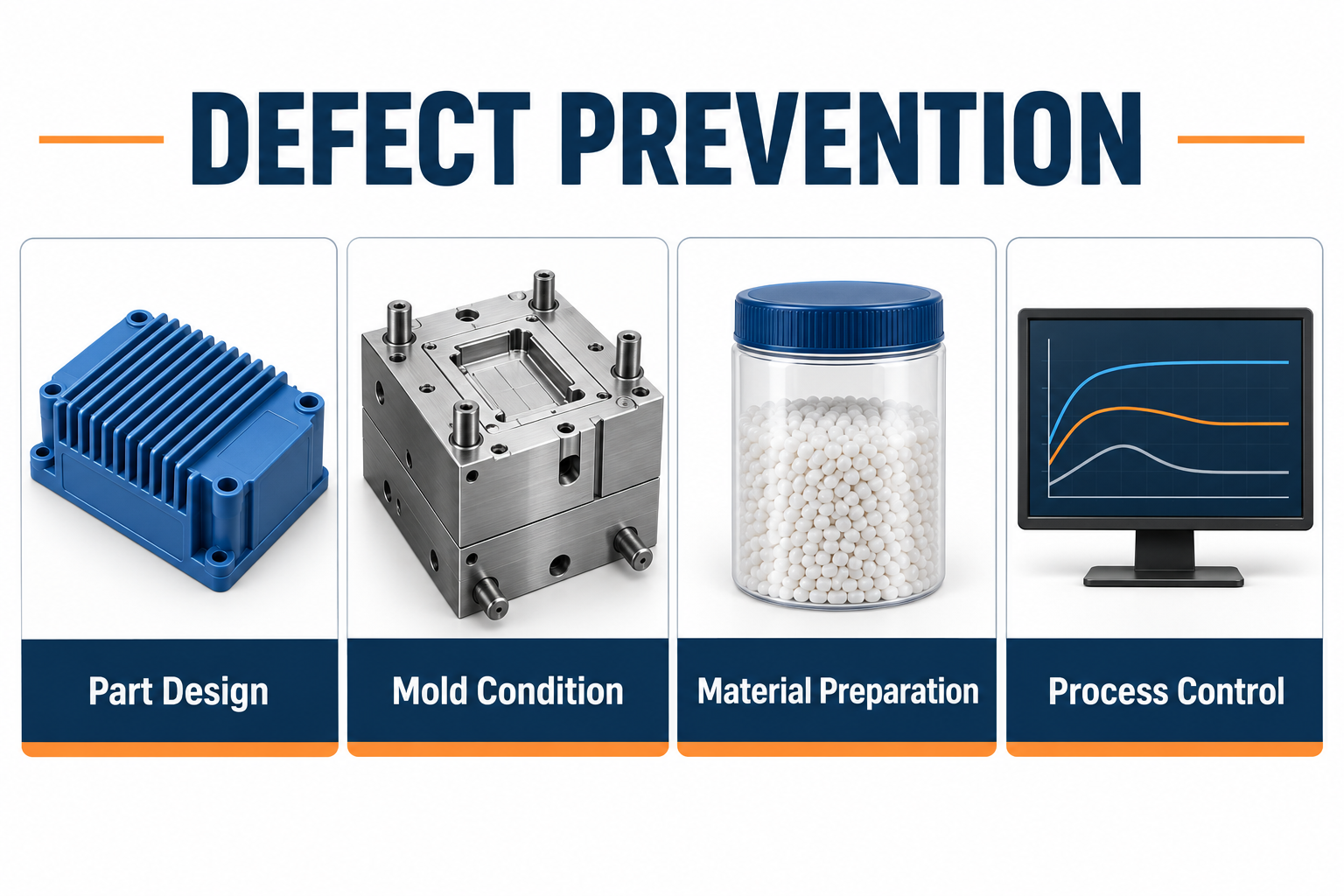
Figura 2. Prevention connects design, utensileria, material preparation, e controllo di processo. Icons are conceptual.
How Do You Prevent Material-Related Defects?
Control resin identity, umidità, contaminazione, and thermal exposure according to the actual grade’s requirements.
Check the material label against the approved specification. Record the lot, colorant, additivi, and permitted regrind content.
Verify Drying Rather Than Only Dryer Settings
For grades requiring drying, follow the supplier’s temperature, tempo, flusso d'aria, and moisture recommendations. Verify the relevant equipment performance and material condition.
A displayed dryer temperature does not establish that the resin reached its moisture target. Consider hopper residence, rendimento, transfer exposure, and measuring method.
Moisture can create streaking. In hydrolysis-sensitive polymers, it can also reduce molecular weight during processing. The severity and mechanism depend on the polymer.
Do not assume every silver streak indicates wet resin. Air, volatile contamination, and degradation can produce similar symptoms. Covestro’s molding-defect guide distinguishes visually similar streak mechanisms.
Control Changes And Contamination
Keep material transfers and containers identified. Review cleaning after resin or color changes, including conveying equipment and the plasticizing system.
Investigate whether black specks appear after a stoppage or changeover. That pattern may point toward retained or degraded material.
Do not approve an unreviewed resin substitution merely because the part still fills. Dimensioni, forza, fine, and process stability may change.
How Does Mold Condition Affect Defect Prevention?
Maintain venting, raffreddamento, shutoffs, and ejection so the tool performs as intended throughout production.
Inspect vents for deposits and blockage. Vent dimensions must suit the resin and tool design; excessive depth can create flash.
Check cooling circuits for flow restrictions, perdite, and temperature imbalance. The controller setting alone does not reveal local cavity conditions.
Inspect parting surfaces, inserti, Slide, and ejector clearances where flash or damage repeatedly occurs. Map defects by cavity to identify localized problems.
Do not compensate for damaged shutoffs by increasing clamp force indefinitely. A tool defect requires an appropriate tool correction and subsequent verification.
Record maintenance findings and changes. If a defect begins after repair, compare the affected features and cooling or venting conditions.
How Should You Troubleshoot Each Defect?
Choose corrections from a confirmed mechanism, then check for side effects on the complete part.
Keep process changes within the resin and equipment limits. The following diagnostic paths guide investigation rather than prescribe universal settings.
Colpi brevi
First confirm shot delivery, fill time, pressure behavior, and the transfer from filling to packing. Check whether the problem is repeatable or intermittent.
For repeatable incomplete regions, inspect the flow path and venting. For changing shot sizes, investigate delivery consistency before modifying the cavity.
Autodesk recommends reviewing the cause before selecting a short-shot remedy. Guardalo short-shot guidance.
Flash
Locate the exact escape path. Determine whether the flash appears during filling or develops during packing.
Review tool closure and shutoff condition before increasing clamp force. If excessive cavity pressure is involved, evaluate the filling and packing transition.
Reducing pressure until flash disappears is insufficient if the part becomes underpacked or dimensionally incorrect.
Sink Marks And Voids
Check whether the affected region contains a thick mass or receives limited packing. Evaluate the gate and local cooling conditions.
Per colata antigelo convenzionale, additional holding after gate seal cannot add material through that gate. Confirm the useful packing interval.
An internal cavity may be a shrinkage void or gas-related bubble. Sectioning or suitable nondestructive inspection may help distinguish them.
Do not assume better surface appearance proves internal soundness. Verify the relevant strength, densità, or internal feature requirements.
Deformazione
Measure the part under defined temperature, conditioning, and support conditions. A fixture can conceal free-state distortion.
Compare cooling balance, packing distribution, and material orientation. Per resine rinforzate, flow direction can affect shrinkage behavior.
Inspect ejection and handling if deformation develops during release. Longer cooling alone may not correct an orientation-driven problem.
Linee di saldatura
Locate the line relative to holes, cancelli, and applied loads. A meeting front is not automatically an open crack.
Evaluate venting and the material condition where fronts join. Trial temperature or speed changes only within a justified process investigation.
Celanese’s EVA molding guide emphasizes placing meeting fronts away from highly stressed regions. Its processing advice is material-specific.
Improved appearance does not establish restored strength. Test the relevant load or sealing function on representative samples.
Burn Marks And Discoloration
End-of-fill scorching can indicate trapped compressed gas. Inspect the vent path and local filling sequence.
Random dark streaks or specks may require a different investigation into contamination or thermal degradation. Record whether they follow downtime or material changes.
Increasing clamp force is not a general remedy for burning. It can reduce available venting at the parting surface.
Jetting And Flow Marks
Jetting can occur when a narrow melt stream enters open space without establishing normal wall contact. Inspect the gate geometry and entry direction.
Autodesk’s jetting explanation links the defect to restrictive passages and high entry velocity.
A staged filling profile may help in suitable cases. Simply increasing speed can worsen jetting even when faster filling helps another defect.
Ejection Marks And Cracking
Compare samples before and after handling where practical. Determine whether whitening or distortion appears during release.
Check draft, attaccare, raffreddamento, ejector support, e allineamento. Reduce localized release stress rather than relying on repeated cosmetic rework.
What Is A Reliable Troubleshooting Workflow?
Record a baseline, test a specific hypothesis, and verify the correction over a representative stable run.
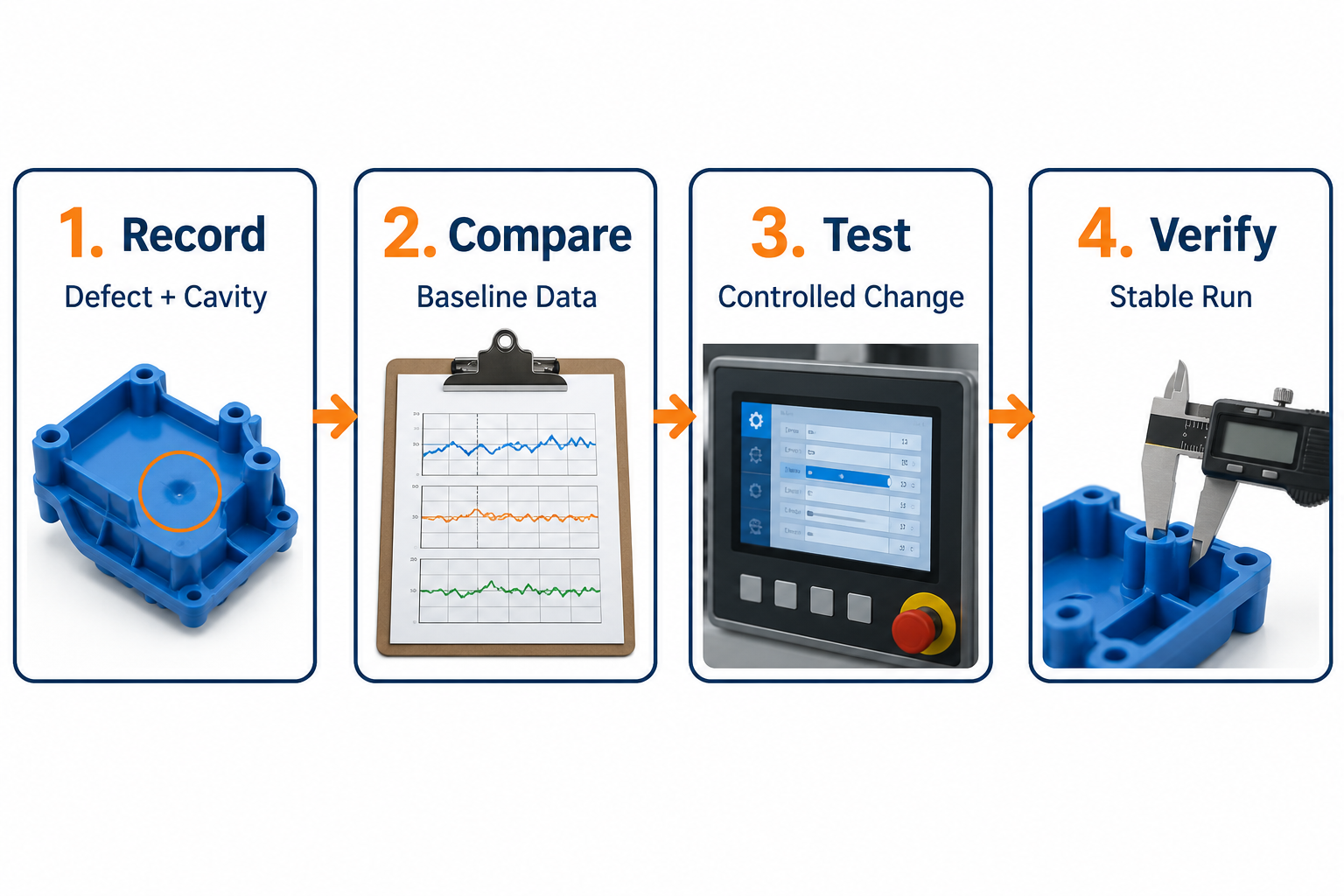
Figura 3. Record, confrontare, test, and verify. Illustrative data and instruments, not a measurement procedure.
Record The Evidence
Retain acceptable and defective samples. Record cavity, tempo, resin lot, material preparation, actual process data, and recent changes.
Measure the defect rate against a defined acceptance rule. Photographs need scale and consistent lighting when they support appearance decisions.
Compare Against A Known Baseline
Check actual values rather than only setpoints. Include fill time, pressure response, cushion, recovery behavior, and relevant temperatures.
A defect isolated to one cavity suggests a different investigation from a change affecting every cavity. Treat that pattern as evidence, not proof.
Test A Controlled Change
Change one factor at a time for a simple diagnostic test. Where interactions matter, use a planned experiment rather than uncontrolled simultaneous adjustments.
Allow the process to stabilize and identify samples from each condition. Record both the intended improvement and any new defect.
Verify And Standardize
Confirm appearance, dimensioni critiche, e funzione. Include all affected cavities and relevant startup or restart conditions in the validation plan.
Update approved settings, maintenance actions, and inspection instructions after approval. Establish a reaction plan if the defect returns.
What Should Buyers Specify Before Production?
Define acceptance requirements before tooling approval so your supplier can design the process and inspection around them.
| Requisito | Information To Agree |
| Aspetto | Visible zones, illuminazione, viewing method, and limit samples |
| Dimensioni | Critical features, datums, conditioning, and measurement method |
| Funzione | Assemblea, carico, leak, or cycle testing where applicable |
| Materiale | Exact grade, colore, additivi, regrind policy, and records |
| Campionamento | Cavità, quantità, tracciabilità, and approval responsibilities |
| Change control | Review required after tooling, resina, or process changes |
Avoid accepting a sample solely because its surface looks clean. Hidden voids, degraded material, and residual stress may require additional evaluation.
TOPS lists servizi di stampaggio ad iniezione di materie plastiche. Confirm project-specific tooling, materiali, and inspection scope during review.
Request A Molded-Part Review with CAD, disegni, grado di resina, defect photos, requisiti critici, volume annuo, e la vita del programma.
Domande frequenti
These answers help separate defect symptoms from the evidence needed to select a correction.
Can You Eliminate Every Injection Molding Defect?
You can reduce defect risk and control production against defined requirements. No general process setting guarantees defect-free output across all geometries and materials.
Does Increasing Injection Pressure Fix Short Shots?
Only when insufficient available pressure contributes to the problem. Blocked vents, inconsistent delivery, or unsuitable geometry may require different corrections.
Are Silver Streaks Always Caused By Moisture?
NO. Moisture is one possible cause. Investigate entrained air, contaminanti, volatiles, and thermal history before deciding on drying alone.
Can More Clamp Force Stop Burn Marks?
It is not a general solution. Trapped gas requires an effective escape path. Excessive clamping can reduce venting and aggravate the problem.
Are All Weld Lines Weak?
Their effect depends on resin, orientamento, geometria, and meeting conditions. Evaluate the relevant function rather than classifying strength from visibility alone.
Can Inspection Prevent Defects?
Inspection detects nonconformance. Prevention requires controlling the causes. Use inspection results to maintain the process and verify corrective actions.
Conclusione
Prevent injection molding defects by linking part design, material preparation, condizione dello stampo, and process evidence. Diagnose the mechanism before changing settings. Verify the entire part after each correction, then document the approved process. Clear acceptance criteria make both supplier review and production control more reliable.


