



Blow molding is a versatile and highly efficient manufacturing process used to create hollow plastic parts. These parts are essential across a wide range of industries, from packaging to automotive. Understanding blow molding, its processes, materiali, vantaggi, and applications is key to determining if it’s the right choice for your plastic manufacturing needs.
In questo articolo, we will provide an in-depth overview of blow molding, covering everything from its history to the future of sustainability in the process. Whether you’re a manufacturer or a product designer, this guide will give you the insights you need to make informed decisions about blow molding for your next project.
1. What is Blow Molding?
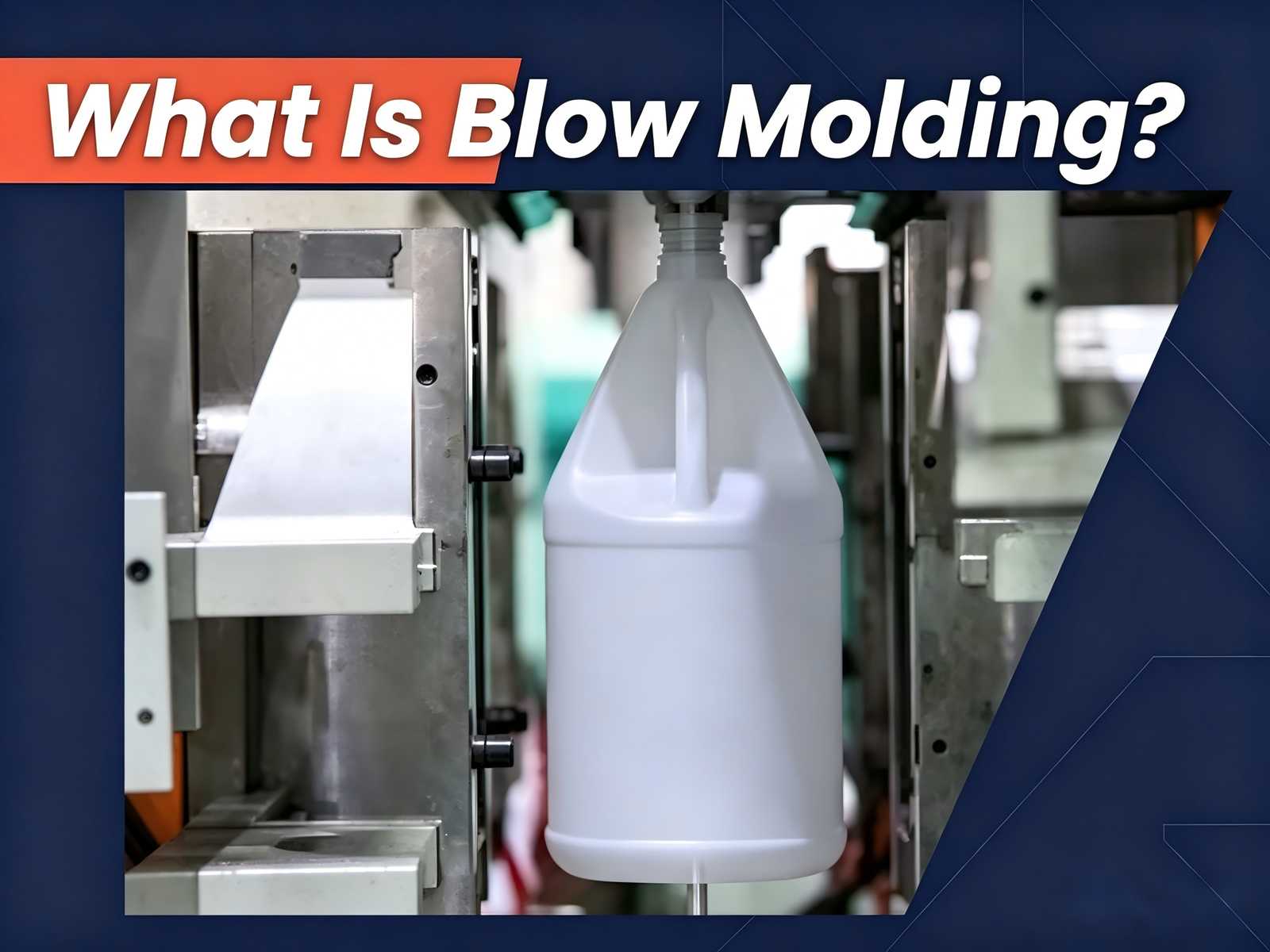
Blow molding is a plastic manufacturing process used to produce hollow parts by inflating a heated plastic tube (known as a parison) inside a mold using compressed air. This method is efficient, versatile, and capable of producing large volumes of uniform parts at a low cost. The process is commonly used for products like bottles, contenitori, carri armati, and other hollow shapes.
The blow molding process is adaptable to a wide range of thermoplastics, including polyethylene (PE), polipropilene (PP), and polyethylene terephthalate (ANIMALE DOMESTICO), making it a popular choice for manufacturers across various industries.
2. The History of Blow Molding
Blow molding’s roots can be traced back to the ancient art of glass-blowing, where molten glass was inflated into hollow forms. This concept was adapted for plastics in the 1930s when synthetic polymers like cellulose acetate were first used for mass production. Negli anni '50, with the rise of polyethylene, blow molding evolved rapidly, especially in the beverage industry with the introduction of PET bottles.
In the 1970s and 1980s, advanced technologies like extrusion blow molding, injection blow molding, and stretch blow molding diversified applications. Oggi, blow molding continues to thrive with automation, multi-layer molding, and sustainable practices pushing the boundaries of what can be produced.
3. How Does Blow Molding Work?
Blow molding involves several key steps to produce hollow plastic parts. Let’s break down the process:
Plastic Preparation
The process begins by feeding plastic pellets into an extruder. These pellets are heated until they melt into a homogeneous, viscous material. The temperature must be carefully controlled—too high, and the plastic degrades; too low, and it won’t inflate properly.
Forming the Parison or Preform
There are several methods for forming the parison or preform:
Extrusion Blow Molding (EBM): A molten tube of plastic is extruded vertically between the mold halves.
Injection Blow Molding (IBM): A solid preform is injection-molded with the neck of the bottle already formed.
Stretch Blow Molding (SBM): A preform is reheated and then stretched before being inflated.
Mold Closing and Air Inflation
Once the parison or preform is in place, the mold halves close around it. Compressed air is then injected into the parison, inflating it until it conforms to the mold’s shape.
Raffreddamento e solidificazione
The plastic rapidly cools against the mold walls, solidifying into its final shape. The cooling process is critical for controlling cycle time and production speed.
Part Ejection and Trimming
After cooling, Lo stampo si apre, and the finished part is ejected. Any excess material, known as “flash,” is trimmed off to complete the part.
4. Types of Blow Molding
Blow molding comes in several variations, each suited to different applications:
Extrusion Blow Molding (EBM)
This method is ideal for producing medium- to large-sized hollow parts like bottles, contenitori, and industrial drums. It involves extruding molten plastic into a tube (parison), inflating it inside the mold, and allowing it to cool. This process is cost-effective and works well for high-volume production.
Injection Blow Molding (IBM)
Injection blow molding involves the injection of molten plastic into a preform mold, followed by inflation to create the hollow part. This method is often used for smaller products like pharmaceutical vials and cosmetic containers that require high precision.
Injection Stretch Blow Molding (ISBM)
This process involves the injection molding of a preform, which is then stretched both axially and radially before being blown into the mold. This biaxial stretching aligns the polymer chains, giving the final product increased strength, chiarezza, and barrier properties. It is commonly used for PET beverage bottles.
Co-Extrusion Blow Molding
Co-extrusion blow molding uses multiple extruders to create a parison composed of several layers of different materials. This approach is used when additional material properties (per esempio., barrier layers for food packaging or fuel tanks) sono richiesti.
Rotary Wheel Blow Molding
Rotary wheel blow molding is designed for high-throughput production. Multiple molds are mounted on a rotating wheel, allowing for continuous extrusion, inflation, raffreddamento, and ejection. This technique is most commonly used for mass production of bottles.
5. Materials Used in Blow Molding
Blow molding is typically performed with thermoplastics, which can be heated and reshaped multiple times. The most common materials used include:
Polietilene ad alta densità (HDPE): Durevole, leggero, and resistant to chemicals, HDPE is widely used for bottles, contenitori, e parti automobilistiche.
Polyethylene Terephthalate (ANIMALE DOMESTICO): Clear and strong, PET is ideal for producing beverage bottles and food containers.
Polipropilene (PP): Lightweight and rigid, PP is often used in automotive parts and medical packaging.
Polietilene a bassa densità (LDPE): Flexible and clear, LDPE is used for packaging and squeeze bottles.
Recycled Plastics: With the increasing focus on sustainability, many manufacturers are incorporating post-consumer recycled plastics into blow-molded products.
6. Cost Considerations in Blow Molding
Blow molding is a cost-effective manufacturing process, particularly for high-volume production of hollow plastic parts. Tooling costs are generally lower than those of injection molding, especially for medium- to large-sized parts. Tuttavia, the cost-effectiveness of blow molding depends on production volume. For small runs, methods like 3D printing may be more cost-efficient, whereas for large-scale production, blow molding offers excellent value.
7. Advantages of Blow Molding
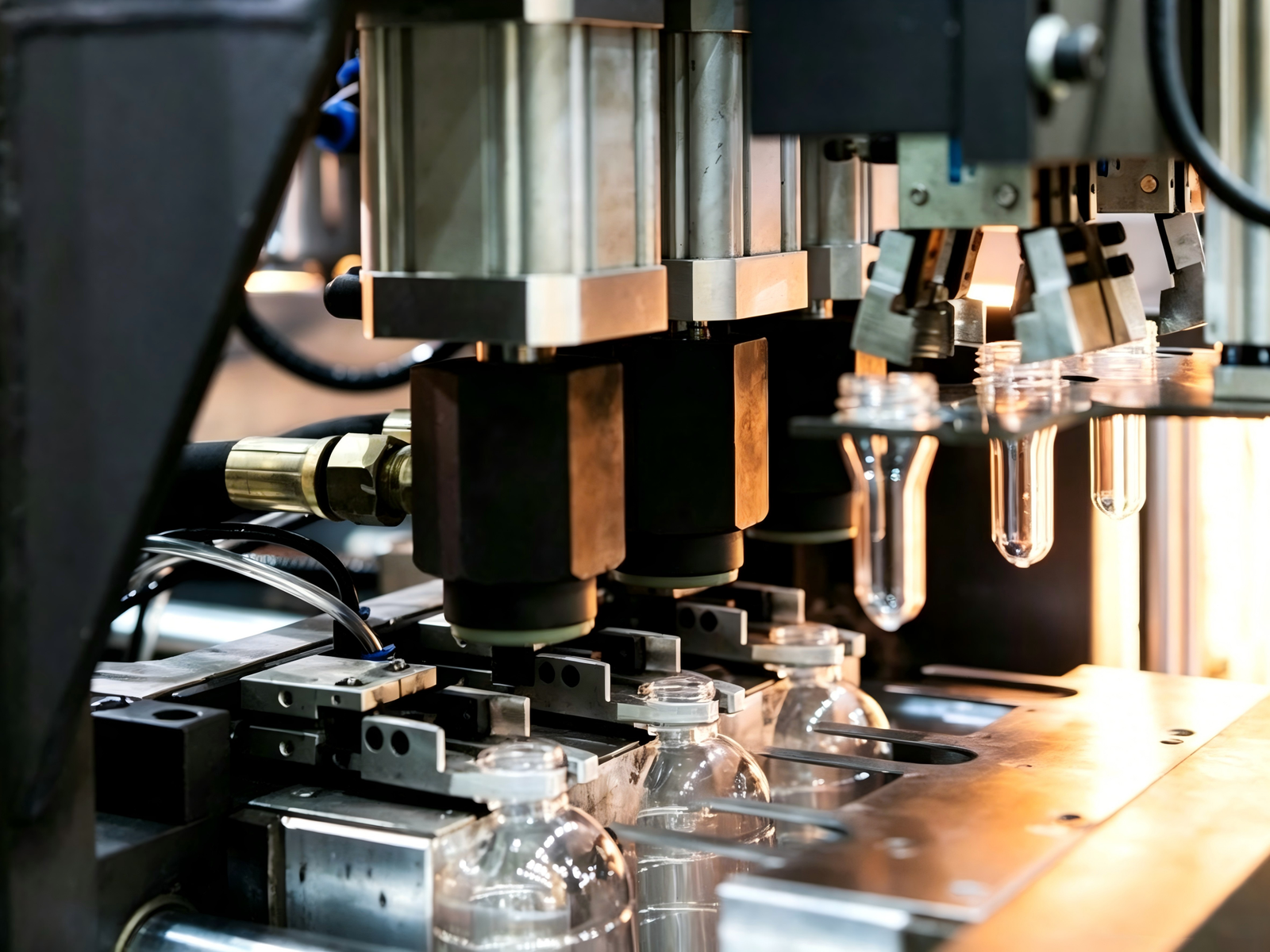
Blow molding is an excellent choice for producing lightweight, durable hollow parts due to several advantages:
Elevata efficienza produttiva: Blow molding can produce parts at a fast rate, making it ideal for large-scale production.
Cost-Effective Tooling: Tooling costs are relatively low compared to other processes like injection molding.
Flessibilità di progettazione: The process can produce complex shapes, including integrated handles and curves, without additional assembly steps.
Versatilità dei materiali: Blow molding works with a variety of thermoplastics, offering flexibility for different product needs.
Scalabilità: Suitable for products of all sizes, from small bottles to large tanks.
8. Common Defects in Blow Molding and How to Prevent Them
Blow molding, like any manufacturing process, can result in defects. Here are some common issues and solutions:
Uneven Wall Thickness: Caused by poor parison control or unbalanced mold cooling. Soluzione: Use precise parison programming and maintain uniform cooling.
Excess Flash: Resulting from mold misalignment or excess parison material. Soluzione: Ensure proper mold alignment and optimize parison sizing.
Bubbles or Voids: Caused by trapped air or moisture in the resin. Soluzione: Dry hygroscopic resins and improve mold venting.
9. Applications of Blow Molding
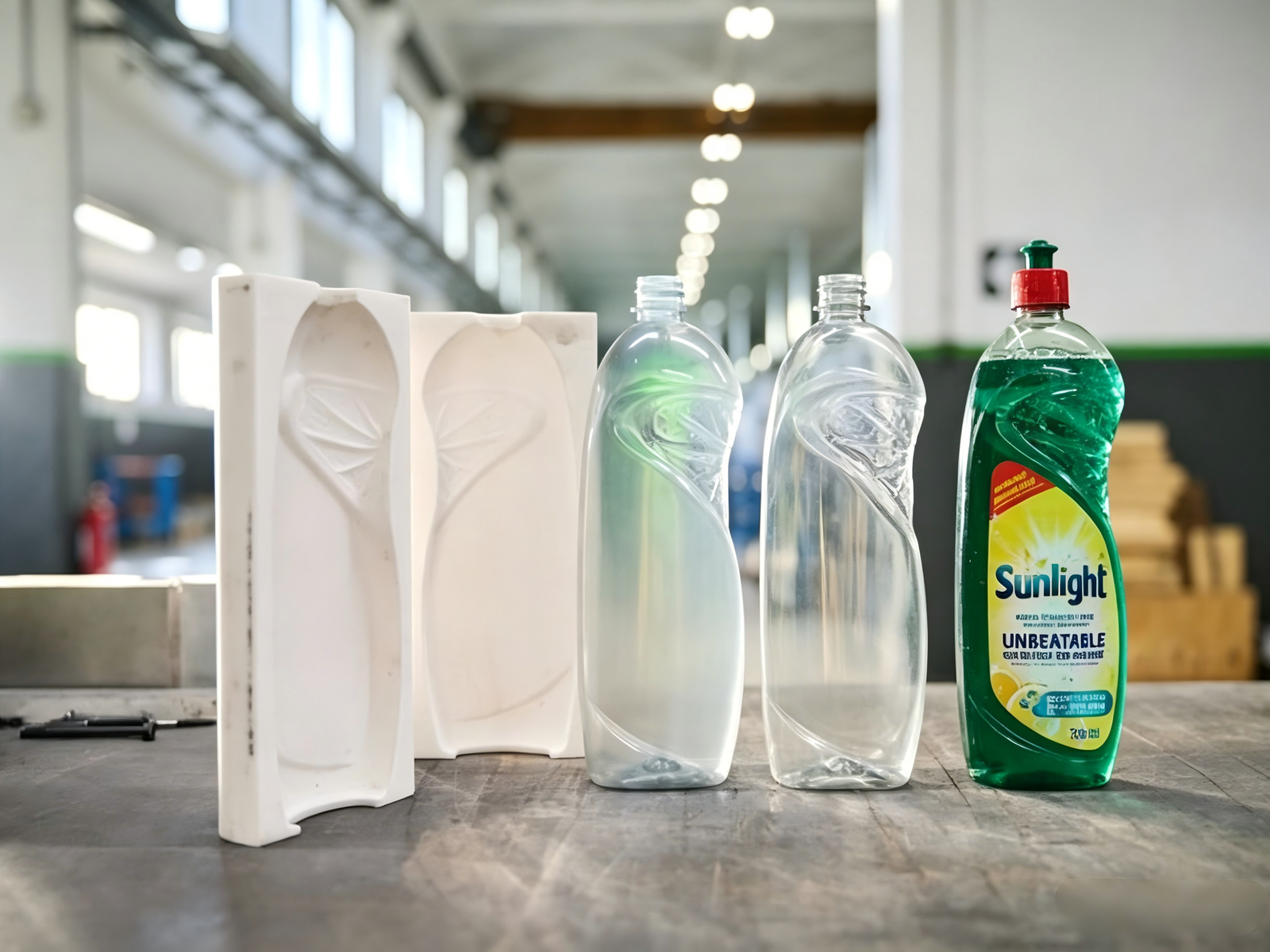
Blow molding is used across various industries, Compreso:
Confezione: Bottiglie di bevande, cosmetic containers, detergent bottles, food jars.
Settore automobilistico: Fuel tanks, air intake systems, and washer fluid reservoirs.
Medical and Pharmaceutical: Small bottles, vials, and healthcare packaging.
Beni di consumo: Giocattoli, articoli sportivi, and reusable water bottles.
10. Blow Molding vs. Stampaggio rotazionale
While both rotational molding (rotomolding) and blow molding produce hollow parts, they differ in process, costo, e applicazioni:
Stampaggio per soffiaggio: Tempi di ciclo più rapidi, cost-effective for medium to large parts, and commonly used for packaging.
Stampaggio rotazionale: Best for large, thick-walled parts like kayaks and outdoor furniture, but with slower production times.
11. Blow Molding vs. Stampaggio a iniezione
Blow molding is specifically for hollow parts, whereas stampaggio a iniezione is ideal for solid parts with intricate details. Blow molding is used for bottles and containers, while injection molding is best for products requiring high precision and complex geometries.
12. Sustainable Development in Blow Molding
As environmental concerns grow, blow molding is becoming more sustainable. Manufacturers are increasingly using recycled materials, exploring biodegradable plastics, and improving energy efficiency through innovations like all-electric drives and closed-loop systems.
Conclusione
Blow molding is a highly efficient, versatile, and cost-effective method for producing hollow plastic parts. Its flexibility in design, Opzioni materiali, and scalability makes it ideal for industries ranging from packaging to automotive. By understanding the blow molding process and its advantages, manufacturers can make informed decisions about when and how to incorporate it into their production lines.
A Massima precisione, we specialize in delivering high-quality blow-molded products tailored to your needs
Contattaci oggi to learn more about how blow molding can streamline your manufacturing process.
Domande frequentiS
- Can blow molding be used for both small and large parts?
SÌ, blow molding is highly versatile. Smaller parts like bottles and vials are typically made using Injection Blow Molding (IBM), while larger items like fuel tanks and industrial drums are made using Extrusion Blow Molding (EBM). - How long does a blow molding cycle take?
Blow molding cycle times can vary depending on the part size, materiale, and cooling method. Tipicamente, the cycle ranges from seconds to a few minutes, with smaller parts having shorter cycle times. - Is blow molding environmentally friendly?
SÌ, blow molding can be environmentally friendly, especially when recycled plastics are used. The process generates minimal waste, and excess material (flash) can often be reground and reused. - What are the common defects in blow molding?
Some common defects include uneven wall thickness, excess flash, bolle, and surface imperfections. These can be prevented by careful control of the parison, mold alignment, and resin quality. - What types of materials can be used in blow molding?
Blow molding can be done with a variety of thermoplastics, including HDPE, ANIMALE DOMESTICO, PP, PVC, and recycled resins. The choice of material depends on the required properties, come la forza, chiarezza, e resistenza chimica. - What industries benefit from blow molding?
Blow molding is widely used in industries such as packaging (bottiglie, contenitori), settore automobilistico (serbatoi di carburante, air intake systems), medico (vials, pharmaceutical packaging), e beni di consumo (giocattoli, articoli sportivi). - How is blow molding different from injection molding?
Blow molding is designed to create hollow parts using air pressure to inflate a parison, while injection molding is used to create solid parts by injecting molten plastic into a closed mold. Blow molding is typically used for packaging and automotive components, while injection molding is better for precise, solid parts. - Can blow molding create complex shapes?
SÌ, blow molding can produce intricate and complex shapes, including integrated handles, curve, and multi-chamber structures, without the need for secondary assembly processes.


