


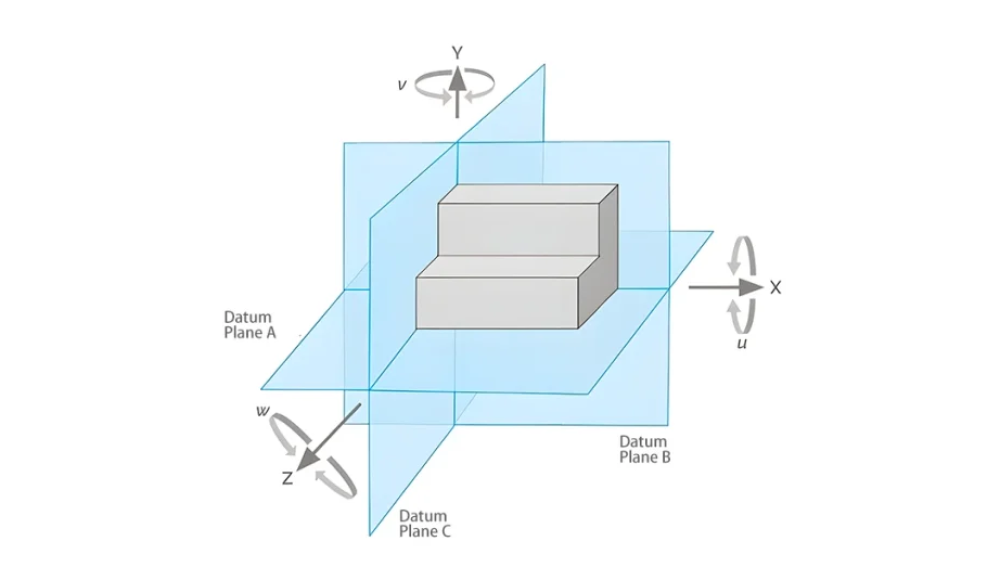
Nel mondo dell'ingegneria, La precisione e la coerenza non sono negoziabili. Ogni parte deve allinearsi, adatto, e funzionare esattamente come previsto. Per raggiungere questo obiettivo, gli ingegneri si basano su un concetto fondamentale noto come dato. Che tu sia lavorazione un albero del cambio, allineamento dei piloni del ponte, o ispezionando un componente aerospaziale, i datum forniscono la base invisibile ma essenziale per tutte le misurazioni e tolleranze.
Questa guida completa approfondisce il concetto di datum, i loro tipi, notazioni, applicazioni, e un ruolo fondamentale nell’ingegneria e nella produzione moderne.
Quali sono i dati in ingegneria?
UN dato è un punto di riferimento teorico, linea, o aereo utilizzato per stabilire a sistema di coordinate per la misurazione e la progettazione. Consideralo come un punto zero o una posizione di partenza che gli ingegneri utilizzano per garantire che ogni misurazione su una parte sia ripetibile, coerente, e standardizzato.
Senza date, non ci sarebbe modo di garantire che i componenti prodotti in stabilimenti diversi, o anche in giorni diversi, si allineino e si incastrino correttamente durante l'assemblaggio.
Tipi di dati
Data primaria
Il dato primario è il primo e più importante riferimento. Solitamente è costituito da tre punti di contatto che giacciono su una superficie piana, formando un piano stabile. Questo piano limita il movimento in tre direzioni: traslazione lungo la X, Y, e assi Z.
Caso d'uso: Superfici di accoppiamento tra gruppi meccanici, come la superficie dell'alloggiamento della trasmissione in un motore automobilistico.
Datum secondari
Il dato secondario viene utilizzato dopo aver stabilito quello primario. Fornisce altri due punti di contatto, formando una linea perpendicolare al dato primario, e limita il movimento in due direzioni aggiuntive (tipicamente rotazionale).
Caso d'uso: La superficie laterale di una staffa che si allinea ortogonalmente alla base.
Dati terziari
Il datum terziario completa il quadro di riferimento del datum (DRF) con un ultimo punto di contatto. È perpendicolare sia ai Riferimenti primari che a quelli secondari e controlla l'ultimo grado di libertà rimanente.
Caso d'uso: Una piccola sporgenza o funzione utilizzata per l'allineamento finale nell'assemblaggio dei componenti.
Punto, Linea, e dati piani
I riferimenti possono anche essere classificati in base alla loro forma fisica:
Data puntuale: Rappresentato da un singolo punto (punto o croce), utilizzato per fare riferimento a piccole funzionalità.
Data della riga: Riferimenti diritti ideali per parti cilindriche o bordi.
Data dell'aereo: Superfici piane utilizzate come basi stabili per misurare o allineare altri elementi.
Riferimenti dell'asse e del piano centrale
Data dell'Asse: Una linea centrale teorica attraverso una lavorazione cilindrica o rotonda. È usato per misurare la concentricità o la rotazione.
Riferimento del piano centrale: Un piano del punto medio tra due superfici parallele, ideale per parti simmetriche.
Entrambi sono essenziali nella misurazione di parti rotonde o simmetriche in cui l'allineamento centrale è fondamentale.
Notazione e simboli dei Datum
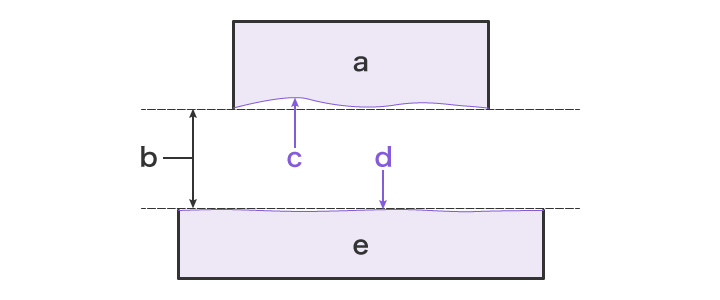
una parte di destinazione; bData (concettuale); c Funzione di Riferimento (piano o linea della parte); d Funzione di Riferimento simulata (piano o linea di una piastra di superficie o di un calibro); e Piastra di superficie, misura, mandrino, eccetera.
Comprendere i simboli di riferimento è fondamentale per leggere correttamente i disegni tecnici.
Simbolo della funzione di Riferimento
Una lettera maiuscola in una cornice quadrata (per esempio., UN, B, C) collegato da una linea guida alla feature. Ciò identifica quale superficie o lavorazione è la lavorazione di Riferimento.
Simbolo di riferimento Datum
Lettere posizionate all'interno di riquadri o triangoli nel riquadro di controllo della funzione. Questi indicano l'ordine di precedenza dei dati (per esempio., UN | B | C).
Simbolo della destinazione di riferimento
Un cerchio diviso, con la metà inferiore che mostra una lettera e un numero (per esempio., A1, A2), utilizzato per identificare punti discreti, linee, o aree su superfici irregolari.
Simbolo del punto di riferimento
Una semplice croce (+) o punto (•) su un disegno per identificare un punto di riferimento specifico.
Questi simboli forniscono indicazioni visive che definiscono come una parte deve essere misurata e allineata durante l'ispezione o l'assemblaggio.
Caratteristiche di riferimento vs. La data

Funzione data: Il reale, parte fisica di un componente utilizzata per stabilire un datum, come la superficie di una flangia, il centro di un buco, o l'asse di uno spillo.
Dato: Il piano teorico, punto, o asse derivato da una feature di Riferimento.
Per esempio, IL centro di un buco è la feature di Riferimento; IL asse che passa per il centro è il dato.
Applicazioni dei Datum
Vantaggi del controllo qualità
I dati sono il fondamento di ispezioni ripetibili e accurate. Strumenti come macchine di misura a coordinate (CMMS) utilizzare quadri di riferimento di riferimento per verificare che le parti siano conformi alle specifiche, garantendo la coerenza tra i lotti.
Usi nel settore automobilistico e aerospaziale
Nell'aerospaziale, i riferimenti aiutano a garantire un assemblaggio preciso delle pale della turbina, pelli della fusoliera, e componenti del carrello di atterraggio. Nell'ingegneria automobilistica, sono fondamentali per garantire l'allineamento dei blocchi motore, sistemi di sospensione, e gruppi di trasmissione.
Ruolo nella produzione
I riferimenti semplificano la progettazione dei dispositivi e i processi di assemblaggio. Garantiscono che ogni parte venga prodotta con orientamento e posizionamento coerenti, riducendo le rilavorazioni, migliorando la vestibilità, e velocizzare la produzione.
Applicazioni di ingegneria civile
I dati servono per stabilire elevazione, allineamento, e posizione in progetti su larga scala come le strade, ponti, tunnel, ed edifici. I geometri li utilizzano come linee di base per la mappatura e il layout.
Targeting del Riferimento per parti irregolari
Forme complesse come fusioni o forgiature potrebbero non avere superfici piane o simmetriche. In questi casi, obiettivi di riferimento (punti o aree sulla parte) vengono utilizzati per definire posizioni di misurazione stabili. Ciò è fondamentale in settori come quello aerospaziale, dove anche le parti irregolari necessitano di un adattamento preciso.
Conclusione
Padroneggiare l'uso dei datum è essenziale in ingegneria, produzione, e garanzia di qualità. Forniscono un linguaggio di misurazione condiviso in tutta la progettazione, produzione, e squadre di ispezione.
Che tu stia progettando un componente di un motore a reazione o costruendo un tunnel, i dati mantengono tutto allineato, controllato, e misurabile. Sono gli eroi non celebrati che rendono possibile l’ingegneria precisa.
Domande frequenti
Q: Qual è la differenza tra un datum e una feature di datum?
Un dato è un riferimento idealizzato (punto, linea, o aereo), mentre una feature di Riferimento è la geometria effettiva della parte utilizzata per stabilire tale riferimento.
Q: Perché utilizzare un sistema di riferimento Datum (DRF) in GD&T?
Il DRF combina primario, secondario, e dati terziari per formare un sistema di coordinate che garantisce misurazioni e tolleranze accurate.
Q: Qual è la differenza tra un asse di Riferimento e un punto o piano di Riferimento?
Un asse di Riferimento è una linea centrale per feature cilindriche che controllano più gradi di libertà; punti e piani sono riferimenti più semplici che ne controllano meno.
Q: È possibile applicare i riferimenti a superfici curve o irregolari?
SÌ. Gli ingegneri usano obiettivi di riferimento su forme complesse per creare sistemi di misura stabili e ripetibili.


