


IN 10204 material certificates help you define the inspection documentation required for purchased metal. For CNC parts, you also need traceability from that material to the delivered lot. Specify the document type, Requisiti materiali, and production records before ordering stock.
Separate The Document Type From The Material Specification
IN 10204 defines inspection document types; it does not specify the alloy or every property your part needs.
BSI lists BS EN 10204:2004 as the current release. State the governing edition and requested document type in your purchase order.
Identify the material standard, grado, forma del prodotto, and delivery condition separately. Include required tests and any supplementary requirements.
A certificate title cannot resolve an unspecified heat-treatment condition. Allo stesso modo, a raw-material document does not establish the finished part’s dimensions or coating quality.
Understand The Four Document Types
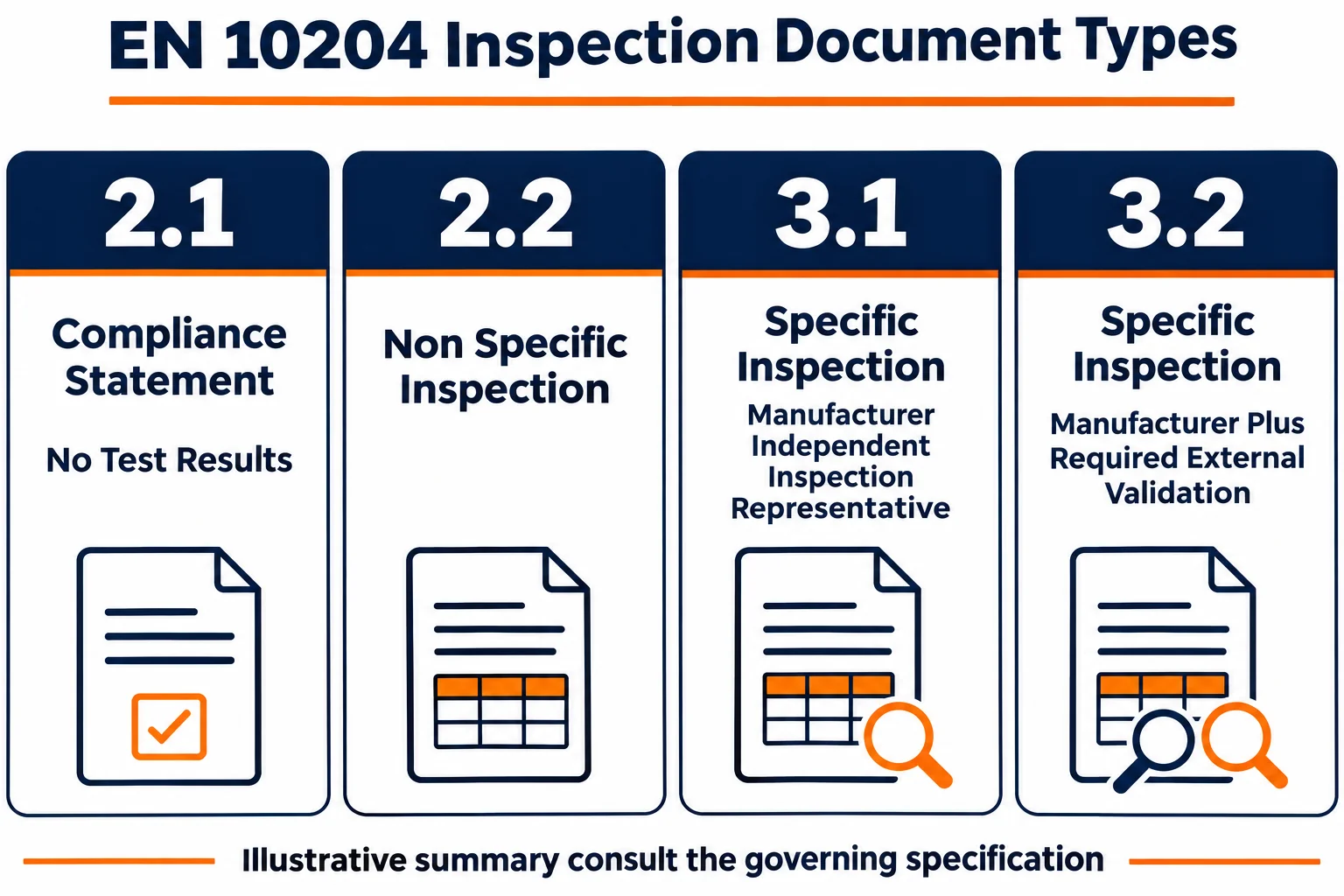
The types differ in the inspection basis, reported results, and required validation.
The British Stainless Steel Association’s inspection document guidance explains the distinctions under the 2004 revisione.
| Tipo | Inspection Basis And Content | Convalida |
|---|---|---|
| 2.1 | Compliance statement without test results | Produttore |
| 2.2 | Compliance statement with non-specific inspection results | Produttore |
| 3.1 | Compliance statement with specific inspection results | Authorized manufacturer inspection representative independent of manufacturing |
| 3.2 | Compliance statement with specific inspection results | Manufacturer inspection representative independent of manufacturing, plus purchaser representative or officially designated inspector |
Specific inspection relates to the supplied products or the test unit representing them. The product specification and order determine the required tests.
Do not describe 3.1 as automatically involving an outside inspection company. Independence from manufacturing does not necessarily mean independence from the manufacturer.
Per 3.2, define the required external validation role. A laboratory report alone does not establish that all certificate requirements are satisfied.
Choose The Type Before Material Procurement
You should choose the document type according to the applicable product and order requirements, before buying stock.
A request for “MTC” or “material certificate” can be interpreted differently. Name the standard, type, and required supporting records.
Ask whether the requested material and documents are available together. Resolve inspection arrangements and any required participation before production begins.
LRQA’s Tipo 3.2 certification overview emphasizes traceable material assurance. Confirm your project’s inspection arrangement rather than assuming an existing document can simply be relabeled.
If the order instead calls for ISO 10474:2013, review that standard’s steel-product scope and requirements. Do not substitute standards without approval.
Preserve Identity From Stock To Finished Parts
Your traceability plan should connect material identity with cut blanks, machining lots, and shipment records.
Ask how the supplier retains identification when the original stock marking is removed. Consider travelers, controlled containers, cutting records, and suitable temporary identification.
Separate material lots when the order requires separate traceability. Define the treatment of offcuts and any mixed-lot shipment before manufacturing starts.
A heat number identifies a material link; it is not the same as a finished machining batch. Your records should connect both.
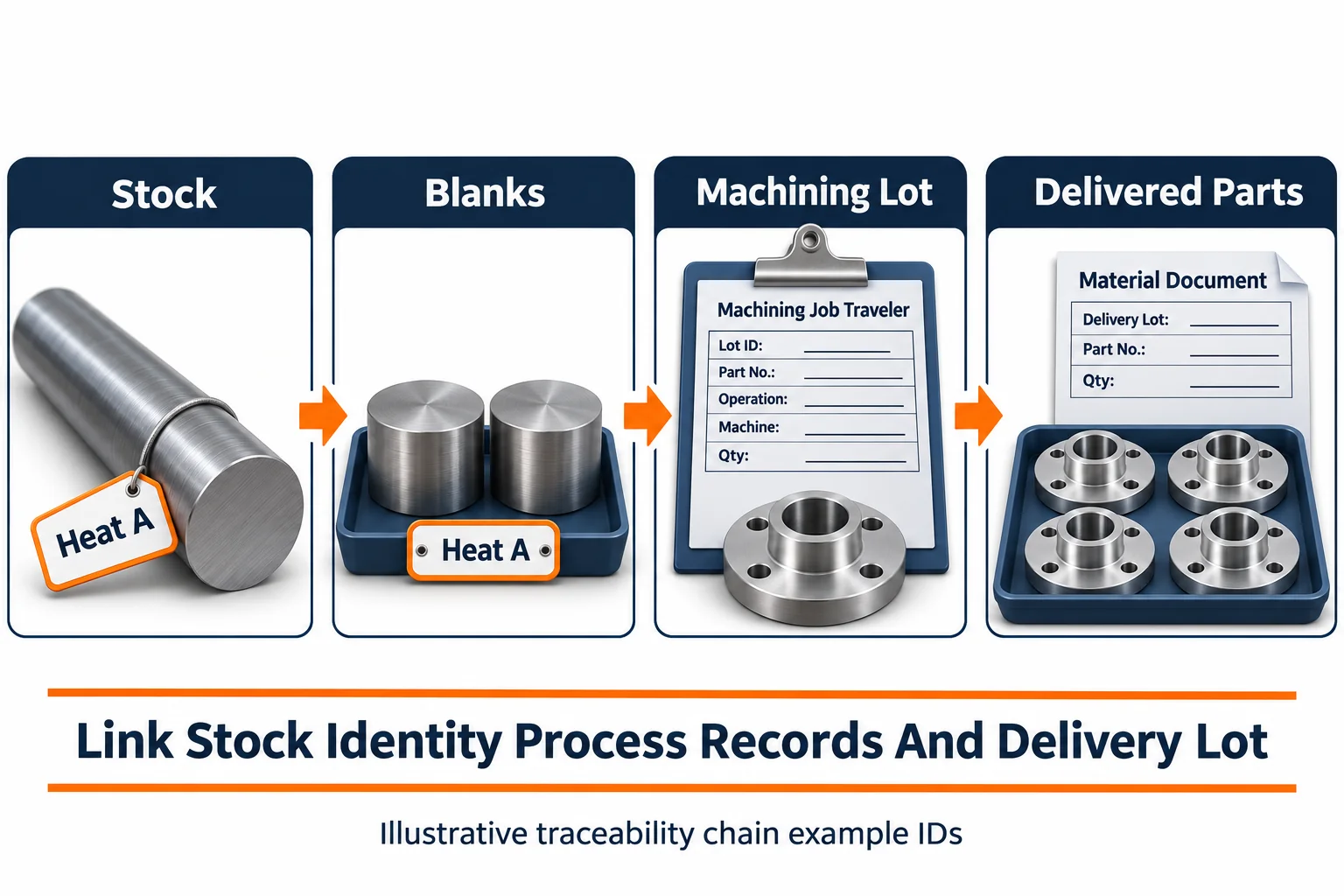
| Production Stage | Link To Retain |
|---|---|
| Incoming stock | Supplier, stock identity, document reference, and receiving record |
| Taglio | Parent stock identity linked to blanks and retained offcuts |
| Lavorazione | Blank identity linked to work order and production lot |
| Further processing | Lot identity linked to heat treatment or finishing records |
| Consegna | Shipment quantity and part lot linked to the document package |
For supporting identification checks, vedi il nostro PMI guide. PMI and document traceability answer related questions, but neither automatically replaces the other.
Check The Document Against The Actual Order
A useful review checks the material, reported condition, risultati, identity, and validation against the purchase requirements.
Verify the document’s issuer, reference, product description, and applicable material specification. Check whether results represent the required product and test unit.
Compare reported chemistry and required mechanical results with the ordered acceptance criteria. Review units, test conditions, and any stated deviations.
Check the connection between received stock identification and the document. If authenticity is uncertain, request confirmation through a verified issuer contact.
Keep the original document intact. Record your review and any clarification separately rather than altering the manufacturer’s results.
Keep Later Processing Evidence Separate
You should request additional evidence when later operations affect properties or requirements outside the original material document.
A mill report describes its stated product and condition. Subsequent heat treatment, saldatura, or other processing can require separate qualification and records.
Dimensional inspection and coating reports serve different purposes. List them separately in the delivery package.
If identification is lost, hold the affected material for an agreed disposition. Do not reconstruct a traceability chain from appearance alone.
Compare Quotes With The Same Documentation Scope
Your quotation should include material sourcing, tracciabilità, inspection participation, and the required delivery records.
Costs depend on stock availability, minimum purchase quantities, additional tests, outside inspection, and record control. Avoid comparing different documentation assumptions.
Offerte TOP Servizi di lavorazione CNC. Send your material and documentation requirements with the drawing so the proposed sourcing route can be reviewed together.
Confirm which documents come from the material producer and which records cover the finished component. Resolve gaps before approving procurement.
Domande frequenti
Your order should resolve the certificate questions that affect sourcing and final acceptance.
Does A Type 3.1 Certificate Mean Third Party Inspection
Not automatically. The manufacturer’s authorized inspection representative must be independent of manufacturing; that is different from an outside inspector.
Does Type 3.2 Mean Better Steel
NO. It changes the required validation arrangement. The material specification and acceptance results still determine compliance.
Does A Type 2.2 Report Identify Specific Delivered Test Results
Non necessariamente. Its results are based on non-specific inspection. Select the document type required by your order.
Can PMI Replace A Required Certificate
Not automatically. PMI measures selected material characteristics. Confirm any alternative documentation or testing arrangement before accepting it.
Can I Request Type 3.2 After Machining
Ask before procurement. Later feasibility depends on available evidence, tracciabilità, and the required inspection arrangement.
Does The Mill Report Cover Finished Dimensions
NO. Request the component inspection report separately and link it to the delivered part lot.
Can One Shipment Contain Several Heats
Only under the agreed order requirements. Keep the quantities and identities linked to the relevant documents.
What Should A Documentation RFQ Include
Send drawings, norma materiale, grado, condizione, quantità, volume annuo, document type, required tests, and traceability expectations.
Request A Material Documentation Review
Contattaci con il tuo disegno, specifica del materiale, quantità, and required document type. Agree the stock source, tracciabilità, and delivery records before production approval.