



Magnetic particle inspection can reveal surface and near-surface discontinuities in ferromagnetic CNC steel parts. It cannot establish that every internal region is defect-free. Before ordering, define the material, examination areas, manufacturing stage, criteri di accettazione, e le registrazioni richieste. Include demagnetization and final cleaning requirements in the inspection scope.
Confirm That Magnetic Particle Inspection Fits Your Material
You should specify magnetic particle inspection only when the component material and inspection objective suit the method.
The method magnetizes the part and uses magnetic particles to reveal leakage fields associated with discontinuities. ASNT describes its surface and near-surface inspection scope.
Provide the exact alloy, condizione, e trattamento termico. The word steel alone does not establish suitability for your inspection procedure.
Do not specify this method for aluminum or a nonferromagnetic alloy. Some stainless steel grades require a different inspection approach.
Ask your responsible inspection specialist to confirm applicability for the actual material and geometry. A material description is not a qualified examination technique.
If your concern involves deeper internal discontinuities, discuss another suitable method. Passing magnetic particle inspection does not establish fatigue life or load capacity.
Define Examination Areas And Manufacturing Stage
Your purchase documents should identify where inspection applies and when it occurs within the manufacturing sequence.
Mark the required surfaces on a drawing or inspection map. Resolve whether coverage includes bores, scanalature per chiavette, spalle, thread roots, and other difficult areas.
A statement such as inspect the shaft leaves access and coverage assumptions unresolved. Identify any inaccessible surfaces and agree their disposition beforehand.
Choose inspection stages around the manufacturing risks being controlled. Earlier inspection can screen material, but subsequent processing can change the component condition.
Specify whether examination occurs after heat treatment, final machining, o macinare, as your governing requirements demand. Define any intermediate inspection separately.
If later rework changes an inspected area, agree whether repeat examination is required. Preserve traceability between the part and its inspection status.
| Requisito | Information To Put In The Order |
|---|---|
| Identità materiale | Alloy designation, condizione, and relevant heat treatment |
| Examination coverage | Identified surfaces, access limitations, and coverage map |
| Manufacturing stage | Required sequence and condition when examined |
| Acceptance basis | Governing specification, revisione, and applicable rejection criteria |
| Release evidence | Part identification, procedura, risultati, and authorized disposition |
Separate The Test Method From Acceptance Criteria
Your inspection order needs an acceptance basis as well as a method reference.
ASTM’s E709 guide supports the preparation of magnetic particle testing procedures and specifications. Identify the contractually applicable document and revision.
Do not assume a general method reference resolves every product acceptance question. State the governing criteria and who evaluates indications.
An indication is an observed particle pattern. It requires interpretation before it becomes a rejection decision under your acceptance rules.
Geometria, condizione della superficie, and magnetic conditions can affect the pattern. Avoid treating every visible accumulation as a confirmed crack.
Require personnel qualification and procedure approval appropriate to your contract. Confirm these arrangements before work begins, including any outside inspection provider.
If criteria are missing or contradictory, resolve them before production release. Do not invent a permitted crack length during inspection.
Review Field Direction And Technique Coverage
Your inspection technique must account for discontinuity orientation and the geometry of the examined part.
Magnetic field direction affects detection. A field crossing a discontinuity is generally more favorable than a field running along it.
The responsible specialist should establish the required magnetization directions and examination sequence. One convenient setup may not cover every relevant orientation.
Review how the procedure establishes adequate field conditions in each required area. Shoulders, section changes, and complex geometry deserve explicit consideration.
Avoid choosing visible or fluorescent particles solely by appearance. The approved technique must address sensitivity, viewing conditions, and the actual inspection surface.
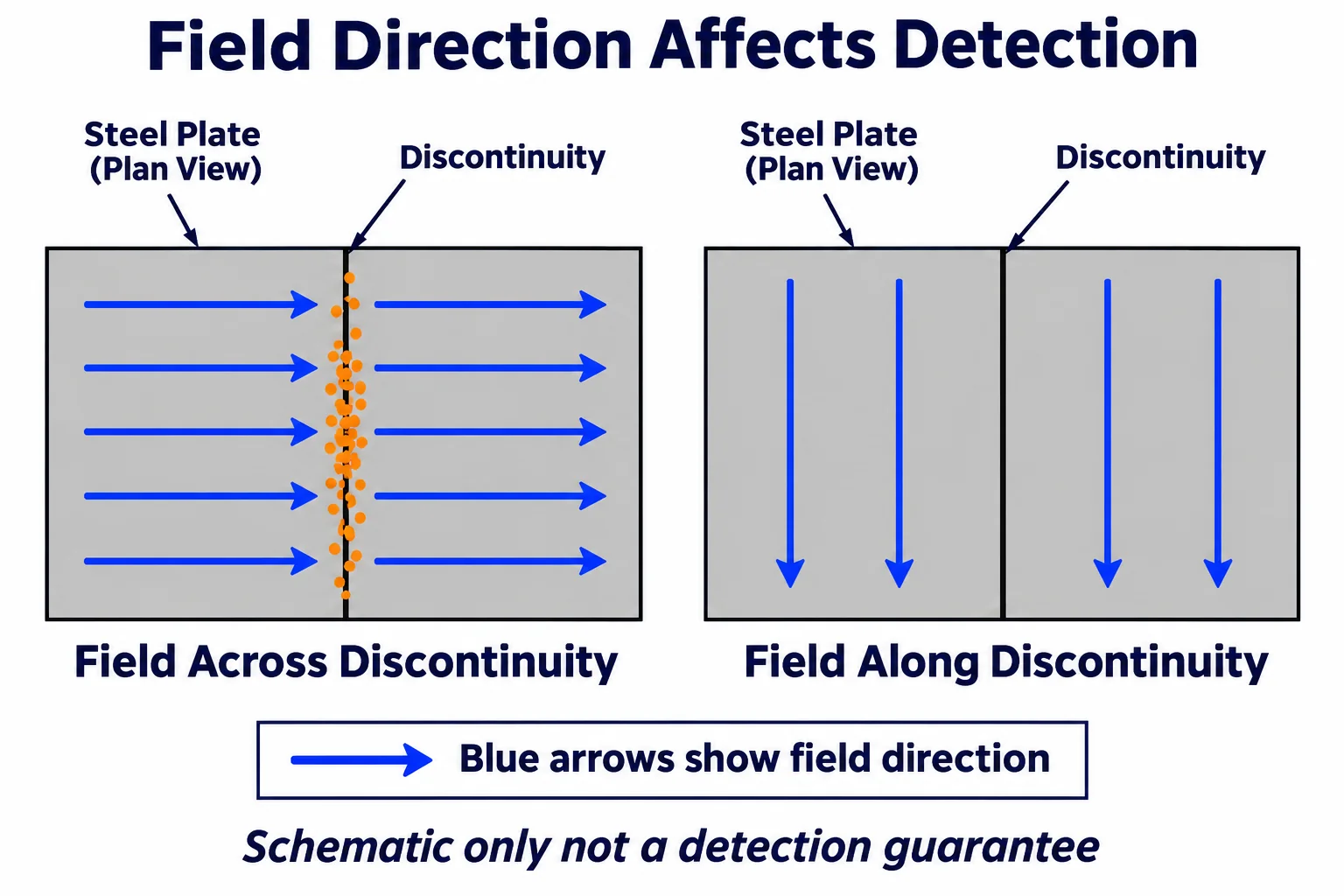
The schematic illustrates orientation only. It does not establish detection sensitivity, limiti di accettazione, or the required settings for your component.
Agree Surface Preparation And Coating Conditions
Your inspection procedure should define a surface condition that allows reliable particle movement and interpretation.
Magnaflux’s magnetic particle inspection FAQ explains how contamination and coatings can affect examination. Cleaning and coating assumptions belong in the agreed procedure.
Identify oils, scala, protective films, and other materials present before inspection. Confirm what must be removed and how the component will be protected afterward.
Do not assume a coated part can be examined with unchanged sensitivity. Review the coating type, spessore, and governing requirements.
Also distinguish an approved inspection contrast coating from the component’s final protective finish. They serve different purposes.
Any preparation must preserve the required dimensions and surface condition. Grinding away a suspect area requires authorized rework and an agreed reinspection route.
Include Demagnetization And Final Cleaning
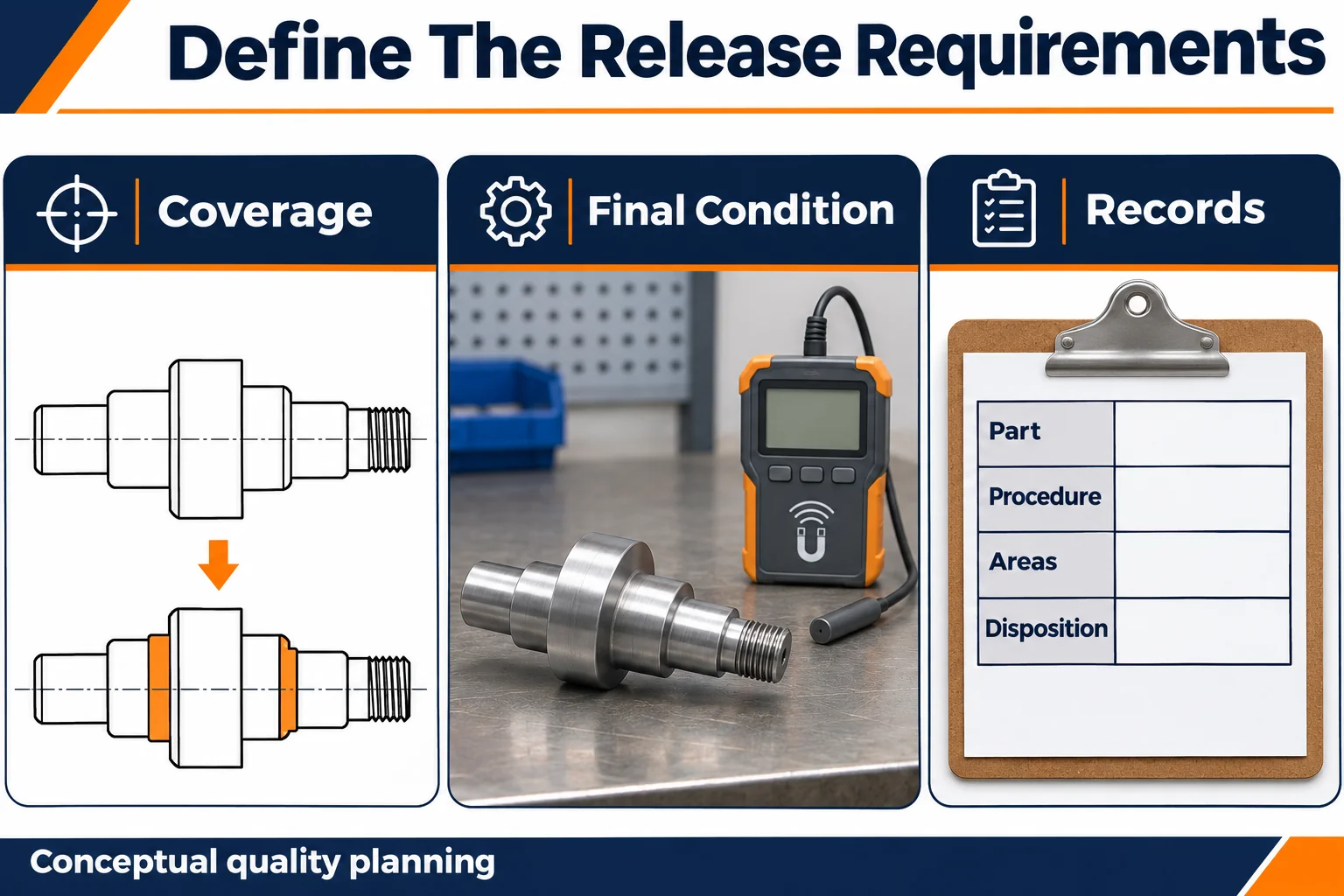
Your release requirements should state the required residual magnetism and cleanliness condition after examination.
Magnaflux’s demagnetization reference guide includes checking residual magnetism after demagnetization. Switching off the magnetizing equipment does not establish an acceptable final condition.
Agree any residual-field limit, measurement method, and locations required by the application. Use the governing specification rather than a universal numerical limit.
Define removal of particles and carrier residues. Include drying and corrosion protection where necessary for the material and subsequent operations.
Keep final cleanliness requirements compatible with assembly, rivestimento, e imballaggio. Confirm that any protective product is permitted on the delivered component.
Request Inspection Records That Support Part Release
Your inspection report should connect the actual examination to identified parts and the agreed acceptance basis.
Include the part number, revisione, lot or serial identification, fase di ispezione, and procedure reference. Record examined areas and any coverage limitations.
Specify the required result details, indication locations, and supporting images where applicable. Photographs support a report but do not replace its interpretation.
Identify the examiner and authorized disposition. Retain approved deviations and reinspection results when rework occurs.
Nostro Guida alla qualità della lavorazione CNC covers the broader inspection workflow. Magnetic particle examination addresses a specific discontinuity question within that workflow.
Confronta preventivi con lo stesso ambito di ispezione
Your quotation should include preparation, examination, segnalazione, and the final delivery condition.
TOPS provides Servizi di lavorazione CNC. Submit your inspection specification during project review and confirm the proposed inspection arrangements.
Costs depend on part geometry, quantità, copertura, preparation, procedure requirements, e reporting. Specialist provider coordination and repeat inspection can also affect lead time.
Confirm the proposed provider, personnel qualification, and required approvals before ordering. Do not assume a machining supplier holds a particular NDT qualification.
Domande frequenti
Your order should resolve these inspection questions before manufacturing begins.
Can Magnetic Particle Inspection Be Used On Aluminum
NO. The method requires ferromagnetic material. Select an appropriate alternative for aluminum with your inspection specialist.
Can Every Stainless Steel Part Be Examined This Way
NO. Applicability depends on the actual material’s magnetic response and the qualified inspection procedure.
Does Passing Inspection Prove That No Internal Defects Exist
NO. The method addresses surface and near-surface discontinuities. Deeper internal concerns may require another examination method.
Is Every Particle Pattern A Rejectable Crack
NO. A qualified evaluator must interpret indications against the applicable acceptance criteria.
Is One Magnetization Direction Always Enough
NO. The technique must address relevant discontinuity orientations and coverage requirements.
Can Inspection Be Performed Through A Coating
Only when the approved procedure and applicable requirements permit it. Review coating condition and sensitivity before accepting that route.
Is Demagnetization Complete When The Equipment Is Switched Off
NO. Follow the approved demagnetization process and verify the residual condition where required.
What Should Be Sent With An Inspection Inquiry
Invia il disegno, materiale, Trattamento termico, quantità, examination areas, governing specification, criteri di accettazione, e obblighi di rendicontazione.
Request A CNC Part Inspection Review
Contattaci con il tuo disegno, materiale, Trattamento termico, quantità, and inspection specification. Identify examination areas, criteri di accettazione, required records, and final delivery condition. Agree the machining and inspection sequence before production release.

