



A galvanização é um método eficaz e econômico para proteger o aço da corrosão. Revestindo aço ou ferro com uma camada de zinco, os fabricantes podem prolongar significativamente a vida útil dos componentes metálicos e, ao mesmo tempo, reduzir os custos de manutenção. Hoje, o aço galvanizado é amplamente utilizado na construção, automotivo, agricultura, transmissão de energia, telecomunicações, e fabricação industrial devido à sua excelente durabilidade e economia.
Este guia explica como funciona a galvanização, os diferentes métodos de galvanização, suas vantagens e limitações, padrões da indústria, e como escolher o processo certo para o seu projeto.
1. O que é galvanização?
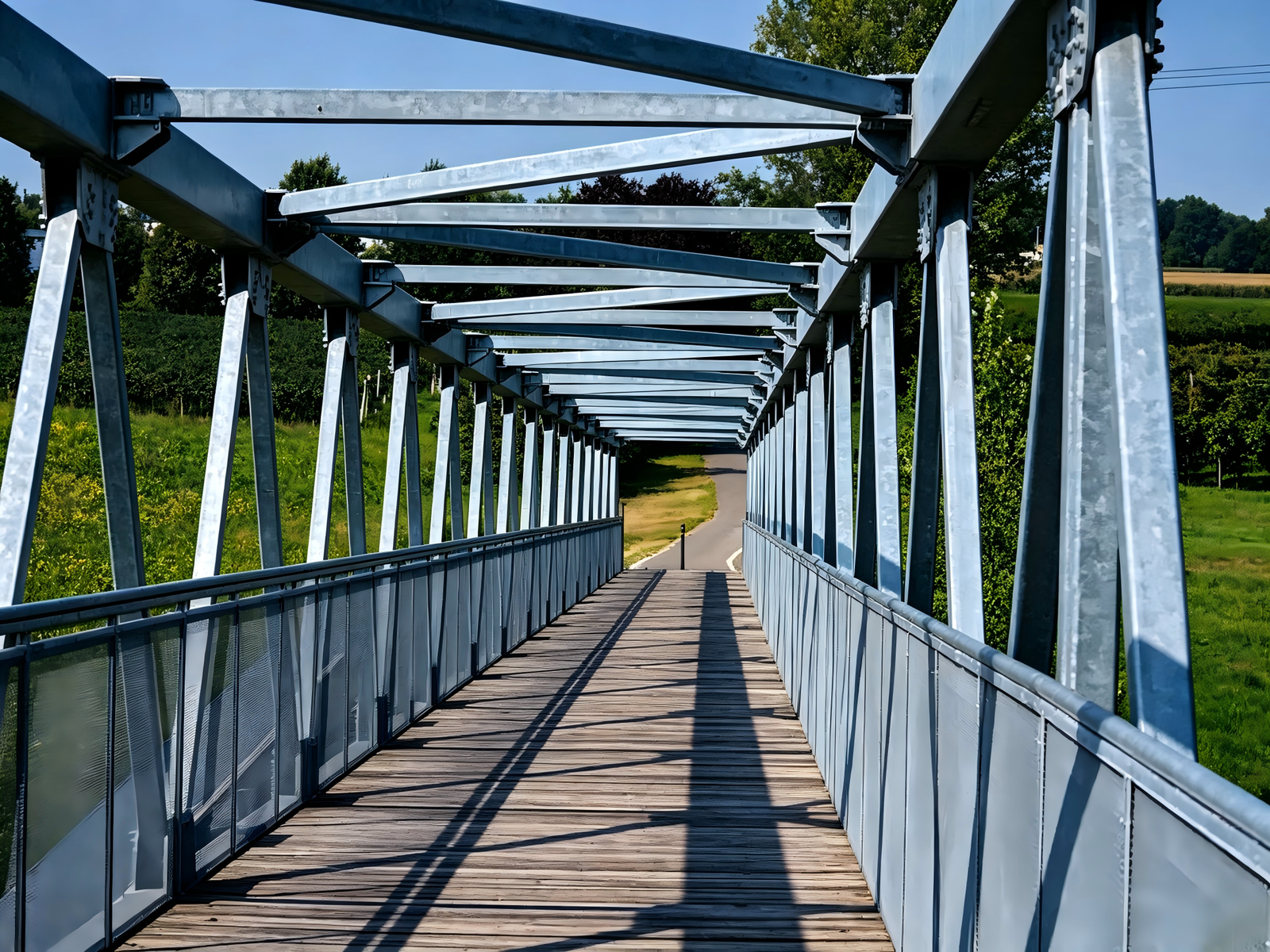
Ao contrário da tinta, que simplesmente cobre a superfície, a galvanização forma uma ligação metalúrgica com o metal base, tornando o revestimento altamente durável e resistente a descascamento ou lascamento.
Os principais benefícios incluem:
- Excelente resistência à corrosão
- Maior vida útil do produto
- Manutenção reduzida
- Custos mais baixos do ciclo de vida
- Maior durabilidade mecânica
2. Por que a galvanização é importante?
O aço enferruja naturalmente quando exposto à umidade e oxigênio. A corrosão pode enfraquecer estruturas, aumentar os custos de manutenção, e encurtar a vida útil do produto.
A galvanização aborda essas questões fornecendo:
- Proteção superior contra corrosãoem ambientes externos e industriais.
- Durabilidade a longo prazo, muitas vezes durando décadas, dependendo do ambiente de serviço.
- Custos de manutenção mais baixosporque os componentes galvanizados requerem manutenção mínima.
- Desempenho confiávelmesmo em condições climáticas adversas.
- Proteção sustentável, reduzindo a necessidade de repintura ou substituição frequente.
Para muitas aplicações industriais, a galvanização oferece um dos custos totais de propriedade mais baixos em comparação com revestimentos de proteção alternativos.
3. Como funciona a galvanização?
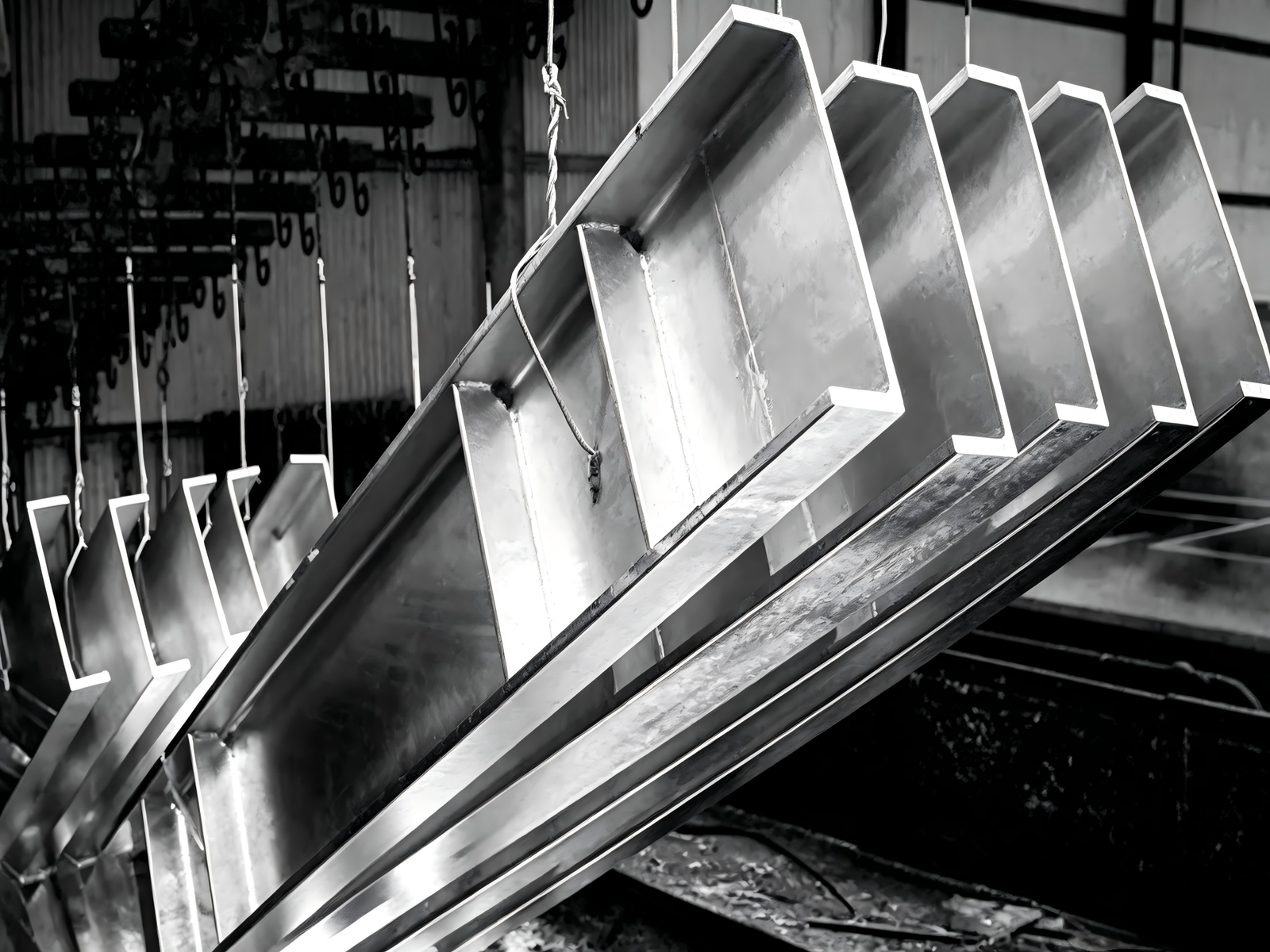
A eficácia da galvanização vem de dois mecanismos de proteção.
Proteção de barreira
O revestimento de zinco isola o aço do ar e da umidade, evitando oxidação e formação de ferrugem.
Proteção de sacrifício
O zinco é mais quimicamente ativo que o aço. Mesmo se o revestimento estiver arranhado, o zinco circundante corrói primeiro, protegendo o aço exposto através de ação catódica.
Esta proteção dupla é uma das principais razões pelas quais o aço galvanizado apresenta um desempenho excepcionalmente bom em ambientes exigentes..
4. Tipos de galvanização
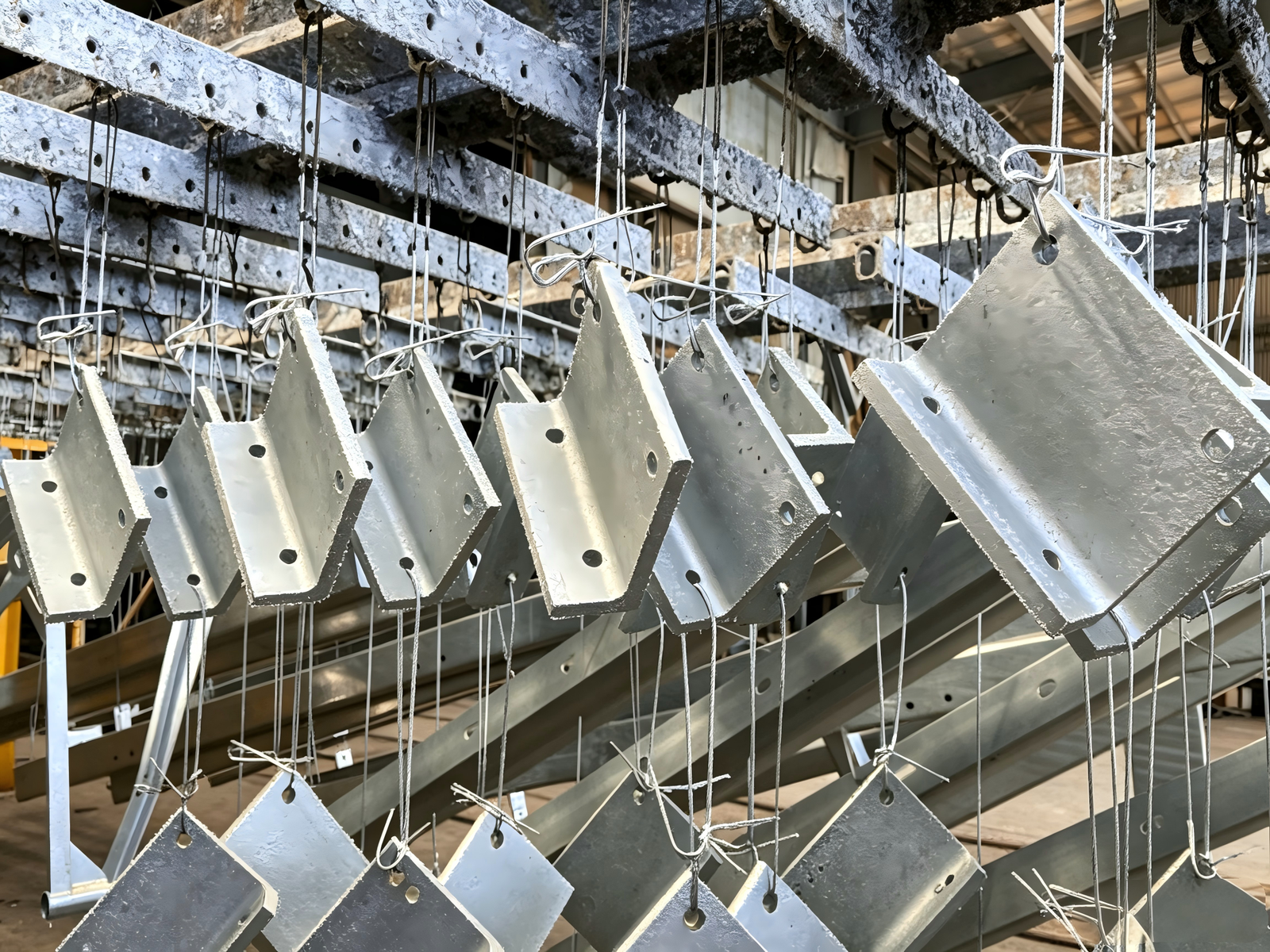
Galvanização por imersão a quente
Componentes de aço são imersos em zinco fundido a aproximadamente 450°C, produzindo um revestimento espesso e durável.
Vantagens
- Excelente resistência à corrosão
- Longa vida útil
- Adequado para grandes peças estruturais
Formulários
Pontes, torres de transmissão, aço estrutural, cercar, e guarda-corpos.
Eletrogalvanização
Também conhecido como galvanoplastia de zinco, este processo deposita zinco usando corrente elétrica.
Vantagens
- Acabamento superficial liso
- Espessura precisa do revestimento
- Ideal para peças decorativas
Formulários
Componentes automotivos, eletrodomésticos, e hardware eletrônico.
Sherardising
Peças de aço são aquecidas com pó de zinco, permitindo que o zinco se difunda na superfície.
Vantagens
- Revestimento uniforme
- Excelente cobertura do fio
- Risco reduzido de fragilização por hidrogênio
Formulários
Fixadores, engrenagens, e componentes de precisão.
Pré-galvanização
A chapa de aço passa por um banho contínuo de zinco fundido antes da fabricação.
Vantagens
- Alta eficiência de produção
- Revestimento uniforme
- Econômico para produtos em chapa
Formulários
Painéis de cobertura, Dutos HVAC, e tubos de aço.
Galvanização Mecânica
O pó de zinco é ligado mecanicamente a peças pequenas sem calor.
Formulários
Parafusos, parafusos, arruelas, e outros fixadores.
5. Processo de galvanização por imersão a quente passo a passo
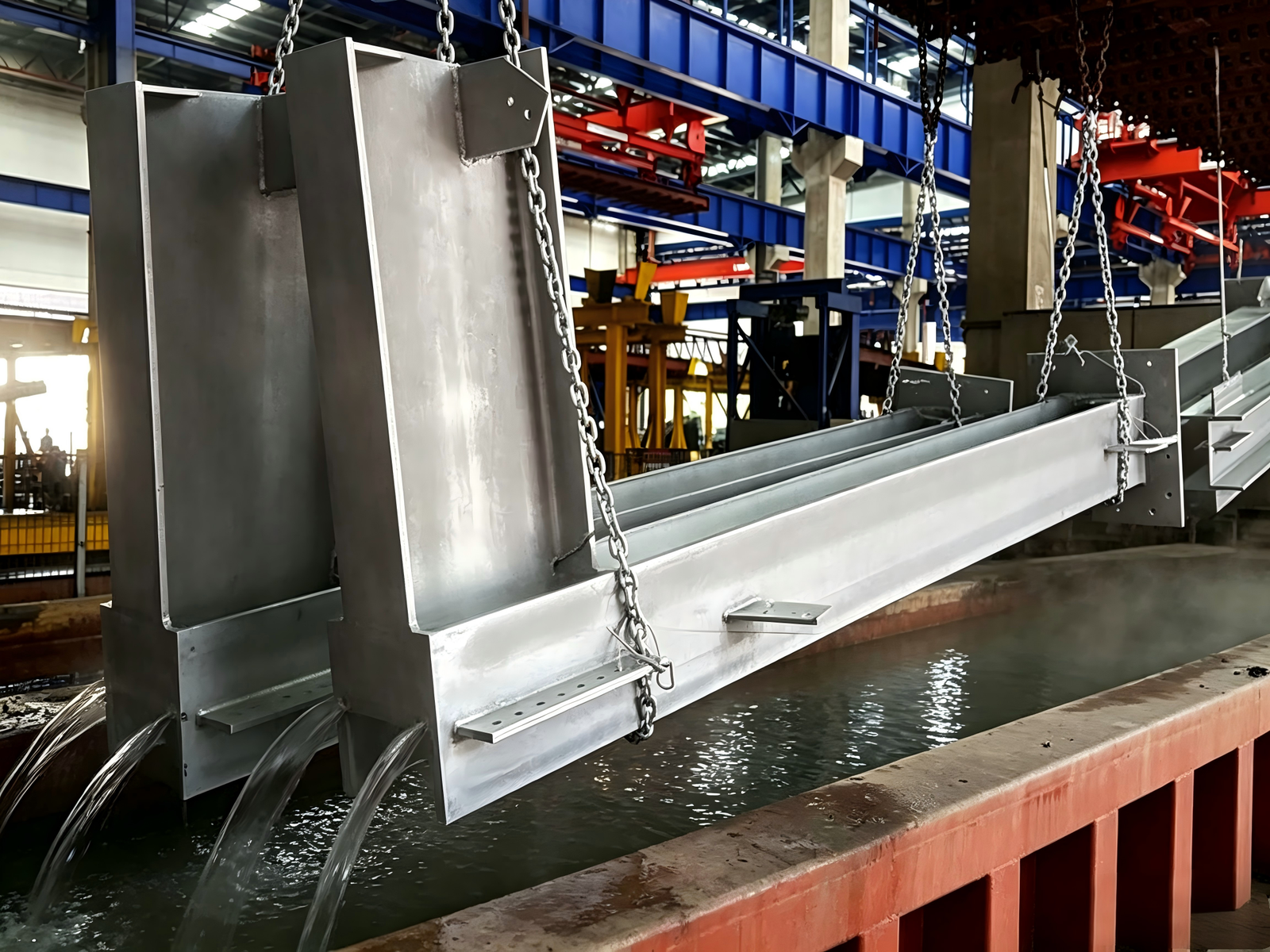
Um processo típico de galvanização por imersão a quente consiste nas seguintes etapas:
- Inspeção– Verifique se há defeitos na superfície do aço.
- Desentando– Remover óleo, graxa, e contaminantes.
- Decapagem– Elimine ferrugem e carepa usando ácido.
- Lavagem– Limpar produtos químicos residuais.
- Fluxo– Aplicar fluxo para melhorar a adesão do zinco.
- Secagem– Prepare a superfície para imersão.
- Banho de zinco– Mergulhe a peça em zinco fundido.
- Resfriamento– Tempere ou resfrie ao ar o componente revestido.
- Inspeção– Verifique a espessura do revestimento, adesão, e aparência.
6. Padrões de espessura de revestimento de zinco
A espessura de revestimento necessária depende da aplicação e das normas aplicáveis.
Os padrões internacionais comuns incluem:
- ASTM A123
- ASTM A153
- ISO 1461
- EM ISO 14713
Revestimentos mais espessos geralmente proporcionam maior proteção contra corrosão, mas podem aumentar os custos de processamento. A seleção do padrão apropriado garante qualidade e desempenho consistentes.
7. Galvanização versus outros acabamentos de superfície
| Acabamento de superfície | Resistência à corrosão | Custo | Aparência | Uso típico |
| Galvanização por imersão a quente | Excelente | Médio | Industrial | Aço estrutural |
| Revestimento em pó | Bom | Médio | Decorativo | Produtos de consumo |
| Pintura | Moderado | Baixo | Cores personalizadas | Aplicações internas |
| Galvanoplastia | Moderado | Médio | Acabamento suave | Peças de precisão |
| Aço inoxidável | Excelente | Alto | Prêmio | Alimentos e equipamentos médicos |
A escolha do acabamento certo depende das condições ambientais, orçamento, e requisitos estéticos.
8. Vantagens da Galvanização
As principais vantagens incluem:
- Excelente resistência à corrosão
- Longa vida útil
- Baixa manutenção
- Ligação metalúrgica forte
- Cobertura total da superfície
- Excelente resistência ao impacto
- Desempenho econômico do ciclo de vida
- Proteção ambientalmente correta
Esses benefícios tornam a galvanização uma solução preferida para aplicações externas de longo prazo.
9. Limitações da galvanização
Apesar de suas vantagens, galvanização tem algumas limitações:
- Custo inicial mais alto do que pintura
- A ferrugem branca pode se formar sob exposição prolongada à umidade
- A aparência da superfície pode variar
- Não é ideal para certas peças usinadas com precisão
- Soldar aço galvanizado requer precauções adicionais
Compreender essas limitações ajuda os engenheiros a escolher o tratamento de superfície mais adequado.
10. Indústrias que utilizam aço galvanizado
O aço galvanizado é amplamente utilizado em:
- Construção
- Automotivo
- Agricultura
- Infraestrutura elétrica
- Energia renovável
- Telecomunicações
- Transporte
- Engenharia naval
Sua combinação de força, durabilidade, e a resistência à corrosão o tornam adequado para ambientes exigentes.
11. Produtos Galvanizados Comuns
Produtos galvanizados típicos incluem:
- Vigas estruturais
- Tubos de aço
- Fixadores
- Guarda-corpos
- Bandejas de cabos
- Postes utilitários
- Cercas de aço
- Malha de arame
- Telhas
- Equipamento industrial
12. Padrões e Certificações de Galvanização
A galvanização de qualidade segue padrões reconhecidos internacionalmente, incluindo ASTM A123, ASTM A153, ISO 1461, e EN ISO 14713. Estas especificações definem a espessura do revestimento, métodos de inspeção, e requisitos de qualidade para garantir um desempenho consistente.
13. Como inspecionar revestimentos galvanizados
Métodos de inspeção comuns incluem:
- Inspeção visual
- Medição da espessura do revestimento
- Teste de adesão
- Avaliação de uniformidade
- Avaliação de defeitos de superfície
A inspeção regular garante a conformidade com as especificações do projeto.
14. Defeitos e soluções comuns de galvanização
Defeitos típicos incluem:
- Ferrugem branca
- Manchas nuas
- Excesso de zinco
- Superfícies ásperas
- Corre e pinga
- Inclusões de cinzas
A maioria dos defeitos pode ser minimizada através de uma preparação adequada da superfície, controle de processo, e pós-tratamento.
15. Quanto tempo dura o aço galvanizado?
A vida útil do aço galvanizado depende do ambiente operacional.
- Áreas rurais: 50–100 anos
- Áreas urbanas: 30–50 anos
- Ambientes costeiros: 20–30 anos
- Ambientes industriais: Varia dependendo da poluição e umidade
A inspeção de rotina prolonga ainda mais a vida útil.
16. Quanto custa a galvanização?
O custo depende de vários fatores:
- Tamanho do componente
- Espessura do aço
- Especificação de revestimento
- Volume de produção
- Preparação de superfície
- Transporte
- Padrões de qualidade exigidos
Embora o investimento inicial possa ser superior ao da pintura, a galvanização geralmente proporciona custos de vida útil mais baixos devido à manutenção reduzida.
17. Dicas de design para galvanização
Para obter os melhores resultados, engenheiros deveriam:
- Incluir orifícios de ventilação e drenagem adequados.
- Evite cavidades fechadas.
- Considere a espessura do revestimento durante o projeto.
- Proteja as áreas roscadas quando necessário.
- Siga as diretrizes de projeto de galvanização para reduzir a distorção.
O design adequado melhora a qualidade do revestimento e a eficiência de fabricação.
Conclusão
Seja usando galvanização por imersão a quente, eletrogalvanização, ou outros processos de revestimento de zinco, selecionar o método apropriado pode melhorar significativamente a durabilidade do produto, reduzir a manutenção, e menores custos do ciclo de vida.
Se o seu projeto exigir componentes de aço galvanizado de alta qualidade ou fabricação de metal personalizado, trabalhando com Precisão máxima-um parceiro de fabricação experiente garante a conformidade com os padrões internacionais, qualidade de revestimento consistente, e desempenho confiável a longo prazo.
Perguntas frequentes
1. Qual é a diferença entre galvanização e zincagem?
Embora ambos os processos apliquem um revestimento de zinco ao aço, a galvanização normalmente cria uma camada protetora muito mais espessa e durável. A galvanização por imersão a quente é ideal para aplicações externas e estruturais, enquanto o revestimento de zinco (eletrogalvanização) fornece um mais fino, acabamento mais suave, adequado para produtos internos e componentes de precisão.
2. O aço galvanizado pode ser cortado ou perfurado após a galvanização?
Sim. O aço galvanizado pode ser cortado, perfurado, ou usinado após o processo de revestimento. No entanto, qualquer aço exposto criado durante a fabricação deve ser reparado com um revestimento rico em zinco ou outro método de reparo aprovado para manter a proteção contra corrosão.
3. A galvanização por imersão a quente é adequada para todos os tipos de aço??
A maioria dos aços carbono pode ser galvanizada por imersão a quente com sucesso. No entanto, a composição química do aço – especialmente o teor de silício e fósforo – pode afetar a espessura e a aparência do revestimento. Consultar seu fornecedor de galvanização antes da produção ser recomendada.
4. A galvanização afeta as propriedades mecânicas do aço?
Na maioria dos casos, a galvanização tem pouco ou nenhum impacto na resistência, dureza, ou integridade estrutural do aço. Temperaturas de processamento adequadamente controladas garantem que o material base retenha suas propriedades mecânicas originais.
5. O aço galvanizado pode ser soldado?
Sim, aço galvanizado pode ser soldado. No entanto, o revestimento de zinco próximo à área de solda deve ser removido previamente, e ventilação adequada deve ser usada porque os vapores de zinco podem ser perigosos. Depois de soldar, a área afetada deve ser reparada com um revestimento rico em zinco para restaurar a resistência à corrosão.
6. Como o aço galvanizado deve ser armazenado antes da instalação?
Os produtos galvanizados devem ser armazenados em local seco, ambiente bem ventilado. Evite empilhar componentes molhados por longos períodos, pois a umidade retida pode causar o desenvolvimento de ferrugem branca na superfície do zinco.
7. Quais fatores influenciam a vida útil do aço galvanizado?
A durabilidade do aço galvanizado depende de vários fatores, incluindo espessura do revestimento, condições ambientais, umidade, exposição ao sal, poluentes industriais, e manutenção regular. Revestimentos de zinco mais espessos geralmente proporcionam maior proteção contra corrosão.
8. A galvanização é ecologicamente correta?
Sim. O zinco é um material natural e reciclável. O aço galvanizado tem uma longa vida útil, requer manutenção mínima, e é totalmente reciclável no final do seu ciclo de vida, tornando-o uma solução sustentável de proteção contra corrosão.
9. Como escolho o método de galvanização certo para o meu projeto?
O melhor método de galvanização depende da sua aplicação, tamanho do componente, espessura de revestimento necessária, aparência, ambiente operacional, e orçamento. A galvanização por imersão a quente é normalmente preferida para aplicações estruturais e externas, enquanto a eletrogalvanização é mais adequada para peças decorativas ou de precisão.
10. Como posso garantir componentes galvanizados de alta qualidade?
Trabalhe com um fabricante experiente que segue padrões internacionais como ISO 1461 ou ASTM A123. Um fornecedor confiável deve fornecer preparação adequada da superfície, controle de processo consistente, inspeção de espessura de revestimento, e garantia de qualidade abrangente para garantir proteção contra corrosão duradoura.


